Tag Archives: Investigative Reporter Tammy Rose

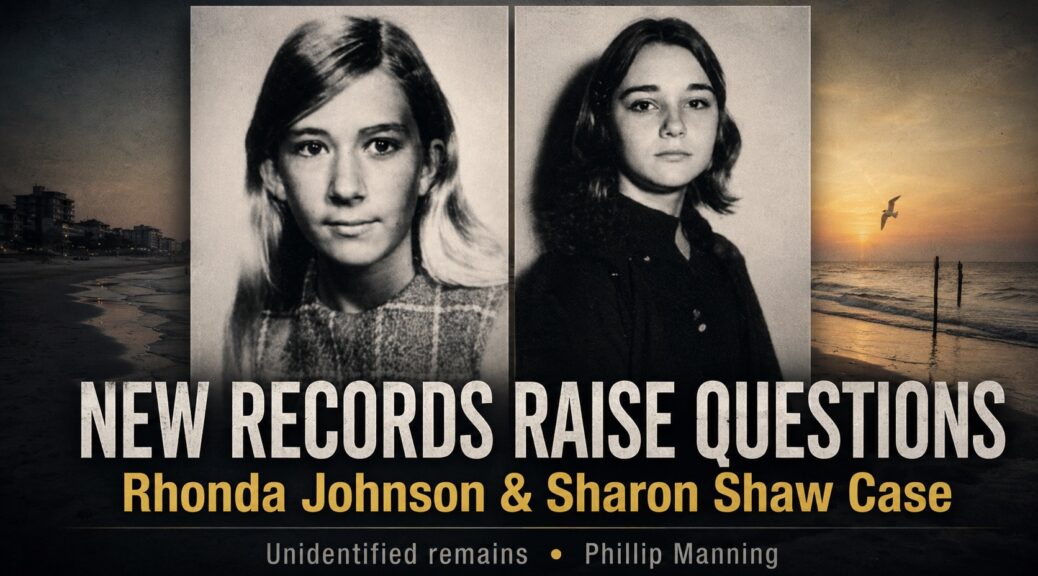
New Records Raise Questions in Rhonda Johnson and Sharon Shaw Case

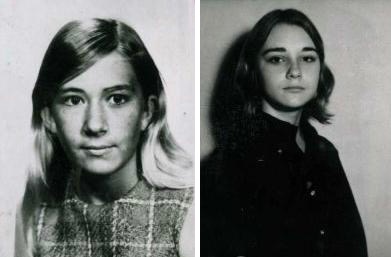
Rhonda Johnson and Sharon Shaw, two teenagers who disappeared after traveling to Galveston on August 4, 1971
Rhonda Renee Johnson, left, and Sharon Lynn Shaw disappeared after leaving Webster for a trip to Galveston on August 4, 1971. Public-domain image via Wikimedia Commons.

New Records Raise Questions About Unidentified Remains in Rhonda Johnson and Sharon Shaw Investigation

By Investigative Reporter Tammy Rose

More than five decades after the murders of Rhonda Johnson and Sharon Shaw, newly reviewed records are raising questions about additional human remains found in the area. The records also raise the possibility that investigators once considered whether another person played a role in the case.

Rhonda Johnson, 14, and Sharon Shaw, 13, disappeared from Galveston County in August 1971. Authorities later recovered their skeletal remains in and around Clear Lake along Galveston Bay.

The investigation continued for decades as detectives worked to identify remains, examine evidence and determine whether the discoveries connected to the two girls.

The records do not prove that another victim or another killer was connected to the murders. However, they show how much uncertainty investigators faced during the early stages of the case.

Remains of Sharon Shaw and Rhonda Johnson Identified

On January 3, 1972, two boys fishing in Clear Lake discovered a human skull floating in the water.

Authorities later identified the skull through dental records as belonging to Sharon Shaw. Investigators also reportedly found a crucifix around the jawbone that Sharon’s mother identified as her daughter’s.

About six weeks later, searchers recovered additional skeletal remains in a marsh near Clear Lake. Authorities identified one set of those remains as belonging to Rhonda Johnson.

The discoveries confirmed that both girls had died, but investigators could not determine their exact causes of death from the remains.

The identification resolved the girls’ missing-person cases, but other remains recovered during that period created additional questions.

Michael Lloyd Self Was Convicted

Investigators eventually focused on Michael Lloyd Self, who worked as a gas station attendant in the Webster/Clear Lake area. Authorities charged Self in connection with the murders of Rhonda Johnson and Sharon Shaw

A jury convicted Self of murdering Sharon Shaw and sentenced him to life in prison. The court record confirms that his conviction involved Sharon’s murder; he was not convicted of Rhonda Johnson’s murder. 

Self later said police had threatened and physically abused him until he confessed. Questions about whether investigators obtained a false or coerced confession followed the case for decades. A federal judge once recommended relief based on the confession issue, although a later appeals court decision allowed the conviction to stand. 

Edward Harold Bell Became an Alternate Suspect
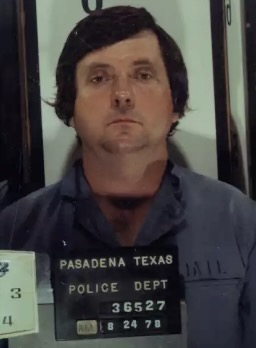
Michael Lloyd Self in a Pasadena Police Department mugshot.
Michael Lloyd Self was convicted in Sharon Shaw’s murder, though questions later emerged about his confession and whether he was responsible.

In 1998, convicted killer Edward Harold Bell claimed responsibility for the murders of several young women and girls in the Galveston-area region. His statements included two girls from Webster who disappeared in August 1971, which investigators associated with Rhonda Johnson and Sharon Shaw.

Bell became an alternate suspect in their murders, but authorities never charged him in the case. Investigators reportedly lacked physical or biological evidence that conclusively connected Bell to the girls’ deaths. 

Bell’s claims increased doubts about Self’s conviction, but they did not officially resolve who killed Rhonda and Sharon.

Questions Surrounding Other Remains

Records reviewed by Investigative Reporter Tammy Rose indicate authorities recovered an unidentified torso in September 1971.

Investigators reportedly found clothing or personal items with or near the remains that they believed belonged to Phillip Manning. Those items initially led authorities to consider whether the torso might be Manning’s.

Authorities later located Manning alive in Louisiana. That confirmed the torso was not his.

The discovery still raised questions about the unidentified victim’s identity and whether another victim—or possibly another killer—may have been connected to the investigation. However, the records reviewed so far do not establish that the torso was connected to the murders of Rhonda Johnson or Sharon Shaw.

Records Detail Manning’s Background

The records also include criminal-history and case information connected to Phillip Manning. That material may help explain why investigators examined his possible connection to the case.

However, the records do not establish that Manning killed Rhonda Johnson, Sharon Shaw or anyone else. The information surrounding him remained circumstantial, and the records reviewed so far do not show that authorities filed a case against him in connection with the girls’ murders.

Investigators Faced Difficult Conditions

Galveston’s shoreline at sunset. Severe weather and shifting Gulf waters may have complicated recovery efforts and the early investigation in 1971.
Galveston shoreline and Gulf waters at sunset

The discoveries occurred during a period when severe weather affected portions of the Texas Gulf Coast.

Tropical storms Edith and Fern moved through the region in September 1971, potentially complicating searches, recovery efforts and investigators’ ability to determine where remains had originally entered the water.

Water movement, weather conditions and the passage of time may have made it more difficult to connect separate remains to specific locations or victims.

Investigators in 1971 also did not have access to the DNA testing and modern forensic databases available today.

Identifications often depended heavily on dental comparisons, physical characteristics and other available medical evidence.

Was Another Killer Suspected?

The records raise an important question: Did investigators believe the additional remains pointed to another victim—or possibly another offender operating in the area?

The documents reviewed so far do not provide a definitive answer.

They instead show that authorities were dealing with several discoveries, uncertain identifications and incomplete information during the earliest stages of the investigation.

Any suggestion that another killer was involved should be treated as a theory unless additional police reports, forensic findings or official statements support it.

Questions That Still Need Answers

Several important questions remain:

Who exactly was Phillip Manning?

Why did investigators connect his name to the torso?

Was the torso ever conclusively identified?

Did Manning have any documented connection to Rhonda Johnson or Sharon Shaw?

What did investigators believe before the girls’ remains were fully identified?

Are additional reports or forensic records still available?

Those questions may be important in understanding not only what investigators knew, but also how the case evolved during its earliest months.

Investigation Continues to Draw Interest

Galveston beach where Rhonda Johnson and Sharon Shaw traveled before disappearing in August 1971
Rhonda Johnson and Sharon Shaw traveled from Webster to Galveston on August 4, 1971, before they disappeared.

The murders of Rhonda Johnson and Sharon Shaw remain among the most discussed cases connected to the Texas Gulf Coast.

Decades later, old reports, forensic findings and previously overlooked names continue to generate new questions.

The records do not yet prove that another killer was involved. But they show that the investigation may have been more complex than the public understood—and that parts of the story may still be missing.

Investigative Reporter Tammy Rose will continue reviewing available records and seeking documentation that could clarify the identity of the additional remains and Phillip Manning’s possible connection to the investigation.

Related Products

Waterproof Document Organizer

When reviewing decades-old police reports, newspaper clippings and case files, a waterproof document organizer can help protect important records from spills, moisture and damage.

Disclosure: As an Amazon Associate, I may earn from qualifying purchases at no additional cost to you.

Portable Document Scanner

A portable scanner can make it easier to digitize old reports, photographs and handwritten notes while researching historical cases.

Planning a Trip to Galveston?

Visitors researching Galveston County history or spending time along the Texas Gulf Coast can compare hotels and available accommodations through Hotels.com.

Disclosure: I may earn a commission from eligible bookings at no additional cost to you.

Related Coverage

Rhonda Johnson and Sharon Shaw: 55 Years Later

A closer look at the disappearance and murders of Rhonda Johnson and Sharon Shaw, the recovery of their remains and the questions that continue decades later.

Texas Killing Fields: James Elmore Jr. Trial Approaches

James Elmore Jr. is scheduled to face trial as investigators continue examining cases connected to the Texas Killing Fields.
Public Records Reveal Ransom Messages Sent After Nancy Guthrie Disappeared

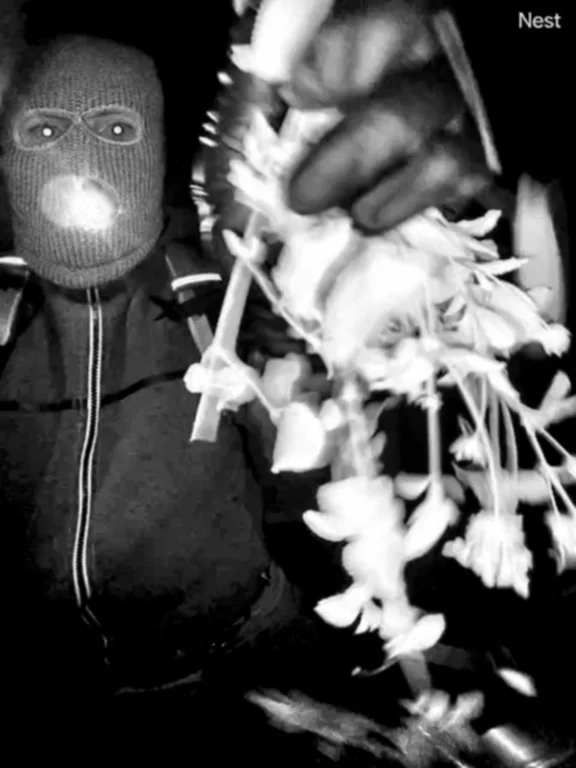
Black-and-white porch surveillance image showing a masked individual standing near a hanging plant at a residence connected to the Nancy Guthrie case.
Porch surveillance image released as part of the investigation into the Nancy Guthrie case.

Public Records Reveal Ransom Messages Sent After Nancy Guthrie Disappeared

By Investigative Reporter Tammy Rose

Nancy Guthrie disappeared from her home in the Catalina Foothills near Tucson, Arizona, during the early morning hours of February 1, 2026. Six months later, publicly released investigative records continue to provide insight into one of the most unusual aspects of the case.

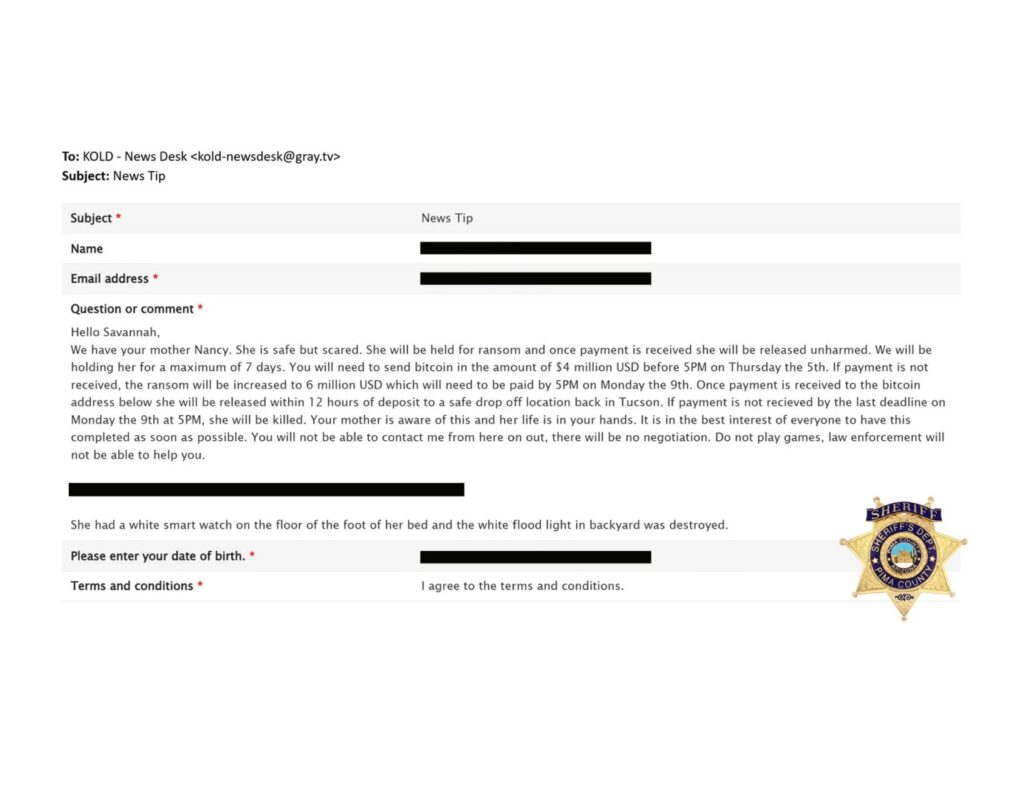
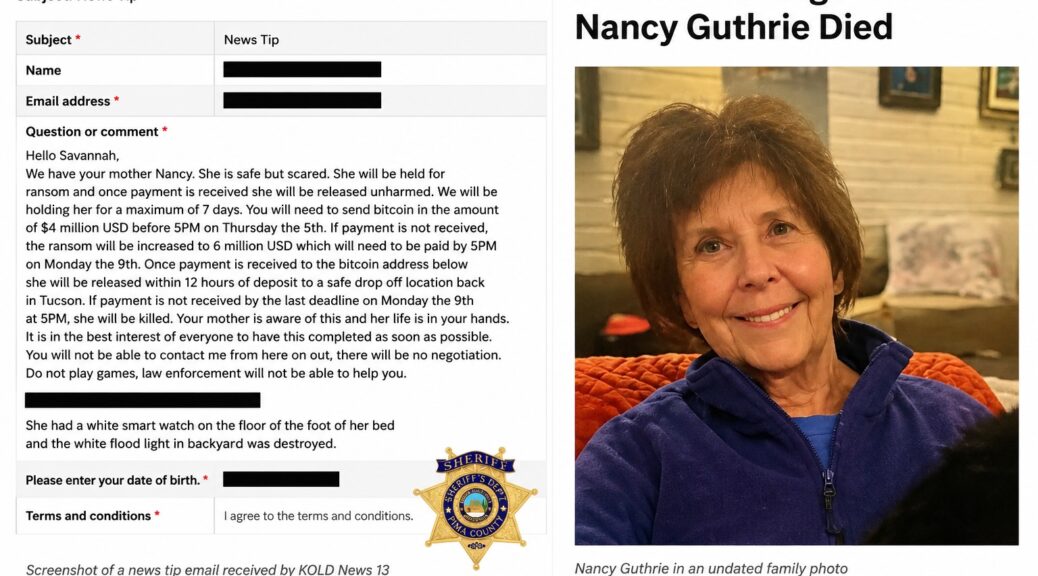
Among the documents released are messages that appeared to demand a ransom and later claimed Nancy Guthrie had died. The messages became part of the investigation and remain included in the publicly released records.

Ransom Message Demanded Bitcoin

Redacted copies of documents described as ransom notes released as evidence in the Nancy Guthrie case.
Redacted ransom note documents included in the investigative records for the Nancy Guthrie case.

According to publicly released records, one message claimed Nancy Guthrie had been kidnapped and demanded a multi-million-dollar Bitcoin payment in exchange for her safe return.

The message included a deadline, threatened harm if payment was not made, and referenced details about Nancy Guthrie’s home. Investigators documented the message as part of the case.

At the time, there was no public confirmation that the claims made in the message were true.

Second Message Claimed Nancy Guthrie Died

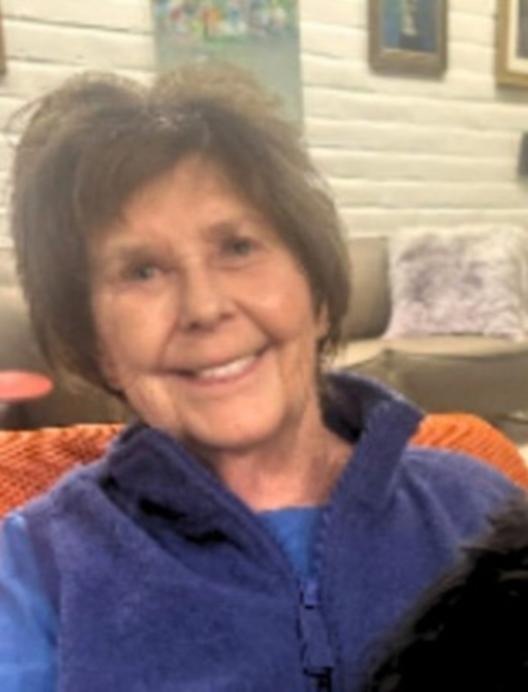
Portrait of Nancy Guthrie smiling in a blue jacket in an undated family photograph.
Nancy Guthrie in an undated family photo provided as part of case coverage.

A second message later claimed Nancy Guthrie had died shortly after being taken.

The message stated that her death was not intentional and expressed sympathy to her family. It also claimed she had been buried in a natural area.

Authorities included the message in the investigative file that was later released as a public record.

Investigators Examined the Messages

Law enforcement reviewed the messages as part of the investigation into Nancy Guthrie’s disappearance.

Publicly released records show the communications were preserved as evidence, but investigators have not publicly confirmed who authored the messages or whether any of the claims contained in them were accurate.

As with many criminal investigations, detectives examined numerous leads while working to determine what happened.

Why These Records Matter

The release of investigative records provides the public with a better understanding of the evidence reviewed during the case.

While the messages generated significant attention, they represent only one part of the overall investigation. Any conclusions about who sent them or why should be based on official investigative findings rather than speculation.

As additional records become public, they may continue to provide new details about the investigation.

If you have information related to the case, contact the investigating law enforcement agency.

Home Security Camera (Indoor/Outdoor) – If you’re interested in true crime or home security, a smart security camera is one of the best ways to monitor your property and record suspicious activity.

Reolink home security camera system with four surveillance cameras, network video recorder, and 2TB hard drive.

Fingerprint Door Lock – Upgrade your home’s security with a keyless smart lock featuring fingerprint access, passcodes, and mobile app control.

Philips smart fingerprint door lock with touchscreen keypad, interior deadbolt, and smartphone app connectivity.

Related Coverage

Read more of my coverage on the James Elmore Jr. investigation:

Read my latest coverage on the Rhonda Johnson and Sharon Shaw investigation:

Hotels.com

Planning to visit Texas for court proceedings, historical research, or to explore the areas connected to this case? Find hotels that fit your budget through my Hotels.com affiliate link.

Amazon Disclosure

As an Amazon Associate, I earn from qualifying purchases. If you shop through my affiliate links, I may receive a small commission at no additional cost to you. Thank you for supporting my independent journalism.

Hotels.com Disclosure

If you book a hotel through my Hotels.com affiliate links, I may earn a small commission at no additional cost to you. Thank you for helping support my reporting and website.

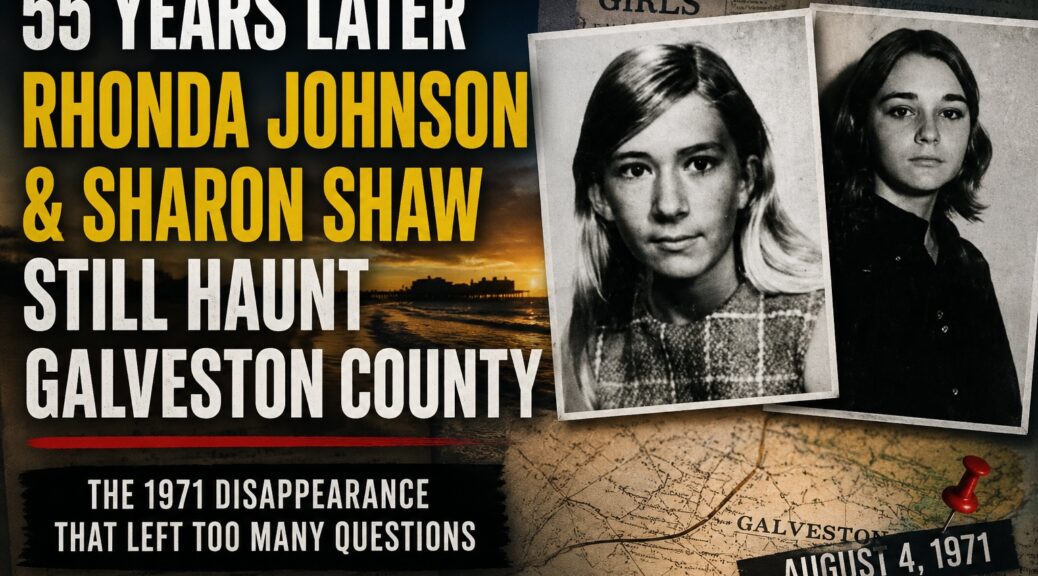
55 Years Later: The Disappearance of Rhonda Johnson and Sharon Shaw Still Haunts Galveston County

Rhonda Johnson and Sharon Shaw, the two teenagers who disappeared after traveling to Galveston on August 4, 1971
Rhonda Renee Johnson, left, and Sharon Lynn Shaw disappeared after traveling from Webster to Galveston on August 4, 1971.

By Investigative Reporter Tammy Rose

Two teenage friends left Webster for a summer day in Galveston on August 4, 1971. They never returned home.

Nearly 55 years later, the deaths of Rhonda Renee Johnson and Sharon Lynn Shaw remain surrounded by painful questions, a controversial confession and competing claims about who was responsible.

Rhonda was 14 years old. Sharon was 13 and just days away from her 14th birthday.

Their case became one of the earliest and most troubling mysteries associated with a series of young women and girls who disappeared across the Houston-Galveston region during the 1970s.

A Summer Trip to Galveston

Galveston beach where Rhonda Johnson and Sharon Shaw traveled before disappearing in August 1971
Rhonda Johnson and Sharon Shaw traveled from Webster to Galveston on August 4, 1971, before they disappeared.

According to federal court records, Sharon and Rhonda were last seen on August 4, 1971, after leaving Webster for a day trip to Galveston, about 25 miles away.

The two friends reportedly spent time near the beach and Galveston Seawall. However, they did not make it home that evening.

Their disappearance launched a search that continued for months.

Their Remains Were Found Months Later

On January 3, 1972, human remains were discovered in the Clear Lake area.

Additional remains were found several weeks later. Authorities identified the victims as Sharon Shaw and Rhonda Johnson.

The medical examiner could not determine the cause of their deaths because there was no identifiable damage to the bones or skulls, according to the federal appellate record.

The discovery confirmed the families’ worst fears. However, determining who killed the girls would become far more complicated.

Michael Lloyd Self Was Convicted

Galveston beach connected to the Rhonda Johnson and Sharon Shaw case involving Michael Lloyd Self.
Michael Lloyd Self was convicted in Sharon Shaw’s death after the teenagers disappeared following a trip to Galveston in August 1971. This Galveston beach image is illustrative.

Investigators eventually focused on Michael Lloyd Self, a Galveston-area gas station attendant.

Self signed a confession after being questioned by police. He later withdrew it and claimed officers had threatened and physically abused him until he confessed.

Self was prosecuted for Sharon Shaw’s murder and received a life sentence. His conviction was upheld by the Texas Court of Criminal Appeals.

Questions about the confession followed the case for decades.

In 1991, a federal district court granted Self’s request for habeas relief after finding that his confession had been obtained in violation of his constitutional rights. However, the Fifth Circuit Court of Appeals later reversed that decision and allowed the conviction to stand.

Self maintained his innocence and died in prison in 2000.

A Second Man Claimed Responsibility

Edward Harold Bell in a 1978 Pasadena Police Department booking photograph
Edward Harold Bell in a 1978 Pasadena Police Department mugshot. Bell later claimed responsibility for several killings in Southeast Texas, but he was never charged in the deaths of Rhonda Johnson or Sharon Shaw. Image credited to the Pasadena Police Department; source copy via Wikipedia/Houston Chronicle.

Years later, convicted murderer Edward Harold Bell claimed he had killed several girls across Southeast Texas during the 1970s.

Bell referred to the victims as the “Eleven that went to Heaven.” His claims reportedly included two girls from Webster who disappeared after visiting Galveston in 1971.

Those details were believed to refer to Sharon and Rhonda.

Investigators familiar with Bell’s statements said portions of his accounts appeared to match information from several cases. However, Bell was never charged with killing Sharon or Rhonda.

Bell was serving a prison sentence for the 1978 murder of Larry Dickens when he died in 2019.

Families Were Left Without Definitive Answers

The conviction of Michael Self remained legally intact. Still, some investigators and members of the victims’ families came to believe Bell may have been responsible.

That leaves a difficult conflict at the center of the case.

One man was convicted based largely on a confession he said was forced. Another man later claimed responsibility but was never prosecuted in connection with the girls’ deaths.

No DNA evidence or weapon publicly connected Bell to the murders. His death ended any possibility that he-would face a trial or further questioning in court.

Remembering Rhonda and Sharon

Rhonda Johnson and Sharon Shaw, two teenagers who disappeared after traveling to Galveston on August 4, 1971
Rhonda Renee Johnson, left, and Sharon Lynn Shaw disappeared after leaving Webster for a trip to Galveston on August 4, 1971. Public-domain image via Wikimedia Commons.

The competing accusations can easily overshadow the two young victims.

Rhonda and Sharon were teenage friends enjoying the final weeks of summer. Their families expected them to return home after a day at the beach.

Instead, August 4 became an anniversary marked by loss and unanswered questions.

As the 55th anniversary approaches, the most important part of this story remains the lives that were taken.

Rhonda Renee Johnson and Sharon Lynn Shaw should be remembered by their names—not simply as entries on a list of Texas cold cases.

Their families deserved clear answers then. They still deserve them today.

Related Texas Killing Fields Coverage

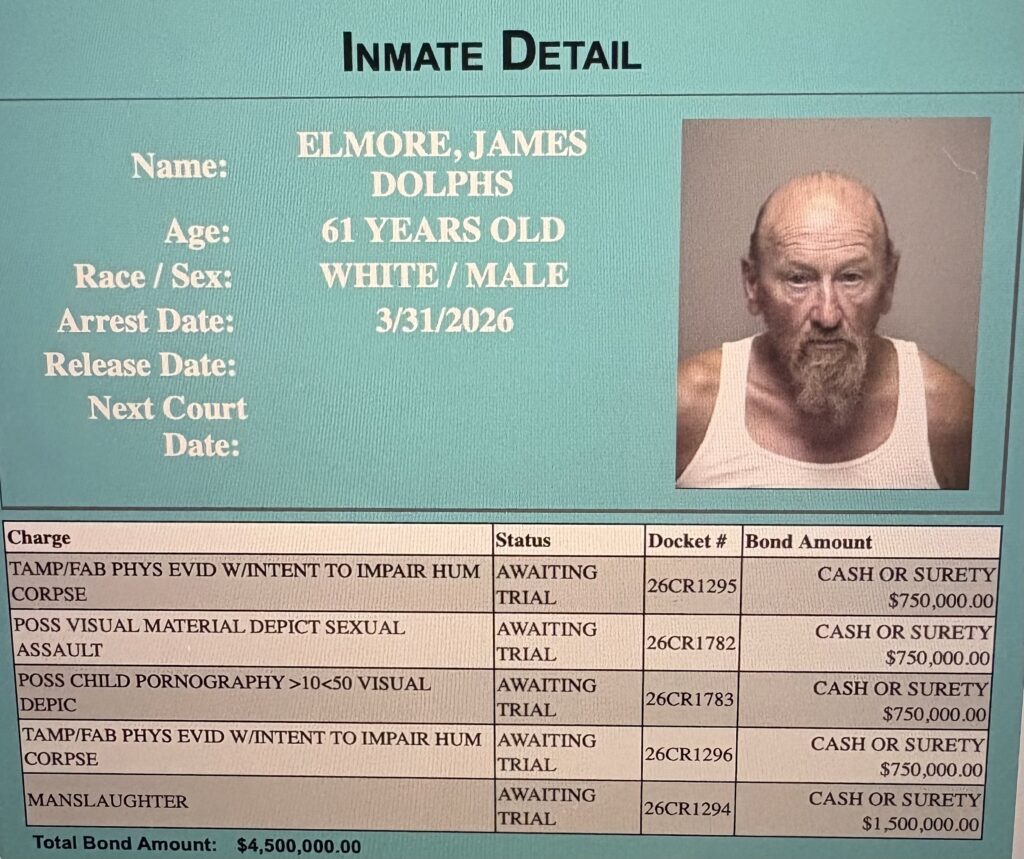
Booking photo of James Elmore Jr. displayed on an inmate detail card related to his criminal case.
James Elmore Jr. booking photo. His trial is currently scheduled to begin Aug. 31, 2026, in Galveston County.

The questions surrounding Sharon and Rhonda are part of a much larger history of disappearances and deaths along the Interstate 45 corridor between Houston and Galveston.

The upcoming trial of James Elmore Jr. is also expected to renew attention on the Calder Road area known as the Texas Killing Fields.
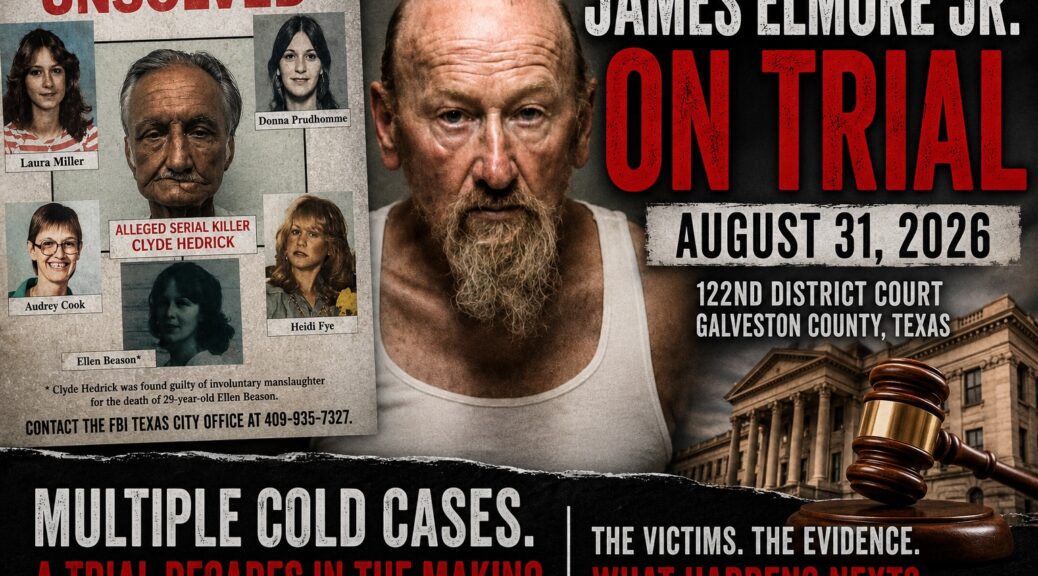
Elmore is charged in connection with the death of Laura Miller and allegations involving the movement of human remains. His jury trial is currently scheduled to begin August 31 in Galveston County’s 122nd District Court.

Read more: James Elmore Jr. Trial Scheduled in Texas Killing Fields Case

This story is based on available court records and previously published reporting. Some allegations were never proven in court. Edward Harold Bell was never charged with the deaths of Rhonda Johnson or Sharon Shaw.

Planning a Galveston Visit?

Many people visit Galveston to explore its history, beaches and landmarks. Travelers looking for a place to stay can compare Galveston hotels, prices and availability through Hotels.com before planning their trip.

I may earn a commission if you book through Hotels.com, at no additional cost to you.

Recommended True-Crime Reading

Readers interested in researching historic cases may find a Texas road atlas helpful for understanding the distance between Webster, Galveston, Clear Lake and other locations connected to the investigation.

A portable document organizer can also help keep court records, timelines, printed articles and handwritten notes arranged while researching a complicated cold case.

As an Amazon Associate, I may earn from qualifying purchases at no additional cost to you.

Related Coverage

The approaching 55th anniversary comes as another Galveston County case is preparing to return to court. Read more about the upcoming James Elmore Jr. trial and the Calder Road investigation.

You can also read my examination of prison confessions compared with public records in the Roy Alan Stuart investigation, another case involving decades of questions and disputed claims.

James Elmore Jr. Trial Set as Calder Road Victims’ Families Hope for Justice Nearly 40 Years Later

Booking photo of James Elmore Jr. displayed on an inmate detail card related to his criminal case.
James Elmore Jr. booking photo. His trial is currently scheduled to begin Aug. 31, 2026, in Galveston County.

James Elmore Jr. Trial Moves Forward

Nearly four decades after several young women were found murdered and their bodies abandoned near Calder Road in Galveston County, the case against James Elmore Jr. continues moving toward trial.

For many victims’ families, the upcoming court proceedings represent another chance to finally see justice.

After checking the Galveston County court docket, I confirmed the case is still moving forward.

According to the current schedule:

Discovery Conference: August 10, 2026

Pretrial Conference: August 21, 2026

Jury Trial: August 31, 2026

The trial is scheduled in the 122nd District Court before Judge Jeth Jones.

If the schedule remains unchanged, I plan to attend the trial and provide updates from the courtroom.

Laura Miller’s Family Has Waited Decades for Answers

Tim Miller, founder of Texas EquuSearch, photographed during a search effort related to a missing persons investigation.
Tim Miller, founder of Texas EquuSearch, has assisted in hundreds of missing persons cases across Texas and the United States.

Laura Miller was last seen on September 10, 1984, after stopping at a convenience store in League City to use a pay phone. Her mother had dropped her off because the family’s phone had not yet been connected after they moved into the area.

Laura never returned home.

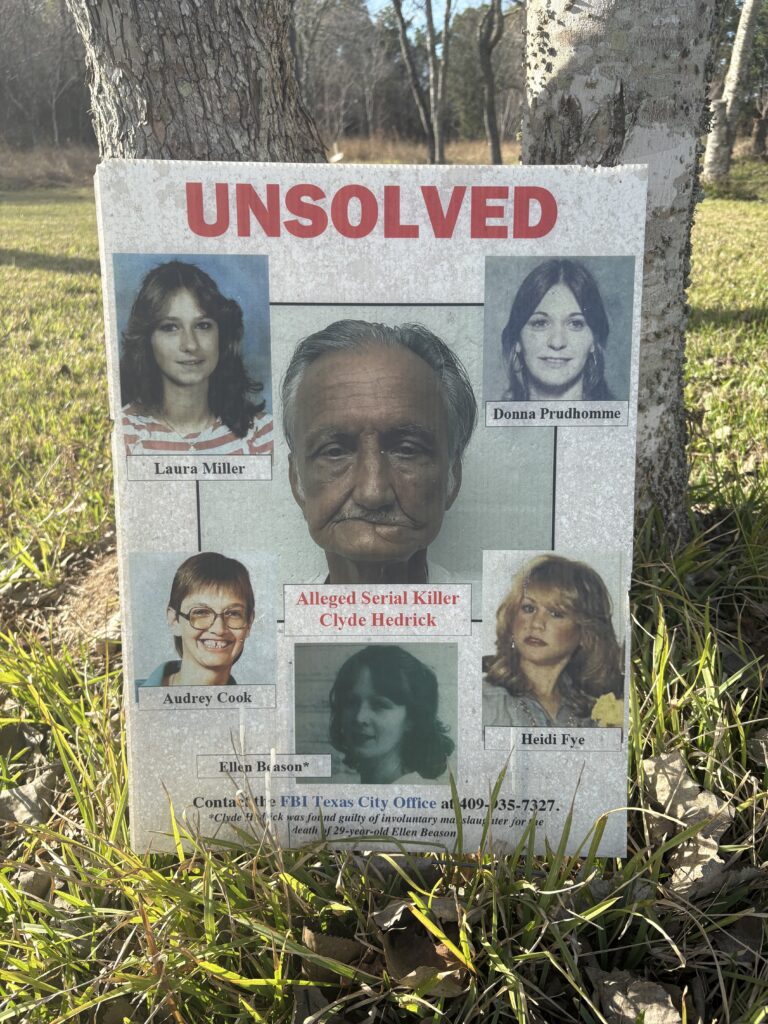
Sign marking a recovery site featuring photos of four women and Clyde Hedrick during an investigation into multiple unsolved Texas homicide cases.
Memorial sign highlighting four victims whose cases have been linked to the same recovery site during the investigation into Clyde Hedrick and several unsolved homicides.

Nearly 17 months later, on February 2, 1986, her remains were discovered in a wooded area near Calder Road. During that same search, investigators also found the remains of Audrey Cook.

For both families, the upcoming trial comes after decades of unanswered questions.

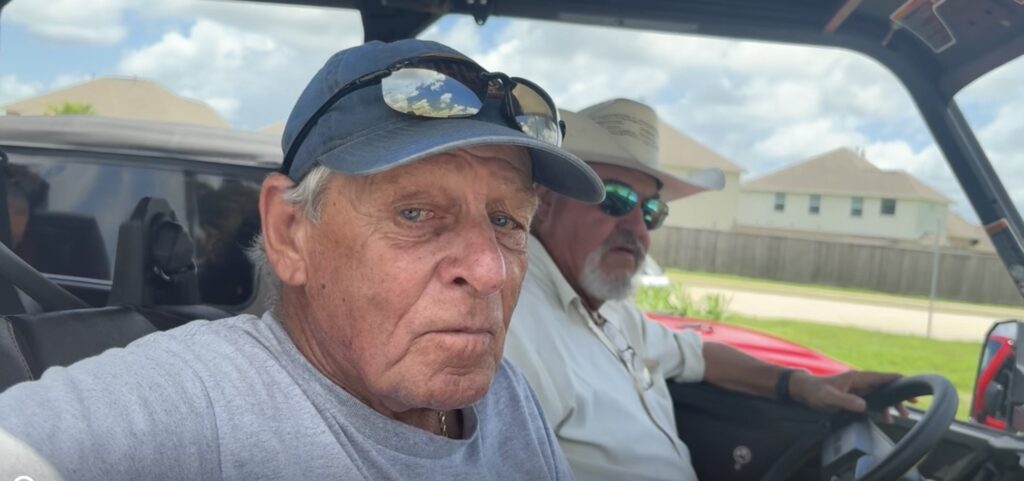
In an earlier interview, Texas EquuSearch founder Tim Miller discussed Laura Miller’s disappearance, the years of searching, and why the case has remained so important to investigators and her family.

Watch: Tim Miller Discusses Laura Miller’s Disappearance

Charges Against James Elmore Jr.

Mugshot of James Elmore Jr., whose trial is scheduled to begin Aug. 31, 2026, in Galveston County.
James Elmore Jr. booking photo. He is scheduled to stand trial beginning Aug. 31, 2026, in Galveston County.

James Elmore Jr. remains jailed while awaiting trial.

According to jail records, he faces the following charges:

Manslaughter

Two counts of tampering with physical evidence involving a human corpse

Possession of visual material depicting sexual assault

Possession of child sexual abuse material

His total bond is listed at $4.5 million.

As with all criminal cases, these charges are allegations, and James Elmore Jr. is presumed innocent unless proven guilty in court.

Clyde Hedrick Died Before Additional Charges Could Be Filed

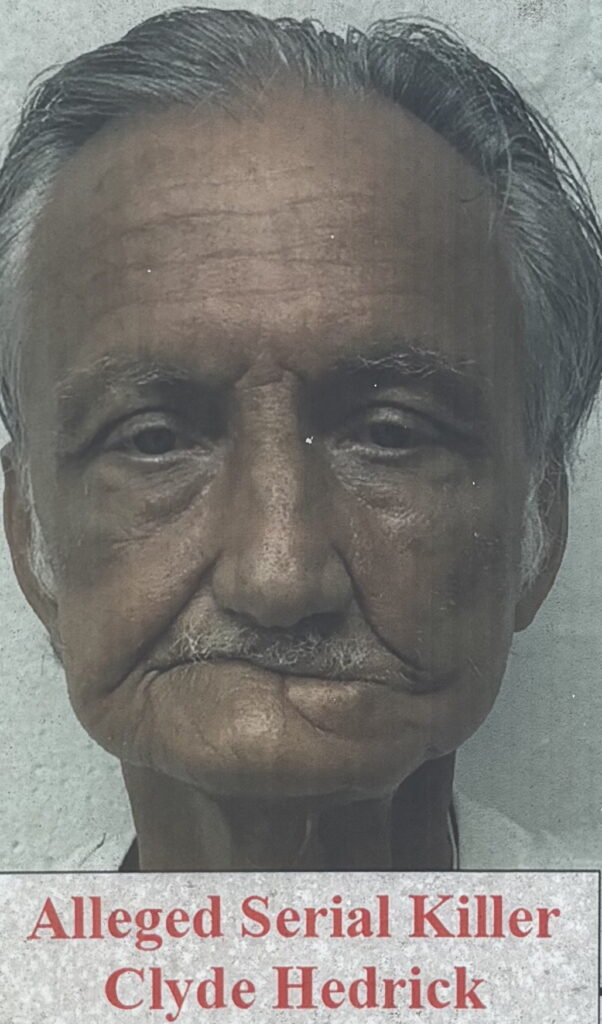
Portrait of Clyde Hedrick, who was convicted in the 1984 murder of Ellen Beason and later became a suspect in additional cold case investigations.
Clyde Hedrick was convicted in the murder of Ellen Beason. Investigators were preparing to charge him in additional cases before his death in March 2026.

The upcoming trial follows the death of Clyde Hedrick, who for years had been publicly linked to several Texas Killing Fields investigations.

Authorities were reportedly preparing additional charges against Hedrick. However, on March 21, 2026, Hedrick removed his breathing tube and died before those charges could be filed.

Hedrick was convicted only in the death of Ellen Beason. He served prison time for that case and was on parole when he died.

Trial Could Bring Long-Awaited Answers

Whether new evidence or testimony emerges during the trial remains to be seen.

However, for the families of Laura Miller, Audrey Cook, Donna Prudhomme, Heidi Fye, and others connected to the Calder Road investigations, the upcoming proceedings represent another opportunity to seek answers after nearly 40 years.

I’ll continue monitoring the Galveston County court docket and, if the trial remains on schedule, will be in the courtroom beginning August 31 to provide updates.

Related Coverage

TIM MILLER: JAMES ELMORE JR. REPEATEDLY CLAIMED THERE WAS ‘ANOTHER GIRL’ IN TEXAS KILLING FIELDS INVESTIGATION

Planning a Trip to Galveston County?

Whether you’re traveling to attend court proceedings or visiting Galveston Island, you can compare hotels throughout Galveston County before your trip.

Browse Hotels in Galveston County

Disclosure: If you book through this link, I may earn a commission at no additional cost to you.

BOBLOV Body Camera

As I continue covering cold cases and court proceedings, a reliable body camera is an important part of documenting interactions in the field. This is similar to the type of equipment many journalists and investigators use.

Amazon Affiliate Disclosure

Disclosure: As an Amazon Associate, I earn from qualifying purchases. If you purchase through my links, I may receive a small commission at no additional cost to you.

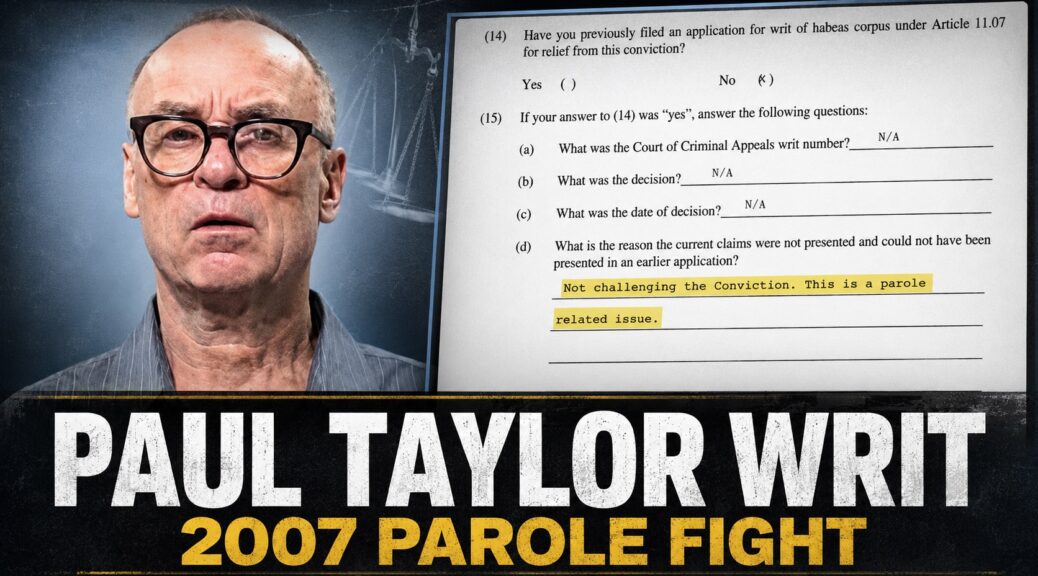
Paul Taylor Claimed Texas Unfairly Kept Him Behind Bars in 2007 Parole Fight

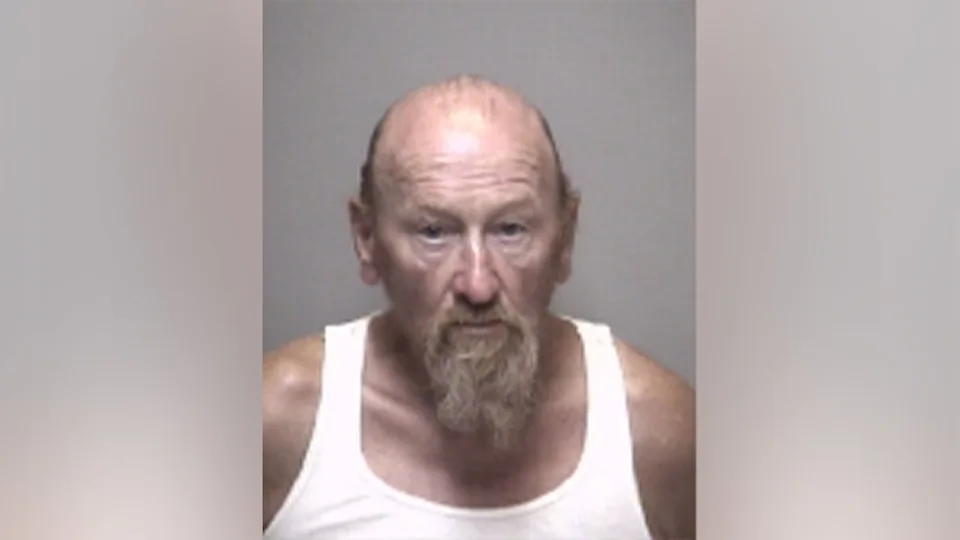
Paul Gayland Taylor Jr. prison mugshot
Paul Gayland Taylor Jr. pleaded guilty to murder in Brazoria County in 1995 and received a life sentence.

Investigative Reporter Tammy Rose

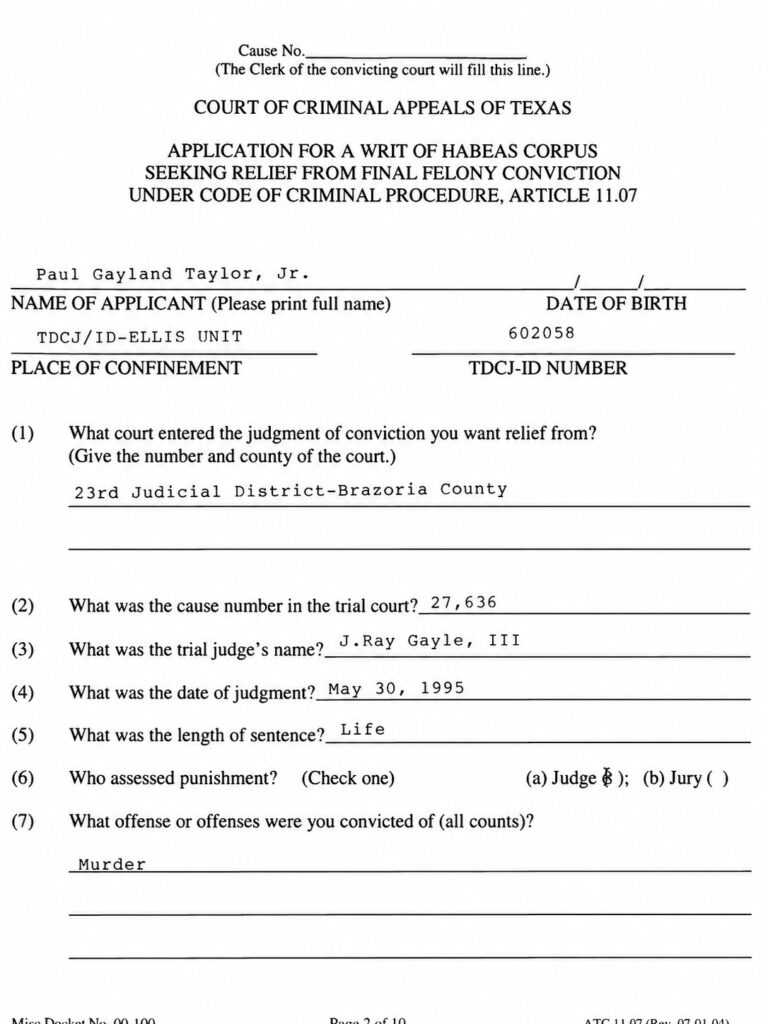
Paul Gayland Taylor Jr. filed a writ of habeas corpus in 2007 after the Texas Board of Pardons and Paroles denied him release.

Taylor challenged his parole denial, not his conviction

The filing did not challenge his murder conviction.

Instead, Taylor argued that the parole board unfairly relied on his crime and past conduct. He claimed the board ignored his prison record, education and other accomplishments.

Taylor pleaded guilty to murder in Brazoria County in 1995. A judge sentenced him to life in prison.

Taylor said the filing was about parole

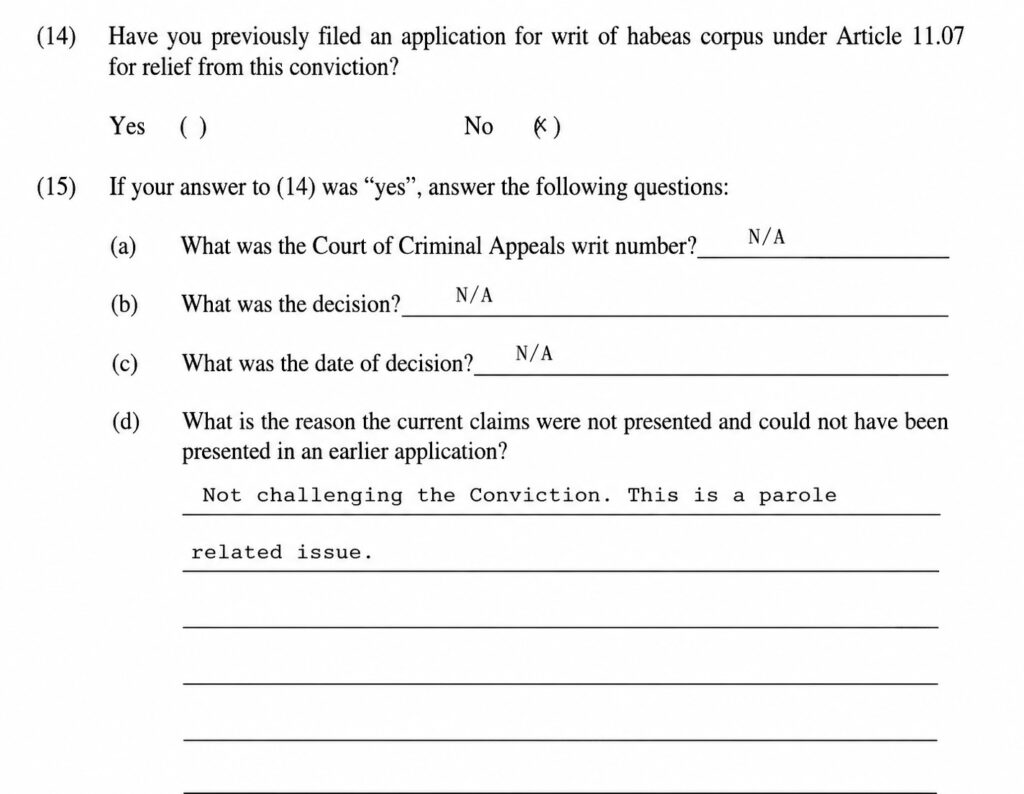
The writ form asked whether Taylor had previously challenged his conviction.

Taylor marked “no.”

He also wrote:

“Not challenging the conviction. This is a parole related issue.”

That statement is important. This filing did not claim that Taylor was innocent. It also did not ask the court to overturn his guilty plea.

Taylor focused his arguments on the parole process.

Paul Taylor 2007 writ stating he was not challenging his murder conviction
In his 2007 writ application, Paul Taylor wrote that he was not challenging his conviction and described the matter as a parole-related issue.

The writ listed his conviction and sentence

The application identified Taylor’s criminal case as Cause No. 27,636 in the 23rd Judicial District Court of Brazoria County.

The document listed:

Judgment date: May 30, 1995
Offense: Murder
Plea: Guilty
Sentence: Life
Punishment assessed by: Judge

Taylor also stated that he did not have a jury trial. He indicated that he did not appeal the judgment.

Paul Taylor writ listing 1995 murder conviction and life sentence
Taylor’s writ application lists his 1995 guilty plea to murder and his life sentence.

Taylor had been eligible for parole since 1997

Taylor wrote that he had been eligible for parole since February 2, 1997.

According to his filing, the parole board denied him release again on January 12, 2007. The board then gave him a three-year setoff before his next review.

Taylor said the board had denied him parole for about 13 years, including the period between his eligibility date and his next review.

The filing quotes the board’s reason for denial. It referred to the violent nature of the offense, the use of a weapon and a threat to public safety.

The quoted language also stated that the offense showed brutality, violence or the selection of a vulnerable victim.

Taylor argued that these factors came from the crime itself. He said he could never change the past.

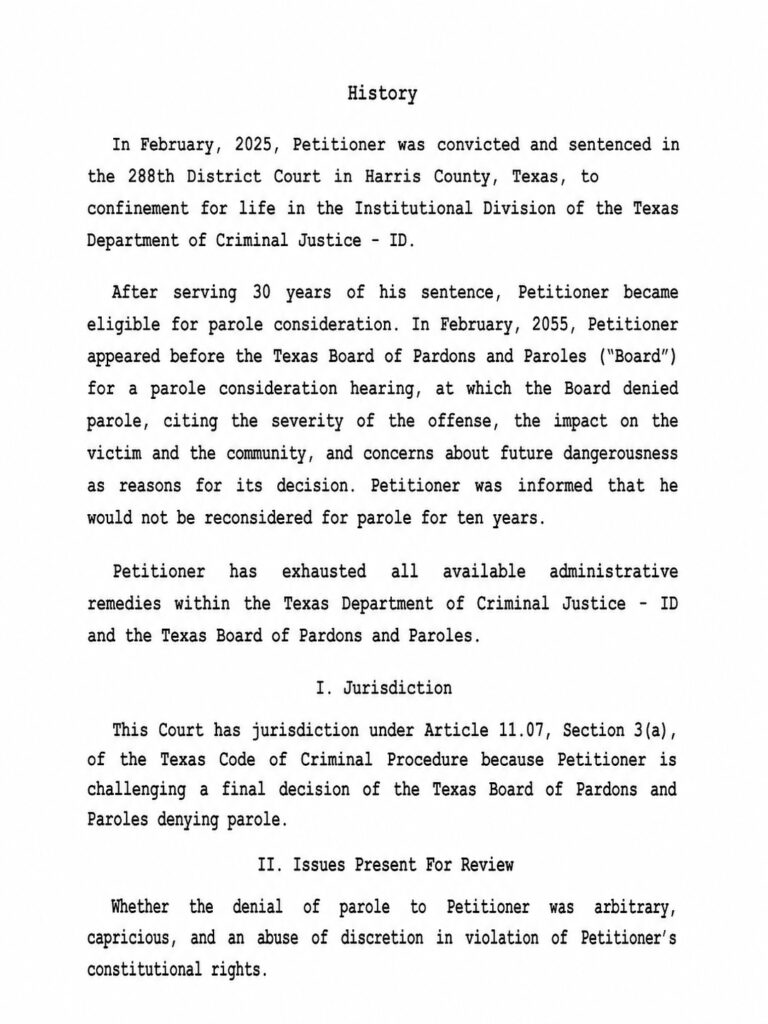
Paul Taylor’s 2007 writ memorandum outlining his parole history and denial
Taylor’s memorandum states that the parole board relied on the violent nature of the offense when it denied his release.

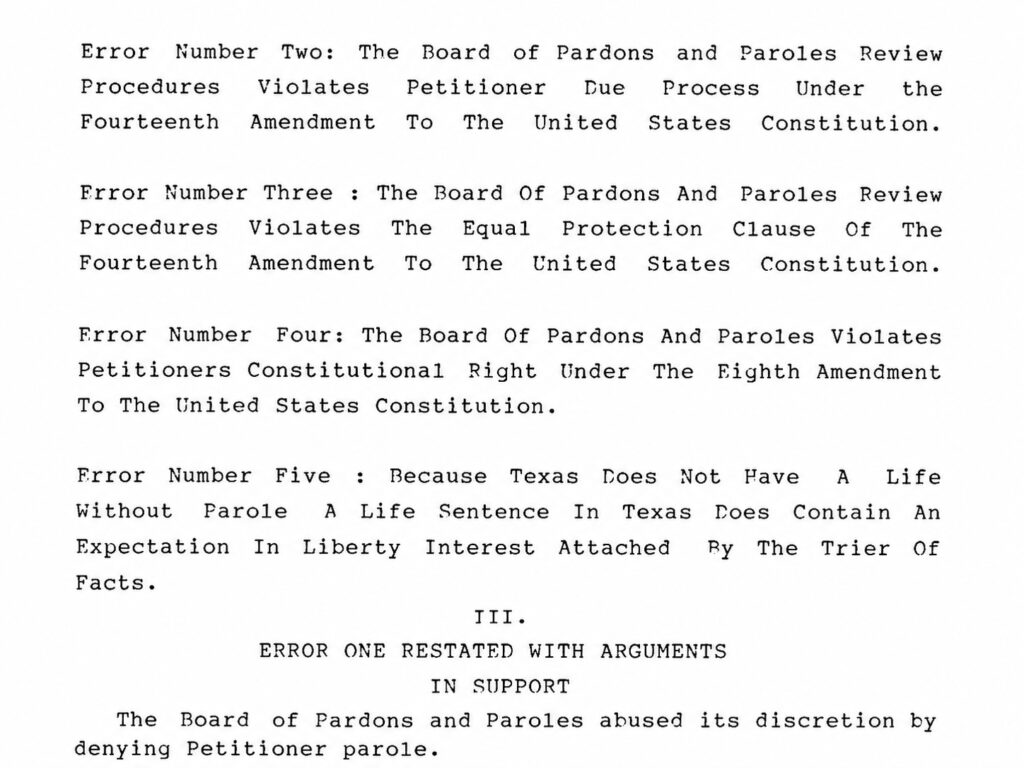
Taylor raised five arguments

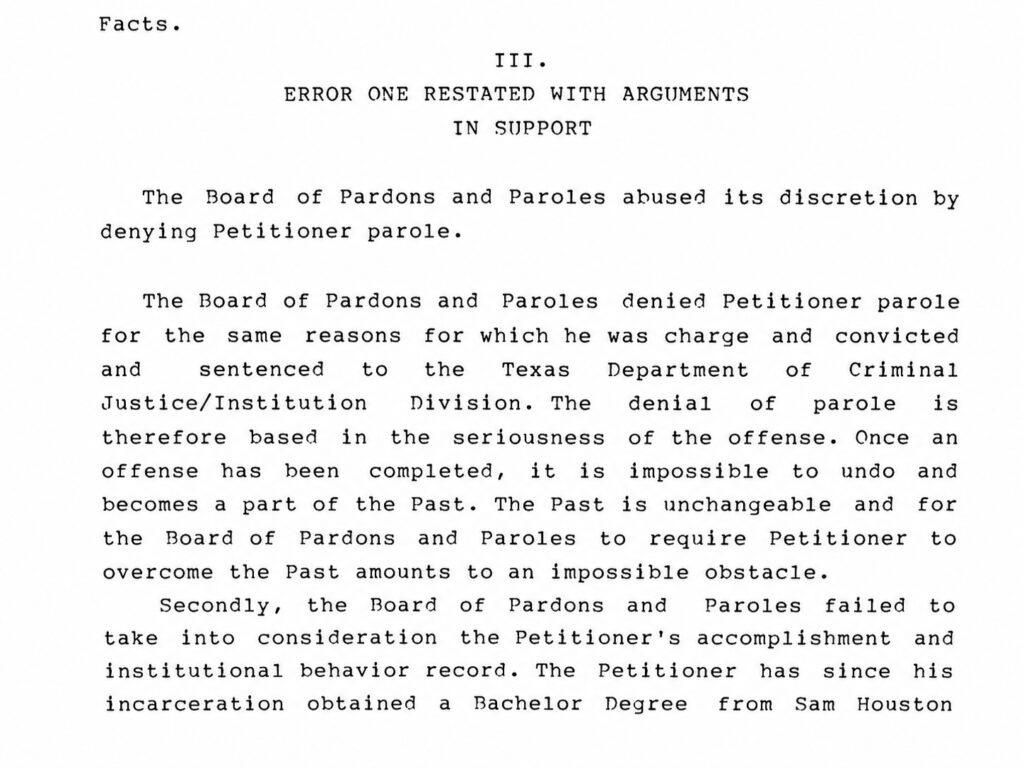
1. The parole board abused its discretion

Taylor claimed the board denied parole for the same conduct that led to his conviction and sentence.

He argued that the board created an “impossible obstacle” because he could not change the crime.

Taylor also said the board failed to give enough weight to his prison accomplishments.

2. The parole process violated due process

Taylor argued that the board did not explain how it decided he remained a future threat.

He claimed the board should have told him what method it used to assess that risk.

Taylor suggested that he could have submitted more information if he had known what evidence the board wanted.

3. The process violated equal protection

Taylor claimed the board released other people with similar or worse criminal records.
He argued that the board treated him differently without a valid reason.

The filing does not include the names or full records of those other prisoners in the pages reviewed.

4. Repeated parole denials amounted to cruel punishment

Taylor argued that repeated denials violated the Eighth Amendment.

He claimed the board continued to deny him for the same unchangeable reasons.
He also accused the board of ignoring his conduct while incarcerated.
5. A Texas life sentence carried an expectation of parole

Taylor argued that Texas did not have a life-without-parole sentence for his case.

Therefore, he claimed that a life sentence carried an expectation of eventual release.

For the first four claims, Taylor asked for a new parole hearing.

However, under his fifth claim, he argued that parole should become mandatory.

These were Taylor’s legal arguments. The filing does not show that a court accepted them.

Taylor’s memorandum states that the parole board relied on the violent nature of the offense when it denied his release.

Taylor highlighted his prison record

Taylor wrote that he earned a bachelor’s degree from Sam Houston State University while incarcerated.

He also said he had never received a disciplinary infraction.

In addition, Taylor said he worked in a prison craft shop. He claimed that the work helped him support himself and assist his family.

However, the filing only reflects Taylor’s account. It does not independently verify every statement about his prison history.

What this document does not say

The writ does not claim that Taylor was innocent.

It does not challenge his guilty plea or murder conviction.

The filing also does not present new evidence about Rebecca “Becky” Beard’s disappearance or the location of her remains.

Instead, Taylor challenged the parole board’s review process.

Therefore, this document focuses on parole. It does not attempt to overturn the murder conviction.

Read the full writ and court decision

The complete 2007 filing appears below, along with the court document showing the outcome.

Taylor challenged the parole process, not his murder conviction. However, the court denied his request for relief

Related coverage

Read Rebecca Beard Part 3: How Witness Statements Changed for a closer look at how accounts in the case evolved over time.

You can also read Rebecca Beard Part 2: Early Police Reports to review what investigators documented during the first days of the investigation.

Tools for reviewing public records

Court records and police files can contain hundreds of pages. A portable document scanner can make it easier to save, organize and review records while working away from home.

White Canon portable document scanner used to scan court records and public documents

A digital voice recorder can also help reporters preserve interviews, notes and important details while researching a case.

PLAUD AI digital voice recorder shown with its mobile transcription app

Disclosure: As an Amazon Associate, I may earn from qualifying purchases at no additional cost to you.

Texas Public Information Act Request: Dash Camera Released, Body Camera Pending

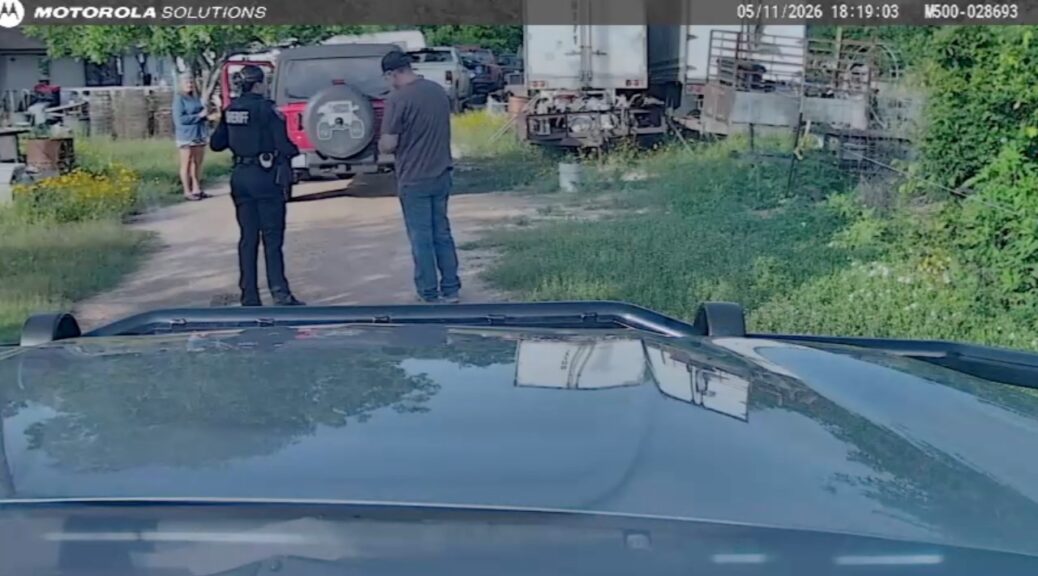
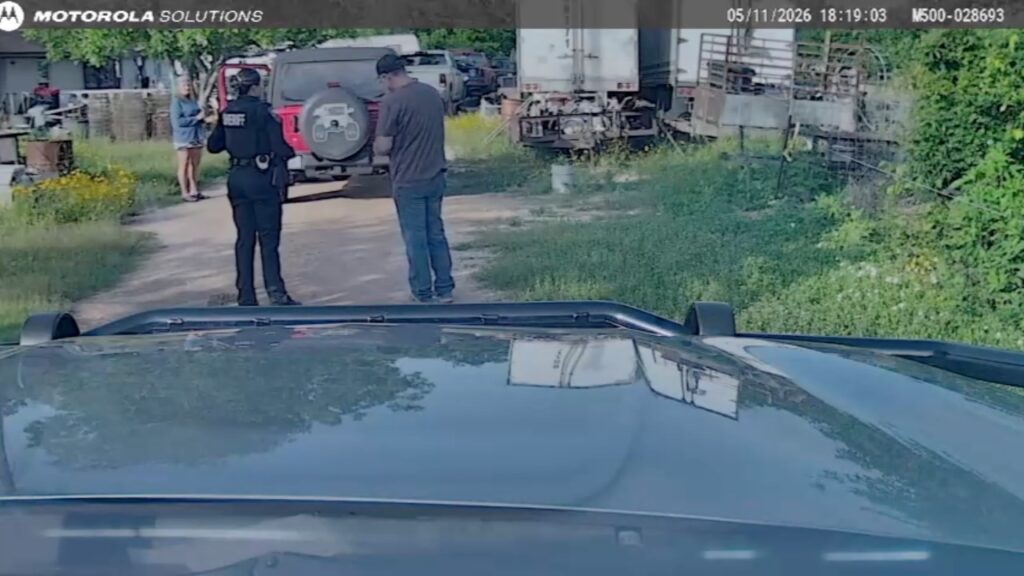
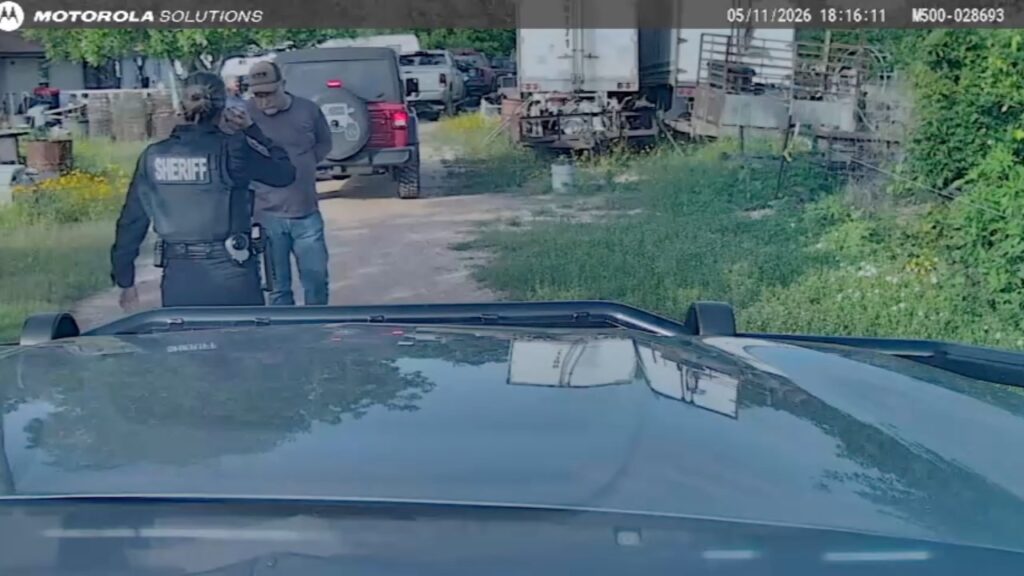
Raw dash camera image released through a Texas Public Information Act request showing a Brazoria County sheriff’s deputy speaking with individuals during a May 11, 2026 encounter related to the Rebecca Beard investigation.
Screenshot from the dash camera video released by Brazoria County in response to a Texas Public Information Act request. The recording contains no audio. The requested body camera video remains pending while the Texas Attorney General reviews whether it may be withheld.

Texas Public Information Act Request Leads to Dash Camera Release While Body Camera Remains Under Review

The Brazoria County Criminal District Attorney’s Office released the dash camera recording in response to my Texas Public Information Act request. The responding deputy’s body camera recording remains under review by the Texas Attorney General.

Page one of the Brazoria County Criminal District Attorney’s Office response confirming my public information request, payment, and the release of the dash camera recording while the requested body camera recording remains under review by the Texas Attorney General.

By Investigative Reporter Tammy Rose

Transparency matters. That is why I filed a Texas Public Information Act request after an encounter with a woman connected to the Rebecca Beard investigation.

The request resulted in sheriff’s reports, dispatch records, redacted documents, and dash camera video. However, one important record remains unavailable. The Brazoria County District Attorney’s Office has asked the Texas Attorney General to decide whether the responding deputy’s body camera can be withheld.

This article explains what happened, what the released records show, and why I continue to seek the body camera recording.

Why I Went to the Property

As an investigative reporter, I believe everyone deserves an opportunity to comment before publication.

I went to Cherie “Rio” Starr’s residence to request an interview about statements she has made regarding the Rebecca Beard investigation.

She declined to comment.

According to the incident report, Starr told deputies she was a protected witness and wanted to know how I obtained her personal information.

The report also states she believed someone had sent me to her property.

I Returned to My Jeep

After Starr declined to comment, I walked back to my Jeep because I intended to leave.

According to the sheriff’s report, I told deputies that Starr and Kenneth Cadenhead prevented me from leaving the property.

The dashcam video released by Brazoria County contains no audio. Therefore, it cannot capture the conversations that occurred during the encounter.

However, the video does show Starr standing near my driver’s side while Cadenhead remained behind my Jeep during part of the incident.

According to my recollection, both were asking me to identify my confidential source.

I declined.

Why I Would Not Reveal My Source

The incident report notes that I refused to identify my source.

That decision was intentional.

Protecting confidential sources is a long-standing practice in investigative journalism. Sources often provide information only because they trust reporters to keep their identities confidential.

My purpose that day was to request an interview. It was not to disclose who provided information for my reporting.

A Detail Not Included in the Report

One part of the encounter is not reflected in the written incident report.

According to my recollection, while standing near my driver’s side door, Starr told me she would agree to an interview “when this is all over.”

She also indicated that the Rebecca Beard investigation remained an active case that had never been closed.

Because the released dashcam has no audio, viewers cannot hear that conversation.

For that reason, I continue to seek release of the responding deputy’s body camera recording.

What the Public Records Show

My Texas Public Information Act request produced several records, including:

Sheriff’s incident reports
Dispatch and CAD records
Dashcam video
Redacted documents

The only major record that has not been released is the deputy’s body camera.

The District Attorney’s Office has asked the Texas Attorney General to determine whether that recording may be withheld under the Texas Public Information Act.

Receiving a request for an Attorney General ruling does not automatically mean the recording will never be released. The Attorney General will determine whether any exceptions to disclosure apply under Texas law.

How I Obtained the Records

Many people ask how to request police records in Texas.

In my case, I submitted a Texas Public Information Act request to Brazoria County.

After receiving a cost estimate, I paid the required fee at the Brazoria County Treasurer’s Office inside the courthouse.

The courthouse is beautiful, although locating the correct office can be a little confusing for first-time visitors.

After payment was processed, I went to the District Attorney’s Office to pick up the responsive records.

Everyone I dealt with during the process was courteous and helpful.

I also received more records than I expected.

Part Two Is Coming Soon

In Part Two, I will explain the Texas Public Information Act process step by step.

I will also show:

How to submit an open records request
Where to pay the required fees
How to pick up responsive records
Why some records are released immediately while others require a ruling from the Texas Attorney General

Understanding the process can help anyone request public records in Texas.

Related Investigations

Equipment I Use

For field reporting and investigative journalism, I rely on equipment that performs well in demanding conditions.

As an Amazon Associate, I earn from qualifying purchases. This comes at no additional cost to you.

Rebecca Beard Part 3: How Witness Statements Changed During the Investigation

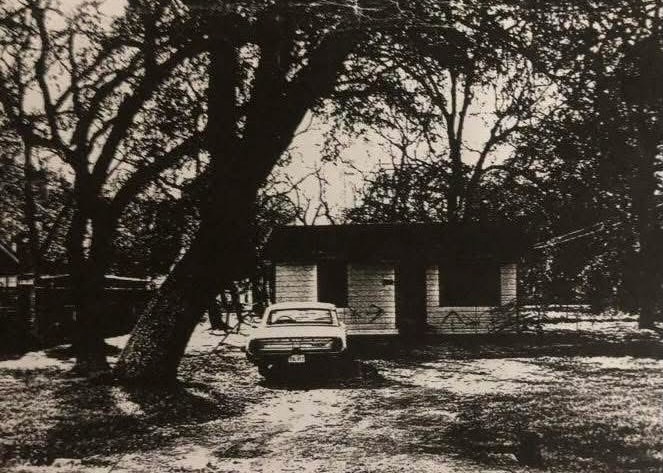
Historic photograph of Paul Taylor’s former Clute home featured in Part 3 of the Rebecca Beard investigation series, examining how witness statements and investigative timelines evolved during the case.
Paul Taylor’s former Clute residence, where investigators later focused much of the Rebecca Beard investigation as witness statements and the case timeline evolved over time.

Rebecca Beard Part 3: How Witness Statements Changed During the Investigation

By Investigative Reporter Tammy Rose

As I continued reviewing the original investigative file in the Rebecca Beard case, one pattern became impossible to ignore.

The earliest reports tell a very different story than the theory prosecutors ultimately presented years later.

During the first weeks of the investigation, detectives documented witnesses who said they did not know Paul Taylor or had never heard Becky mention him. At the same time, investigators pursued reports that Becky was seen after leaving the Excalibur Club, including at a Surfside beach party and an after-party.

Months later, investigators had assembled a very different timeline.

The records show how that evolution occurred.

Early Witnesses Did Not Connect Becky to Paul Taylor

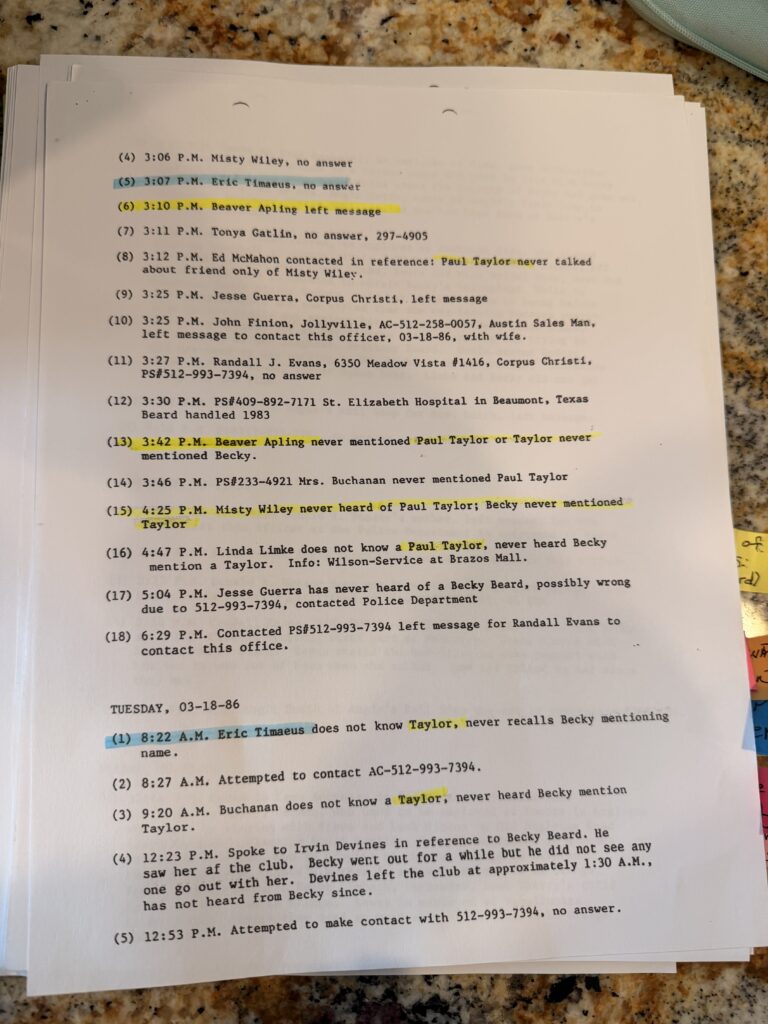
March 1986 police report documenting early witness interviews in the Rebecca Beard investigation, including statements from people who told investigators they did not know Paul Taylor or had never heard Becky mention him.
A March 1986 police report documents early witness interviews in the Rebecca Beard investigation. Several witnesses told detectives they did not know Paul Taylor or had never heard Becky mention him, reflecting one of the investigation’s earliest lines of inquiry.

One of the strongest themes in the March 1986 reports is how often investigators documented witnesses saying they had no connection between Becky Beard and Paul Taylor.

Among those interviewed were:

Beaver Aplin, who investigators noted never mentioned Paul Taylor, and Taylor had never mentioned Becky.


Eric Timaeus, Becky’s friend, who said he did not know Paul Taylor and never recalled Becky mentioning his name.


Misty Wiley, who said she had never heard of Paul Taylor and Becky never mentioned him.


Linda Barnes (identified in some records as Linda Limke), who said she had never heard Becky mention Paul Taylor.


Mrs. Buchanan, who also said she did not know Taylor.

At this point in the investigation, detectives had not yet developed the theory that Paul Taylor was the last person with Becky.

Several Witnesses Reported Becky Alive After Leaving Excalibur

The earliest reports also show investigators pursuing multiple leads suggesting Becky continued socializing after leaving the Excalibur Club in Freeport.

Paula’s Surfside Account

One witness, Paula, told investigators she saw Becky at a Surfside beach party during the morning hours after she disappeared.

That account suggested Becky may have left the club and traveled elsewhere.

Jack Hamilton’s Statement

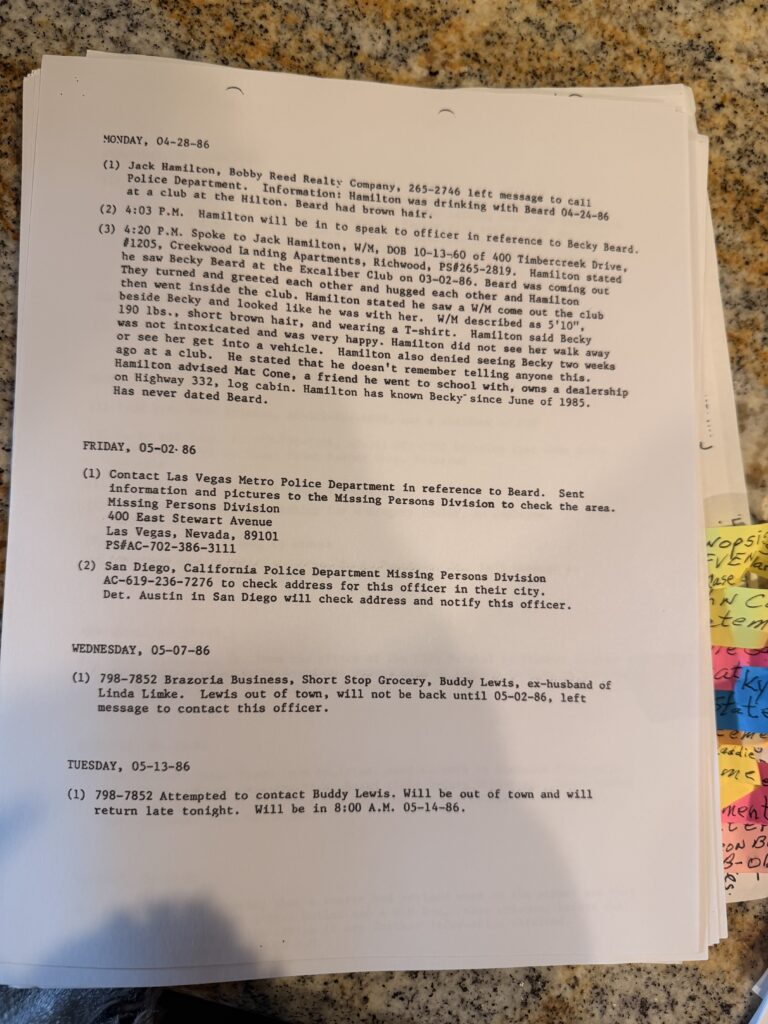
April 28, 1986 police report documenting witness interviews in the Rebecca Beard investigation, including statements from Jack Hamilton and dancer Mel Scroggins regarding Becky’s movements after leaving the Excalibur Club.
An April 28, 1986 police report documents interviews with Jack Hamilton and dancer Mel Scroggins. Both described seeing Becky Beard after she left the Excalibur Club, adding to the early investigative timeline detectives were working to reconstruct.

On April 28, 1986, Jack Hamilton told investigators he saw Becky outside the Excalibur Club.

Hamilton said:

Becky appeared happy.
She was not intoxicated.
The two greeted each other and hugged.
He saw an unidentified white male walk out beside Becky who appeared to be with her.
He never saw Becky get into a vehicle.

Importantly, Hamilton did not identify the man as Paul Taylor.

Hamilton also told investigators he knew Matt Cone, a longtime friend.

Dancer Reported Seeing Becky at an After-Party

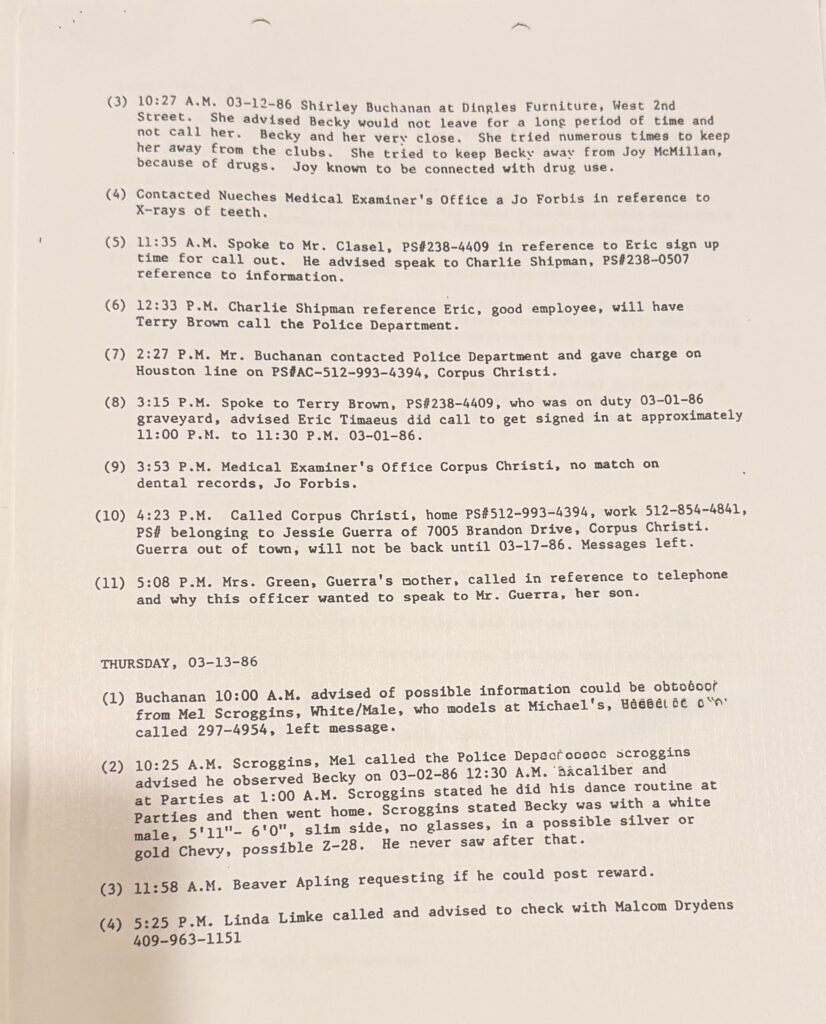
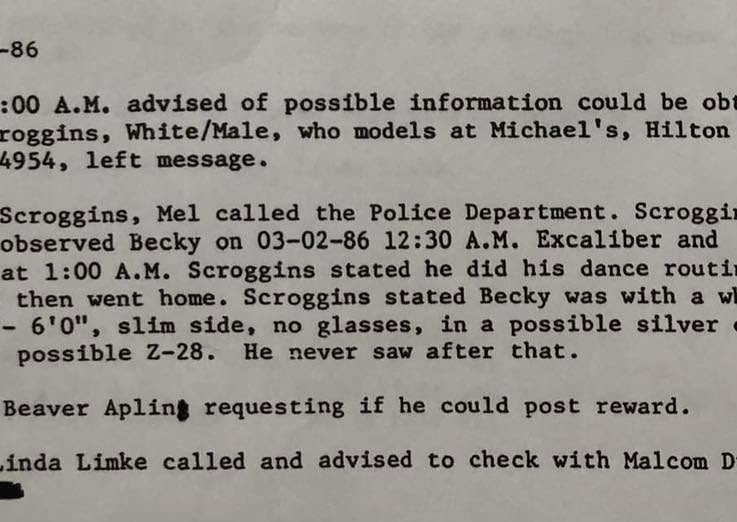
March 13, 1986 police report documenting witness information in the Rebecca Beard investigation, including dancer Mel Scroggins’ account of seeing Becky at Excalibur and later at an after-party.
A March 13, 1986 police report documents dancer Mel Scroggins’ statement that he saw Becky Beard at the Excalibur Club and later at an after-party around 1:00 a.m. The report also notes Beaver Aplin contacted investigators about posting a reward.

Another witness, Mel Scroggins, also described seeing Becky after she left Excalibur.

Scroggins told investigators he saw Becky around 12:30 a.m. at Excalibur before performing his dance routine.

He then reported seeing Becky again around 1:00 a.m. at an after-party.

According to Scroggins, Becky was accompanied by:

a white male,
approximately 5’11” to 6’0”,
slim build,
no glasses,
associated with a possible silver or gold Chevrolet.

Again, the man was not identified as Paul Taylor.

Scroggins said he never saw Becky after that.

When viewed together, these reports show detectives were actively investigating the possibility that Becky continued on to other locations after leaving Excalibur.

John Cone’s Statement Became a Turning Point

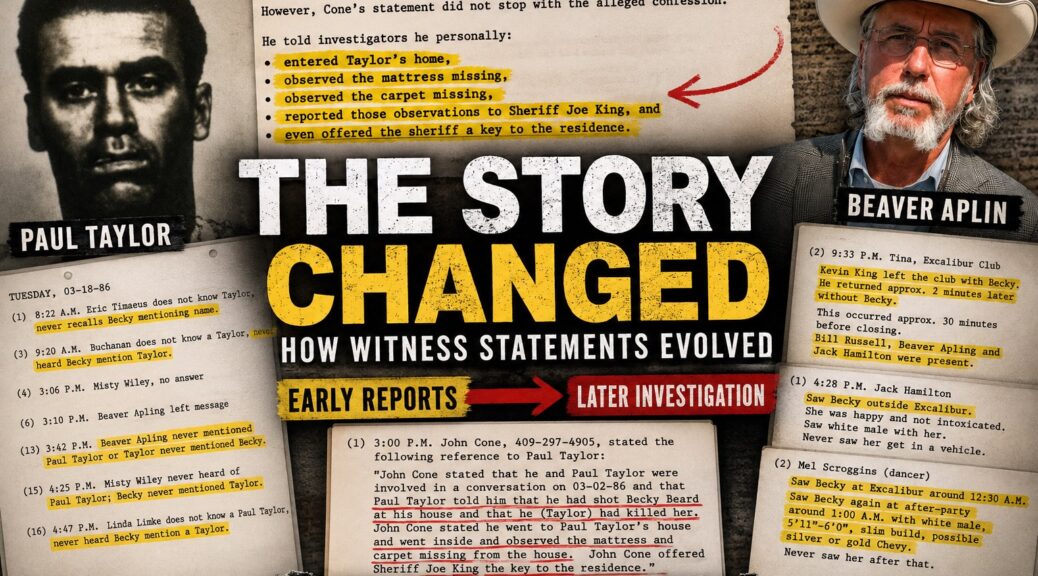
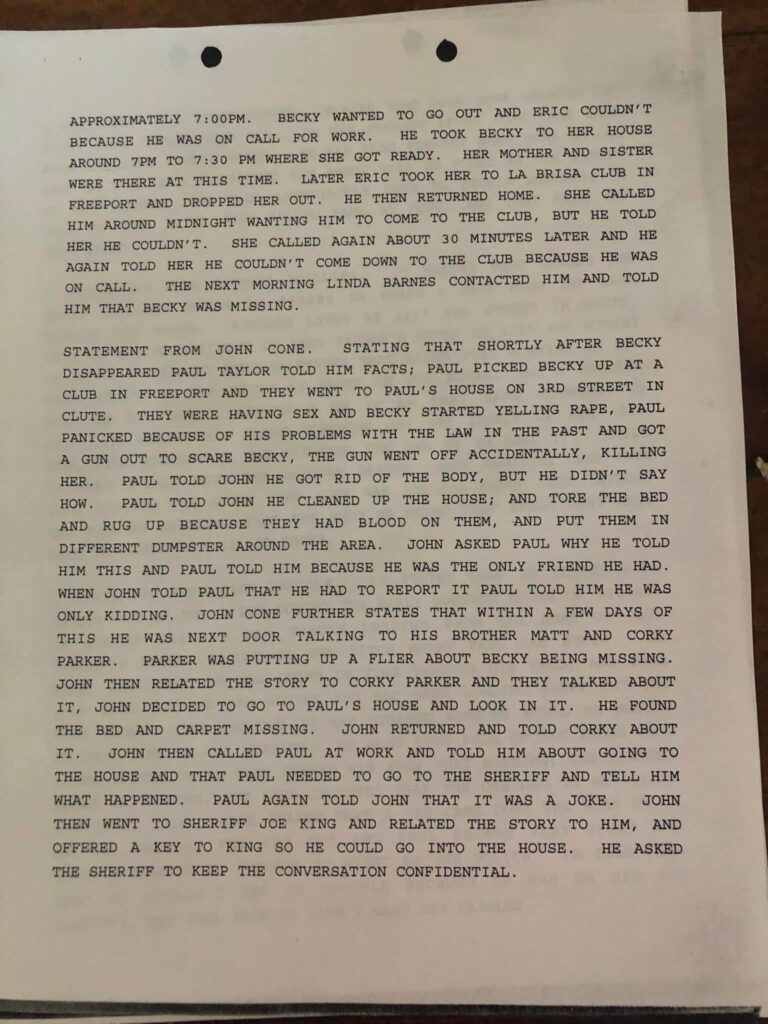
Police report documenting John Cone’s statement in the Rebecca Beard investigation. The statement describes what Cone said Paul Taylor told him and also details Cone’s own observations after entering Taylor’s home, including that the mattress and carpet were missing.
Police records show John Cone told investigators that Paul Taylor admitted Becky Beard died at his home. Cone also stated he personally entered the house, observed the mattress and carpet were missing, and reported those observations to Sheriff Joe King while offering a key to the residence.

Another major development came from John Cone.

Cone told investigators Paul Taylor admitted Becky died inside his Clute home after a gun discharged during an encounter.

However, Cone’s statement did not stop with the alleged confession.

He told investigators he personally:

entered Taylor’s home,
observed the mattress missing,
observed the carpet missing,
reported those observations to Sheriff Joe King, and
even offered the sheriff a key to the residence.

Those observations were based on what Cone said he personally witnessed, not simply what Taylor allegedly told him.

Matt Cone Appears to Corroborate Parts of the Story

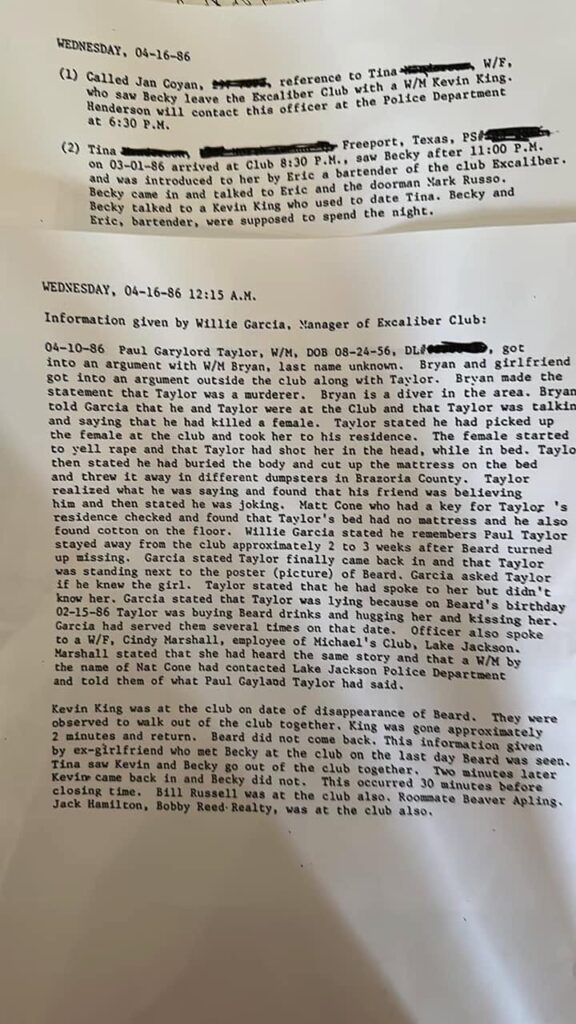
Composite police report pages from the Rebecca Beard investigation. The documents include witness statements from Tina, Willie Garcia, and references to Matt Cone, who is identified as John Cone’s brother, as investigators documented interviews and leads in April 1986.
April 16, 1986 police records include statements from Tina and Excalibur Club manager Willie Garcia. The documents also reference Matt Cone, John Cone’s brother, whose name appears multiple times in the investigation as detectives continued interviewing witnesses and following leads.

The records also repeatedly reference Matt Cone.

John Cone told investigators he discussed the situation with his brother, Matt Cone, and Corky Parker before going to Taylor’s house.

Jack Hamilton also identified Matt Cone as someone he knew.

If Matt Cone independently observed the missing mattress and carpet, that would provide additional corroboration of John’s observations.

Whether Matt entered the home himself or relied on John’s account remains an important question raised by the records.

Beaver Aplin Continued Contacting Investigators

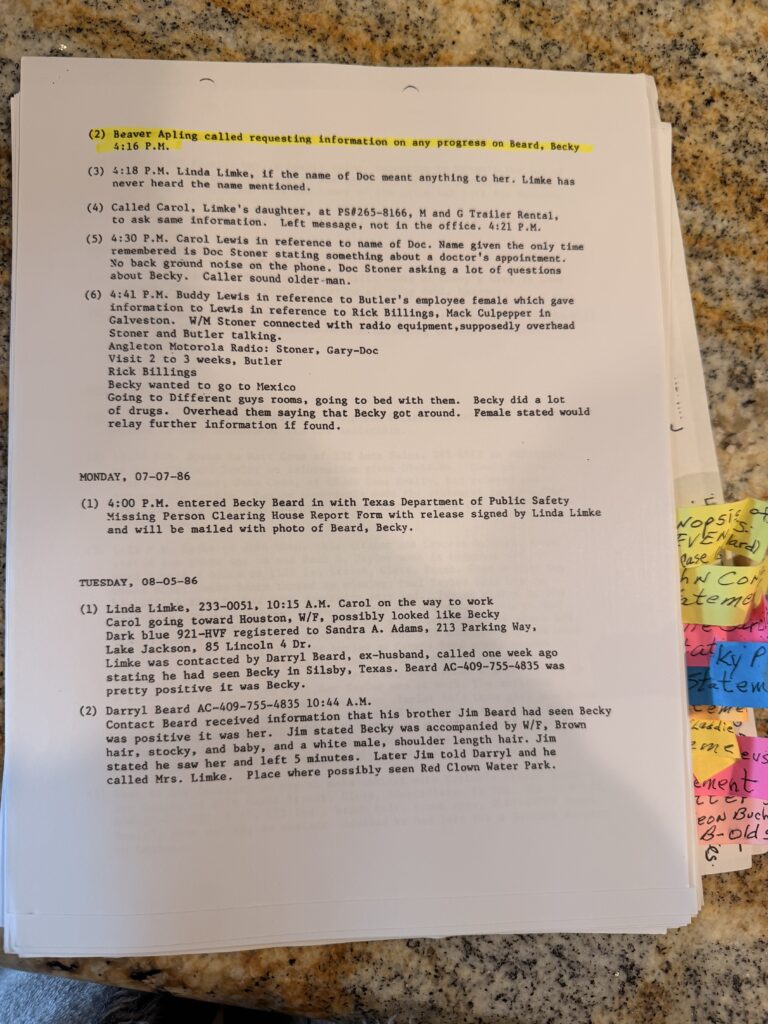
Police records show Beaver Aplin remained in regular contact with investigators after Rebecca Beard disappeared. The reports document Aplin requesting case updates, asking about posting a reward, and continuing to communicate with detectives as the investigation progressed.

Another interesting pattern involves Beaver Aplin.

The investigative file documents that:

Beaver was interviewed during the early stages of the case.
Investigators noted he did not connect Becky to Paul Taylor.
He later left messages for investigators.
Months later, he again contacted police requesting an update on Becky’s case.

Those records do not suggest wrongdoing.

However, they do show Beaver remained engaged with investigators long after Becky disappeared.

The Investigation Evolved

As the investigation continued, the documentary record began shifting.

Later reports increasingly connected Becky to Paul Taylor.

Among them were statements from:

Willie Garcia,
Kevin King,
John Cone,
and other witnesses who later appeared on the prosecution’s witness list.

That witness list outlined how prosecutors intended to build their case, including testimony that Becky left with Taylor, statements that Taylor admitted killing her, and witnesses describing evidence allegedly observed inside Taylor’s home.

That later theory differs considerably from many of the earliest reports documenting possible Surfside sightings, after-party sightings, and witnesses who initially said they did not know Paul Taylor.

Questions That Remain

Reading these records chronologically reveals an investigation that changed significantly over time.

The documents show detectives initially pursued multiple leads, including reports that Becky was seen after leaving Excalibur and accounts from witnesses who did not connect her to Paul Taylor.

As additional interviews were conducted, investigators documented statements that increasingly focused on Taylor and ultimately formed the basis of the prosecution’s case.

The records do not fully explain how every conflicting witness account was evaluated before investigators settled on the final timeline presented in court.

Nearly four decades later, those documents continue to provide important insight into how the Rebecca Beard investigation developed—and why reviewing the original records remains essential.

Read More in This Series

Part 1: Rebecca Beard: John Cone’s Confession and the Early Investigation

Part 2: Rebecca Beard: Early Police Reports Reveal the First Days of the Investigation

https://www.chopperrose.com/2026/07/20/rebecca-beard-part-2-early-police-reports-reveal-the-first-days-of-the-investigation

Recommended Resources

If you’re researching cold cases or organizing public records, these are tools I use during investigations.

Disclosure: As an Amazon Associate, I earn from qualifying purchases at no additional cost to you. Your support helps fund my investigative reporting and allows me to continue researching and publishing stories like this one.

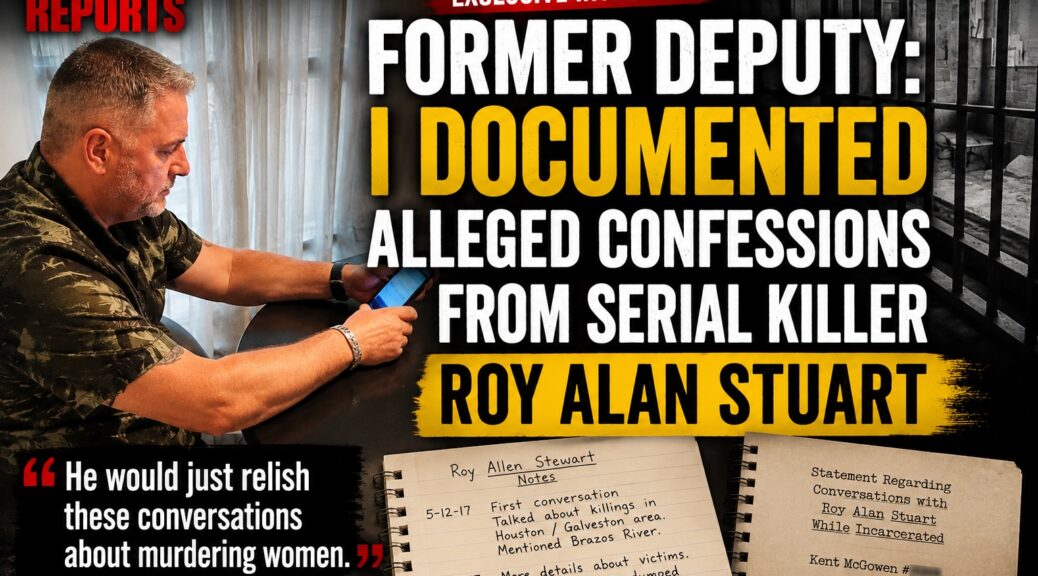
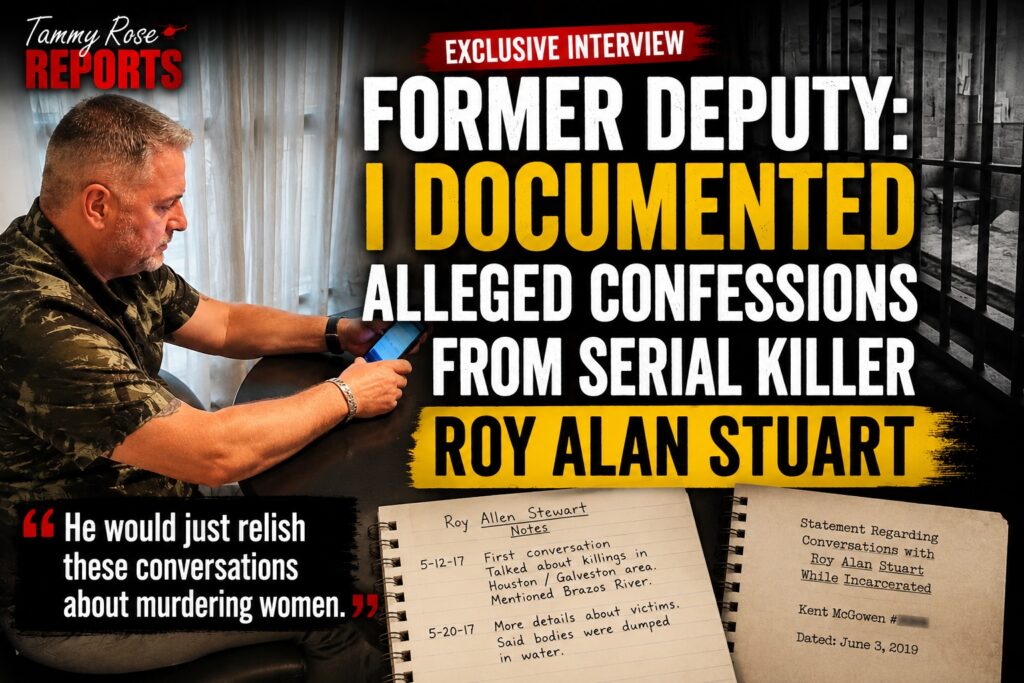
Former Deputy Documents Alleged Roy Alan Stuart Confessions

By Investigative Reporter Tammy Rose

How An Unlikely Prison Friendship Began

Former Harris County deputy Kent McGowen says one of the most unexpected chapters of his life began while serving a prison sentence in the Texas Department of Criminal Justice.

McGowen was convicted in the 1992 murder of Susan White and spent 19 years in prison before he was paroled. Since his release, he has spoken publicly about his case and his time in prison, including conversations he says he had with convicted serial killer Roy Alan Stuart.

According to McGowen, he spent nearly two years housed near convicted serial killer Roy Alan Stuart, where the two developed an unlikely relationship that led to conversations about alleged unsolved murders across Southeast Texas.

McGowen says he carefully documented those conversations, typed formal reports, and later turned the information over to multiple law enforcement agencies.

I have not independently verified Stuart’s alleged prison statements or whether they resulted in any solved criminal cases.

An Unlikely Prison Conversation

McGowen told me that most inmates avoided Stuart, describing him as someone who appeared exactly how many people would imagine a serial killer.

After noticing Stewart sitting alone, McGowen said he bought him a pint of ice cream and a soft drink from the prison commissary.

According to McGowen, that simple act led Stuart to begin discussing murders he claimed to have committed throughout Texas.

“Nobody would talk to Roy,” McGowen said. “After that, he just started talking.”

McGowen said one reason he began paying close attention was because Stuart showed him what McGowen recalls was a letter that Stuart claimed had been written by attorney Tom Selleck. According to McGowen, Stuart also claimed Selleck represented him at the time. Selleck currently serves as the Brazoria County Criminal District Attorney and previously worked as an assistant district attorney before entering private practice. I have not independently verified the letter, its authenticity, or Stuart’s claim regarding the alleged legal representation.

Claims Of Additional Victims

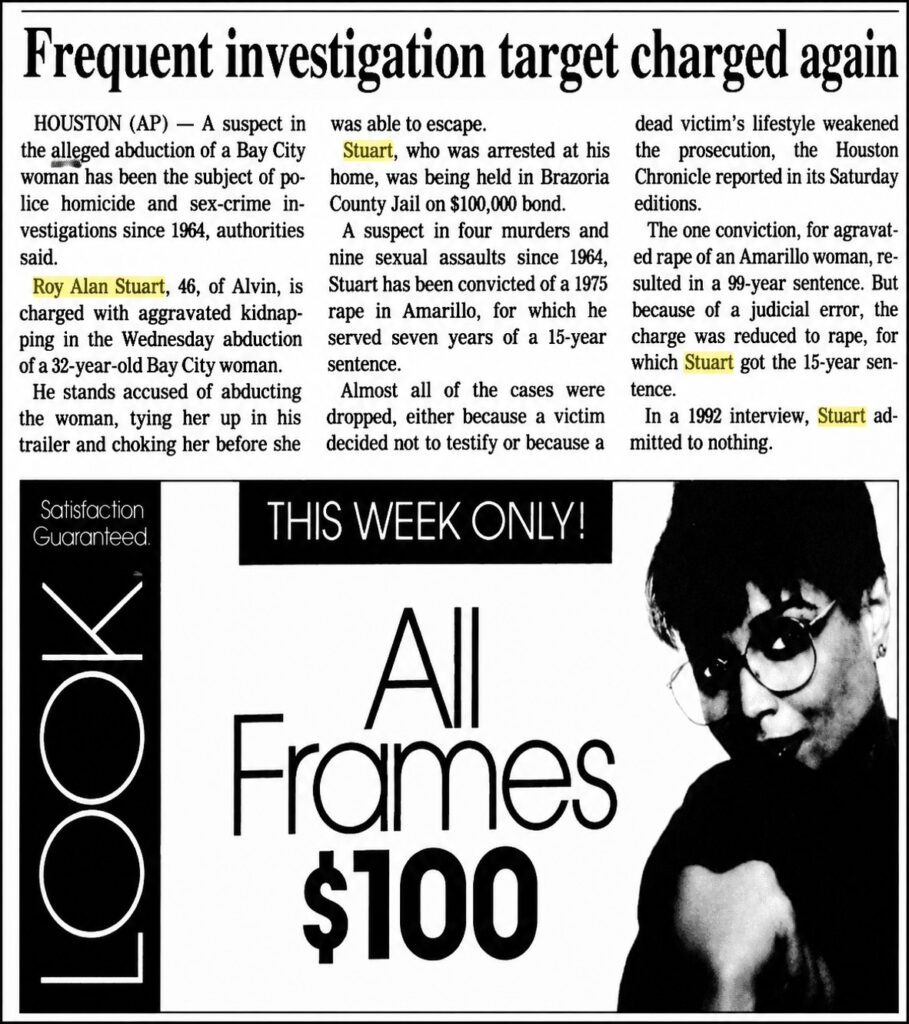
Historical 1994 Victoria Advocate newspaper clipping reporting Roy Alan Stuart’s arrest in Brazoria County and describing his criminal history.
Historical newspaper clipping from The Victoria Advocate (May 1994) reporting Roy Alan Stuart’s arrest in Brazoria County. The article states Stuart had been investigated in multiple homicide and sexual assault cases. Included for historical context alongside Kent McGowen’s interview.

McGowen alleges Stuart described several killings that were never publicly connected to him.

Among the stories McGowen recalls were allegations involving:

A woman allegedly abducted from Houston during rodeo season.

A victim allegedly killed near a waterway in Brazoria County.

Bodies allegedly disposed of in or near the Brazos River.

Additional killings Stuart allegedly discussed involving Southeast Texas.

McGowen says Stuart showed no remorse while recounting the alleged crimes.

Documenting Every Conversation

Rather than relying on memory, McGowen says he immediately began documenting the conversations.

He kept handwritten notes while incarcerated before later typing formal reports describing what Stuart allegedly told him.

McGowen says he eventually forwarded those reports to multiple law enforcement agencies, including investigators in several Texas counties.

“I wanted to document everything while it was still fresh,” McGowen said.

Investigators Later Contacted Him

According to McGowen, investigators later reached out requesting copies of his notes.

He says an FBI agent also contacted him after learning about the reports and asked to review the journals because they reflected his contemporaneous observations while Stuart was allegedly making the statements.

McGowen says he continues to maintain copies of those writings today.

Questions Still Remain

Whether Stuart’s alleged prison statements can ever be verified remains unknown.

At this time, I have not found any publicly available records that independently confirm the additional alleged victims described by McGowen.

However, McGowen believes investigators considered the information important enough to request his documentation years after the conversations took place.

As part of my continuing coverage, I am preparing additional public records requests to determine what investigative steps, if any, followed McGowen’s submissions.

This remains an active reporting project. If you have firsthand knowledge related to Roy Alan Stuart or the investigations discussed in this article, contact me through ChopperRose.com

Related Coverage

Convicted Former Deputy Says He Was Framed — But Key Questions Remain (coming soon)

Rebecca Beard Investigation: Exclusive Interviews And Court Records

Texas Killing Fields: Continuing Coverage

Amazon Recommendations

Books About Serial Killers

Whoever Fights Monsters by Robert K. Ressler

Mindhunter by John E. Douglas

Disclosure: As an Amazon Associate, I earn from qualifying purchases at no additional cost to you.

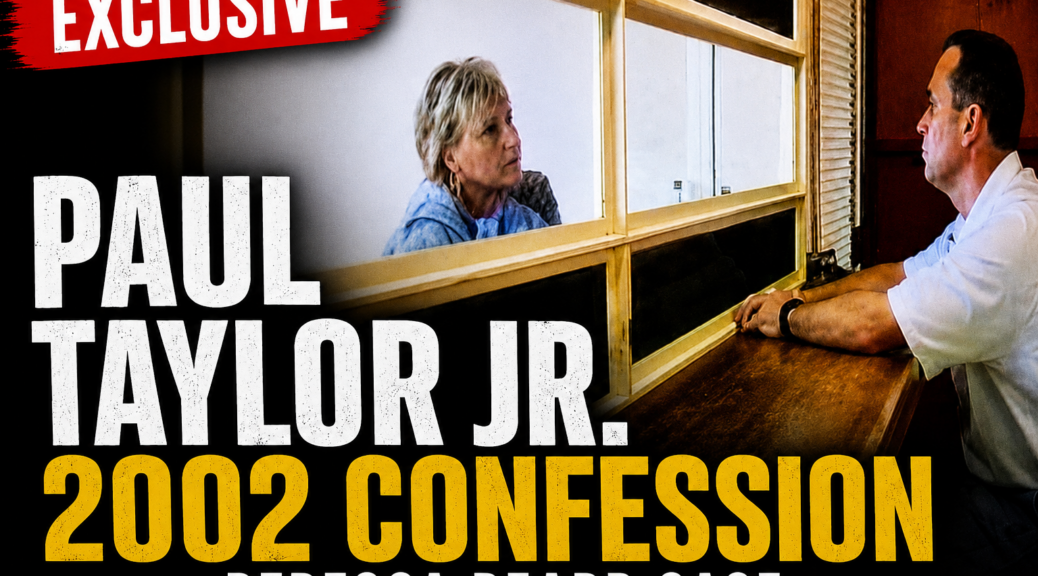
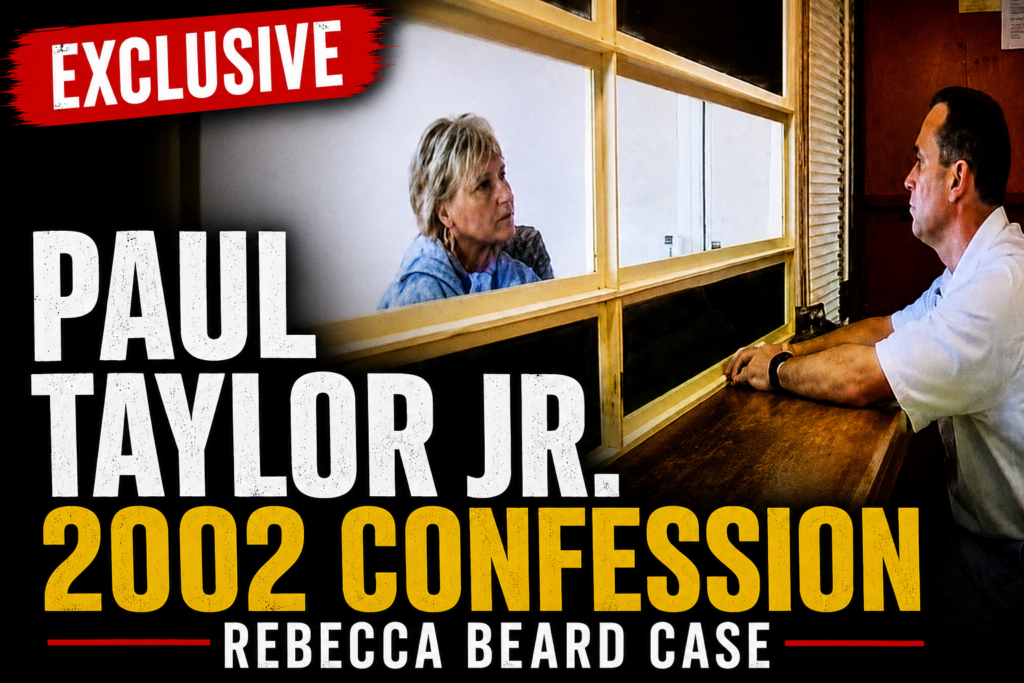
Why I Released the Exclusive 2002 Paul Taylor Jr. Confession

Why I Released the 2002 Paul Taylor Jr. Confession

As an investigative reporter, I often have to make difficult decisions.

One of the hardest was deciding whether to release the 2002 family mediation recording involving Paul Taylor Jr. and Rebecca Beard’s family.

When I first obtained an exclusive copy of the recording from Rebecca Beard’s family, I wasn’t sure if I would ever make it public.

For months, I listened to the recording while reviewing court records, investigative documents, and interviewing Rebecca’s family. The more I reported on the case, the more I believed the recording added important context to an investigation that still raises questions nearly four decades later.

Rather than relying on summaries or secondhand accounts, I wanted people to hear Paul Taylor Jr.’s own words for themselves.

This article isn’t about telling anyone what to believe.

It’s about explaining why I decided to release the recording and why I believe it is an important part of my ongoing investigation.

“Rather than relying on summaries or secondhand accounts, I wanted people to hear Paul Taylor Jr.’s own words and decide for themselves.”

Watch the Exclusive 2002 Paul Taylor Jr. Confession

The full 30-minute recording is embedded below. I encourage you to listen to it in its entirety before drawing your own conclusions.

Why the recording stood out

As I compared the mediation recording with other records I reviewed during my investigation, several things caught my attention.

One involves the events after Rebecca Beard disappeared.

During the mediation, Paul Taylor Jr. appears unable to remember getting his vehicle stuck in a ditch near his home or the tow truck driver who reportedly helped pull him out. Yet in other parts of the recording, he recalls details surrounding the case.

That difference raised questions for me.

Another involves the weapon.

While reviewing investigative records, I came across a sealed document containing entries that reference a Remington shotgun and what appears to be human remains.

Those entries stood out because they raise questions when compared with portions of the mediation recording.

I encourage viewers to listen to the recording, review the available information, and draw their own conclusions.

Why I chose to publish it

Investigative reporting isn’t about deciding a case.

It’s about asking questions, reviewing records, interviewing the people closest to the investigation, and presenting information as fairly and accurately as possible.

Over the past several months, I’ve interviewed Rebecca Beard’s family, reviewed numerous court records and investigative documents, and continued asking questions about a case that still has many unanswered ones.

After months of reporting, I believed it was time to let the public hear this recording in its entirety.

This article serves as an introduction to that recording.

I encourage you to listen to the complete mediation audio in context and compare what is said with the records discussed throughout my investigation.

Sometimes the biggest questions aren’t about what someone remembers.

They’re about what they don’t.

Thank you for taking the time to follow my reporting.

Related Rebecca Beard Coverage

Continue following my investigation with these related reports:

Exclusive: Rebecca Beard’s Daughter Speaks Out Nearly 40 Years After Her Mother’s Disappearance

Questions for Arch Aplin and John Cohn in the Rebecca Beard Case

What the Sealed Documents Reveal in the Rebecca Beard Investigation

How I Reported This Investigation

This investigation took months of research, interviews, reviewing court records, and comparing documents with the 2002 mediation recording. These are some of the tools I use while reporting stories like this.

Shure MV88+ Microphone – Used for interviews and recording clear audio in the field.

GoPro Camera – Captures behind-the-scenes footage and field reporting.

iPhone 16 Accessories – Tripods, mounts, and mobile reporting gear.

Disclosure: As an Amazon Associate, I earn from qualifying purchases. If you purchase through the links on this page, I may earn a small commission at no additional cost to you. Thank you for supporting my independent investigative journalism.

John Gabriel Mendoza Jr. Investigation: State Reports Raise New Questions

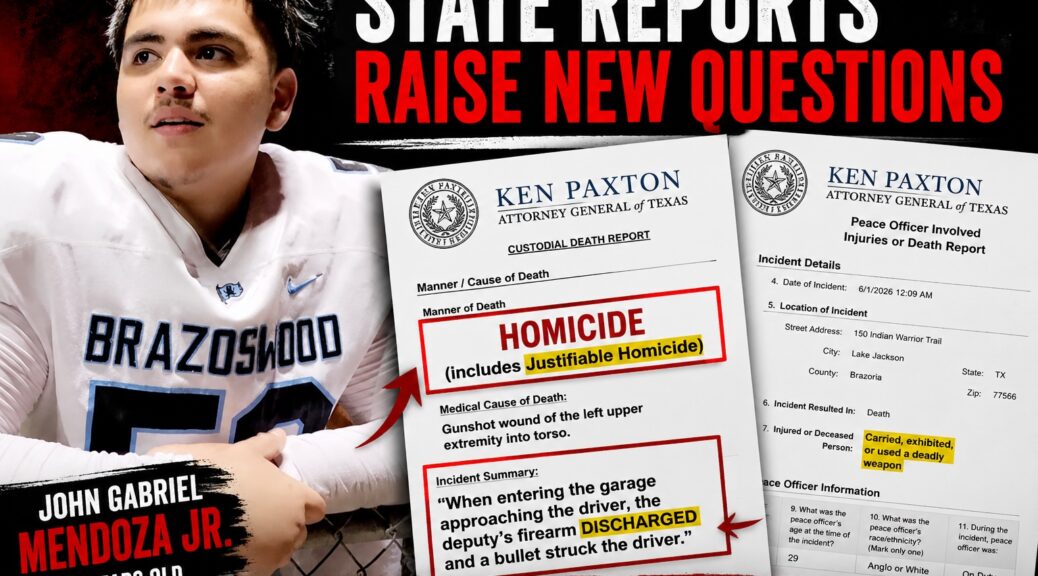
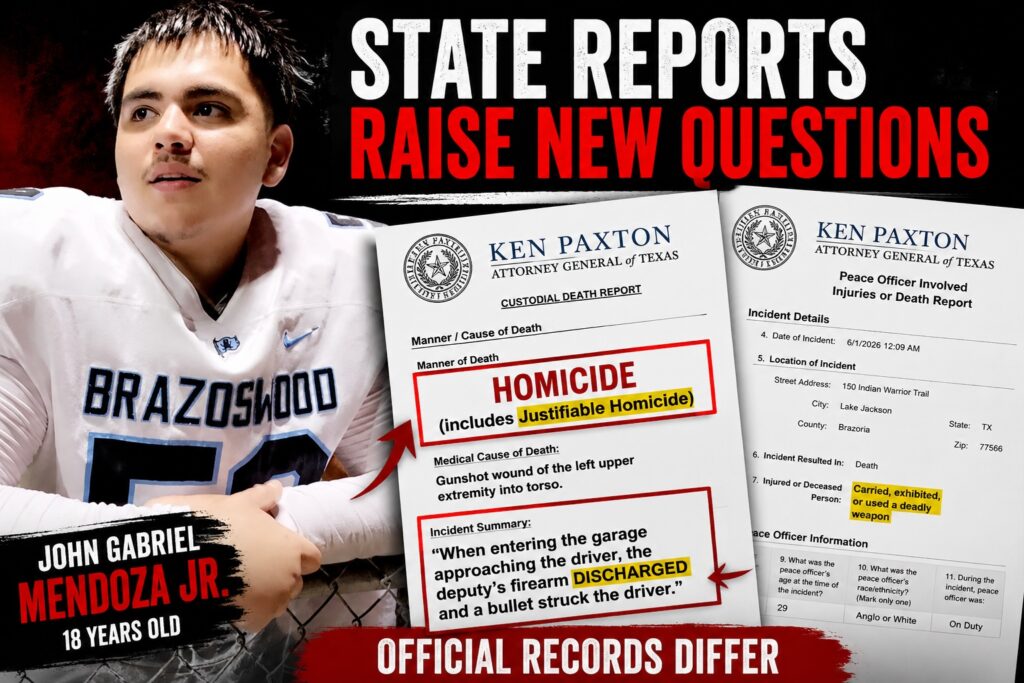
Featured image for an investigative news article about John Gabriel Mendoza Jr. showing his football photo alongside Texas Attorney General custodial death reports highlighting the manner of death and differing language in official records.
Newly released Texas Attorney General reports raise new questions in the investigation into the fatal shooting of John Gabriel Mendoza Jr. The Texas Rangers investigation remains ongoing.

By Investigative Reporter Tammy Rose

John Gabriel Mendoza Jr. Investigation

The John Gabriel Mendoza Jr. investigation continues to raise new questions after newly released Texas Attorney General state reports provided additional details about the fatal June 1 shooting in Lake Jackson. The documents describe the same incident but use different wording in several key sections.

The Brazoria County Sheriff’s Office submitted both a Custodial Death Report and a Peace Officer Involved Injuries or Death Report to the Texas Attorney General. While the Texas Rangers continue investigating the John Gabriel Mendoza Jr. case, the newly released records highlight differences in how the incident was documented.

Both reports describe the same incident. However, they use different wording in several sections while the Texas Rangers continue their investigation.

John Gabriel Mendoza Jr. Investigation: Reports Describe the Same Incident 

Both reports identify Mendoza as the 18-year-old who died after a deputy attempted a traffic stop that ended at a residence on Indian Warrior Trail in Lake Jackson.

According to the records, Mendoza drove into a garage attached to a home after deputies attempted to stop him.

The reports state the deputy was on duty and involved in a pursuit after Mendoza allegedly failed to stop.

Custodial Death Report Lists Homicide

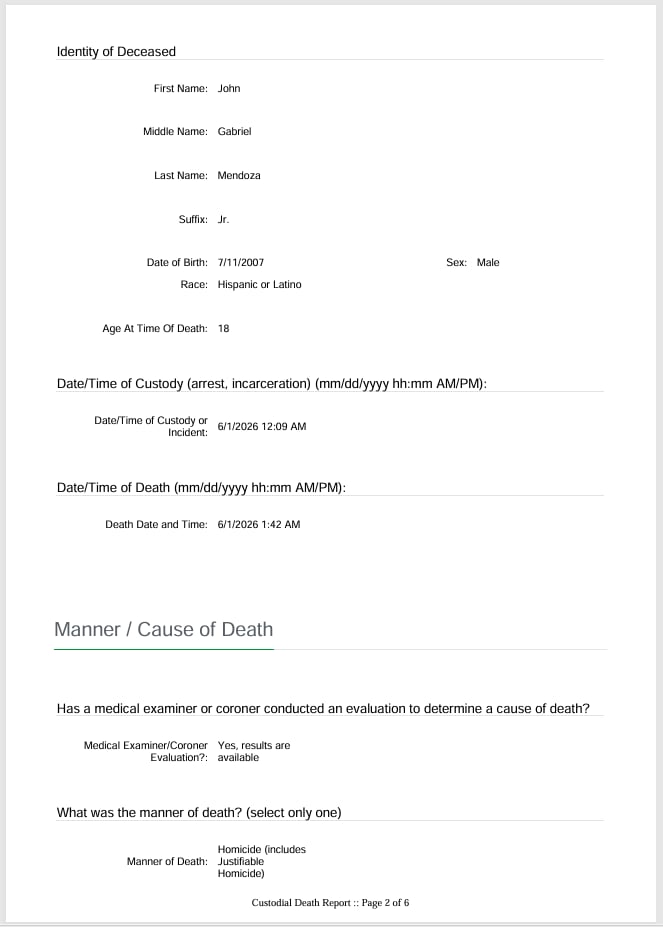
Texas Attorney General Custodial Death Report identifying John Gabriel Mendoza Jr. and listing the official manner and cause of death in the Lake Jackson investigation.
The Texas Attorney General Custodial Death Report identifies John Gabriel Mendoza Jr. and includes the official manner and cause of death submitted by the Brazoria County Sheriff’s Office.

The Custodial Death Report lists the manner of death as:

Homicide (includes Justifiable Homicide).

Medical examiners use that classification when one person causes another person’s death. The classification does not determine whether a crime occurred or whether criminal charges are appropriate.

The report lists the medical cause of death as a gunshot wound that entered through the left upper extremity into the torso.

It also identifies the weapon as a handgun.

Incident Summary Uses the Word “Discharged”

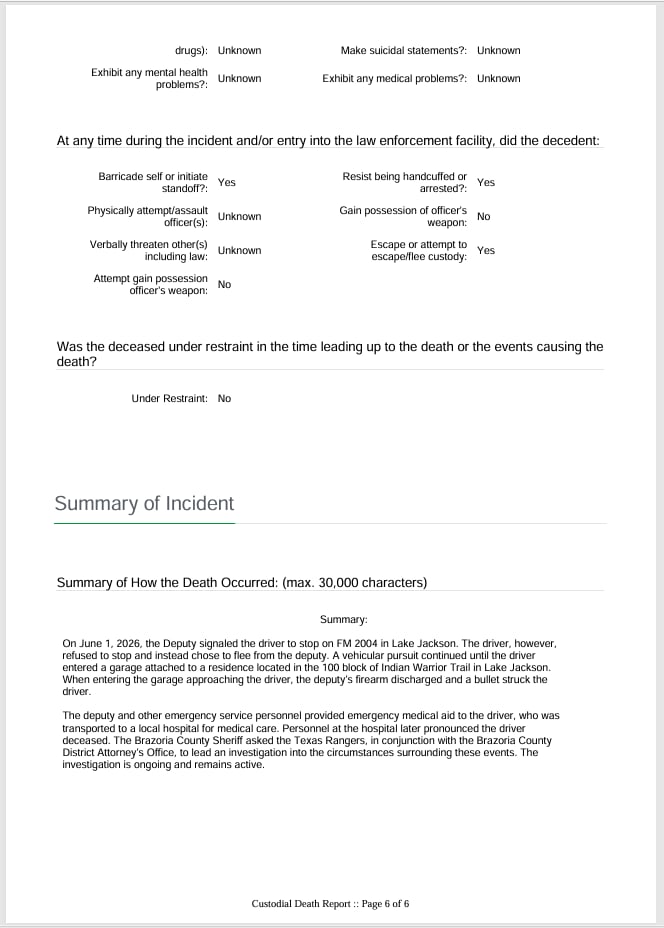
Texas Attorney General Custodial Death Report summary describing the fatal shooting of John Gabriel Mendoza Jr. and stating that the deputy’s firearm discharged while approaching the driver.
The incident summary in the Texas Attorney General Custodial Death Report states that the deputy’s firearm discharged while approaching John Gabriel Mendoza Jr. The report does not explain what caused the firearm to discharge.

One section of the Custodial Death Report states:

“When entering the garage approaching the driver, the deputy’s firearm discharged and a bullet struck the driver.”

The report does not explain why the firearm discharged or whether investigators have determined if the discharge was intentional, accidental, or the result of another circumstance.

Reports Use Different Language About a Weapon

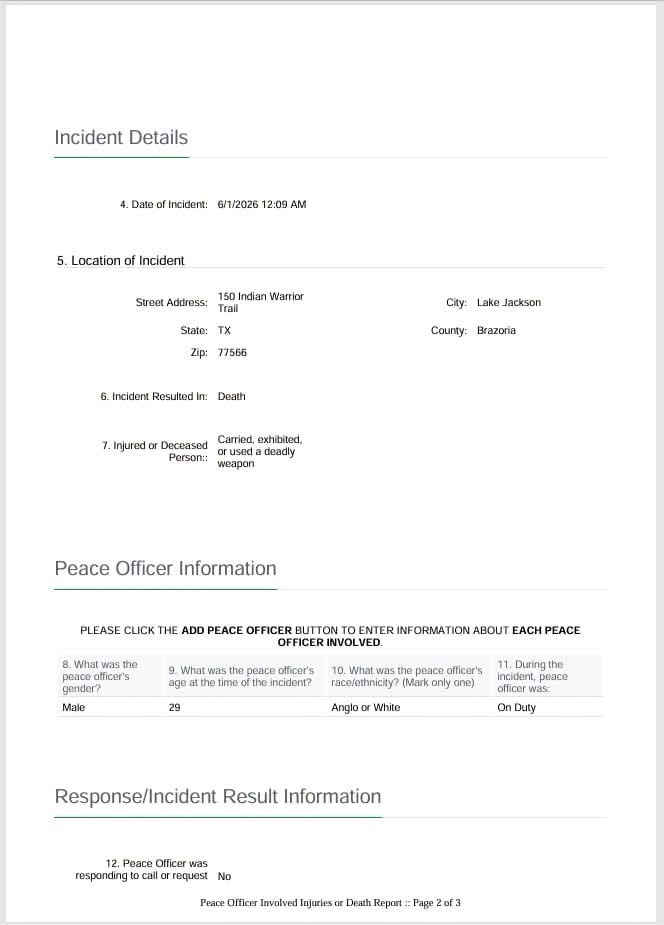
Texas Attorney General Peace Officer Involved Injuries or Death Report stating that John Gabriel Mendoza Jr. carried, exhibited, or used a deadly weapon during the incident.
A separate Texas Attorney General report states that John Gabriel Mendoza Jr. “carried, exhibited, or used a deadly weapon.” The report does not identify the weapon or explain why this wording differs from the Custodial Death Report.

One section of the Custodial Death Report asks whether Mendoza displayed or used a weapon during the incident.

The answer listed is:

Unknown.

However, the separate Peace Officer Involved Injuries or Death Report includes a different description.

That report states the injured or deceased person:

“Carried, exhibited, or used a deadly weapon.”

Neither report explains the apparent difference in wording or identifies the weapon referenced in that section.

The records also do not describe when investigators reached those conclusions or whether additional evidence remains under review.

Deputy Was Not Responding to a Call

The Peace Officer Involved Injuries or Death Report states the deputy was not responding to a call for service when the incident began.

Instead, the report states the encounter occurred during a pursuit involving a suspect who was allegedly evading arrest or detention using a motor vehicle.

The report identifies the deputy as a 29-year-old male who was on duty at the time of the shooting.

Investigation Continues

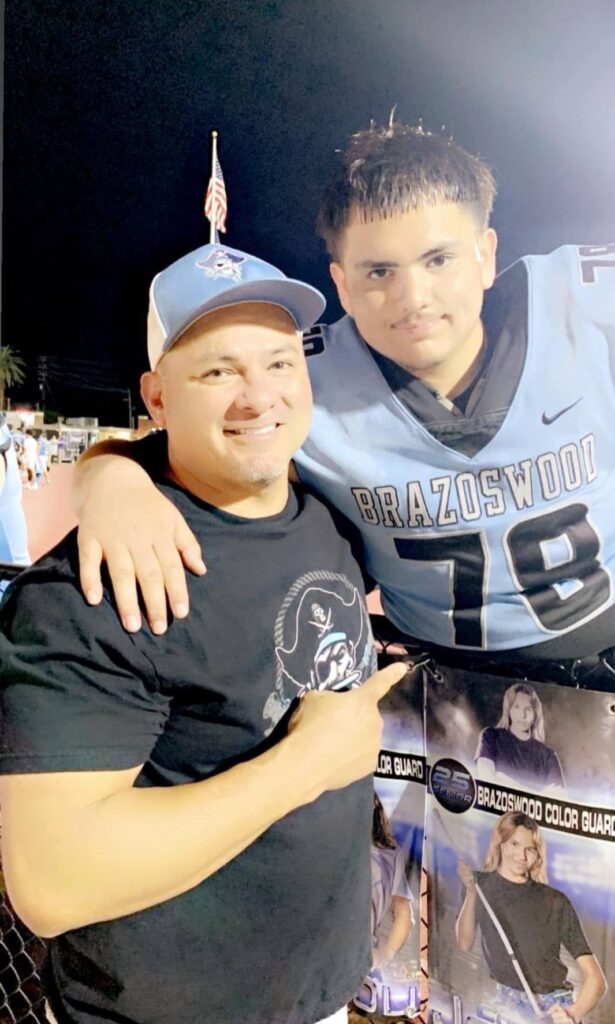
John Gabriel Mendoza Jr. poses in his Brazoswood High School football uniform with a family member before his death.
John Gabriel Mendoza Jr. is pictured in his Brazoswood High School football uniform before the June 1, 2026, incident in Lake Jackson. The Texas Rangers continue to investigate the fatal deputy-involved shooting.

The Custodial Death Report states emergency personnel treated Mendoza before transporting him to a local hospital, where he later died.

The report also confirms that the Texas Rangers, working with the Brazoria County District Attorney’s Office, continue investigating the shooting.

Neither report reaches a conclusion about criminal responsibility or explains what caused the deputy’s firearm to discharge.

As the investigation moves forward, the newly released state records answer some questions while raising others about the events inside the garage on June 1.

Investigative Reporter Tammy Rose contacted the Brazoria County Sheriff’s Office for comment regarding the newly released state records. No response had been received at the time of publication.

Related Coverage

Texas Rangers affidavit and scanner audio timeline

Deputy fired following policy violations

Amazon Recommendation

On Combat by Lt. Col. Dave Grossman – Understanding the psychological effects of deadly force.

Amazon Associate Disclosure: As an Amazon Associate, I earn from qualifying purchases at no additional cost to you.