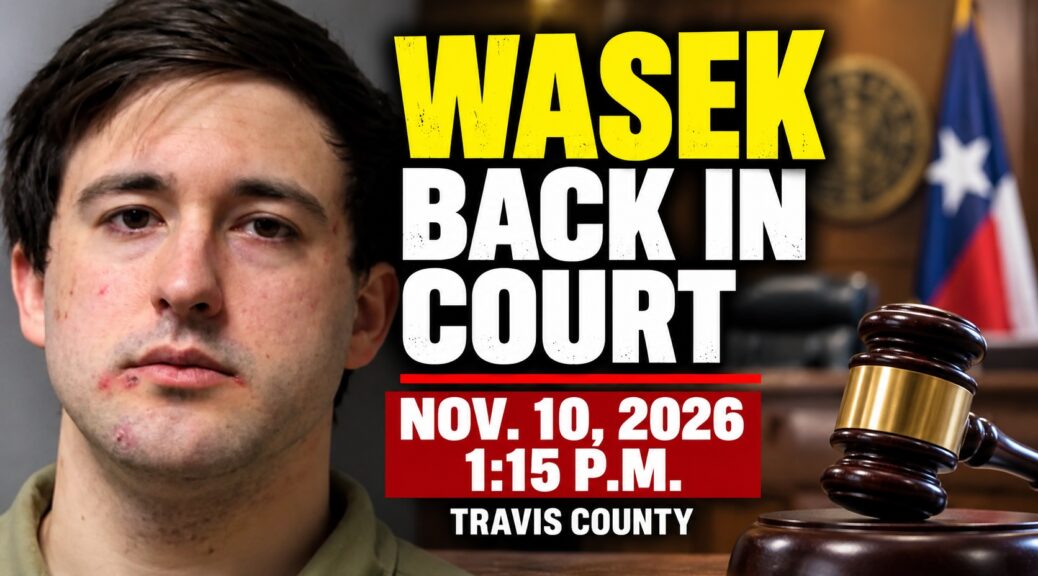
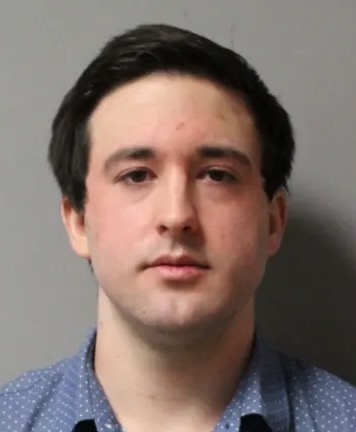
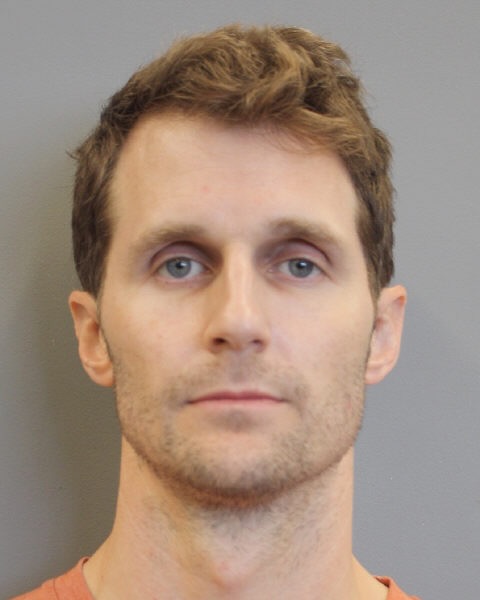
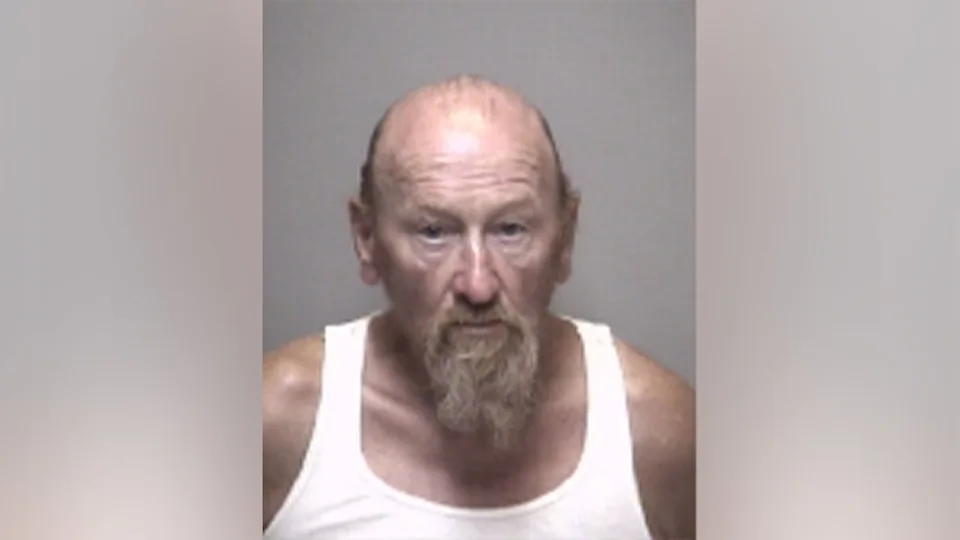
Mitchell Wasek has another court date in Travis County.
Court records show Wasek will return to the 167th District Court on Nov. 10, 2026, at 1:15 p.m.
The hearing involves several criminal cases that I have followed for years.
One of Wasek’s original 2023 cases lists a writ hearing. His separate 2025 case lists a pretrial hearing at the same time.
The Nov. 10 setting is not a trial date.
Wasek’s original cases remain in court
Wasek faces six invasive visual recording cases filed in 2023.
Those cases carry cause numbers D-1-DC-23-500314 through D-1-DC-23-500319. Travis County previously listed all six for writ hearings in the 167th District Court.
The latest Odyssey record I reviewed on Oct. 2 shows a Nov. 10 writ hearing in case D-1-DC-23-500314.
The older cases have also gone through appellate proceedings.
Separate 2025 case heads to pretrial hearing
Wasek also faces a separate felony case filed in 2025.
That case carries cause number D-1-DC-25-500122.
The Travis County docket lists the 2025 charge as possession of child pornography.
The latest Odyssey record shows a pretrial hearing on Nov. 10 at 1:15 p.m.
The newer case and at least one of Wasek’s original cases now have hearings set for the same date and time.
Defense wants evidence suppressed
The 2025 case includes two major defense challenges.
Wasek’s attorneys filed a motion to suppress on April 14.
The docket describes it as a motion to suppress evidence obtained by theft and breach of computer security.
The public docket I reviewed does not show an order resolving that motion.
Defense also seeks dismissal
Wasek’s attorneys filed another motion on June 2.
That motion asks the judge to dismiss the indictment due to an expired statute of limitations.
The filing does not mean the court has dismissed the indictment.
The public docket I reviewed does not show an order granting that request.
Court records also show several subpoena applications filed in June.
What happens next in the Mitchell Wasek cases?
Mitchell Wasek faces felony charges in Travis County as his defense seeks to suppress evidence and dismiss the indictment.
The Nov. 10 hearings could provide answers about the pending legal challenges.
The 167th District Court handles felony criminal cases in Travis County. Judge Dayna Blazey presides over the court.
For now, Wasek’s cases remain pending.
I will continue reviewing the court records and report any new rulings before the Nov. 10 hearings.
My new book, When Two Worlds Collide During WWII, follows two families on opposite sides of World War II and the remarkable events that eventually brought their lives together in Wisconsin.
The story is based on my own family history, with real people, family photographs and stories passed down through generations.
Disclosure: As an Amazon Associate, I earn from qualifying purchases.
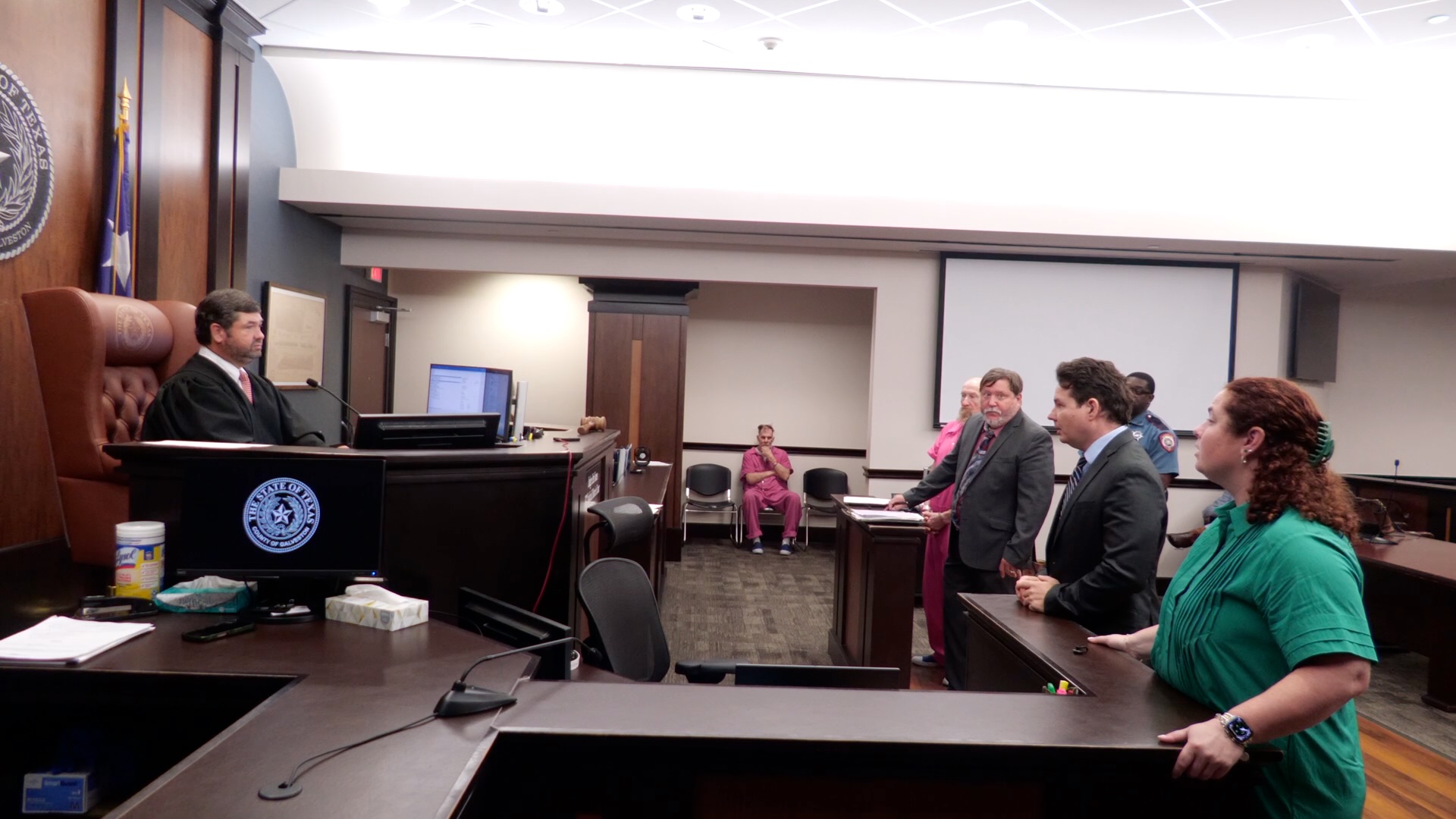
James Elmore Jr. appears in court during a pretrial hearing ahead of his Aug. 31 manslaughter trial.
James Elmore Jr. Trial Set for Aug. 31 as Judge Signals No Continuance
By Investigative Reporter Tammy Rose
James Elmore Jr. remains on track for an Aug. 31 trial in Galveston County.
Elmore pleaded not guilty as his case moves toward a jury. He faces several criminal cases connected to the deaths linked to the area known as the Texas Killing Fields.
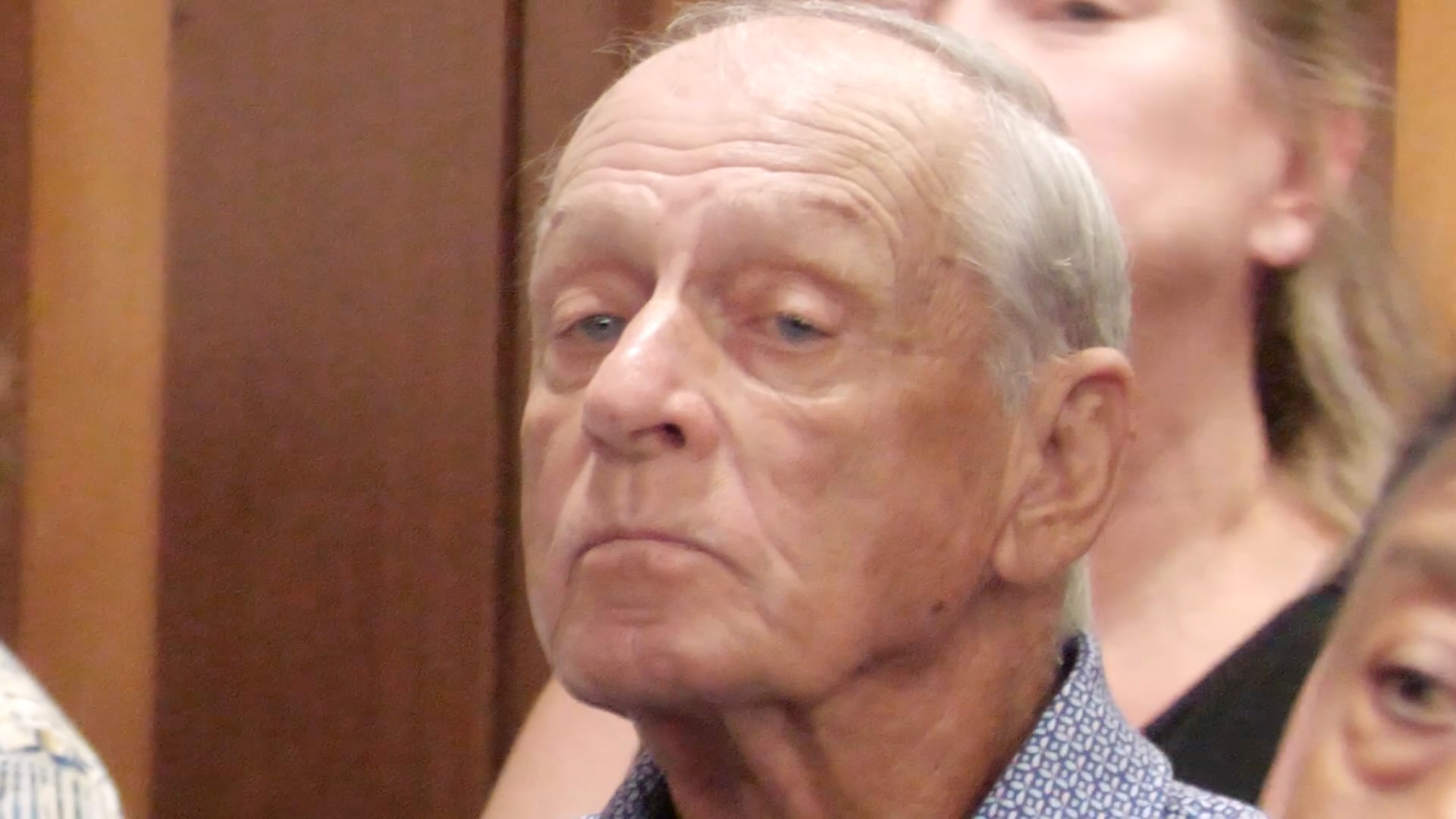
Texas EquuSearch founder Tim Miller was also present in the courtroom.
Texas EquuSearch founder Tim Miller sits in the courtroom during James Elmore Jr.’s pretrial hearing ahead of the Aug. 31 trial.
During a pretrial discussion, the judge made one point especially clear. The court intends to try the case as scheduled.
“Unless there’s some medical emergency … no continuance.”
The judge told attorneys to make sure everyone understands that the case has a firm trial setting.
James Elmore Jr. Manslaughter Case Will Go First
Watch the full James Elmore Jr. pretrial hearing above, including discussion of the Aug. 31 trial date, jury selection, discovery and the other pending cases.
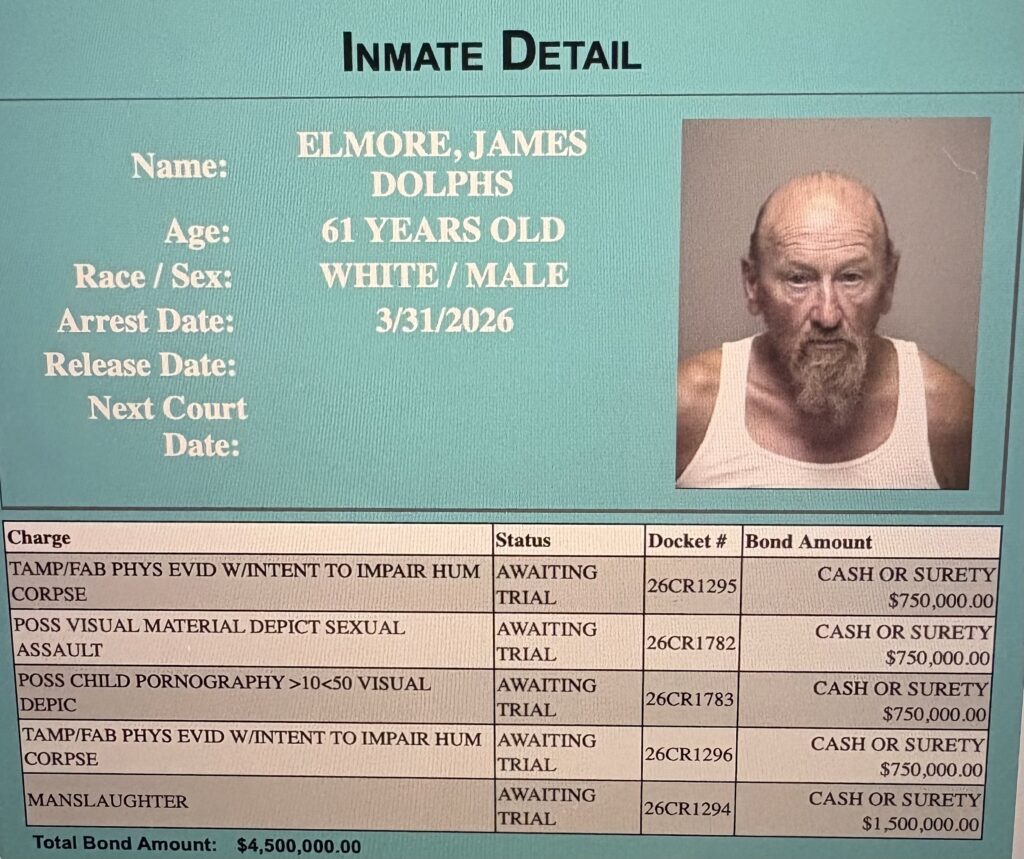
Elmore currently has five pending cases, according to statements made in court.
The prosecution told the judge that it plans to try the manslaughter case first on Aug. 31.
The state said it no longer plans to first try newer cases involving allegations of possession of child pornography.
The court also discussed Elmore’s other pending cases.
Prosecutors said the tampering cases could become relevant during the manslaughter trial. They argued that some of that evidence may provide context involving the victim.
If a jury finds Elmore guilty of manslaughter, prosecutors could also introduce evidence from the other pending cases during the punishment phase.
The judge explained that process in court.
If jurors find Elmore not guilty, the remaining cases would still remain pending.
Attorneys Say Discovery Is Nearly Complete
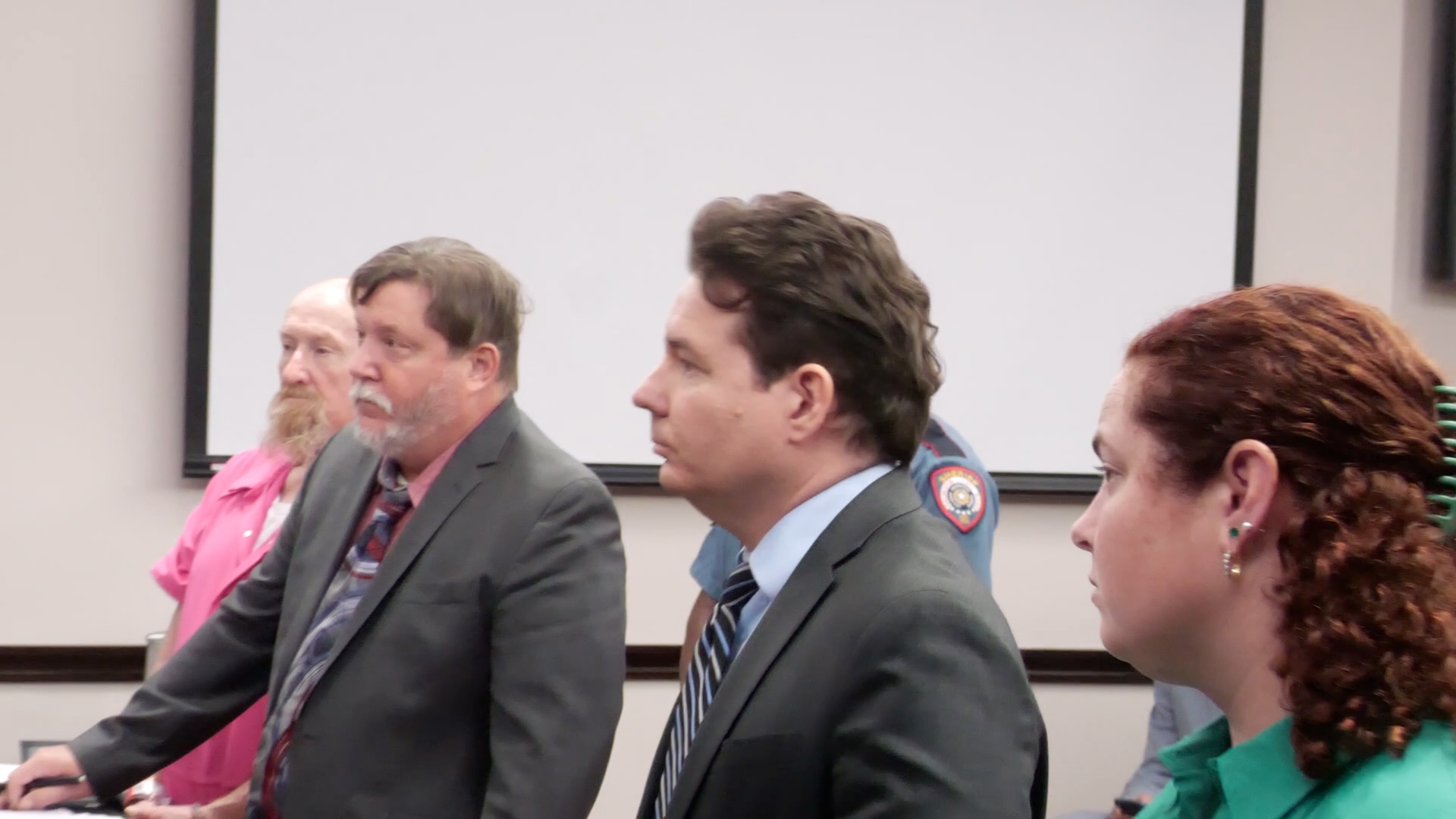
James Elmore Jr. and attorneys appear before the judge during a pretrial hearing ahead of his Aug. 31 manslaughter trial.
Both sides told the judge that no major discovery issues remain.
Prosecutors said they still need to handle several smaller matters. Those include redactions to statements and identifying specific jail calls.
The state also has images stored on a hard drive.
Defense attorneys can review those materials at the prosecutor’s office.
Elmore’s attorney told the judge that he plans to review the material while preparing for trial.
The court also discussed a discovery compliance form. Defense counsel said he would have Elmore review and sign it.
Court Could Call More Than 200 Potential Jurors
Jury selection could become one of the biggest challenges in the James Elmore Jr. trial.
The case has received extensive media coverage.
The judge and attorneys discussed calling more than 200 prospective jurors because of the attention surrounding the case.
The court could use a larger courtroom to accommodate the panel.
Attorneys also discussed whether to use a written jury questionnaire.
A questionnaire could help identify people who already know details about the case. However, it could also delay jury selection by a day.
The judge raised another concern.
Questions asked in front of the entire panel could influence other potential jurors. The court may instead question some people individually.
The goal will be to find jurors who can decide the case based only on evidence presented in court.
Judge Expects Trial to Last About One Week
James Elmore Jr. appears with attorneys during a pretrial hearing as the court prepares for his Aug. 31 trial.
The attorneys told the judge they expect the manslaughter trial to last about one week.
The court discussed beginning jury selection on the afternoon of Aug. 31.
Opening statements and testimony could begin the following day.
If the court uses a jury questionnaire, the trial could run slightly longer.
The court also expects to select alternate jurors.
Other James Elmore Cases Could Follow Quickly
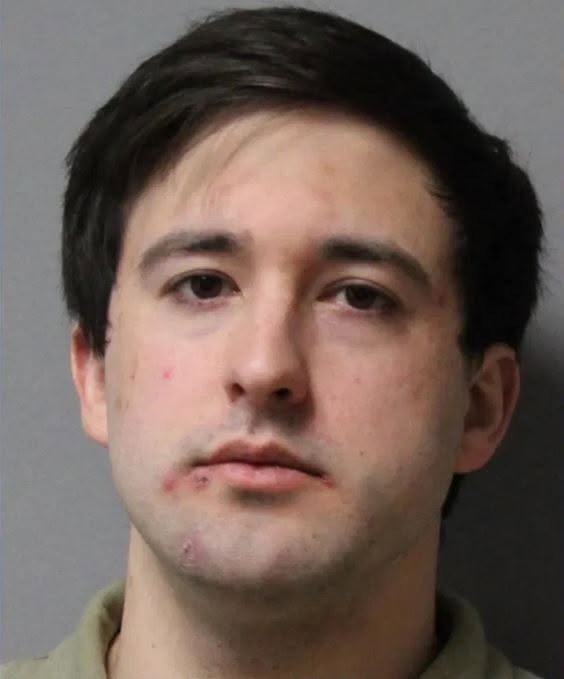
James Elmore Jr. booking photo. His trial is currently scheduled to begin Aug. 31, 2026, in Galveston County.
Prosecutors are already looking beyond the Aug. 31 trial.
The state told the judge it wants to return to court quickly for another Elmore case.
An October trial setting came up during the discussion.
The court discussed Oct. 5 as a possible next docket setting. Attorneys also mentioned Oct. 12 as another possibility.
Those dates could change depending on how long the manslaughter trial lasts and how quickly attorneys receive the court record.
Judge Warns Elmore Against Speaking
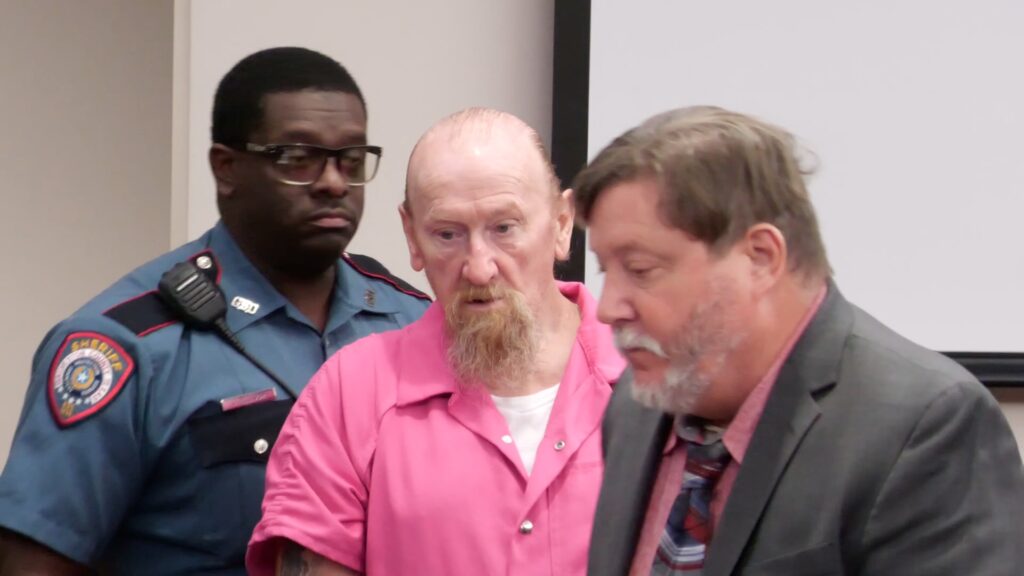
James Elmore Jr. stands with his attorney during a pretrial hearing as the court prepares for his Aug. 31 manslaughter trial.
The judge also addressed Elmore directly.
He told Elmore that he did not have to speak in court. The judge warned that anything Elmore said could become evidence against him.
Instead, the judge encouraged Elmore to communicate with his attorney about anything he wants addressed before trial.
The judge said the court would hear necessary motions, even if attorneys file them shortly before trial.
Aug. 31 Trial Remains Firm
For now, the most important development is simple.
James Elmore Jr. remains scheduled for trial Aug. 31.
The prosecution says it will begin with the manslaughter case.
The court expects a large jury pool because of the publicity surrounding the case.
And the judge made clear that he does not expect to grant another delay without a serious emergency.
Tim Miller’s presence in the courtroom also underscored the attention surrounding the case as it moves closer to trial.
Investigative Reporter Tammy Rose will continue following the James Elmore Jr. case and any developments before jury selection begins.
Travelers heading to Galveston County can compare hotel options near the courthouse and surrounding area.
If you are traveling to Galveston County to follow the James Elmore Jr. trial, you can compare hotel options through Hotels.com. Look for rooms near Galveston, League City or the surrounding area, depending on your travel plans and court schedule.
Long court days can mean a lot of waiting. I recommend bringing a portable phone charger, reusable water bottle and a lightweight bag for your essentials. You can find travel gear and courtroom-day basics on Amazon.
As an Amazon Associate, I may earn from qualifying purchases at no additional cost to you.
Lee Gilley remains in Italy as his extradition case faces another court hearing.
Lee Gilley Extradition Hits New Roadblock as Italian Court Questions Texas Death Penalty Guarantees
By Investigative Reporter Tammy Rose
A new ruling from Italy could delay Lee Gilley’s return to Houston.
The Turin Court of Appeal wants stronger guarantees from the United States before it decides whether to extradite Gilley.
The Italian court raised two major concerns. It wants answers about the death penalty and life without parole.
Gilley faces a capital murder charge in Harris County in connection with the death of his pregnant wife.
He remains accused and has not been convicted.
Christa Bauer Gilley, whose husband Lee Gilley is charged in connection with her 2024 death. Photo: Facebook
Italian Court Questions Death Penalty Assurances
The Turin Court of Appeal issued its order on July 17, 2026.
An Italian legal publication released details of that order on Aug. 12.
The court reviewed information connected to the Harris County District Attorney’s Office.
According to the Italian court’s order, Harris County prosecutors indicated that they had not requested the death penalty.
However, the Italian judges found that statement did not clearly rule out a future request.
That distinction matters in Italy.
Italian law does not allow extradition when a person could face the death penalty without firm guarantees that prosecutors will not seek or carry it out.
The Turin court now wants additional assurances from the U.S. government.
Life Without Parole Also Raises Questions
The Italian judges also raised concerns about a possible sentence of life without parole.
The court reviewed European human rights standards that address whether a life sentence must include some meaningful chance for review.
The judges want more information about what options Gilley could have if a Texas court sentenced him to life without parole.
The extradition case remains unresolved while Italy waits for those answers.
Harris County Court Records Show Bond Revoked
Lee Gilley is charged in Harris County in connection with the death of his pregnant wife. He remains in Italy while extradition proceedings continue.
A review of Harris County District Clerk records shows major changes in Gilley’s Texas case after he left the country.
The records show that Gilley originally posted a $1 million bond in October 2024.
The court required GPS monitoring before his release.
Court records also show that Gilley surrendered his passport on Oct. 22, 2024.
Judges continued to impose pretrial supervision and bond conditions during 2025 and early 2026.
Judge Granted Emergency Travel Request
The Harris County docket shows another important development on April 1, 2026.
The court granted an emergency request to travel.
The docket does not explain the full terms of that order on the public activity page.
Public reporting later showed that Gilley traveled through Canada before reaching Italy.
Authorities allege he used false Belgian travel documents while traveling to Milan.
Italian authorities detained him after discovering problems with those documents.
Bond Revoked and Capias Issued
The Harris County case changed quickly after Gilley left the United States.
Court records show a May 5, 2026 motion hearing with the result:
An alias capias directs authorities to take a defendant into custody.
“Bond Revoked Alias Capias Issued.”
The docket also shows bond denied entries on May 4 and May 8.
The current case summary lists Gilley as not in custody in Harris County.
It also shows his bond as denied.
Gilley Missed Houston Court Settings
Christa Bauer Gilley and Lee Gilley on their wedding day. Photo: Facebook
Court records show Gilley missed several settings after his departure.
The docket lists him as absent from a May 21 status conference.
It also lists him as absent from a June 5 status conference.
The court reset that hearing for Sept. 15.
On July 29, attorneys filed a motion for a show cause hearing.
The court held that hearing on Aug. 3.
The docket again lists Gilley as absent.
Next Harris County Hearing Set for September
Gilley’s next Harris County setting is scheduled for:
Sept. 15, 2026 at 9 a.m.
The docket identifies the hearing as a status conference in the 497th District Court.
Judge Peyton Peebles currently presides over the case.
Gilley’s capital murder case remains active.
What Happens Next in Italy?
The biggest question now sits with the United States.
The Turin Court of Appeal wants clear guarantees about the punishment Gilley could face in Texas.
The court specifically wants clarity on the death penalty.
It also wants answers about life without parole.
Until those questions receive satisfactory answers, Italy could delay a final extradition decision.
That leaves Gilley’s Harris County prosecution in limbo as his next Texas court date approaches.
Lee Gilley Case Timeline
Christa Bauer Gilley and Lee Gilley on their wedding day. Photo: Facebook
Oct. 2024: Harris County files the capital murder case.
Oct. 2024: Gilley posts a $1 million bond and surrenders his passport.
April 1, 2026: Court grants an emergency request to travel.
May 2026: Gilley leaves the United States and later reaches Italy.
Soon after, on May 5, 2026: Harris County court records show his bond revoked and an alias capias issued.
Three days later, on May 8, 2026: Court records show bond denied.
July 17, 2026: Turin Court of Appeal issues an order seeking additional U.S. assurances.
July 29, 2026: Motion for show cause hearing filed in Harris County.
Aug. 3, 2026: Show cause hearing held. Docket lists Gilley as absent.
Aug. 12, 2026: Italian legal publication releases details of the Turin court order.
Sept. 15, 2026: Next Harris County status conference scheduled.
The Bottom Line
Lee Gilley’s extradition now depends on more than whether Italy believes Texas has a valid criminal case.
Italian judges want firm assurances about what could happen if Gilley returns to Houston and receives a conviction.
The death penalty remains the biggest issue.
The Harris County docket also shows that Gilley’s legal situation changed sharply after he left the country.
His bond is now denied. A capias remains tied to the case. His next Houston court date is Sept. 15.
The Italian extradition fight could determine when, or whether, he returns to Harris County to face the capital murder charge.
If the Lee Gilley case has you following developments in Italy, you may also be planning a trip there yourself. I’ll be traveling to Italy soon, with stops in Rome and Sardinia. If you’re planning your own visit, you can compare hotels, locations and prices on Hotels.com before you book.
I may earn a commission if you book through my link, at no extra cost to you.
For long travel days, I like to keep things simple and comfortable. I look for lightweight gear, a good backpack, comfortable walking shoes and other travel essentials that are easy to carry through airports and around cities.
You can shop some of the travel gear I use on Amazon.
As an Amazon Associate, I may earn from qualifying purchases at no extra cost to you.
Mitchell Wasek faces felony charges in Travis County as his defense challenges evidence and seeks dismissal of the indictment.
Buc-ee’s Co-Founder’s Son Fights Felony Case as New Court Hearing Nears
By Investigative Reporter Tammy Rose
The criminal case against the son of a Buc-ee’s co-founder is heading back to court.
Mitchell Wasek now wants a judge to suppress evidence in his felony child pornography case. His defense also wants the indictment dismissed.
Court records reviewed by Investigative Reporter Tammy Rose show a pretrial hearing set for August 18, 2026, at 1:15 p.m. in Travis County’s 167th District Court.
The latest filings reveal a significant new legal fight.
Mitchell Wasek Case Update: Defense Challenges Evidence
Wasek faces a felony charge of possession of child pornography in Travis County.
The current court docket lists the offense as a second-degree felony.
His attorney filed a motion to suppress on April 14, 2026.
The docket describes the filing as a:
“Motion to suppress evidence obtained by theft and breach of computer security.”
The wording raises a major question.
What evidence does the defense want thrown out, and how was it obtained?
The court docket does not answer that question by itself.
The actual motion could provide those details.
Defense Also Wants Indictment Dismissed
Another filing could have an even bigger impact on the case.
On June 2, 2026, Wasek’s defense filed a motion asking the court to dismiss the indictment.
The stated reason:
An expired statute of limitations.
The judge has not dismissed the case based on the docket reviewed for this report.
The State also requested several subpoenas that same day.
One went to Detective Keith McManus.
Court records show that subpoena was executed on June 5.
Pretrial Hearing Set for August 18
The next scheduled hearing could determine what happens with those defense challenges.
The Travis County Odyssey Portal lists a:
Pretrial Hearing August 18, 2026 1:15 p.m. 167th District Court
The hearing could bring new arguments over the evidence and the defense request to dismiss the indictment.
It could also provide the clearest update yet on where the case stands.
Wasek Also Faces 21 Invasive Recording Counts
Mitchell Wasek faces felony charges in Travis County as his defense seeks to suppress evidence and dismiss the indictment.
The child pornography case came after an earlier investigation involving allegations of secret recordings.
The Travis County District Attorney’s Office announced in May 2024 that a grand jury returned six indictments against Wasek.
Those indictments contained 21 counts of invasive visual recording involving 13 alleged victims.
Prosecutors said the alleged recordings occurred over roughly two years in Travis County.
Those cases also remain listed in Travis County court records.
Wasek has not been convicted of the allegations discussed in this report. He remains presumed innocent unless proven guilty in court.
Why the Buc-ee’s Name Draws Attention
Arch Aplin remained in contact with investigators as questions continued about the Rebecca Beard case timeline.
Mitchell Wasek is the son of Buc-ee’s co-founder Don Wasek.
That connection has pushed the criminal case into headlines across Texas.
It also creates an unusual overlap with another story I have covered extensively.
Not because the criminal cases have anything to do with each other.
My reporting has also examined conflicting information in historical records about when Aplin last saw Becky and who investigators reported seeing at the Excalibur Club around the time of her disappearance.
Again, there is no known connection between Mitchell Wasek’s criminal case and Rebecca Beard’s murder case.
The common thread is that both stories involve members of the families behind one of Texas’ most recognizable brands.
Related Rebecca Beard Coverage
Exclusive: Arch Aplin Responds to Rebecca Beard Question
Why I Continue Investigating the Texas Killing Fields: Every Victim Deserves to Be Remembered
By Investigative Reporter Tammy Rose
People often ask why I continue investigating murders that happened more than 50 years ago.
They wonder why I file public records requests. They ask why I travel hundreds of miles to interview witnesses. They also question why I keep digging into cases that many people have forgotten.
When I began researching the Texas Killing Fields, one issue quickly bothered me.
Old news reports often focused on how the victims died. Police records also placed heavy attention on their circumstances. Those accounts did not always show who the women were or how they lived.
Authorities described some victims as runaways. Others struggled with addiction or lived through difficult times. Reports also linked some women to prostitution.
Those labels often overshadowed their identities.
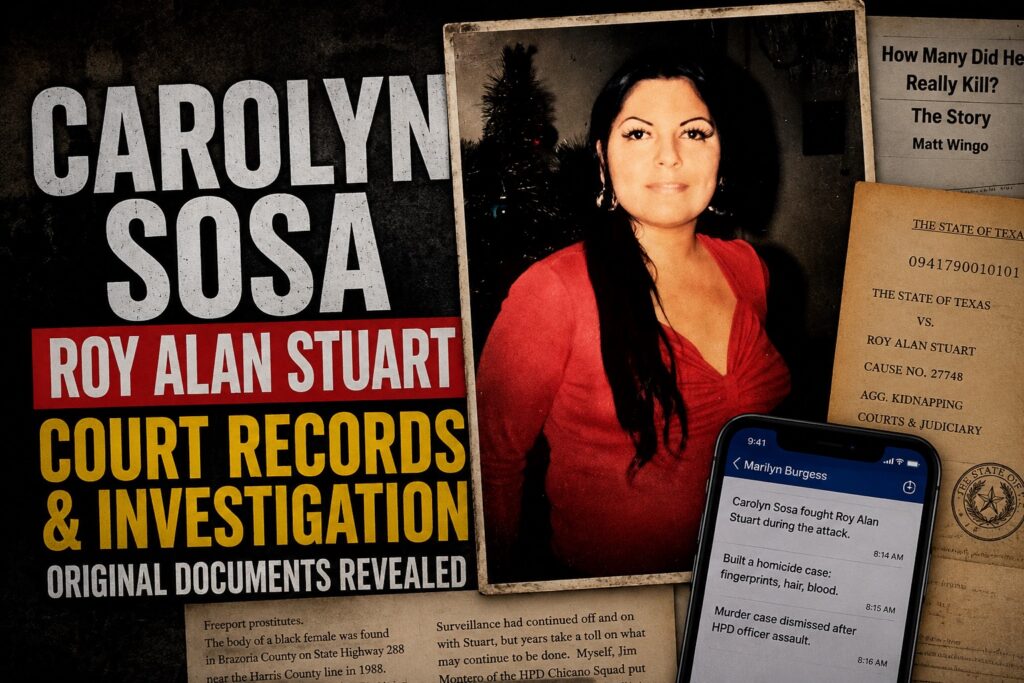
Investigators first viewed Laura Miller as a possible runaway. Reports also associated Carolyn Sosa and Teri McDaniel with prostitution.
Those descriptions may have been accurate, incomplete or unfair. Either way, they often became the focus of the story.
The victims deserved better.
No one should disappear from history because of a label.
My investigation has taken me across Texas and beyond.
I have tracked down key witnesses. I have interviewed retired investigators. I have reviewed thousands of pages of public records.
I have also examined evidence that many people have never seen.
Each interview raises another question. Every record leads to another document. One conversation can reveal a missing piece of history.
Some discoveries involve unidentified remains. Others involve witnesses who were overlooked years ago. Records may also expose decisions that still raise questions today.
I do not investigate these cases to sensationalize tragedy.
I investigate because every victim mattered.
A person’s past should never decide how much effort investigators make. It should not affect whether authorities search for them or work to solve their murder.
A straight-A student had value. A runaway had value. A woman struggling with addiction had value. A person living on the streets had value.
Their circumstances did not make their lives less important.
Justice should never depend on someone’s background.
My investigations sometimes require travel across Texas and beyond. When I need a place to stay near an interview, courthouse or records office, I compare available hotels through Hotels.com.
I also rely on practical tools while reviewing old case files. A portable document scannerhelps me preserve records, photographs and handwritten notes.
This post contains affiliate links. I may earn a small commission from qualifying bookings or purchases at no additional cost to you. As an Amazon Associate, I earn from qualifying purchases.
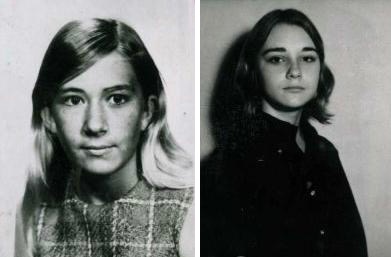
Rhonda Renee Johnson, left, and Sharon Lynn Shaw disappeared after traveling from Webster to Galveston on August 4, 1971.
By Investigative Reporter Tammy Rose
Two teenage friends left Webster for a summer day in Galveston on August 4, 1971. They never returned home.
Nearly 55 years later, the deaths of Rhonda Renee Johnson and Sharon Lynn Shaw remain surrounded by painful questions, a controversial confession and competing claims about who was responsible.
Rhonda was 14 years old. Sharon was 13 and just days away from her 14th birthday.
Their case became one of the earliest and most troubling mysteries associated with a series of young women and girls who disappeared across the Houston-Galveston region during the 1970s.
A Summer Trip to Galveston
Rhonda Johnson and Sharon Shaw traveled from Webster to Galveston on August 4, 1971, before they disappeared.
According to federal court records, Sharon and Rhonda were last seen on August 4, 1971, after leaving Webster for a day trip to Galveston, about 25 miles away.
The two friends reportedly spent time near the beach and Galveston Seawall. However, they did not make it home that evening.
Their disappearance launched a search that continued for months.
Their Remains Were Found Months Later
On January 3, 1972, human remains were discovered in the Clear Lake area.
Additional remains were found several weeks later. Authorities identified the victims as Sharon Shaw and Rhonda Johnson.
The medical examiner could not determine the cause of their deaths because there was no identifiable damage to the bones or skulls, according to the federal appellate record.
The discovery confirmed the families’ worst fears. However, determining who killed the girls would become far more complicated.
Michael Lloyd Self Was Convicted
Michael Lloyd Self was convicted in Sharon Shaw’s death after the teenagers disappeared following a trip to Galveston in August 1971. This Galveston beach image is illustrative.
Investigators eventually focused on Michael Lloyd Self, a Galveston-area gas station attendant.
Self signed a confession after being questioned by police. He later withdrew it and claimed officers had threatened and physically abused him until he confessed.
Self was prosecuted for Sharon Shaw’s murder and received a life sentence. His conviction was upheld by the Texas Court of Criminal Appeals.
Questions about the confession followed the case for decades.
In 1991, a federal district court granted Self’s request for habeas relief after finding that his confession had been obtained in violation of his constitutional rights. However, the Fifth Circuit Court of Appeals later reversed that decision and allowed the conviction to stand.
Self maintained his innocence and died in prison in 2000.
A Second Man Claimed Responsibility
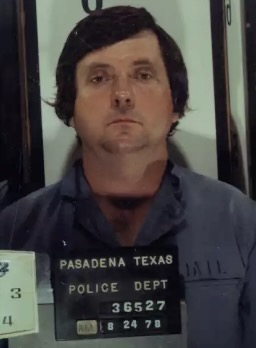
Edward Harold Bell in a 1978 Pasadena Police Department mugshot. Bell later claimed responsibility for several killings in Southeast Texas, but he was never charged in the deaths of Rhonda Johnson or Sharon Shaw. Image credited to the Pasadena Police Department; source copy via Wikipedia/Houston Chronicle.
Years later, convicted murderer Edward Harold Bell claimed he had killed several girls across Southeast Texas during the 1970s.
Bell referred to the victims as the “Eleven that went to Heaven.” His claims reportedly included two girls from Webster who disappeared after visiting Galveston in 1971.
Those details were believed to refer to Sharon and Rhonda.
Investigators familiar with Bell’s statements said portions of his accounts appeared to match information from several cases. However, Bell was never charged with killing Sharon or Rhonda.
Bell was serving a prison sentence for the 1978 murder of Larry Dickens when he died in 2019.
Families Were Left Without Definitive Answers
The conviction of Michael Self remained legally intact. Still, some investigators and members of the victims’ families came to believe Bell may have been responsible.
That leaves a difficult conflict at the center of the case.
One man was convicted based largely on a confession he said was forced. Another man later claimed responsibility but was never prosecuted in connection with the girls’ deaths.
No DNA evidence or weapon publicly connected Bell to the murders. His death ended any possibility that he-would face a trial or further questioning in court.
Remembering Rhonda and Sharon
Rhonda Renee Johnson, left, and Sharon Lynn Shaw disappeared after leaving Webster for a trip to Galveston on August 4, 1971. Public-domain image via Wikimedia Commons.
The competing accusations can easily overshadow the two young victims.
Rhonda and Sharon were teenage friends enjoying the final weeks of summer. Their families expected them to return home after a day at the beach.
Instead, August 4 became an anniversary marked by loss and unanswered questions.
As the 55th anniversary approaches, the most important part of this story remains the lives that were taken.
Rhonda Renee Johnson and Sharon Lynn Shaw should be remembered by their names—not simply as entries on a list of Texas cold cases.
Their families deserved clear answers then. They still deserve them today.
Related Texas Killing Fields Coverage
James Elmore Jr. booking photo. His trial is currently scheduled to begin Aug. 31, 2026, in Galveston County.
The questions surrounding Sharon and Rhonda are part of a much larger history of disappearances and deaths along the Interstate 45 corridor between Houston and Galveston.
The upcoming trial of James Elmore Jr. is also expected to renew attention on the Calder Road area known as the Texas Killing Fields.
Elmore is charged in connection with the death of Laura Miller and allegations involving the movement of human remains. His jury trial is currently scheduled to begin August 31 in Galveston County’s 122nd District Court.
This story is based on available court records and previously published reporting. Some allegations were never proven in court. Edward Harold Bell was never charged with the deaths of Rhonda Johnson or Sharon Shaw.
Many people visit Galveston to explore its history, beaches and landmarks. Travelers looking for a place to stay can compare Galveston hotels, prices and availability through Hotels.com before planning their trip.
I may earn a commission if you book through Hotels.com, at no additional cost to you.
Recommended True-Crime Reading
Readers interested in researching historic cases may find a Texas road atlas helpful for understanding the distance between Webster, Galveston, Clear Lake and other locations connected to the investigation.
A portable document organizer can also help keep court records, timelines, printed articles and handwritten notes arranged while researching a complicated cold case.
Why I Released the 2002 Paul Taylor Jr. Confession
As an investigative reporter, I often have to make difficult decisions.
One of the hardest was deciding whether to release the 2002 family mediation recording involving Paul Taylor Jr. and Rebecca Beard’s family.
When I first obtained an exclusive copy of the recording from Rebecca Beard’s family, I wasn’t sure if I would ever make it public.
For months, I listened to the recording while reviewing court records, investigative documents, and interviewing Rebecca’s family. The more I reported on the case, the more I believed the recording added important context to an investigation that still raises questions nearly four decades later.
Rather than relying on summaries or secondhand accounts, I wanted people to hear Paul Taylor Jr.’s own words for themselves.
This article isn’t about telling anyone what to believe.
It’s about explaining why I decided to release the recording and why I believe it is an important part of my ongoing investigation.
“Rather than relying on summaries or secondhand accounts, I wanted people to hear Paul Taylor Jr.’s own words and decide for themselves.”
Watch the Exclusive 2002 Paul Taylor Jr. Confession
The full 30-minute recording is embedded below. I encourage you to listen to it in its entirety before drawing your own conclusions.
Why the recording stood out
As I compared the mediation recording with other records I reviewed during my investigation, several things caught my attention.
One involves the events after Rebecca Beard disappeared.
During the mediation, Paul Taylor Jr. appears unable to remember getting his vehicle stuck in a ditch near his home or the tow truck driver who reportedly helped pull him out. Yet in other parts of the recording, he recalls details surrounding the case.
That difference raised questions for me.
Another involves the weapon.
While reviewing investigative records, I came across a sealed document containing entries that reference a Remington shotgun and what appears to be human remains.
Those entries stood out because they raise questions when compared with portions of the mediation recording.
I encourage viewers to listen to the recording, review the available information, and draw their own conclusions.
Why I chose to publish it
Investigative reporting isn’t about deciding a case.
It’s about asking questions, reviewing records, interviewing the people closest to the investigation, and presenting information as fairly and accurately as possible.
Over the past several months, I’ve interviewed Rebecca Beard’s family, reviewed numerous court records and investigative documents, and continued asking questions about a case that still has many unanswered ones.
After months of reporting, I believed it was time to let the public hear this recording in its entirety.
This article serves as an introduction to that recording.
I encourage you to listen to the complete mediation audio in context and compare what is said with the records discussed throughout my investigation.
Sometimes the biggest questions aren’t about what someone remembers.
They’re about what they don’t.
Thank you for taking the time to follow my reporting.
Related Rebecca Beard Coverage
Continue following my investigation with these related reports:
This investigation took months of research, interviews, reviewing court records, and comparing documents with the 2002 mediation recording. These are some of the tools I use while reporting stories like this.
Disclosure: As an Amazon Associate, I earn from qualifying purchases. If you purchase through the links on this page, I may earn a small commission at no additional cost to you. Thank you for supporting my independent investigative journalism.
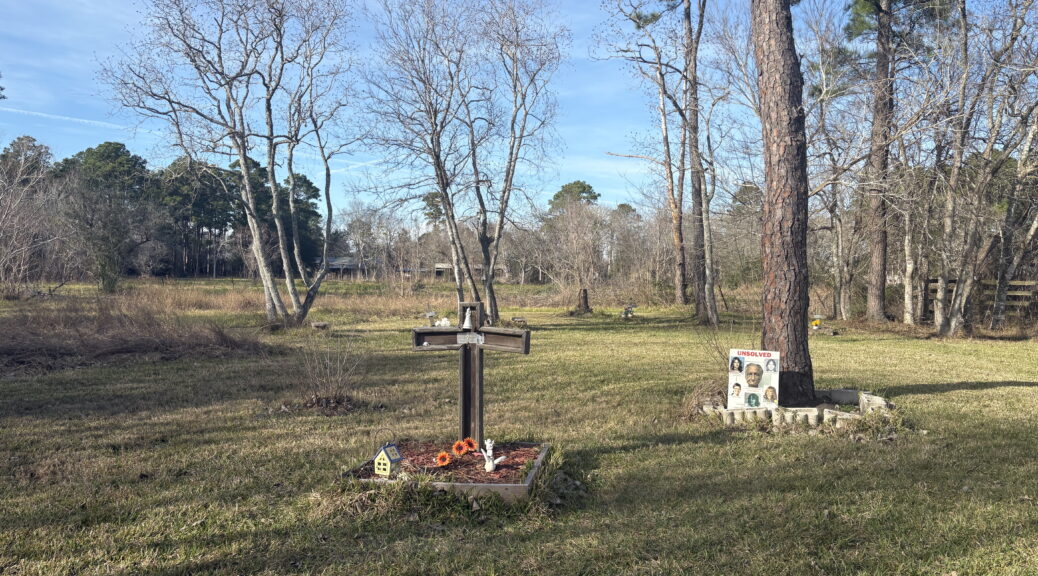
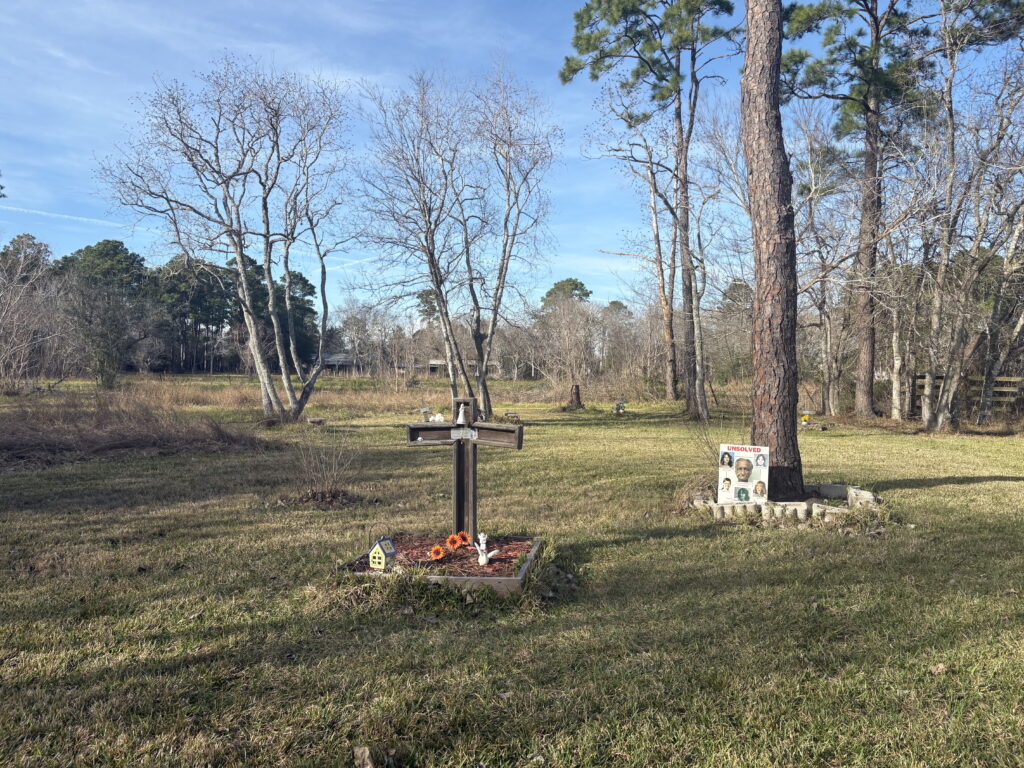
Memorial site near Calder Road in League City, Texas-one of the Texas Killing Fields discovery locations
Police confirm new developments in the decades-old investigation into multiple deaths near Calder Road.
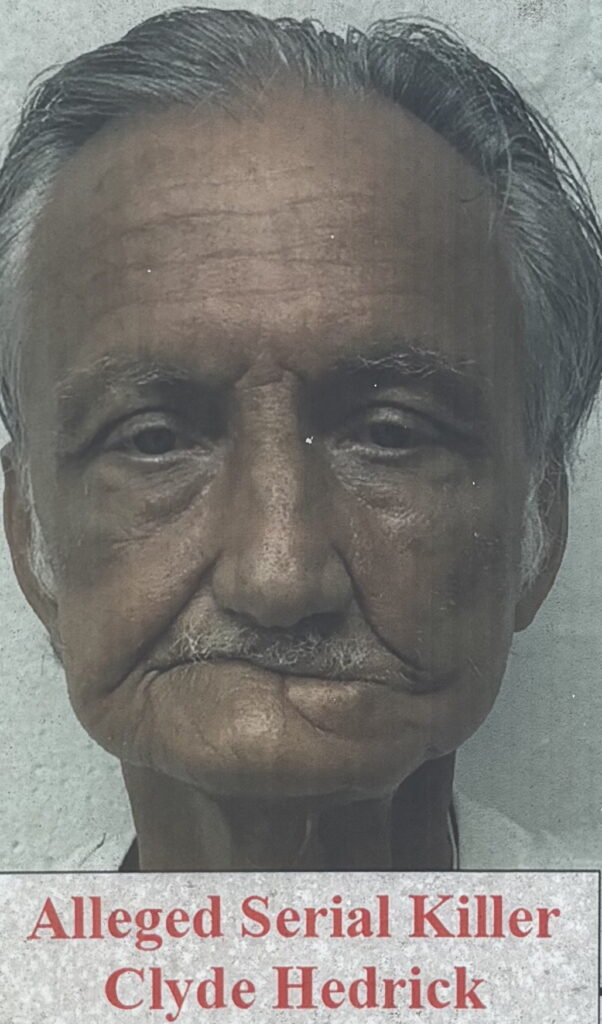
Police confirmed that longtime Texas Killing Fields suspect Clyde Edwin Hedrick died at 72 after removing his breathing tube while hospitalized following an interview with investigators. Prosecutors had been preparing murder charges against him before his death.
A Galveston County grand jury indicted James Dolphs Elmore Jr., 61, of Bacliff, on manslaughter and evidence‑tampering charges related to the deaths of Laura Lynn Miller and Audrey Lee Cook. Authorities say Elmore helped conceal the victims’ remains and provided a vial of cocaine linked to Miller’s death.
James Dolphs Elmore Jr. has been arrested and charged with manslaughter in connection to the death of Laura Miller, a victim linked to the Calder Road “Killing Fields.”
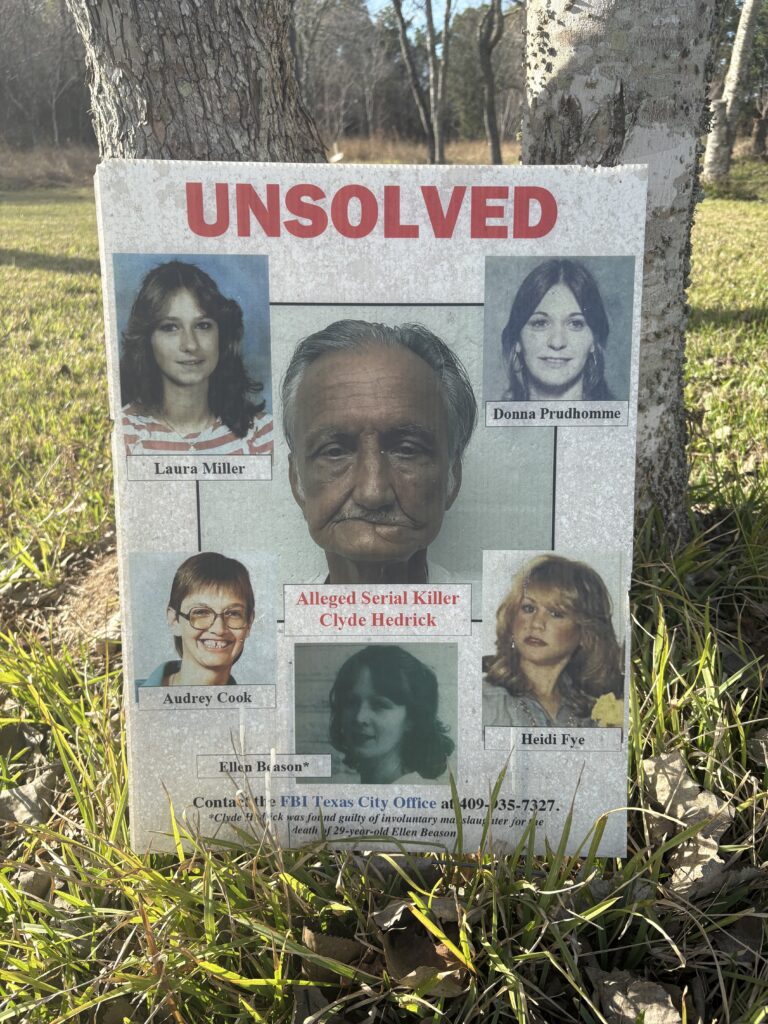
Investigators identified four women connected to the Calder Road “Killing Fields”: Heidi Fye, Laura Miller, Audrey Cook, and Donna Prudhomme. They located Fye and Miller in the 1980s. DNA testing later confirmed the identities of Cook and Prudhomme in 2019.
The Calder Road case remains active. Officials continue reviewing other cold cases and leads connected to the site.
A memorial near Calder Road honors the victims. Families, law enforcement, and community members visit regularly to pay their respects and remember the lives lost.
Four victims, one recovery site
Laura Miller and a Father’s Search for Justice
Laura Miller disappeared on September 10, 1984, after calling her boyfriend from a payphone in League City, Texas. Police initially treated her disappearance as a runaway case, but her father, Tim Miller, refused to accept that explanation.
Seventeen months later, investigators located Laura’s remains along Calder Road. The loss of his daughter changed Tim Miller’s life. Rather than give up, he turned his grief into action and founded Texas EquuSearch, a volunteer organization that helps locate missing people across the country.
Hedrick lived in the area when Laura disappeared, and investigators and families have long considered him a person of interest in the Calder Road murders.
He was later convicted of a separate killing — the 1984 murder of Ellen Beason — a brutal crime in which the victim was bludgeoned and hidden.
Hedrick served years in prison for that murder and was released under Texas parole laws.
Clyde Edwin Hedrick, long considered a suspect in multiple killings tied to the Texas Killing Fields, died in March 2026 while on parole, before authorities could file additional charges against him.
Remembering the Victims: Calder Road Killing Fields Memorial
Site were 4 victims were found
Disclosure: As an Amazon Associate, I earn from qualifying purchases.