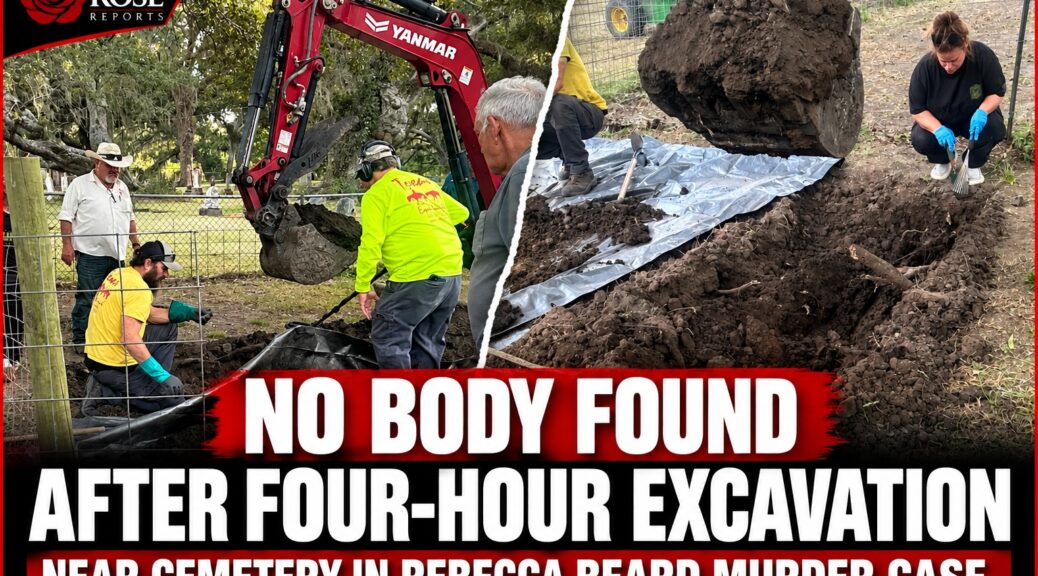
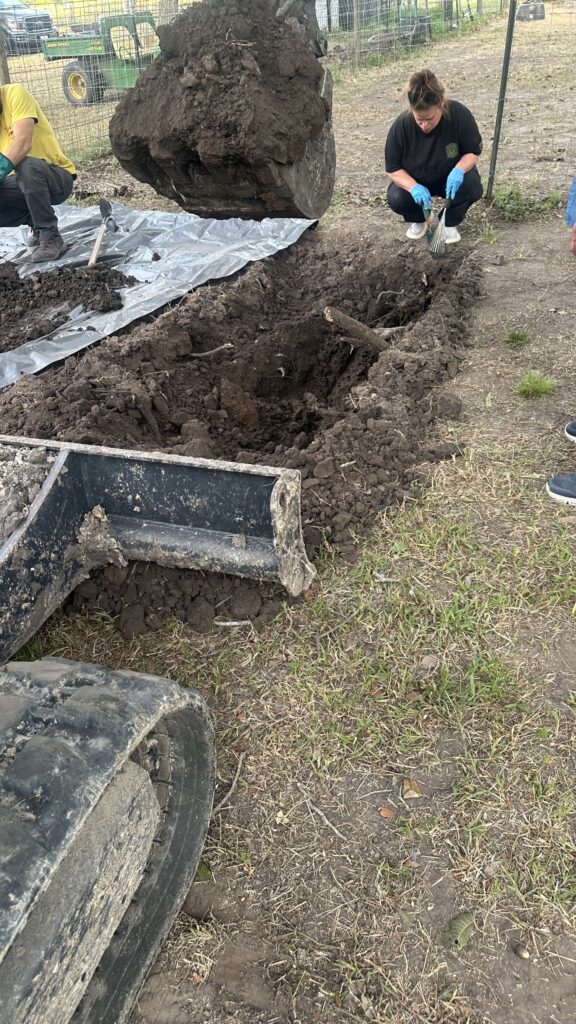
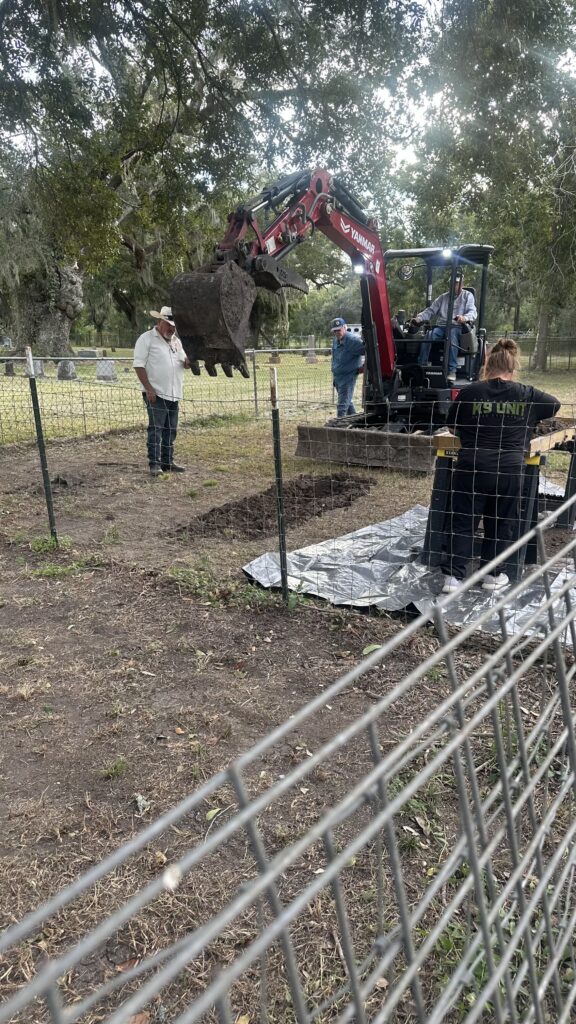
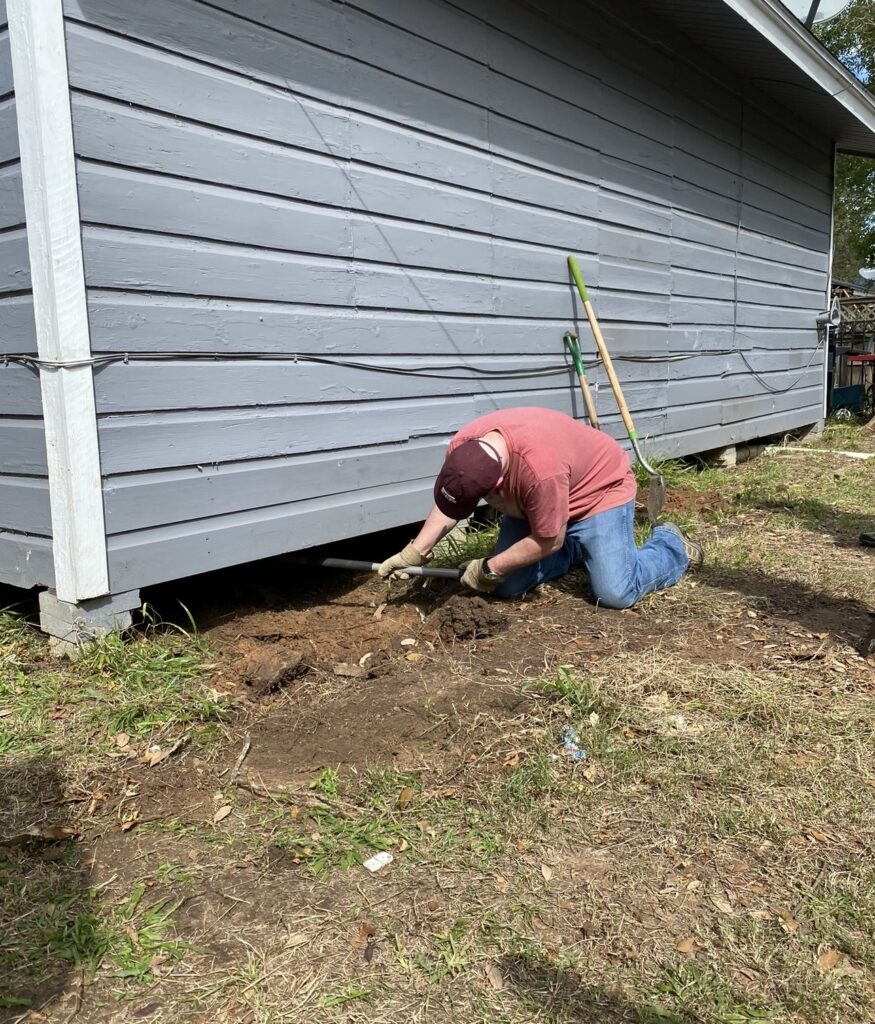
Nearly 40 years after Rebecca Beard’s murder, a four-hour excavation near a Brazoria County cemetery ended without the discovery of her remains.
The search followed a disturbing claim from a witness who says she watched the 22-year-old woman buried alive in 1986.
While I was in Dubai, a nearby property owner contacted me about repeated visits by retired Brazoria County District Attorney’s Office investigator John Blankenship. The owner also claimed he witnessed suspicious activity in the area around the time Beard disappeared.
Shortly after Blankenship spoke with the property owner, a search took place with assistance from Texas EquuSearch.
According to a source familiar with the operation, nothing was found.
Witness claims she watched Rebecca Beard buried alive
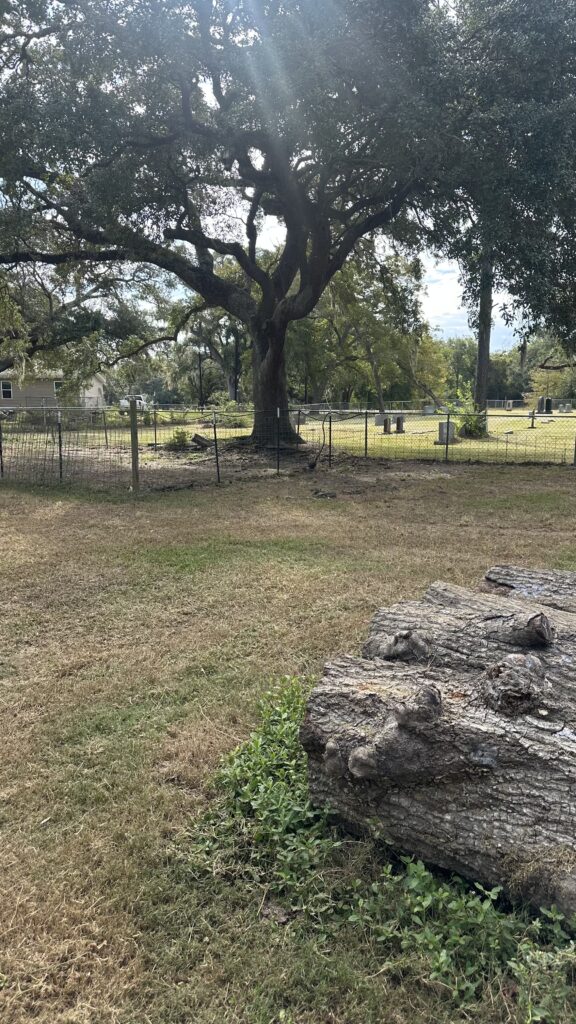
Area near the cemetery identified as a possible burial site in the Rebecca Beard murder investigation.
In January 2026, a woman came forward with a disturbing account of what she claims happened nearly 40 years earlier.
She alleged that she was present the night Beard was killed in March 1986.
According to the witness, she followed the suspects from the Excalibur Club in Freeport to an area near a cemetery.
There, she claims, she watched them bury Beard alive.
The witness identified a possible burial location near the cemetery.
Her allegations remain unverified. No publicly confirmed physical evidence has established that Beard was buried at that location.
Nevertheless, her account brought renewed attention to an area connected to one of Brazoria County’s longest-running murder mysteries.
District attorney’s investigators questioned witness credibility
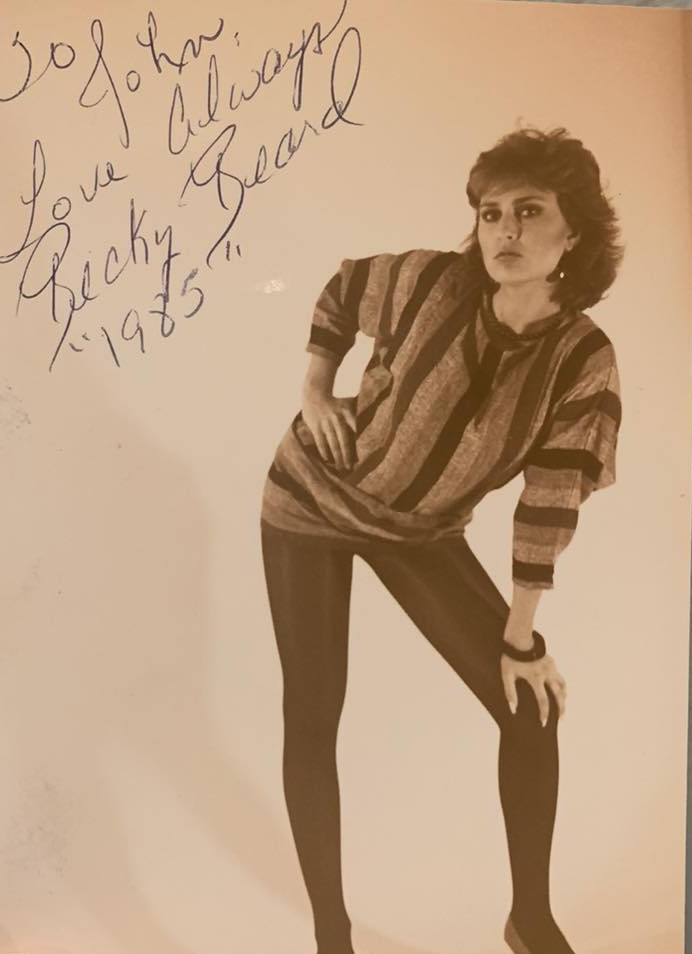
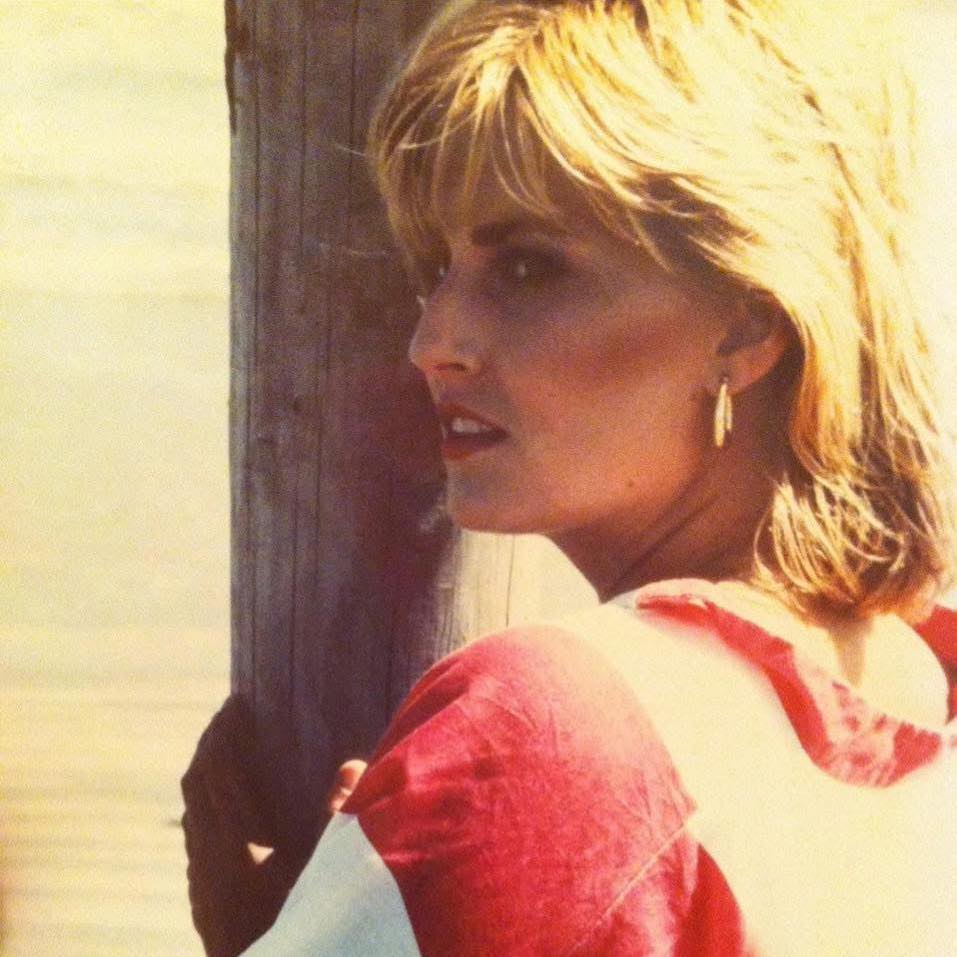
Recreation showing Rebecca “Becky” Beard wearing clothing similar to what she reportedly wore the night she disappeared in 1986.
Beard’s family later met with representatives of the Brazoria County District Attorney’s Office and investigators to discuss the witness’s allegations.
During a recorded meeting, investigators explained why they did not believe the woman’s account.
They said she had changed parts of her story.
According to investigators, those inconsistencies raised concerns about her credibility.
Despite the witness’s claims, investigators did not consider her account reliable.
However, the question of where Beard’s remains are located remains unanswered.
Property owner contacts reporter about activity near cemetery
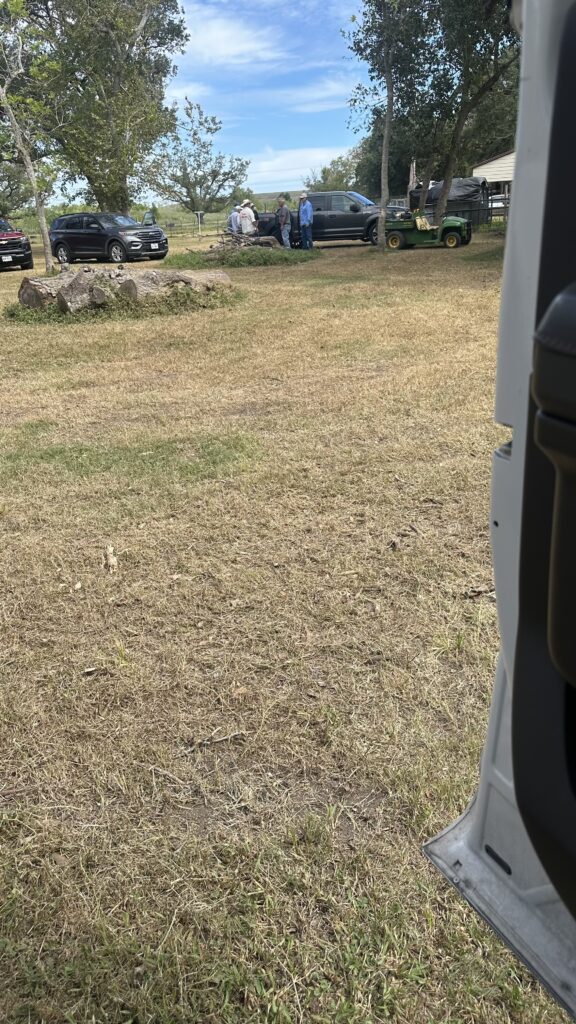
Vehicles and search personnel gather near the cemetery following renewed interest in a possible burial location for Rebecca “Becky” Beard.
While I was in Dubai in October 2026, a property owner near the cemetery contacted me about several visits by retired Brazoria County District Attorney’s Office investigator John Blankenship.
The owner said Blankenship had been looking near the area where a witness claimed Rebecca Beard was buried in 1986.
During our conversation, the owner revealed that he had witnessed suspicious activity in the same area around the time Beard disappeared.
However, he said he initially believed the activity might involve satanic rituals or the burial of animals. He had previously noticed activity in the area that led him to that suspicion.
At the time, he did not believe he had witnessed anything connected to a murder. As a result, he never contacted police.
His suspicions remain unverified, and there is no established evidence connecting satanic activity or animal burials to Beard’s murder.
Shortly after Blankenship spoke with the property owner, a search took place near the cemetery.
Four-hour excavation finds nothing
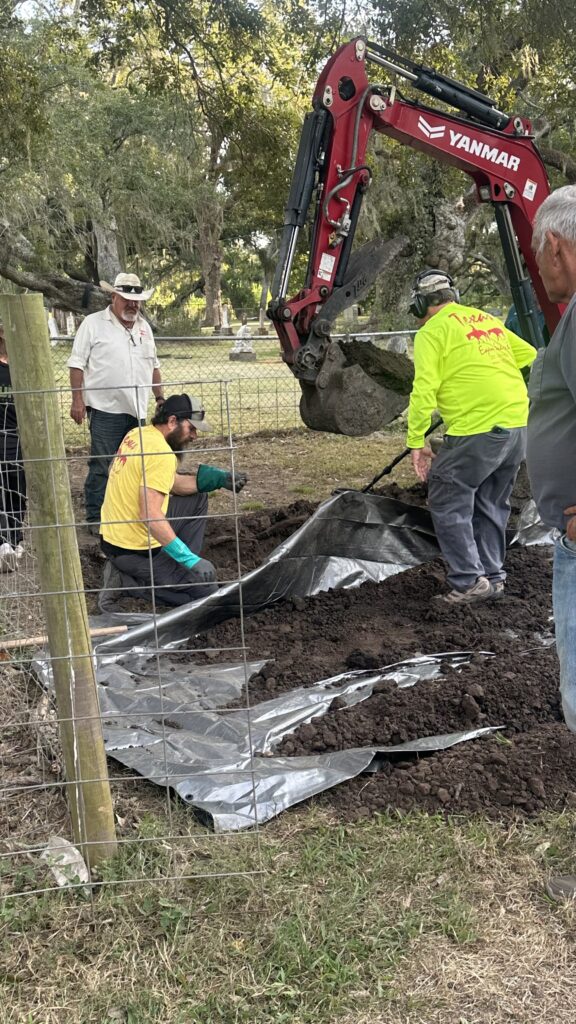
Texas EquuSearch was brought in to assist with the search near the Brazoria County cemetery.
Photographs show excavation equipment removing soil while search personnel carefully examined the ground by hand.
The search focused on an area near where a witness claimed Rebecca Beard was buried alive in 1986.
The operation lasted approximately four hours.
Despite the extensive digging, a source familiar with the search said nothing was found.
Nearly 40 years after Beard’s murder, her remains are still missing.
The latest search has not resolved the questions surrounding her disappearance or the witness’s allegations.
Rebecca Beard disappeared after visiting Freeport nightclub
Rebecca Beard was just 22 years old when she disappeared in March 1986.
She had visited the Excalibur Club in Freeport before vanishing.
Her disappearance left behind a young daughter and a family desperate for answers.
In 1995, Paul Taylor Jr. pleaded guilty to her murder.
However, Beard’s body was never recovered.
Over the years, investigators examined evidence connected to the Excalibur Club and a residence in Clute.
Former investigators also raised questions about evidence discovered during earlier searches.
Despite those investigative efforts, Beard’s remains have never been located.
Family has searched for answers for four decades
For Beard’s mother, Linda Barnes, and sister, Carol Mize, the search has continued for nearly 40 years.
Both have spent decades trying to learn what happened to Becky and where her remains may be.
The latest excavation did not provide the answers they have sought.
Investigators have questioned the cemetery witness’s credibility. The property owner’s account of suspicious activity also remains unverified.
Still, the recent search shows that possible leads continue to emerge decades after Beard’s murder.
The latest excavation raises an important question.
If investigators did not believe the cemetery witness, what prompted renewed interest in the area?
That question remains unanswered.
For Beard’s family, the ultimate goal has not changed.
They want to find Becky and bring her home.
Investigative Reporter Tammy Rose continues investigating the Rebecca Beard murder through public records, interviews, and firsthand accounts. Her documentary, Finding Becky Beard, examines evidence, witness statements, and unanswered questions surrounding the 1986 case. The documentary is available on YouTube.
My new book, When Two Worlds Collide During WWII, follows two families on opposite sides of World War II and the remarkable events that eventually brought their lives together in Wisconsin.
Amazon Affiliate Disclosure: As an Amazon Associate, I earn from qualifying purchases. This comes at no additional cost to you.
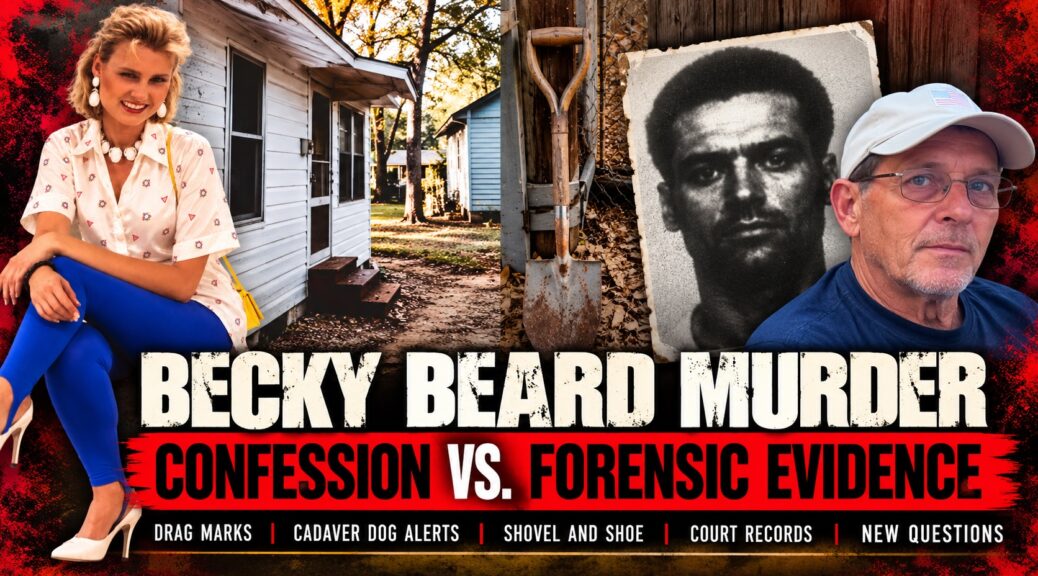
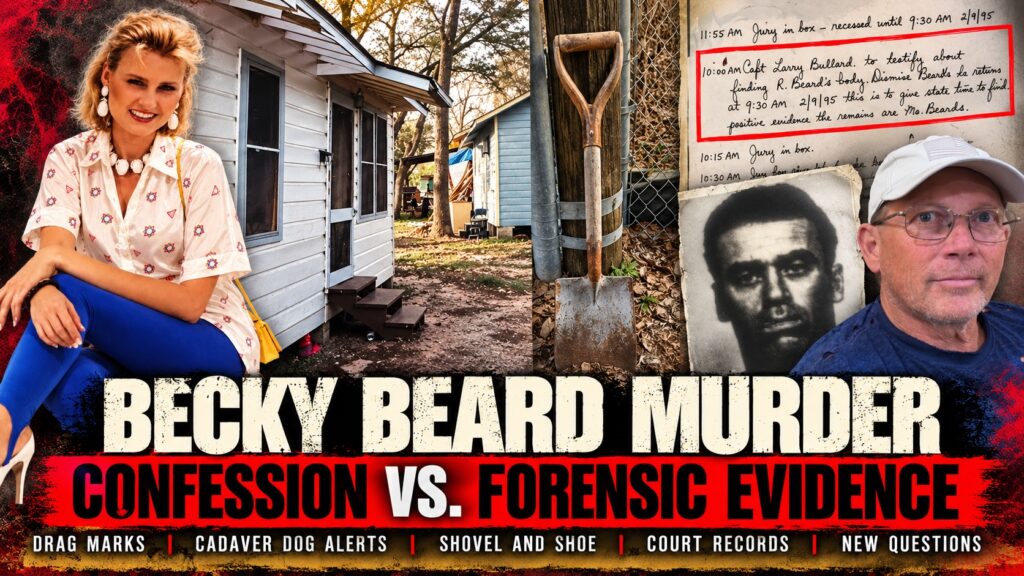
Paul Taylor’s confession vs. forensic evidence. An exclusive investigation reveals new questions about drag marks, cadaver dog alerts, a shovel found beneath the house and court records referencing Becky Beard’s remains.
Did Paul Taylor tell investigators everything about what happened to Rebecca “Becky” Beard?
Nearly 40 years after the 22-year-old disappeared from Freeport, Texas, new questions surround her murder.
A comparison of Taylor’s confession and previously undisclosed investigative findings reveals significant differences.
In my exclusive interview, retired Freeport police captain Richard Miller described apparent blood evidence and drag marks inside a home linked to Becky’s murder.
Two cadaver dogs also alerted beneath the property.
Miller began digging and discovered unidentified white material. However, officials ordered him to stop before he could identify it.
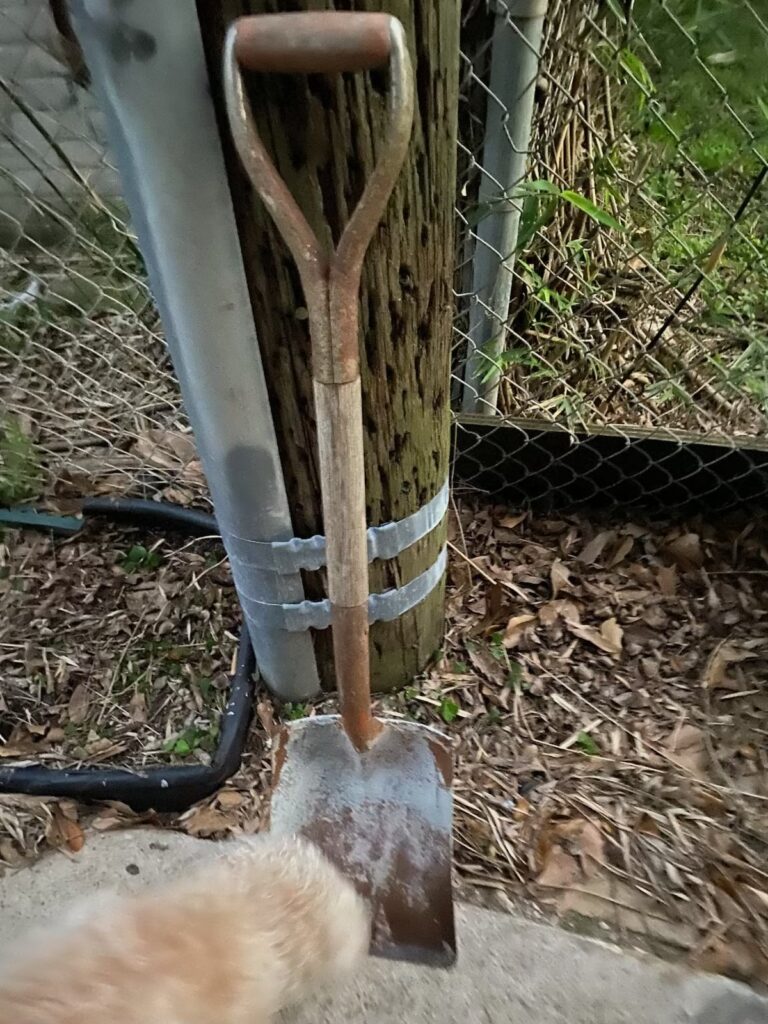
Becky’s mother, Linda Barnes, also found a shovel and shoe beneath the house. According to the family, investigators never entered either item into evidence.
Newly uncovered court records raise even more questions. They reference Becky’s body and a Remington shotgun after Taylor’s guilty plea.
What really happened inside that house? And where are Becky’s remains?
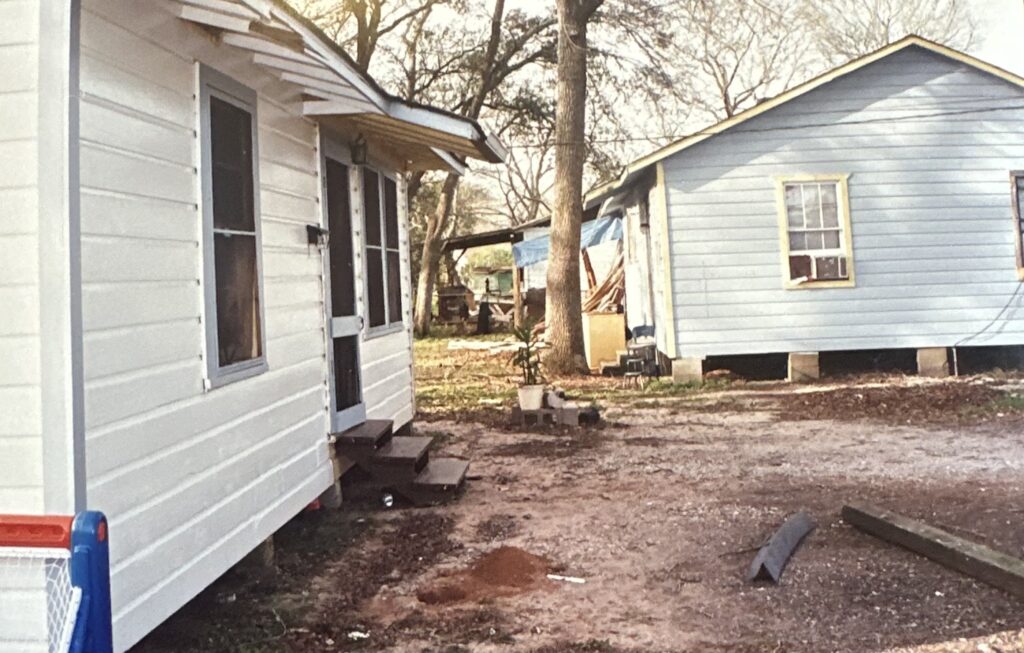
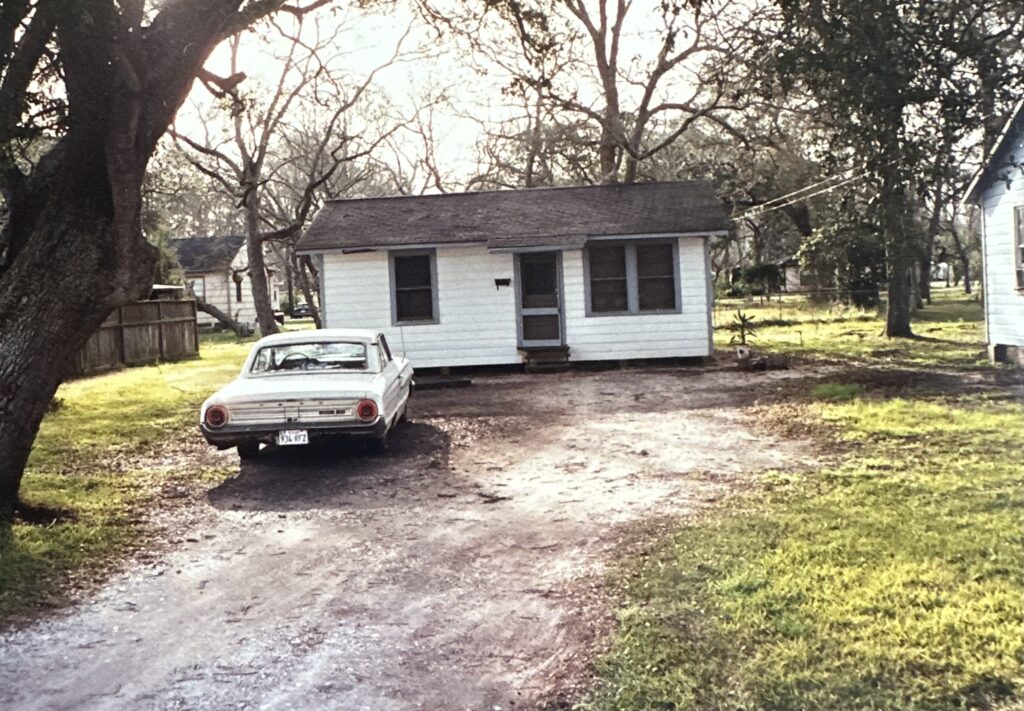
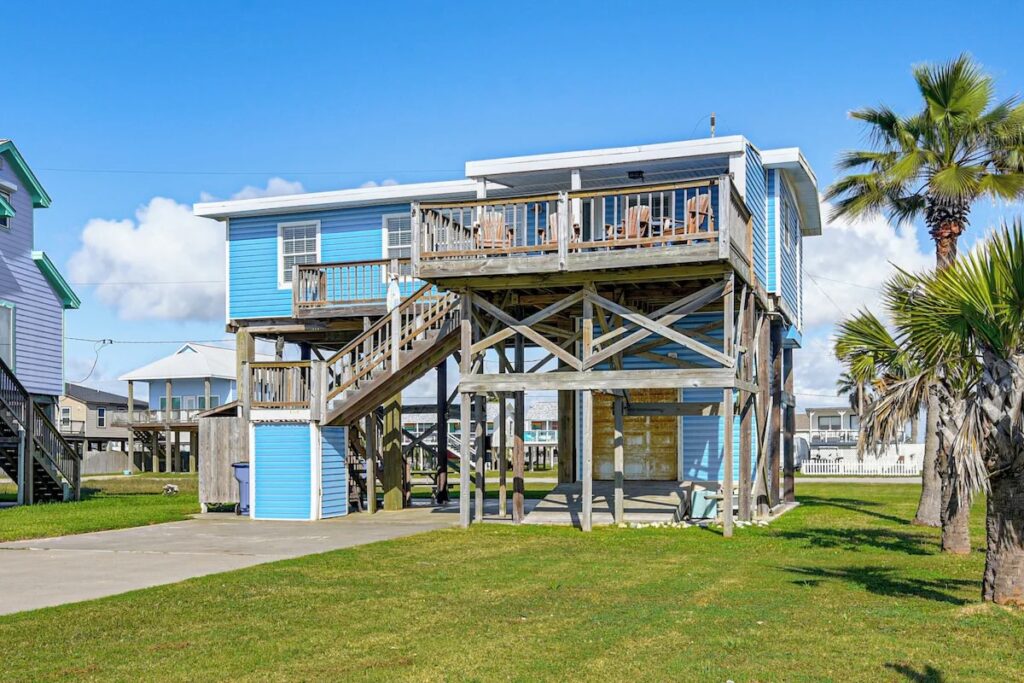
The home linked to Becky Beard’s murder. Retired Freeport police captain Richard Miller says investigators found apparent blood evidence and drag marks inside. Two cadaver dogs also alerted beneath the property.
What Paul Taylor said happened to Becky Beard
Becky disappeared after visiting the Excalibur Club in Freeport on March 1, 1986.
Taylor admitted that Becky left the club with him. He said they drove to his home, where an argument eventually turned violent.
During a recorded interview with Becky’s mother, Taylor claimed an argument over cocaine led to the shooting.
He said he had promised to obtain cocaine but could not reach his supplier.
According to Taylor, Becky became angry and threatened to call police.
Taylor admitted that he grabbed a gun and tried to frighten her.
He then told Linda that he shot Becky between the eyes.
Taylor claimed Becky died immediately.
He later pleaded guilty to her murder in 1995. However, investigators never recovered her body.
Forensic evidence reveals apparent drag marks inside the home
The home linked to Becky Beard’s murder. Retired Freeport police captain Richard Miller says investigators found apparent blood evidence and drag marks inside. Two cadaver dogs also alerted beneath the property.
Taylor described wrapping Becky’s body in bedsheets before placing her in his car.
However, Miller’s account raises questions about how someone moved her body.
During his investigation around 1994, Miller returned to the home where investigators believed the murder occurred.
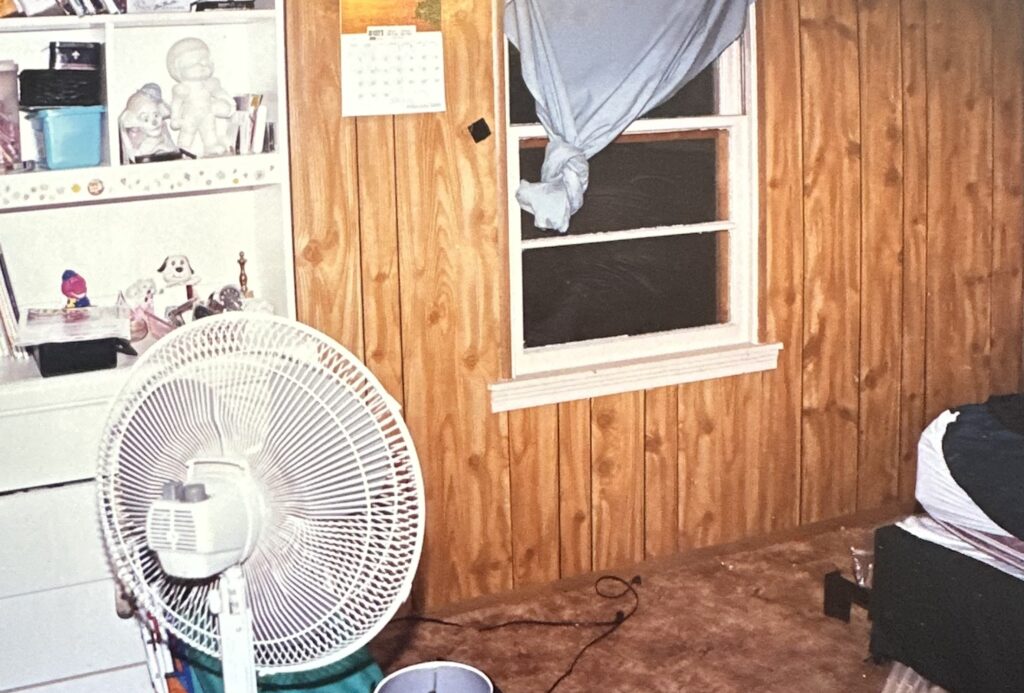
He removed wall paneling and conducted luminol testing.
Miller said the testing revealed apparent blood smears on the bedroom wall and floor.
He also observed what appeared to be drag marks.
Those marks extended from the bedroom, through a common area and toward the back door.
According to Miller, the marks ended at that door.
Could someone have dragged Becky through the house before placing her body in a vehicle?
Taylor’s account does not explain the apparent drag marks.
However, additional forensic testing would need to establish what caused them.
Two cadaver dogs alerted beneath the house
Another view of the home linked to Becky Beard’s murder, where retired police captain Richard Miller says investigators discovered apparent blood evidence and drag marks.
Miller’s investigation took another unexpected turn when a dog handler brought two cadaver dogs to the property.
The first dog searched the house and alerted beneath the kitchen area, near the back door.
The handler then brought in a second dog.
That dog searched from another direction and alerted at the exact same location.
Miller crawled beneath the house and began digging by hand.
A few inches below the surface, he discovered soft white material.
He immediately thought about the clothing Becky reportedly wore when she disappeared.
However, Miller never determined what he had found.
He said a district attorney’s investigator and the Clute police chief arrived at the property.
They ordered him to stop digging because Taylor’s trial was approaching.
Miller complied and left the excavation unfinished.
Officials never secured the home as a crime scene during that investigation.
Linda Barnes found a shovel and shoe beneath the house
Linda Barnes discovered this shovel beneath the Clute home linked to Becky Beard’s murder. The family says investigators never entered it into evidence.
Becky’s mother conducted her own investigation into her daughter’s disappearance.
During her search beneath Taylor’s former home, Linda discovered a short-handled shovel and a shoe.
Linda described burn marks on the shovel. She also claimed it carried dirt similar to soil at the suspected burial site.
According to the family, investigators never entered either item into evidence.
During her recorded interview with Taylor, Linda confronted him about the shovel.
Taylor said he could not remember leaving it beneath the house.
He suggested he might have obtained it from his father or mother.
Years later, Miller discovered apparent blood evidence and drag marks inside the same home.
Two cadaver dogs also alerted beneath the property.
Miller began digging and uncovered unidentified white material.
However, officials ordered him to stop before he could identify it.
Did Linda and Miller discover evidence connected to Becky’s disappearance?
Investigators never established that connection through the forensic testing documented in the available interviews.
Did Paul Taylor place Becky beneath the house?
Thumbnail for an article examining conflicting accounts regarding whether Paul Taylor Jr. declined legal representation in the Rebecca Beard murder case.
Taylor claimed he wrapped Becky in bedsheets and roofing paper before placing her body in his car.
He said he later drove to a remote location and buried her.
However, Linda confronted him about the shovel she had discovered beneath his home.
Taylor said he could not remember placing it there.
Miller’s discovery raises another question.
Why did two cadaver dogs alert beneath the home if Taylor immediately transported Becky to another location?
The alerts alone cannot establish that Becky’s body was beneath the house.
They also cannot determine whether someone moved her remains.
Investigators would need additional physical evidence to establish either possibility.
Did investigators recover evidence of a handgun or shotgun?
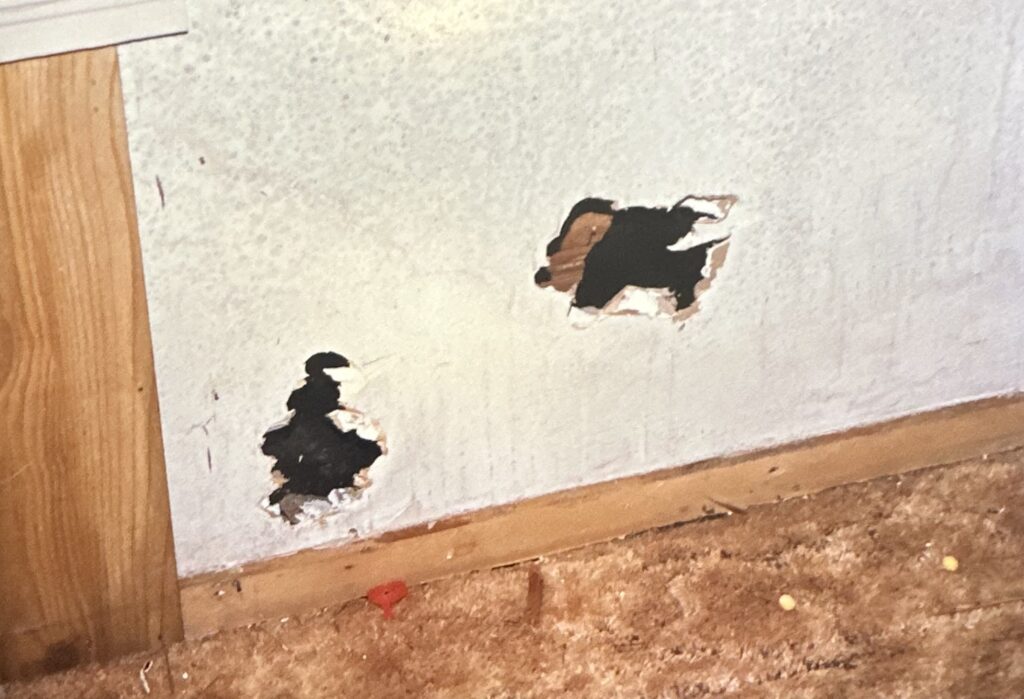
Two suspected bullet holes documented inside the Clute home. Retired Freeport police captain Richard Miller believes a large-caliber handgun, possibly a .357, could have caused them. He disputes the theory that they came from a shotgun.
Taylor admitted that he shot Becky but did not identify the firearm’s caliber during his interview with Linda.
He claimed he found a gun in his mother’s attic and brought it home.
Miller recalled discovering two holes through the bedroom floor, behind the baseboard.
He believed the holes appeared consistent with a large-caliber handgun.
During my interview, Miller examined photographs from the investigation.
He rejected the suggestion that the holes showed evidence of a shotgun blast.
Miller said he believed a handgun could have caused them. He mentioned a .357 as one possibility.
However, he did not identify a specific weapon.
Newly uncovered case records also reference a Remington shotgun.
Miller said he had never heard about that shotgun during his involvement in Becky’s case.
He also explained that investigators sometimes collect multiple firearms for elimination testing.
The available interviews do not establish whether investigators recovered bullets or conducted ballistics testing in Becky’s murder.
Did investigators ever identify the weapon that killed Becky?
Paul Taylor’s timeline raises additional questions
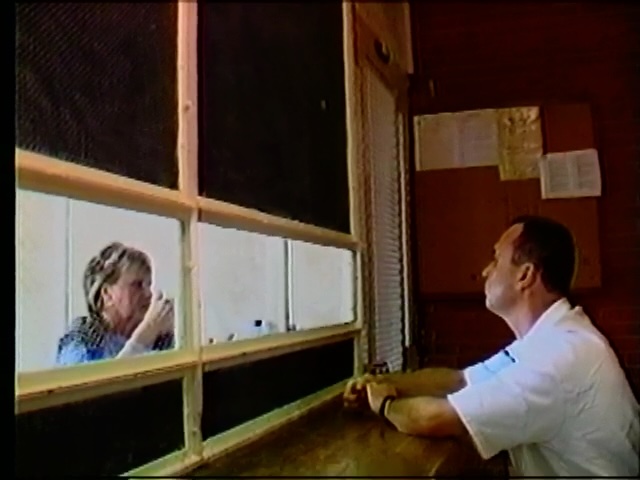
Linda Barnes confronts Paul Taylor about her daughter’s murder during a prison interview. Taylor claimed heavy drinking affected his memory of the night Becky disappeared.
Taylor repeatedly claimed that heavy drinking affected his memory.
He estimated that he and Becky left the Excalibur Club around 12:30 or 1 a.m.
He said he drank approximately 10 alcoholic drinks that night.
After the shooting, Taylor claimed he struggled to decide what to do with Becky’s body.
He described wrapping her in sheets and placing her in his car during daylight.
However, he also said he spent much of the following day recovering from the alcohol and cleaning the house.
Linda confronted him about another reported incident.
According to Linda, a tow-truck operator and a neighbor described Taylor backing his car into a ditch near his home.
Taylor claimed he could not remember the incident.
He also disputed whether it happened.
These details leave questions about when Taylor moved Becky’s body and what happened outside the home.
What happened to Becky’s missing remains?
A recreation of the outfit Becky Beard reportedly wore the night she disappeared from Freeport, Texas, on March 1, 1986. Her family continues searching for her remains nearly 40 years later.
Taylor maintained that he took investigators to the correct burial site.
He described parking near a tree to conceal his activities from a farmer working nearby.
He said he wrapped Becky in bedsheets and roofing paper before burying her.
However, investigators failed to recover her remains.
Taylor expressed surprise that they found neither her body nor the sheets.
He suggested wild animals, including feral hogs, might have disturbed the burial site.
That explanation remains unverified.
Meanwhile, Miller’s account introduces another location that investigators never fully examined.
The area beneath the house could hold answers about what happened to Becky after her death.
However, the available evidence does not establish that anyone buried her there.
Court records reference possible remains after Taylor’s guilty plea
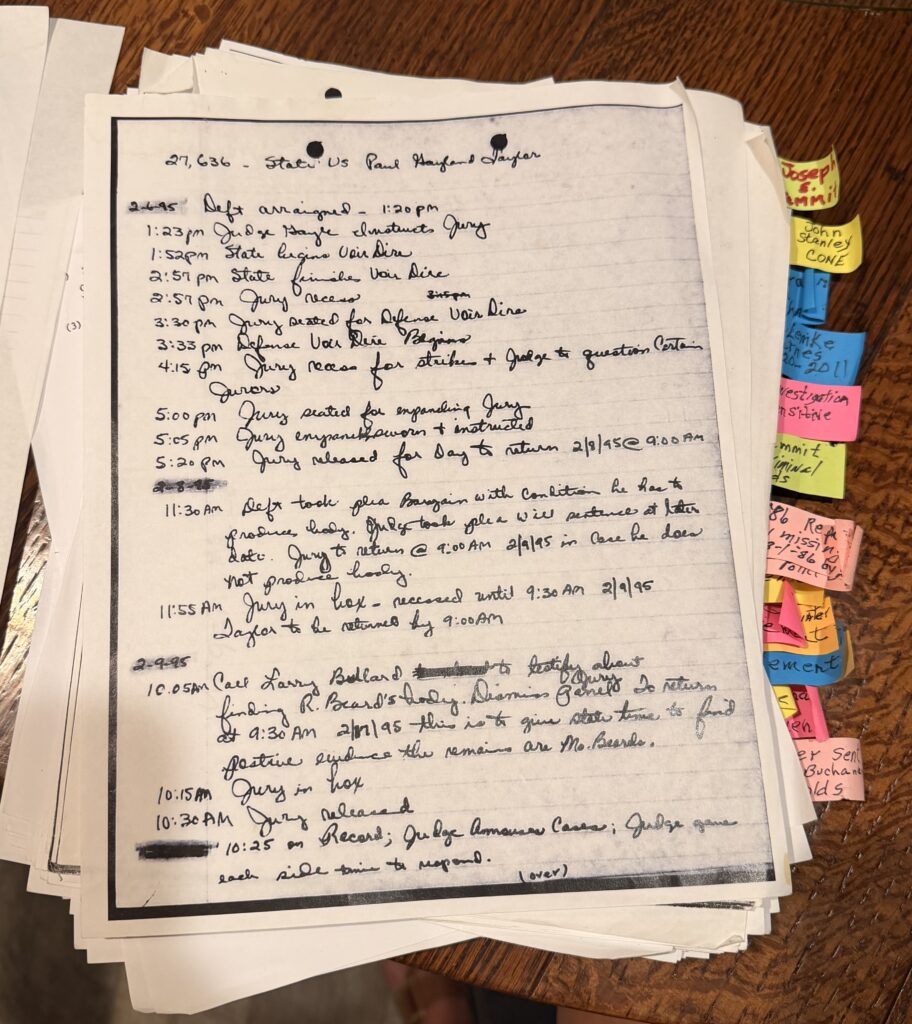
Court records uncovered by Becky Beard’s family reference the discovery of her body and plans to establish positive identification after Paul Taylor’s guilty plea in 1995. Becky’s remains have never been recovered or positively identified.
Becky’s family has spent decades searching for answers.
Their investigation uncovered court records that reference her body and a Remington shotgun after Taylor’s guilty plea in February 1995.
The handwritten court notes also reference investigator Larry Bullard.
One entry describes plans for Bullard to testify about finding Becky’s body. It also references additional time to establish positive identification.
The family says it learned about these records decades later.
During my exclusive interview, Miller said he knew nothing about investigators recovering Becky’s remains.
He also said he had never heard about a Remington shotgun in connection with the case.
Miller questioned why the family would not have learned about such a discovery.
He explained that investigators would ordinarily seek identification through dental records, DNA testing or other forensic methods.
The court documents raise questions about what investigators recovered after Taylor’s guilty plea.
Did investigators discover possible human remains?
Where did those remains go?
Did anyone submit them for forensic identification?
Why did Becky’s family learn about these records decades later?
The documents do not establish that investigators positively identified Becky’s body.
Her family continues to search for her remains.
Why did officials stop the excavation?
The home linked to Becky Beard’s murder. Retired Freeport police captain Richard Miller says investigators found apparent blood evidence and drag marks inside. Two cadaver dogs also alerted beneath the property.
Miller’s account presents one of the most significant unanswered questions in this investigation.
Investigators had apparent blood evidence inside the home.
They observed possible drag marks leading toward the back door.
Two cadaver dogs independently alerted beneath the property.
Miller then discovered unidentified white material while digging at that location.
Yet officials ordered him to stop before he could identify it.
Miller said they cited concerns about the upcoming trial.
He never personally entered physical evidence from that excavation into the case.
Nearly four decades after Becky disappeared, her family continues to search for her remains.
Taylor’s confession established his involvement in her murder. However, it did not answer every question about what happened inside the home or where Becky’s body went.
The original forensic reports, evidence logs and sealed court records could help resolve those questions.
Did investigators overlook evidence that could finally lead Becky’s family to her remains?
For Becky’s mother, sister and daughter, the search for answers continues.
My new book, When Two Worlds Collide During WWII, follows two families on opposite sides of World War II and the remarkable events that eventually brought their lives together in Wisconsin.
The story is based on my own family history, with real people, family photographs and stories passed down through generations.
Disclosure: As an Amazon Associate, I earn from qualifying purchases.
Retired Freeport police captain Richard Miller reveals evidence discovered inside a home linked to the Becky Beard murder case, including apparent blood evidence, drag marks and cadaver dog alerts.
Nearly 40 years after Rebecca “Becky” Beard disappeared, a retired Freeport police captain is revealing evidence investigators discovered inside a home believed to be connected to her murder.
In my exclusive interview, Richard Miller describes apparent blood evidence, drag marks and two cadaver dogs that alerted beneath the home. He also recalls finding unusual material while digging before officials ordered him to stop.
Despite those discoveries, investigators never secured the home as a crime scene.
Watch my exclusive interview with Richard Miller
Richard Miller reveals evidence discovered inside the home
Retired Freeport police captain Richard Miller speaks exclusively with Investigative Reporter Tammy Rose about evidence discovered inside a home linked to Becky Beard’s murder.
Miller spent 22 years with the Freeport Police Department. He was a rookie when Becky disappeared in March 1986. Years later, he revisited the investigation as a police captain.
During a search of the home, investigators used luminol to look for possible blood evidence. Miller describes apparent blood smears on a wall and floor, along with marks leading toward the back door.
Two cadaver dogs also alerted beneath the house.
Officials ordered Miller to stop digging
Miller says he began digging beneath the home after the dogs alerted. During that search, he discovered unusual white material.
Before he could determine what he had found, officials ordered him to stop.
The material has not been confirmed as human remains. However, Miller’s account raises questions about evidence investigators may have left behind.
Why wasn’t the home secured as a crime scene?
Inside the home investigators searched in connection with Becky Beard’s murder. Retired Freeport police captain Richard Miller describes evidence discovered during the investigation.
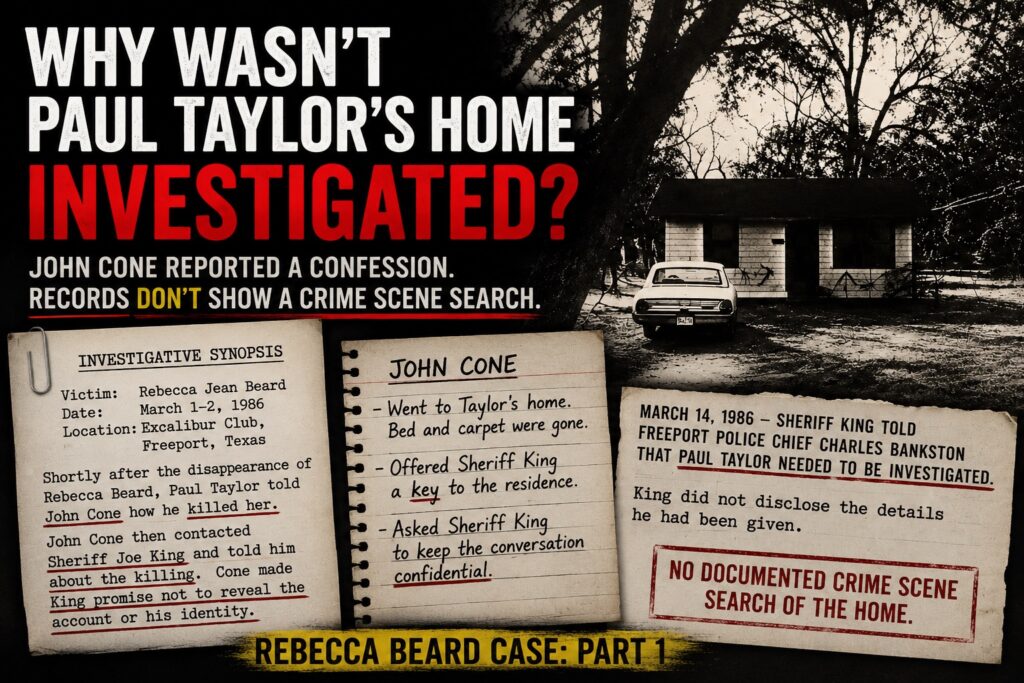
John Cone previously told investigators that Paul Taylor Jr. allegedly confessed to him about Becky’s death.
Cone reported that Taylor had removed a mattress and carpet from the home. He also offered authorities a key to the property.
Yet investigators did not immediately secure and process the residence following Cone’s report.
Miller’s account now provides additional details about what investigators discovered during a later search.
Newly uncovered records raise more question
Newly uncovered investigative notes reference finding Becky Beard’s body. Her family says they were never informed of such a discovery, raising questions about what investigators knew in 1995.
Becky’s family has spent decades searching for her remains. They have also reviewed investigative reports and court records in their effort to uncover what happened.
Records involving possible human remains have raised additional questions for the family.
Miller’s interview offers a new perspective on the evidence discovered beneath the house. However, it does not establish that investigators recovered human remains.
Paul Taylor Jr. pleaded guilty in connection with Becky’s death in 1995. Her body has never been recovered.
My new book, When Two Worlds Collide During WWII, follows two families on opposite sides of World War II and the remarkable events that eventually brought their lives together in Wisconsin.
The story is based on my own family history, with real people, family photographs and stories passed down through generations.
Disclosure: As an Amazon Associate, I earn from qualifying purchases.
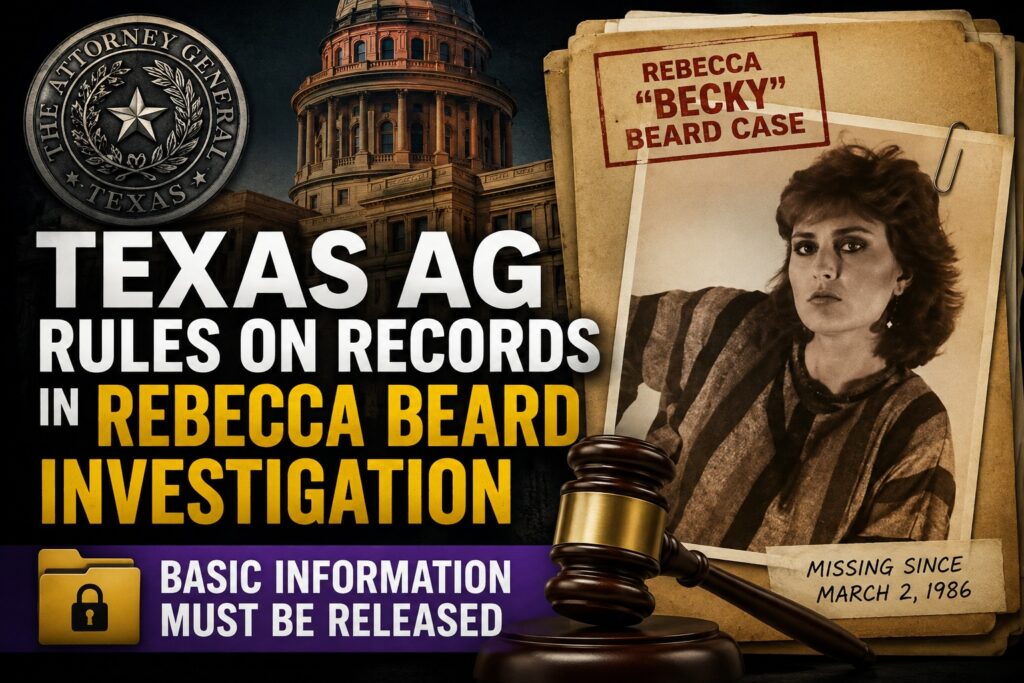
The Texas Attorney General ruled Aug. 28, 2026, that Brazoria County may withhold investigative information tied to the Rebecca “Becky” Beard case, but must release basic information.
More records in the decades-old Rebecca “Becky” Beard case will remain out of public view for now.
The Texas Attorney General issued a new ruling Aug. 28 allowing Brazoria County to withhold investigative information because authorities say it relates to an ongoing criminal case.
But the ruling comes with an important exception.
Brazoria County must release the basic information.
I have already requested it.
New ruling in the Rebecca Beard records investigation
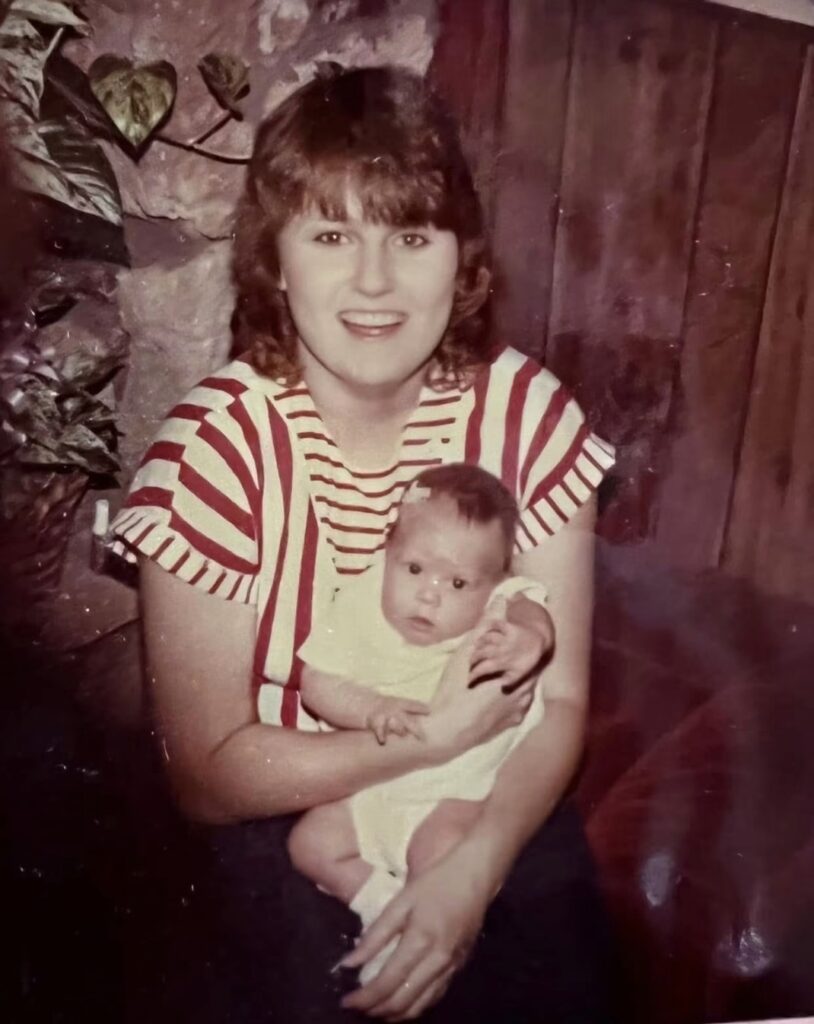
Rebecca “Becky” Beard pictured with her daughter before Becky disappeared from Freeport, Texas, in March 1986.
Beard was 22 when she disappeared after leaving the Excalibur Club in Freeport in March 1986.
Her body has never been recovered.
Paul Taylor Jr. pleaded guilty in 1995 in connection with her death, but questions surrounding the case have continued for decades.
My investigation has included multiple public information requests seeking Brazoria County records connected to the case.
Those requests have now resulted in another Attorney General ruling.
Brazoria County says the criminal case is ongoing
The Aug. 28 decision provides an important detail about the current status of the investigation.
According to the Attorney General, Brazoria County said a law enforcement agency objected to releasing the information because it “relates to an ongoing criminal case.”
The county argued that releasing the records could interfere with that case.
The Attorney General agreed that the investigative information may be withheld under Section 552.108(a)(1) of the Texas Government Code.
However, the ruling also says the county must release basic information under Section 552.108(c).
Eight Brazoria County records requests included in ruling
The Attorney General combined eight Brazoria County reference numbers in the decision:
26-1859, 26-1865, 26-1874, 26-1933, 26-1947, 26-1950, 26-1991 and 26-2012.
The Attorney General assigned the matter request ID 26-033498.
The Aug. 28 decision is OR2026-038106.
What will Brazoria County release?
That is now the question.
The ruling does not mean Brazoria County must turn over the entire investigative file.
It does mean the county cannot withhold everything.
I have submitted a follow-up request seeking the basic information that the Attorney General says must be released.
Once those records arrive, I will review them and report what they reveal.
After 40 years, the Rebecca Beard case continues to generate new questions — and the state now confirms that authorities still consider the matter tied to an ongoing criminal case.
Read the Attorney General ruling
I have included the Aug. 28, 2026 Texas Attorney General ruling connected to these Brazoria County records requests below.
The ruling, OR2026-038106, says the county may withhold investigative information tied to the ongoing criminal case, but must release basic information.
For readers traveling to Brazoria County for court proceedings, research or other business, Hotels.com can help compare accommodations throughout the area and along the Texas Gulf Coast.
This post may contain affiliate links. I may earn a commission from qualifying bookings at no additional cost to you.
Public-records investigations often mean sorting through court filings, police reports, photographs and hundreds of pages of documents. Amazonhas portable scanners, external drives, document organizers and other tools that can help keep large research projects organized.
As an Amazon Associate, I earn from qualifying purchases.
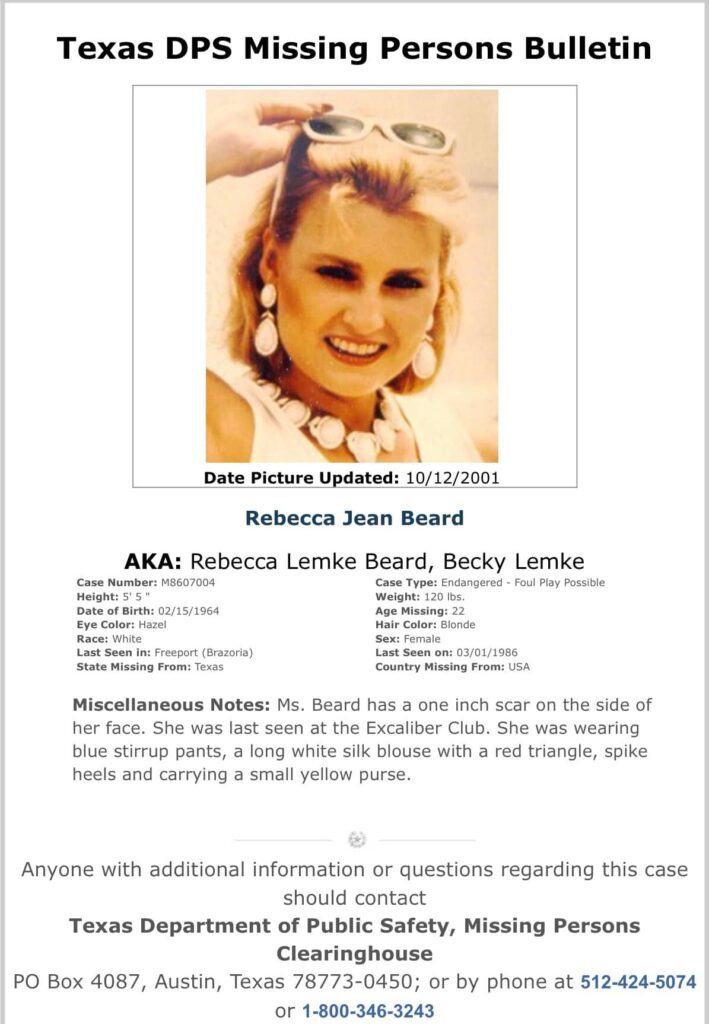
Texas Department of Public Safety missing person bulletin for Rebecca “Becky” Beard, who disappeared in 1986.
Brazoria County seeks to withhold Rebecca Beard records
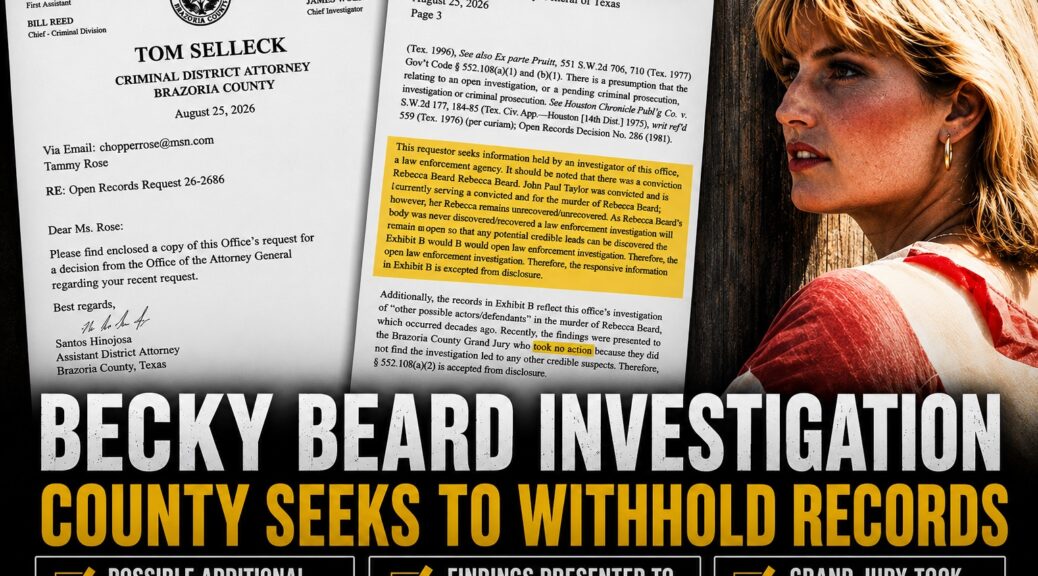
Brazoria County prosecutors are asking the Texas Attorney General for permission to withhold records connected to the renewed investigation into the 1986 disappearance and murder of Rebecca “Becky” Beard.
The August 25 filing also reveals new details about the investigation.
Prosecutors confirmed investigators examined information involving possible additional suspects in Beard’s murder. They also confirmed investigators recently presented their findings to a Brazoria County grand jury.
The grand jury took no action.
Records request targeted 2026 investigation
I submitted a Texas Public Information Act request on August 10 seeking records related to the 2026 investigation.
The request focused on information provided by Cherie Starr, also known as “Rio.”
I requested interviews, statements, reports, recordings, photographs, maps and investigative notes connected to Starr’s information.
I also sought records concerning any location Starr identified as a possible site for Beard’s remains or other evidence.
The request included records involving a possible search, excavation or dig.
I also requested communications between the Brazoria County District Attorney’s Office, Brazoria County Sheriff’s Office, Texas Rangers and other law enforcement agencies.
Importantly, the request did not seek secret grand jury testimony, deliberations, voting records or juror identities.
Brazoria County confirms responsive records exist
The District Attorney’s Office confirmed it holds records that respond to the request.
However, prosecutors want to withhold those records in their entirety.
In its August 25 letter to the Texas Attorney General, the DA’s Office cited the law-enforcement exception under Section 552.108 of the Texas Government Code.
Prosecutors argue that Beard’s murder investigation remains open because her body has never been recovered.
They contend releasing the requested records could interfere with that continuing investigation.
Filing reveals investigation of possible additional suspects
The filing provides an important glimpse into what happened during the renewed investigation.
Prosecutors wrote that their office had recently investigated “other possible actors/defendants” in Beard’s murder.
According to the filing, investigators presented those findings to a Brazoria County grand jury.
The DA’s Office said the grand jury took no action because investigators did not develop other credible suspects.
That disclosure provides new information about the scope of the 2026 investigation.
It shows investigators did more than simply review an old case file. They examined whether other people may have played a role in Beard’s murder and brought those findings before a grand jury.
Paul Taylor was convicted, but Becky remains missing
John Paul Taylor Jr. pleaded guilty in 1995 to murdering Beard.
Beard was 22 when she disappeared in March 1986.
Her body has never been recovered.
The DA’s filing cites that fact as one reason the murder investigation remains open. Prosecutors argue law enforcement must remain able to investigate credible new leads if they emerge.
Prosecutors also claim attorney work-product protection
The District Attorney’s Office makes another argument for withholding the records.
Prosecutors say the requested investigative notes and materials contain attorney work product.
According to the filing, a DA investigator prepared the records while working at the direction of an appointed special prosecutor.
The DA argues the documents contain investigative strategy, mental impressions and legal reasoning connected to potential criminal litigation.
For those reasons, prosecutors asked the Attorney General to allow them to withhold all of the responsive records.
The Attorney General will decide
The August 25 filing is not a final ruling on my records request.
It is Brazoria County’s argument for why the records should remain confidential.
The Texas Attorney General’s Office will now review the arguments and determine whether state law allows Brazoria County to withhold the requested material.
The decision could allow the county to withhold the records, require the release of some information, or require additional responsive material to be released.
I will continue following the records dispute and the investigation into what happened to Rebecca Beard.
The public records request and Brazoria County District Attorney’s Office filing to the Texas Attorney General are attached below.
If you are traveling to Brazoria County to follow developments in the Rebecca Beard case, you can compare hotel options through Hotels.com. Look for rooms near Angleton, Lake Jackson, Freeport or the surrounding area, depending on your plans.
I may earn a commission from qualifyingHotels.com bookings made through my link, at no additional cost to you.
Court records, interviews and long hours on the road can mean a lot of waiting. A portable phone charger, reusable water bottle and lightweight bag can make the day easier. You can find travel gear and everyday reporting essentials on Amazon.
As an Amazon Associate, I may earn from qualifying purchases at no additional cost to you.
Nearly 40 years after Rebecca “Becky” Beard disappeared from Freeport, Texas, her family is still searching for the answer that matters most.
Where is Becky?
Rebecca “Becky” Beard disappeared in March 1986. Her family continues searching for information that could help locate her remains.
Now, her family wants the public to hear information from a woman known as “Rio.” Her account includes disturbing claims about what may have happened to Becky and where someone may have taken her remains.
However, an important warning comes with Rio’s story.
According to Becky’s family, prosecutors recently presented information involving Rio to a Brazoria County grand jury. Family members say the grand jury took no action.
Becky’s family also says the Brazoria County District Attorney’s Office told them investigators did not consider Rio a credible witness.
I am not presenting Rio’s statements as established facts.
Still, Becky’s family believes parts of her account could contain accurate information. They hope releasing these details reaches someone who knows what happened or where to find Becky.
Who Was Rebecca “Becky” Beard?
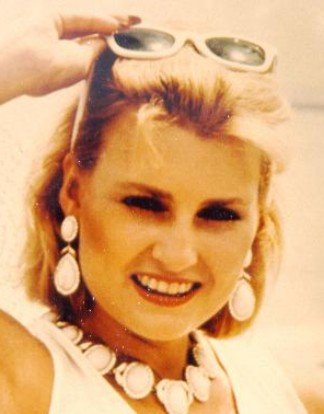
Rebecca “Becky” Beard pictured with her daughter before Becky disappeared from Freeport, Texas, in March 1986.
Becky Beard was 22 years old when she disappeared after spending the night at the Excalibur Club in Freeport on March 1, 1986.
She never came home.
Investigators have never recovered her body.
Years later, Paul Taylor Jr. pleaded guilty in connection with Becky’s death. Despite that conviction, her family has spent decades trying to find her remains.
That search continues today.
Who Is the Witness Known as Rio?
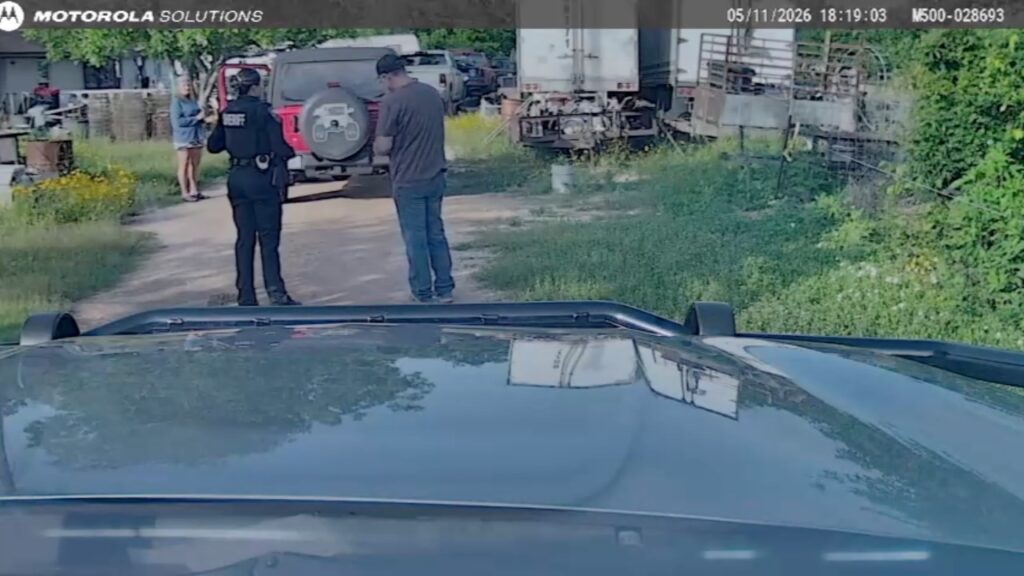
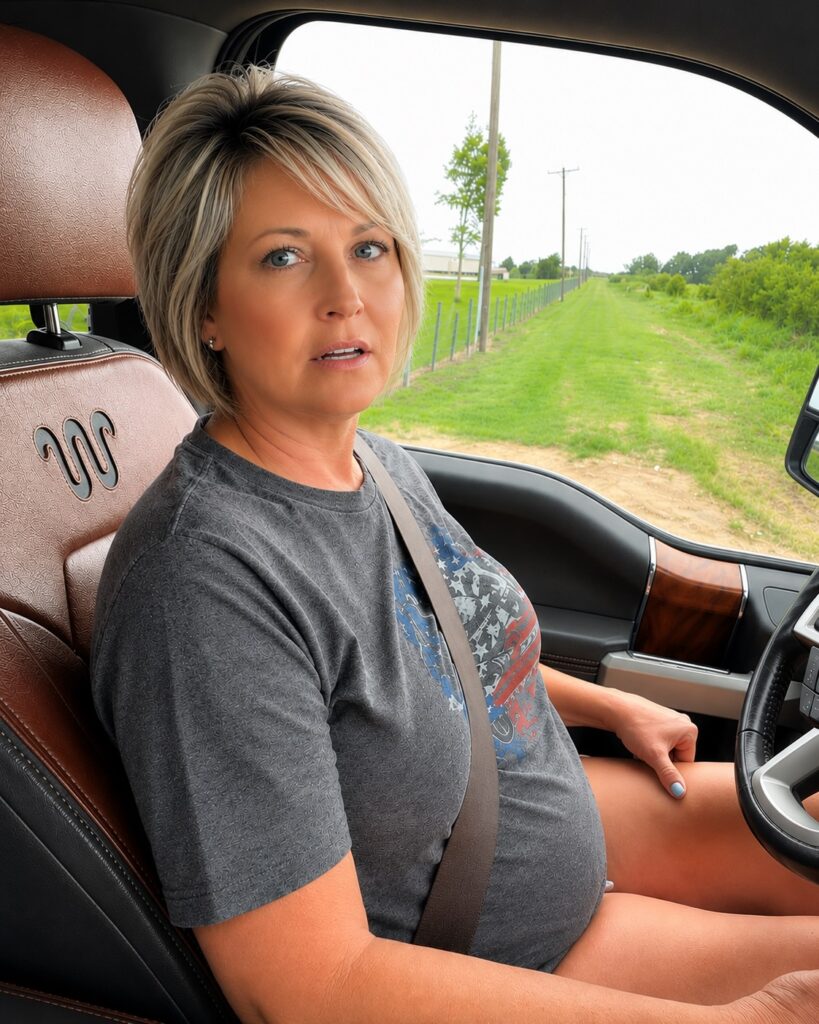
Cherie “Rio” Starr stands near Tammy Rose’s Jeep during an interview connected to the Rebecca “Becky” Beard investigation.
During my investigation, I tracked down Cherie “Rio” Starr, a woman who has provided an account of events surrounding Becky’s disappearance.
Rio made several specific and disturbing claims. Some involve what allegedly happened to Becky’s body and where people may have taken her remains.
Investigators have not established those claims as fact.
According to Becky’s family, the district attorney told them authorities did not find Rio credible.
Still, one reason the family has not completely dismissed her story is that some details appear to connect with information they already knew about Becky’s life before she disappeared.
The Galveston Weekend in Becky’s Planner
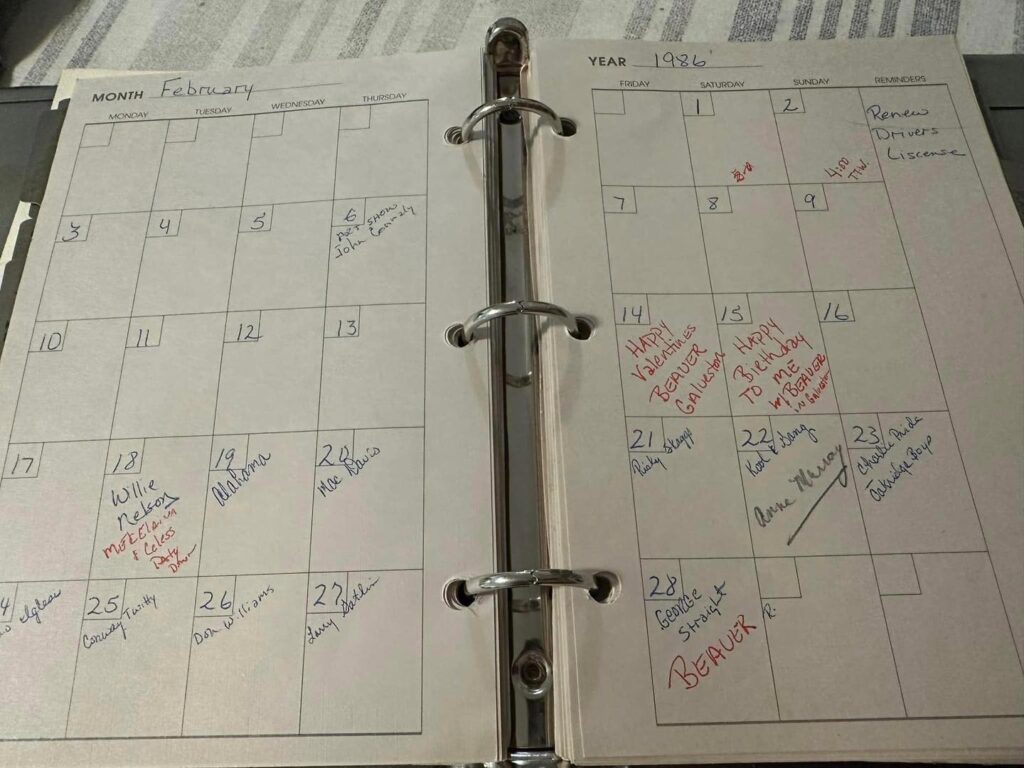
Becky Beard’s personal planner contains entries documenting events and trips in the weeks before her March 1986 disappearance.
One detail deserves closer examination.
Becky kept a planner. An entry documents a weekend trip to Galveston from February 14 through February 16, 1986, just weeks before she disappeared.
Becky was dating Beaver Aplin at the time.
Rio described an incident involving Aplin during which she said he got down on his knees with a dozen roses, jewelry and bottles.
That detail caught the family’s attention because Becky’s mother, Linda Barnes, already knew about Becky’s Galveston weekend.
Linda recalled Becky returning from the trip and throwing away roses.
Her mother asked her why she was throwing them away.
According to Linda, Becky did not want to talk about it.
That does not prove Rio’s account.
It does, however, raise a question for the family: How much of Rio’s story, if any, could be independently verified?
Becky’s planner documents the Galveston weekend. Her mother remembers the roses. Rio later provided an account involving roses and the man Becky was dating.
The family believes those details are worth examining rather than ignoring.
Family Says Evidence Was Presented to a Grand Jury
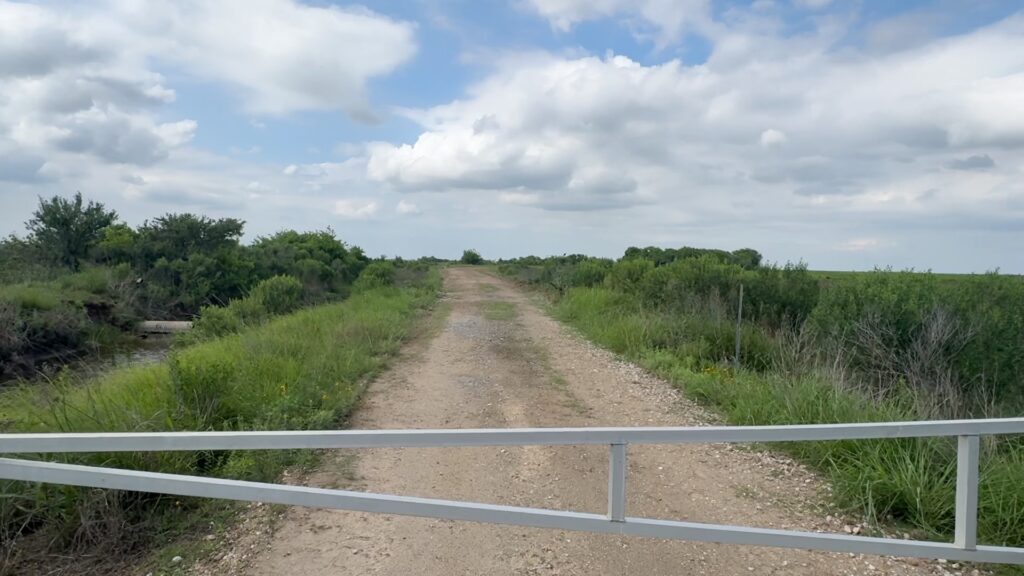
A remote dirt road in the Brazoria National Wildlife Refuge near the area where witness Cherie Lynette “Rio” Starr claims Rebecca “Becky” Beard was buried.
Becky’s family says prosecutors recently presented evidence involving Rio to a Brazoria County grand jury.
According to family members, the grand jury took no action.
They also say the district attorney told them authorities did not consider Rio a credible witness.
Those details matter.
Rio’s claims are not established facts.
I am not presenting them as proof of what happened to Becky.
Instead, the family wants to know whether someone else can independently confirm any part of her account.
Why Release Rio’s Story?
There is a simple reason.
Becky still has not been found.
Almost four decades have passed since she disappeared. People who were young adults in 1986 are now much older. Some witnesses have died. Properties have changed. Memories have faded.
That makes information from people who were there increasingly important.
The family understands authorities have questioned Rio’s credibility. They also understand that a grand jury took no action after hearing information related to her account, according to what family members say they were told.
Still, they cannot get past the possibility that one detail could be true even if other parts of a witness’s story are not.
The Galveston weekend is one reason they continue asking questions.
Someone May Remember Something
Texas Department of Public Safety missing person bulletin for Rebecca “Becky” Beard, who disappeared in 1986.
Maybe you were at the Excalibur Club.
Maybe you knew Becky, Paul Taylor Jr., Beaver Aplin or Rio.
Maybe you remember the Galveston weekend in February 1986.
Maybe you heard a conversation afterward.
Or perhaps you know something about a location connected to the case.
The family isn’t asking people to speculate. They are looking for firsthand information that can be independently checked.
If you know something, even if it seemed insignificant at the time, consider coming forward.
After nearly 40 years, Becky’s family isn’t looking for rumors.
They are looking for Becky.
Carol Mize shows areas she has searched while continuing to look for answers in the 1986 disappearance of her sister, Rebecca “Becky” Beard.
This article is part of my continuing independent investigation into the disappearance and death of Rebecca “Becky” Beard. Statements attributed to witnesses represent their accounts unless independently corroborated. The inclusion of any person’s name does not imply criminal conduct or involvement in Becky’s death.
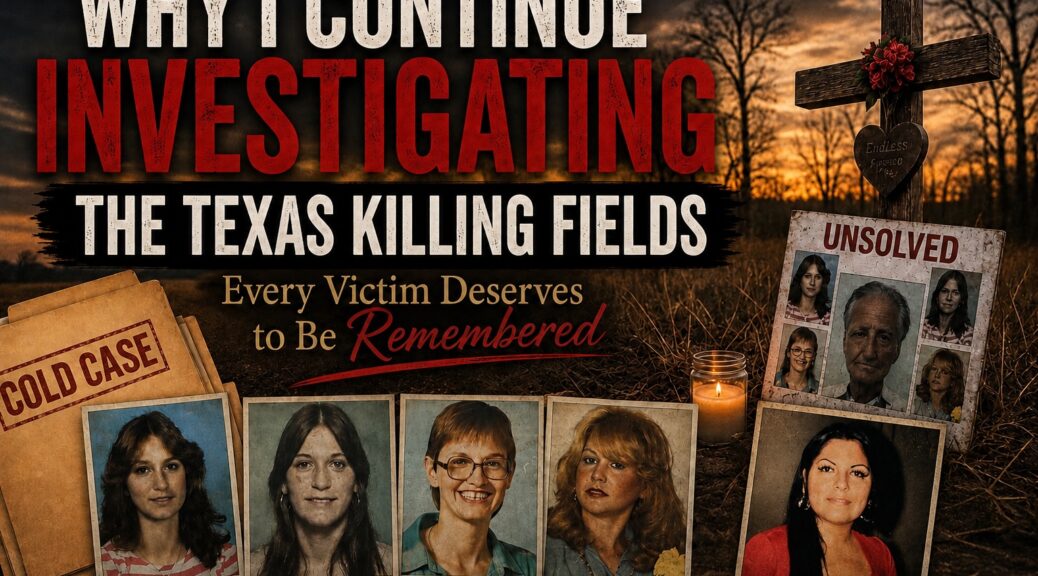
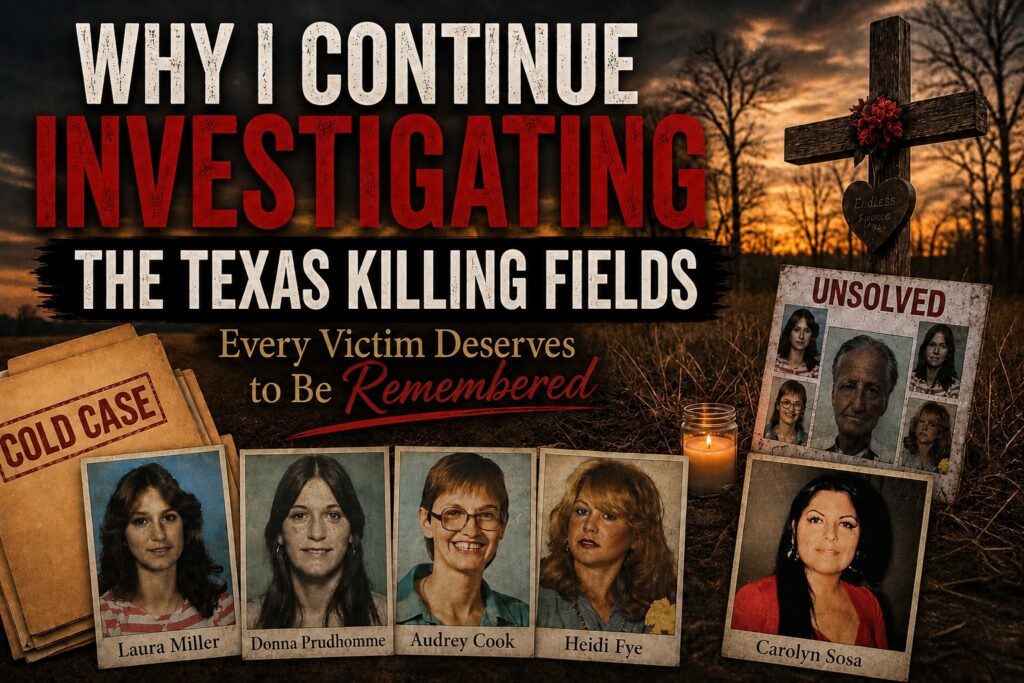
Why I Continue Investigating the Texas Killing Fields: Every Victim Deserves to Be Remembered
By Investigative Reporter Tammy Rose
People often ask why I continue investigating murders that happened more than 50 years ago.
They wonder why I file public records requests. They ask why I travel hundreds of miles to interview witnesses. They also question why I keep digging into cases that many people have forgotten.
When I began researching the Texas Killing Fields, one issue quickly bothered me.
Old news reports often focused on how the victims died. Police records also placed heavy attention on their circumstances. Those accounts did not always show who the women were or how they lived.
Authorities described some victims as runaways. Others struggled with addiction or lived through difficult times. Reports also linked some women to prostitution.
Those labels often overshadowed their identities.
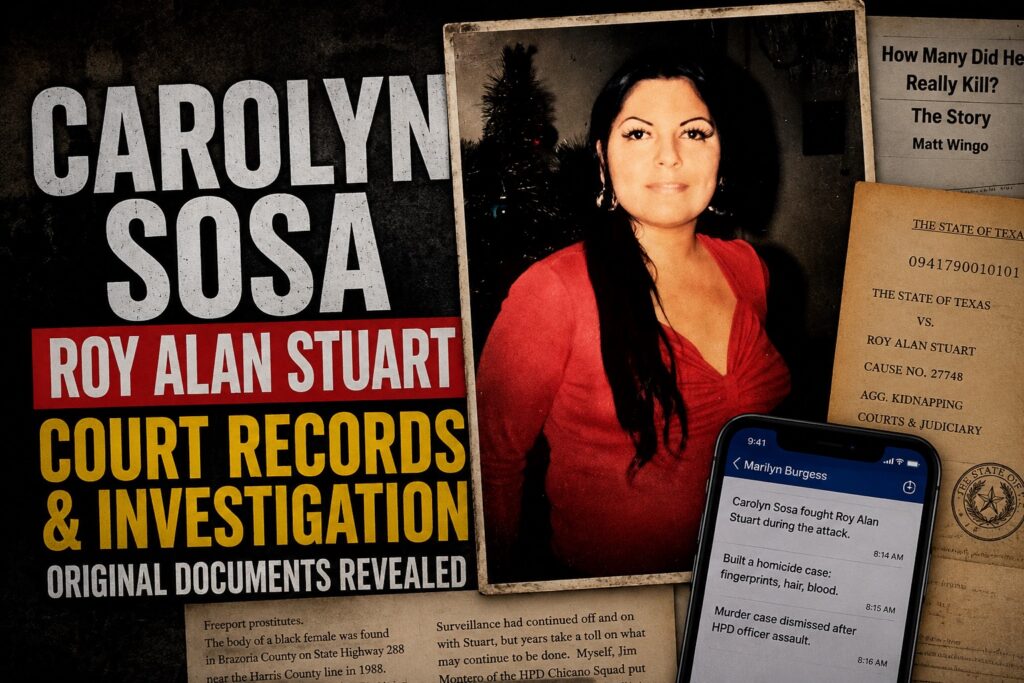
Investigators first viewed Laura Miller as a possible runaway. Reports also associated Carolyn Sosa and Teri McDaniel with prostitution.
Those descriptions may have been accurate, incomplete or unfair. Either way, they often became the focus of the story.
The victims deserved better.
No one should disappear from history because of a label.
My investigation has taken me across Texas and beyond.
I have tracked down key witnesses. I have interviewed retired investigators. I have reviewed thousands of pages of public records.
I have also examined evidence that many people have never seen.
Each interview raises another question. Every record leads to another document. One conversation can reveal a missing piece of history.
Some discoveries involve unidentified remains. Others involve witnesses who were overlooked years ago. Records may also expose decisions that still raise questions today.
I do not investigate these cases to sensationalize tragedy.
I investigate because every victim mattered.
A person’s past should never decide how much effort investigators make. It should not affect whether authorities search for them or work to solve their murder.
A straight-A student had value. A runaway had value. A woman struggling with addiction had value. A person living on the streets had value.
Their circumstances did not make their lives less important.
Justice should never depend on someone’s background.
My investigations sometimes require travel across Texas and beyond. When I need a place to stay near an interview, courthouse or records office, I compare available hotels through Hotels.com.
I also rely on practical tools while reviewing old case files. A portable document scannerhelps me preserve records, photographs and handwritten notes.
This post contains affiliate links. I may earn a small commission from qualifying bookings or purchases at no additional cost to you. As an Amazon Associate, I earn from qualifying purchases.
Paul Gayland Taylor Jr. pleaded guilty to murder in Brazoria County in 1995 and received a life sentence.
Investigative Reporter Tammy Rose
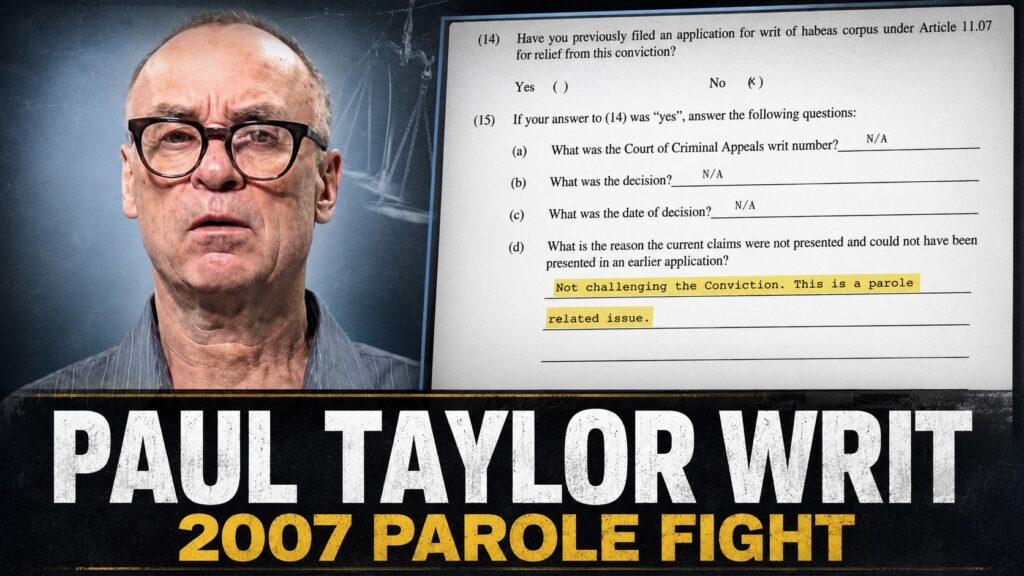
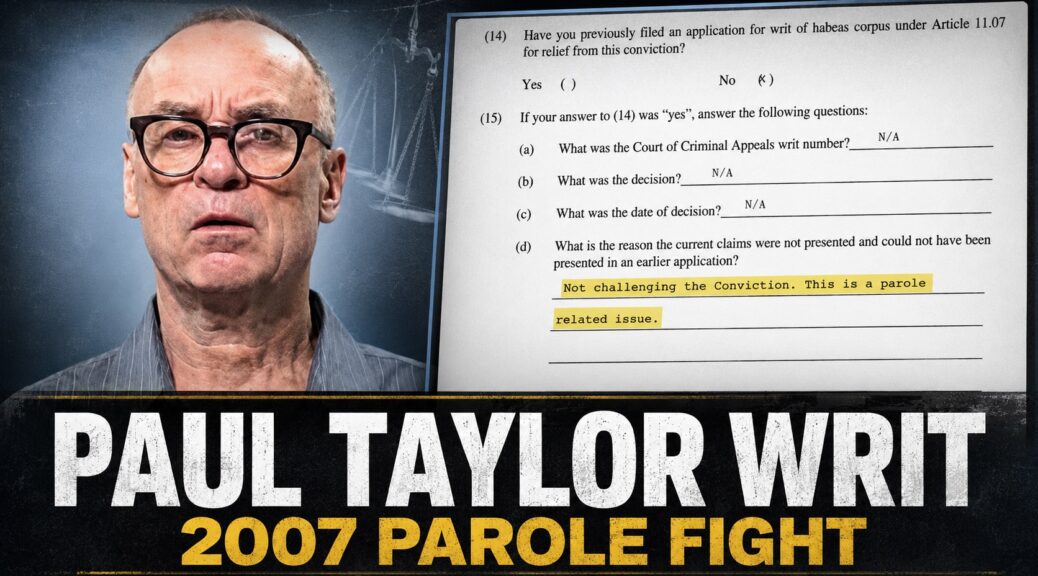
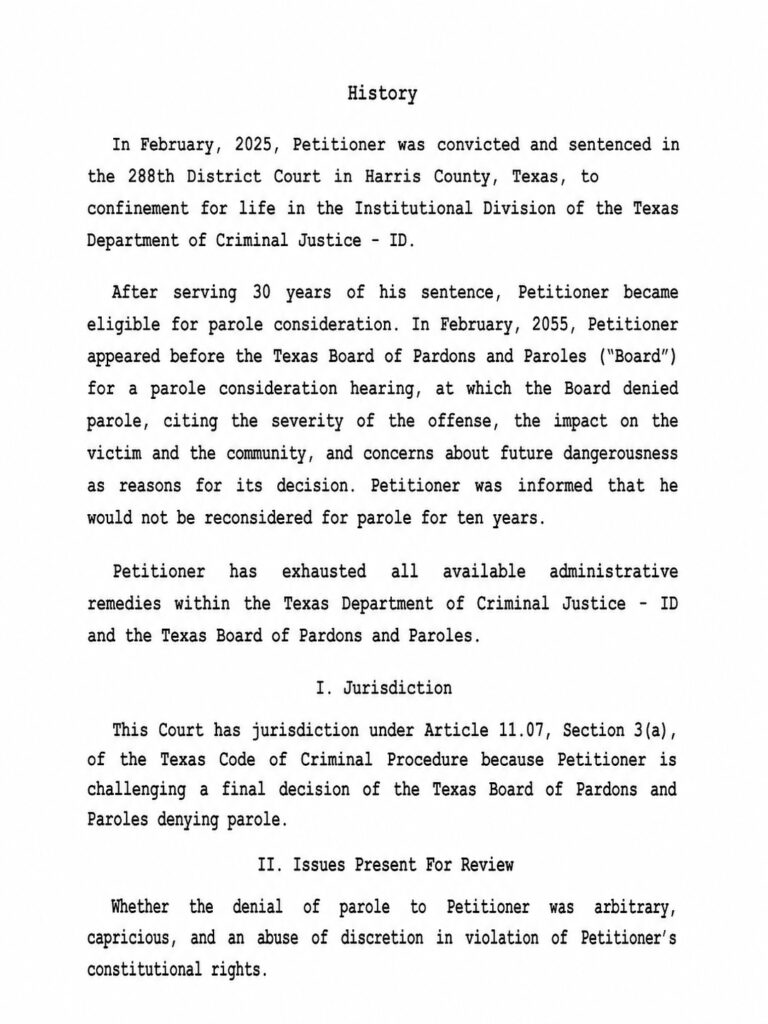
Paul Gayland Taylor Jr. filed a writ of habeas corpus in 2007 after the Texas Board of Pardons and Paroles denied him release.
Taylor challenged his parole denial, not his conviction
The filing did not challenge his murder conviction.
Instead, Taylor argued that the parole board unfairly relied on his crime and past conduct. He claimed the board ignored his prison record, education and other accomplishments.
Taylor pleaded guilty to murder in Brazoria County in 1995. A judge sentenced him to life in prison.
Taylor said the filing was about parole
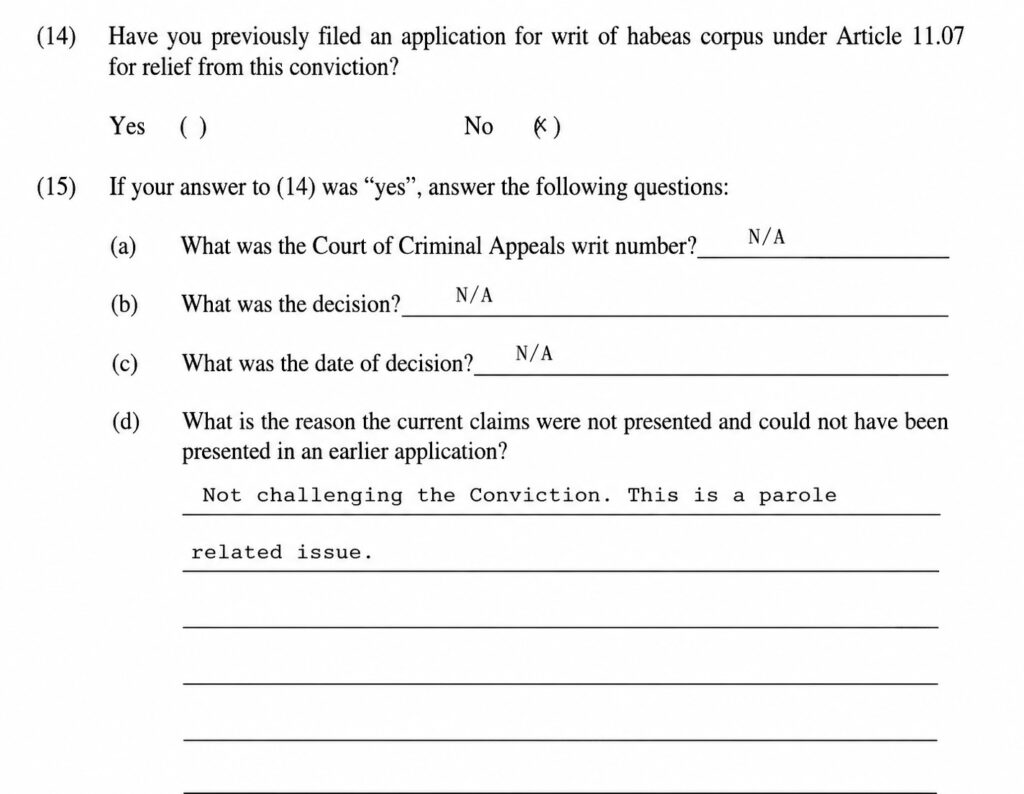
The writ form asked whether Taylor had previously challenged his conviction.
Taylor marked “no.”
He also wrote:
“Not challenging the conviction. This is a parole related issue.”
That statement is important. This filing did not claim that Taylor was innocent. It also did not ask the court to overturn his guilty plea.
Taylor focused his arguments on the parole process.
In his 2007 writ application, Paul Taylor wrote that he was not challenging his conviction and described the matter as a parole-related issue.
The writ listed his conviction and sentence
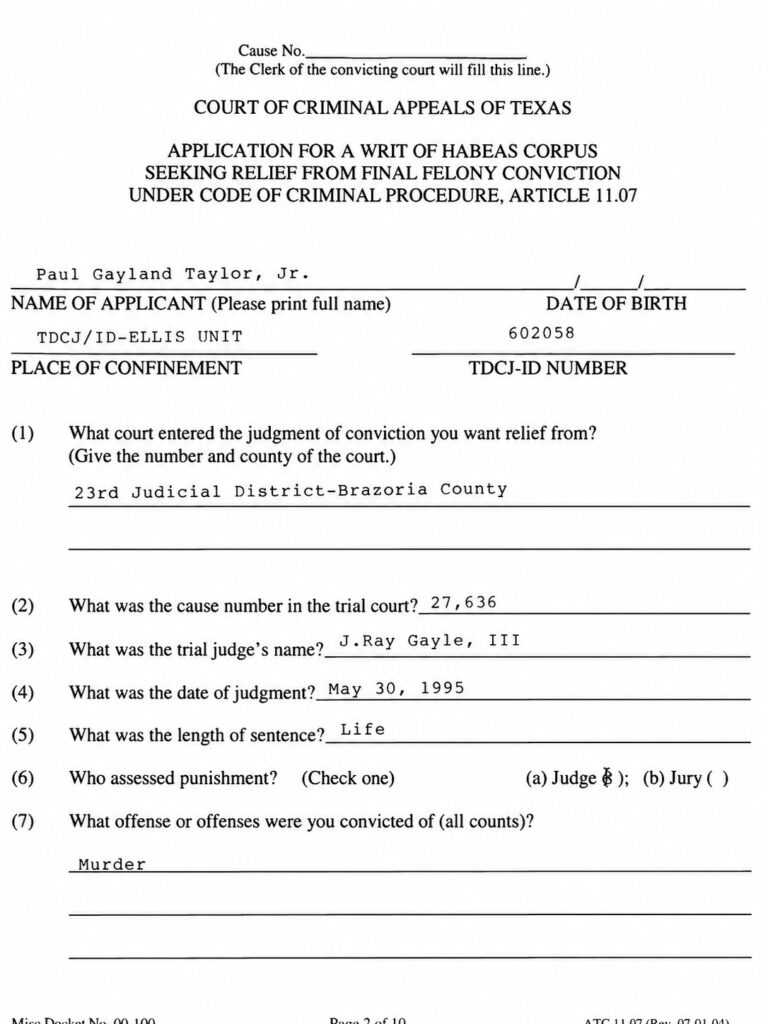
The application identified Taylor’s criminal case as Cause No. 27,636 in the 23rd Judicial District Court of Brazoria County.
The document listed:
Judgment date: May 30, 1995 Offense: Murder Plea: Guilty Sentence: Life Punishment assessed by: Judge
Taylor also stated that he did not have a jury trial. He indicated that he did not appeal the judgment.
Taylor’s writ application lists his 1995 guilty plea to murder and his life sentence.
Taylor had been eligible for parole since 1997
Taylor wrote that he had been eligible for parole since February 2, 1997.
According to his filing, the parole board denied him release again on January 12, 2007. The board then gave him a three-year setoff before his next review.
Taylor said the board had denied him parole for about 13 years, including the period between his eligibility date and his next review.
The filing quotes the board’s reason for denial. It referred to the violent nature of the offense, the use of a weapon and a threat to public safety.
The quoted language also stated that the offense showed brutality, violence or the selection of a vulnerable victim.
Taylor argued that these factors came from the crime itself. He said he could never change the past.
Taylor’s memorandum states that the parole board relied on the violent nature of the offense when it denied his release.
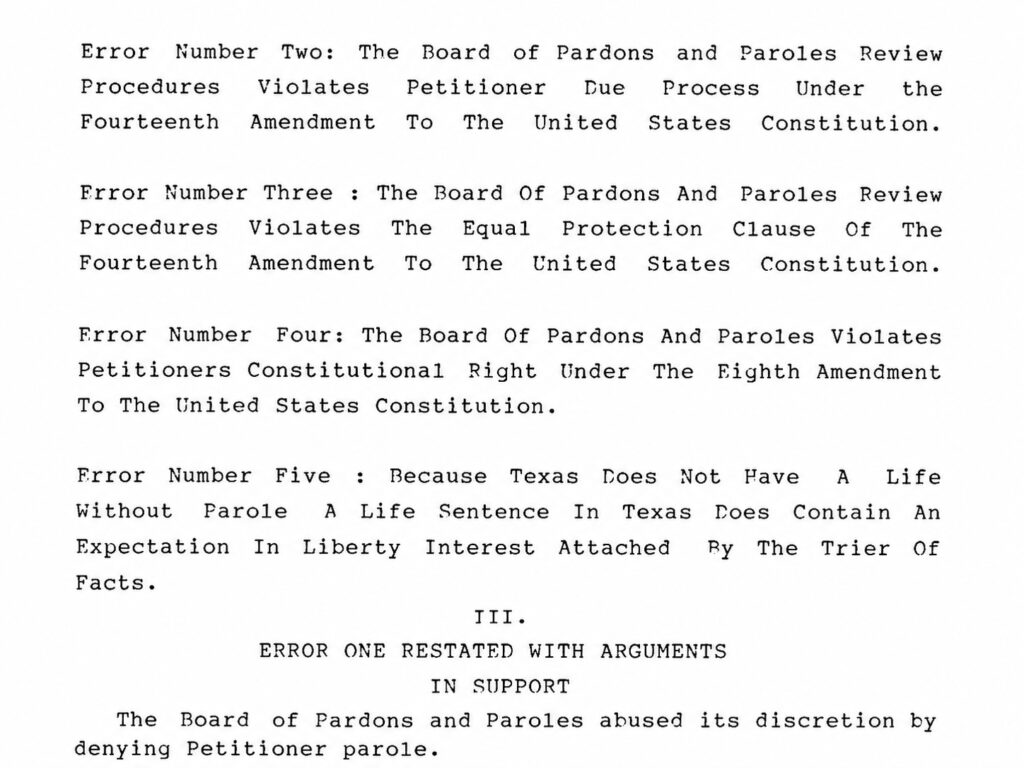
Taylor raised five arguments
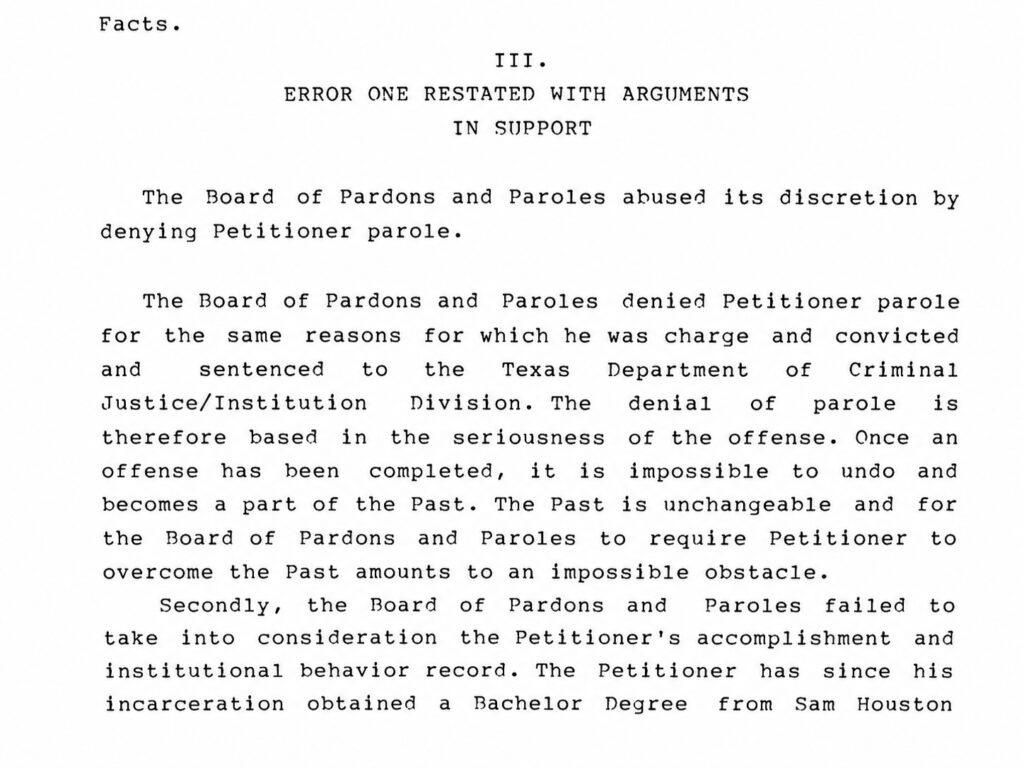
1. The parole board abused its discretion
Taylor claimed the board denied parole for the same conduct that led to his conviction and sentence.
He argued that the board created an “impossible obstacle” because he could not change the crime.
Taylor also said the board failed to give enough weight to his prison accomplishments.
2. The parole process violated due process
Taylor argued that the board did not explain how it decided he remained a future threat.
He claimed the board should have told him what method it used to assess that risk.
Taylor suggested that he could have submitted more information if he had known what evidence the board wanted.
3. The process violated equal protection
Taylor claimed the board released other people with similar or worse criminal records.
He argued that the board treated him differently without a valid reason.
The filing does not include the names or full records of those other prisoners in the pages reviewed.
4. Repeated parole denials amounted to cruel punishment
Taylor argued that repeated denials violated the Eighth Amendment.
He claimed the board continued to deny him for the same unchangeable reasons.
He also accused the board of ignoring his conduct while incarcerated.
5. A Texas life sentence carried an expectation of parole
Taylor argued that Texas did not have a life-without-parole sentence for his case.
Therefore, he claimed that a life sentence carried an expectation of eventual release.
For the first four claims, Taylor asked for a new parole hearing.
However, under his fifth claim, he argued that parole should become mandatory.
These were Taylor’s legal arguments. The filing does not show that a court accepted them.
Taylor’s memorandum states that the parole board relied on the violent nature of the offense when it denied his release.
Taylor highlighted his prison record
Taylor wrote that he earned a bachelor’s degree from Sam Houston State University while incarcerated.
He also said he had never received a disciplinary infraction.
In addition, Taylor said he worked in a prison craft shop. He claimed that the work helped him support himself and assist his family.
However, the filing only reflects Taylor’s account. It does not independently verify every statement about his prison history.
What this document does not say
The writ does not claim that Taylor was innocent.
It does not challenge his guilty plea or murder conviction.
The filing also does not present new evidence about Rebecca “Becky” Beard’s disappearance or the location of her remains.
Instead, Taylor challenged the parole board’s review process.
Therefore, this document focuses on parole. It does not attempt to overturn the murder conviction.
Read the full writ and court decision
The complete 2007 filing appears below, along with the court document showing the outcome.
Taylor challenged the parole process, not his murder conviction. However, the court denied his request for relief
Court records and police files can contain hundreds of pages. A portable document scanner can make it easier to save, organize and review records while working away from home.