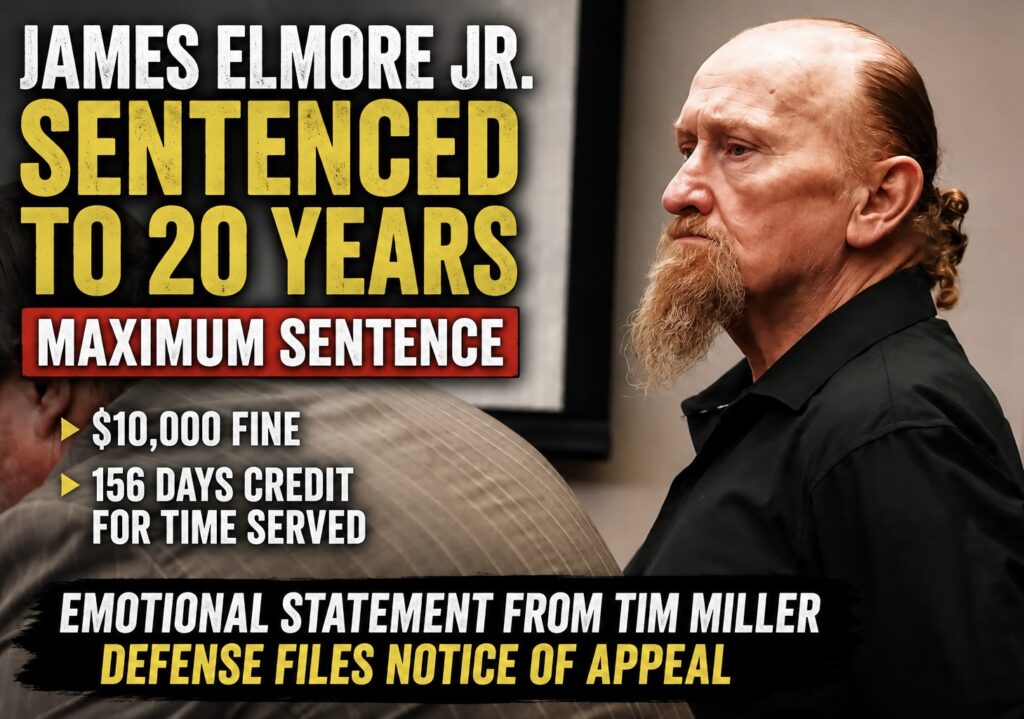
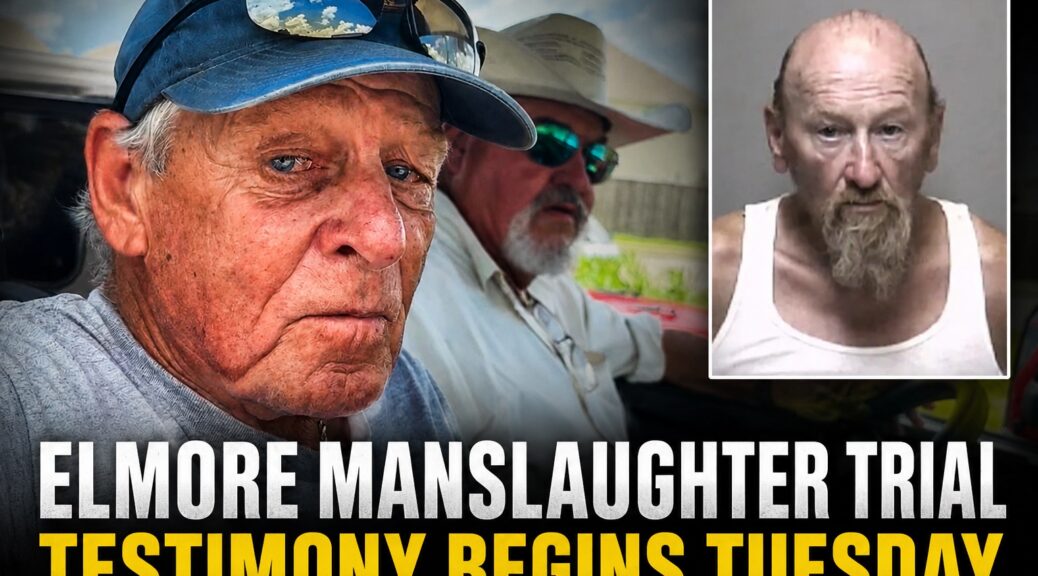
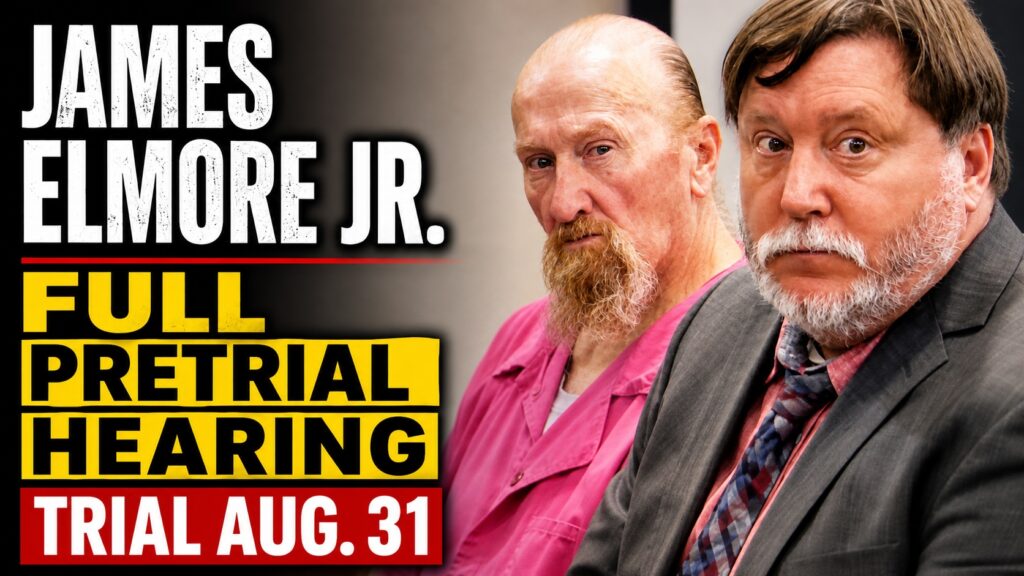
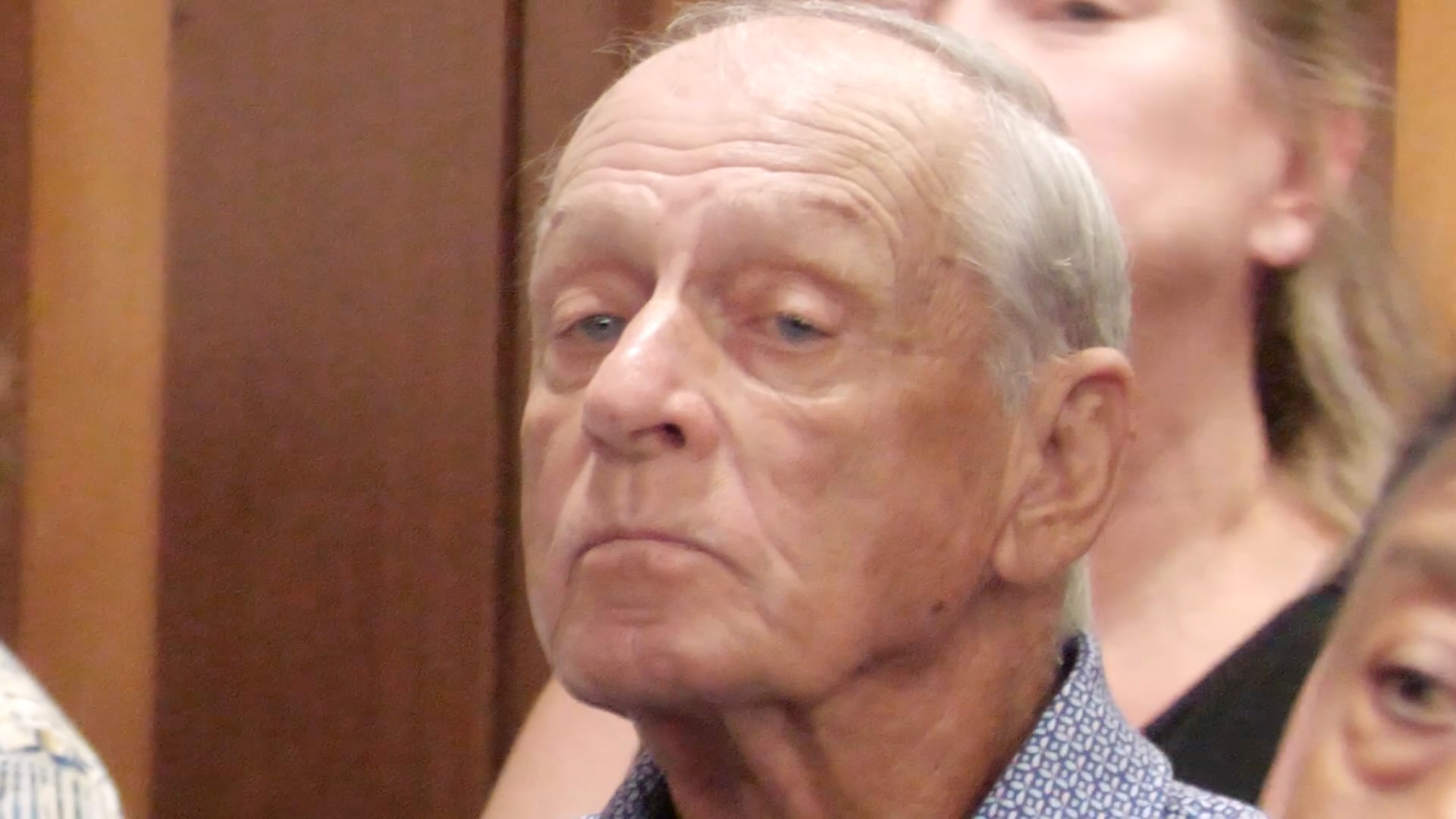
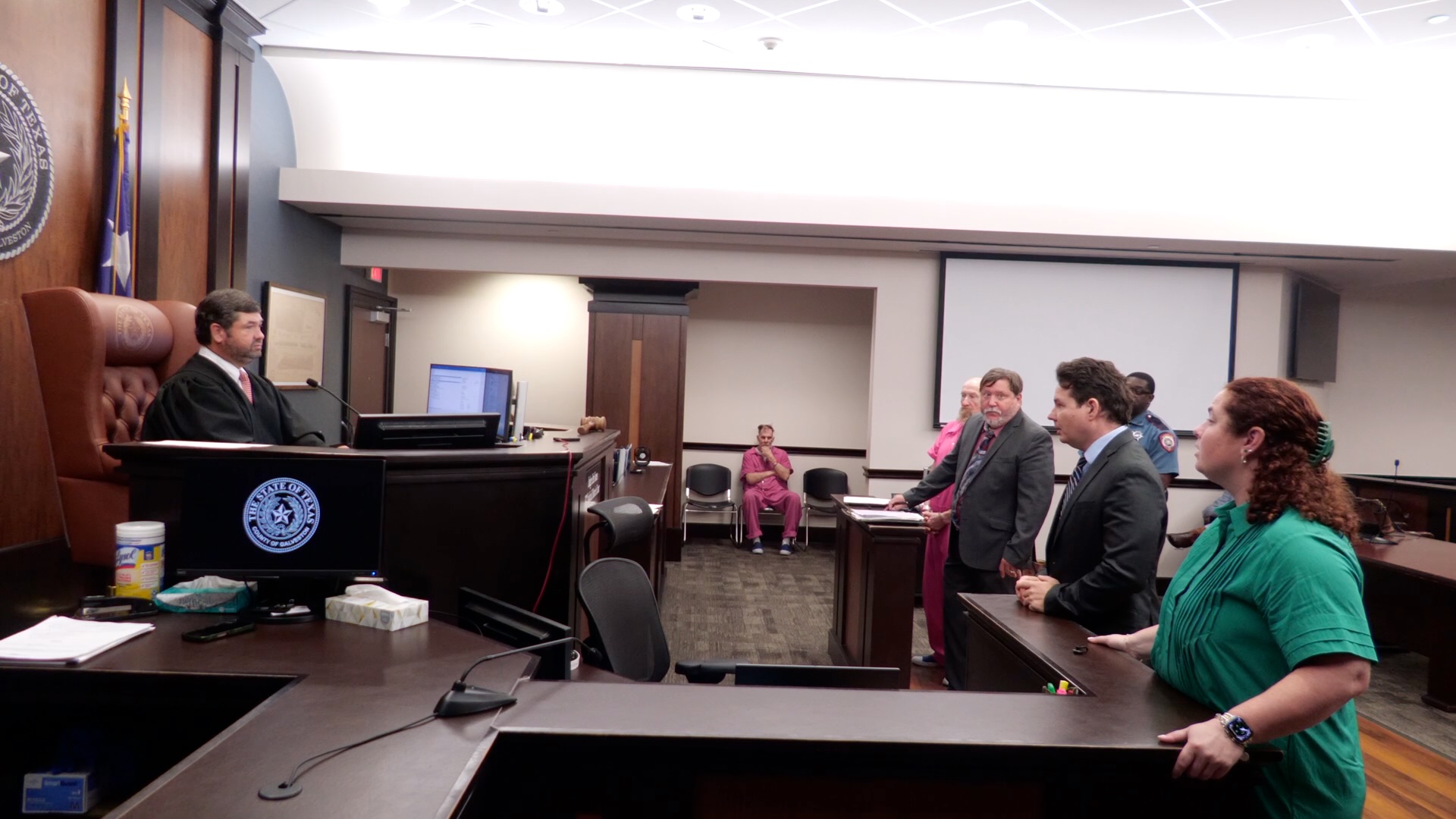
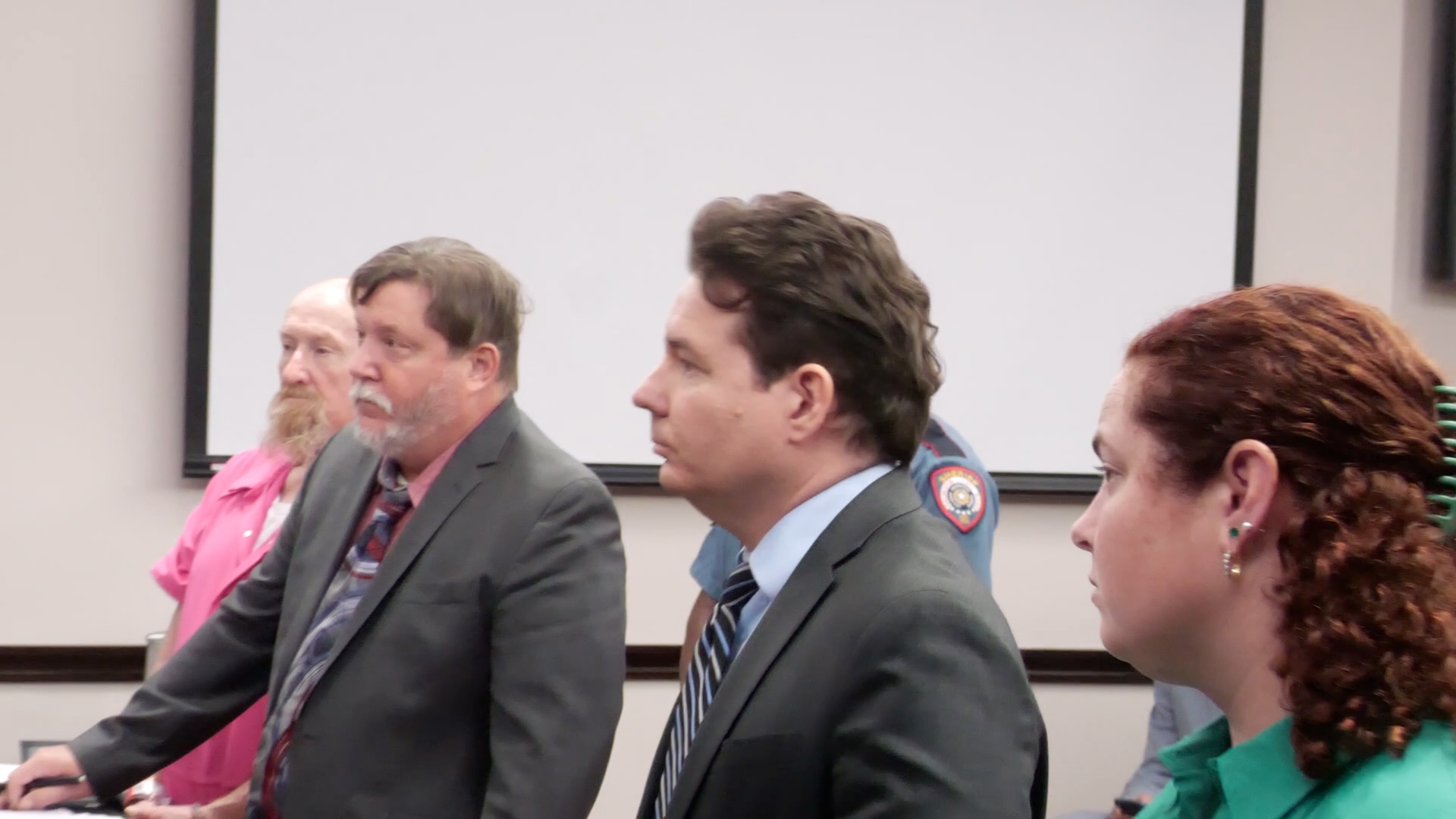
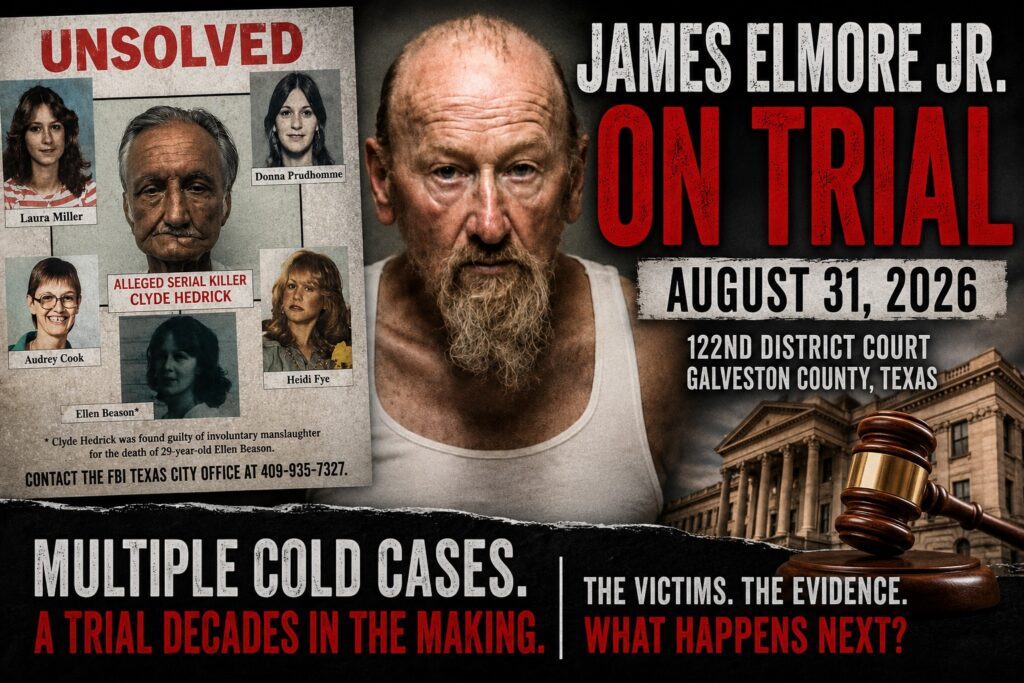
James Elmore Jr. was sentenced to 20 years in prison in the Laura Miller case. The judge also imposed a $10,000 fine and credited him with 156 days served.
James Elmore Jr. received a 20-year prison sentence Thursday in the Laura Miller case.
The judge also imposed a $10,000 fine.
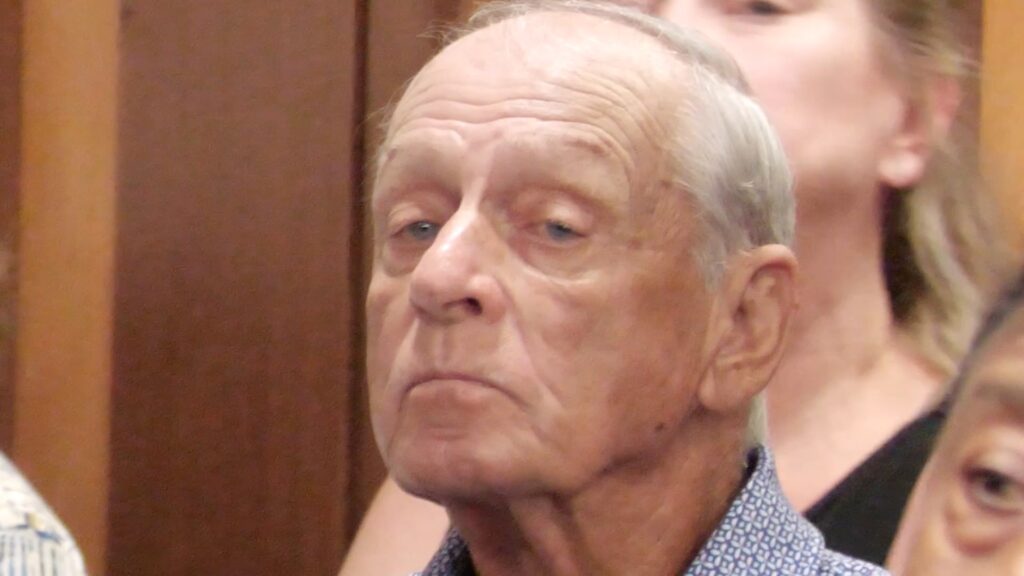
The sentencing came after an emotional statement from Laura’s father, Tim Miller. He spoke directly to Elmore before the judge announced the punishment.
Tim Miller addresses James Elmore Jr.
Miller told Elmore about the damage Laura’s death caused his family.
He also spoke about Elmore’s own family.
Miller said Elmore’s son had recently posted messages suggesting he did not want to live. Despite everything that happened, Miller said he would do what he could to help keep Elmore’s son alive.
Miller then turned his attention back to Laura.
He told Elmore he once wanted to believe Elmore had not played a larger role in what happened to his daughter.
Miller said he no longer believed that.
He ended his statement by telling Elmore that he hoped he could someday find peace.
Judge sentences Elmore to 20 years
After Miller finished speaking, the judge sentenced Elmore to 20 years in the Texas Department of Criminal Justice.
The judge also ordered Elmore to pay a $10,000 fine.
Elmore received credit for 156 days already spent in custody.
The sentence followed a jury trial in Galveston County.
Elmore plans to appeal
The defense also confirmed plans to appeal the case.
Elmore’s trial attorney asked the court to release him as counsel. The judge said the court would appoint another attorney to handle the appeal.
The notice of appeal had already been filed when the judge addressed the issue in court.
Laura Miller case reaches another milestone
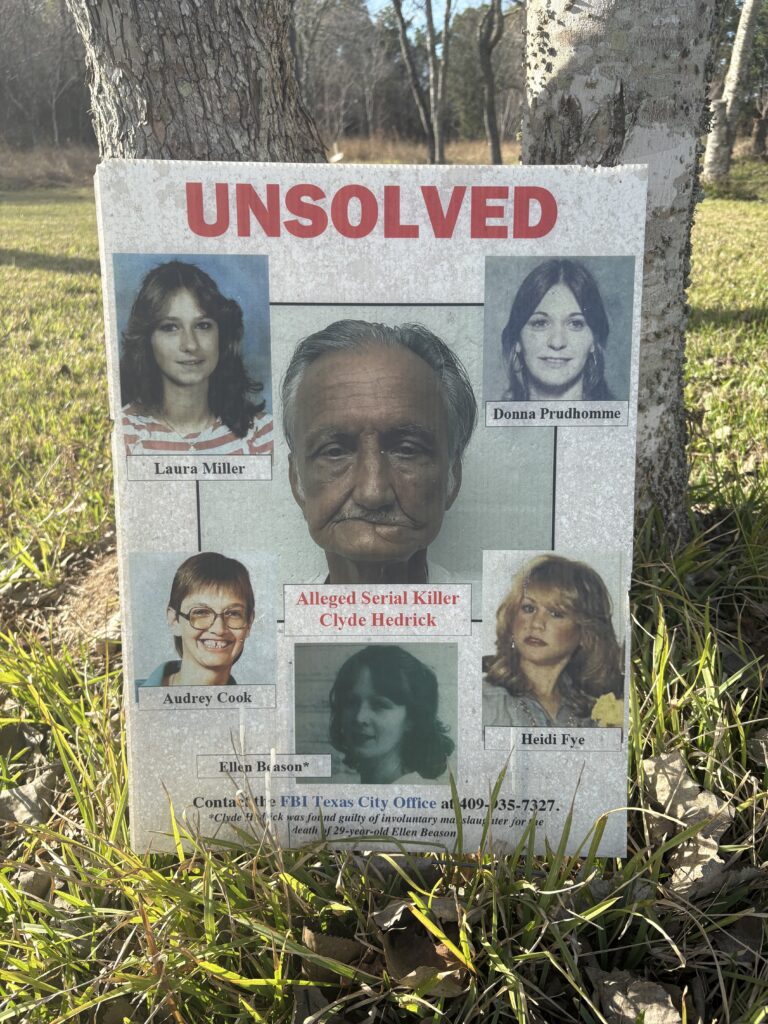
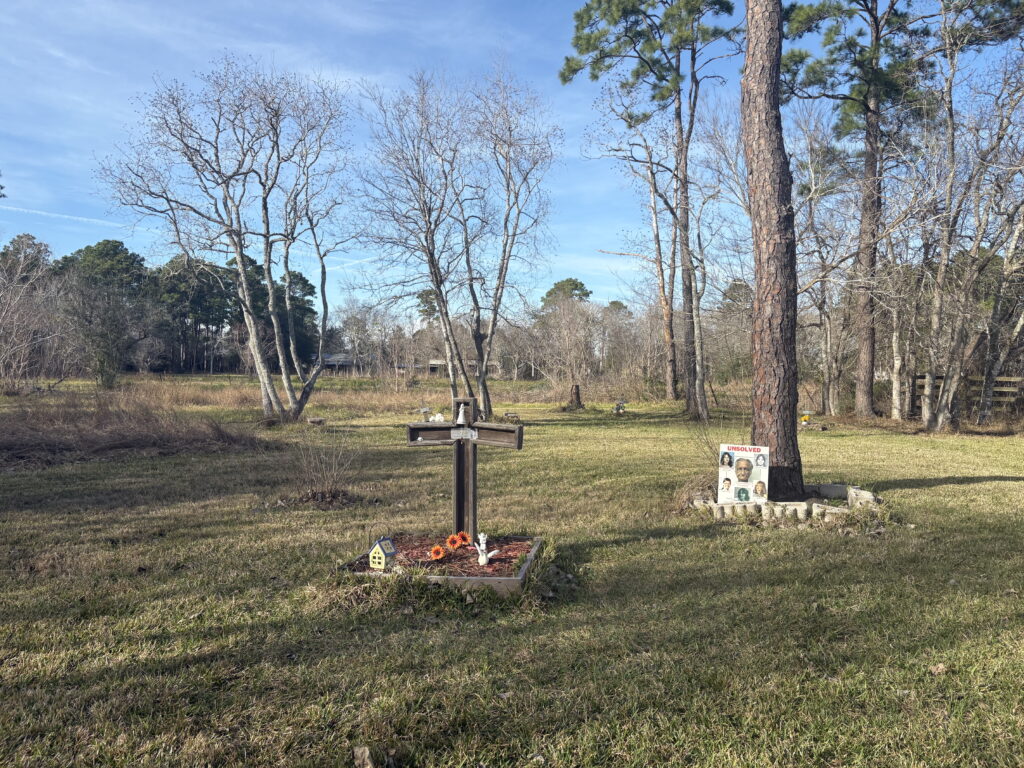
Memorial sign highlighting four victims whose cases have been linked to the same recovery site during the investigation into Clyde Hedrick and several unsolved homicides.
Laura Miller disappeared in September 1984.
Her remains were discovered near Calder Road in League City in February 1986.
Her father later founded Texas EquuSearch and spent decades searching for missing people while continuing to seek answers about Laura.
The sentencing marks another major development in a case that has remained part of the Texas Killing Fields story for more than four decades.
Outside the courtroom, I have also been working on a deeply personal project.
My new book, When Two Worlds Collide During WWII, follows two families on opposite sides of World War II and the remarkable events that eventually brought their lives together in Wisconsin.
The story is based on my own family history, with real people, family photographs and stories passed down through generations.
Disclosure: As an Amazon Associate, I earn from qualifying purchases.
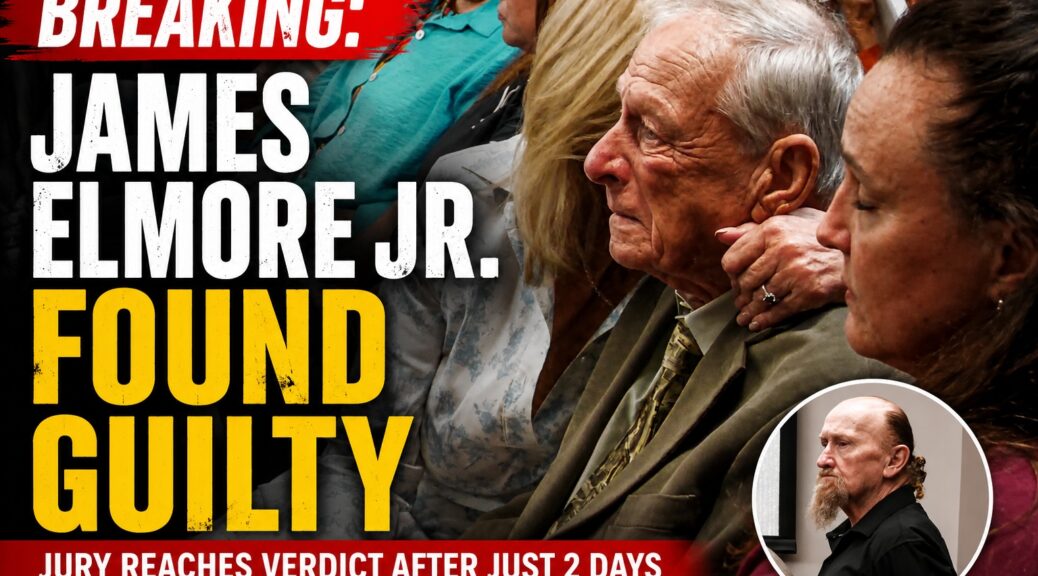
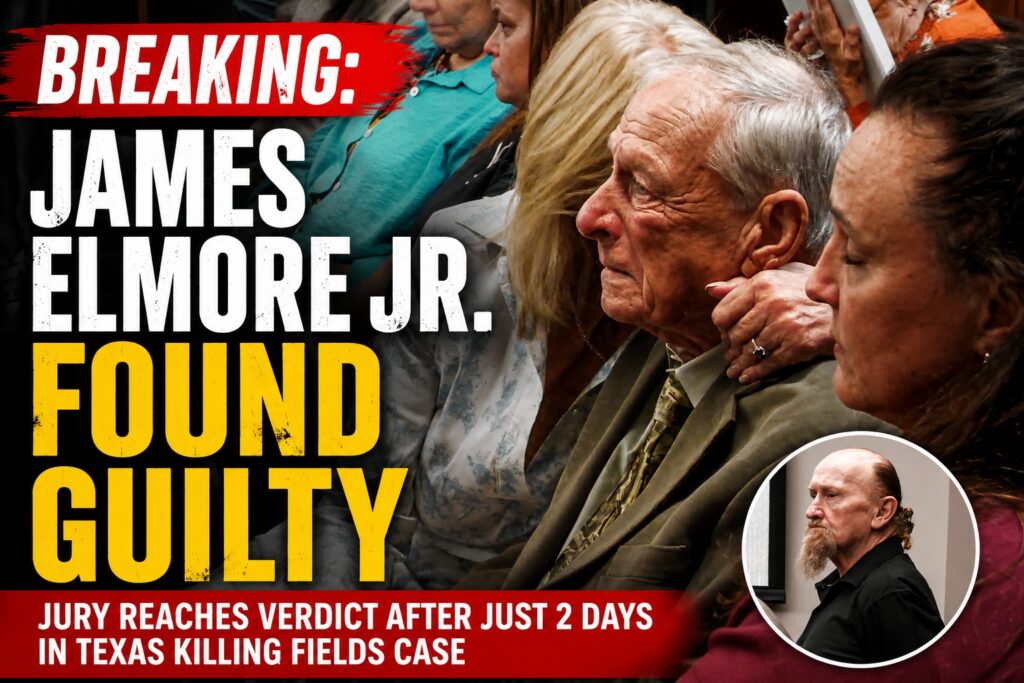
James Elmore Jr. was found guilty after a two-day trial in Galveston County tied to the death of Laura Miller.
A Galveston County jury found James Elmore Jr. guilty Wednesday following a fast-moving trial connected to the death of Laura Miller.
The verdict came after just two days of testimony.
Jurors began deliberating Wednesday afternoon. A short time later, the court notified the media that the jury had reached a verdict.
Elmore stood trial on charges tied to Laura Miller and Audrey Cook, two women whose remains were found in the League City area decades ago.
Jury reaches verdict in James Elmore Jr. trial
The case moved quickly Wednesday.
Prosecutors rested their case. The defense then called witnesses before both sides completed their cases.
Six women and six men ultimately received the case.
The jury returned its verdict later Wednesday afternoon.
Elmore was found guilty.
I will update this story with the verdict on each individual count and sentencing information as the court releases those details.
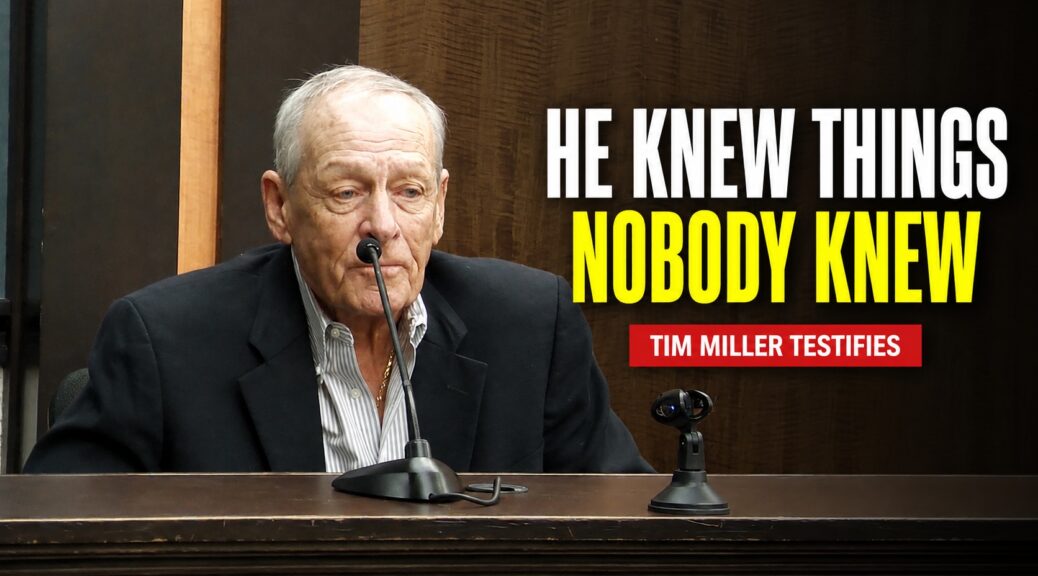
Tim Miller takes the stand
Laura Miller’s father, Tim Miller, was among the key witnesses called by prosecutors.
Miller testified about his years of contact with Elmore and his efforts to learn what happened to his daughter.
Jurors also heard about information Elmore allegedly knew concerning Laura and the location where her remains were found.
The defense later cross-examined Miller about those conversations and the investigation.
Jurors watched recorded interviews
The jury also watched recordings involving Elmore.
Those recordings became an important part of the prosecution’s case.
Investigators questioned what Elmore knew about Laura Miller and events surrounding her death.
The testimony focused on whether Elmore knew details that had not been released to the public.
Decades after Laura Miller disappeared
Memorial sign highlighting four victims whose cases have been linked to the same recovery site during the investigation into Clyde Hedrick and several unsolved homicides.
Laura Miller disappeared in 1984.
Her remains were later discovered near Calder Road in League City.
The area eventually became associated with several unsolved deaths and disappearances.
Laura’s death remained under investigation for decades.
Elmore’s arrest brought the case back into a Galveston County courtroom more than 40 years later.
What happens next
The case now moves to the next phase following the guilty verdict.
I am continuing to follow developments from the courthouse and will update this story with the verdict on each charge and sentencing information as those details become available.
Full courtroom video and continuing coverage will also be posted on Tammy Rose Reports on YouTube.
Outside the courtroom, I have also been working on a deeply personal project.
My new book, When Two Worlds Collide During WWII, follows two families on opposite sides of World War II and the remarkable events that eventually brought their lives together in Wisconsin.
The story is based on my own family history, with real people, family photographs and stories passed down through generations.
Disclosure: As an Amazon Associate, I earn from qualifying purchases.
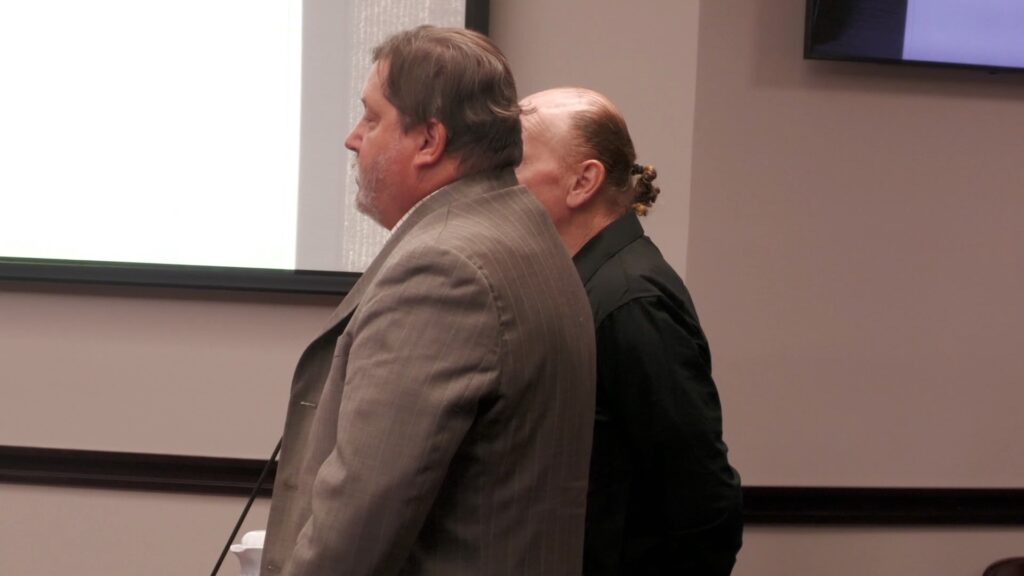
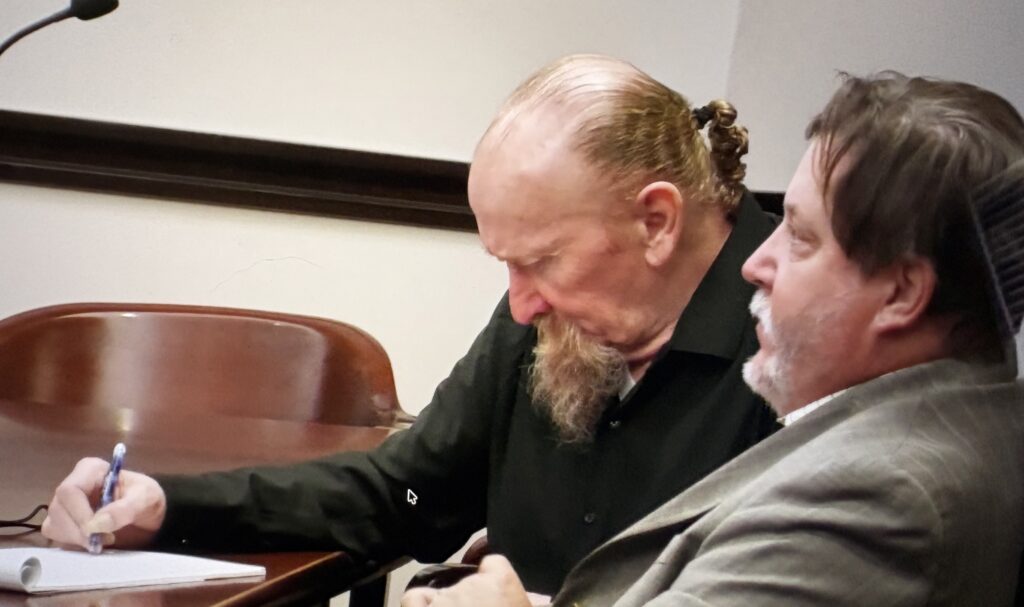
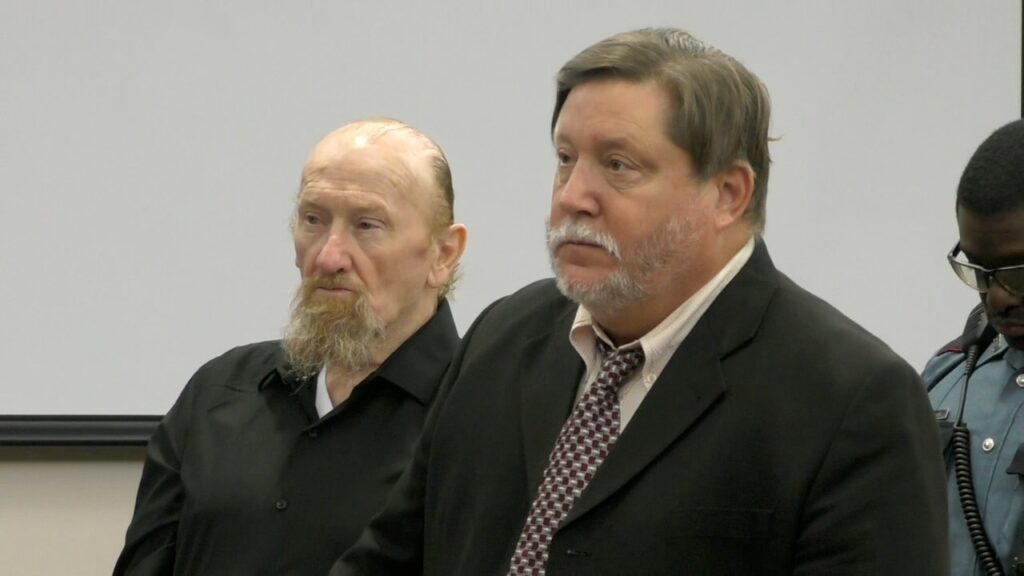
James Elmore Jr. sits with his defense attorney during his trial in Galveston County.
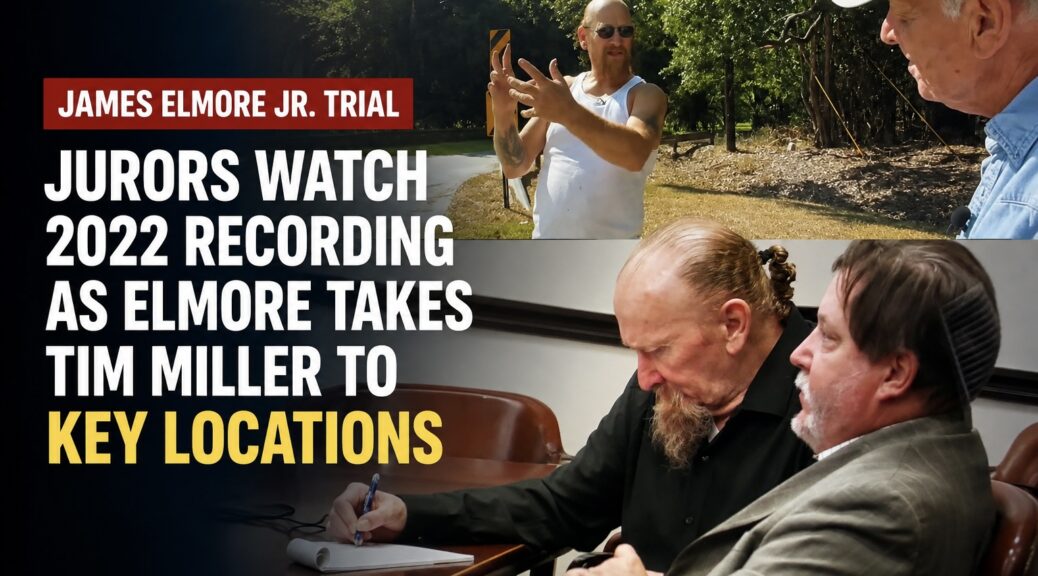
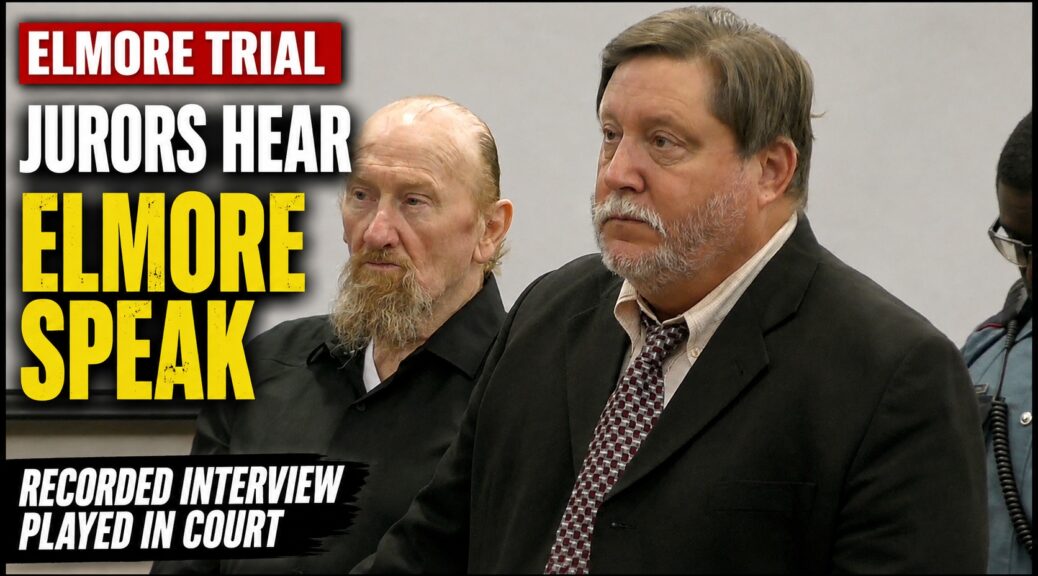
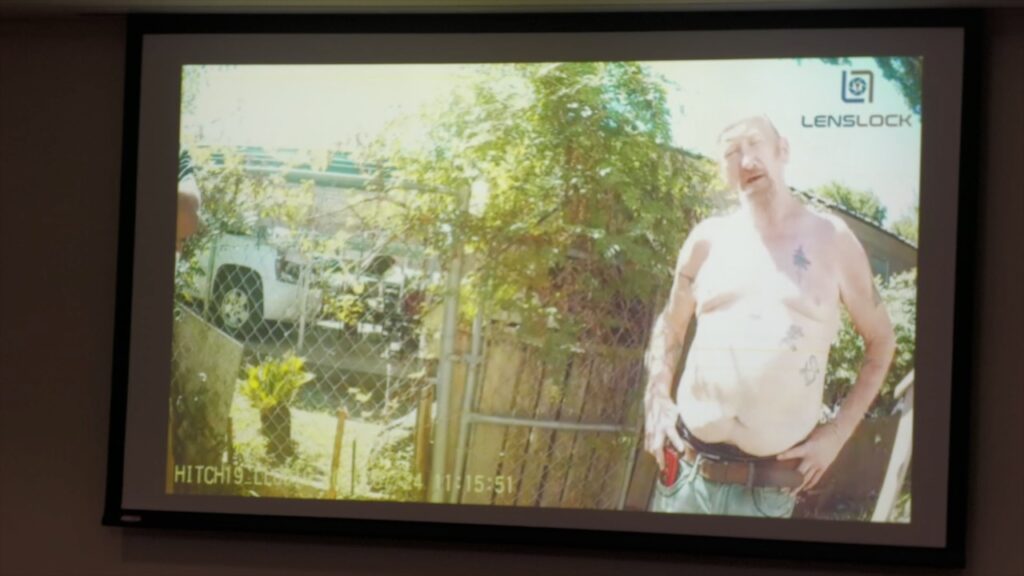
Jurors in the James Elmore Jr. trial watched a lengthy 2022 recording Wednesday that put Elmore’s own words at the center of the case.
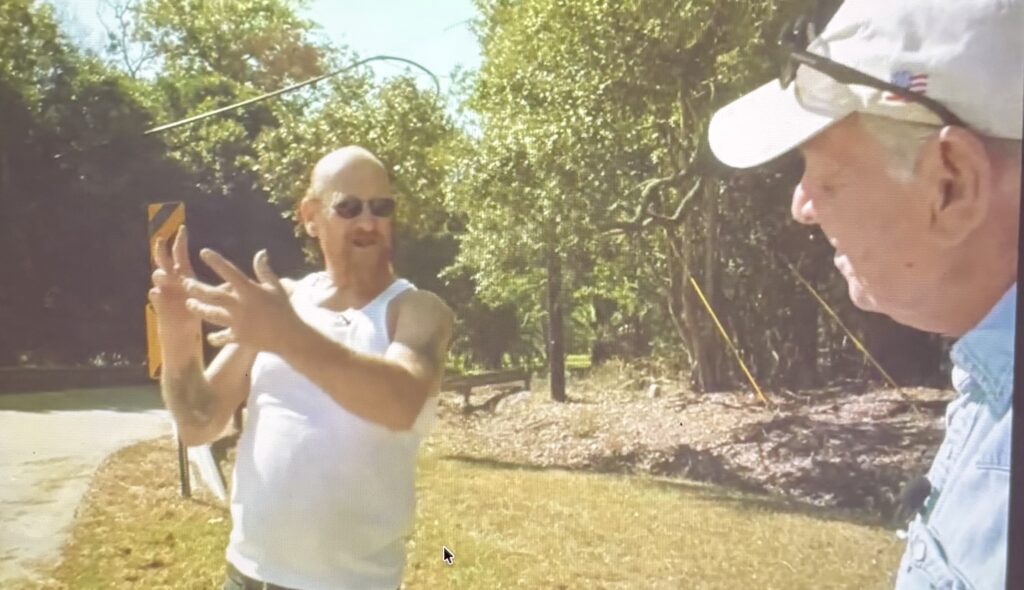
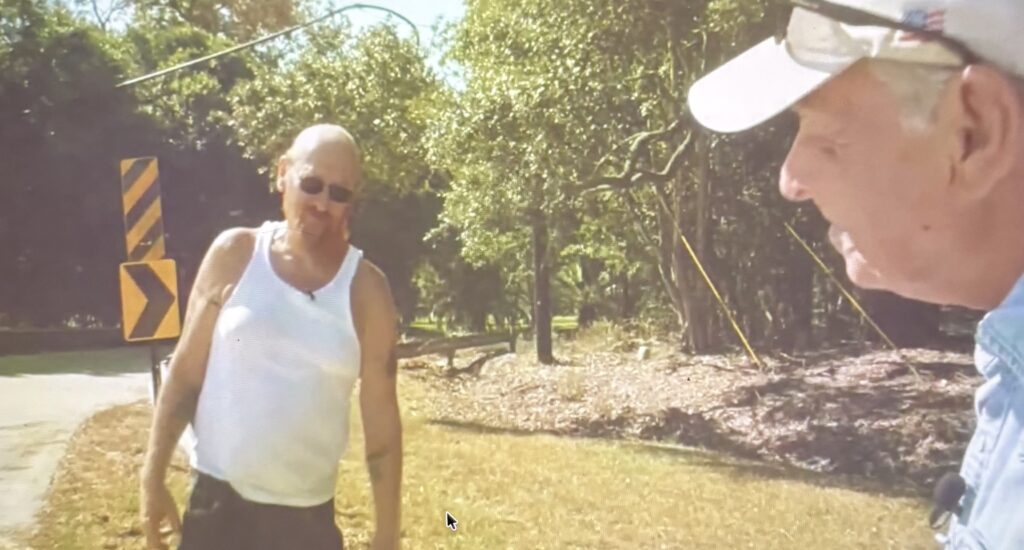
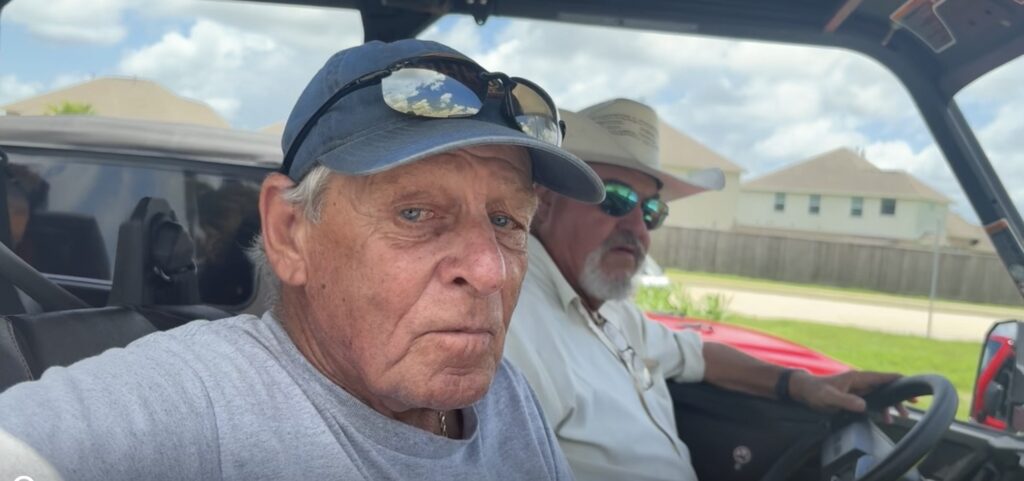
The video shows Elmore riding with Tim Miller through League City. Elmore points out locations tied to Laura Miller, Audrey Cook and Clyde Hedrick.
The recording also captures Elmore making claims about what happened to Laura before and after her death.
Prosecutors played the video during Day 3 of the trial.
Tim Miller explains why he recorded Elmore
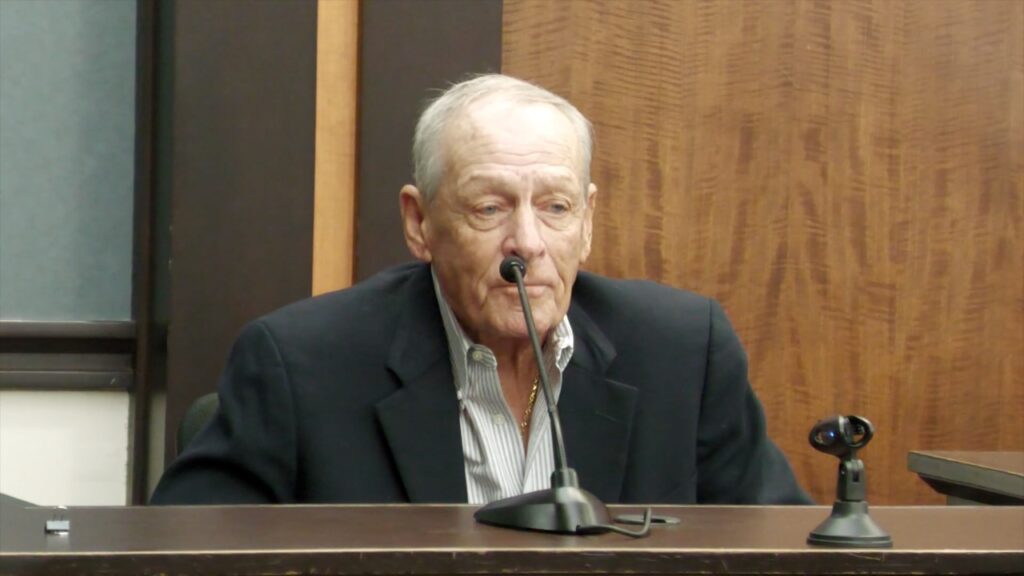
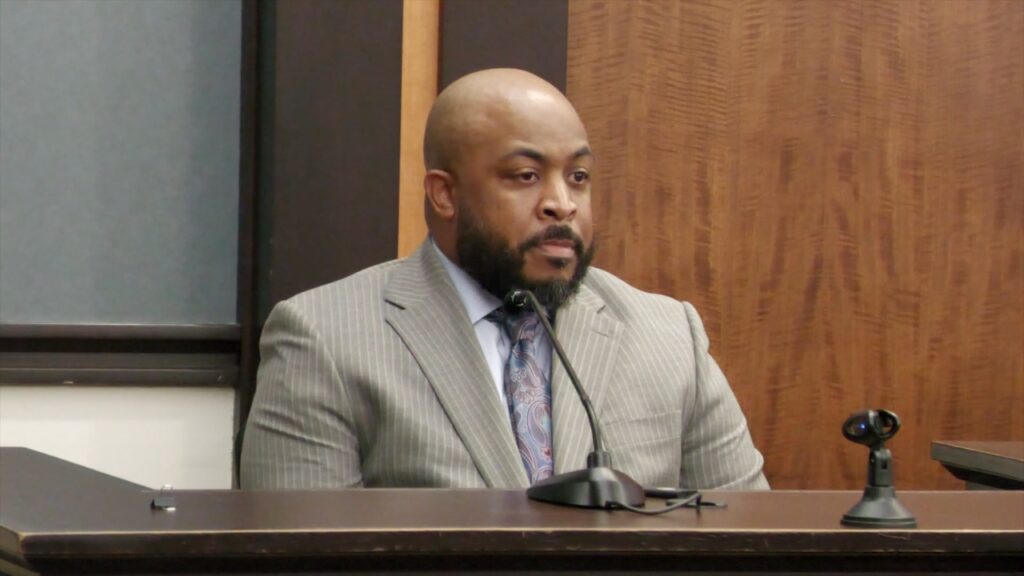
Tim Miller testifies about his conversations with James Elmore Jr. during the trial.
Miller told jurors he wanted to preserve what Elmore had told him.
He said Elmore had discussed several health problems. Miller feared Elmore could die before investigators resolved the case.
Miller said he contacted a friend with a production company and arranged the recording.
He told jurors he wanted Elmore to repeat what he had previously told him.
Miller also stressed during the recording that Elmore had contacted him voluntarily.
The video dates to Oct. 10, 2022.
Elmore returns to Calder Road
James Elmore Jr. points out an area near Calder Road during a 2022 recording with Tim Miller that was shown to jurors.
The recording shows Miller and Elmore driving through areas connected to the investigation.
They returned to Calder Road, where investigators found the remains of Laura Miller and Audrey Cook in 1986.
Elmore pointed out areas where he claimed the bodies had been placed.
He also discussed how the area looked decades earlier. Elmore described thick vegetation and fewer homes.
Miller questioned Elmore about the locations as they drove through the area.
Elmore claims he saw Laura at Hedrick’s house
One of the most significant portions of the recording focused on Clyde Hedrick’s former home.
Elmore claimed he saw Laura at the house.
Memorial sign highlighting four victims whose cases have been linked to the same recovery site during the investigation into Clyde Hedrick and several unsolved homicides.
He also described events involving drugs inside the home. Elmore claimed he prepared drugs and warned Hedrick that the amount was too much.
Elmore said he later saw Laura covered with a shirt. He claimed he initially thought she was sleeping.
Elmore also described returning to the house days later.
His account forms a key part of the prosecution’s case against him.
Cemetery becomes another focus
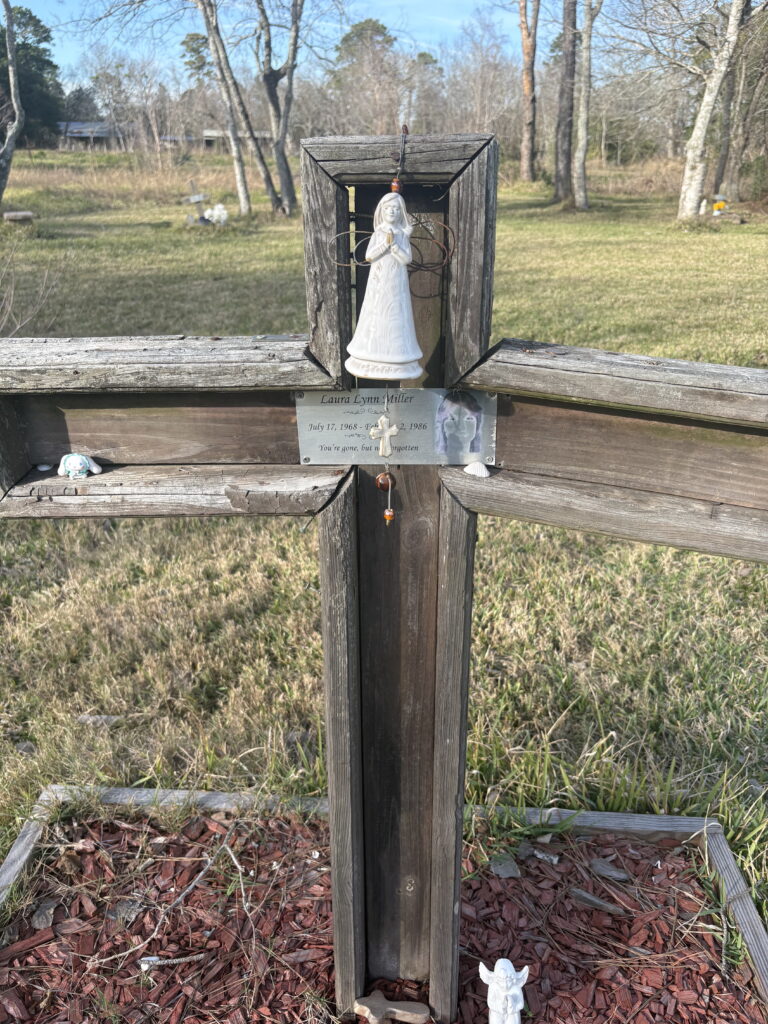
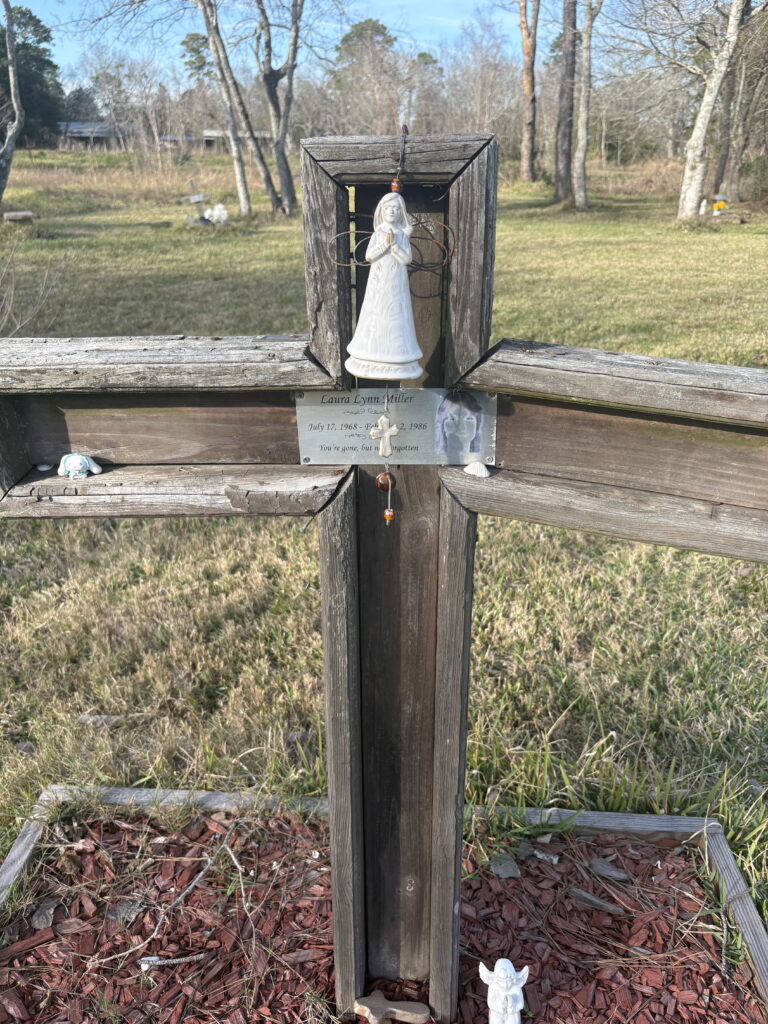
A cross memorial for Laura Miller stands near the Calder Road area where her remains were found in 1986.
The recording also took jurors to a cemetery near the neighborhood where Laura lived.
Elmore claimed Laura sometimes went to the cemetery.
He said Hedrick had seen and spoken with her there before her death.
Elmore described an encounter in which Hedrick approached Laura while Elmore and another man were nearby.
That claim could become important because it addresses whether Hedrick knew Laura before she died.
Elmore discusses shirt found near Laura Miller
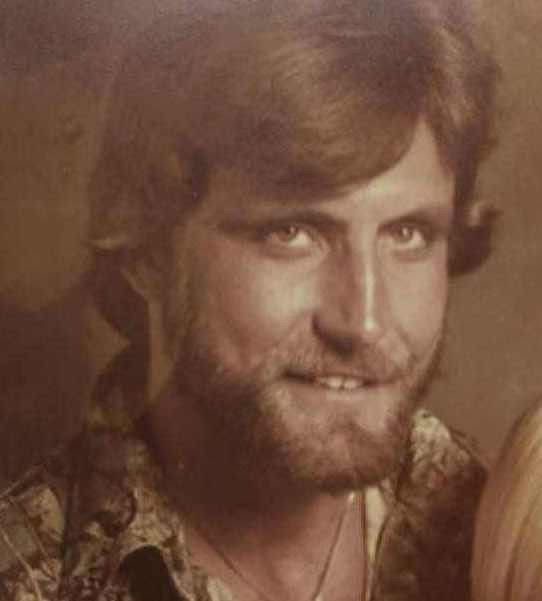
Clyde Hedrick in an undated photograph. His clothing became relevant during testimony about a shirt found near Laura Miller’s remains.
The shirt found near Laura Miller’s remains also came up during the recording.
Elmore claimed Hedrick often wore cowboy-style shirts.
He also claimed Hedrick later complained about losing a favorite shirt.
Investigators found a man’s shirt near Laura’s remains.
Jurors will have to decide what weight to give Elmore’s statements and whether they connect to other evidence presented during the trial.
Jurors hear Elmore in his own words
James Elmore Jr. talks with Tim Miller near Calder Road during a 2022 recording later played for jurors.
The recording marks a significant point in the trial.
Until now, jurors have heard witnesses describe statements Elmore allegedly made about Laura Miller and the investigation.
Wednesday, they heard Elmore make claims himself.
The video allowed jurors to watch him point out locations and answer Miller’s questions.
Elmore faces a manslaughter charge in connection with Laura Miller’s death. He also faces tampering charges involving the remains of Laura Miller and Audrey Cook.
The trial continues in Galveston County.
Editor’s note: Statements attributed to James Elmore Jr. in this story come from the recorded interview played for jurors in court. The allegations and evidence remain for the jury to evaluate.
Outside the courtroom, I have also been working on a deeply personal project.
My new book, When Two Worlds Collide During WWII, follows two families on opposite sides of World War II and the remarkable events that eventually brought their lives together in Wisconsin.
The story is based on my own family history, with real people, family photographs and stories passed down through generations.
Tim Miller testifies Tuesday afternoon about Laura Miller’s disappearance and the information he says James Elmore Jr. gave him.
Tim Miller delivered emotional testimony Tuesday afternoon in the James Elmore Jr. trial. He described the day his daughter vanished and the 2022 call that changed the decades-old investigation.
Miller told jurors that Elmore knew details about Laura Miller and Audrey Cook that the public did not know. He also testified that Elmore described his alleged role in Laura’s death.
Elmore has pleaded not guilty. He faces a manslaughter charge in Laura Miller’s death. He also faces charges of tampering with the bodies of Miller and Cook.
Watch Tim Miller’s afternoon testimony below. This is the court video currently available for download. I will add any additional testimony when the remaining recordings become available.
Tim Miller describes Laura’s disappearance
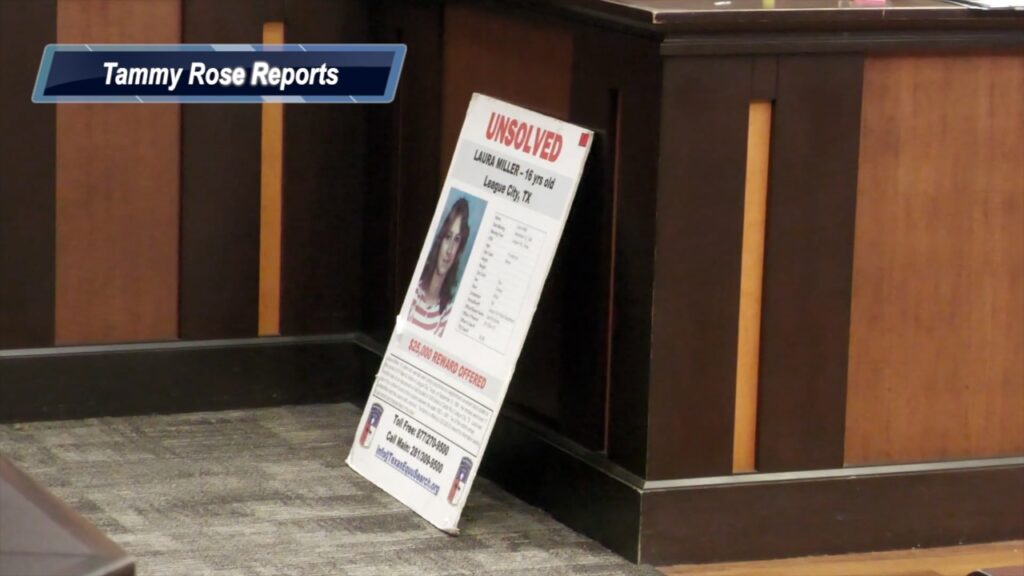
Prosecutors display a reward flyer for Laura Miller while Tim Miller testifies on September 1, 2026.
Laura Miller disappeared on September 10, 1984. She was 16 years old.
Tim Miller described the last morning he saw his daughter alive. He also told jurors about the 17 months he spent searching for answers.
Miller learned in February 1986 that investigators had found the remains of two young women near Calder Road. He took a newspaper article about the discovery to police.
Investigators later identified one of the victims as Laura.
Miller said he repeatedly returned to the field where investigators found her. He searched for her clothing and necklace. He also built a cross near the location.
Years later, Miller founded Texas EquuSearch. The organization has searched for missing people across the United States and in other countries.
Miller called the organization Laura’s legacy.
James Elmore contacted Texas EquuSearch
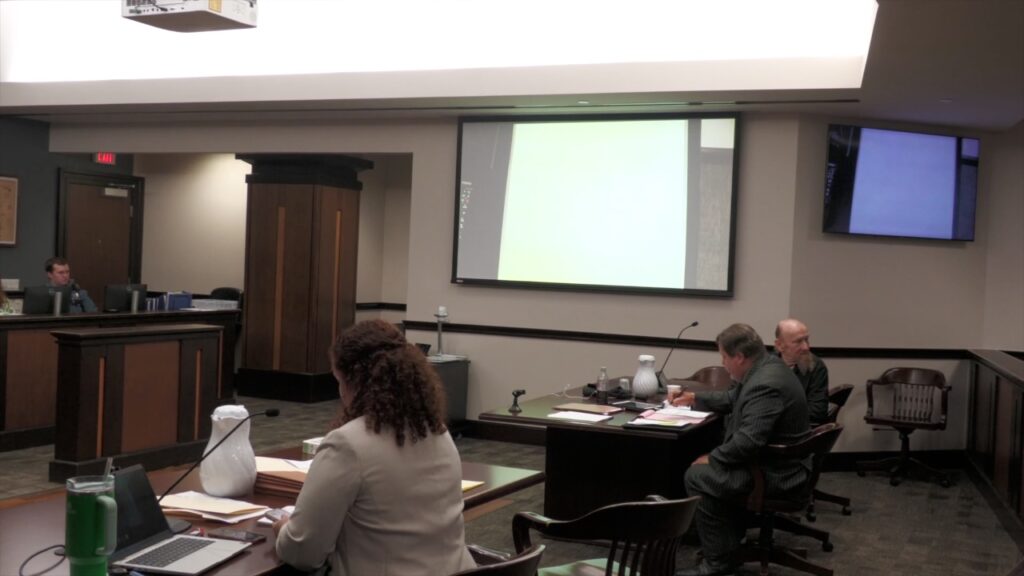
James Elmore Jr. sits at the defense table during the afternoon testimony on September 1, 2026.
Miller testified that Elmore contacted Texas EquuSearch in April 2022. The message said Elmore wanted to discuss a missing-person case and “get some things off his chest.”
Miller called Elmore and asked which case he wanted to discuss.
According to Miller, Elmore named Laura Miller and Clyde Hedrick.
Miller then drove to Elmore’s home in Bacliff. Elmore asked him to take a ride to Calder Road.
Once there, Miller said Elmore pointed toward an area behind a church. Miller initially questioned whether Elmore had real information. The location of the so-called Killing Fields had received widespread attention.
That changed during their next stop.
Cemetery detail convinced Miller
A wooden cross stands in memory of Laura Lynn Miller near the site where her remains were found.
Miller testified that Elmore directed him to a home on Nevada Street in Dickinson. Hedrick once lived near the Miller family.
Elmore then directed Miller toward a nearby cemetery.
According to Miller, Elmore pointed toward trees and said Hedrick had hidden there to watch Laura when she visited the cemetery.
Miller said Laura’s visits to that cemetery were not public knowledge.
“That’s when I knew this guy was real,” Miller told jurors.
Miller asked Elmore whether he would speak with law enforcement. He then took him to an FBI office.
Miller recounts Elmore’s alleged statements
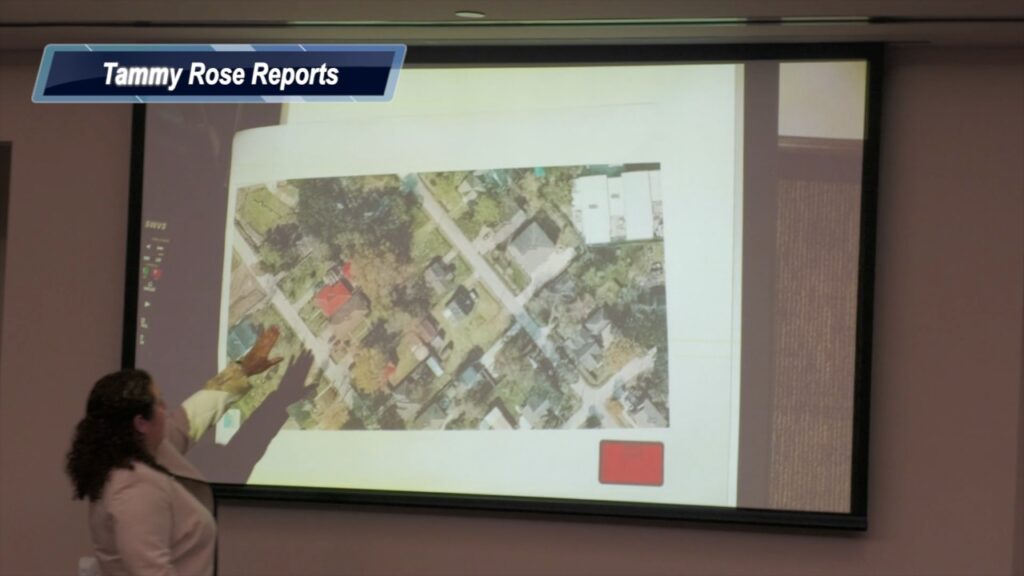
Jurors view a map showing Clyde Hedrick’s former home near the Miller family’s house in Dickinson.
Miller testified that Elmore slowly revealed more information during later conversations.
According to Miller, Elmore said Laura was with Hedrick and other men on the night she died. Miller testified that Elmore described mixing cocaine in a syringe and handing it to Hedrick.
Miller said Elmore claimed that he warned Hedrick not to inject Laura. According to Miller, Elmore then described watching Laura shake and take her final breath.
The state has accused Elmore of recklessly causing Laura’s death by preparing a syringe that contained cocaine and another substance.
Miller also testified about a shirt connected to the case. He said Elmore described the shirt before seeing a photograph of it.
According to Miller, that detail had never become public.
Testimony turns to Audrey Cook
Memorial sign highlighting four victims whose cases have been linked to the same recovery site during the investigation into Clyde Hedrick and several unsolved homicides.
Miller said Elmore also provided details about Audrey Cook.
Cook’s remains were found near Calder Road in 1986. Investigators did not identify her until 2019.
Miller testified that he first visited the location with one of the people who found Cook’s body. Days later, he returned to the area with Elmore.
Miller said he did not tell Elmore where to go. According to Miller, Elmore walked to the same location and pointed toward the same tree.
Miller also testified that Elmore described Cook’s alleged shooting. He said Elmore identified the ammunition as a .22-caliber Federal hollow-point rifle bullet.
Miller told jurors that Cook’s autopsy findings were not public at that time.
Miller paid Elmore nearly $33,000
The defense will likely focus on money that Miller gave Elmore.
Miller testified that a reward offered $25,000 for information in Laura’s case. He said Elmore had already implicated himself and revealed key details before receiving any money.
Miller first gave Elmore $5,000. He later made additional payments.
In total, Miller said he gave Elmore nearly $33,000. That amount included the reward and additional money for Elmore’s personal and medical needs.
Miller denied paying Elmore to make the statements.
He said Elmore had information about Laura and other missing women. Miller also feared Elmore could die before investigators solved the case.
“He was the only one left,” Miller testified.
Recorded interview will play for jurors
Miller arranged a recorded interview with Elmore in 2022. He said he wanted to preserve the information because Elmore had discussed cancer and heart problems.
The interview lasts more than 90 minutes.
Prosecutors introduced the recording as evidence Tuesday afternoon. They plan to play it for jurors Wednesday.
Miller said he did not watch the video until two days before his testimony because it was too painful.
Miller says he believes Elmore
Miller continued communicating with Elmore for several years. He also connected Elmore with Hitchcock Police Detective Cory Williams.
According to Miller, Williams later began investigating the case and spoke directly with Elmore.
Prosecutors ended the afternoon by asking Miller whether he believed the information Elmore gave him.
“Yes, ma’am,” Miller answered.
They then asked whether he believes Elmore bears responsibility for Laura’s death.
My new book, When Two Worlds Collide During WWII, follows two families separated by war—one in Wisconsin and one in Germany—whose lives eventually collide in a way neither could have imagined. Order your copy on Amazon.
Affiliate disclosure: As an Amazon Associate, I earn from qualifying purchases. I may also earn a commission from eligible Hotels.com bookings, at no additional cost to you.
Opening statements began Tuesday in the James Elmore Jr. trial in Galveston County. By midday, jurors were hearing Elmore speak in a recorded interview with the detective who helped revive the decades-old investigation into Laura Miller’s death.
Prosecutors told jurors that Elmore knew details about Laura that had never been made public. They argue those details connect him to what happened to the 16-year-old more than 40 years ago.
Elmore has pleaded not guilty to manslaughter in Laura’s death.
Prosecutors say Elmore knew details about Laura Miller
Memorial sign highlighting four victims whose cases have been linked to the same recovery site during the investigation into Clyde Hedrick and several unsolved homicides.
During opening statements, prosecutors focused on what Elmore allegedly told Laura’s father, Tim Miller.
The state said Elmore contacted Miller and told him he needed to get something off his chest. Miller later met with Elmore and drove around with him.
Prosecutors said Elmore directed Miller to Calder Road. He allegedly pointed out an area where he remembered dumping trash and seeing what he thought was a mannequin.
Laura’s remains were found near Calder Road in 1986.
Prosecutors also highlighted another detail they say Elmore could not have learned from news reports.
The state said Elmore knew Laura would skip school and spend time at a cemetery. He allegedly knew where she would sit among the trees.
Prosecutors said Tim Miller knew that detail because he had caught his daughter there before.
The state argues Elmore knew things that only someone with firsthand knowledge would know.
Watch: Detective Cory Williams questions James Elmore Jr.
Jurors heard portions of a recorded interview between Detective Cory Williams and James Elmore Jr. during Tuesday’s testimony. In the video below, viewers can hear Williams question Elmore directly about information surrounding Laura Miller and the investigation.
The court video is included as part of my podcast coverage so you can hear the exchange presented to the jury for yourself.
State describes alleged party before Laura Miller’s death
Prosecutors also gave jurors their account of a party they say took place before Laura died.
According to the state, Elmore said Laura was in a room with him, Clyde Hedrick and John Gorham.
Prosecutors said Elmore described Hedrick giving Laura cocaine. Elmore allegedly believed the amount was too much for the 16-year-old.
The state said Laura soon began flailing and removing her clothes.
Prosecutors told jurors Elmore said he and others eventually left the room. The state alleges Laura died sometime afterward.
The prosecution also told jurors that Elmore later helped move items from the house. Prosecutors say he described an arm falling out while something was being carried.
The defense reserved its opening statement.
Jurors hear about remains found near Calder Road
Memorial crosses mark the Calder Road area where the remains of Laura Miller and Audrey Cook were found in 1986.
The first witnesses took jurors back to the area where Laura Miller and Audrey Cook were found in February 1986.
Testimony described the largely undeveloped Calder Road area as it appeared at the time.
Jurors also heard testimony about the condition of the remains and the autopsies.
Laura’s cause of death could not be determined from her skeletal remains. Testimony also addressed the limitations investigators faced because toxicology testing could no longer determine whether drugs played a role in her death.
Detective Corey Williams takes the stand
Hitchcock Police Detective Corey Williams testifies in the James Elmore Jr. trial in Galveston County.
The case then moved to Hitchcock Police Detective Corey Williams.
Williams testified that he has worked in law enforcement for about 17 years. He said investigating cold cases involving missing women became a passion alongside his regular work as a detective.
Williams eventually met Tim Miller while working on other missing-person investigations.
That connection led him to James Elmore.
Williams told jurors that he did not initially consider Elmore a suspect.
Instead, investigators believed Elmore might have information about another case.
That changed during their interview.
Elmore’s interview changes direction of investigation
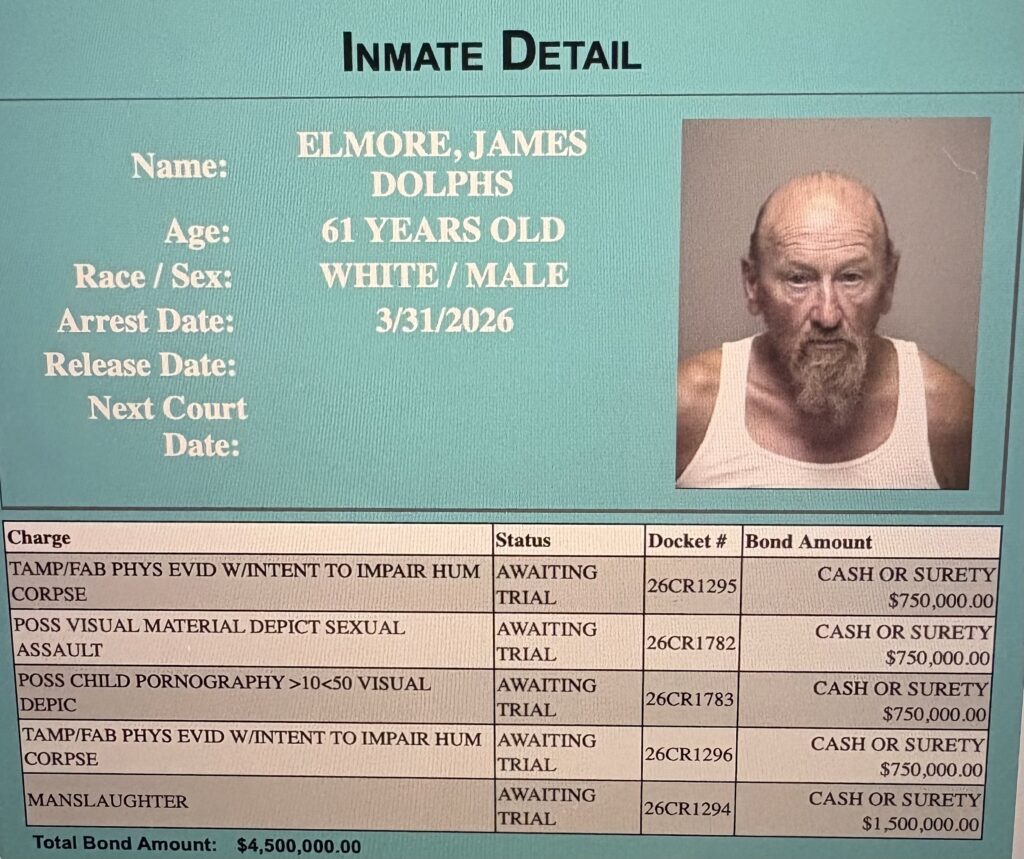
James Elmore Jr. booking photo. His trial is currently scheduled to begin Aug. 31, 2026, in Galveston County.
Williams testified that Elmore began talking about other cases during the interview.
Then the conversation turned to a party and Laura Miller.
Williams said Elmore’s statements caused him to start looking at Elmore differently. He testified that he began considering Elmore a possible suspect in Laura’s death.
Williams then gathered records from several law enforcement agencies and investigated information Elmore provided.
He also traveled to Louisiana, Oklahoma and other parts of Texas while investigating information connected to the cases.
Jurors hear James Elmore in his own words
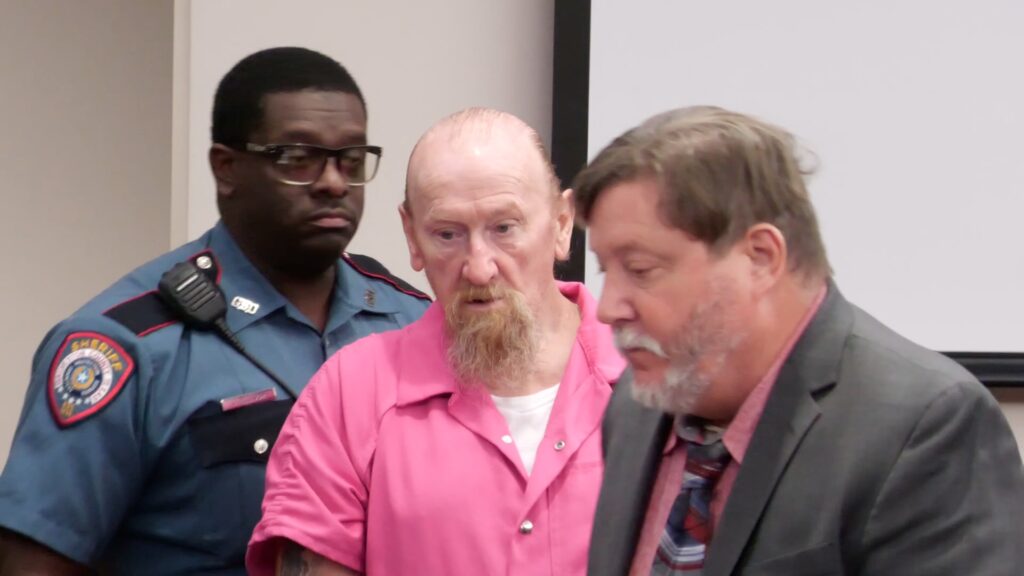
James Elmore Jr. appears in court ahead of his scheduled manslaughter trial in Galveston County.
Prosecutors then played Williams’ recorded interview with Elmore for the jury.
It marked a significant moment in the trial. Jurors could now hear Elmore describe events in his own voice.
During the recording, Elmore talks about the party where Laura was present.
He discusses drugs and describes Laura removing her clothes.
Investigators repeatedly question him about who remained in the room and what happened next.
Elmore says there were parts of the night he did not witness. He also says he did not see Laura being killed.
The interview then moves to what allegedly happened afterward.
Elmore talks about helping move items from a house. During one exchange, he describes an arm falling out of something being moved.
Investigators press him for more details about what he saw, who was there and where items were taken.
Elmore also discusses the Calder Road area and tells investigators he could show them the general location.
Recorded statements become key evidence
Jurors watched recorded footage of James Elmore Jr. as prosecutors presented statements they say became key evidence in the Laura Miller case.
Williams testified that Elmore’s statements changed the course of his investigation.
Prosecutors are using Elmore’s own words to support their argument that he had knowledge about Laura, the party and events surrounding her death that he should not otherwise have known.
Elmore also denies witnessing Laura’s death during the recording and repeatedly tells investigators that he does not know exactly what happened during portions of the night.
Jurors will have to weigh those statements along with the physical evidence and testimony from other witnesses.
The James Elmore Jr. trial continues in Galveston County.
Tim Miller, father of Laura Miller and founder of Texas EquuSearch, shown in a Galveston County courtroom.
The James Elmore Jr. trial moves into testimony Tuesday in Galveston County.
The court released Tuesday’s schedule.
Prosecutors expect Tim Miller to testify. Miller is Laura Miller’s father and the founder of Texas EquuSearch.
His testimony could become one of the most closely watched moments of the trial.
Tim Miller expected to take the stand
Tim Miller has spent decades searching for answers in the death of his daughter, Laura Miller. He is expected to be the prosecution’s first witness in the James Elmore Jr. trial.
Miller spent years searching for answers about his daughter’s death.
More recently, he had repeated contact with Elmore.
Miller has said he met privately with Elmore dozens of times after Elmore approached him with information about Laura’s death. Those conversations eventually became part of the renewed investigation.
Prosecutors expect Miller to testify about those contacts with Elmore.
Elmore faces a manslaughter charge in Laura Miller’s death.
He pleaded not guilty.
Opening statements expected Tuesday
James Elmore Jr. appears in court ahead of his scheduled manslaughter trial in Galveston County.
Proceedings are scheduled to begin at 9 a.m. Tuesday, Sept. 1.
The court will formally read the charge before opening statements.
Assistant District Attorney Katelyn Willis will give the prosecution’s opening statement. Willis leads the Violence Against Women Division.
ADA Adam Poole also represents the state. He leads the Felony Division but will not give an opening statement.
Defense attorney William “Bill” Agnew is not expected to give an opening statement immediately after the prosecution, according to the current schedule.
Manslaughter case goes before jury first
James Elmore Jr. appears in the 122nd District Court ahead of his manslaughter trial in the death of Laura Miller.
Elmore is charged with manslaughter in connection with Laura Miller’s death and with two counts of tampering with evidence involving the remains of Laura Miller and Audrey Cook.
He has pleaded not guilty and is presumed innocent unless proven guilty beyond a reasonable doubt.
Trial expected to continue through Friday
James Elmore Jr. appears in court as proceedings move toward testimony in the manslaughter case involving Laura Miller’s death.
The court currently expects testimony to continue through Friday, Sept. 4.
Proceedings are scheduled to begin at 9 a.m. each day and conclude around 5 p.m.
The schedule could change depending on testimony and other issues that arise during the trial.
I will continue following the James Elmore Jr. trial and will report new developments as they happen.
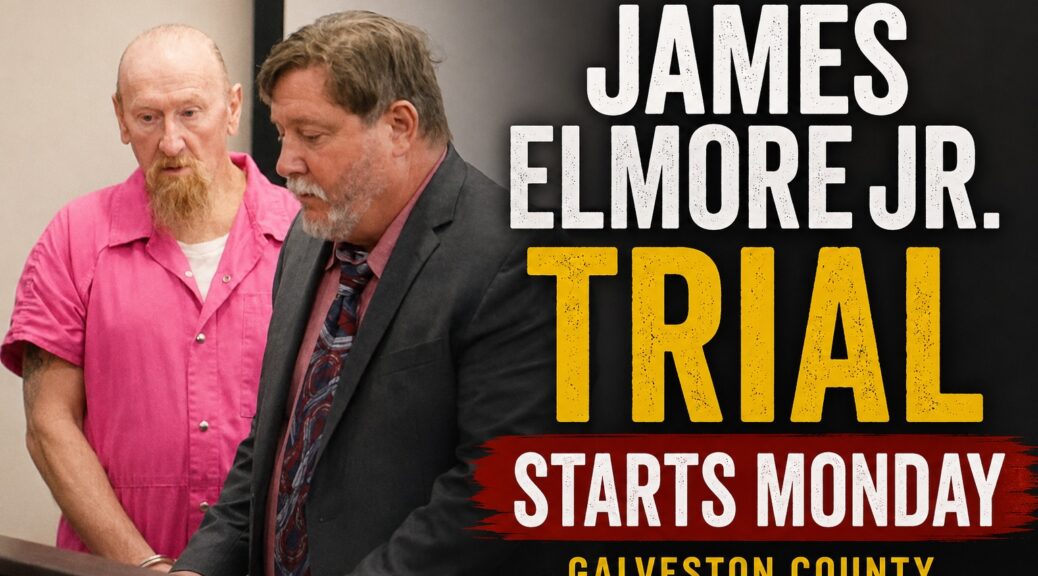
James Elmore Jr. appears in court ahead of his scheduled manslaughter trial in Galveston County.
The James Elmore Jr. trial is set to begin Monday in Galveston County.
Elmore faces a manslaughter charge in connection with the death of Laura Miller.
The case is scheduled in the 122nd District Court.
The court has already warned attorneys that it does not expect another delay without a serious emergency.
Jury selection could draw a large crowd
Jury selection may become one of the first major hurdles in the case.
During an earlier pretrial hearing, the judge and attorneys discussed calling more than 200 prospective jurors because of the publicity surrounding the case.
The court also discussed using a larger courtroom.
Attorneys considered a written jury questionnaire and individual questioning for some prospective jurors. The goal is to determine whether jurors can decide the case only on evidence presented in court.
Manslaughter case will go first
James Elmore Jr. booking photo. His trial is currently scheduled to begin Aug. 31, 2026, in Galveston County.
Prosecutors previously told the judge they plan to try the manslaughter case first.
Elmore has several other criminal cases pending.
The state has said evidence connected to some of those cases could become relevant during the manslaughter trial. If Elmore is convicted, prosecutors could also seek to introduce additional evidence during the punishment phase.
Watch the pretrial hearing
I previously covered Elmore’s Aug. 21 pretrial hearing, where the judge and attorneys discussed jury selection, outstanding discovery and how the manslaughter case would move forward.
Watch my full video from the hearing below for more context before Monday’s trial.
When testimony could begin
The court previously discussed beginning jury selection Monday afternoon.
Opening statements and testimony could begin Tuesday if a jury is seated in time. Attorneys have estimated the trial could last about one week.
That timeline could change depending on how long jury selection takes.
What to watch Monday
The biggest questions heading into court are how large the jury pool will be, whether attorneys use questionnaires and how quickly they can seat a jury.
There could also be last-minute motions before testimony begins.
Chopper Rose Productions will be at the courthouse following developments as the case moves toward trial.
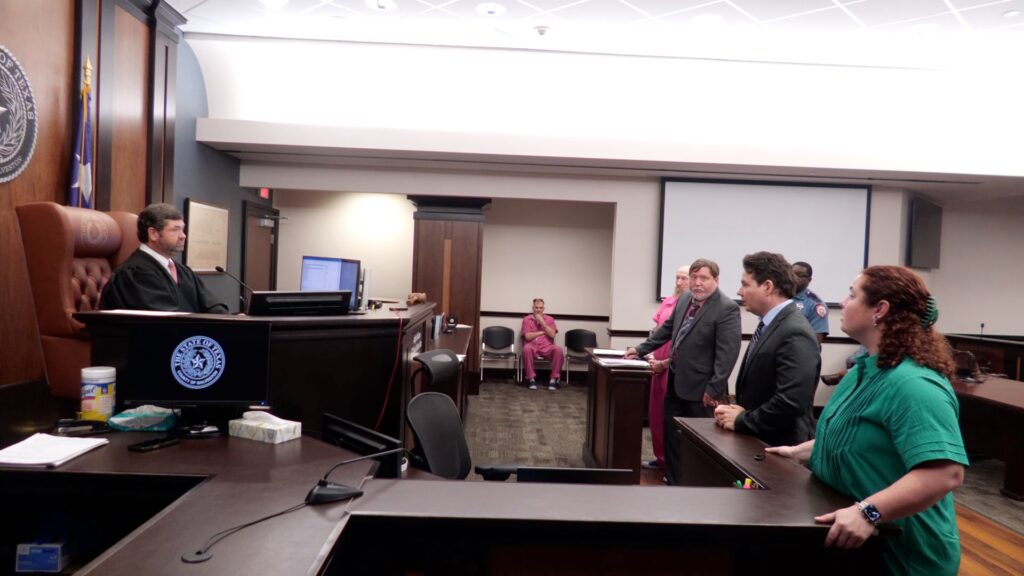
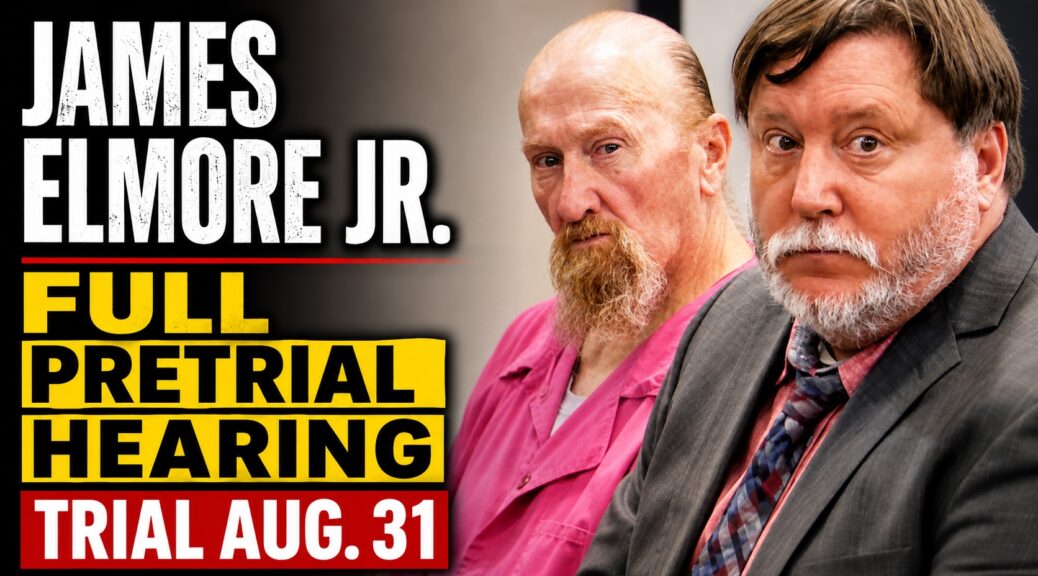
James Elmore Jr. appears in court during a pretrial hearing ahead of his Aug. 31 manslaughter trial.
James Elmore Jr. Trial Set for Aug. 31 as Judge Signals No Continuance
By Investigative Reporter Tammy Rose
James Elmore Jr. remains on track for an Aug. 31 trial in Galveston County.
Elmore pleaded not guilty as his case moves toward a jury. He faces several criminal cases connected to the deaths linked to the area known as the Texas Killing Fields.
Texas EquuSearch founder Tim Miller was also present in the courtroom.
Texas EquuSearch founder Tim Miller sits in the courtroom during James Elmore Jr.’s pretrial hearing ahead of the Aug. 31 trial.
During a pretrial discussion, the judge made one point especially clear. The court intends to try the case as scheduled.
“Unless there’s some medical emergency … no continuance.”
The judge told attorneys to make sure everyone understands that the case has a firm trial setting.
James Elmore Jr. Manslaughter Case Will Go First
Watch the full James Elmore Jr. pretrial hearing above, including discussion of the Aug. 31 trial date, jury selection, discovery and the other pending cases.
Elmore currently has five pending cases, according to statements made in court.
The prosecution told the judge that it plans to try the manslaughter case first on Aug. 31.
The state said it no longer plans to first try newer cases involving allegations of possession of child pornography.
The court also discussed Elmore’s other pending cases.
Prosecutors said the tampering cases could become relevant during the manslaughter trial. They argued that some of that evidence may provide context involving the victim.
If a jury finds Elmore guilty of manslaughter, prosecutors could also introduce evidence from the other pending cases during the punishment phase.
The judge explained that process in court.
If jurors find Elmore not guilty, the remaining cases would still remain pending.
Attorneys Say Discovery Is Nearly Complete
James Elmore Jr. and attorneys appear before the judge during a pretrial hearing ahead of his Aug. 31 manslaughter trial.
Both sides told the judge that no major discovery issues remain.
Prosecutors said they still need to handle several smaller matters. Those include redactions to statements and identifying specific jail calls.
The state also has images stored on a hard drive.
Defense attorneys can review those materials at the prosecutor’s office.
Elmore’s attorney told the judge that he plans to review the material while preparing for trial.
The court also discussed a discovery compliance form. Defense counsel said he would have Elmore review and sign it.
Court Could Call More Than 200 Potential Jurors
Jury selection could become one of the biggest challenges in the James Elmore Jr. trial.
The case has received extensive media coverage.
The judge and attorneys discussed calling more than 200 prospective jurors because of the attention surrounding the case.
The court could use a larger courtroom to accommodate the panel.
Attorneys also discussed whether to use a written jury questionnaire.
A questionnaire could help identify people who already know details about the case. However, it could also delay jury selection by a day.
The judge raised another concern.
Questions asked in front of the entire panel could influence other potential jurors. The court may instead question some people individually.
The goal will be to find jurors who can decide the case based only on evidence presented in court.
Judge Expects Trial to Last About One Week
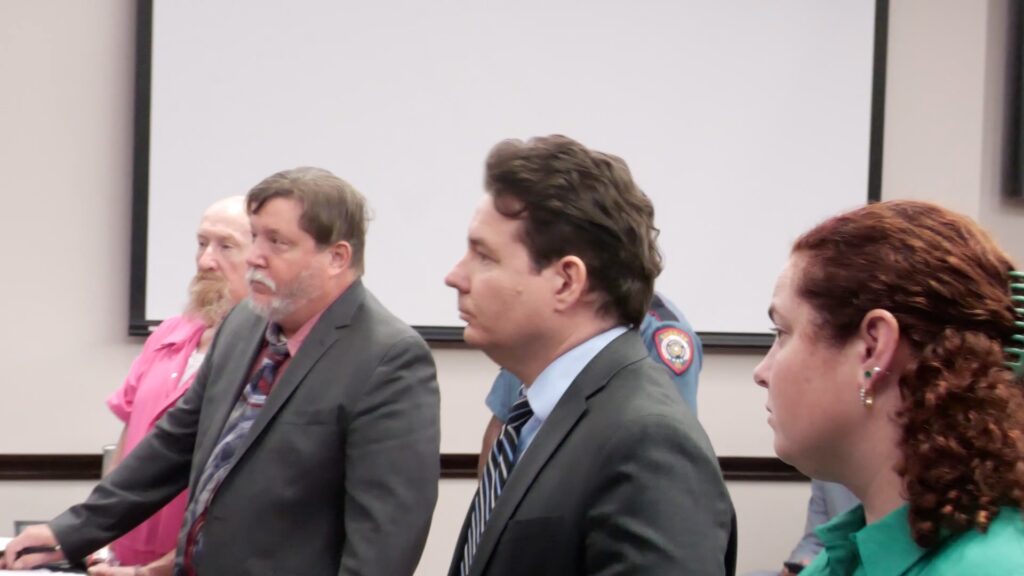
James Elmore Jr. appears with attorneys during a pretrial hearing as the court prepares for his Aug. 31 trial.
The attorneys told the judge they expect the manslaughter trial to last about one week.
The court discussed beginning jury selection on the afternoon of Aug. 31.
Opening statements and testimony could begin the following day.
If the court uses a jury questionnaire, the trial could run slightly longer.
The court also expects to select alternate jurors.
Other James Elmore Cases Could Follow Quickly
James Elmore Jr. booking photo. His trial is currently scheduled to begin Aug. 31, 2026, in Galveston County.
Prosecutors are already looking beyond the Aug. 31 trial.
The state told the judge it wants to return to court quickly for another Elmore case.
An October trial setting came up during the discussion.
The court discussed Oct. 5 as a possible next docket setting. Attorneys also mentioned Oct. 12 as another possibility.
Those dates could change depending on how long the manslaughter trial lasts and how quickly attorneys receive the court record.
Judge Warns Elmore Against Speaking
James Elmore Jr. stands with his attorney during a pretrial hearing as the court prepares for his Aug. 31 manslaughter trial.
The judge also addressed Elmore directly.
He told Elmore that he did not have to speak in court. The judge warned that anything Elmore said could become evidence against him.
Instead, the judge encouraged Elmore to communicate with his attorney about anything he wants addressed before trial.
The judge said the court would hear necessary motions, even if attorneys file them shortly before trial.
Aug. 31 Trial Remains Firm
For now, the most important development is simple.
James Elmore Jr. remains scheduled for trial Aug. 31.
The prosecution says it will begin with the manslaughter case.
The court expects a large jury pool because of the publicity surrounding the case.
And the judge made clear that he does not expect to grant another delay without a serious emergency.
Tim Miller’s presence in the courtroom also underscored the attention surrounding the case as it moves closer to trial.
Investigative Reporter Tammy Rose will continue following the James Elmore Jr. case and any developments before jury selection begins.
Travelers heading to Galveston County can compare hotel options near the courthouse and surrounding area.
If you are traveling to Galveston County to follow the James Elmore Jr. trial, you can compare hotel options through Hotels.com. Look for rooms near Galveston, League City or the surrounding area, depending on your travel plans and court schedule.
Long court days can mean a lot of waiting. I recommend bringing a portable phone charger, reusable water bottle and a lightweight bag for your essentials. You can find travel gear and courtroom-day basics on Amazon.
As an Amazon Associate, I may earn from qualifying purchases at no additional cost to you.
Why I Continue Investigating the Texas Killing Fields: Every Victim Deserves to Be Remembered
By Investigative Reporter Tammy Rose
People often ask why I continue investigating murders that happened more than 50 years ago.
They wonder why I file public records requests. They ask why I travel hundreds of miles to interview witnesses. They also question why I keep digging into cases that many people have forgotten.
When I began researching the Texas Killing Fields, one issue quickly bothered me.
Old news reports often focused on how the victims died. Police records also placed heavy attention on their circumstances. Those accounts did not always show who the women were or how they lived.
Authorities described some victims as runaways. Others struggled with addiction or lived through difficult times. Reports also linked some women to prostitution.
Those labels often overshadowed their identities.
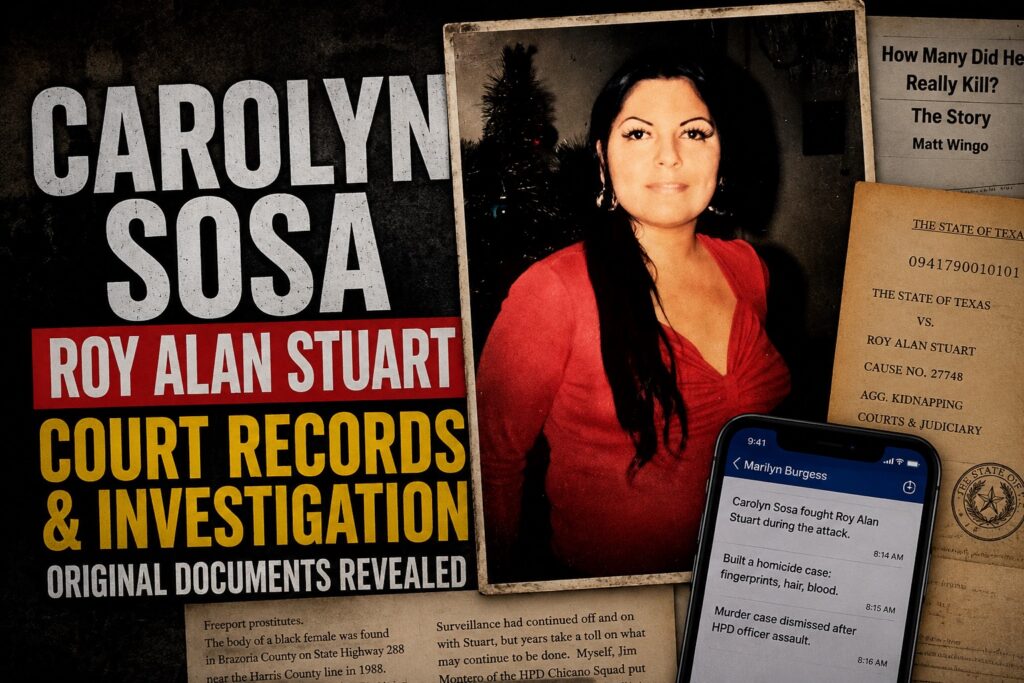
Investigators first viewed Laura Miller as a possible runaway. Reports also associated Carolyn Sosa and Teri McDaniel with prostitution.
Those descriptions may have been accurate, incomplete or unfair. Either way, they often became the focus of the story.
The victims deserved better.
No one should disappear from history because of a label.
My investigation has taken me across Texas and beyond.
I have tracked down key witnesses. I have interviewed retired investigators. I have reviewed thousands of pages of public records.
I have also examined evidence that many people have never seen.
Each interview raises another question. Every record leads to another document. One conversation can reveal a missing piece of history.
Some discoveries involve unidentified remains. Others involve witnesses who were overlooked years ago. Records may also expose decisions that still raise questions today.
I do not investigate these cases to sensationalize tragedy.
I investigate because every victim mattered.
A person’s past should never decide how much effort investigators make. It should not affect whether authorities search for them or work to solve their murder.
A straight-A student had value. A runaway had value. A woman struggling with addiction had value. A person living on the streets had value.
Their circumstances did not make their lives less important.
Justice should never depend on someone’s background.
My investigations sometimes require travel across Texas and beyond. When I need a place to stay near an interview, courthouse or records office, I compare available hotels through Hotels.com.
I also rely on practical tools while reviewing old case files. A portable document scannerhelps me preserve records, photographs and handwritten notes.
This post contains affiliate links. I may earn a small commission from qualifying bookings or purchases at no additional cost to you. As an Amazon Associate, I earn from qualifying purchases.
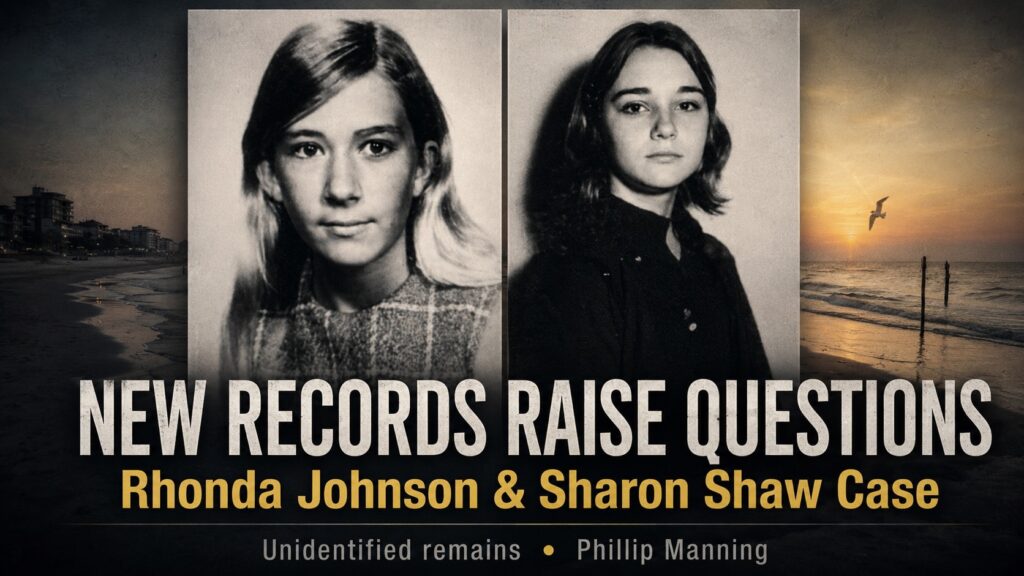
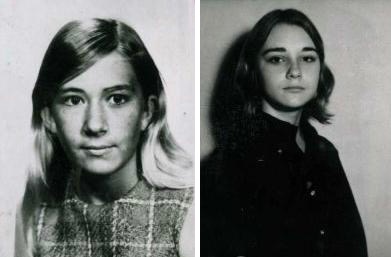
Rhonda Renee Johnson, left, and Sharon Lynn Shaw disappeared after leaving Webster for a trip to Galveston on August 4, 1971. Public-domain image via Wikimedia Commons.
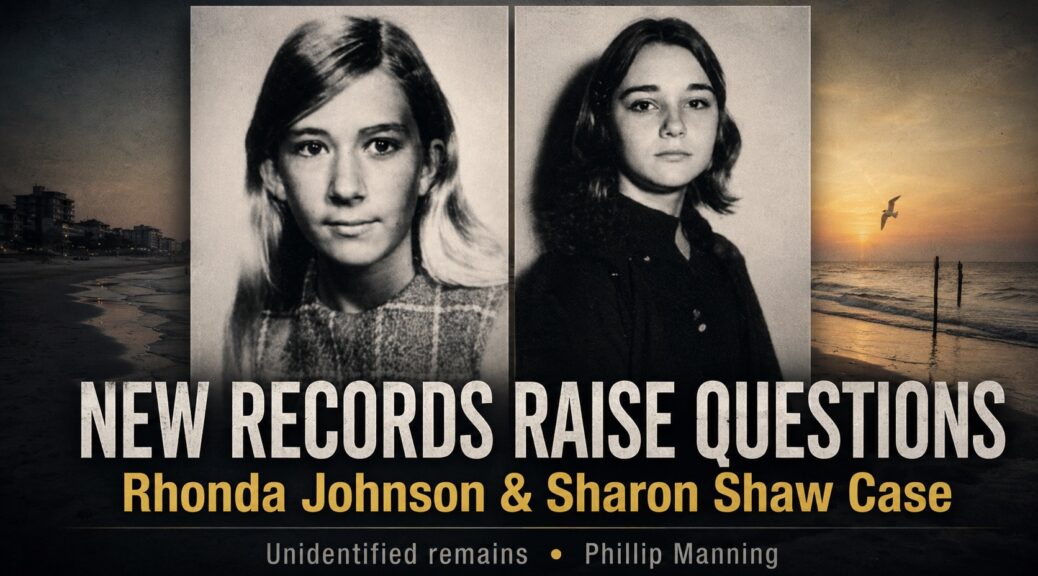
New Records Raise Questions About Unidentified Remains in Rhonda Johnson and Sharon Shaw Investigation
By Investigative Reporter Tammy Rose
More than five decades after the murders of Rhonda Johnson and Sharon Shaw, newly reviewed records are raising questions about additional human remains found in the area. The records also raise the possibility that investigators once considered whether another person played a role in the case.
Rhonda Johnson, 14, and Sharon Shaw, 13, disappeared from Galveston County in August 1971. Authorities later recovered their skeletal remains in and around Clear Lake along Galveston Bay.
The investigation continued for decades as detectives worked to identify remains, examine evidence and determine whether the discoveries connected to the two girls.
The records do not prove that another victim or another killer was connected to the murders. However, they show how much uncertainty investigators faced during the early stages of the case.
Remains of Sharon Shaw and Rhonda Johnson Identified
On January 3, 1972, two boys fishing in Clear Lake discovered a human skull floating in the water.
Authorities later identified the skull through dental records as belonging to Sharon Shaw. Investigators also reportedly found a crucifix around the jawbone that Sharon’s mother identified as her daughter’s.
About six weeks later, searchers recovered additional skeletal remains in a marsh near Clear Lake. Authorities identified one set of those remains as belonging to Rhonda Johnson.
The discoveries confirmed that both girls had died, but investigators could not determine their exact causes of death from the remains.
The identification resolved the girls’ missing-person cases, but other remains recovered during that period created additional questions.
Michael Lloyd Self Was Convicted
Investigators eventually focused on Michael Lloyd Self, who worked as a gas station attendant in the Webster/Clear Lake area. Authorities charged Self in connection with the murders of Rhonda Johnson and Sharon Shaw
A jury convicted Self of murdering Sharon Shaw and sentenced him to life in prison. The court record confirms that his conviction involved Sharon’s murder; he was not convicted of Rhonda Johnson’s murder.
Self later said police had threatened and physically abused him until he confessed. Questions about whether investigators obtained a false or coerced confession followed the case for decades. A federal judge once recommended relief based on the confession issue, although a later appeals court decision allowed the conviction to stand.
Edward Harold Bell Became an Alternate Suspect
Michael Lloyd Self was convicted in Sharon Shaw’s murder, though questions later emerged about his confession and whether he was responsible.
In 1998, convicted killer Edward Harold Bell claimed responsibility for the murders of several young women and girls in the Galveston-area region. His statements included two girls from Webster who disappeared in August 1971, which investigators associated with Rhonda Johnson and Sharon Shaw.
Bell became an alternate suspect in their murders, but authorities never charged him in the case. Investigators reportedly lacked physical or biological evidence that conclusively connected Bell to the girls’ deaths.
Bell’s claims increased doubts about Self’s conviction, but they did not officially resolve who killed Rhonda and Sharon.
Questions Surrounding Other Remains
Records reviewed by Investigative Reporter Tammy Rose indicate authorities recovered an unidentified torso in September 1971.
Investigators reportedly found clothing or personal items with or near the remains that they believed belonged to Phillip Manning. Those items initially led authorities to consider whether the torso might be Manning’s.
Authorities later located Manning alive in Louisiana. That confirmed the torso was not his.
The discovery still raised questions about the unidentified victim’s identity and whether another victim—or possibly another killer—may have been connected to the investigation. However, the records reviewed so far do not establish that the torso was connected to the murders of Rhonda Johnson or Sharon Shaw.
Records Detail Manning’s Background
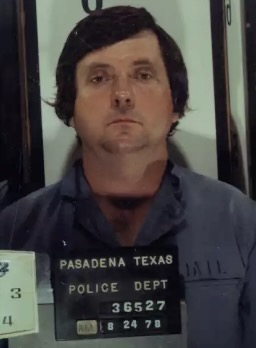
The records also include criminal-history and case information connected to Phillip Manning. That material may help explain why investigators examined his possible connection to the case.
However, the records do not establish that Manning killed Rhonda Johnson, Sharon Shaw or anyone else. The information surrounding him remained circumstantial, and the records reviewed so far do not show that authorities filed a case against him in connection with the girls’ murders.
Investigators Faced Difficult Conditions
Galveston shoreline and Gulf waters at sunset
The discoveries occurred during a period when severe weather affected portions of the Texas Gulf Coast.
Tropical storms Edith and Fern moved through the region in September 1971, potentially complicating searches, recovery efforts and investigators’ ability to determine where remains had originally entered the water.
Water movement, weather conditions and the passage of time may have made it more difficult to connect separate remains to specific locations or victims.
Investigators in 1971 also did not have access to the DNA testing and modern forensic databases available today.
Identifications often depended heavily on dental comparisons, physical characteristics and other available medical evidence.
Was Another Killer Suspected?
The records raise an important question: Did investigators believe the additional remains pointed to another victim—or possibly another offender operating in the area?
The documents reviewed so far do not provide a definitive answer.
They instead show that authorities were dealing with several discoveries, uncertain identifications and incomplete information during the earliest stages of the investigation.
Any suggestion that another killer was involved should be treated as a theory unless additional police reports, forensic findings or official statements support it.
Questions That Still Need Answers
Several important questions remain:
Who exactly was Phillip Manning?
Why did investigators connect his name to the torso?
Was the torso ever conclusively identified?
Did Manning have any documented connection to Rhonda Johnson or Sharon Shaw?
What did investigators believe before the girls’ remains were fully identified?
Are additional reports or forensic records still available?
Those questions may be important in understanding not only what investigators knew, but also how the case evolved during its earliest months.
Investigation Continues to Draw Interest
Rhonda Johnson and Sharon Shaw traveled from Webster to Galveston on August 4, 1971, before they disappeared.
The murders of Rhonda Johnson and Sharon Shaw remain among the most discussed cases connected to the Texas Gulf Coast.
Decades later, old reports, forensic findings and previously overlooked names continue to generate new questions.
The records do not yet prove that another killer was involved. But they show that the investigation may have been more complex than the public understood—and that parts of the story may still be missing.
Investigative Reporter Tammy Rose will continue reviewing available records and seeking documentation that could clarify the identity of the additional remains and Phillip Manning’s possible connection to the investigation.
When reviewing decades-old police reports, newspaper clippings and case files, a waterproof document organizer can help protect important records from spills, moisture and damage.
Disclosure: As an Amazon Associate, I may earn from qualifying purchases at no additional cost to you.
Visitors researching Galveston County history or spending time along the Texas Gulf Coast can compare hotels and available accommodations through Hotels.com.
Disclosure: I may earn a commission from eligible bookings at no additional cost to you.
A closer look at the disappearance and murders of Rhonda Johnson and Sharon Shaw, the recovery of their remains and the questions that continue decades later.