Tag Archives: Witness Statements

False information to police in Texas: When a crime tip becomes a crime

By Investigative Reporter Tammy Rose
A single tip can reopen a cold case, lead investigators to missing evidence, or help a grieving family finally find answers. But what happens when someone knowingly gives police false information?

In Texas, providing false information to police during a criminal investigation can result in criminal charges, fines, and jail time.

Law enforcement agencies rely on witnesses to help solve crimes. Even information that surfaces decades later can be valuable. However, there is a legal difference between an honest mistake and a deliberate attempt to mislead investigators.

What Texas law says about false information to police
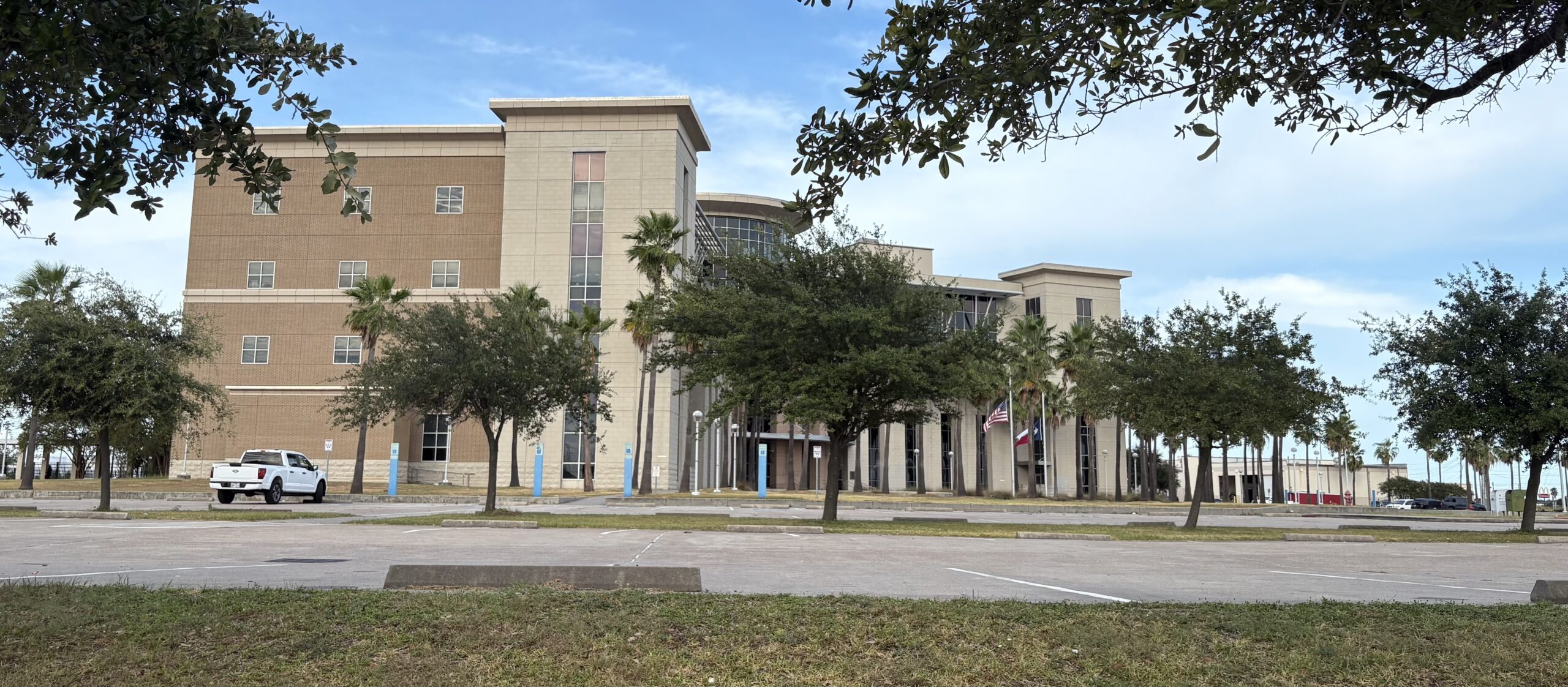
Galveston County courthouse building in Texas, illustrating state laws concerning false information provided to police.
Texas Penal Code Section 37.08 addresses false reports made to law enforcement officers and certain investigators.

Under Texas Penal Code Section 37.08, a person commits an offense when they knowingly make a materially false statement to an authorized investigator with the intent to deceive.

The offense is classified as a Class B misdemeanor.

A conviction can carry:

Up to 180 days in county jail.
A fine of up to $2,000.
Both jail time and a fine.

The law does not require someone to invent an entire crime. A knowingly false statement about an important detail in an investigation may be enough to violate the statute.

What happens when someone makes a false crime report?
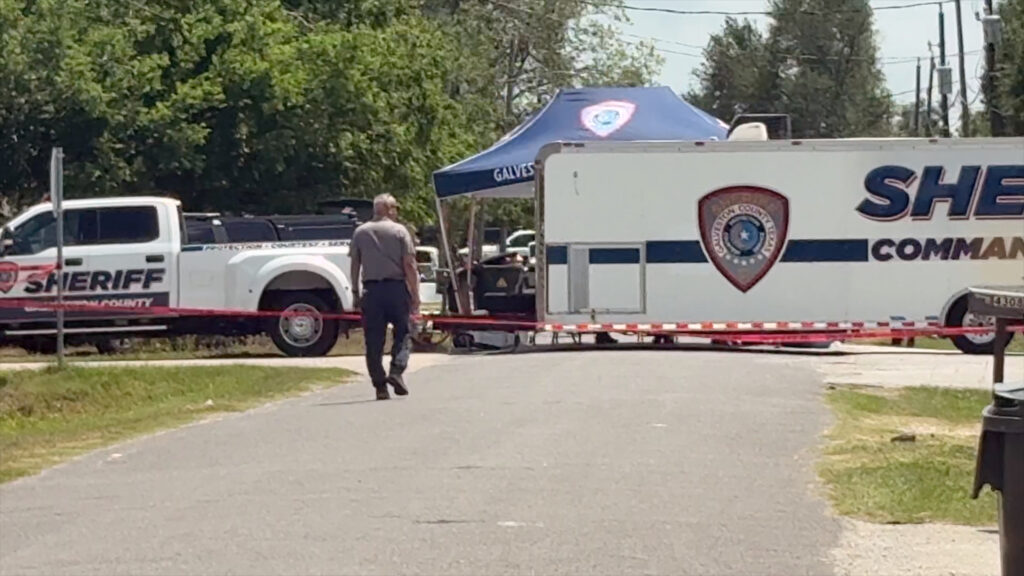
Sheriff's command vehicle with law enforcement officers walking toward it during an active investigation scene.
Law enforcement investigations require personnel, equipment, and resources. Knowingly false crime reports can divert those resources.

Texas Penal Code Section 42.06 addresses certain false reports involving crimes or emergencies.

A person who knowingly communicates a false or baseless report that meets the statute’s requirements may face a Class A misdemeanor. Certain reports involving schools, public transportation, or essential public services can result in felony charges.

Other laws may apply when false reports trigger dangerous emergency responses.

Why false information can hurt cold case investigations
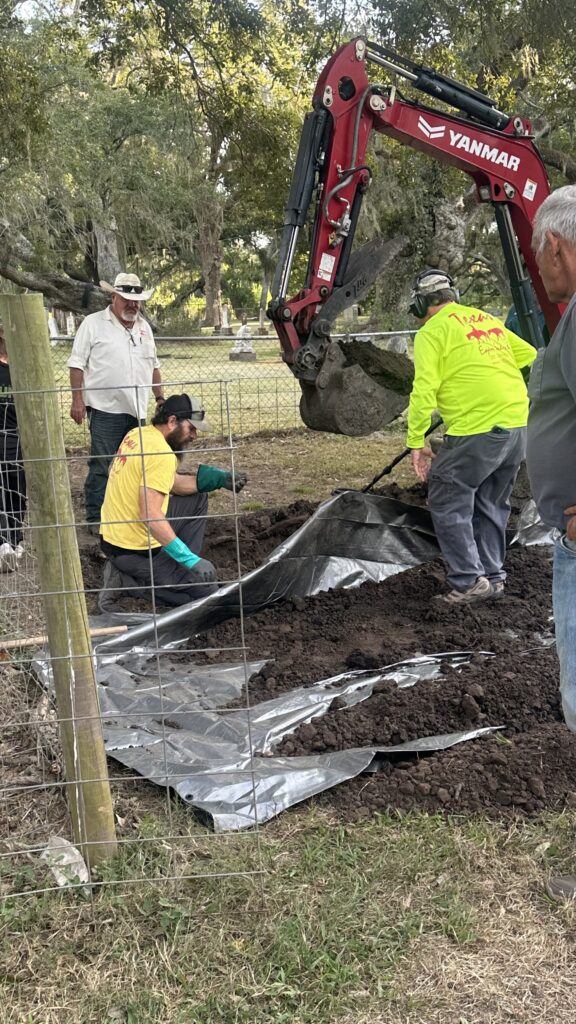
Excavation crew using heavy equipment to search for possible evidence near a Brazoria County cemetery in the 1986 Rebecca Beard cold case.
Search crews excavate an area near a Brazoria County cemetery after new witness information raised questions about the possible location of Rebecca Beard’s remains.

Cold cases often depend on information that surfaces years or even decades after the original investigation.

Witnesses may remember a conversation, recognize a location, or decide to share information they previously withheld.

These tips deserve careful consideration.

But knowingly fabricated information can send investigators in the wrong direction.

It can also consume investigative resources, lead to unnecessary searches, and create false hope for families who have spent years waiting for answers.

When investigators search a property or examine a possible burial site, the information that prompted the search must be evaluated alongside physical evidence and independent corroboration.

A witness statement alone does not establish that a crime occurred at a particular location.

Being mistaken is not the same as lying
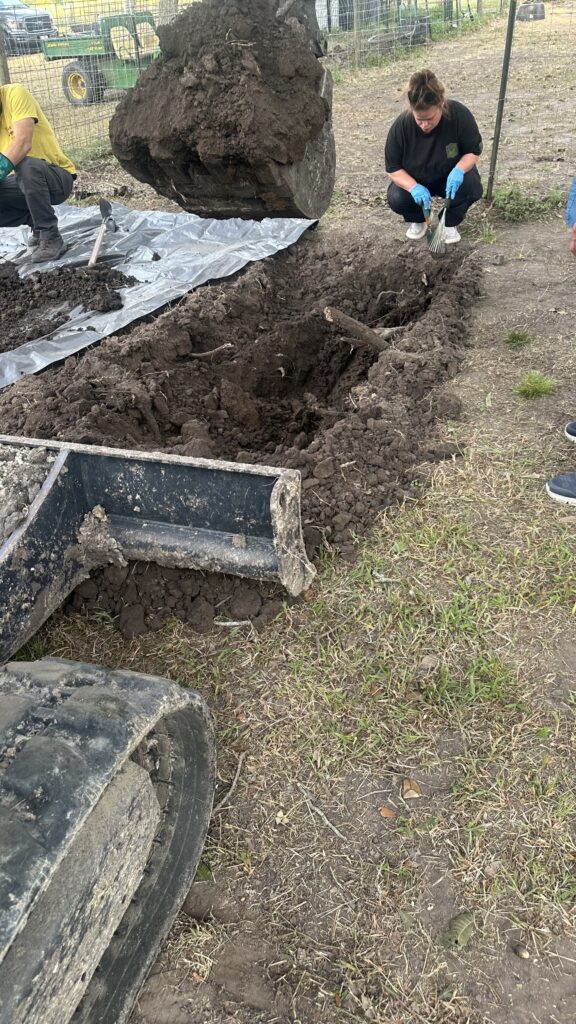
Excavation of soil near a Brazoria County cemetery during the 2026 search for possible evidence in the 1986 Rebecca Beard cold case.
An excavation near a Brazoria County cemetery during the renewed search for Rebecca Beard, who disappeared in 1986. Investigators examined the area following new witness information.

This distinction is especially important.

Human memory is imperfect. Details can become unclear over time. Witnesses may confuse dates, locations, or conversations.

An honest mistake does not automatically constitute a criminal offense.

Texas Penal Code Section 37.08 requires proof that a person knowingly made a materially false statement with the intent to deceive.

Investigators must distinguish between inaccurate recollections, misunderstandings, secondhand information, and deliberate deception.

Why witnesses should still come forward

Recreation of the clothing Rebecca “Becky” Beard was reportedly wearing when she disappeared in Freeport, Texas, in March 1986.
A recreation of the outfit Rebecca “Becky” Beard was reportedly wearing when she vanished in March 1986. Her family continues searching for answers 40 years later.

The possibility of criminal penalties should never discourage someone from reporting information they genuinely believe could help solve a crime.

A witness does not need to have every answer.

Someone may remember a suspicious vehicle, an unusual conversation, or activity near a location connected to an investigation.

Even decades later, that information may be important.

The best approach is to explain exactly what was personally observed, identify information learned from others, and acknowledge uncertainty.

Investigators can then determine whether the information can be independently verified.

The responsibility that comes with reporting a crime
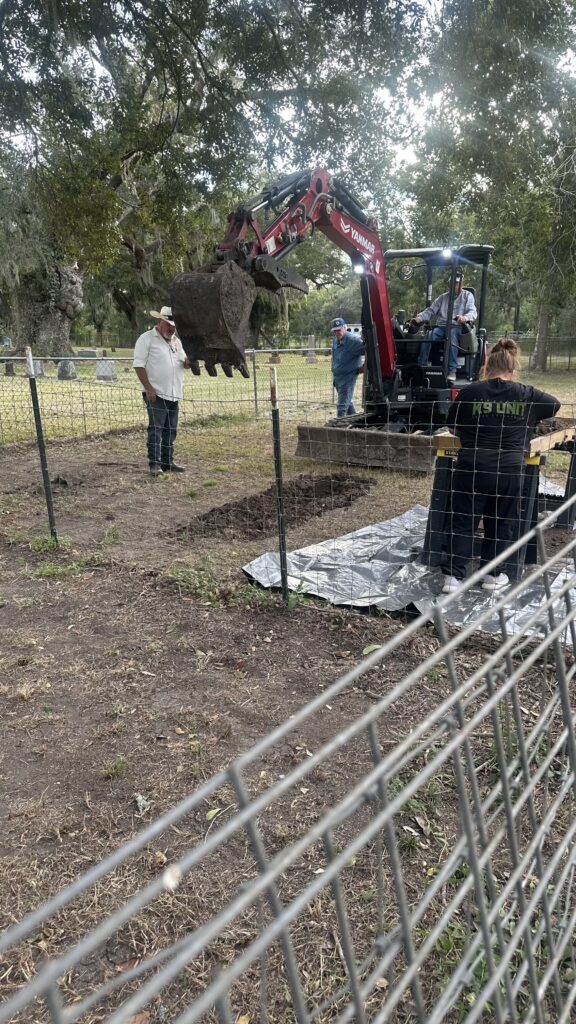
Excavator digging near a Brazoria County cemetery during the 2026 search for evidence in the Rebecca Beard cold case.
Search crews excavate an area near a Brazoria County cemetery following new witness information in the 1986 disappearance of Rebecca “Becky” Beard.

Families of missing persons and homicide victims deserve answers based on credible evidence.

Investigators deserve truthful information. Witnesses deserve to be heard and treated fairly.

And the public deserves to understand that deliberately misleading law enforcement can carry legal consequences.

Coming forward with information can be an act of courage.

Knowingly inventing information is something entirely different.

The message is simple: If you know something about a crime, speak up. But tell the truth. Someone’s family may be depending on it.

⸻

My new book is now available
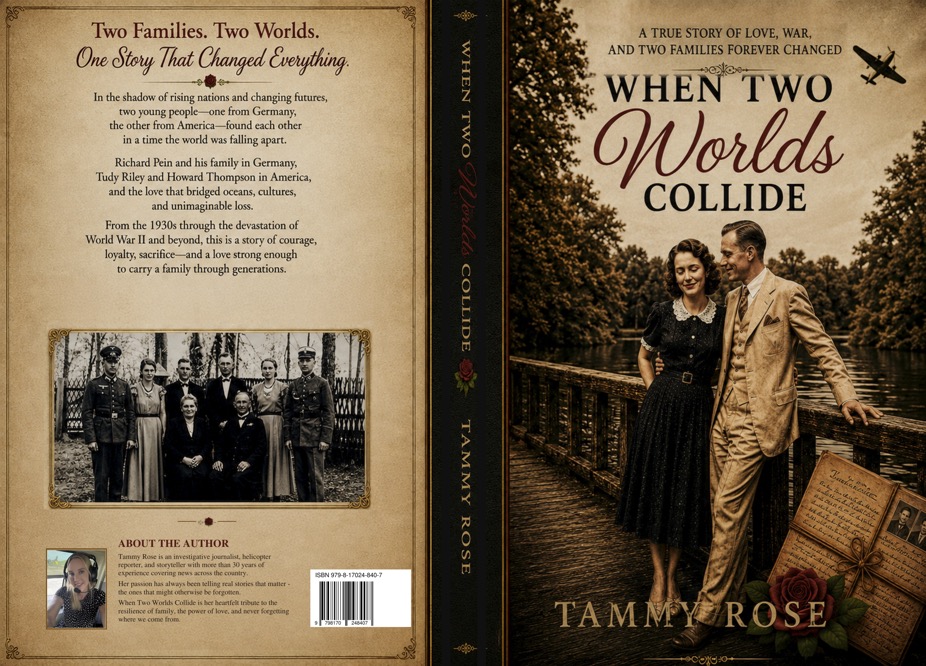
My new book, When Two Worlds Collide During WWII, follows two families on opposite sides of World War II and the remarkable events that eventually brought their lives together in Wisconsin.

Amazon Affiliate Disclosure: As an Amazon Associate, I earn from qualifying purchases. This comes at no additional cost to you.
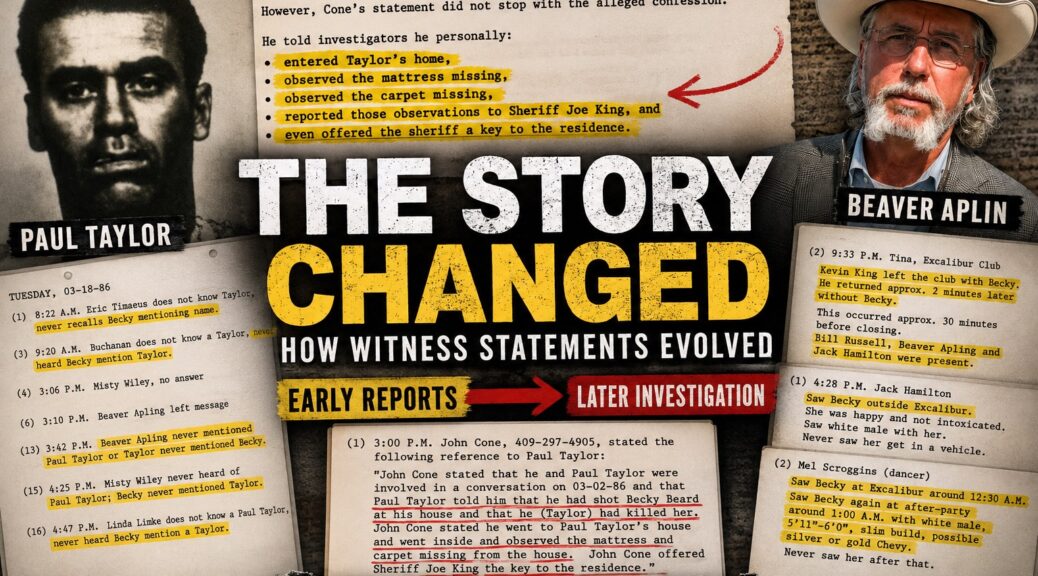
Rebecca Beard Part 3: How Witness Statements Changed During the Investigation

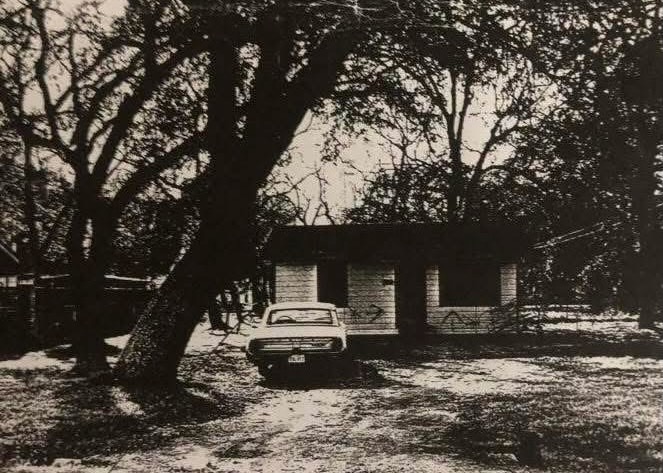
Historic photograph of Paul Taylor’s former Clute home featured in Part 3 of the Rebecca Beard investigation series, examining how witness statements and investigative timelines evolved during the case.
Paul Taylor’s former Clute residence, where investigators later focused much of the Rebecca Beard investigation as witness statements and the case timeline evolved over time.

Rebecca Beard Part 3: How Witness Statements Changed During the Investigation

By Investigative Reporter Tammy Rose

As I continued reviewing the original investigative file in the Rebecca Beard case, one pattern became impossible to ignore.

The earliest reports tell a very different story than the theory prosecutors ultimately presented years later.

During the first weeks of the investigation, detectives documented witnesses who said they did not know Paul Taylor or had never heard Becky mention him. At the same time, investigators pursued reports that Becky was seen after leaving the Excalibur Club, including at a Surfside beach party and an after-party.

Months later, investigators had assembled a very different timeline.

The records show how that evolution occurred.

⸻

Early Witnesses Did Not Connect Becky to Paul Taylor

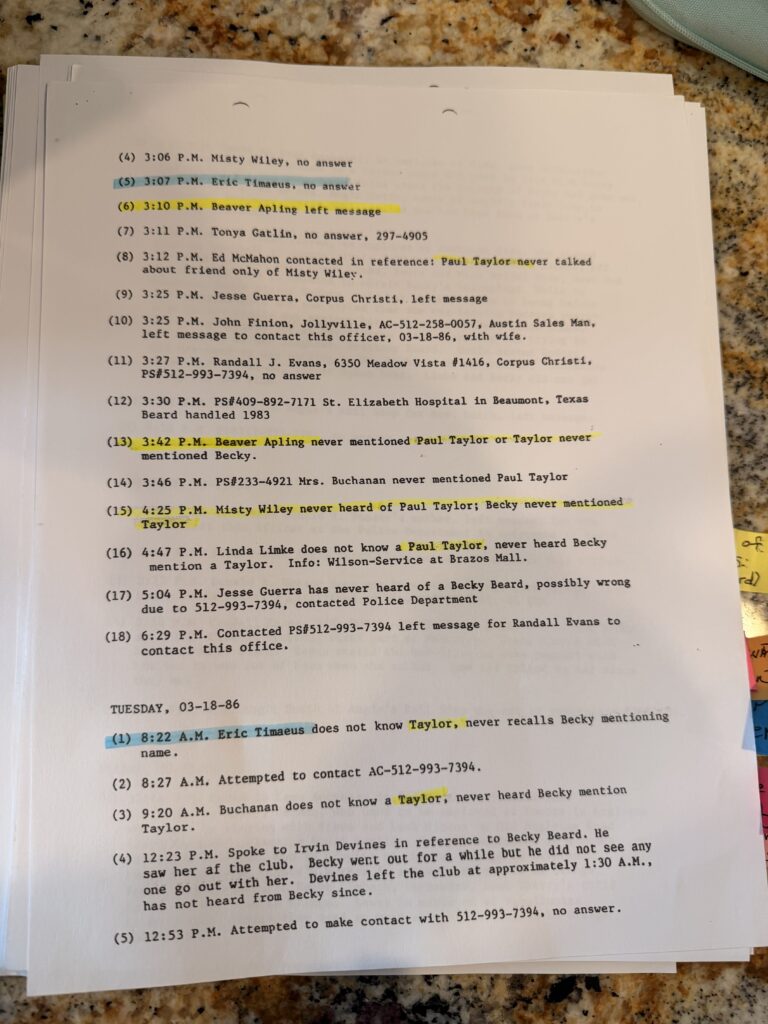
March 1986 police report documenting early witness interviews in the Rebecca Beard investigation, including statements from people who told investigators they did not know Paul Taylor or had never heard Becky mention him.
A March 1986 police report documents early witness interviews in the Rebecca Beard investigation. Several witnesses told detectives they did not know Paul Taylor or had never heard Becky mention him, reflecting one of the investigation’s earliest lines of inquiry.

One of the strongest themes in the March 1986 reports is how often investigators documented witnesses saying they had no connection between Becky Beard and Paul Taylor.

Among those interviewed were:

Beaver Aplin, who investigators noted never mentioned Paul Taylor, and Taylor had never mentioned Becky.


Eric Timaeus, Becky’s friend, who said he did not know Paul Taylor and never recalled Becky mentioning his name.


Misty Wiley, who said she had never heard of Paul Taylor and Becky never mentioned him.


Linda Barnes (identified in some records as Linda Limke), who said she had never heard Becky mention Paul Taylor.


Mrs. Buchanan, who also said she did not know Taylor.

At this point in the investigation, detectives had not yet developed the theory that Paul Taylor was the last person with Becky.

⸻

Several Witnesses Reported Becky Alive After Leaving Excalibur

The earliest reports also show investigators pursuing multiple leads suggesting Becky continued socializing after leaving the Excalibur Club in Freeport.

Paula’s Surfside Account

One witness, Paula, told investigators she saw Becky at a Surfside beach party during the morning hours after she disappeared.

That account suggested Becky may have left the club and traveled elsewhere.

Jack Hamilton’s Statement

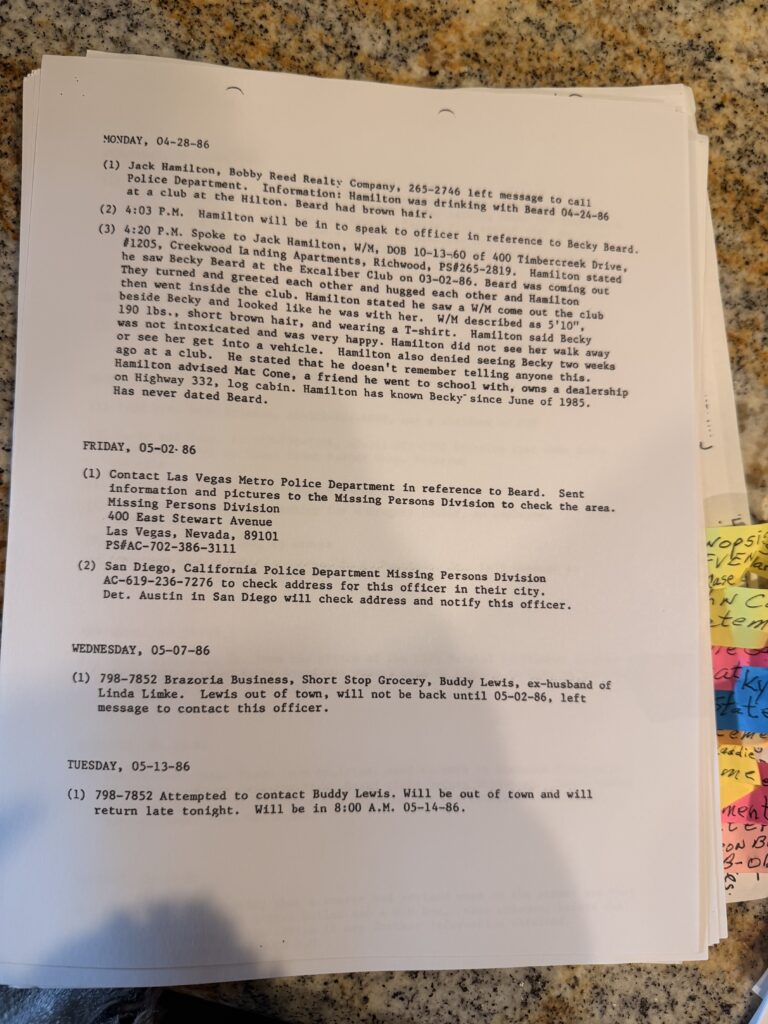
April 28, 1986 police report documenting witness interviews in the Rebecca Beard investigation, including statements from Jack Hamilton and dancer Mel Scroggins regarding Becky’s movements after leaving the Excalibur Club.
An April 28, 1986 police report documents interviews with Jack Hamilton and dancer Mel Scroggins. Both described seeing Becky Beard after she left the Excalibur Club, adding to the early investigative timeline detectives were working to reconstruct.

On April 28, 1986, Jack Hamilton told investigators he saw Becky outside the Excalibur Club.

Hamilton said:

Becky appeared happy.
She was not intoxicated.
The two greeted each other and hugged.
He saw an unidentified white male walk out beside Becky who appeared to be with her.
He never saw Becky get into a vehicle.

Importantly, Hamilton did not identify the man as Paul Taylor.

Hamilton also told investigators he knew Matt Cone, a longtime friend.

Dancer Reported Seeing Becky at an After-Party

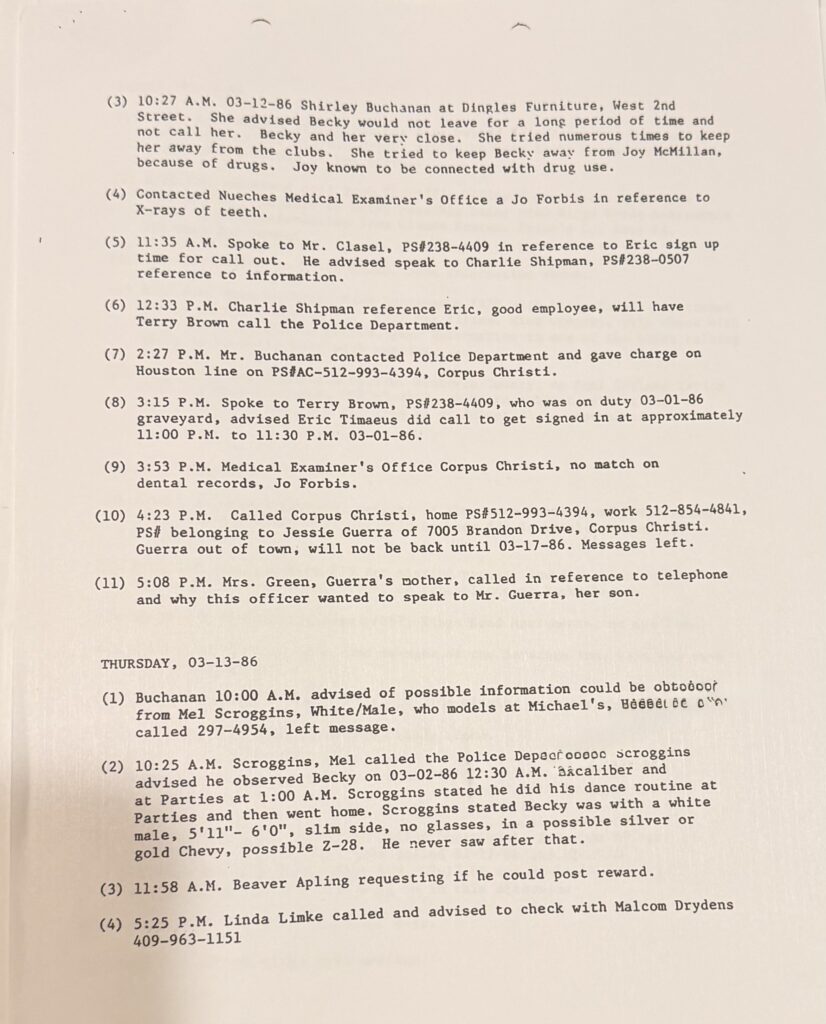
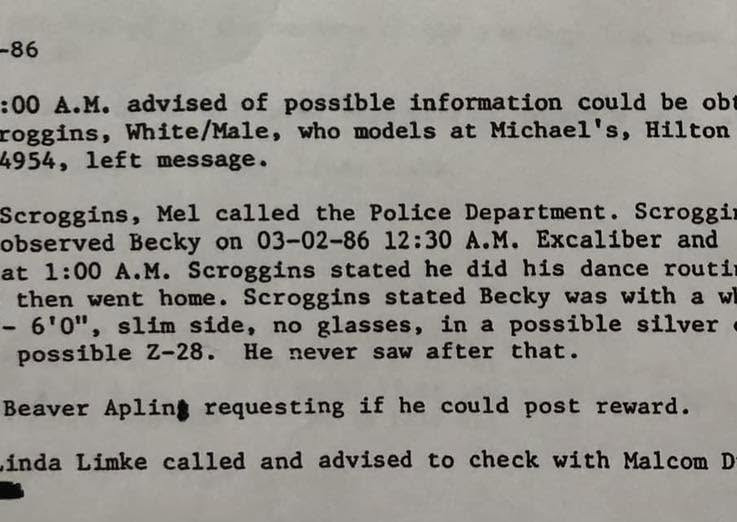
March 13, 1986 police report documenting witness information in the Rebecca Beard investigation, including dancer Mel Scroggins’ account of seeing Becky at Excalibur and later at an after-party.
A March 13, 1986 police report documents dancer Mel Scroggins’ statement that he saw Becky Beard at the Excalibur Club and later at an after-party around 1:00 a.m. The report also notes Beaver Aplin contacted investigators about posting a reward.

Another witness, Mel Scroggins, also described seeing Becky after she left Excalibur.

Scroggins told investigators he saw Becky around 12:30 a.m. at Excalibur before performing his dance routine.

He then reported seeing Becky again around 1:00 a.m. at an after-party.

According to Scroggins, Becky was accompanied by:

a white male,
approximately 5’11” to 6’0”,
slim build,
no glasses,
associated with a possible silver or gold Chevrolet.

Again, the man was not identified as Paul Taylor.

Scroggins said he never saw Becky after that.

When viewed together, these reports show detectives were actively investigating the possibility that Becky continued on to other locations after leaving Excalibur.

⸻

John Cone’s Statement Became a Turning Point

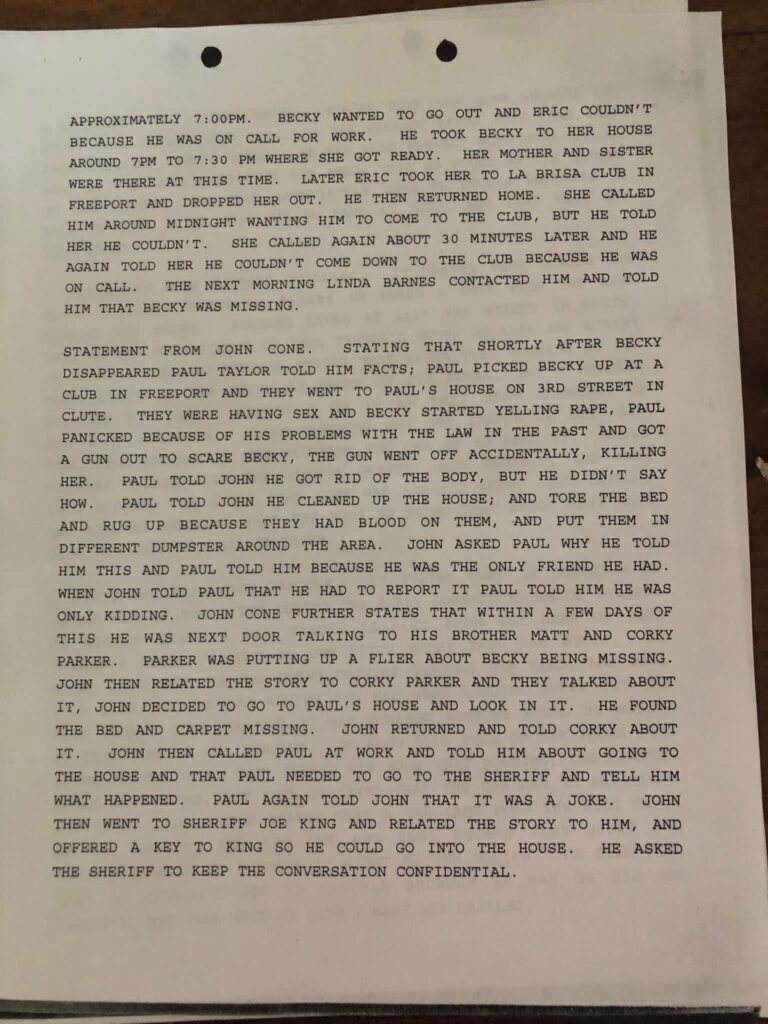
Police report documenting John Cone’s statement in the Rebecca Beard investigation. The statement describes what Cone said Paul Taylor told him and also details Cone’s own observations after entering Taylor’s home, including that the mattress and carpet were missing.
Police records show John Cone told investigators that Paul Taylor admitted Becky Beard died at his home. Cone also stated he personally entered the house, observed the mattress and carpet were missing, and reported those observations to Sheriff Joe King while offering a key to the residence.

Another major development came from John Cone.

Cone told investigators Paul Taylor admitted Becky died inside his Clute home after a gun discharged during an encounter.

However, Cone’s statement did not stop with the alleged confession.

He told investigators he personally:

entered Taylor’s home,
observed the mattress missing,
observed the carpet missing,
reported those observations to Sheriff Joe King, and
even offered the sheriff a key to the residence.

Those observations were based on what Cone said he personally witnessed, not simply what Taylor allegedly told him.

⸻

Matt Cone Appears to Corroborate Parts of the Story

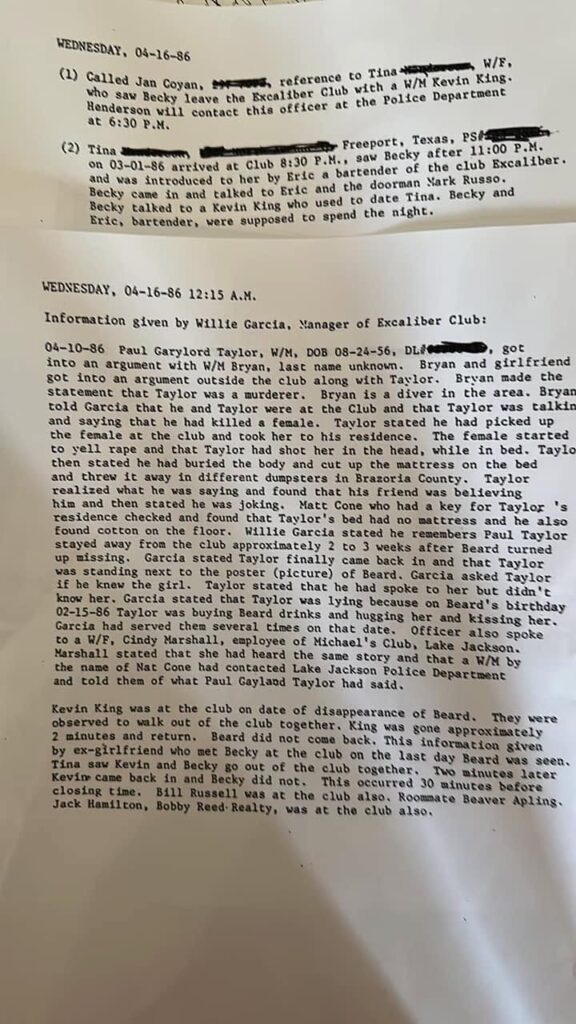
Composite police report pages from the Rebecca Beard investigation. The documents include witness statements from Tina, Willie Garcia, and references to Matt Cone, who is identified as John Cone’s brother, as investigators documented interviews and leads in April 1986.
April 16, 1986 police records include statements from Tina and Excalibur Club manager Willie Garcia. The documents also reference Matt Cone, John Cone’s brother, whose name appears multiple times in the investigation as detectives continued interviewing witnesses and following leads.

The records also repeatedly reference Matt Cone.

John Cone told investigators he discussed the situation with his brother, Matt Cone, and Corky Parker before going to Taylor’s house.

Jack Hamilton also identified Matt Cone as someone he knew.

If Matt Cone independently observed the missing mattress and carpet, that would provide additional corroboration of John’s observations.

Whether Matt entered the home himself or relied on John’s account remains an important question raised by the records.

⸻

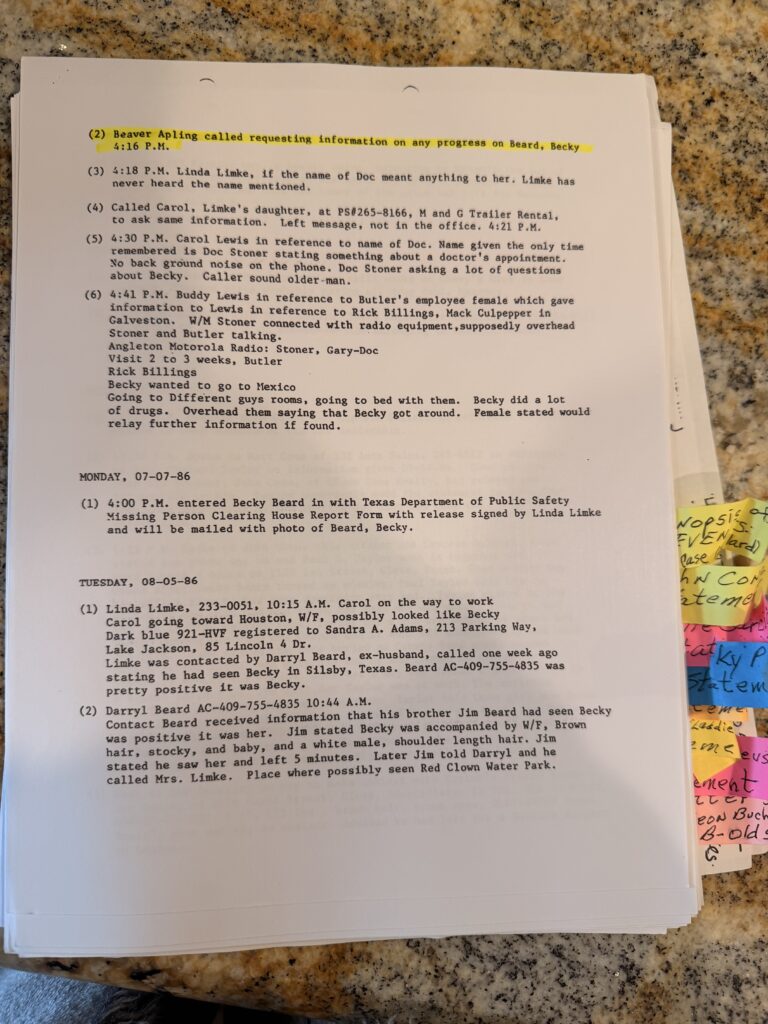
Beaver Aplin Continued Contacting Investigators

Police records show Beaver Aplin remained in regular contact with investigators after Rebecca Beard disappeared. The reports document Aplin requesting case updates, asking about posting a reward, and continuing to communicate with detectives as the investigation progressed.

Another interesting pattern involves Beaver Aplin.

The investigative file documents that:

Beaver was interviewed during the early stages of the case.
Investigators noted he did not connect Becky to Paul Taylor.
He later left messages for investigators.
Months later, he again contacted police requesting an update on Becky’s case.

Those records do not suggest wrongdoing.

However, they do show Beaver remained engaged with investigators long after Becky disappeared.

⸻

The Investigation Evolved

As the investigation continued, the documentary record began shifting.

Later reports increasingly connected Becky to Paul Taylor.

Among them were statements from:

Willie Garcia,
Kevin King,
John Cone,
and other witnesses who later appeared on the prosecution’s witness list.

That witness list outlined how prosecutors intended to build their case, including testimony that Becky left with Taylor, statements that Taylor admitted killing her, and witnesses describing evidence allegedly observed inside Taylor’s home.

That later theory differs considerably from many of the earliest reports documenting possible Surfside sightings, after-party sightings, and witnesses who initially said they did not know Paul Taylor.

⸻

Questions That Remain

Reading these records chronologically reveals an investigation that changed significantly over time.

The documents show detectives initially pursued multiple leads, including reports that Becky was seen after leaving Excalibur and accounts from witnesses who did not connect her to Paul Taylor.

As additional interviews were conducted, investigators documented statements that increasingly focused on Taylor and ultimately formed the basis of the prosecution’s case.

The records do not fully explain how every conflicting witness account was evaluated before investigators settled on the final timeline presented in court.

Nearly four decades later, those documents continue to provide important insight into how the Rebecca Beard investigation developed—and why reviewing the original records remains essential.

⸻

Read More in This Series

Part 1: Rebecca Beard: John Cone’s Confession and the Early Investigation

Part 2: Rebecca Beard: Early Police Reports Reveal the First Days of the Investigation

https://www.chopperrose.com/2026/07/20/rebecca-beard-part-2-early-police-reports-reveal-the-first-days-of-the-investigation

⸻

Recommended Resources

If you’re researching cold cases or organizing public records, these are tools I use during investigations.

Disclosure: As an Amazon Associate, I earn from qualifying purchases at no additional cost to you. Your support helps fund my investigative reporting and allows me to continue researching and publishing stories like this one.