
Investigative Reporter Tammy Rose
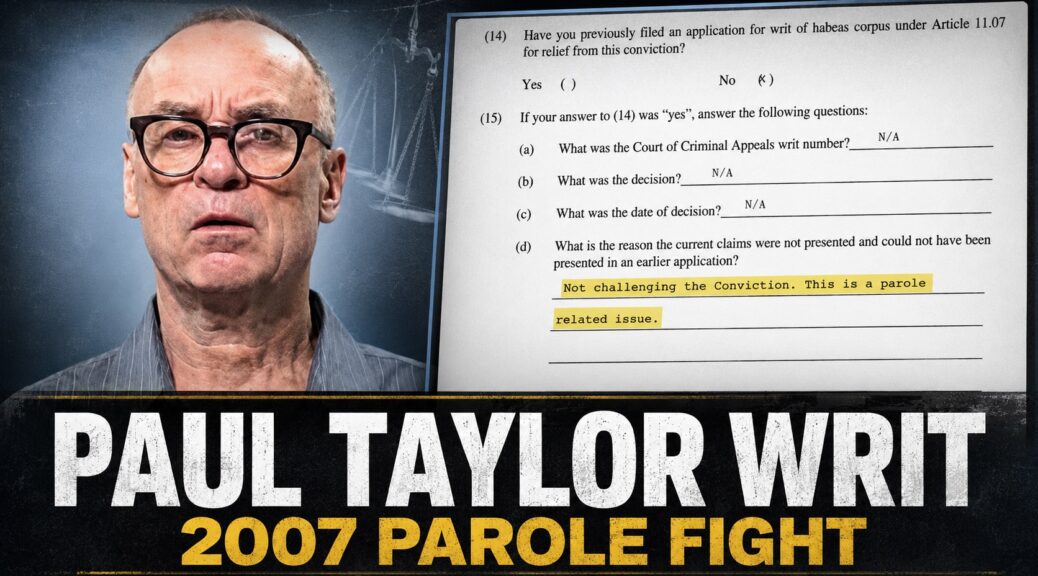
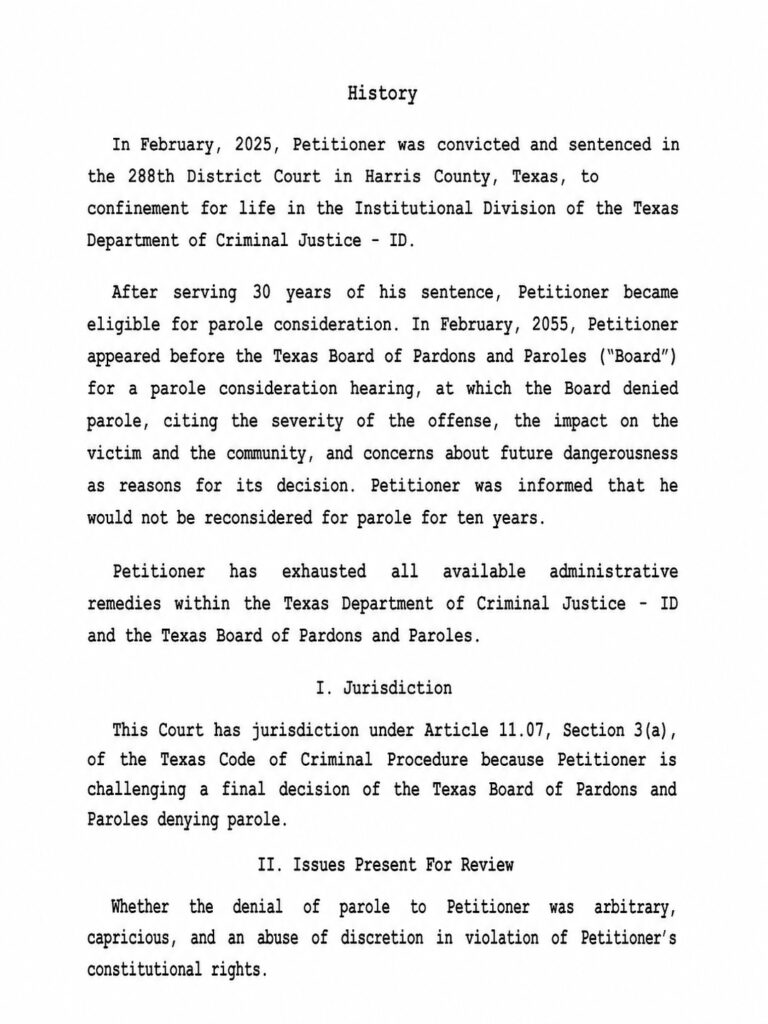
Paul Gayland Taylor Jr. filed a writ of habeas corpus in 2007 after the Texas Board of Pardons and Paroles denied him release.
Taylor challenged his parole denial, not his conviction
The filing did not challenge his murder conviction.
Instead, Taylor argued that the parole board unfairly relied on his crime and past conduct. He claimed the board ignored his prison record, education and other accomplishments.
Taylor pleaded guilty to murder in Brazoria County in 1995. A judge sentenced him to life in prison.
Taylor said the filing was about parole
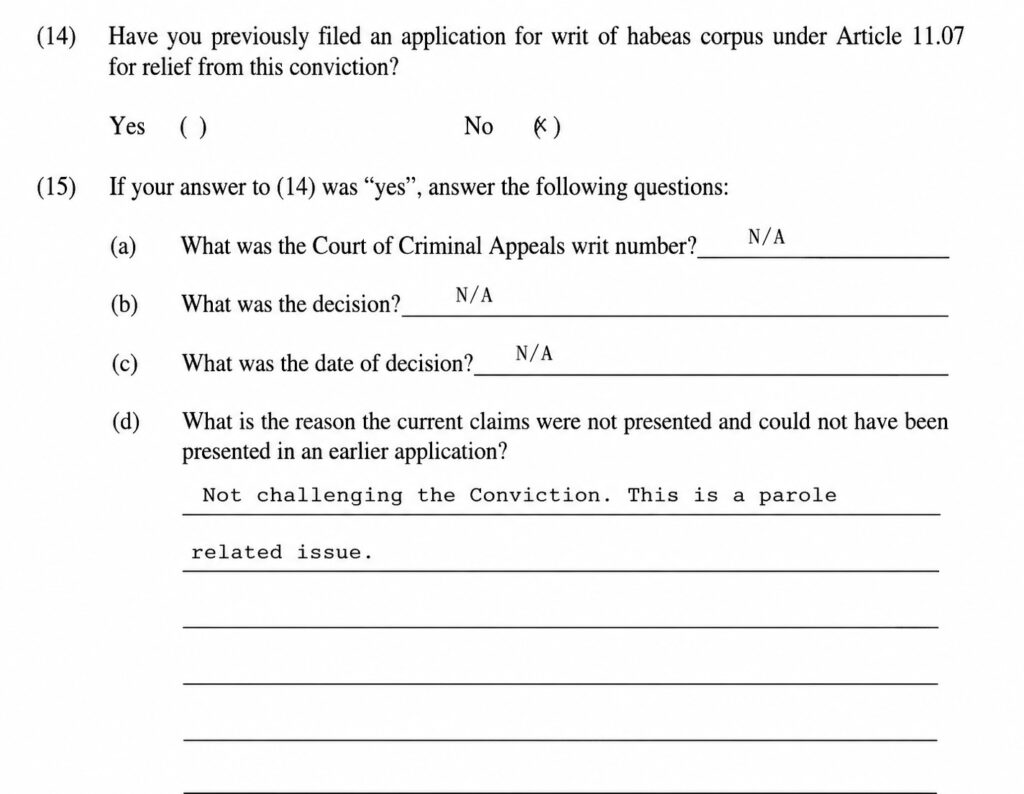
The writ form asked whether Taylor had previously challenged his conviction.
Taylor marked “no.”
He also wrote:
“Not challenging the conviction. This is a parole related issue.”
That statement is important. This filing did not claim that Taylor was innocent. It also did not ask the court to overturn his guilty plea.
Taylor focused his arguments on the parole process.
The writ listed his conviction and sentence
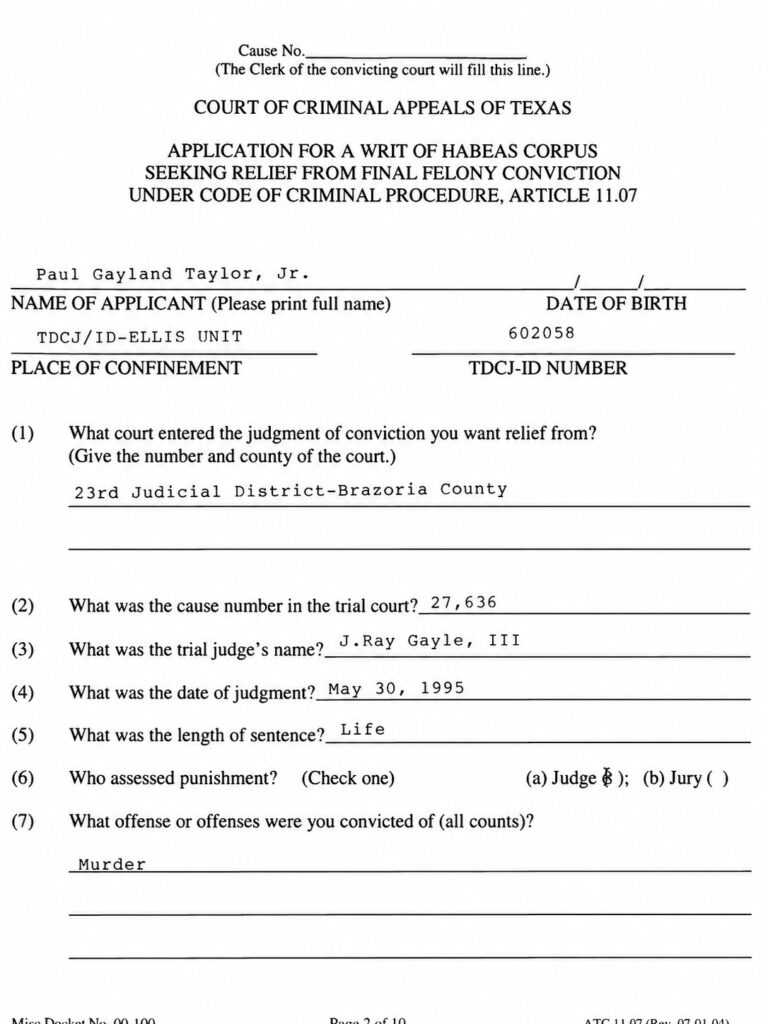
The application identified Taylor’s criminal case as Cause No. 27,636 in the 23rd Judicial District Court of Brazoria County.
The document listed:
Judgment date: May 30, 1995
Offense: Murder
Plea: Guilty
Sentence: Life
Punishment assessed by: Judge
Taylor also stated that he did not have a jury trial. He indicated that he did not appeal the judgment.
Taylor had been eligible for parole since 1997
Taylor wrote that he had been eligible for parole since February 2, 1997.
According to his filing, the parole board denied him release again on January 12, 2007. The board then gave him a three-year setoff before his next review.
Taylor said the board had denied him parole for about 13 years, including the period between his eligibility date and his next review.
The filing quotes the board’s reason for denial. It referred to the violent nature of the offense, the use of a weapon and a threat to public safety.
The quoted language also stated that the offense showed brutality, violence or the selection of a vulnerable victim.
Taylor argued that these factors came from the crime itself. He said he could never change the past.
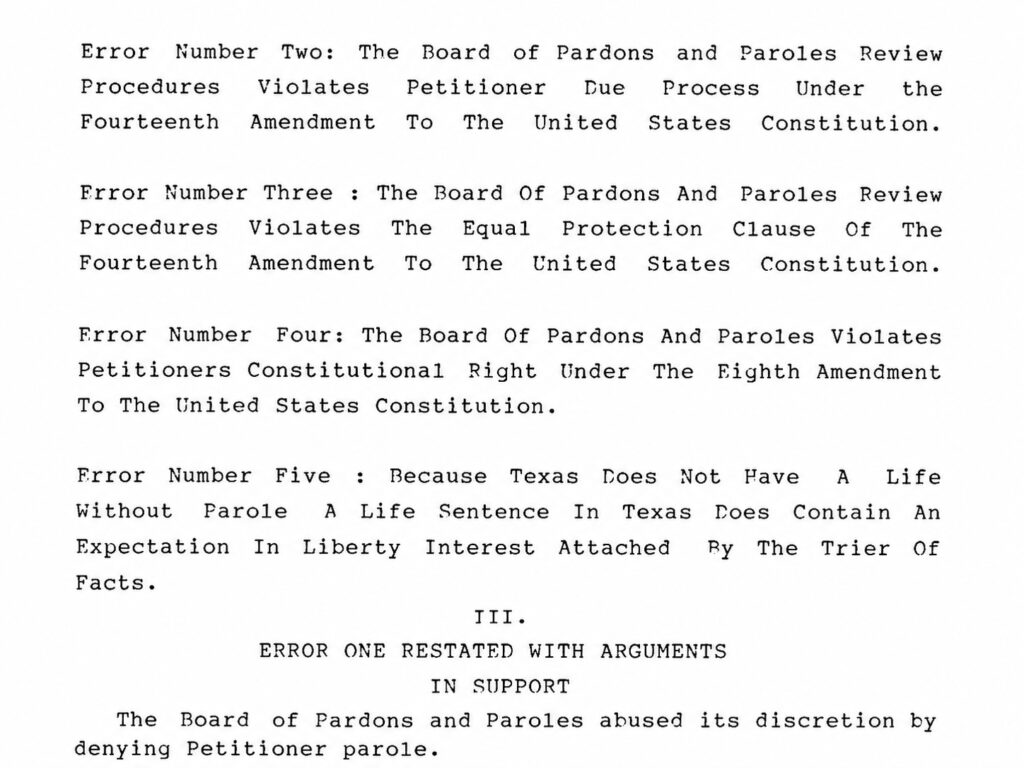
Taylor raised five arguments
1. The parole board abused its discretion
Taylor claimed the board denied parole for the same conduct that led to his conviction and sentence.
He argued that the board created an “impossible obstacle” because he could not change the crime.
Taylor also said the board failed to give enough weight to his prison accomplishments.
2. The parole process violated due process
Taylor argued that the board did not explain how it decided he remained a future threat.
He claimed the board should have told him what method it used to assess that risk.
Taylor suggested that he could have submitted more information if he had known what evidence the board wanted.
3. The process violated equal protection
Taylor claimed the board released other people with similar or worse criminal records.
He argued that the board treated him differently without a valid reason.
The filing does not include the names or full records of those other prisoners in the pages reviewed.
4. Repeated parole denials amounted to cruel punishment
Taylor argued that repeated denials violated the Eighth Amendment.
He claimed the board continued to deny him for the same unchangeable reasons.
He also accused the board of ignoring his conduct while incarcerated.
5. A Texas life sentence carried an expectation of parole
Taylor argued that Texas did not have a life-without-parole sentence for his case.
Therefore, he claimed that a life sentence carried an expectation of eventual release.
For the first four claims, Taylor asked for a new parole hearing.
However, under his fifth claim, he argued that parole should become mandatory.
These were Taylor’s legal arguments. The filing does not show that a court accepted them.
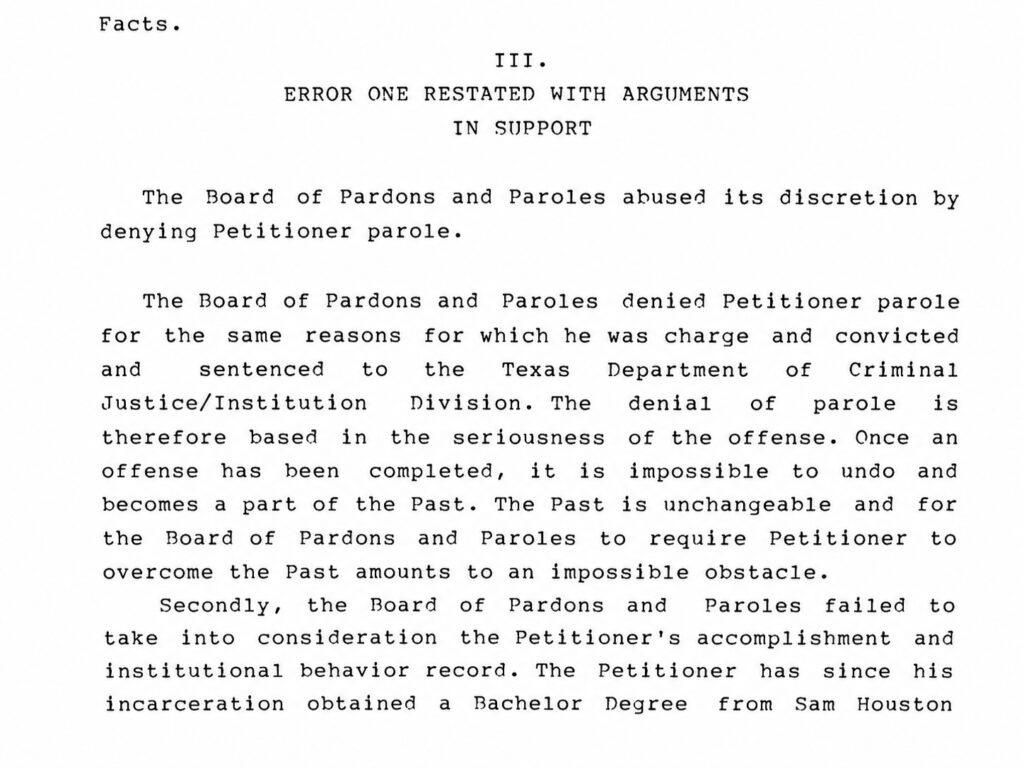
Taylor’s memorandum states that the parole board relied on the violent nature of the offense when it denied his release.
Taylor highlighted his prison record
Taylor wrote that he earned a bachelor’s degree from Sam Houston State University while incarcerated.
He also said he had never received a disciplinary infraction.
In addition, Taylor said he worked in a prison craft shop. He claimed that the work helped him support himself and assist his family.
However, the filing only reflects Taylor’s account. It does not independently verify every statement about his prison history.
What this document does not say
The writ does not claim that Taylor was innocent.
It does not challenge his guilty plea or murder conviction.
The filing also does not present new evidence about Rebecca “Becky” Beard’s disappearance or the location of her remains.
Instead, Taylor challenged the parole board’s review process.
Therefore, this document focuses on parole. It does not attempt to overturn the murder conviction.
Read the full writ and court decision
The complete 2007 filing appears below, along with the court document showing the outcome.
Taylor challenged the parole process, not his murder conviction. However, the court denied his request for relief
Related coverage
Read Rebecca Beard Part 3: How Witness Statements Changed for a closer look at how accounts in the case evolved over time.
You can also read Rebecca Beard Part 2: Early Police Reports to review what investigators documented during the first days of the investigation.
Tools for reviewing public records
Court records and police files can contain hundreds of pages. A portable document scanner can make it easier to save, organize and review records while working away from home.

A digital voice recorder can also help reporters preserve interviews, notes and important details while researching a case.

Disclosure: As an Amazon Associate, I may earn from qualifying purchases at no additional cost to you.