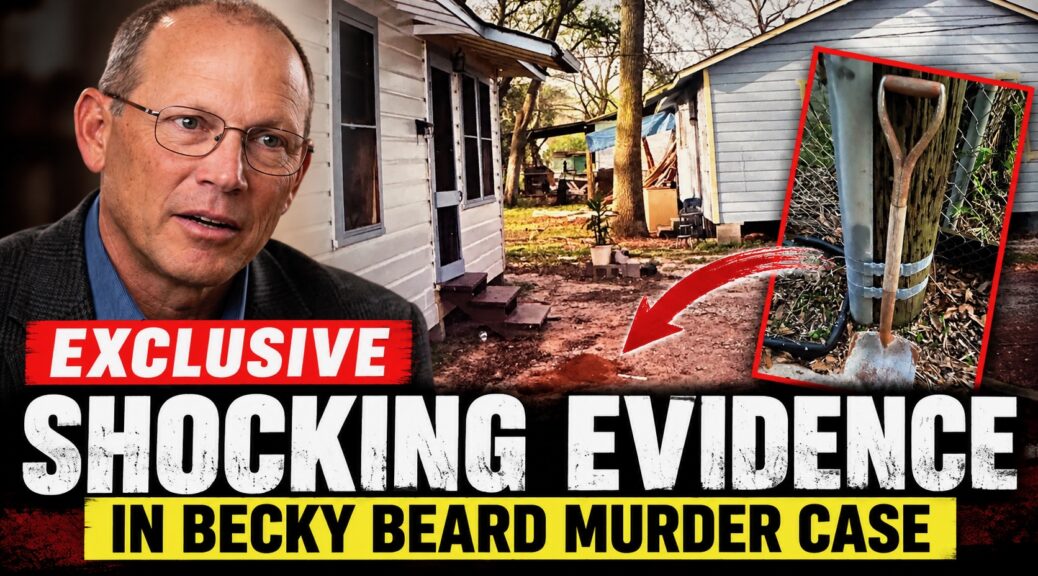
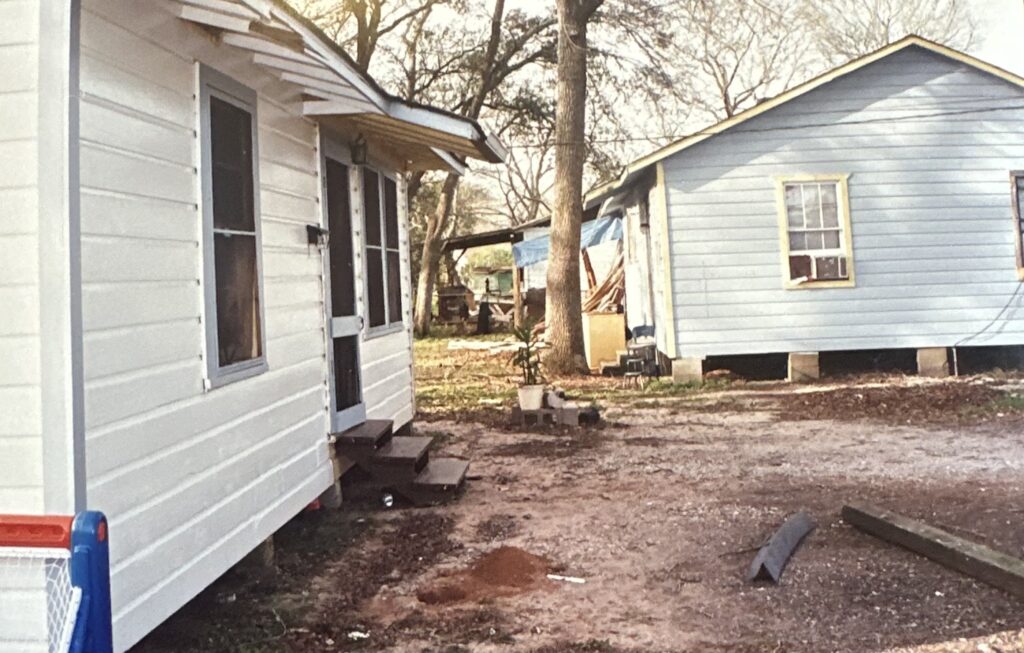
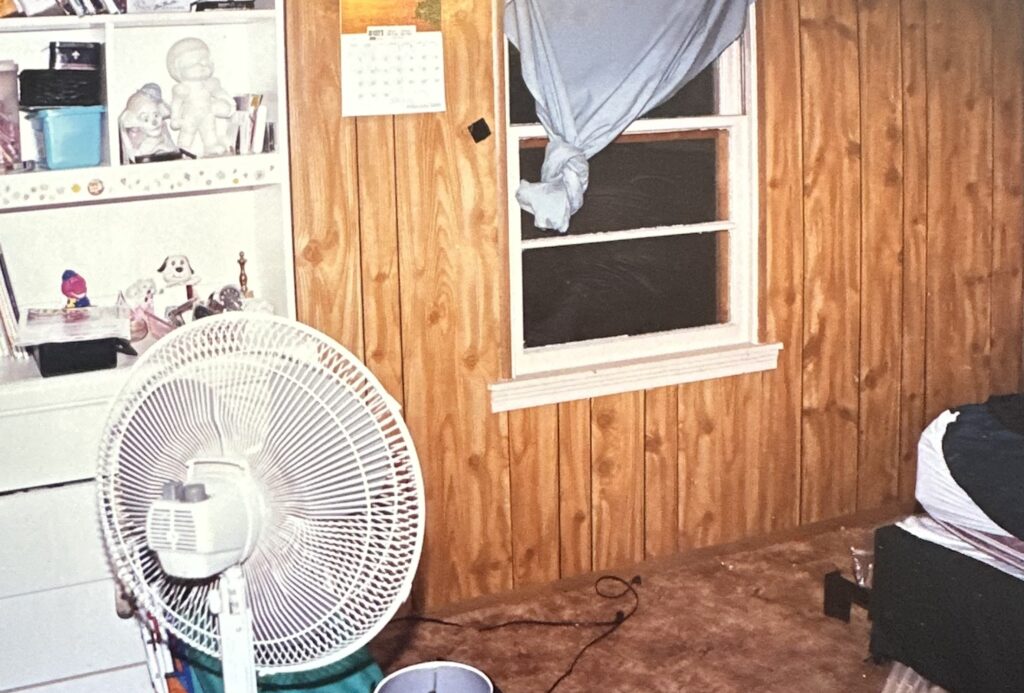
Retired Freeport police captain Richard Miller reveals evidence discovered inside a home linked to the Becky Beard murder case, including apparent blood evidence, drag marks and cadaver dog alerts.
Nearly 40 years after Rebecca “Becky” Beard disappeared, a retired Freeport police captain is revealing evidence investigators discovered inside a home believed to be connected to her murder.
In my exclusive interview, Richard Miller describes apparent blood evidence, drag marks and two cadaver dogs that alerted beneath the home. He also recalls finding unusual material while digging before officials ordered him to stop.
Despite those discoveries, investigators never secured the home as a crime scene.
Watch my exclusive interview with Richard Miller
Richard Miller reveals evidence discovered inside the home
Retired Freeport police captain Richard Miller speaks exclusively with Investigative Reporter Tammy Rose about evidence discovered inside a home linked to Becky Beard’s murder.
Miller spent 22 years with the Freeport Police Department. He was a rookie when Becky disappeared in March 1986. Years later, he revisited the investigation as a police captain.
During a search of the home, investigators used luminol to look for possible blood evidence. Miller describes apparent blood smears on a wall and floor, along with marks leading toward the back door.
Two cadaver dogs also alerted beneath the house.
Officials ordered Miller to stop digging
Miller says he began digging beneath the home after the dogs alerted. During that search, he discovered unusual white material.
Before he could determine what he had found, officials ordered him to stop.
The material has not been confirmed as human remains. However, Miller’s account raises questions about evidence investigators may have left behind.
Why wasn’t the home secured as a crime scene?
Inside the home investigators searched in connection with Becky Beard’s murder. Retired Freeport police captain Richard Miller describes evidence discovered during the investigation.
John Cone previously told investigators that Paul Taylor Jr. allegedly confessed to him about Becky’s death.
Cone reported that Taylor had removed a mattress and carpet from the home. He also offered authorities a key to the property.
Yet investigators did not immediately secure and process the residence following Cone’s report.
Miller’s account now provides additional details about what investigators discovered during a later search.
Newly uncovered records raise more question
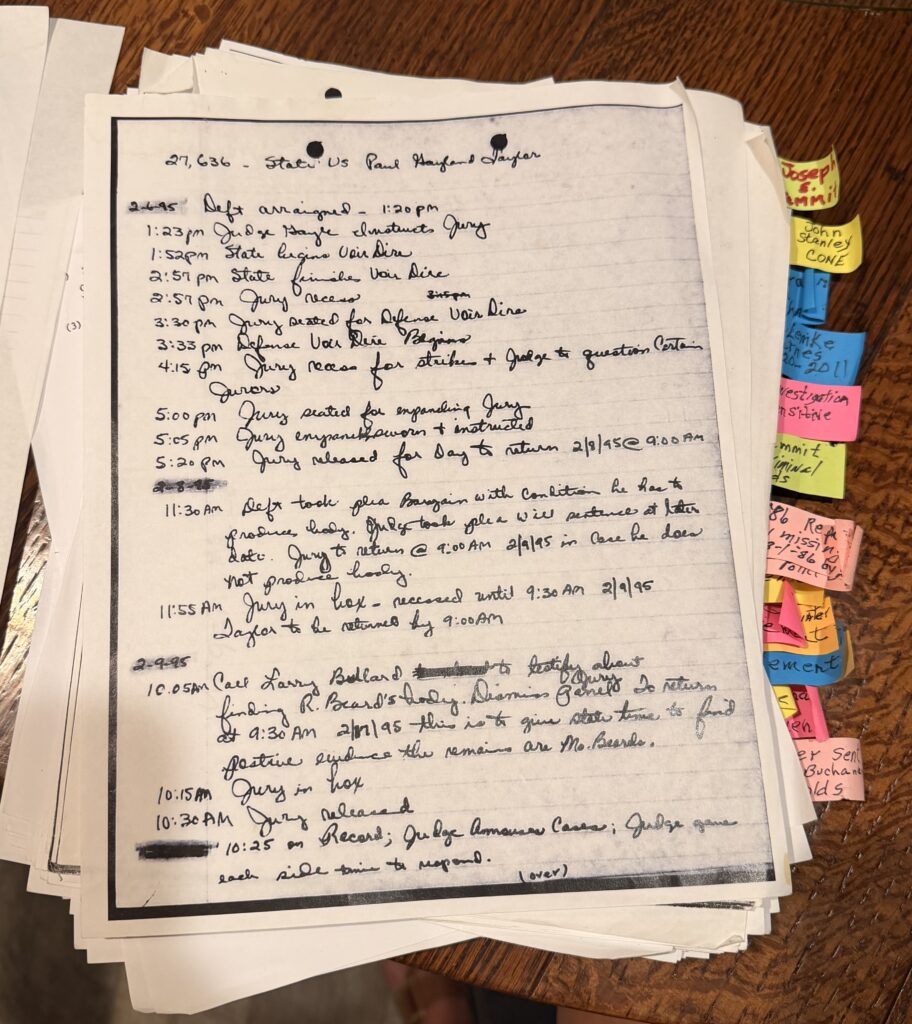
Newly uncovered investigative notes reference finding Becky Beard’s body. Her family says they were never informed of such a discovery, raising questions about what investigators knew in 1995.
Becky’s family has spent decades searching for her remains. They have also reviewed investigative reports and court records in their effort to uncover what happened.
Records involving possible human remains have raised additional questions for the family.
Miller’s interview offers a new perspective on the evidence discovered beneath the house. However, it does not establish that investigators recovered human remains.
Paul Taylor Jr. pleaded guilty in connection with Becky’s death in 1995. Her body has never been recovered.
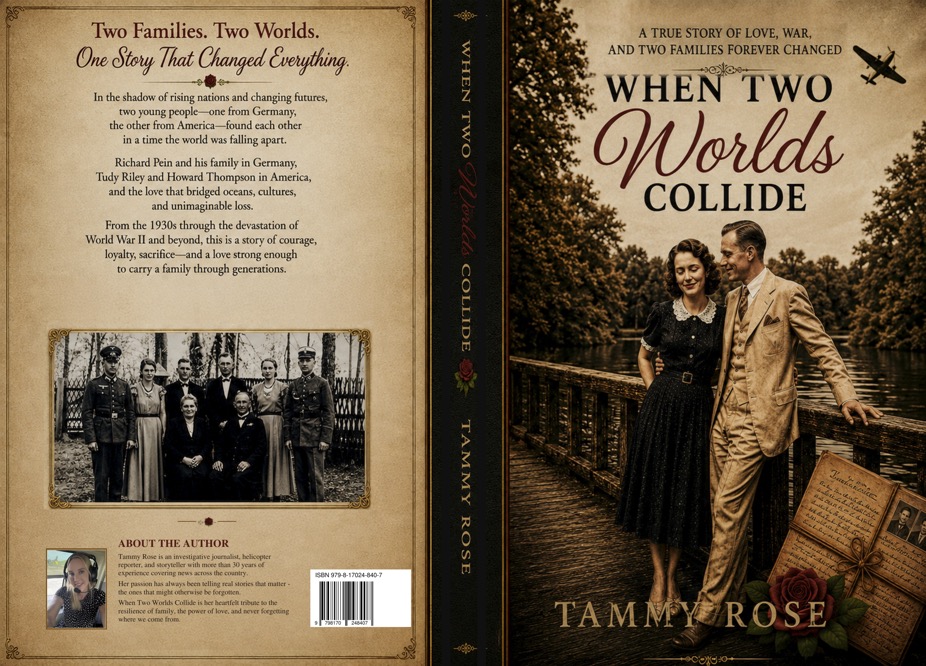
My new book, When Two Worlds Collide During WWII, follows two families on opposite sides of World War II and the remarkable events that eventually brought their lives together in Wisconsin.
The story is based on my own family history, with real people, family photographs and stories passed down through generations.
Disclosure: As an Amazon Associate, I earn from qualifying purchases.
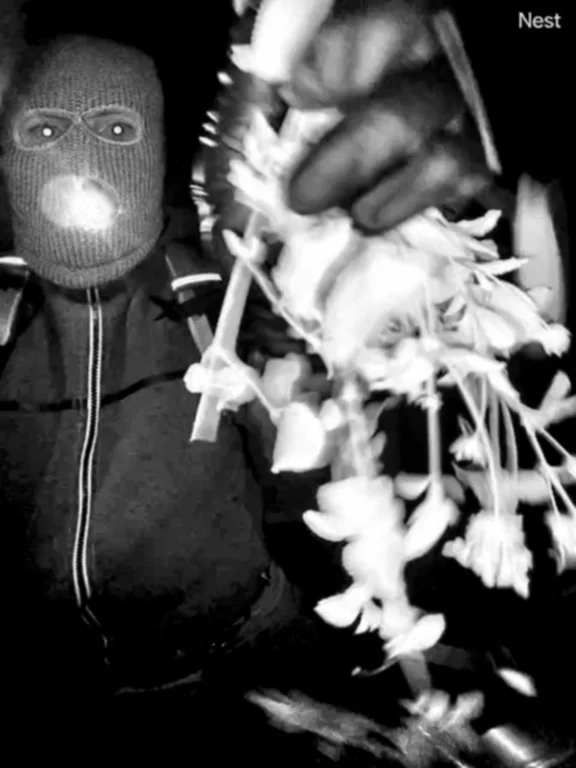
Porch surveillance image released as part of the investigation into the Nancy Guthrie case.
Public Records Reveal Ransom Messages Sent After Nancy Guthrie Disappeared
By Investigative Reporter Tammy Rose
Nancy Guthrie disappeared from her home in the Catalina Foothills near Tucson, Arizona, during the early morning hours of February 1, 2026. Six months later, publicly released investigative records continue to provide insight into one of the most unusual aspects of the case.
Among the documents released are messages that appeared to demand a ransom and later claimed Nancy Guthrie had died. The messages became part of the investigation and remain included in the publicly released records.
Ransom Message Demanded Bitcoin
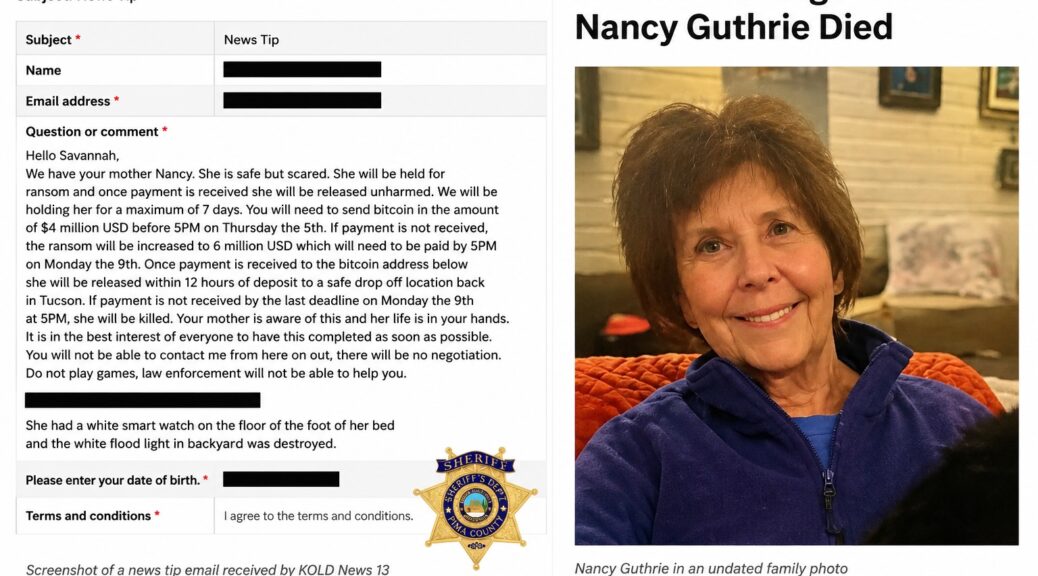
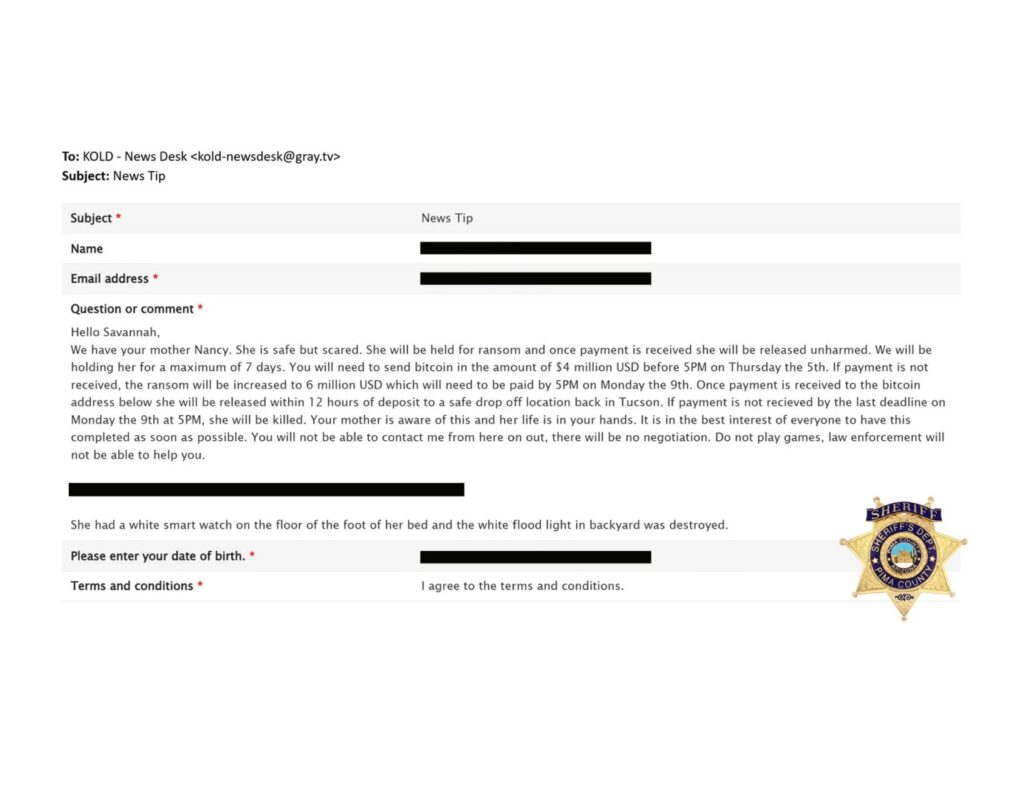
Redacted ransom note documents included in the investigative records for the Nancy Guthrie case.
According to publicly released records, one message claimed Nancy Guthrie had been kidnapped and demanded a multi-million-dollar Bitcoin payment in exchange for her safe return.
The message included a deadline, threatened harm if payment was not made, and referenced details about Nancy Guthrie’s home. Investigators documented the message as part of the case.
At the time, there was no public confirmation that the claims made in the message were true.
Second Message Claimed Nancy Guthrie Died
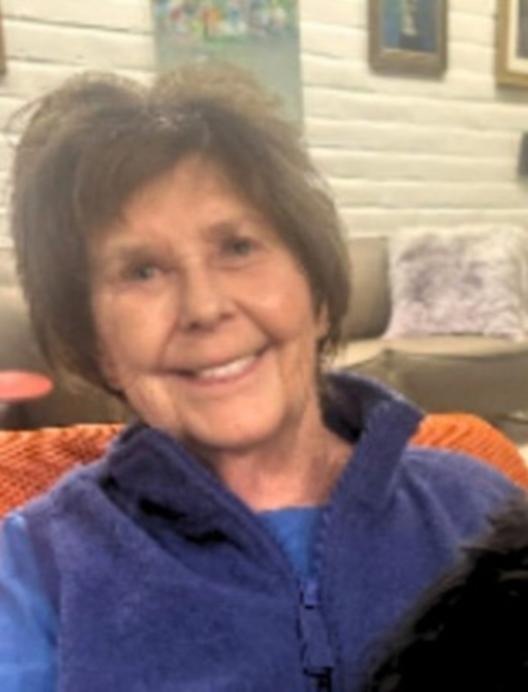
Nancy Guthrie in an undated family photo provided as part of case coverage.
A second message later claimed Nancy Guthrie had died shortly after being taken.
The message stated that her death was not intentional and expressed sympathy to her family. It also claimed she had been buried in a natural area.
Authorities included the message in the investigative file that was later released as a public record.
Investigators Examined the Messages
Law enforcement reviewed the messages as part of the investigation into Nancy Guthrie’s disappearance.
Publicly released records show the communications were preserved as evidence, but investigators have not publicly confirmed who authored the messages or whether any of the claims contained in them were accurate.
As with many criminal investigations, detectives examined numerous leads while working to determine what happened.
Why These Records Matter
The release of investigative records provides the public with a better understanding of the evidence reviewed during the case.
While the messages generated significant attention, they represent only one part of the overall investigation. Any conclusions about who sent them or why should be based on official investigative findings rather than speculation.
As additional records become public, they may continue to provide new details about the investigation.
If you have information related to the case, contact the investigating law enforcement agency.
⸻
Home Security Camera (Indoor/Outdoor) – If you’re interested in true crime or home security, a smart security camera is one of the best ways to monitor your property and record suspicious activity.
Planning to visit Texas for court proceedings, historical research, or to explore the areas connected to this case? Find hotels that fit your budget through my Hotels.com affiliate link.
Amazon Disclosure
As an Amazon Associate, I earn from qualifying purchases. If you shop through my affiliate links, I may receive a small commission at no additional cost to you. Thank you for supporting my independent journalism.
If you book a hotel through my Hotels.com affiliate links, I may earn a small commission at no additional cost to you. Thank you for helping support my reporting and website.
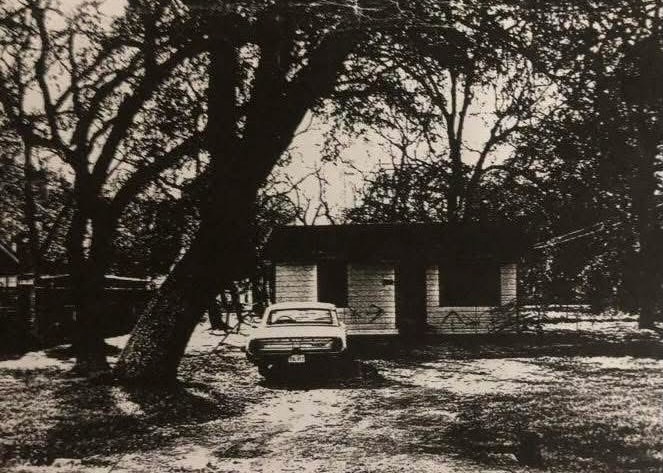
The former Clute home where Paul Taylor lived became a focus of later investigative records after John Cone reported that Taylor allegedly confessed to killing Rebecca Beard. The article examines why available records do not document an immediate crime scene search or forensic processing of the property following that report.
Rebecca Beard Case: Why Wasn’t Paul Taylor’s Home Investigated After John Cone’s Report?
Reviewed by Investigative Reporter Tammy Rose
Police records raise new questions
Nearly 40 years after Rebecca “Becky” Beard disappeared, police records raise a question that remains unanswered.
If Sheriff Joe King received details of an alleged confession from John Cone shortly after Becky vanished, why don’t the records reviewed by Investigative Reporter Tammy Rose document an immediate search or forensic examination of Paul Taylor’s home?
The question stands out because later investigative summaries describe a series of events that, if accurate, pointed investigators toward Taylor’s residence within days of Becky’s disappearance.
John Cone said Taylor admitted killing Becky
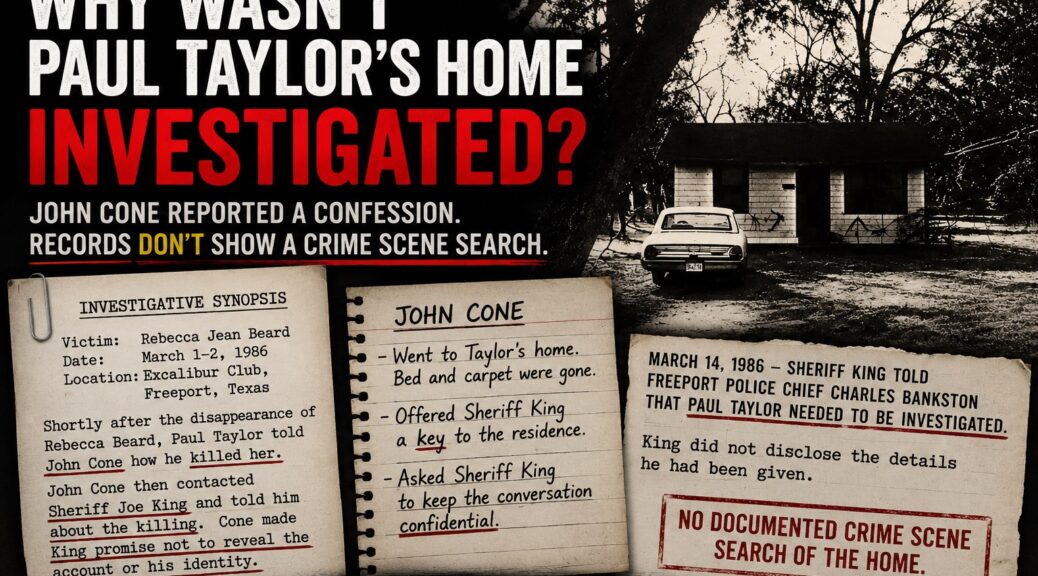
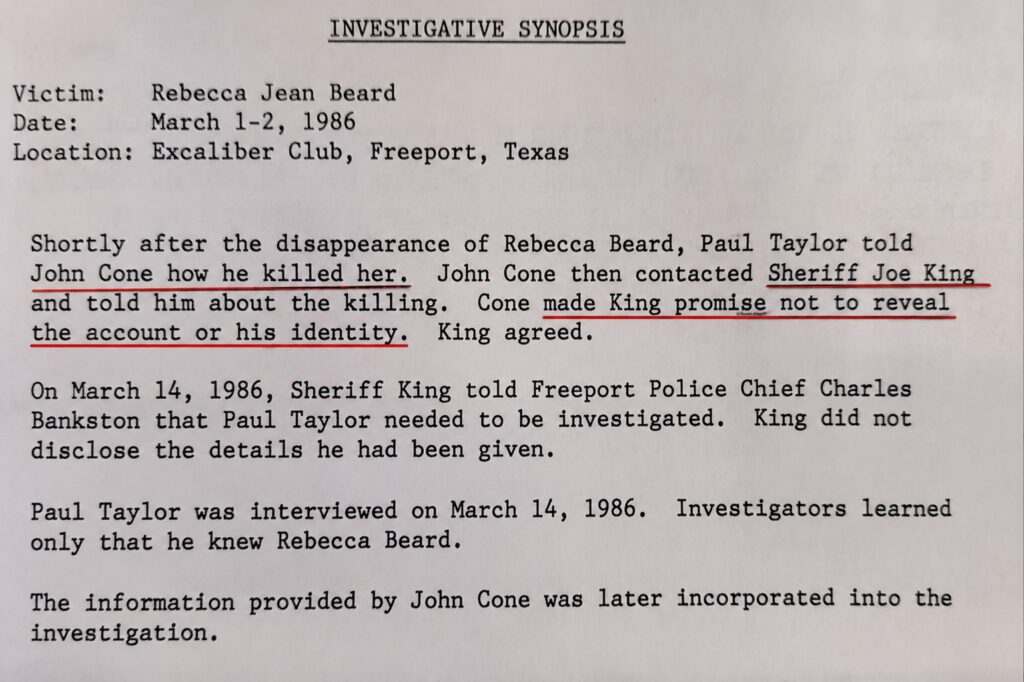
This investigative synopsis states that John Cone reported an alleged confession by Paul Taylor to Sheriff Joe King shortly after Rebecca Beard disappeared. According to the document, Cone asked King to keep both the information and his identity confidential. The synopsis also states King later advised Freeport Police that Taylor should be investigated, raising questions about what investigative steps followed.
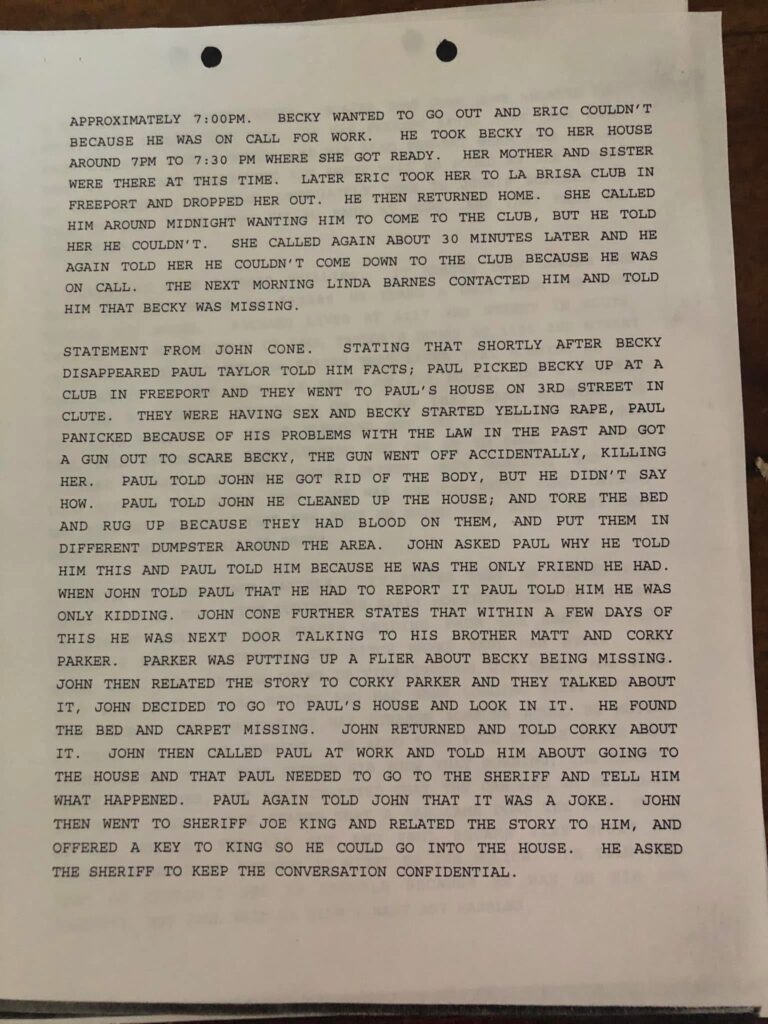
According to a later investigative synopsis, John Cone told investigators that Paul Taylor admitted Becky died inside his Clute home.
Cone’s statement says Taylor claimed he picked Becky up after she left a club, took her to his residence, and that she died after a gun discharged during a struggle.
Taylor allegedly told Cone he cleaned the residence, removed the bed and carpet because they contained blood, and discarded them in dumpsters.
Cone also said he entered Taylor’s home himself and noticed the bed and carpet were gone.
According to the records, Cone then contacted Brazoria County Sheriff Joe King and reported what Taylor allegedly told him.
Cone reportedly offered Sheriff Joe King a key
This investigative document summarizes John Cone’s account, including his claim that Paul Taylor allegedly confessed to killing Rebecca Beard. According to the document, Cone said he entered Taylor’s home, noticed the bed and carpet were missing, and later offered Sheriff Joe King a key to the residence. The document raises questions about what investigative steps followed after that information reached law enforcement.
One detail stands out in Cone’s statement.
Cone said he offered Sheriff Joe King a key to Taylor’s residence.
He also asked the sheriff to keep both the conversation and his identity confidential.
The investigative synopsis later states that King agreed to keep the information confidential.
According to that same synopsis, Sheriff King informed Freeport Police Chief Charles Bankston on March 14, 1986, that Paul Taylor needed to be investigated but did not relate the details Cone had provided.
Taylor was interviewed that day. The synopsis states investigators learned only that Taylor knew Becky.
Where is the documented crime scene investigation?
The records reviewed by Investigative Reporter Tammy Rose do not document that investigators immediately searched Paul Taylor’s residence or processed it as a possible crime scene.
The records also do not document officers collecting physical evidence, photographing the interior, looking for blood evidence, seizing the reportedly missing bed or carpet, or tracing the dumpsters where Taylor allegedly said he discarded evidence.
Those questions remain central to understanding the early investigation. The records reviewed for this report do not document that investigators immediately completed those investigative steps after John Cone reported what Taylor allegedly told him.
Those questions remain central to understanding the early investigation. The records reviewed for this report do not document that investigators immediately completed those investigative steps after John Cone reported what Taylor allegedly told him.
Another report raised similar concerns
The records contain another development one month later.
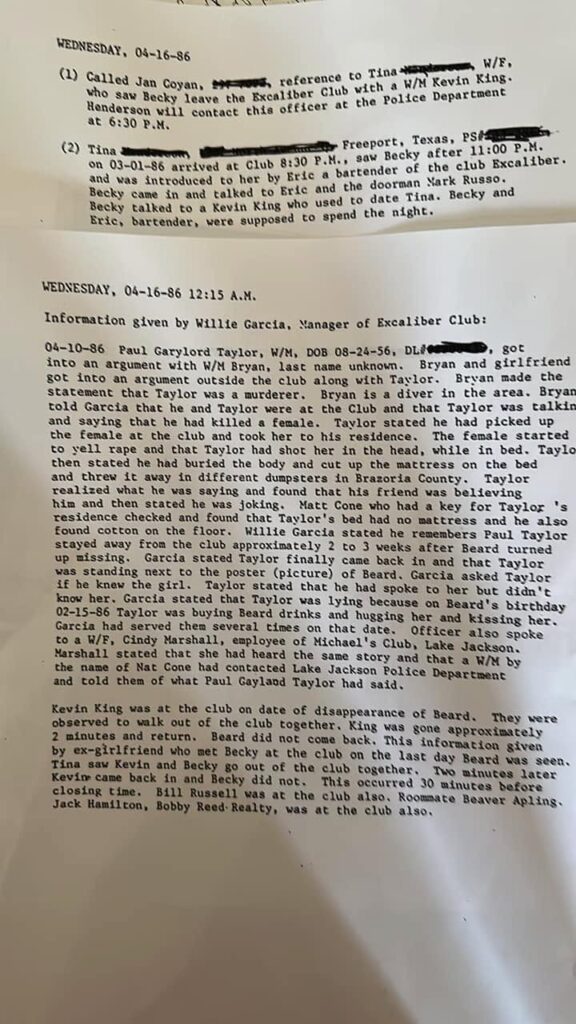
An April 16, 1986 report states the manager of Excaliber Club told investigators about another conversation involving Taylor.
According to the report, another witness claimed Taylor said he picked up a woman from the club, took her home, shot her, buried her body, cut up the mattress and discarded it in dumpsters.
The same report states Matt Cone checked Taylor’s residence and found the bed no longer had a mattress. Cotton stuffing reportedly remained on the floor.
Even then, the records reviewed by Investigative Reporter Tammy Rose do not document that officers immediately processed the residence as a homicide scene.
Another inconsistency emerges
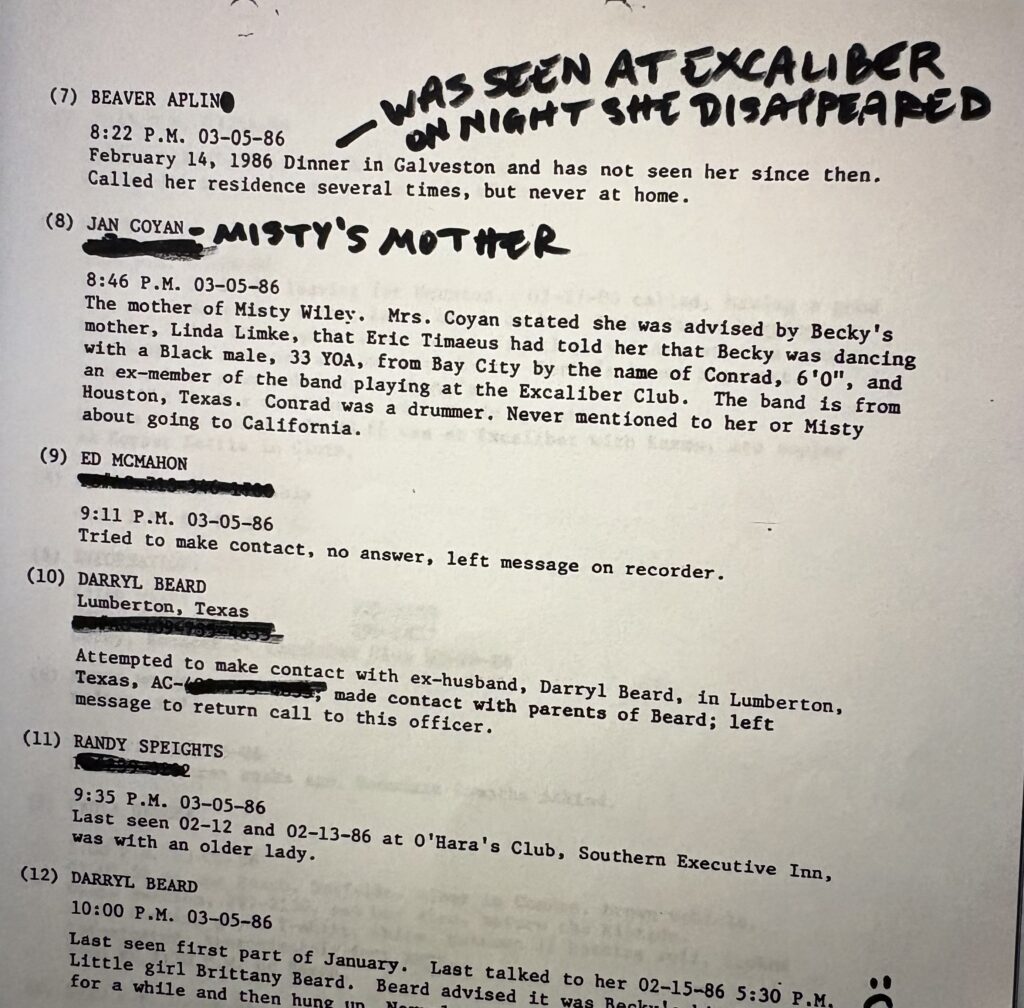
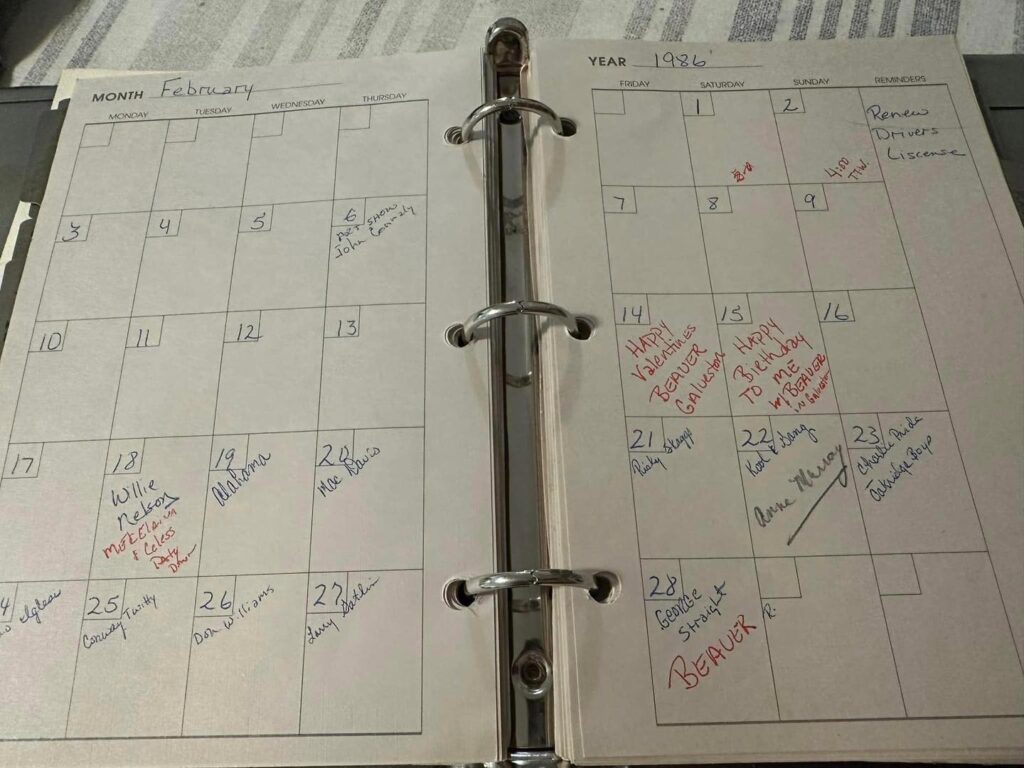
These records compare early police reports, a later investigative summary, and Rebecca Beard’s personal planner. One report states Beaver (Arch) Aplin last saw Rebecca on February 14, while a later investigative summary lists him among witnesses who reportedly saw her at Excalibur on the night she disappeared. The differing timelines raise questions about how investigators reconciled those statements during the investigation.
While reviewing the early investigation, another issue surfaced.
Police reports appear to contain conflicting information about Beaver (Arch) Aplin’s timeline.
One report says Aplin told investigators he had not seen Becky since February 14, 1986.
A later investigative report identifies Aplin as one of several people reportedly present at Excaliber on the night Becky disappeared.
That apparent inconsistency raises another question.
Did investigators ever reconcile those differing accounts?
That question will be examined in Part 2 of this series.
Questions that remain
The records reviewed for this article leave several unanswered questions:
Why wasn’t Taylor’s residence immediately documented as a potential crime scene after John Cone reported an alleged confession? Did Sheriff Joe King ever use the key Cone reportedly offered? Were investigators ever able to locate the missing bed, carpet or mattress? If those items were never recovered, how much potential evidence may have been lost?
Nearly four decades later, those questions remain central to understanding the early investigation into Rebecca Beard’s disappearance.
Keep detailed notes while following complex investigations. A structured notebook makes it easier to compare timelines, witness statements and evidence.
⸻
Disclosure: As an Amazon Associate, I earn from qualifying purchases at no additional cost to you. Your support helps fund my investigative reporting and allows me to continue researching and publishing stories like this one.
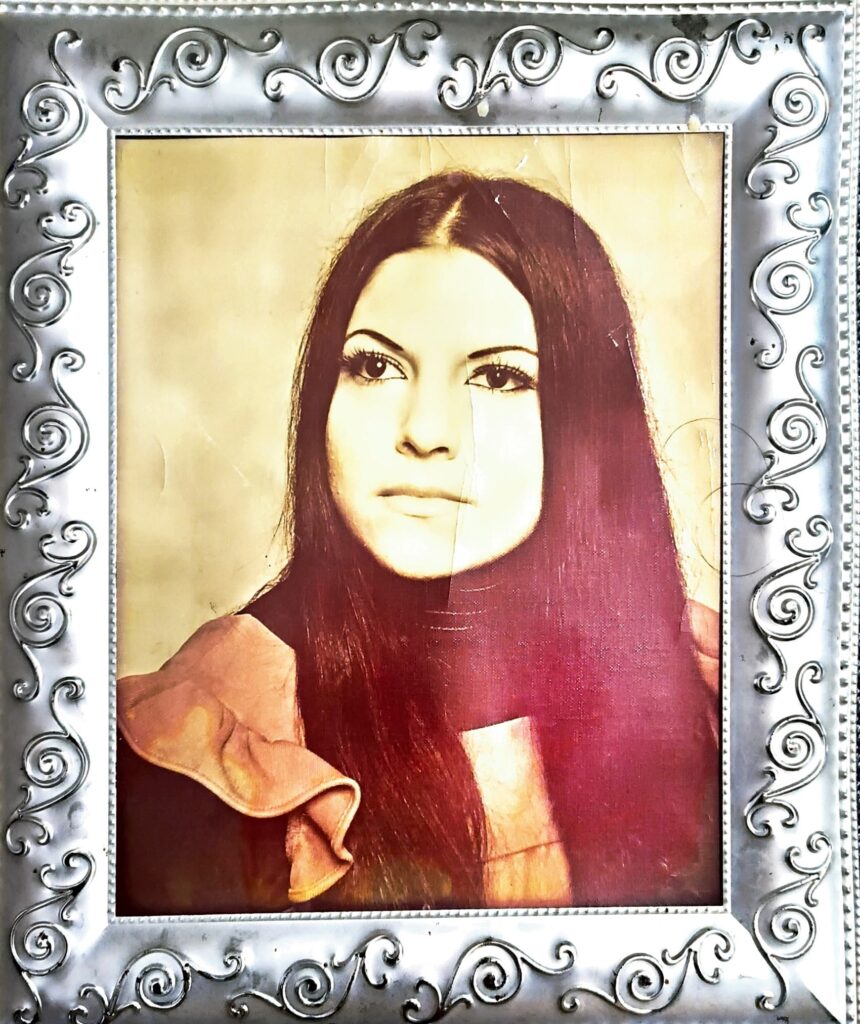
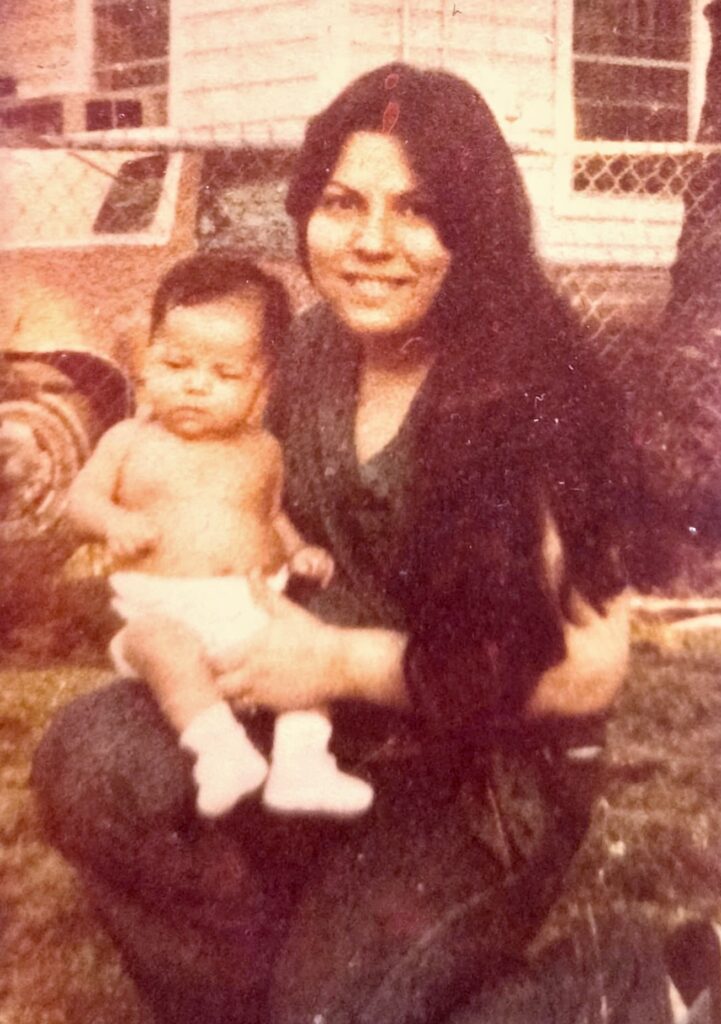
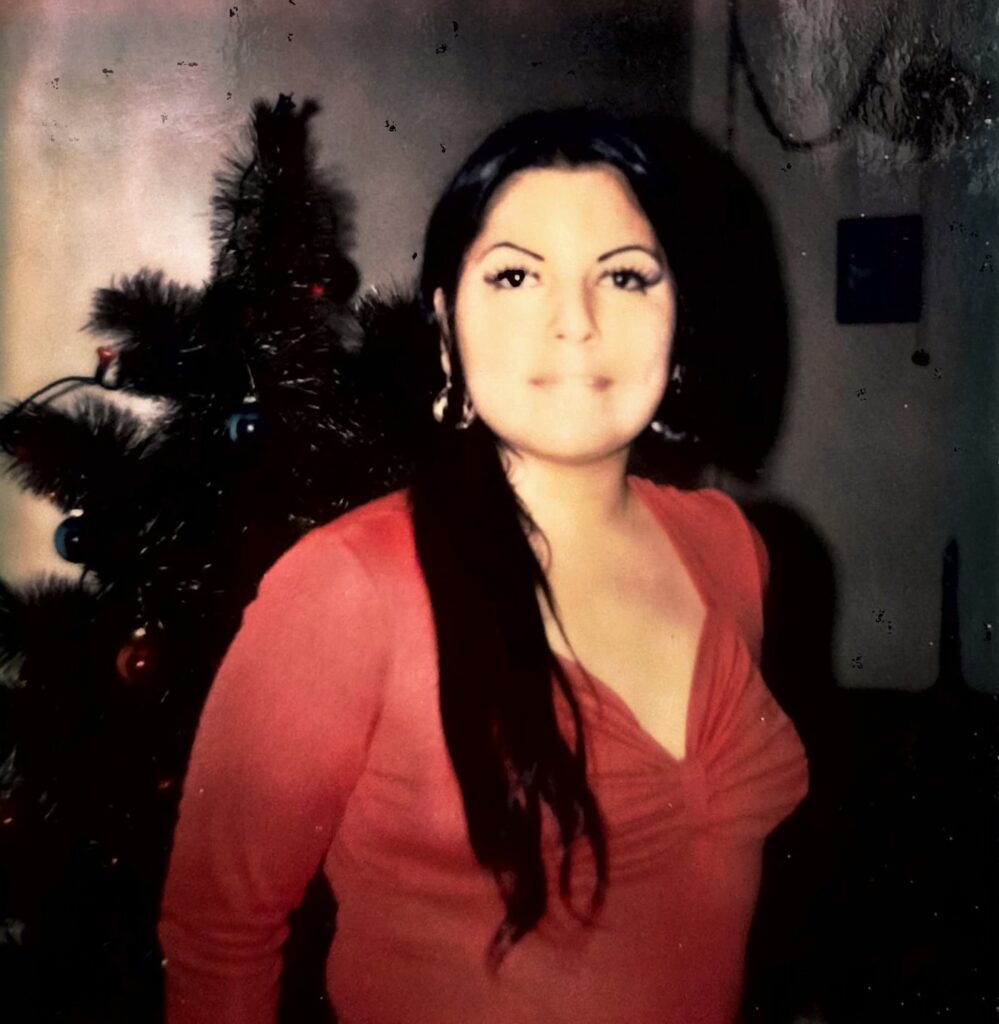
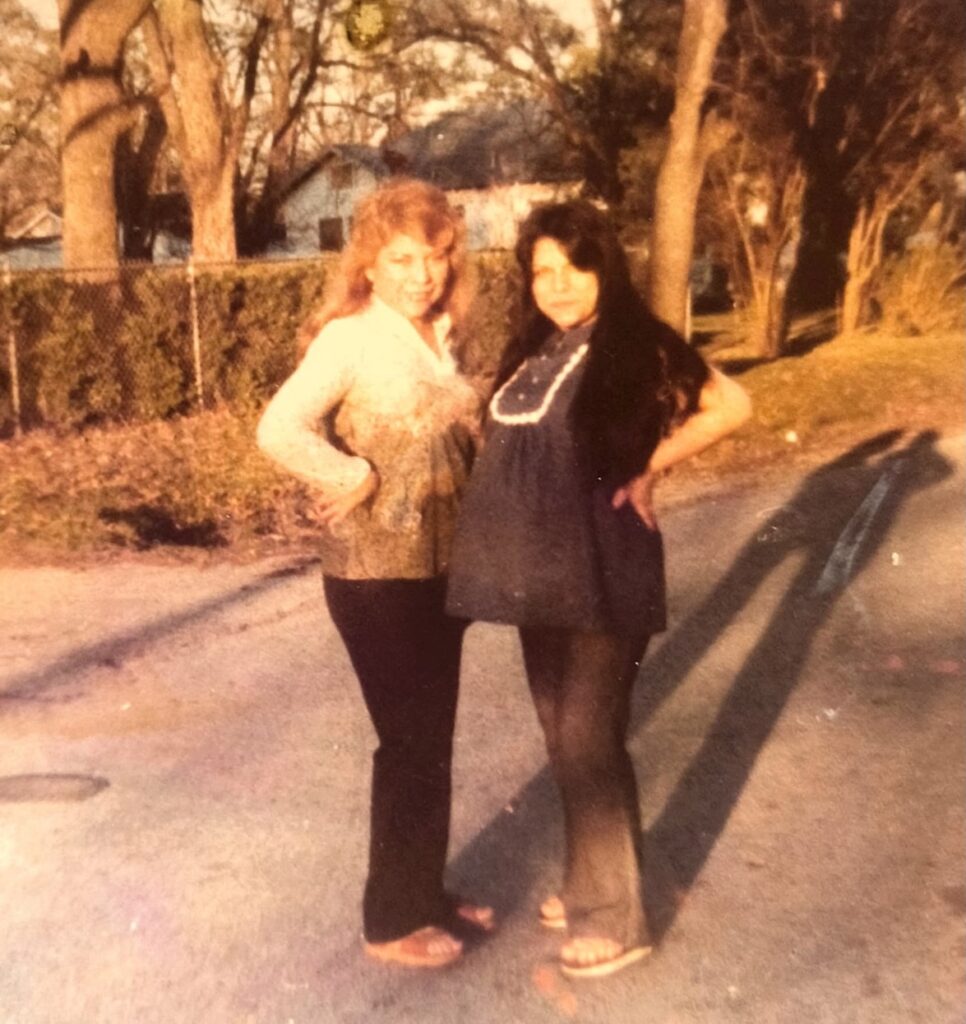
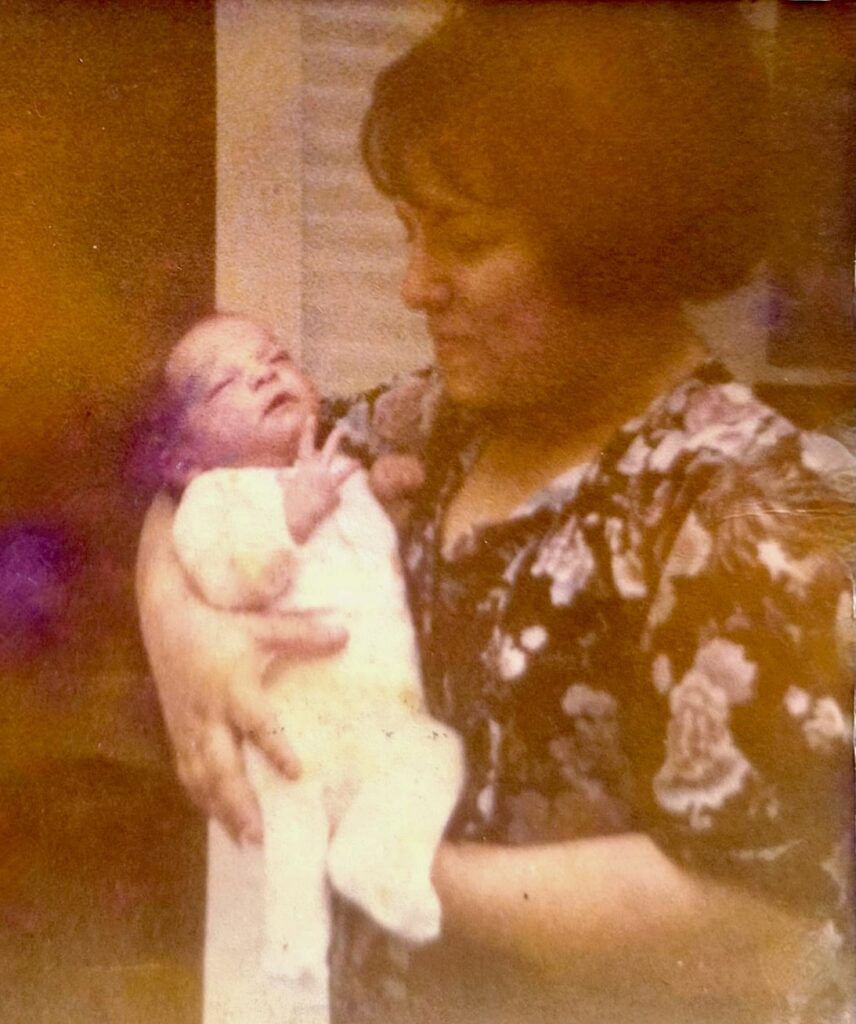
For nearly 40 years, Donna Sanchez has searched for answers about what happened to her mother, Carolyn Sosa.
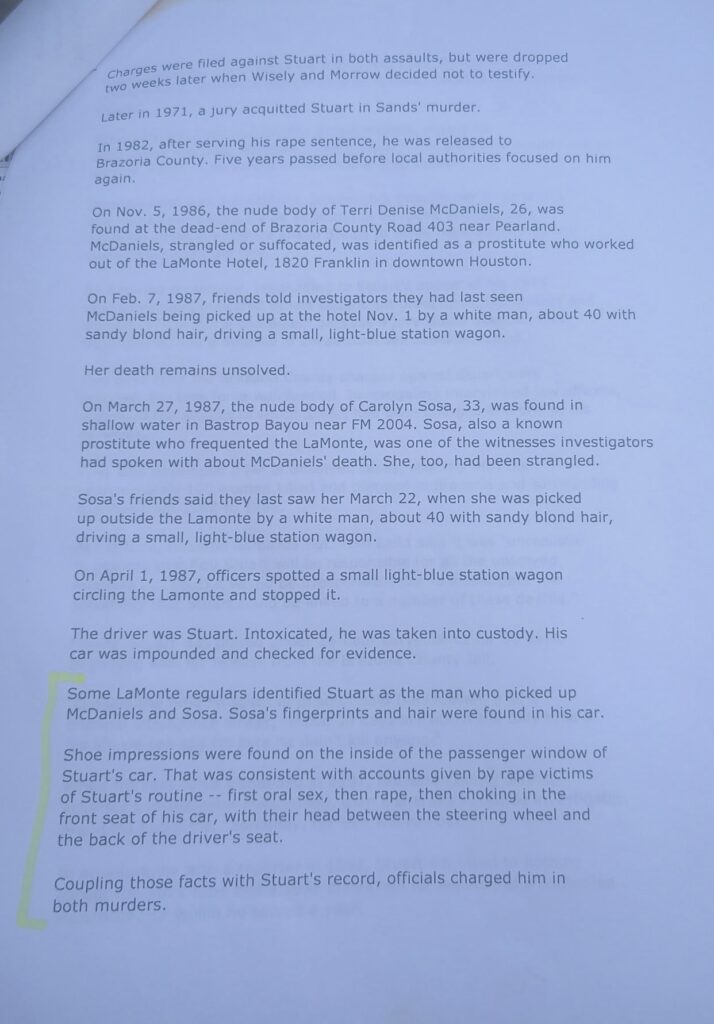
After Investigative Reporter Tammy Rose reached out during an ongoing investigation into former Harris County deputy Kent McGowen’s prison diaries and Roy Alan Stuart’s alleged prison confessions, Donna shared family memories, court records and historical documents she hopes could help bring renewed attention to her mother’s unsolved murder.
“I was seven years old when my mother died,” Donna said. “She was strangled and thrown into Bastrop Bayou.”
Carolyn Sosa Case
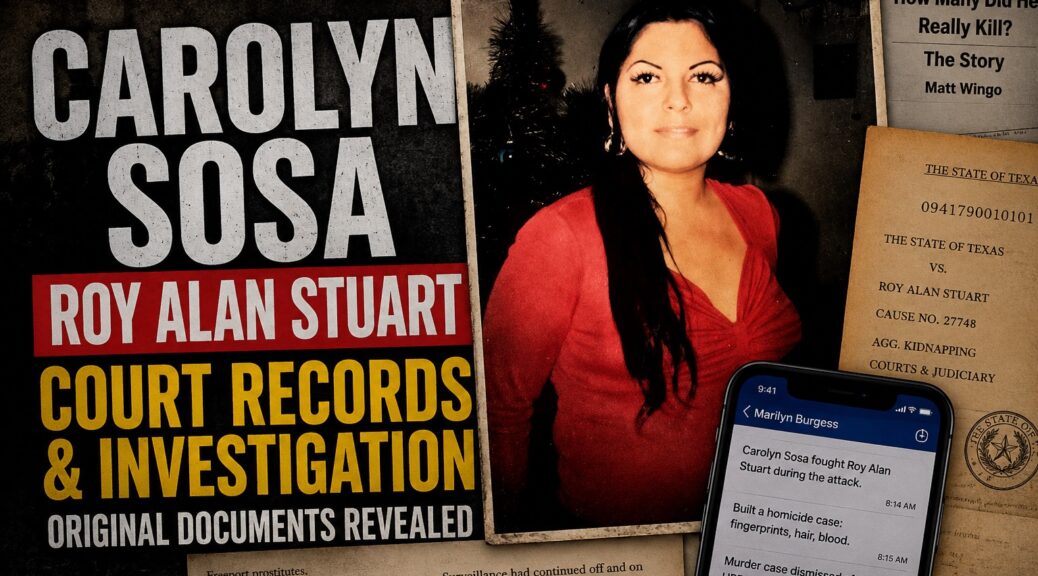
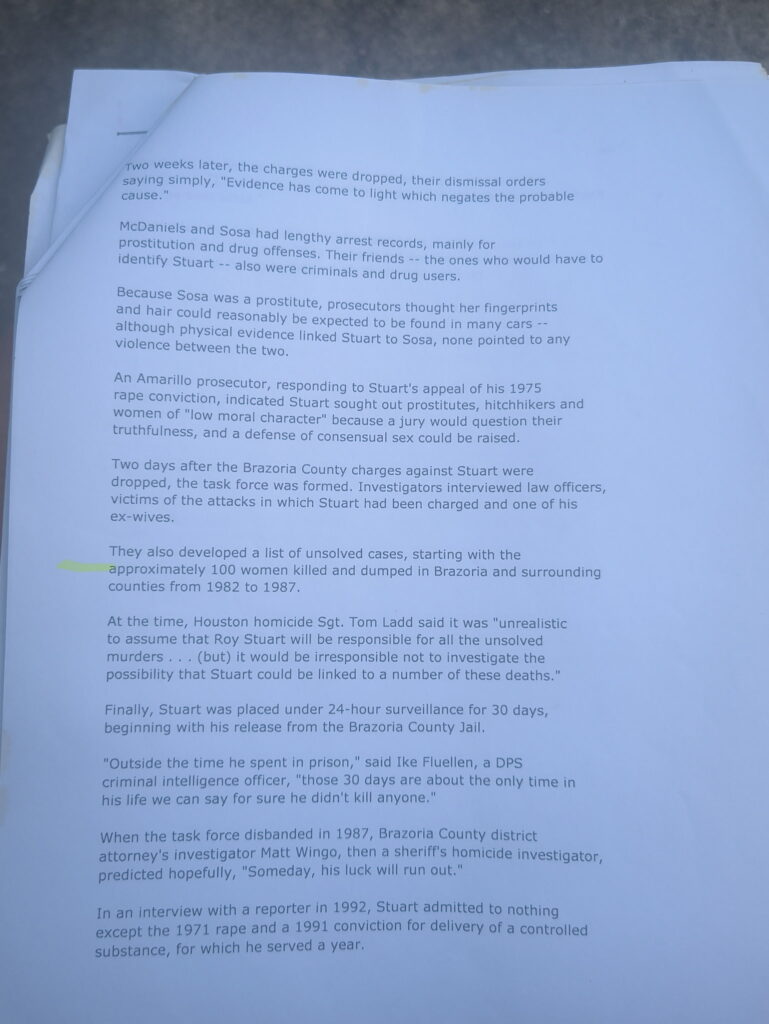
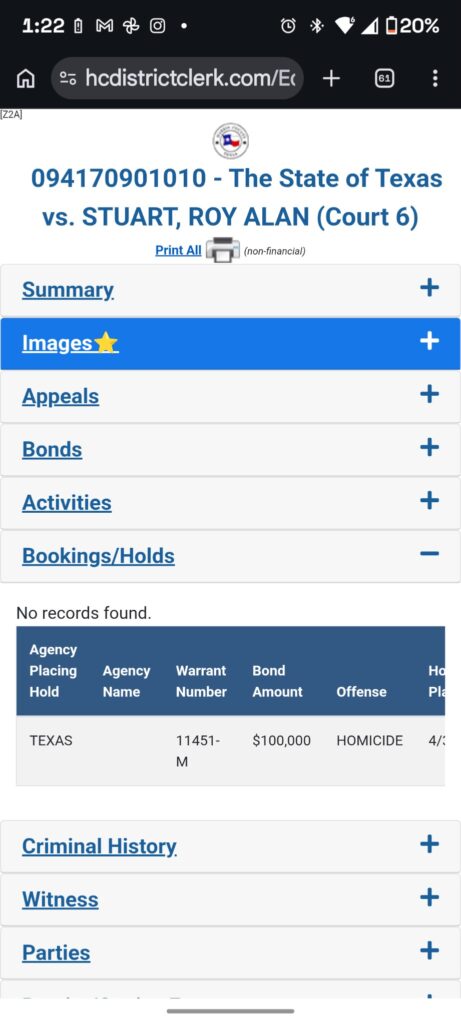
After speaking with Investigative Reporter Tammy Rose, Donna Sanchez shared family memories, court records, historical documents, newspaper articles, and text messages related to the Carolyn Sosa investigation.
Donna believes Roy Alan Stuart murdered her mother, Carolyn Sosa, and hopes the records contribute to another review of the case.
Some of the historical records overlap with information gathered during this investigation, including details Kent McGowen says Roy Alan Stuart shared while the two were incarcerated together. Readers can review the original source documents below and draw their own conclusions.
⸻
Who Was Carolyn Sosa?
Carolyn Sosa was 33 years old when she disappeared in March 1987. Investigators believe she was last seen leaving Houston’s LaMonte Hotel.
Her body was later found in shallow water near Bastrop Bayou off FM 2004.
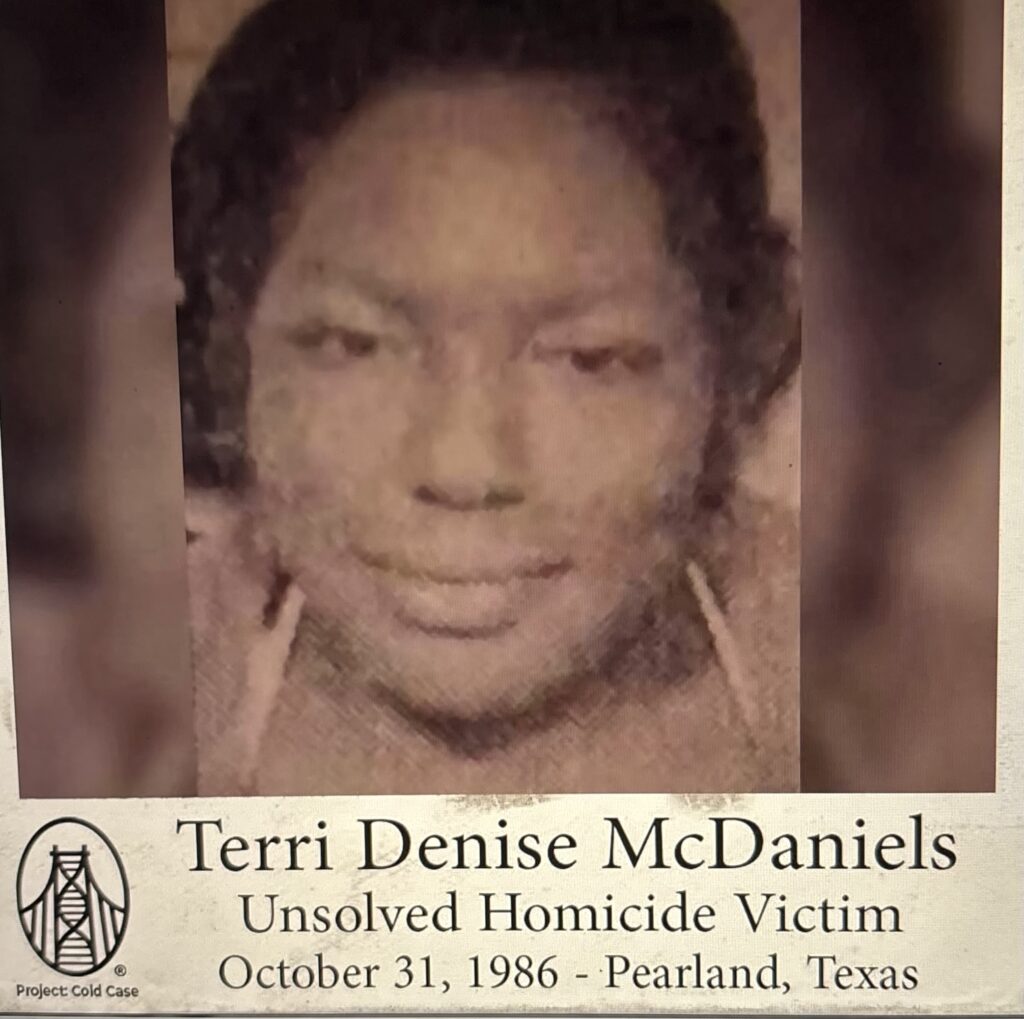
Investigators also believed Carolyn had information about the earlier killing of Terri Denise McDaniels.
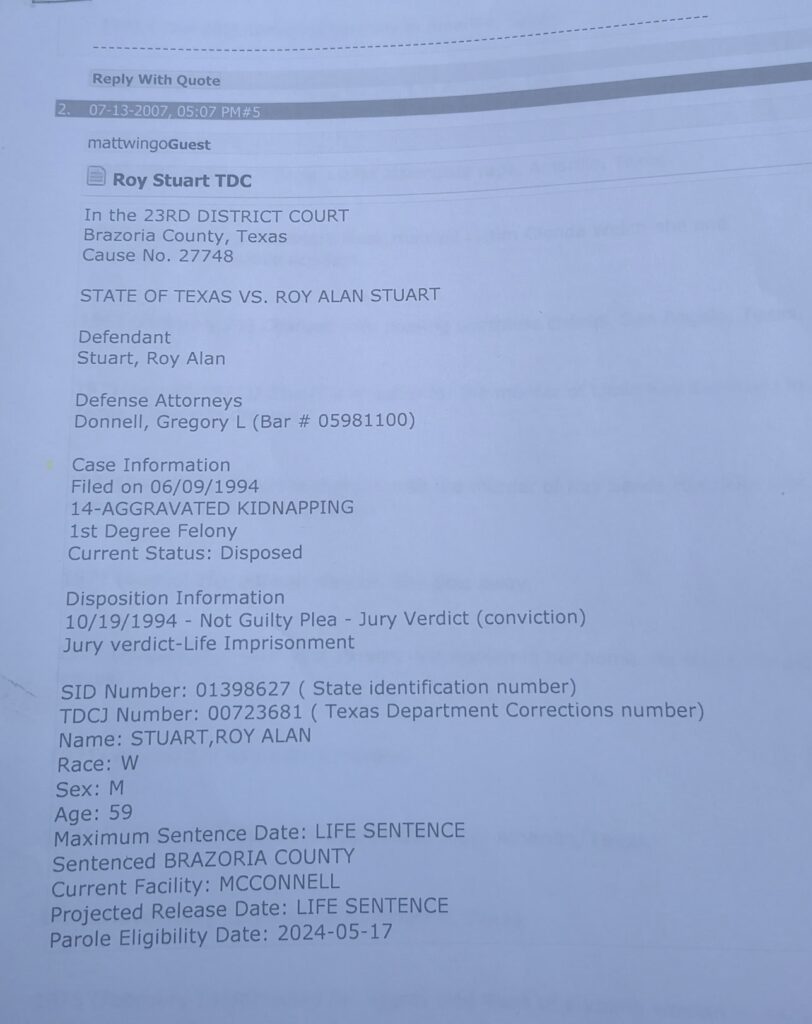
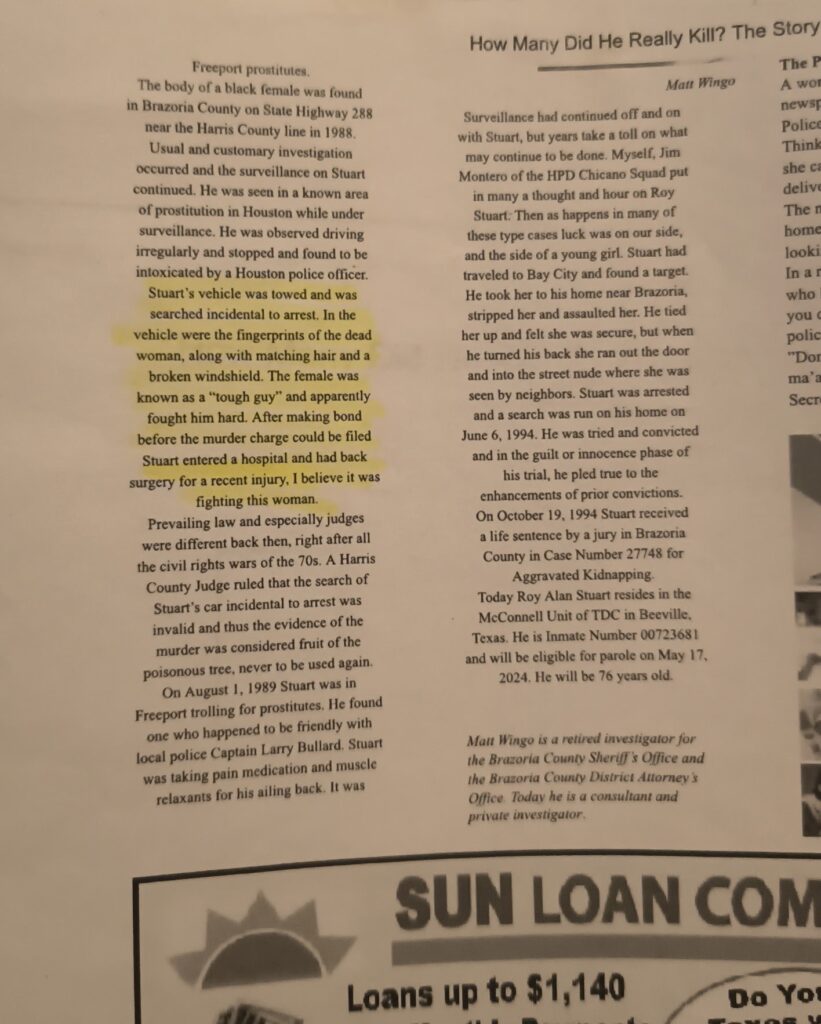
Historical investigative records state investigators found Carolyn Sosa’s fingerprints and hair inside Roy Alan Stuart’s vehicle.
⸻
Historical Court Records
The gallery below contains historical court records, newspaper articles, and investigative documents related to the Carolyn Sosa homicide investigation and Roy Alan Stuart. Readers can review the original source material and examine the records in their historical context.
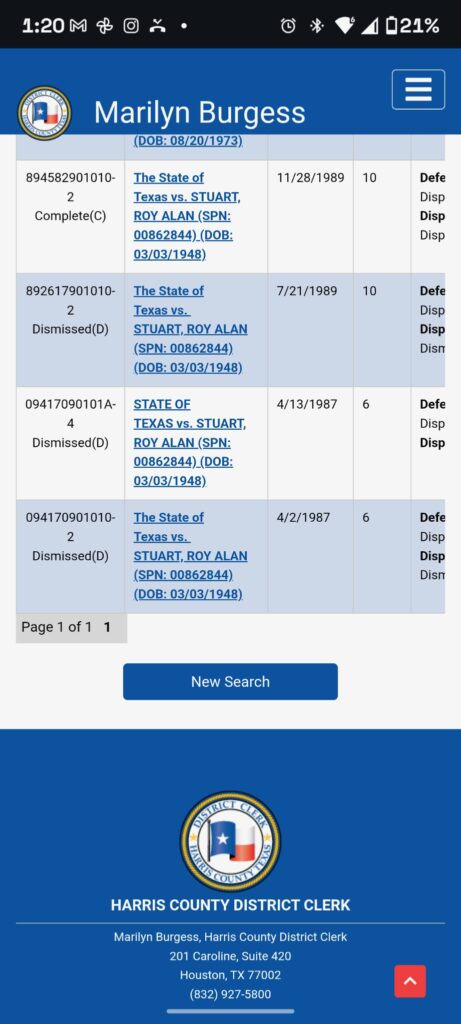
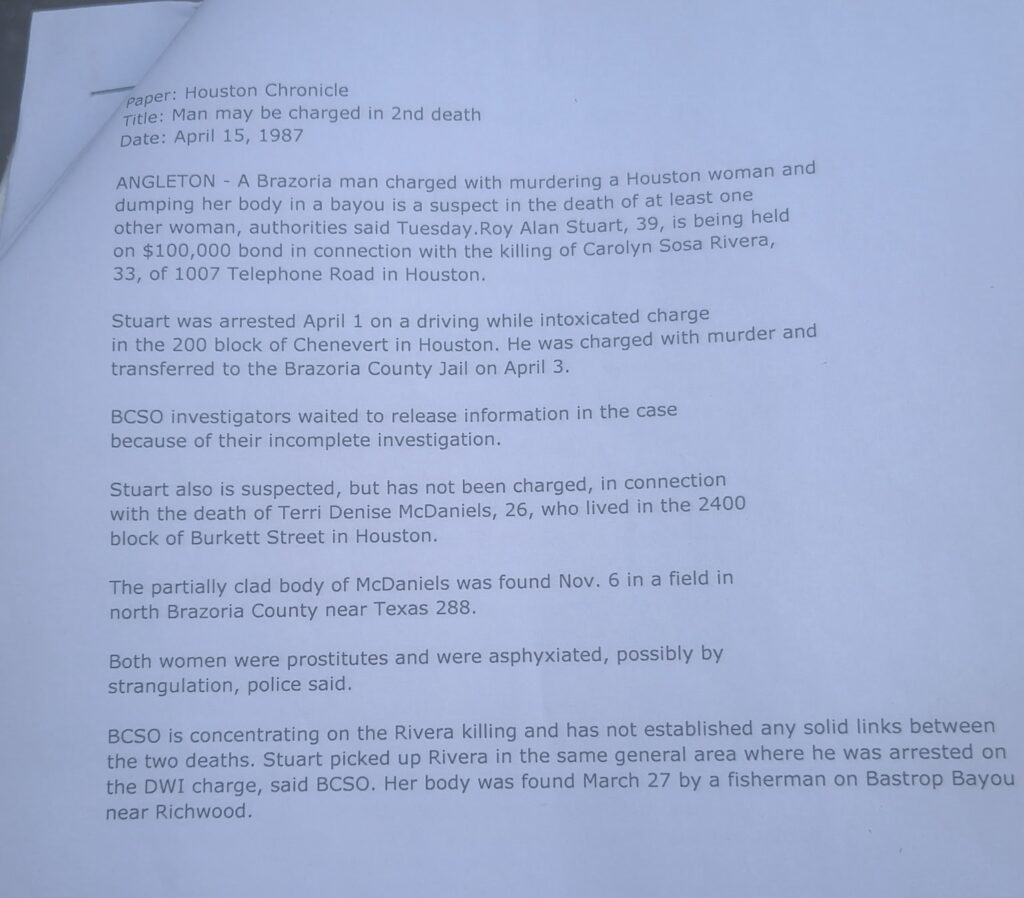
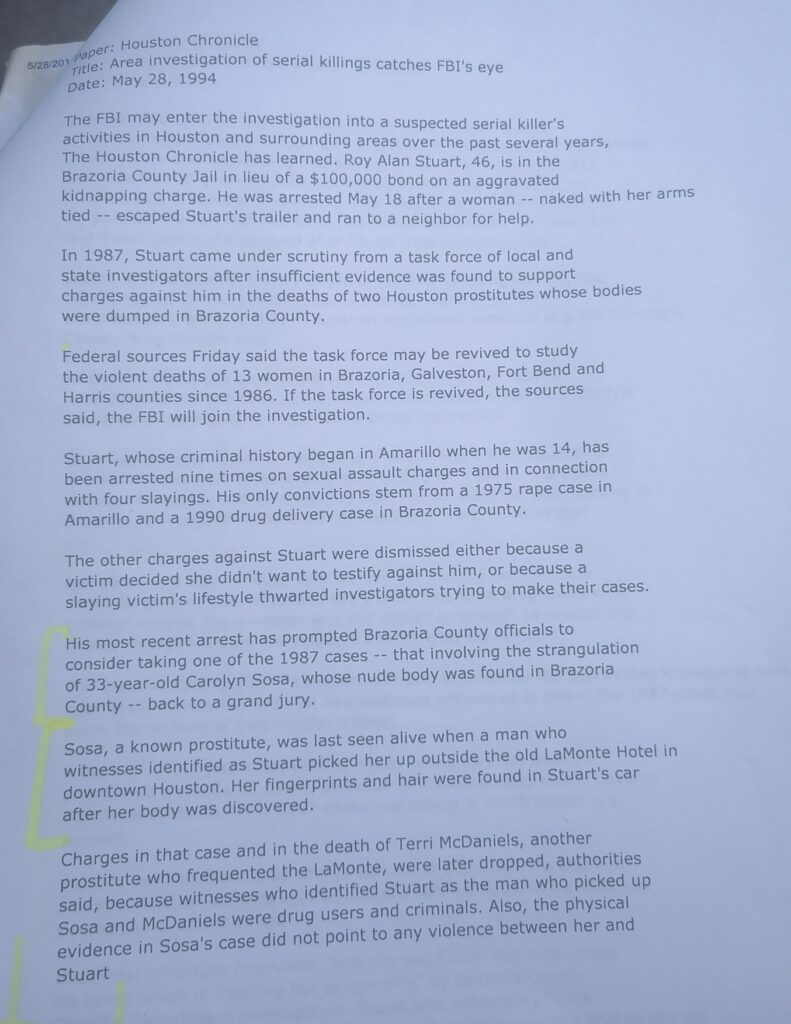
Donna Sanchez shared court records showing Roy Alan Stuart was arrested in Carolyn Sosa’s murder. The murder charge was later dismissed.
Donna said investigators told her family they collected fingerprints, hair evidence, blood evidence, and skin reportedly found beneath Carolyn Sosa’s fingernails.
“My mom was small, but she was a fighter,” Donna told Investigative Reporter Tammy Rose.
Donna hopes someone will finally answer what happened to her mother.
⸻
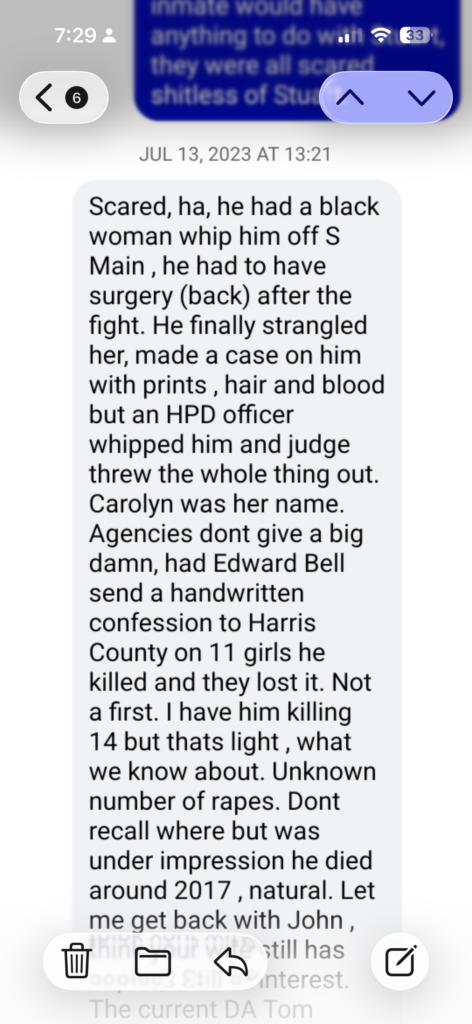
Matt Wingo’s Text Messages About Carolyn Sosa
Former Brazoria County investigator Matt Wingo exchanged text messages with Kent McGowen in July 2023.
One message states Carolyn Sosa fought Roy Alan Stuart during the attack.
Wingo wrote investigators built a homicide case using fingerprints, hair, and blood evidence.
He also wrote the murder case was dismissed after an HPD officer allegedly assaulted Stuart during his arrest.
Another message states Wingo believed Roy Alan Stuart could be connected to at least 14 killings.
Wingo also wrote then-Brazoria County District Attorney Tom Selleck wanted investigators to review Kent McGowen’s records.
These statements reflect Wingo’s account. Investigative Reporter Tammy Rose has not independently verified every statement beyond available court records.
⸻
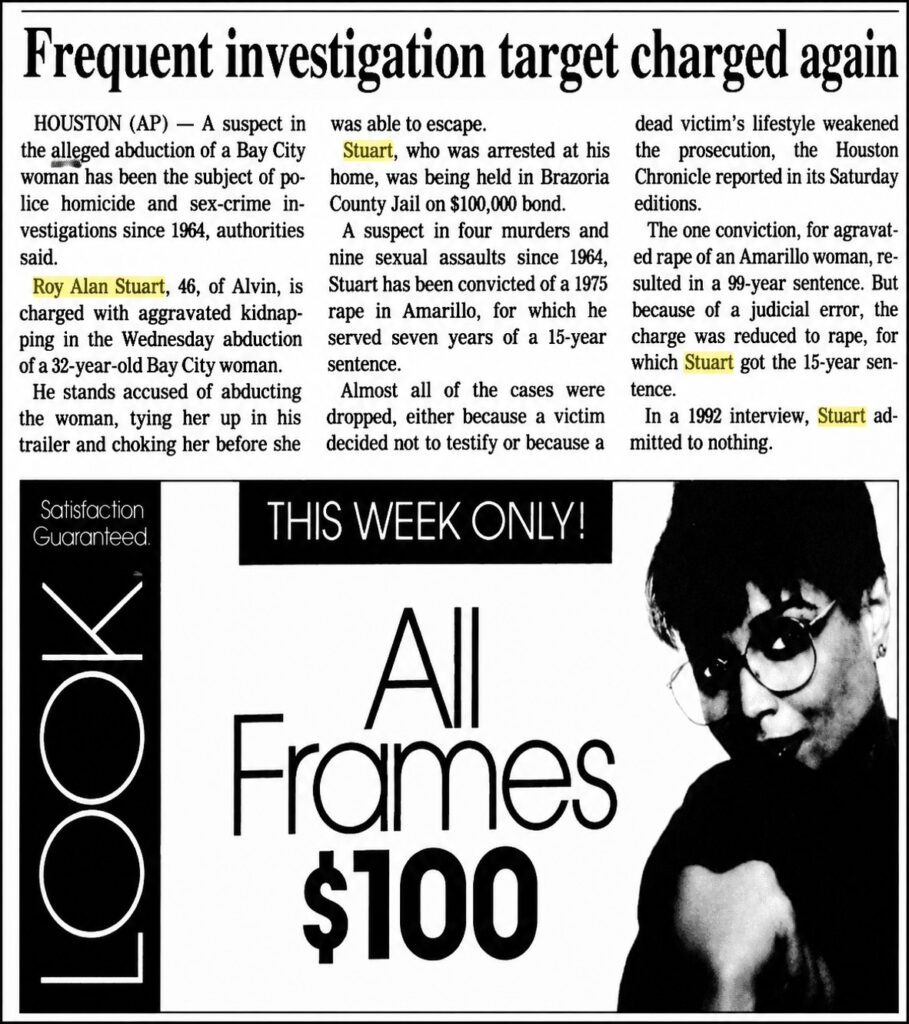
Kent McGowen Says Roy Alan Stuart Confessed
Former Harris County deputy Kent McGowen met Roy Alan Stuart while both were incarcerated at the Duncan Unit.
McGowen said Stuart openly discussed kidnapping and murdering women.
He said Stuart described picking up a Black woman near Telephone Road during rodeo season.
McGowen said Stuart claimed he tried to strangle her with a seat belt before shooting her twice with a .22-caliber pistol.
McGowen also said Stuart claimed a fisherman witnessed the killing from a nearby boat.
After reviewing historical records, McGowen believed Stuart was describing Carolyn Sosa’s murder.
Investigative Reporter Tammy Rose has not independently verified McGowen’s account.
Roy Alan Stuart Died Before the Investigation Was Complete
McGowen said he documented Stuart’s statements while they were incarcerated together and later prepared formal reports detailing the alleged confessions.
According to McGowen, he submitted those reports in 2019 to multiple agencies, including the Brazoria County District Attorney’s Office, Brazoria County Sheriff’s Office, Galveston County District Attorney’s Office, Harris County Sheriff’s Office, Houston Police Department and the FBI.
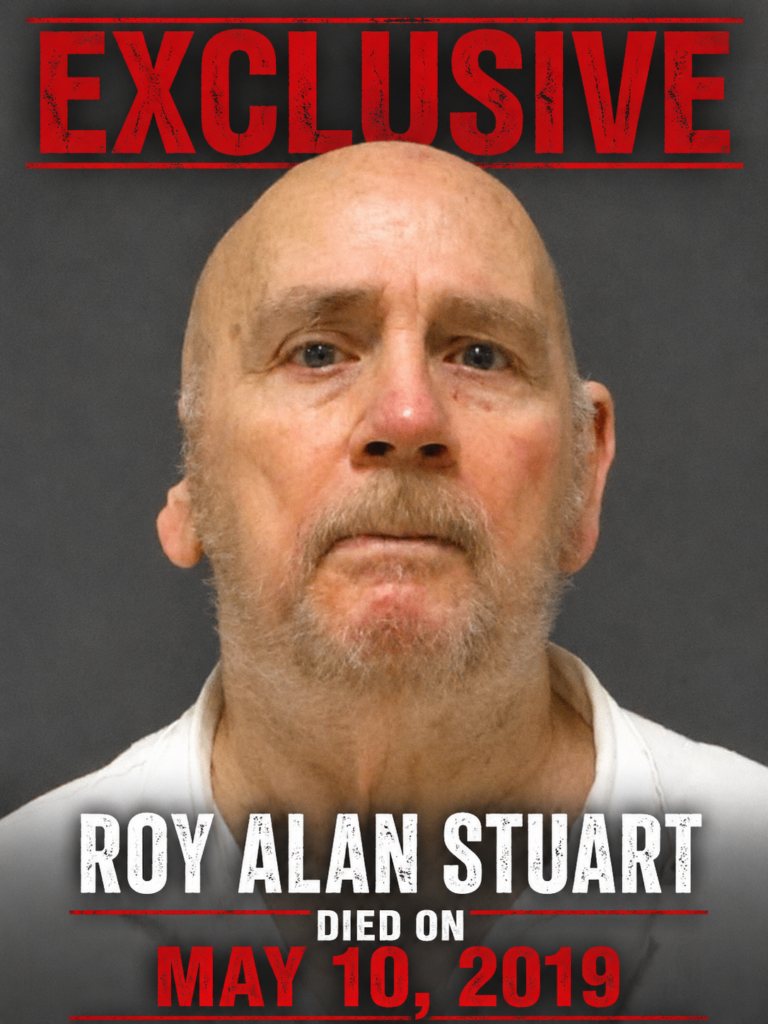
Roy Alan Stuart died on May 10, 2019, while serving a life sentence in the Texas Department of Criminal Justice.
His death came shortly after McGowen said he had notified multiple law enforcement agencies about Stuart’s alleged confessions.
Can the Carolyn Sosa Case Be Reopened?
Yes.
Under Texas law, there is no statute of limitations for murder.
Although Roy Alan Stuart is deceased and can no longer be prosecuted, investigators may reopen a homicide investigation if new evidence, witnesses, historical documents or advances in forensic science justify another review.
A reopened investigation could include re-examining physical evidence using modern DNA testing, interviewing surviving witnesses, reviewing investigative files, or comparing historical evidence with newly discovered information.
If investigators conclude the evidence supports it, they can publicly identify a deceased suspect as responsible for a homicide even though criminal prosecution is no longer possible.
What’s Next in the Carolyn Sosa Case?
Nearly 40 years after Carolyn Sosa’s murder, her family continues searching for answers.
Whether the Carolyn Sosa investigation is officially reopened will ultimately be decided by law enforcement.
However, newly shared family records, historical court documents, Matt Wingo’s text messages, Kent McGowen’s prison interview and previously submitted investigative reports have renewed attention on one of the Gulf Coast’s long-unsolved homicide investigations.
⸻
Editor’s Note: This article includes newly obtained court records, historical investigative documents, text messages, and interviews gathered during an ongoing investigation by Investigative Reporter Tammy Rose. Statements attributed to former Harris County deputy Kent McGowen are based on his interview and prison diaries describing alleged confessions made by Roy Alan Stuart while the two were incarcerated together. Statements attributed to former investigator Matt Wingo are based on text messages reviewed by Investigative Reporter Tammy Rose. Court records confirm Roy Alan Stuart was arrested in Carolyn Sosa’s homicide before the charge was dismissed. Some claims discussed in this article remain unverified or disputed. The purpose of this report is to present the available records, document new information provided by Carolyn Sosa’s family, and examine whether the case merits renewed investigative review.
Disclosure: As an Amazon Associate, I earn from qualifying purchases. If you purchase through my affiliate links, I may earn a small commission at no additional cost to you.
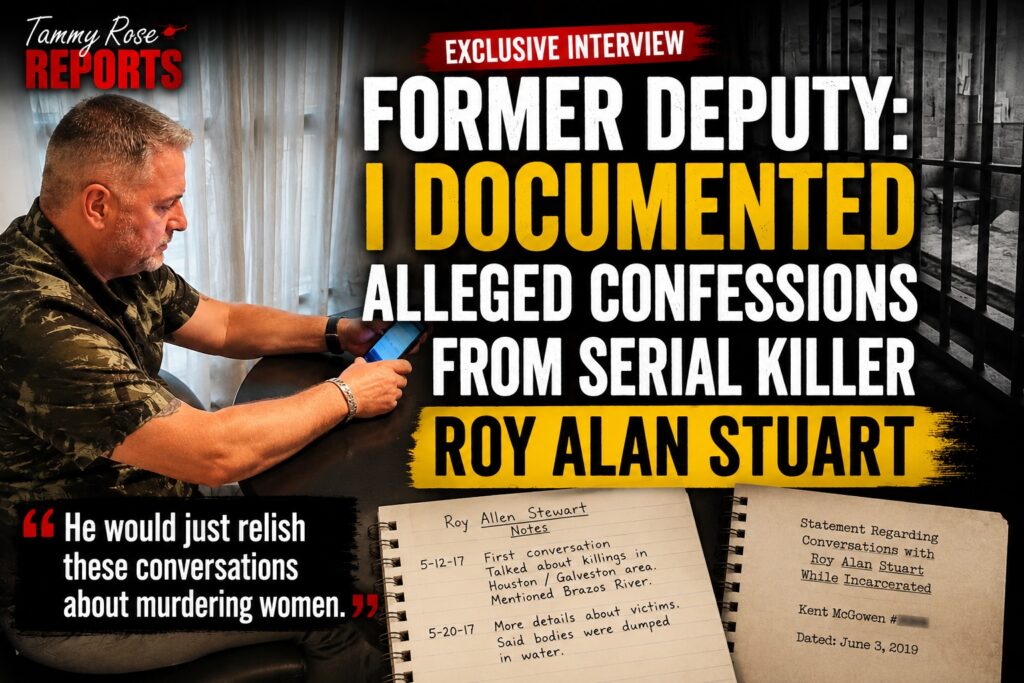
Former Harris County deputy Kent McGowen says one of the most unexpected chapters of his life began while serving a prison sentence in the Texas Department of Criminal Justice.
McGowen was convicted in the 1992 murder of Susan White and spent 19 years in prison before he was paroled. Since his release, he has spoken publicly about his case and his time in prison, including conversations he says he had with convicted serial killer Roy Alan Stuart.
According to McGowen, he spent nearly two years housed near convicted serial killer Roy Alan Stuart, where the two developed an unlikely relationship that led to conversations about alleged unsolved murders across Southeast Texas.
McGowen says he carefully documented those conversations, typed formal reports, and later turned the information over to multiple law enforcement agencies.
I have not independently verified Stuart’s alleged prison statements or whether they resulted in any solved criminal cases.
An Unlikely Prison Conversation
McGowen told me that most inmates avoided Stuart, describing him as someone who appeared exactly how many people would imagine a serial killer.
After noticing Stewart sitting alone, McGowen said he bought him a pint of ice cream and a soft drink from the prison commissary.
According to McGowen, that simple act led Stuart to begin discussing murders he claimed to have committed throughout Texas.
“Nobody would talk to Roy,” McGowen said. “After that, he just started talking.”
McGowen said one reason he began paying close attention was because Stuart showed him what McGowen recalls was a letter that Stuart claimed had been written by attorney Tom Selleck. According to McGowen, Stuart also claimed Selleck represented him at the time. Selleck currently serves as the Brazoria County Criminal District Attorney and previously worked as an assistant district attorney before entering private practice. I have not independently verified the letter, its authenticity, or Stuart’s claim regarding the alleged legal representation.
Claims Of Additional Victims
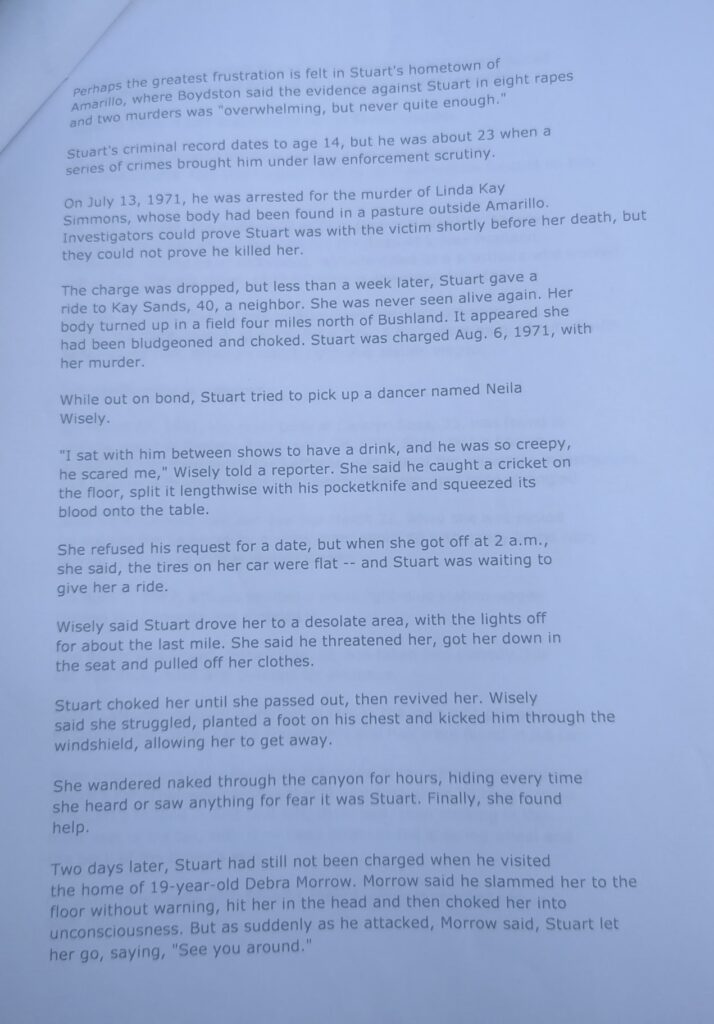
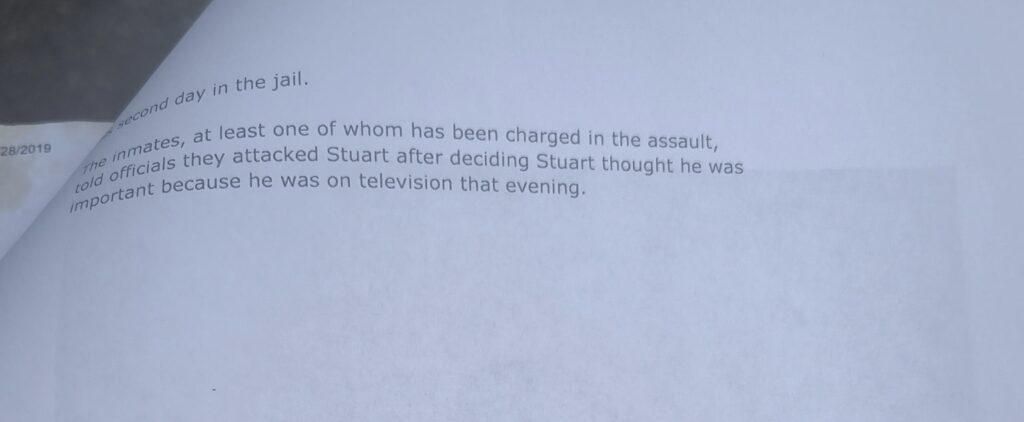
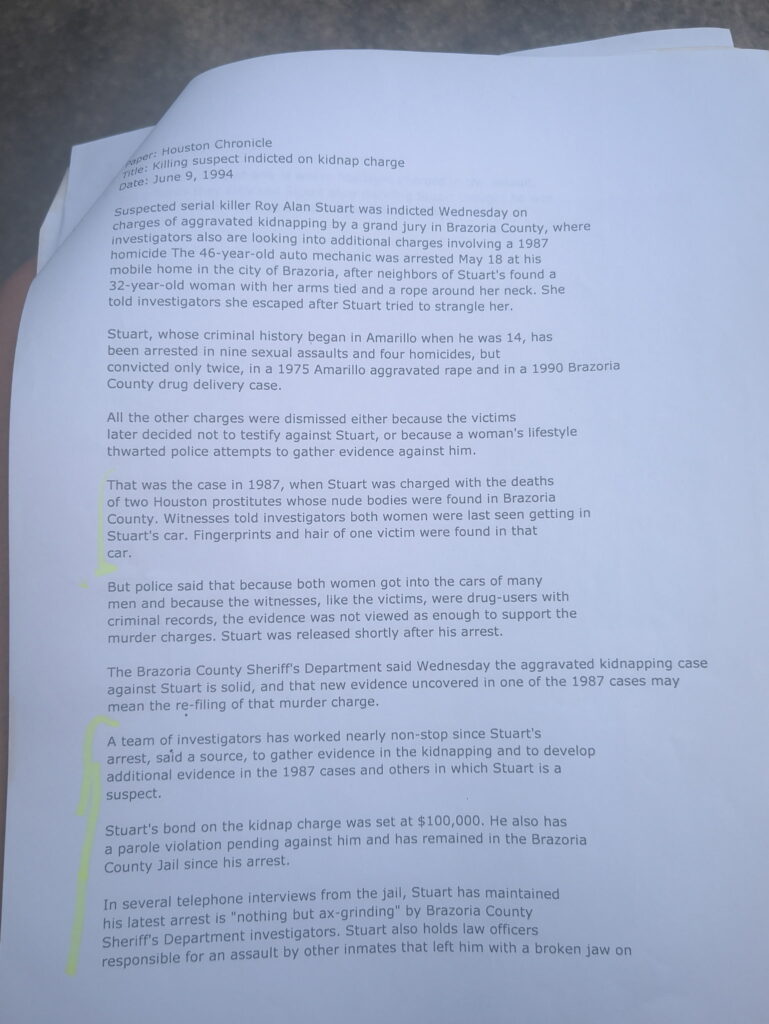
Historical newspaper clipping from The Victoria Advocate (May 1994) reporting Roy Alan Stuart’s arrest in Brazoria County. The article states Stuart had been investigated in multiple homicide and sexual assault cases. Included for historical context alongside Kent McGowen’s interview.
McGowen alleges Stuart described several killings that were never publicly connected to him.
Among the stories McGowen recalls were allegations involving:
A woman allegedly abducted from Houston during rodeo season.
A victim allegedly killed near a waterway in Brazoria County.
Bodies allegedly disposed of in or near the Brazos River.
Additional killings Stuart allegedly discussed involving Southeast Texas.
McGowen says Stuart showed no remorse while recounting the alleged crimes.
Documenting Every Conversation
Rather than relying on memory, McGowen says he immediately began documenting the conversations.
He kept handwritten notes while incarcerated before later typing formal reports describing what Stuart allegedly told him.
McGowen says he eventually forwarded those reports to multiple law enforcement agencies, including investigators in several Texas counties.
“I wanted to document everything while it was still fresh,” McGowen said.
Investigators Later Contacted Him
According to McGowen, investigators later reached out requesting copies of his notes.
He says an FBI agent also contacted him after learning about the reports and asked to review the journals because they reflected his contemporaneous observations while Stuart was allegedly making the statements.
McGowen says he continues to maintain copies of those writings today.
Questions Still Remain
Whether Stuart’s alleged prison statements can ever be verified remains unknown.
At this time, I have not found any publicly available records that independently confirm the additional alleged victims described by McGowen.
However, McGowen believes investigators considered the information important enough to request his documentation years after the conversations took place.
As part of my continuing coverage, I am preparing additional public records requests to determine what investigative steps, if any, followed McGowen’s submissions.
This remains an active reporting project. If you have firsthand knowledge related to Roy Alan Stuart or the investigations discussed in this article, contact me through ChopperRose.com
Related Coverage
Convicted Former Deputy Says He Was Framed — But Key Questions Remain(coming soon)
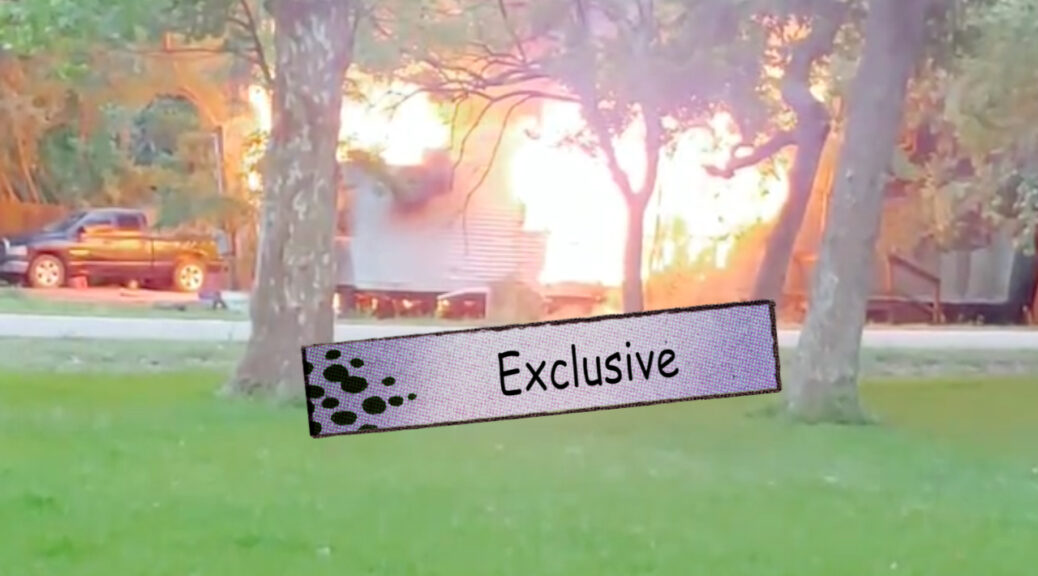
Exclusive: New Video Shows James Elmore Jr.’s Trailer Engulfed in Flames.
As the search for evidence continues, new voices are speaking out-sharing what they know about the Texas Killing Fields. Some of them, choosing to remain anonymous.
Exclusive: New Video Shows James Elmore Jr.’s Trailer Engulfed in Flames
As the search for evidence continues, new voices are speaking out—sharing what they know about the Texas Killing Fields. Some are choosing to remain anonymous, fearing backlash as this decades-old case gains renewed attention.
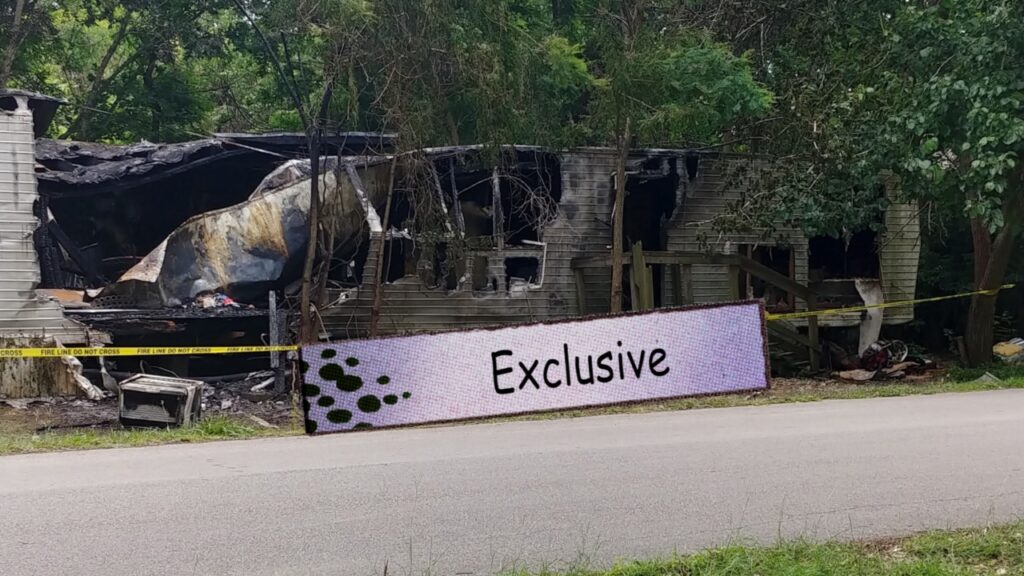
This exclusive video, along with interviews obtained by this site, may point to another location of interest. Multiple sources claim the property currently being searched on 18th Street may not be the only place investigators should be focusing.
According to those sources, another nearby property—also previously linked to James Elmore Jr.—could hold critical clues. The footage shows one of two separate fires tied to locations where he once lived, raising new questions about whether key evidence may exist just around the corner from where authorities are currently searching.
While investigators have not confirmed these claims, the accounts shared in this report suggest there may be more to uncover in the surrounding area.
📦 Recommended Field Reporting Gear
If you’re producing investigative or field reporting content like this, here are some tools creators and journalists commonly use: