Tag Archives: court records

Former Deputy Kent McGowen Responds to Susan White 911 Call

Watch the Full Investigation

Former Deputy Kent McGowen Responds to Susan White 911 Call, Allegations Before 1992 Shooting
By Investigative Reporter Tammy Rose

More than three decades after the fatal shooting of Susan White, former Harris County Sheriff’s Office Deputy Kent McGowen is publicly responding to allegations White made before the shooting, including claims she voiced during calls to 911.

In an exclusive interview with Investigative Reporter Tammy Rose, McGowen discussed the August 25, 1992 shooting, disputed allegations that he sexually harassed White, addressed why she repeatedly mentioned his name and shared courtroom demonstration photographs that he says support his version of events.

The interview pairs portions of White’s 911 call with McGowen’s current account, allowing readers to compare both versions of events.

Viewer Note: This story contains discussion of a fatal officer-involved shooting and includes portions of a 911 call that some readers may find disturbing.

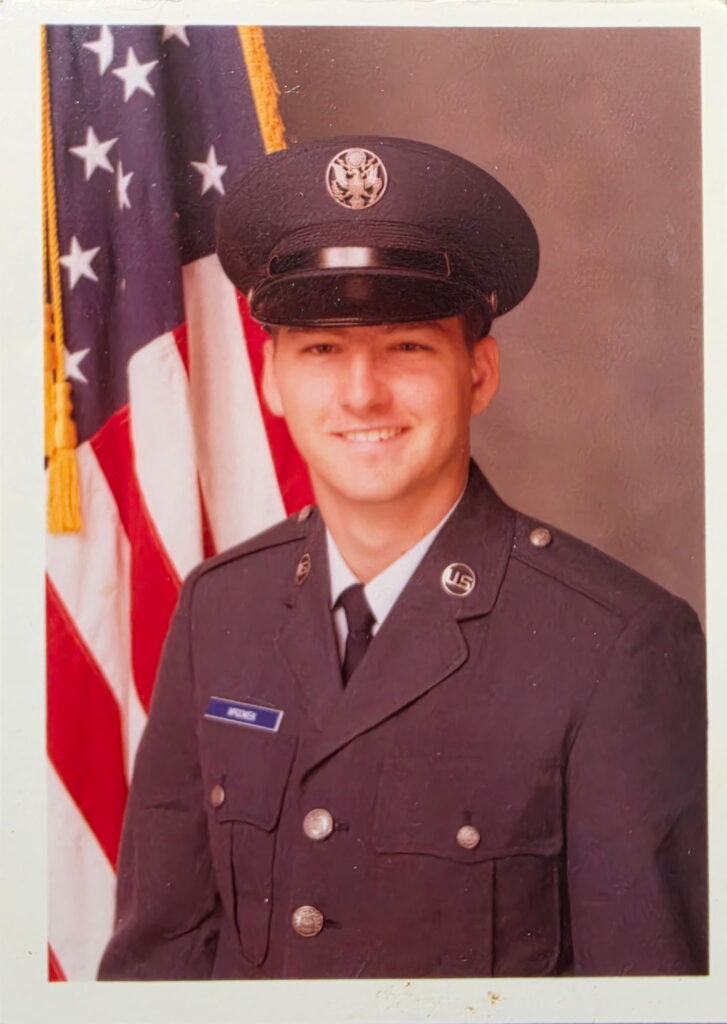
Kent McGowen in his U.S. Air Force dress uniform before beginning his law enforcement career.
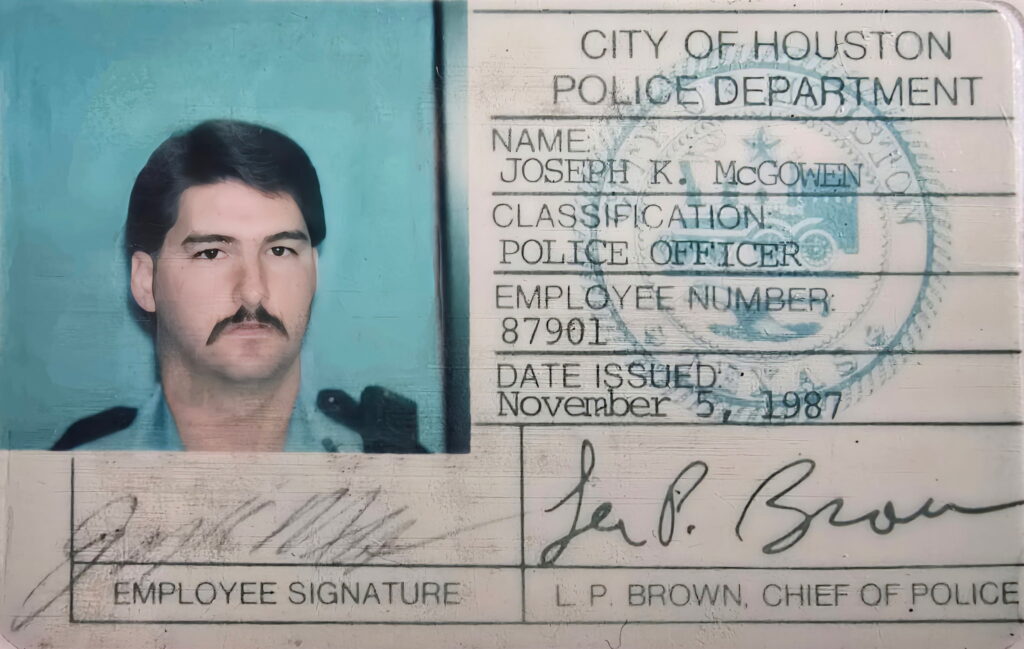
Before entering law enforcement, Kent McGowen served in the U.S. Air Force. He later worked as a Houston police officer and Harris County deputy before the Aug. 25, 1992, fatal shooting of Susan White that led to two criminal trials and his eventual conviction.

Background Before the Case

Before beginning his law enforcement career, Kent McGowen served in the United States Air Force.

After leaving the military, he joined the Houston Police Department before later serving with the Harris County Sheriff’s Office. During his career, he received commendations and officer recognition awards.

Before beginning his law enforcement career, Kent McGowen served in the United States Air Force.

After leaving the military, he joined the Houston Police Department before later serving with the Harris County Sheriff’s Office. During his career, he received commendations and officer recognition awards.

McGowen’s career changed forever on August 25, 1992, when deputies serving a felony warrant fatally shot Susan White at her home.

A jury convicted McGowen of murder in his first trial. An appellate court later overturned that conviction. A second jury convicted him in 2002. He ultimately served approximately 19 years in prison before his release in 2021.

Book About the Case

Journalist Jerry Langton later examined the case in Reasonable Doubts: How Rumor and Innuendo Convicted Deputy Kent McGowen of Murder. The book explores the investigation, the two trials and McGowen’s conviction.
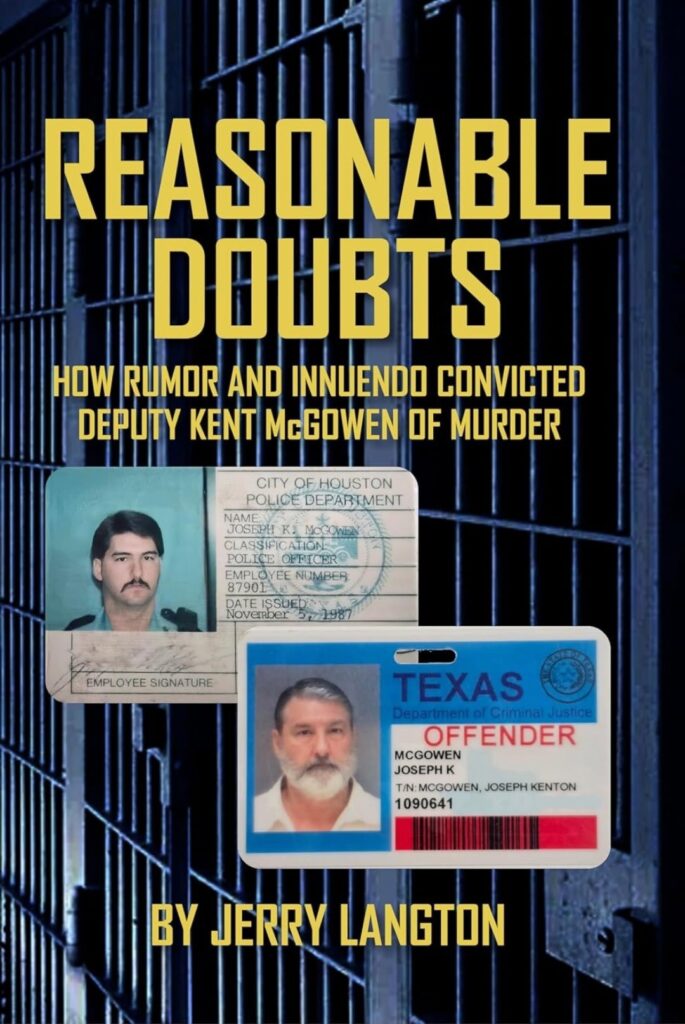
Read the book on Amazon: 

Additional Case Materials

In addition to the trial record, Kent McGowen has provided investigative records and expert reports that he says support his account of the shooting.

Among the records McGowen provided is a forensic review by consulting forensic scientist Dr. Edward E. Hueske.

Hueske prepared the review during McGowen’s legal proceedings.

McGowen also provided a statement he wrote at the request of Harris County Assistant District Attorney Baldwin Chin, then chief of the Harris County District Attorney’s Office Post Conviction Integrity Review Unit, during the office’s review of his case in 2011–2012.

According to McGowen, the statement summarizes the case and his account of events as they existed during the Harris County District Attorney’s Office Post Conviction Integrity Review in 2011-2012.
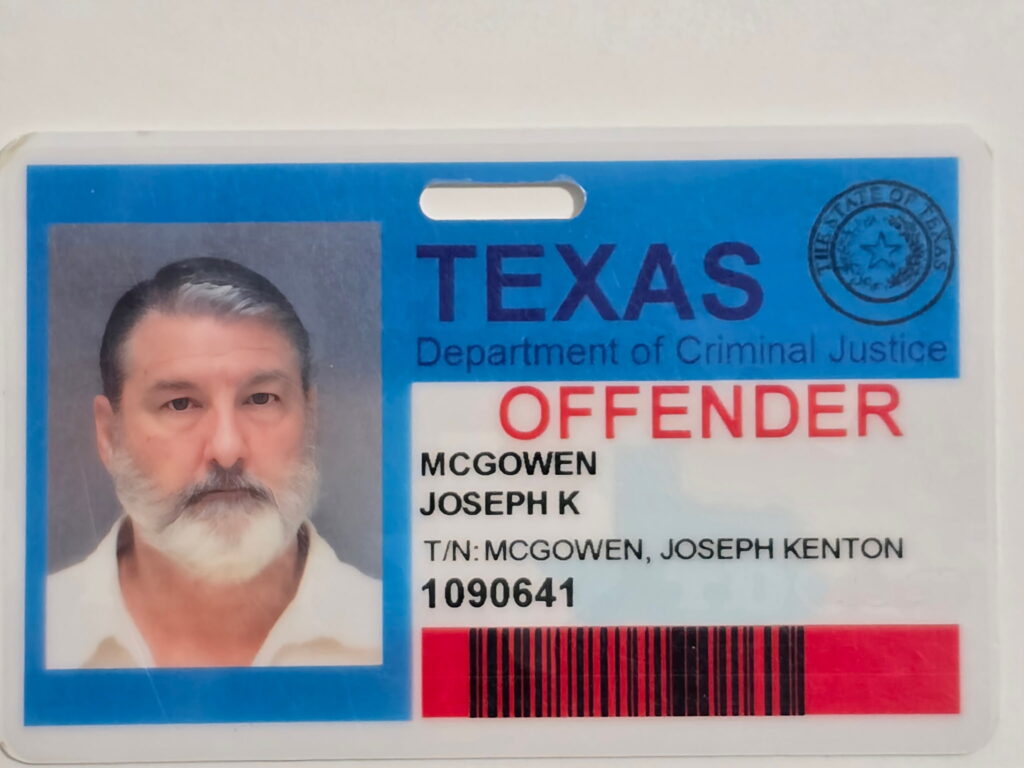
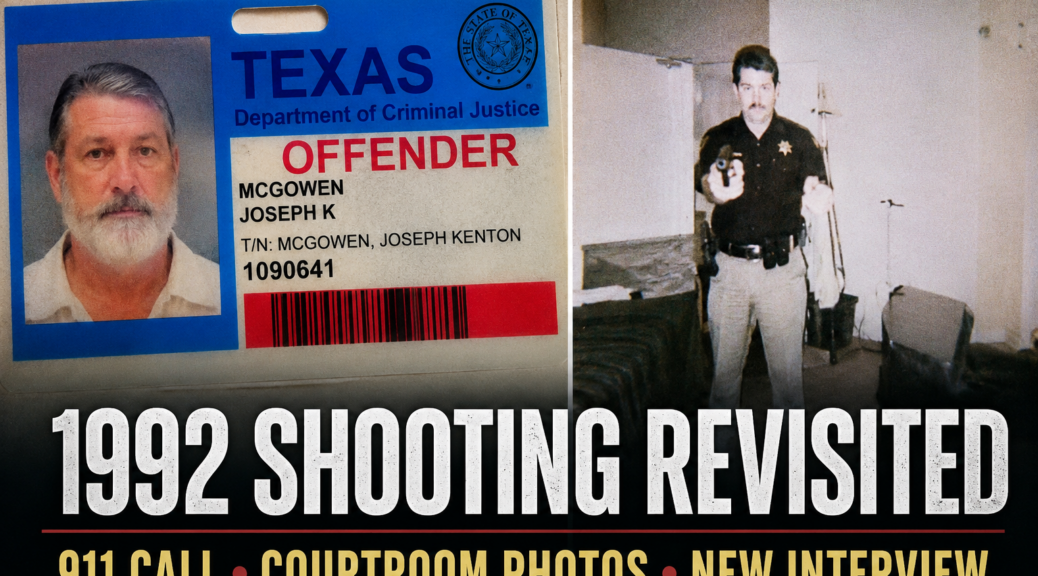
Texas Department of Criminal Justice offender identification card for Joseph Kent McGowen during his incarceration.
After two criminal trials stemming from the Aug. 25, 1992, fatal shooting of Susan White, Kent McGowen was ultimately convicted of murder. He served approximately 19 years in the Texas Department of Criminal Justice before his release in 2021.

Watch the Full Investigation

The television report below includes exclusive interview excerpts with Kent McGowen, courtroom demonstration photographs and additional background on the Susan White case.

Listen to Susan White’s 911 Call

The audio below captures one of Susan White’s calls to 911 before deputies entered her home.

During the recording, White repeatedly asks dispatchers for help and expresses fear as deputies remain outside the residence.

The call contains emotional language and may be disturbing to some listeners.

Susan White’s 911 Call Before Deputies Entered The Home

The video and audio above include one of Susan White’s 911 calls before deputies entered the home.

During the recording, White repeatedly asks dispatchers for help while describing people outside her home.

The recording contains emotional language that some listeners may find disturbing.

McGowen Strongly Disputes White’s Allegations
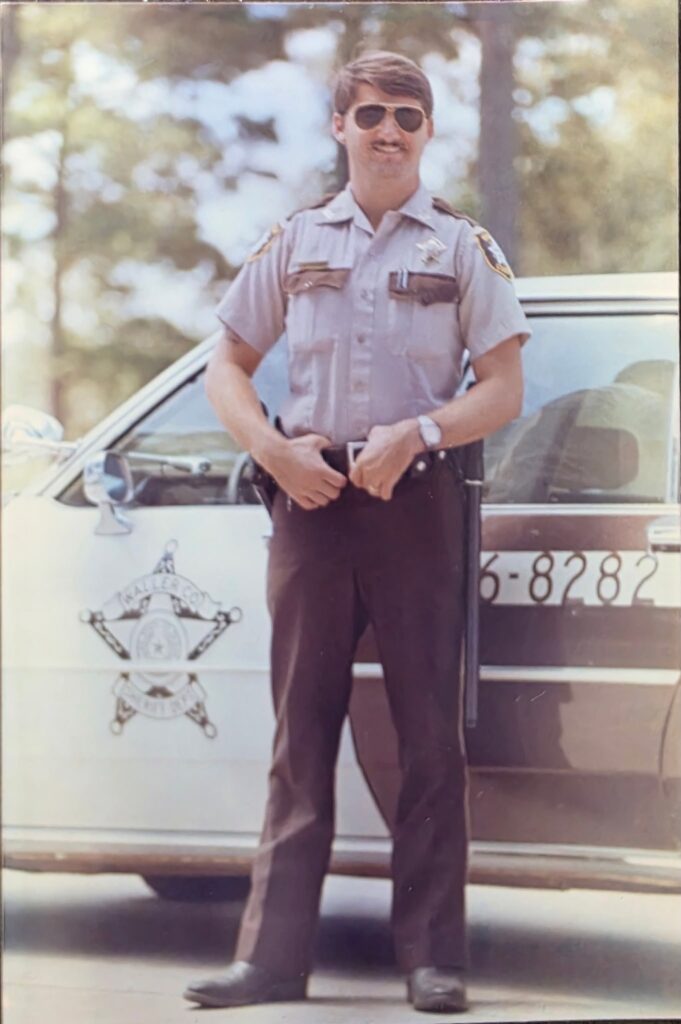
Vintage photograph of Kent McGowen in a Waller County Sheriff’s Office uniform standing beside a marked patrol vehicle while serving with the department before joining the Houston Police Department.
Kent McGowen while serving with the Waller County Sheriff’s Office at age 19, before joining the Houston Police Department pending completion of his background investigation.

During his interview with Investigative Reporter Tammy Rose, McGowen firmly denied White’s allegations.

According to McGowen, he never sexually harassed White, never stalked her and never had the repeated contacts she described.

“I had never pulled her over. I’d never spoken to her,” McGowen said during the interview.

McGowen believes White confused him with another deputy who previously worked in the area.

He told Tammy Rose that investigators later uncovered witness statements he believes support that explanation.

According to McGowen, White mistakenly identified him after seeing him during the arrest of her son and others connected to a burglary investigation.

Why Did White Know McGowen’s Name?

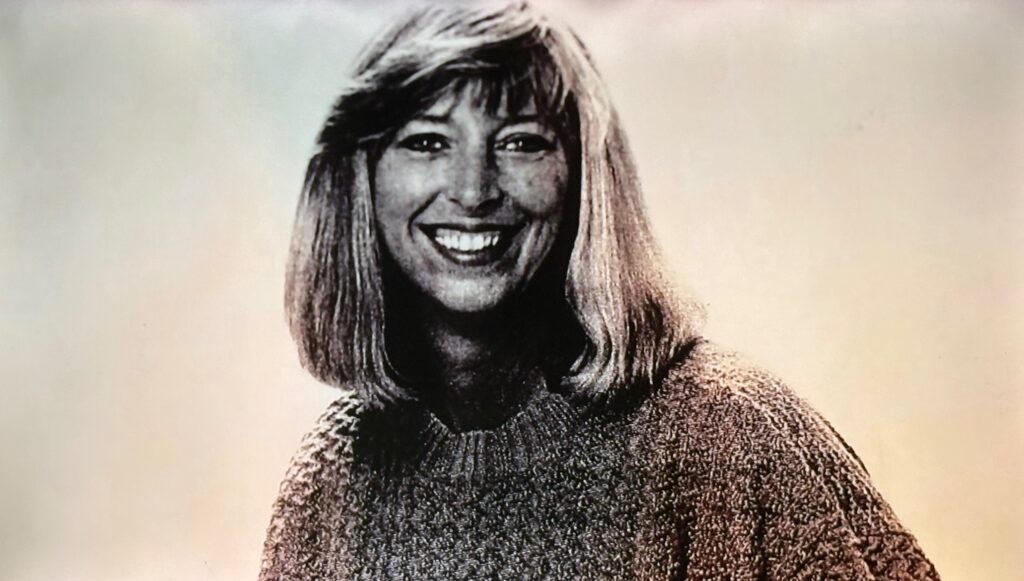
Portrait of Susan White, whose repeated references to former Harris County Precinct 4 Deputy Kent McGowen before the 1992 shooting are discussed in this section of the investigation.
Susan White. Investigators and former Deputy Kent McGowen have offered differing explanations for why White repeatedly mentioned his name before the August 25, 1992, shooting.

One of the questions surrounding the case is why White repeatedly mentioned McGowen by name before the shooting.

McGowen offered his explanation during the interview.

He said White arrived at the scene after deputies arrested her son and began asking officers who “McGowen” was.

According to McGowen, several deputies pointed in different directions while trying to identify him, causing White to approach multiple officers before eventually speaking with him.

McGowen believes that encounter explains why she later knew his name.

He disputes claims that he had an ongoing personal conflict with White before the shooting.

McGowen Says White Mistook Him for Another Deputy

McGowen also challenged allegations that he repeatedly stopped or harassed White before the shooting.

Instead, he told Tammy Rose that another deputy had previous contact with White and believes she mistakenly associated him with those earlier encounters.

McGowen said he never received phone calls from White, never contacted her outside official duties and never had a personal relationship with her.

He also pointed to subpoenaed telephone records that he says failed to show communication between them.

Those statements reflect McGowen’s account. Investigative Reporter Tammy Rose continues reviewing court records, witness statements and other documents connected to the case.

McGowen’s Description of White’s Condition

McGowen also discussed White’s condition while deputies attempted to serve the warrant.

According to McGowen, White appeared to be slurring her speech as deputies tried to communicate with her through the front door.

He told Tammy Rose he believed White was impaired and described her behavior as confused and erratic.

McGowen said those observations influenced how he interpreted her actions that morning.

His statements represent his account of the encounter and should not be interpreted as independent findings of fact.

The Warrant That Led to the Shooting

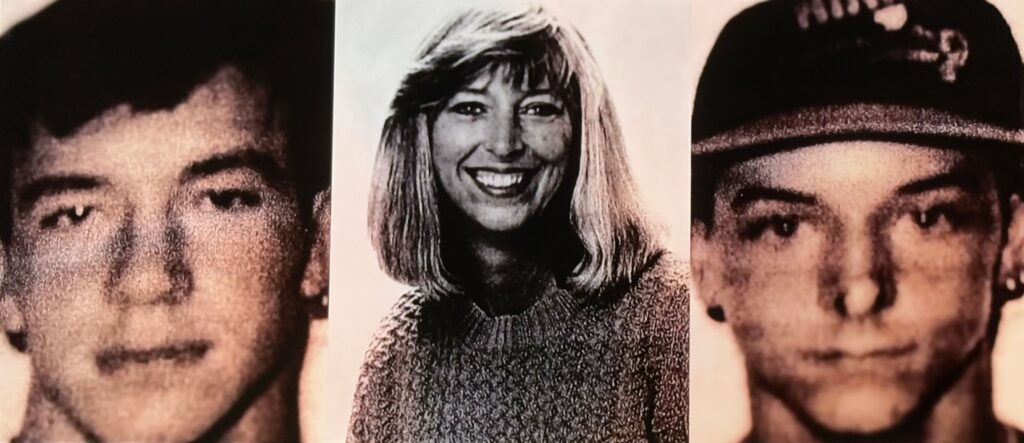
Composite image showing Michael Shaffer (left), Susan White (center), and Jason Aguilar, Linda White’s teenage son (right).
Left to right: Confidential informant Michael Shaffer, Susan White and Jason Aguillard, Susan White’s teenage son.

According to McGowen, deputies went to Susan White’s home to serve a felony retaliation warrant after investigators alleged she threatened a confidential informant connected to a burglary investigation.

McGowen said he first attempted to obtain the warrant during the overnight hours but claimed a judge was unavailable to sign it. He returned the following morning with the approved warrant and several deputies to serve it.

He told Investigative Reporter Tammy Rose that deputies knocked on the front door for several minutes, repeatedly identified themselves as members of the Harris County Sheriff’s Office and asked White to come outside.

According to McGowen, White refused to open the door.

McGowen said deputies eventually forced entry after obtaining permission from a supervisor.

McGowen Describes What Happened Inside

According to McGowen, deputies entered the home and began clearing rooms while searching for White.

He told Tammy Rose he saw White move through the house toward a bedroom. He followed her and said she picked up a handgun after entering the room.

McGowen said he ordered White three times to drop the weapon.

He claims White raised the handgun toward him and began placing her finger on the trigger.

Believing his life and the lives of the other deputies were in danger, McGowen fired three shots.

He has consistently maintained that he acted in self-defense.

Prosecutors disputed that version of events during both criminal trials.

Courtroom Demonstration Photos

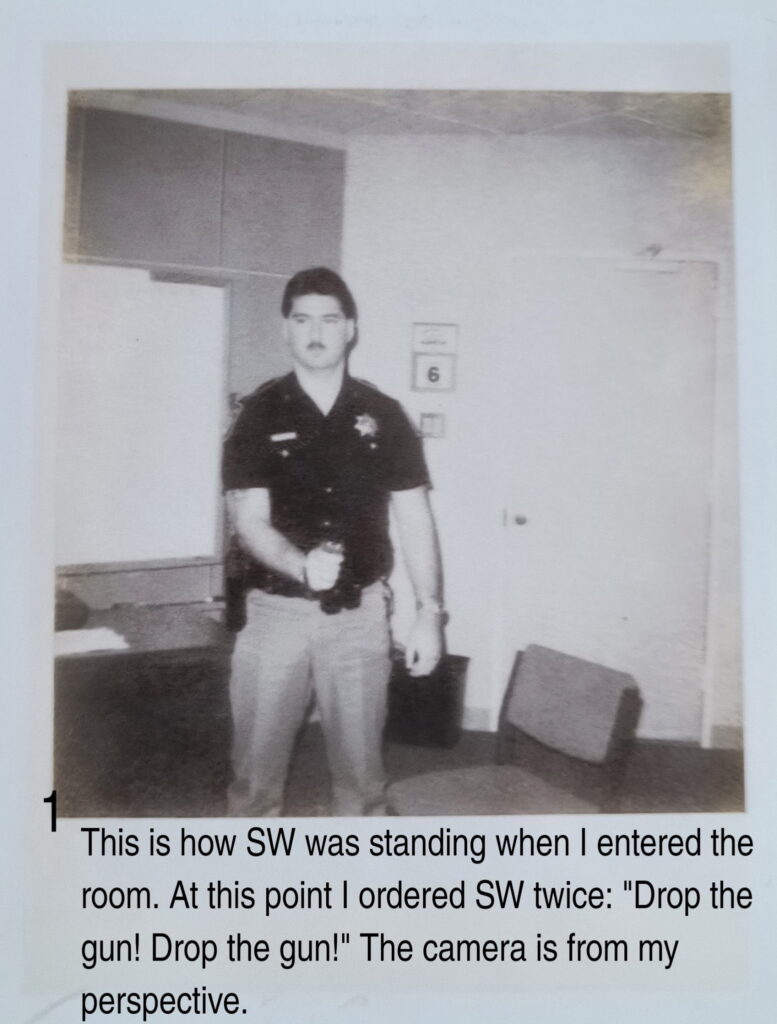
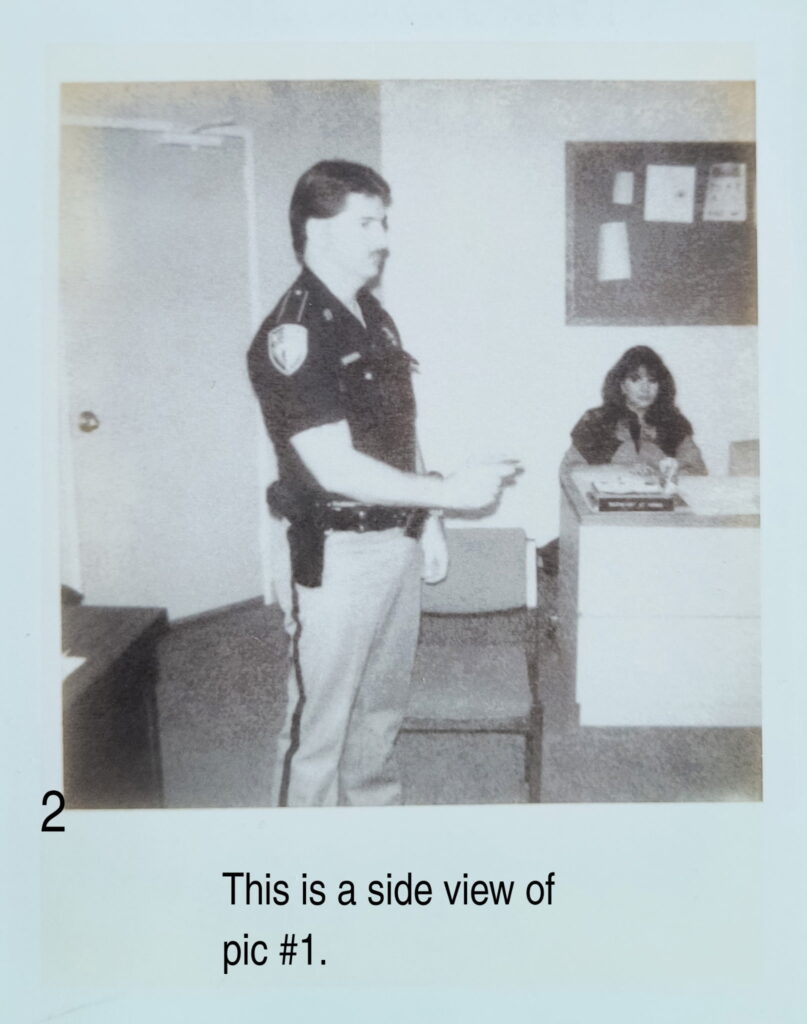
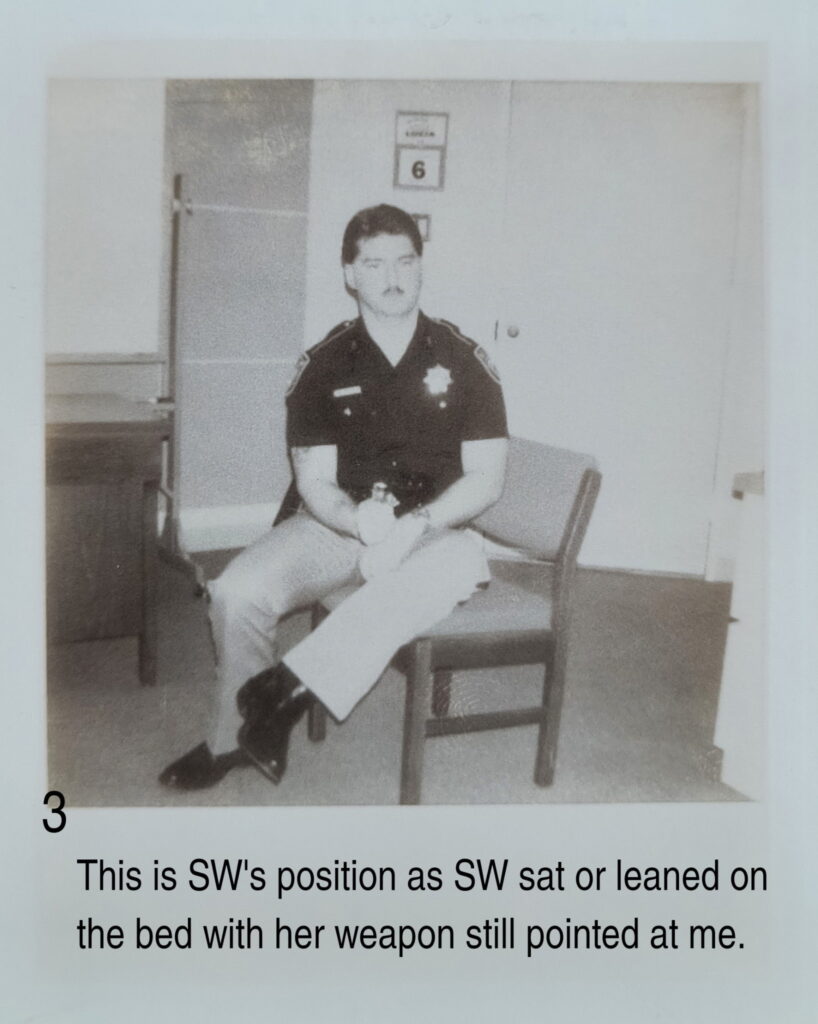
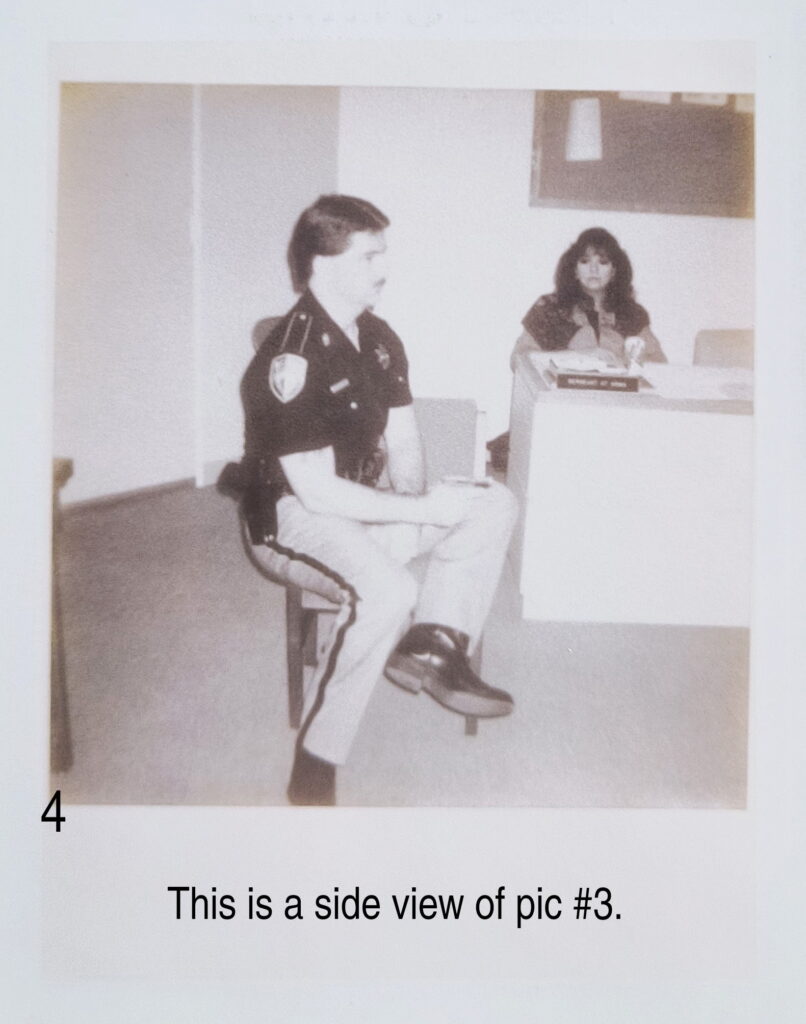
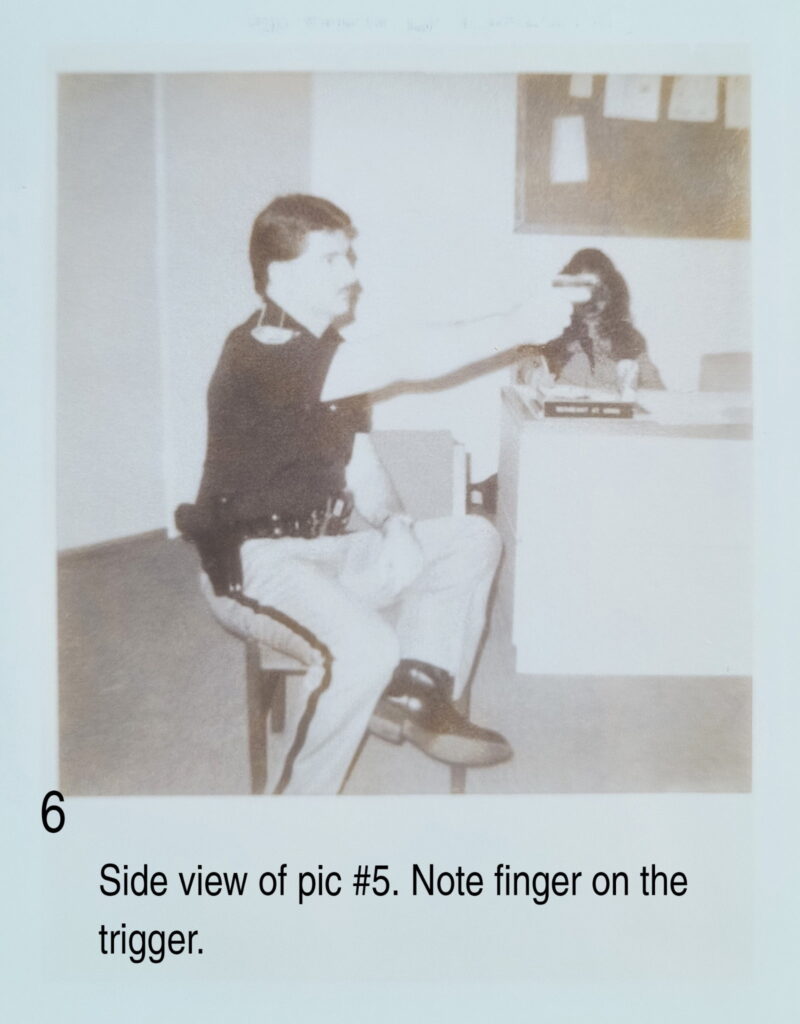
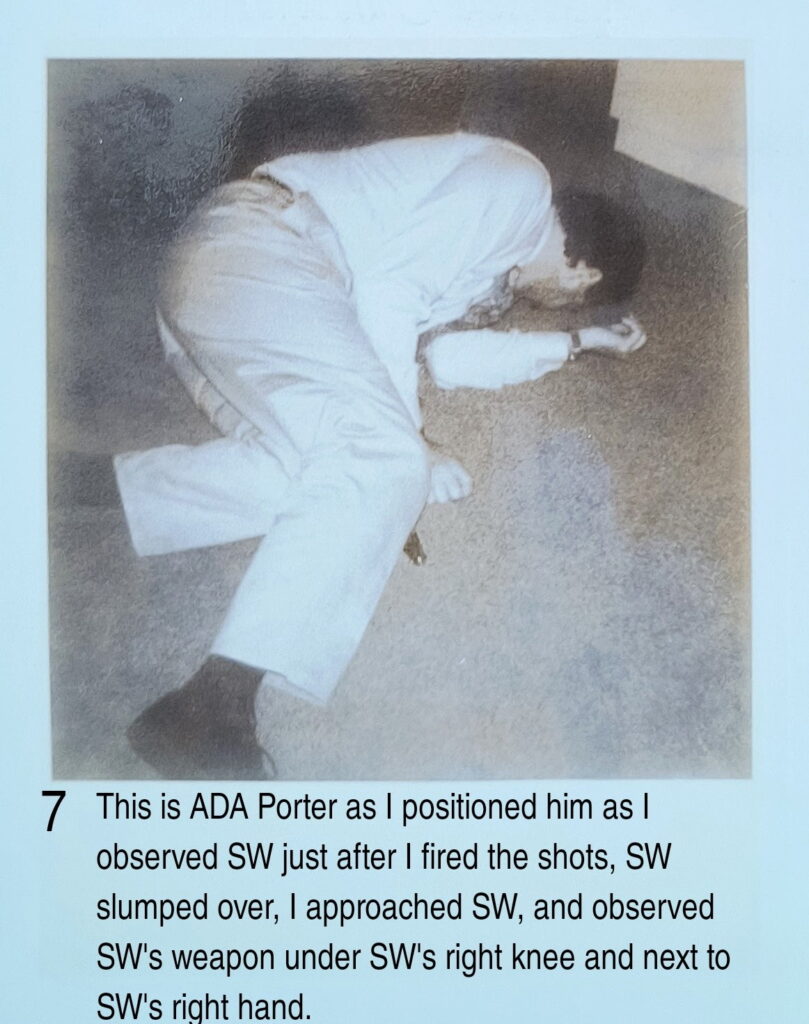
Former deputy Kent McGowen recently provided Investigative Reporter Tammy Rose with these courtroom demonstration photographs, which he says were used during legal proceedings to illustrate his version of the Aug. 25, 1992, fatal shooting of Susan White. The images reflect McGowen’s account and are presented for context alongside court records, the 911 call, and his interview.

McGowen recently provided Investigative Reporter Tammy Rose with courtroom demonstration photographs that he says were used during legal proceedings to explain his version of the shooting.

Several photographs include handwritten descriptions showing where McGowen says he was standing, where White was positioned and where he believes the handgun came to rest after the shooting.

Other images illustrate the angle from which he says he observed White inside the bedroom.

The photographs are not crime scene photographs. Instead, they are courtroom demonstrations created to illustrate McGowen’s account during litigation.

One Issue Continues to Draw Attention

One issue discussed during Tammy Rose’s interview involved which hand White used to hold the handgun.

McGowen maintains White pointed the weapon with her right hand before he fired.

During the interview, Tammy Rose asked McGowen about reports indicating White was left-handed.

McGowen stood by his account and said the position of the handgun after the shooting matched what he remembered seeing inside the bedroom.

That issue remains one of several points that have been debated for years.

McGowen Says Jurors Never Heard Everything

During the interview, McGowen repeatedly argued that jurors never heard all of the evidence he believes supports his account.

He pointed to witness statements, subpoenaed records and other documents that he says were unavailable or never fully presented during trial.

McGowen also criticized how the case was investigated and prosecuted.

Those claims have not been independently verified by Investigative Reporter Tammy Rose and remain part of McGowen’s account of the case.

Two Trials, Two Different Juries

The Susan White case was presented to two different juries.

McGowen’s first murder conviction was later overturned on appeal, resulting in a new trial.

Following that second trial, another jury convicted McGowen of murder in 2002.

He ultimately served approximately 19 years in prison before his release in 2021.

Since leaving prison, McGowen has continued speaking publicly about the shooting and maintains he acted lawfully while serving the warrant.

Why Revisit the Susan White Case Now?

More than 30 years after the shooting, Kent McGowen continues to challenge the conclusions reached during his criminal case.

Since his release from prison in 2021, he has participated in interviews, worked with author Jerry Langton on a book about his case and continues to review court records and investigative documents.

His recent interview with Investigative Reporter Tammy Rose offers readers an opportunity to hear his account in his own words while comparing those statements with court records, courtroom exhibits and the 911 call placed by Susan White.

As with any decades-old criminal case, many questions remain disputed.

Tammy Rose will continue reviewing court records, witness statements and other documents connected to the investigation as additional records become available.

Editor’s Note: This article includes court records, historical documents, portions of Susan White’s 911 call, and an interview with Joseph Kent McGowen. McGowen disputes allegations made against him before the shooting. The interview is presented so readers can review his response in full.

More Kent McGowen Coverage

This interview is part of an ongoing investigative series examining Kent McGowen’s criminal case and new claims he has made since his release from prison.

Readers can also follow Tammy Rose’s continuing investigation into McGowen’s allegations involving convicted serial killer Roy Alan Stuart.

Related Coverage

➡️ Former Deputy Documents Alleged Roy Alan Stuart Confessions

Amazon Disclosure

Disclosure: As an Amazon Associate, I earn from qualifying purchases at no additional cost to you.

If you’re interested in learning more about wrongful convictions, criminal investigations and true crime, these books provide additional background.

➡️ The Cadaver King and the Country Dentist

➡️ In Cold Blood by Truman Capote

About Tammy Rose Reports

Investigative Reporter Tammy Rose is an independent journalist covering breaking news, aviation and long-form investigations across Texas.

If you appreciate independent journalism, consider bookmarking ChopperRose.com for continuing coverage.

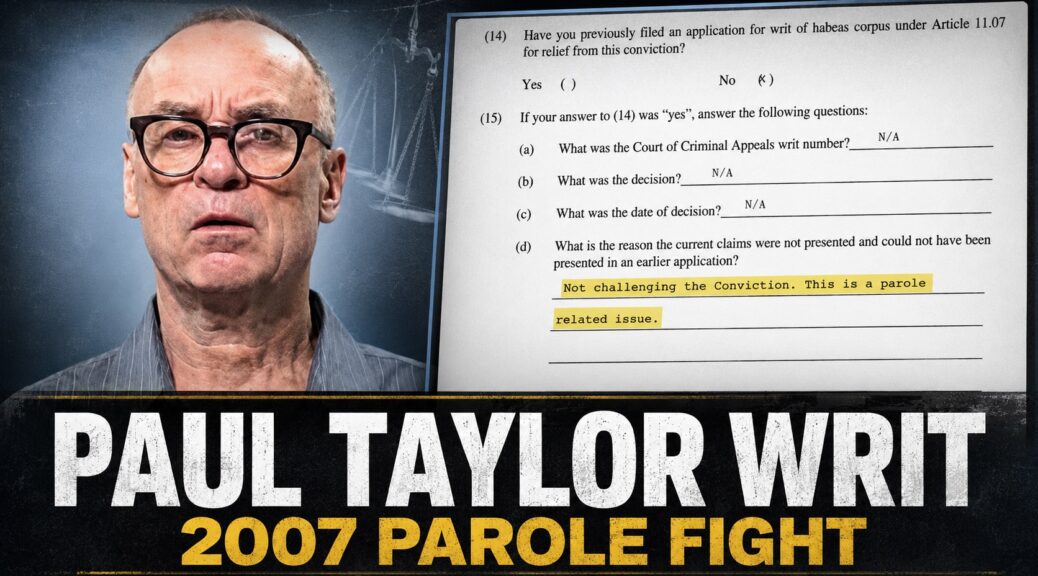
Paul Taylor Claimed Texas Unfairly Kept Him Behind Bars in 2007 Parole Fight

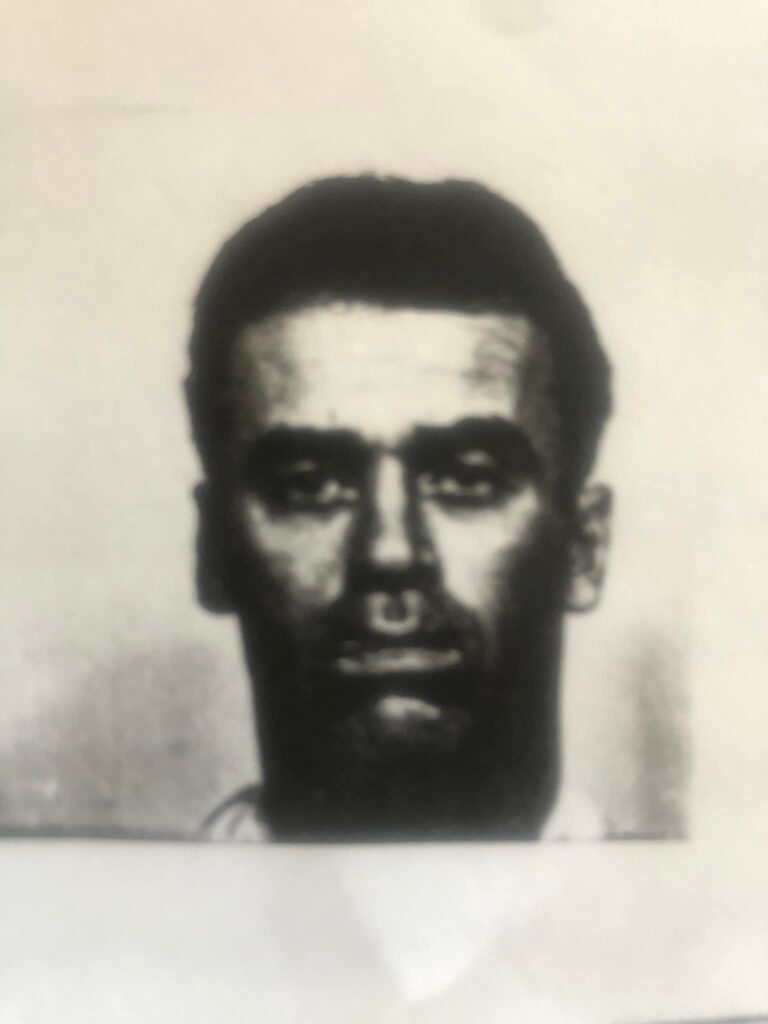
Paul Gayland Taylor Jr. prison mugshot
Paul Gayland Taylor Jr. pleaded guilty to murder in Brazoria County in 1995 and received a life sentence.

Investigative Reporter Tammy Rose

Paul Gayland Taylor Jr. filed a writ of habeas corpus in 2007 after the Texas Board of Pardons and Paroles denied him release.

Taylor challenged his parole denial, not his conviction

The filing did not challenge his murder conviction.

Instead, Taylor argued that the parole board unfairly relied on his crime and past conduct. He claimed the board ignored his prison record, education and other accomplishments.

Taylor pleaded guilty to murder in Brazoria County in 1995. A judge sentenced him to life in prison.

Taylor said the filing was about parole

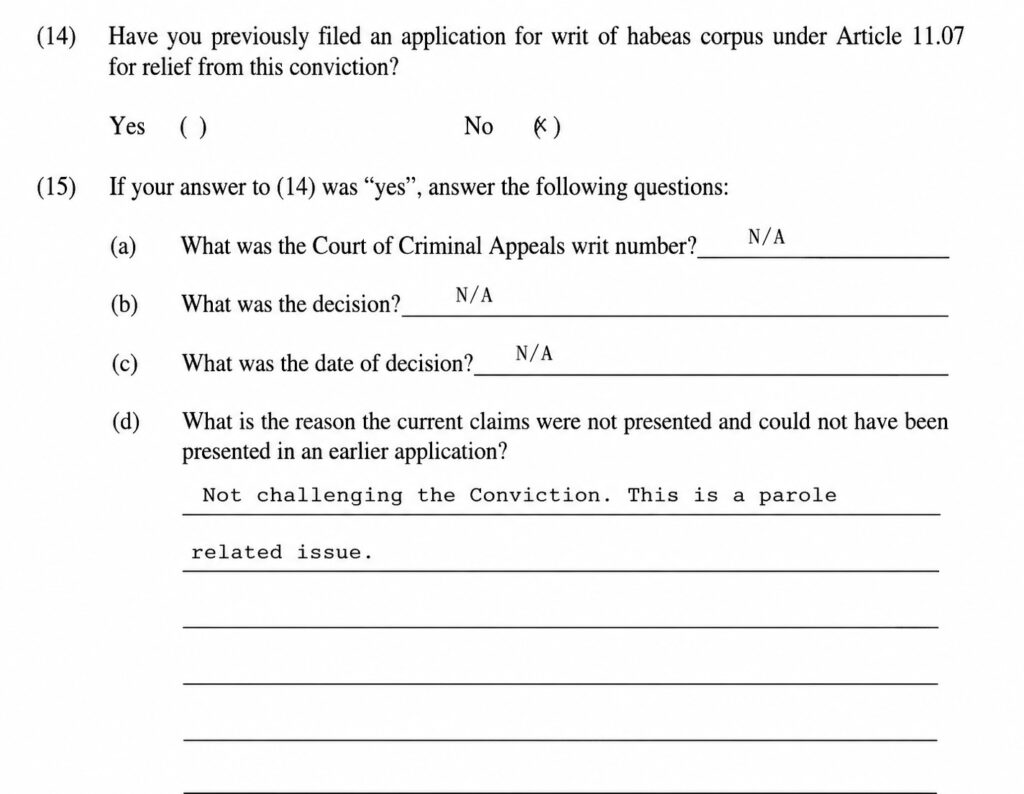
The writ form asked whether Taylor had previously challenged his conviction.

Taylor marked “no.”

He also wrote:

“Not challenging the conviction. This is a parole related issue.”

That statement is important. This filing did not claim that Taylor was innocent. It also did not ask the court to overturn his guilty plea.

Taylor focused his arguments on the parole process.

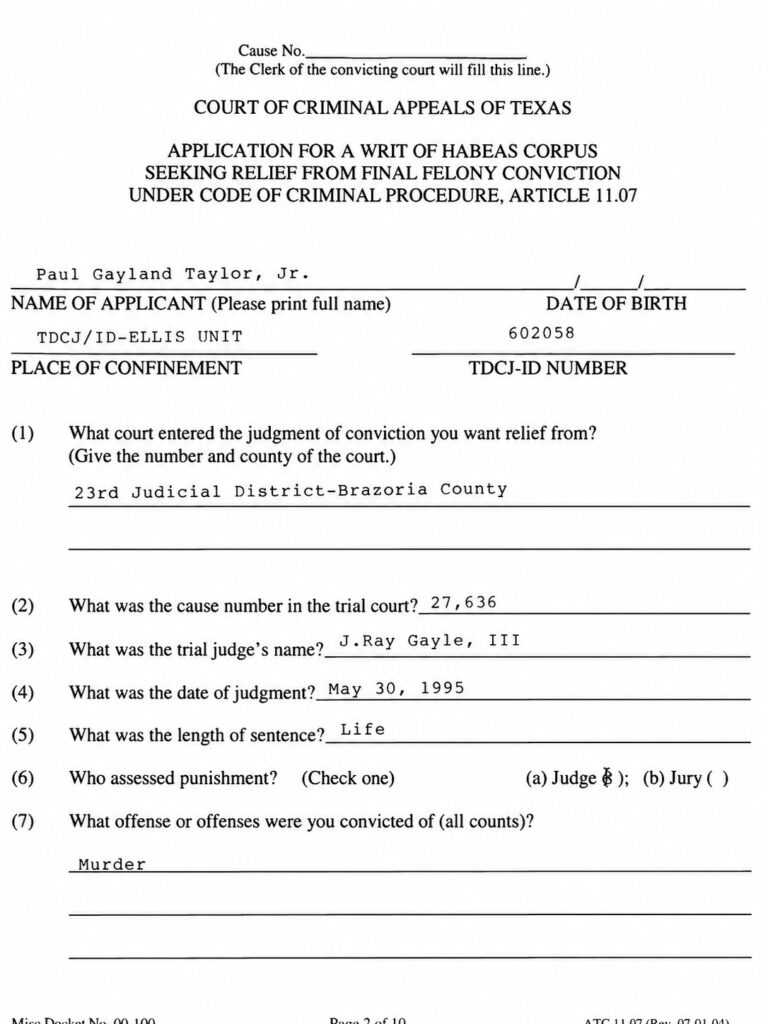
Paul Taylor 2007 writ stating he was not challenging his murder conviction
In his 2007 writ application, Paul Taylor wrote that he was not challenging his conviction and described the matter as a parole-related issue.

The writ listed his conviction and sentence

The application identified Taylor’s criminal case as Cause No. 27,636 in the 23rd Judicial District Court of Brazoria County.

The document listed:

Judgment date: May 30, 1995
Offense: Murder
Plea: Guilty
Sentence: Life
Punishment assessed by: Judge

Taylor also stated that he did not have a jury trial. He indicated that he did not appeal the judgment.

Paul Taylor writ listing 1995 murder conviction and life sentence
Taylor’s writ application lists his 1995 guilty plea to murder and his life sentence.

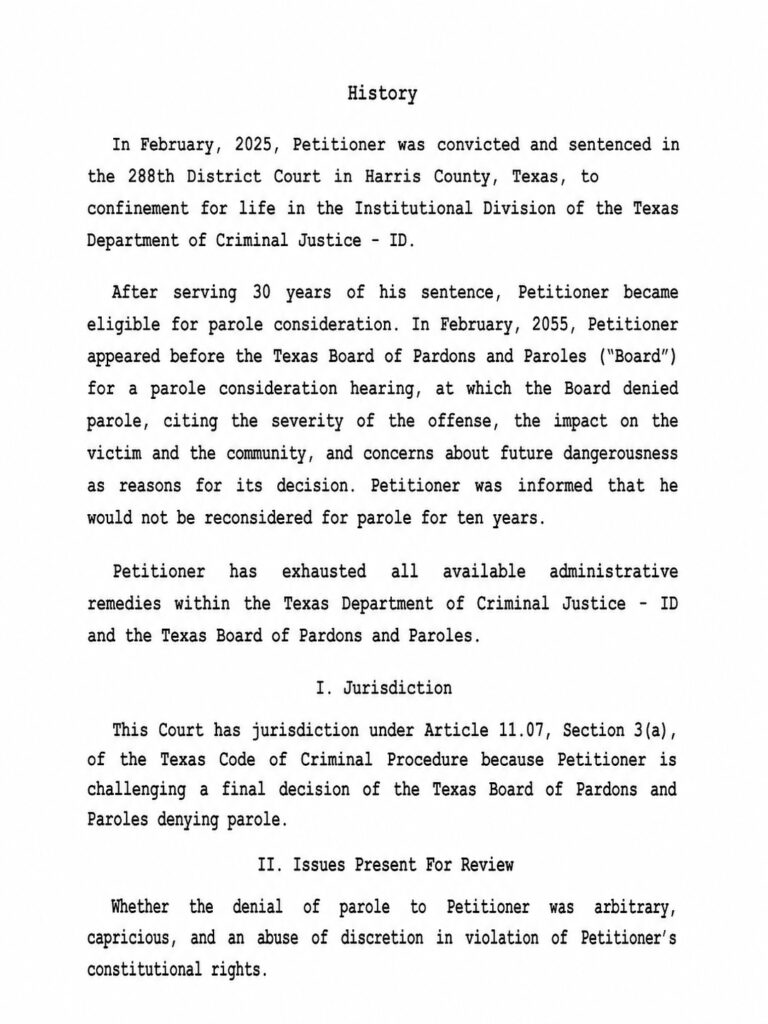
Taylor had been eligible for parole since 1997

Taylor wrote that he had been eligible for parole since February 2, 1997.

According to his filing, the parole board denied him release again on January 12, 2007. The board then gave him a three-year setoff before his next review.

Taylor said the board had denied him parole for about 13 years, including the period between his eligibility date and his next review.

The filing quotes the board’s reason for denial. It referred to the violent nature of the offense, the use of a weapon and a threat to public safety.

The quoted language also stated that the offense showed brutality, violence or the selection of a vulnerable victim.

Taylor argued that these factors came from the crime itself. He said he could never change the past.

Paul Taylor’s 2007 writ memorandum outlining his parole history and denial
Taylor’s memorandum states that the parole board relied on the violent nature of the offense when it denied his release.

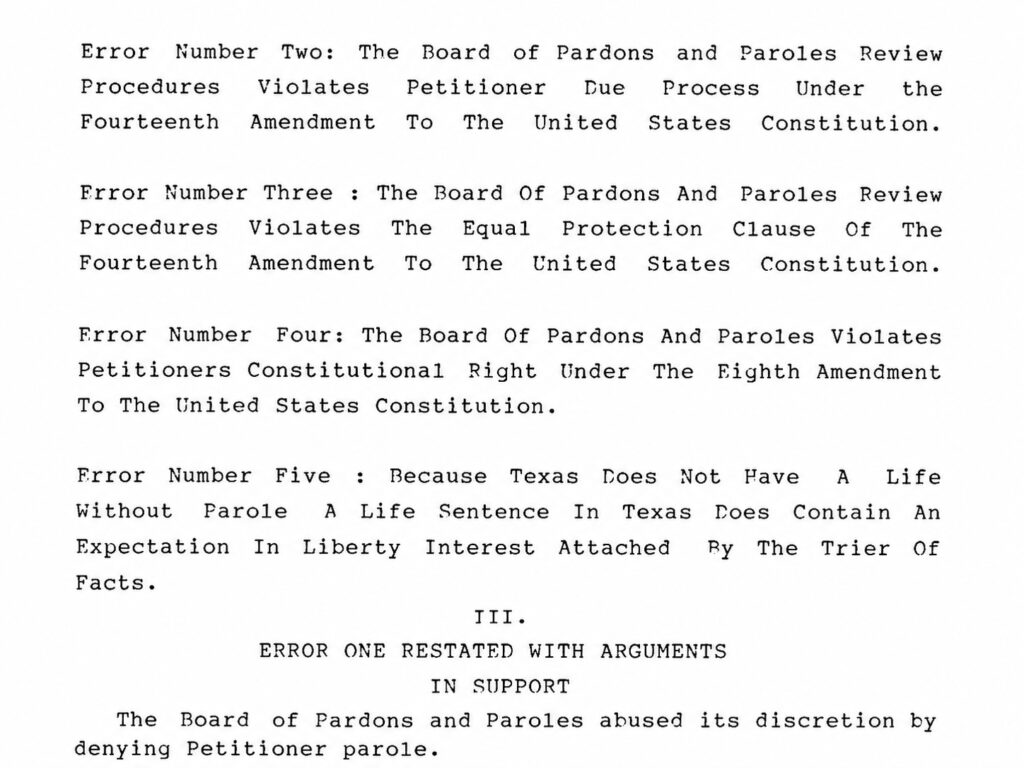
Taylor raised five arguments

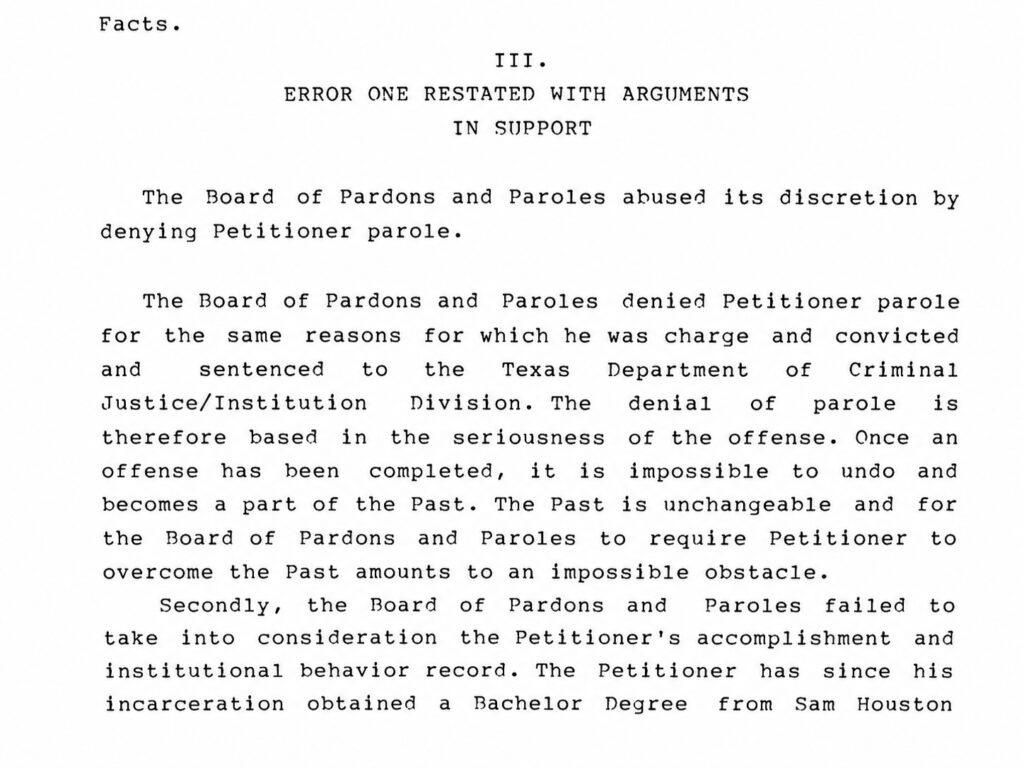
1. The parole board abused its discretion

Taylor claimed the board denied parole for the same conduct that led to his conviction and sentence.

He argued that the board created an “impossible obstacle” because he could not change the crime.

Taylor also said the board failed to give enough weight to his prison accomplishments.

2. The parole process violated due process

Taylor argued that the board did not explain how it decided he remained a future threat.

He claimed the board should have told him what method it used to assess that risk.

Taylor suggested that he could have submitted more information if he had known what evidence the board wanted.

3. The process violated equal protection

Taylor claimed the board released other people with similar or worse criminal records.

He argued that the board treated him differently without a valid reason.

The filing does not include the names or full records of those other prisoners in the pages reviewed.

4. Repeated parole denials amounted to cruel punishment

Taylor argued that repeated denials violated the Eighth Amendment.

He claimed the board continued to deny him for the same unchangeable reasons.

He also accused the board of ignoring his conduct while incarcerated.

5. A Texas life sentence carried an expectation of parole

Taylor argued that Texas did not have a life-without-parole sentence for his case.

Therefore, he claimed that a life sentence carried an expectation of eventual release.

For the first four claims, Taylor asked for a new parole hearing.

However, under his fifth claim, he argued that parole should become mandatory.

These were Taylor’s legal arguments. The filing does not show that a court accepted them.

Taylor’s memorandum states that the parole board relied on the violent nature of the offense when it denied his release.

Taylor highlighted his prison record

Taylor wrote that he earned a bachelor’s degree from Sam Houston State University while incarcerated.

He also said he had never received a disciplinary infraction.

In addition, Taylor said he worked in a prison craft shop. He claimed that the work helped him support himself and assist his family.

However, the filing only reflects Taylor’s account. It does not independently verify every statement about his prison history.

What this document does not say

The writ does not claim that Taylor was innocent.

It does not challenge his guilty plea or murder conviction.

The filing also does not present new evidence about Rebecca “Becky” Beard’s disappearance or the location of her remains.

Instead, Taylor challenged the parole board’s review process.

Therefore, this document focuses on parole. It does not attempt to overturn the murder conviction.

Read the full writ and court decision

The complete 2007 filing appears below, along with the court document showing the outcome.

Taylor challenged the parole process, not his murder conviction. However, the court denied his request for relief

Related coverage

Read Rebecca Beard Part 3: How Witness Statements Changed for a closer look at how accounts in the case evolved over time.

You can also read Rebecca Beard Part 2: Early Police Reports to review what investigators documented during the first days of the investigation.

Tools for reviewing public records

Court records and police files can contain hundreds of pages. A portable document scanner can make it easier to save, organize and review records while working away from home.

White Canon portable document scanner used to scan court records and public documents

A digital voice recorder can also help reporters preserve interviews, notes and important details while researching a case.

PLAUD AI digital voice recorder shown with its mobile transcription app

Disclosure: As an Amazon Associate, I may earn from qualifying purchases at no additional cost to you.

Rebecca Beard Meeting: Family Questions Evidence and Investigators

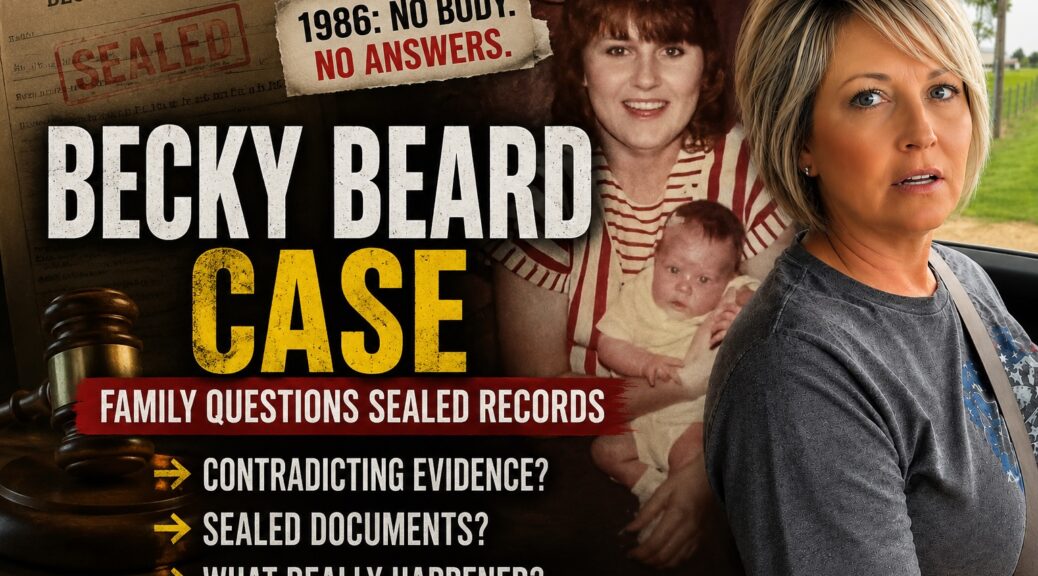
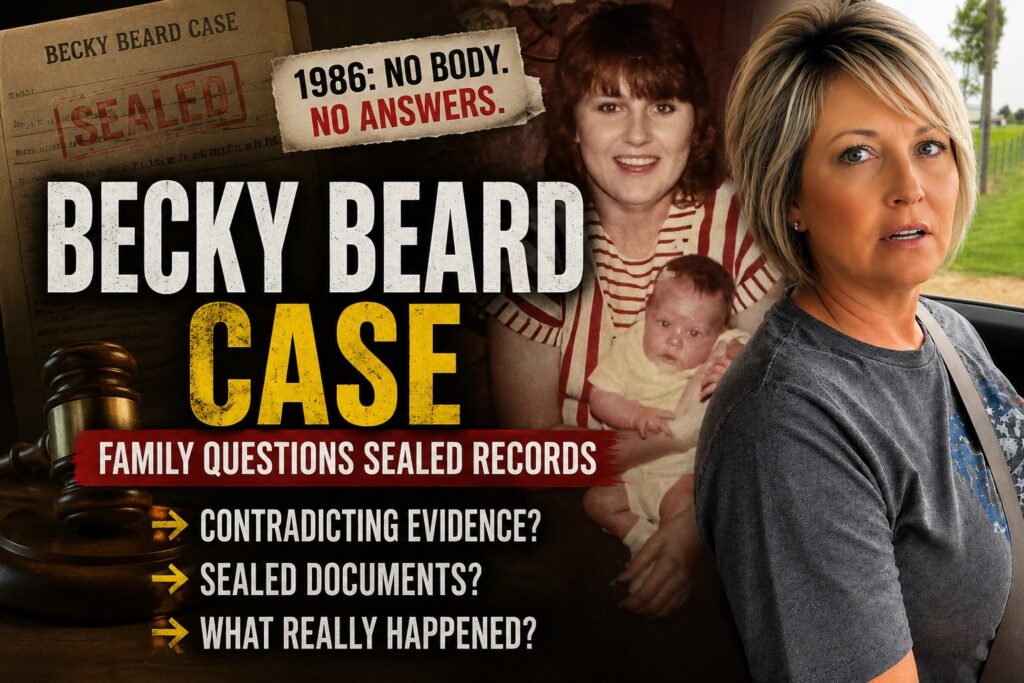
Rebecca Beard article thumbnail featuring a sealed case file, Rebecca Beard with her infant daughter, a present-day image of her sister Carol Mize, and text highlighting the family’s questions about sealed records and evidence in the 1986 murder case.
 Rebecca Beard’s family continues to question evidence, sealed records, and investigative conclusions nearly four decades after her 1986 disappearance and murder.

Rebecca Beard Meeting: Family Presses Investigators on Evidence While Authorities Defend Their Conclusions

CLUTE, Texas — A recorded meeting between Rebecca “Becky” Beard’s family and Brazoria County officials reveals sharp questions about court records, physical evidence, witness statements and the continuing search for her remains.

Becky disappeared after leaving the Excalibur Club in Freeport in March 1986. Paul Taylor later pleaded guilty to her murder, but investigators have never recovered Rebecca Beard’s body.

During the meeting, Becky’s sister, Carol Mize, and mother, Linda Barnes, questioned Brazoria County District Attorney Tom Selleck, former DA investigator John Blankenship, investigator Tommy Hansen and others involved in reviewing the case.

Selleck prosecuted Taylor in the original case and now serves as Brazoria County district attorney. Blankenship is a former investigator with the DA’s Office who came out of retirement to help review the Beard case.

According to a professional biography presented for Hansen, he worked for the Galveston County Sheriff’s Office from 1973 until 2024. The biography states that he transferred his law-enforcement license to the Brazoria County District Attorney’s Office in January 2025 and remained assigned to an FBI task force.

Rebecca Beard’s Family Questions Court Records

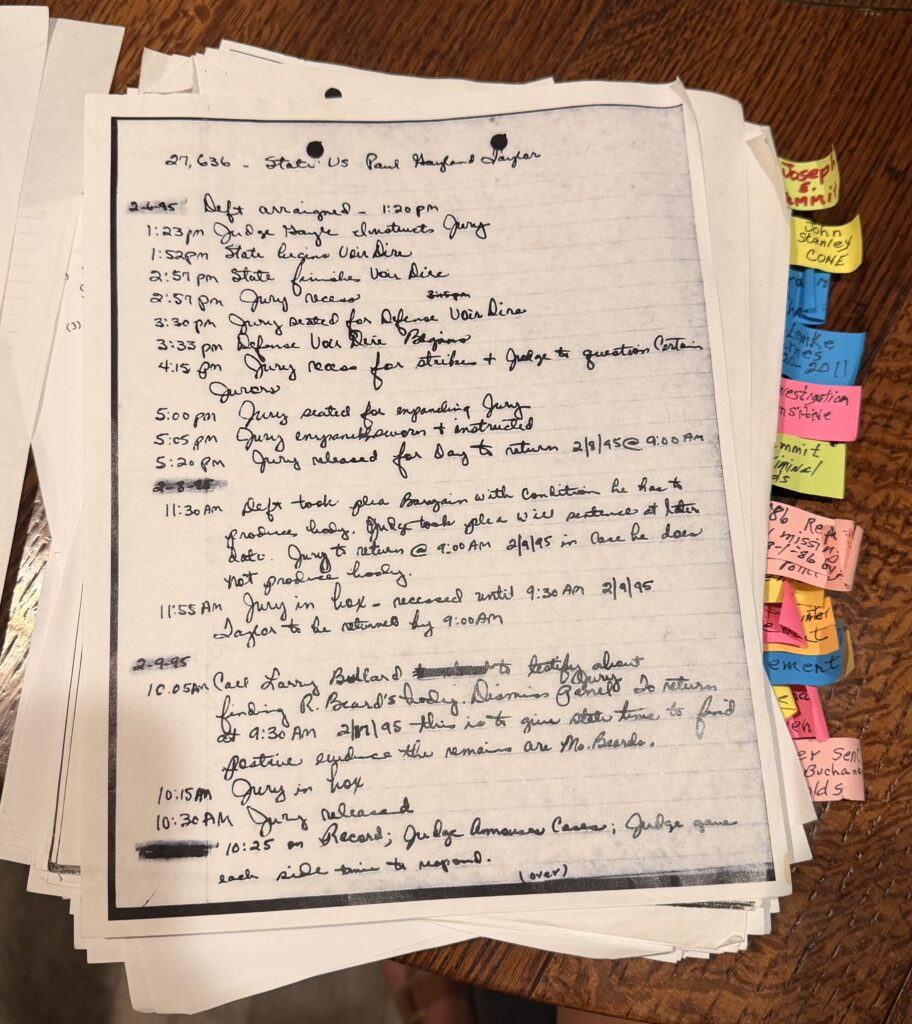
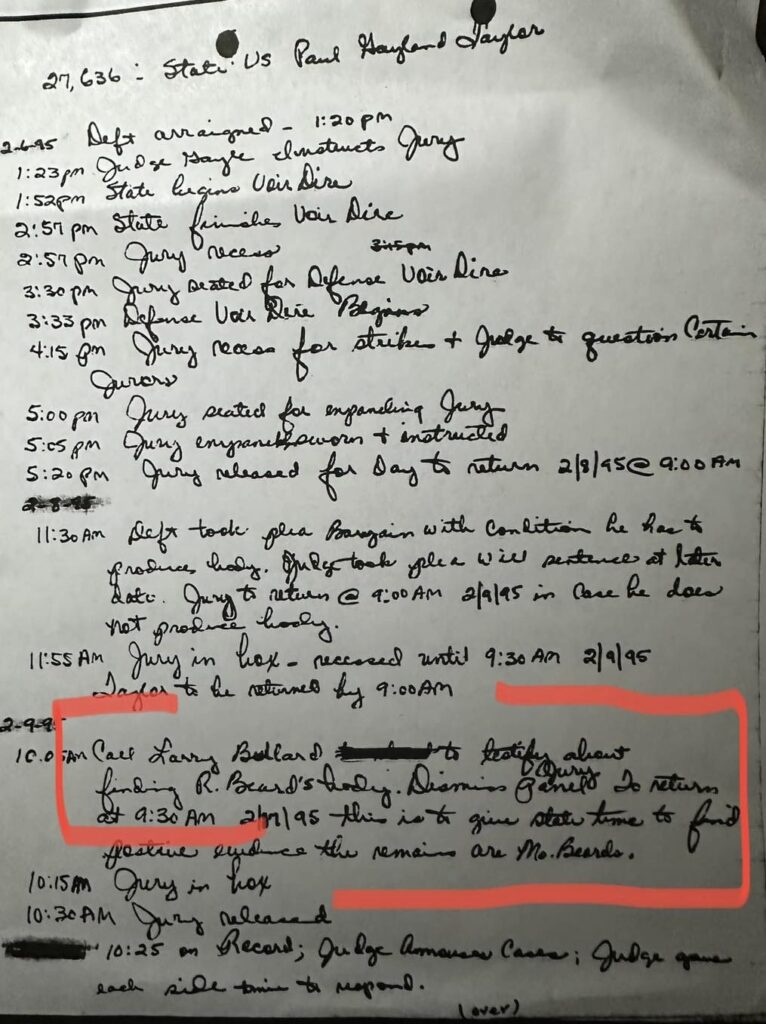
Handwritten court notes and docket records from the Paul Taylor case displayed with color-coded tabs highlighting key sections discussed during the Rebecca Beard family meeting.
Handwritten court notes and docket records became a major focus during the meeting as Rebecca Beard’s family questioned language, timelines, and evidence referenced in the original case.

A significant portion of the meeting centered on handwritten court notes and docket records from Taylor’s case.

Mize questioned language indicating that Larry Bullard planned to testify about “finding” Rebecca Beard’s body. She asked why the document appeared to reference a body when authorities have repeatedly said they never recovered Becky’s remains.

Officials disputed that interpretation. They said Bullard’s appearance concerned efforts to locate Becky’s body and the prosecution’s request for additional time to continue searching.

According to officials, the court had already selected a jury when Paul Taylor changed his plea before opening statements and testimony began. The court later released the jurors.

The family continued to challenge the wording in the court record. They argued the written language appeared more definitive than the explanation officials provided during the meeting.

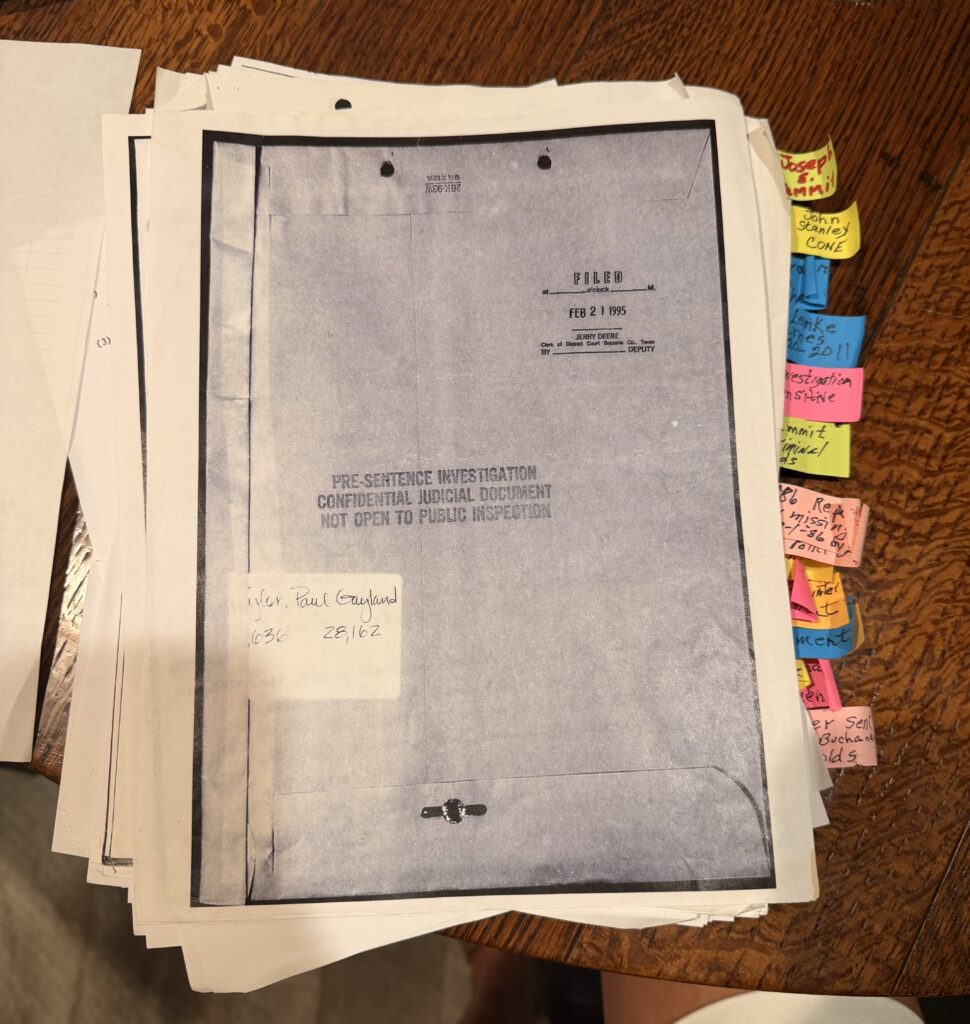
Pre-Sentence Document Marked Not for Public Inspection

The family also questioned an envelope marked “Pre-Sentence Investigation,” “Judicial Document” and “Not for Public Inspection.”

Officials explained that judges use a pre-sentence investigation, commonly called a PSI, to review a standard report before sentencing. They said the restriction applied only to the PSI and did not mean anyone had secretly sealed evidence about Becky’s body.

Mize said she received the document among additional pages included with the records she purchased. She questioned why those pages were not part of the original page count.

The group also discussed the roles of the district clerk, deputy district clerk and judge in preparing, filing and maintaining court documents.

Family Raises Questions About the Shotgun

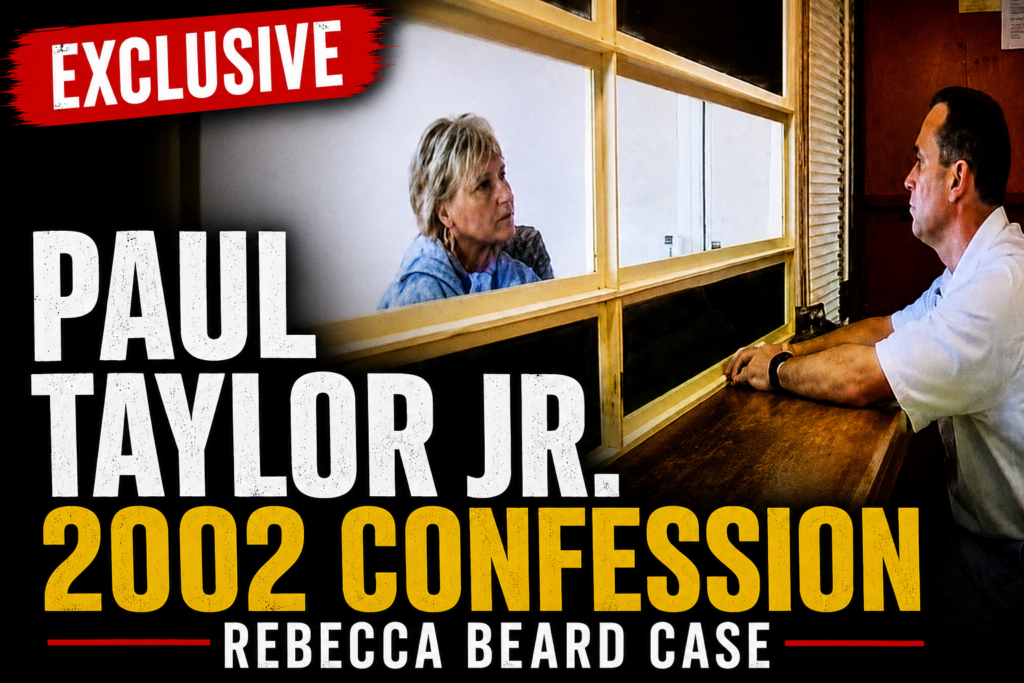
Paul Taylor Jr confession released from 2002 family mediation discussing the Rebecca Beard case

The possible murder weapon became another major point of discussion.

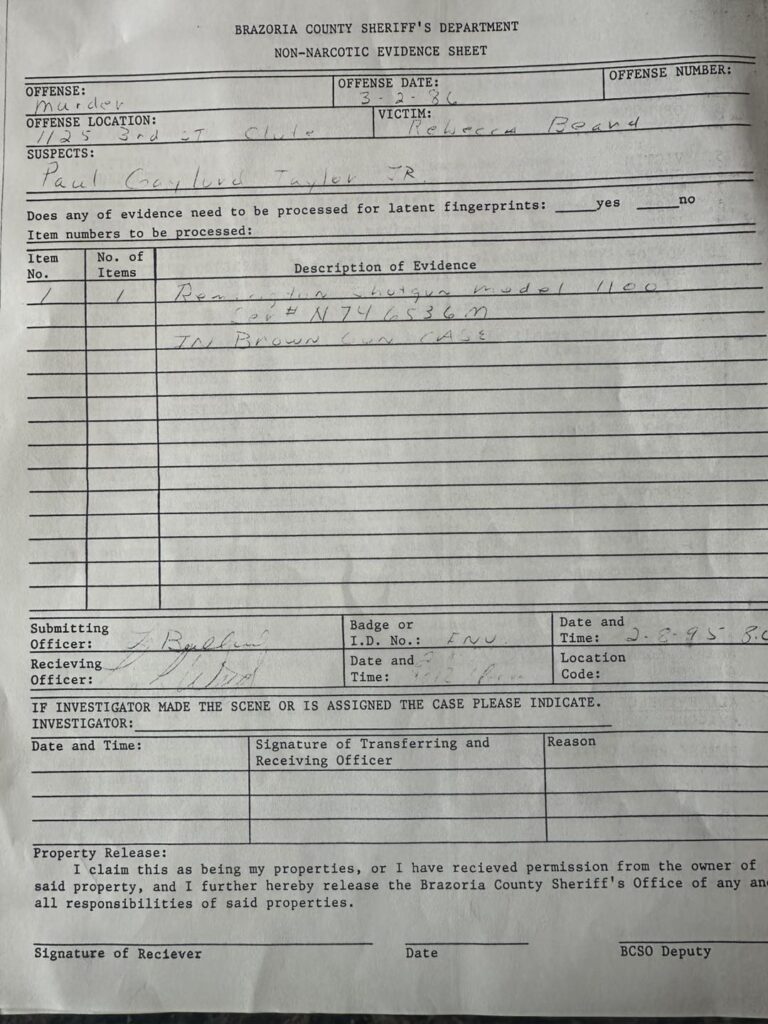
Taylor’s account has reportedly included a handgun. However, the family questioned why a shotgun appeared in the case evidence records.

Mize questioned why the evidence records appeared to show someone entered the shotgun into evidence after Taylor entered his plea. Officials disputed that timeline. They said investigators collected the firearm earlier and later returned it after the case concluded.

The conversation included references to two officers signing the weapon into evidence and to a man associated with the shotgun. The exact spelling of several names mentioned in the audio remains unclear.

The disagreement highlights a central concern for the family: whether the dates and descriptions in the evidence records fully match the official explanation of the case.

Officials Continue to Believe Paul Taylor Acted Alone

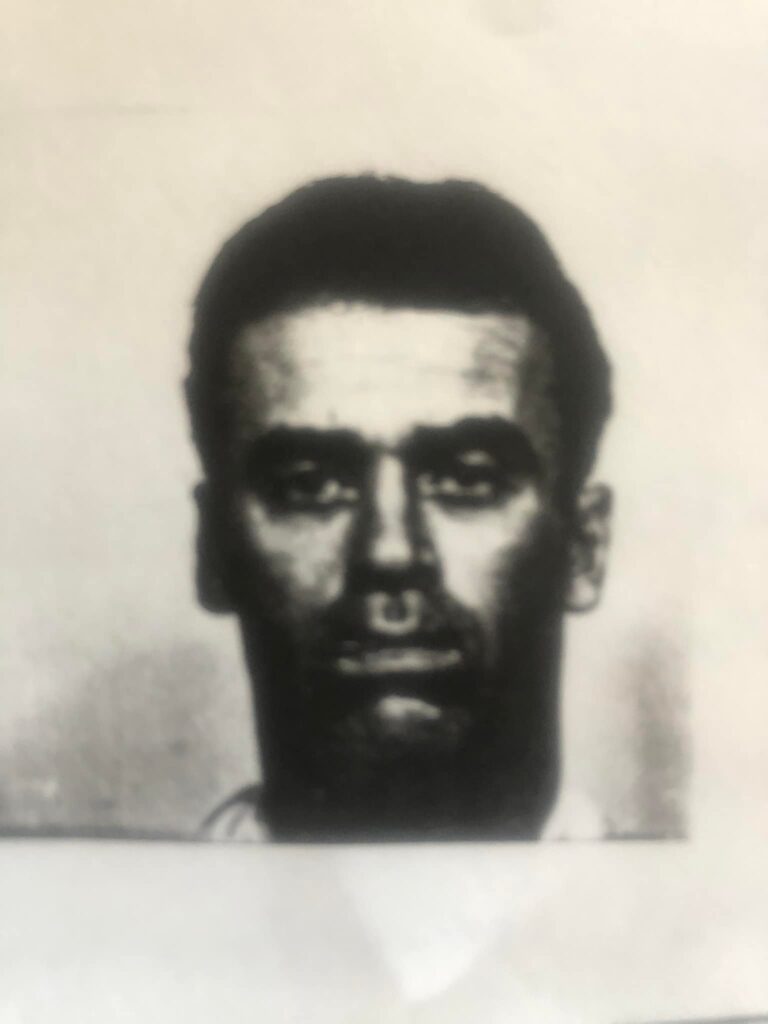
Paul Taylor Jr. booking photo taken during the investigation into the Rebecca Beard case.
Paul Taylor Jr.‘s booking photograph from the Rebecca Beard murder investigation. During the meeting, officials defended the original prosecution and said they continue to believe Taylor acted alone in Becky’s murder.

Selleck and the investigators defended the original prosecution and said the available evidence continues to point to Taylor as the sole person responsible for Becky’s murder.

Officials said there was enough evidence to present the case to a grand jury, obtain an indictment and prepare for trial. Taylor ultimately changed his plea after the court selected a jury.

They also discussed a more recent interview with Taylor. According to officials in the meeting, that interview did not give them a reason to believe another person participated in the crime.

One official said the combined experience of those reviewing the case exceeded 100 years and that they had not developed a “gut feeling” that Taylor’s conviction was wrong.

Why Paul Taylor Led Investigators to a Search Site

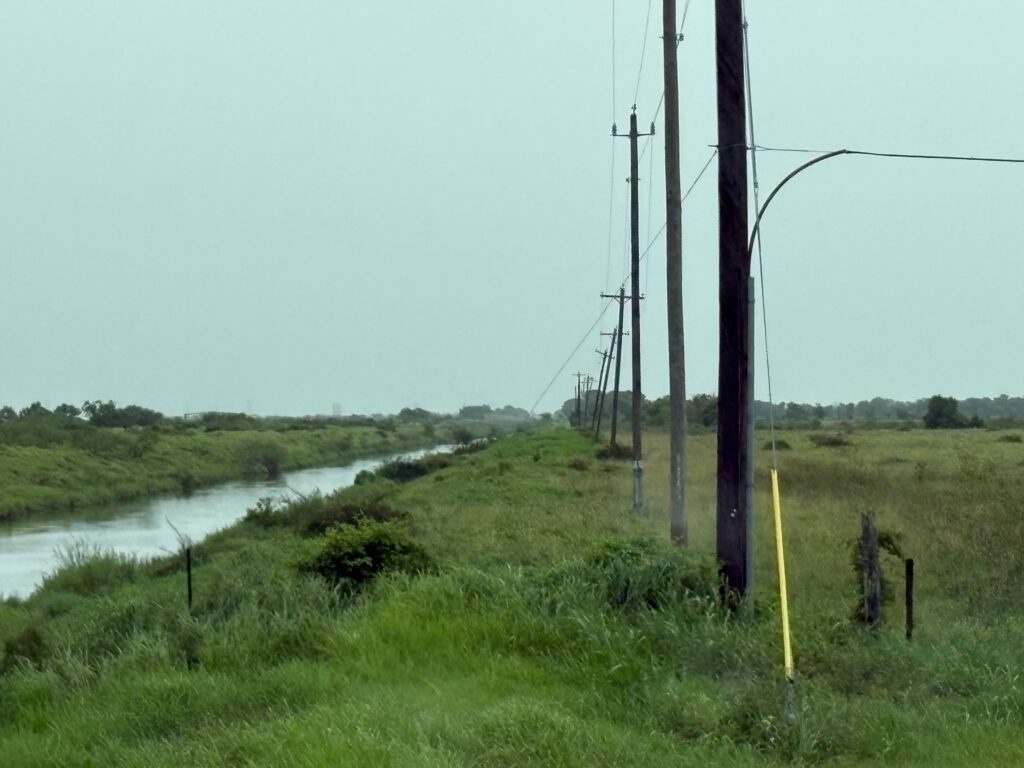
Canal and grassy search area associated with the Rebecca Beard investigation, where Paul Taylor led investigators during the search for her remains.
Officials said Paul Taylor led investigators to this search area because he believed he buried Rebecca Beard there. During the meeting, they distinguished that location from what they believe may have happened to her remains afterward.

The family asked why Taylor led investigators to a location if he also claimed he did not know where Becky’s body was.

Officials drew a distinction between the location where Taylor believed he buried Becky and what may have happened to her remains afterward.

They said Taylor could identify the area where he believed the burial occurred but could not explain whether the remains had later been moved, scattered or affected by environmental conditions.

The family also discussed a tow truck driver, Jack Daniels, who reportedly pulled Taylor’s vehicle from a ditch around the time of the crime.

Investigators Say the Search Has Not Ended

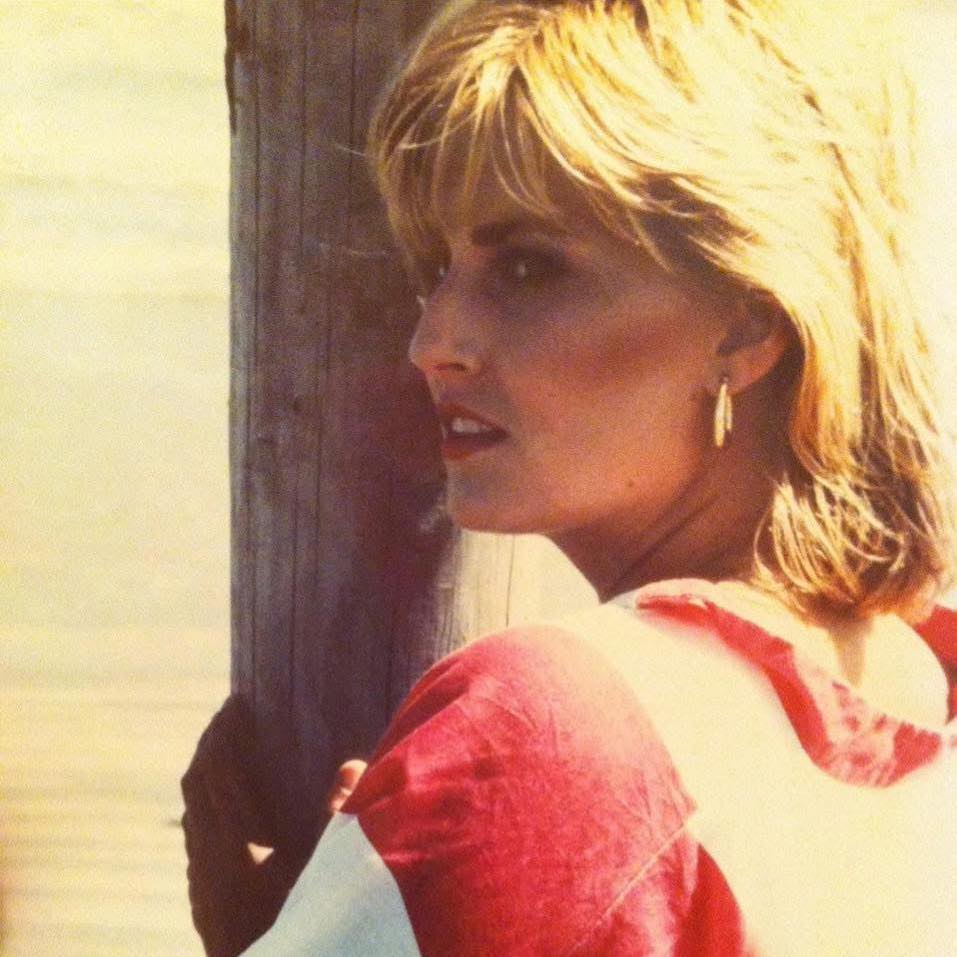
Portrait of Rebecca “Becky” Beard taken before her 1986 disappearance and murder.
Rebecca “Becky” Beard disappeared after leaving the Excalibur Club in Freeport in March 1986. During the meeting, officials told her family investigators continue searching for her remains nearly four decades later.

Officials told Mize and Barnes that investigators have not stopped looking for Becky.

They described the difficulties of recovering remains after four decades in a coastal area affected by hurricanes, flooding, animals, vegetation and natural decomposition.

An investigator said other homicide cases involving remains left in similar environments have also ended without a recovery.

Officials said credible information about a new location would still be investigated.

“Nobody’s giving up,” one participant told the family.

Family DNA Available for Future Comparisons

The meeting also included questions about DNA.

Officials said DNA from Becky’s biological relatives is available for comparison if unidentified remains are discovered in the future.

They explained that unidentified remains can be entered into national databases and compared with family reference samples. No match involving Becky had been reported at the time of the meeting.

The family said having DNA available is important because remains could be uncovered years later during construction, land development or another investigation.

Officials Address Witness Rio’s Statements

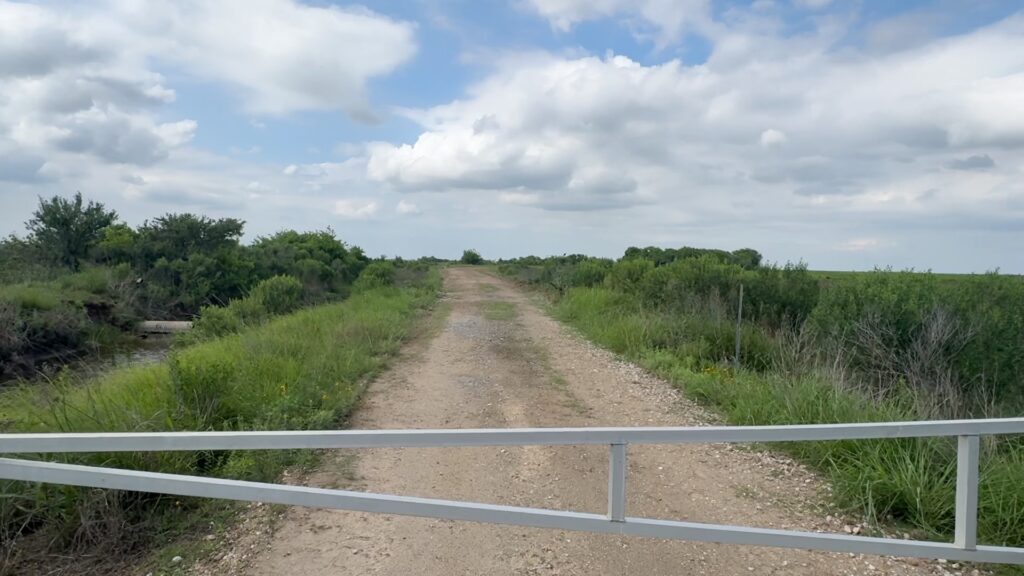
Remote dirt road leading through the Brazoria National Wildlife Refuge, an area referenced in witness accounts and past searches connected to the Rebecca Beard case.
Witness Rio reportedly led investigators to this location in the Brazoria National Wildlife Refuge while describing his account of Rebecca Beard’s disappearance. During the meeting, officials addressed Rio’s statements as family members questioned his version of events.

The family also questioned claims made by a witness identified as Rio.

Rio has reportedly described multiple people participating in Becky’s assault, death and the movement of her remains. The account has included unusual claims involving an alligator and an ambulance.

Several participants said they had never previously heard that version.

Officials said numerous people named or connected to Rio’s account had been interviewed. They said investigators were unable to corroborate the substantive portions of the account concerning the crime or the people allegedly present.

They acknowledged that some general details could be confirmed, including the existence of certain locations. However, they said that did not verify the allegations about what happened to Becky.

Family Continues to Challenge the Official Account

The meeting showed a clear divide between the family’s unresolved questions and the conclusions defended by authorities.

Mize and Barnes pressed officials about the court record, the shotgun, witness accounts, search locations and the lack of Becky’s remains.

Officials maintained that Taylor acted alone, that the original prosecution was supported by sufficient evidence and that no credible information has changed that conclusion.

For Becky’s family, however, the absence of her remains and the conflicting language found in records continue to leave questions nearly 40 years after her disappearance.

Related Rebecca Beard Coverage

Read more about the conflicting information surrounding legal representation for Paul Taylor and what the Beard family says it was told:

Follow continuing coverage of the Rebecca Beard investigation and newly reviewed records:

https://www.chopperrose.com

Recommended True Crime Reading

Books examining unsolved disappearances and cold-case investigations can provide insight into how evidence, witness statements and investigative decisions are reviewed decades after a crime.

Investigative journalism books offer a closer look at court records, public-information requests, evidence logs and the challenges reporters face when examining conflicting official accounts.

Editor’s Note

This article is based on audio from a meeting involving Rebecca Beard’s family, Brazoria County officials and investigators. Statements are attributed to the people heard in the recording. Some names and portions of the conversation were difficult to understand and should be confirmed through original records before being treated as established fact.

Amazon Affiliate Disclosure: As an Amazon Associate, I earn from qualifying purchases at no additional cost to you.

Carolyn Sosa’s Daughter Speaks Out as New Documents and Roy Alan Stuart Prison Confession Claims Renew Calls for Review

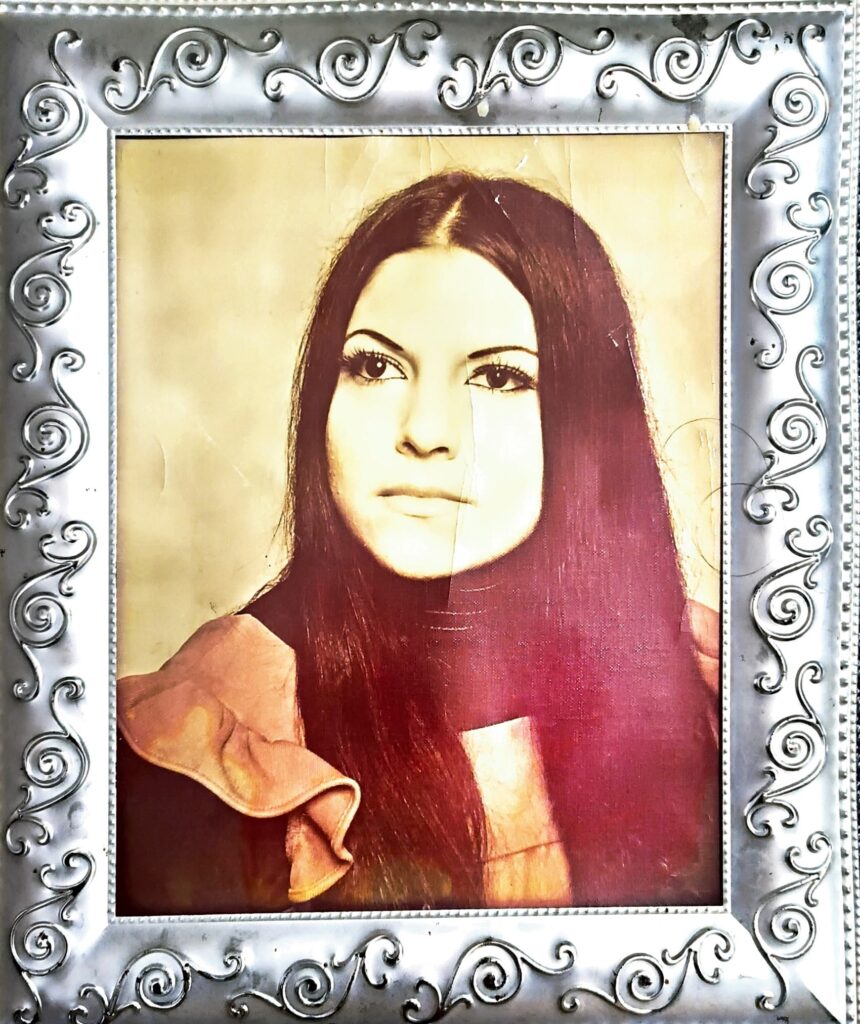
Carolyn Sosa portrait in a decorative silver frame shared by her family as part of the investigation into her 1987 murder.

For nearly 40 years, Donna Sanchez has searched for answers about what happened to her mother, Carolyn Sosa.

After Investigative Reporter Tammy Rose reached out during an ongoing investigation into former Harris County deputy Kent McGowen’s prison diaries and Roy Alan Stuart’s alleged prison confessions, Donna shared family memories, court records and historical documents she hopes could help bring renewed attention to her mother’s unsolved murder.

“I was seven years old when my mother died,” Donna said. “She was strangled and thrown into Bastrop Bayou.”

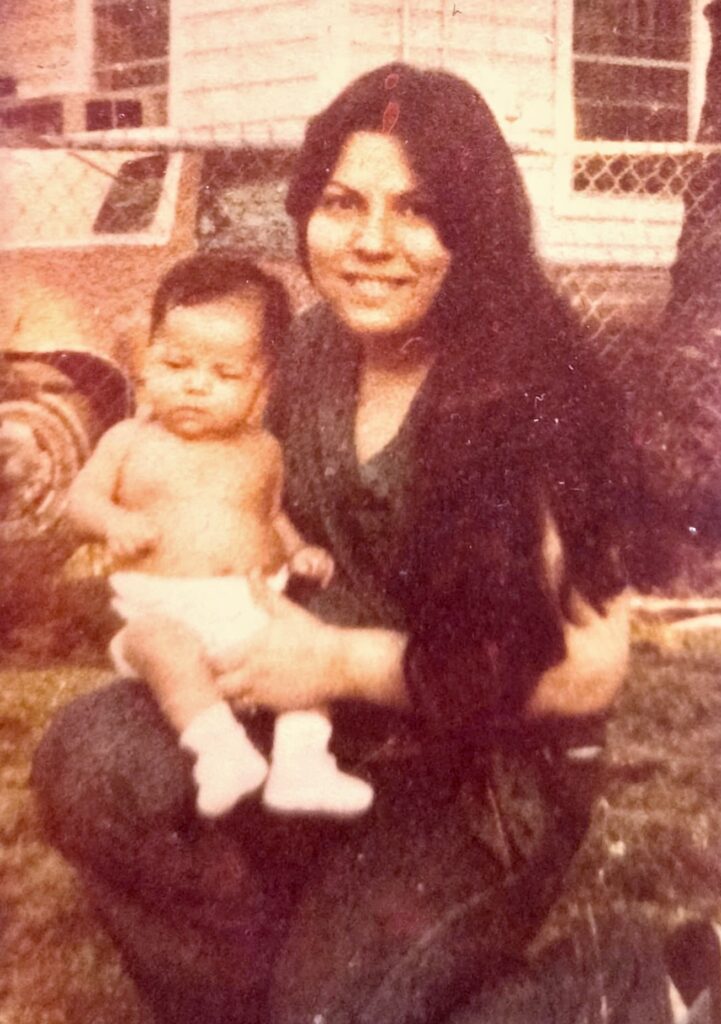
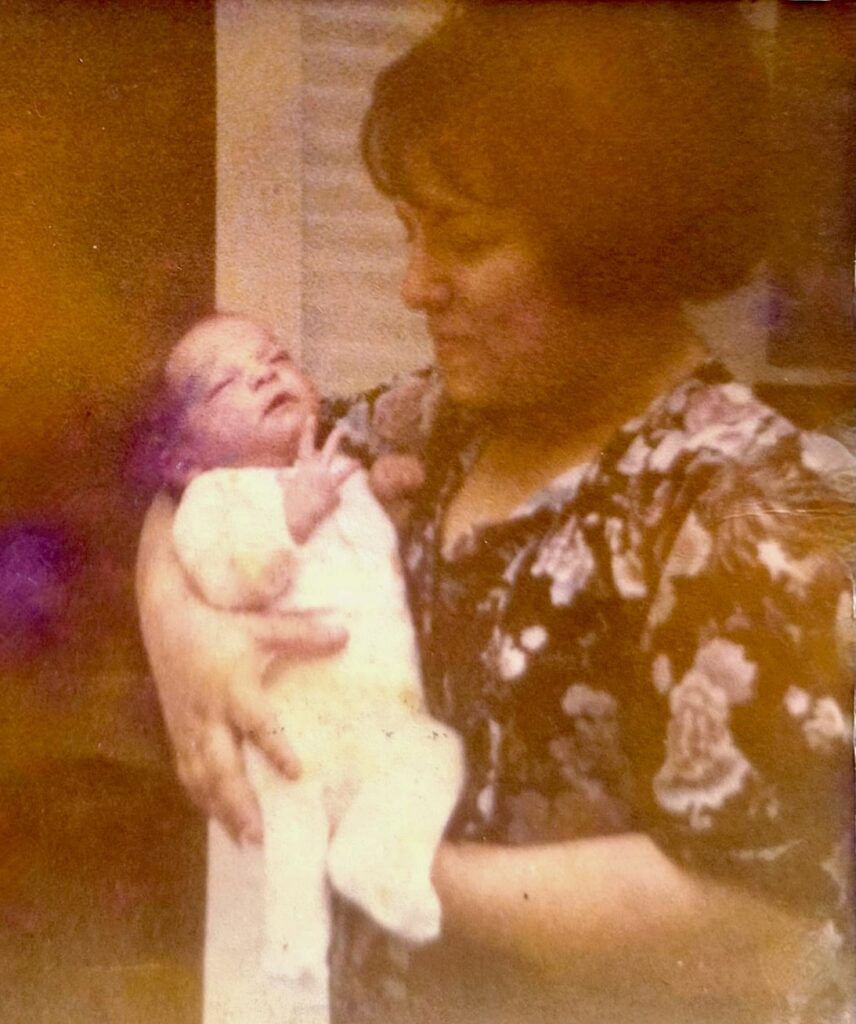
Carolyn Sosa holding her young daughter Donna Sanchez in a family photograph taken before Carolyn’s 1987 disappearance.

Carolyn Sosa Case

After speaking with Investigative Reporter Tammy Rose, Donna Sanchez shared family memories, court records, historical documents, newspaper articles, and text messages related to the Carolyn Sosa investigation.

Donna believes Roy Alan Stuart murdered her mother, Carolyn Sosa, and hopes the records contribute to another review of the case.

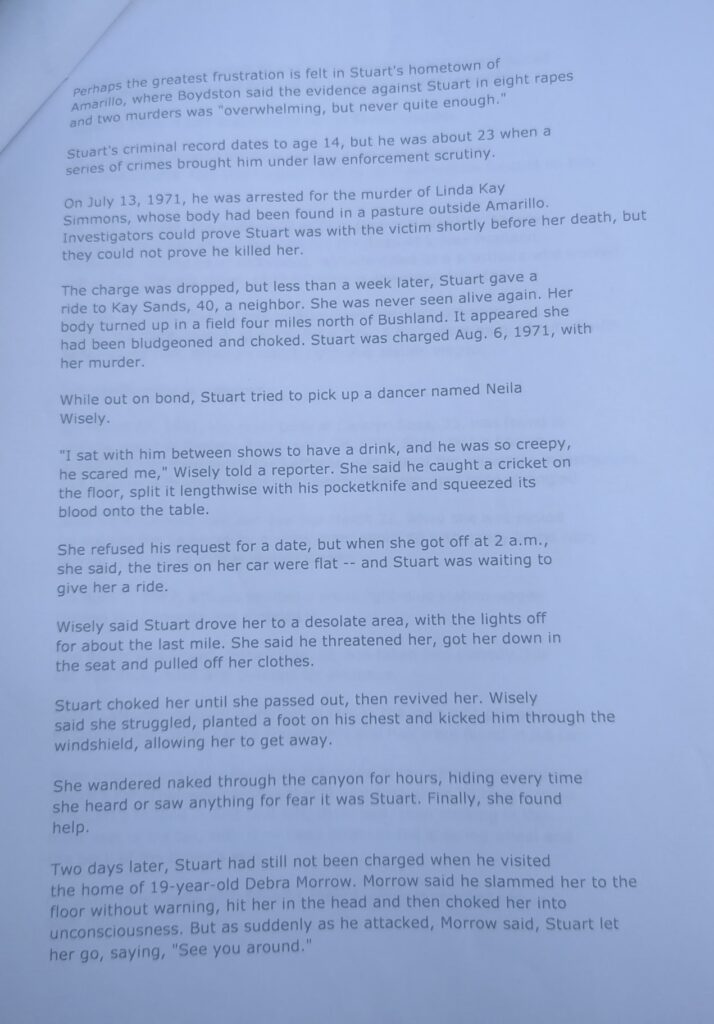
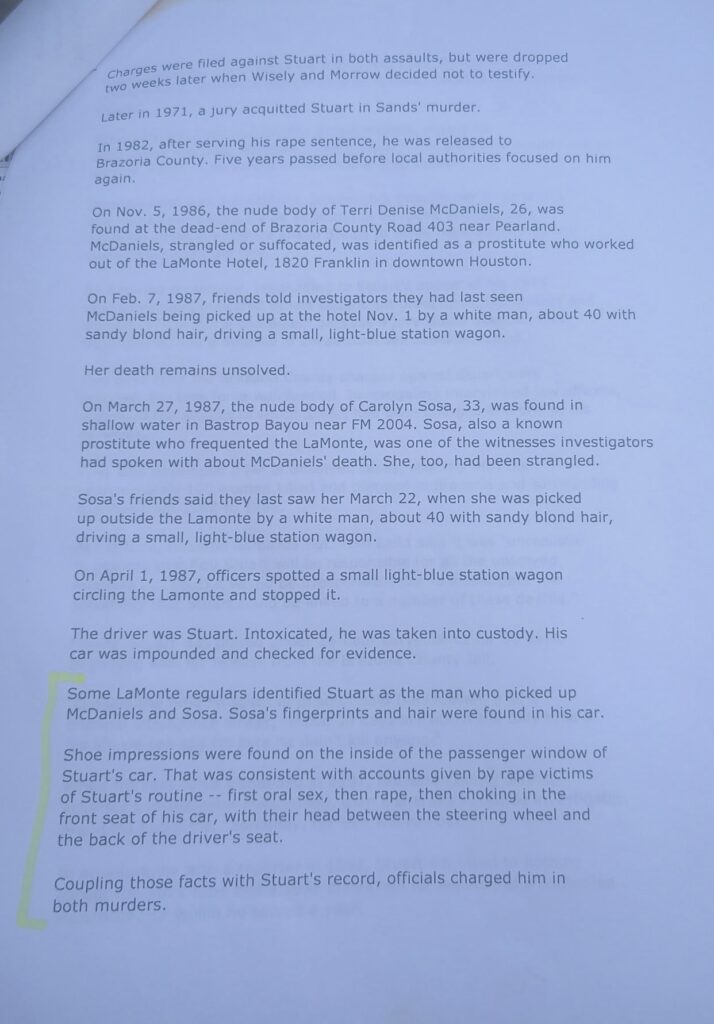
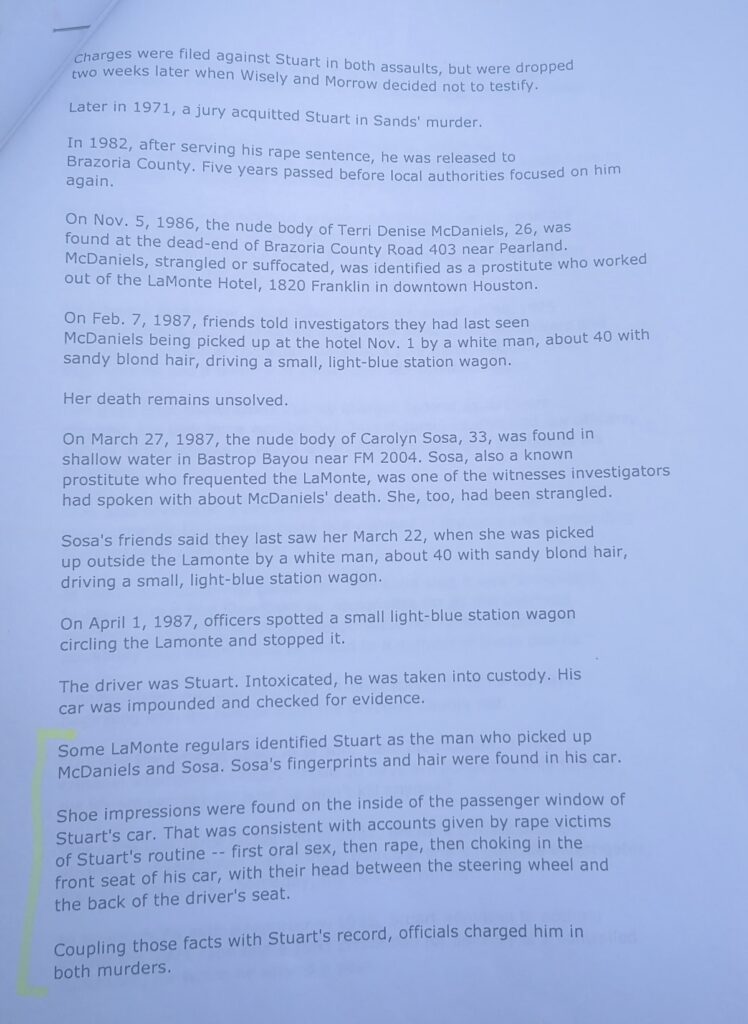
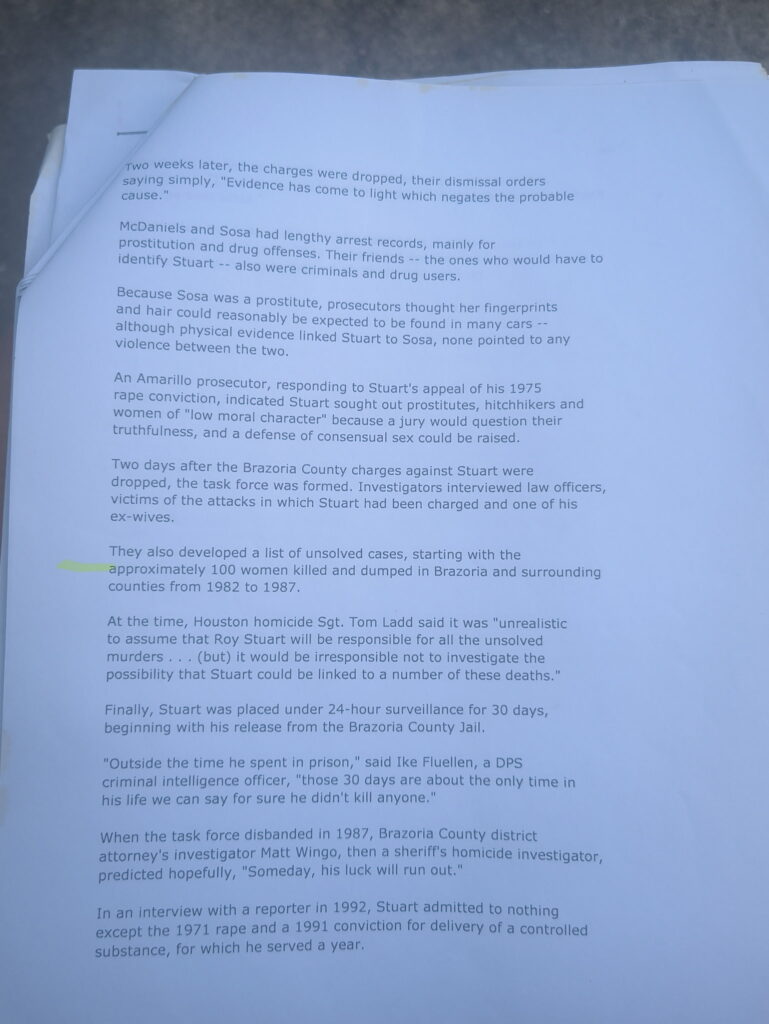
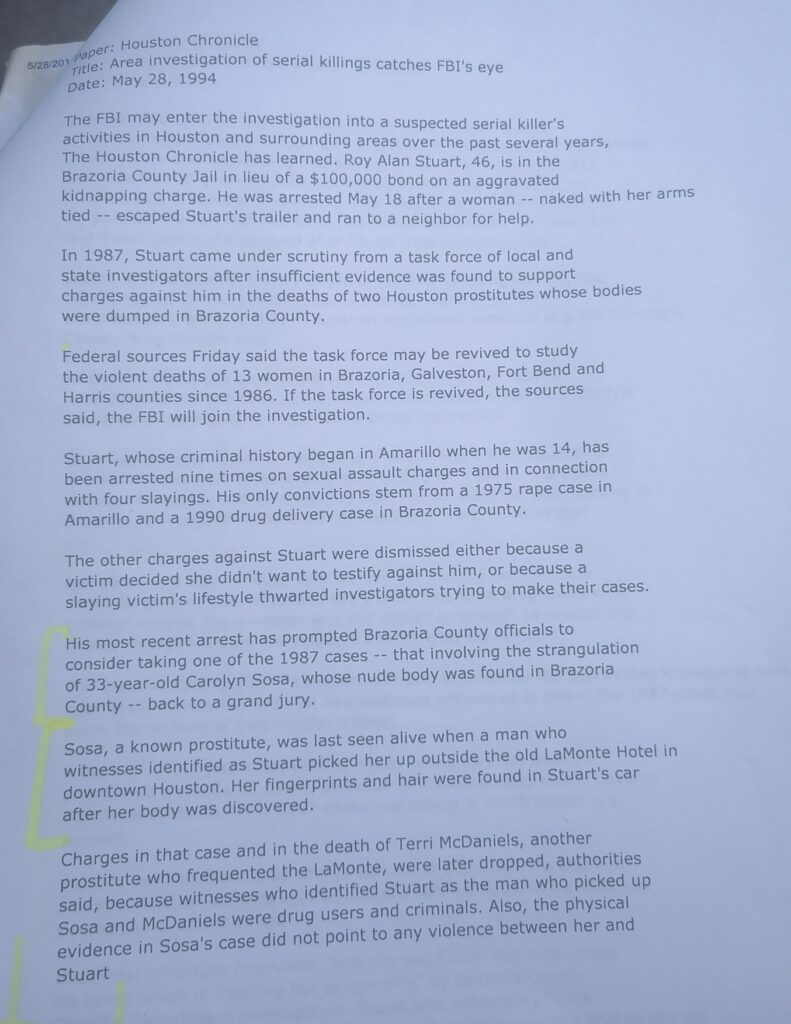
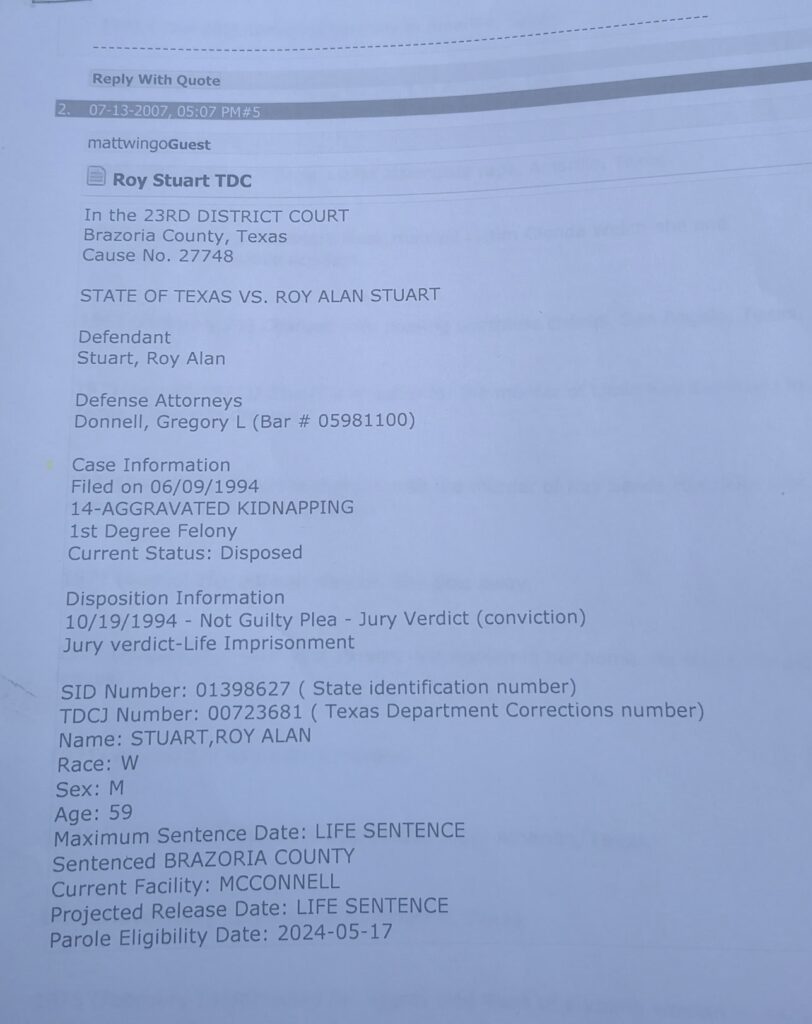
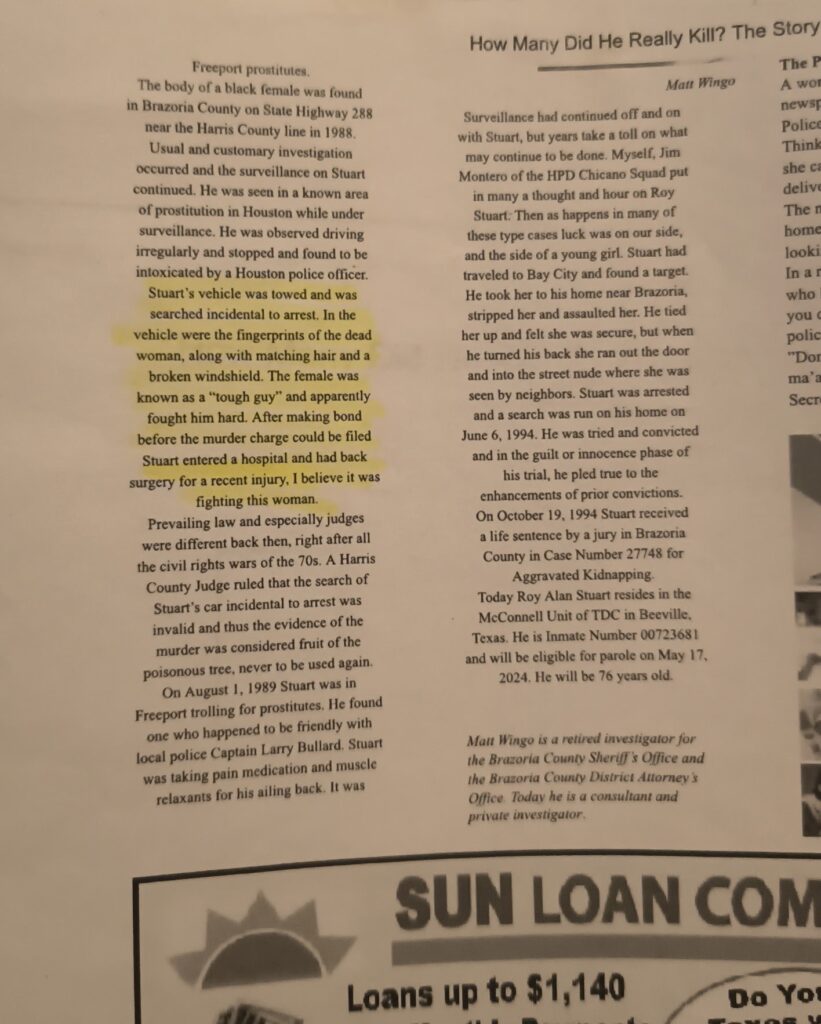
Some of the historical records overlap with information gathered during this investigation, including details Kent McGowen says Roy Alan Stuart shared while the two were incarcerated together. Readers can review the original source documents below and draw their own conclusions.

Who Was Carolyn Sosa?

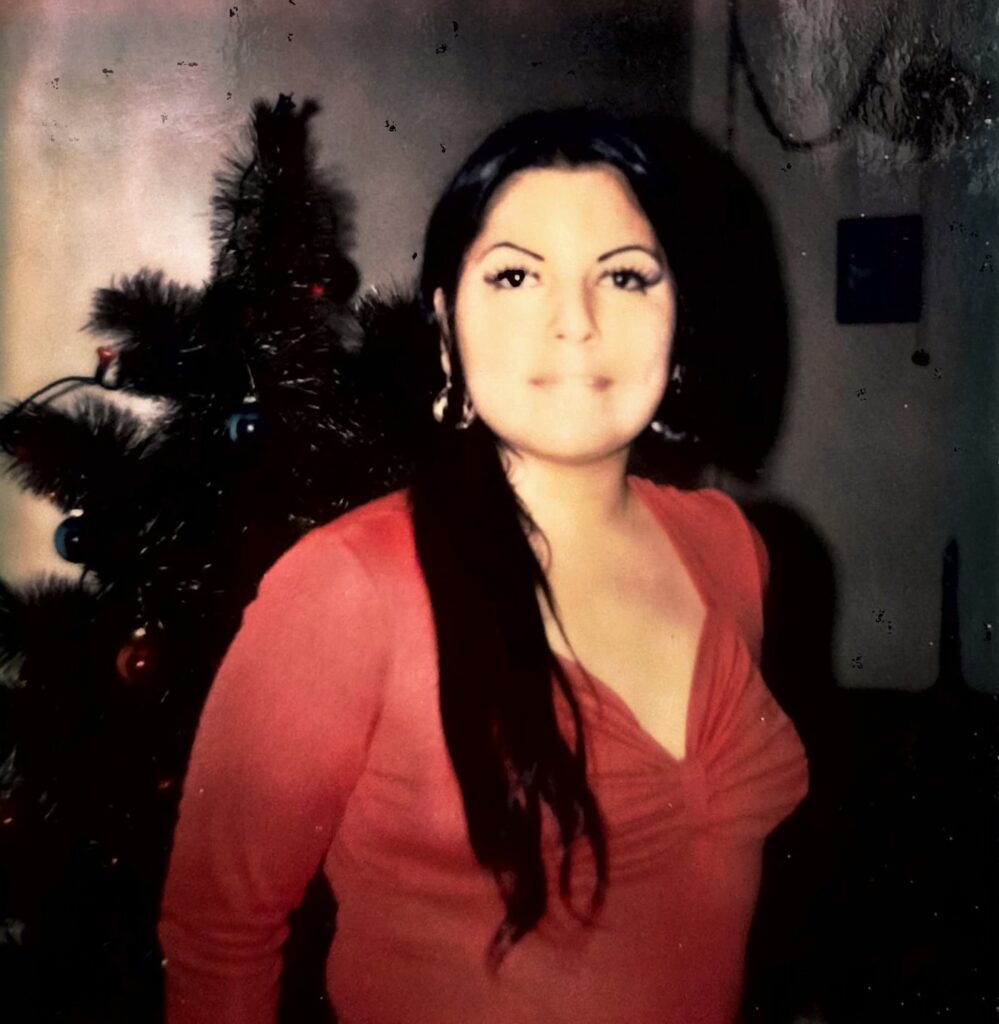
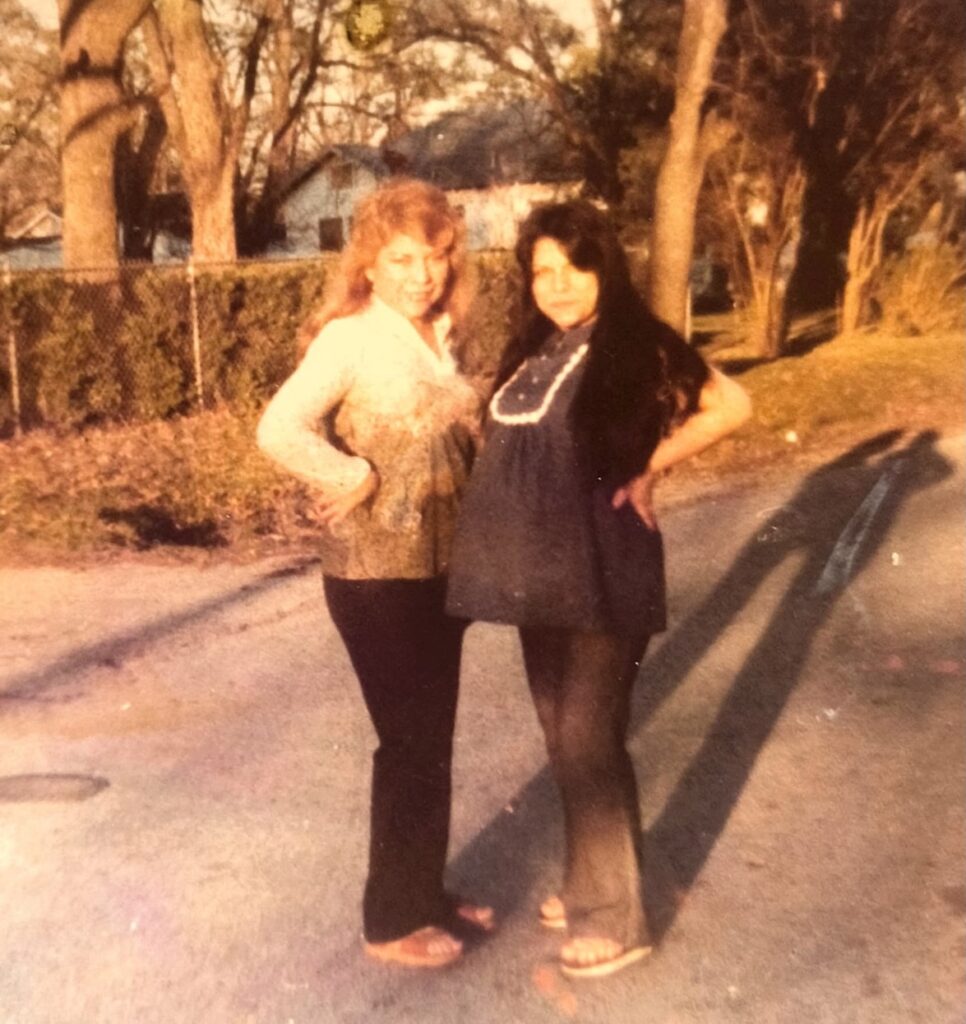
Carolyn Sosa in a red blouse in a family photograph taken before her disappearance in March 1987.

Carolyn Sosa was 33 years old when she disappeared in March 1987. Investigators believe she was last seen leaving Houston’s LaMonte Hotel.

Her body was later found in shallow water near Bastrop Bayou off FM 2004.

Investigators also believed Carolyn had information about the earlier killing of Terri Denise McDaniels.

Historical investigative records state investigators found Carolyn Sosa’s fingerprints and hair inside Roy Alan Stuart’s vehicle.

Historical Court Records

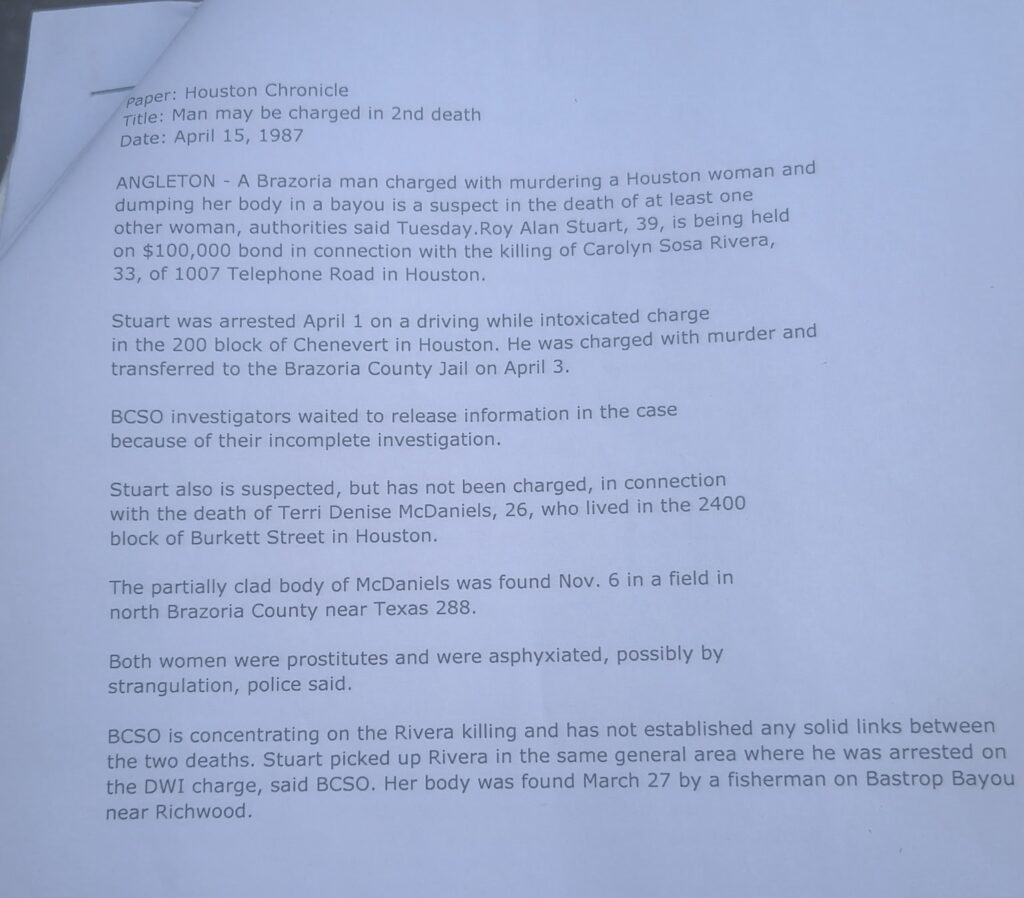
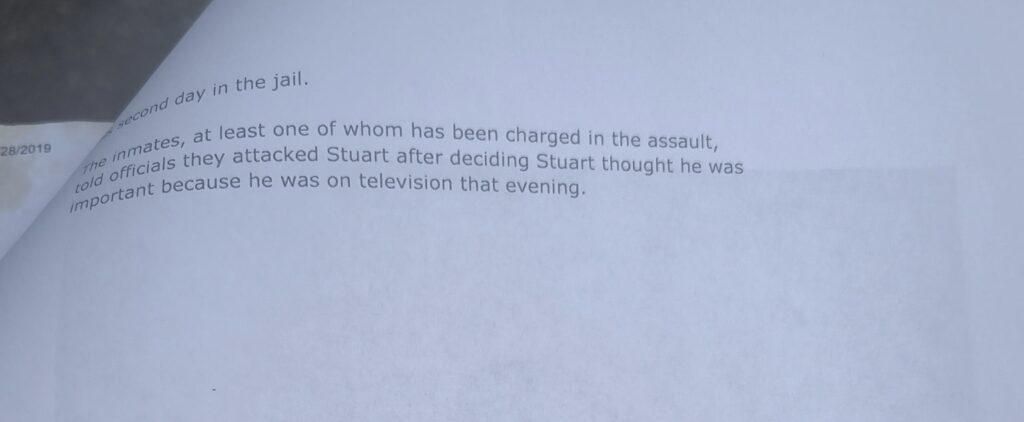
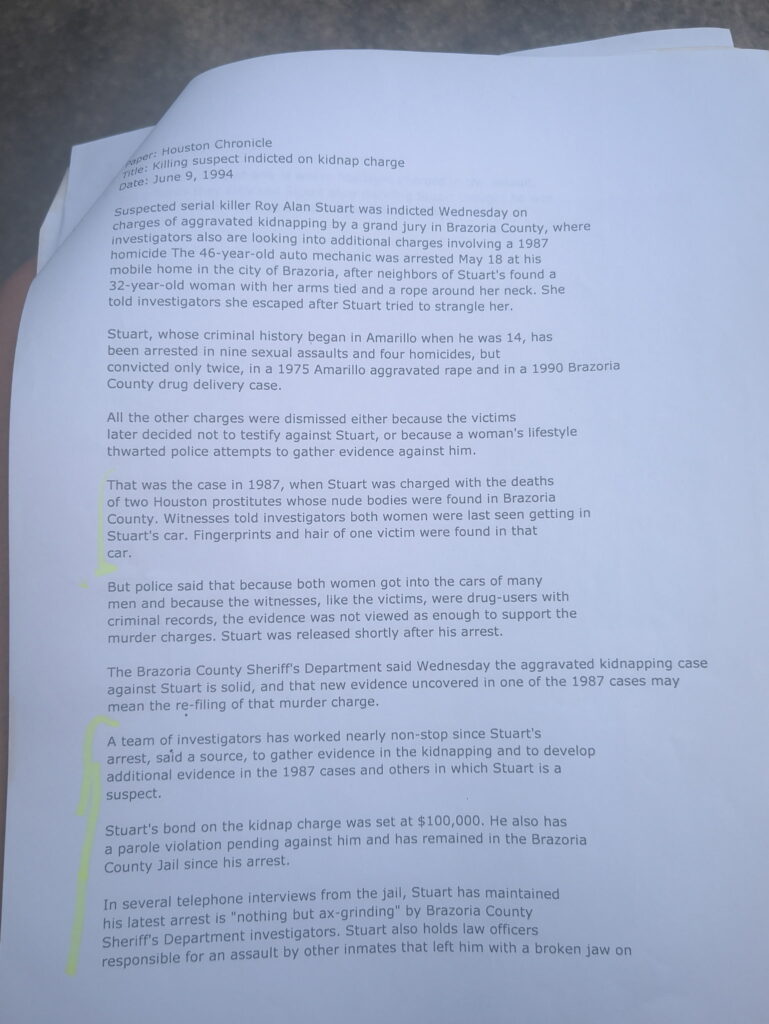
The gallery below contains historical court records, newspaper articles, and investigative documents related to the Carolyn Sosa homicide investigation and Roy Alan Stuart. Readers can review the original source material and examine the records in their historical context.

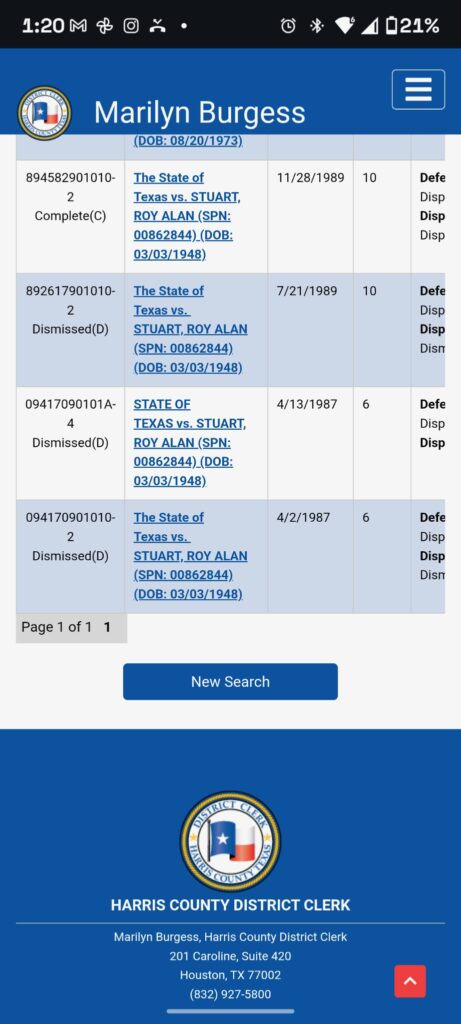
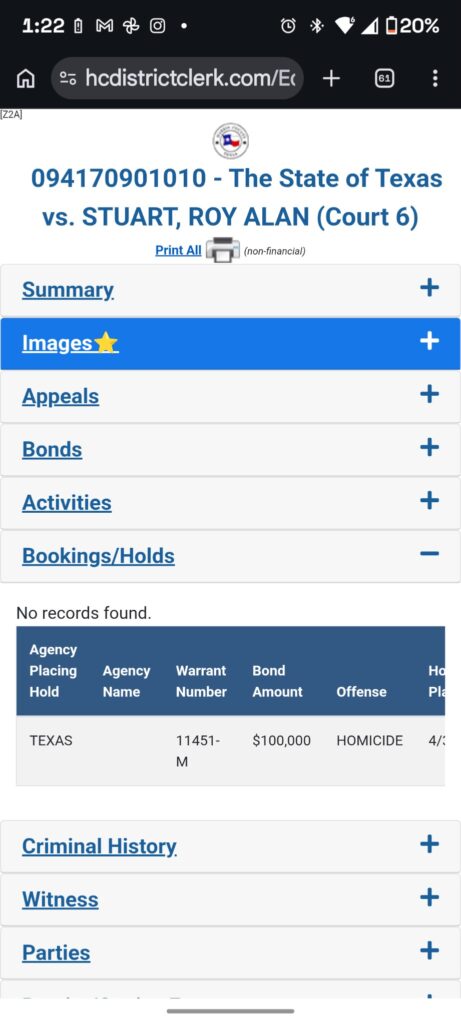
Donna Sanchez shared court records showing Roy Alan Stuart was arrested in Carolyn Sosa’s murder. The murder charge was later dismissed.

Donna said investigators told her family they collected fingerprints, hair evidence, blood evidence, and skin reportedly found beneath Carolyn Sosa’s fingernails.

“My mom was small, but she was a fighter,” Donna told Investigative Reporter Tammy Rose.

Donna hopes someone will finally answer what happened to her mother.

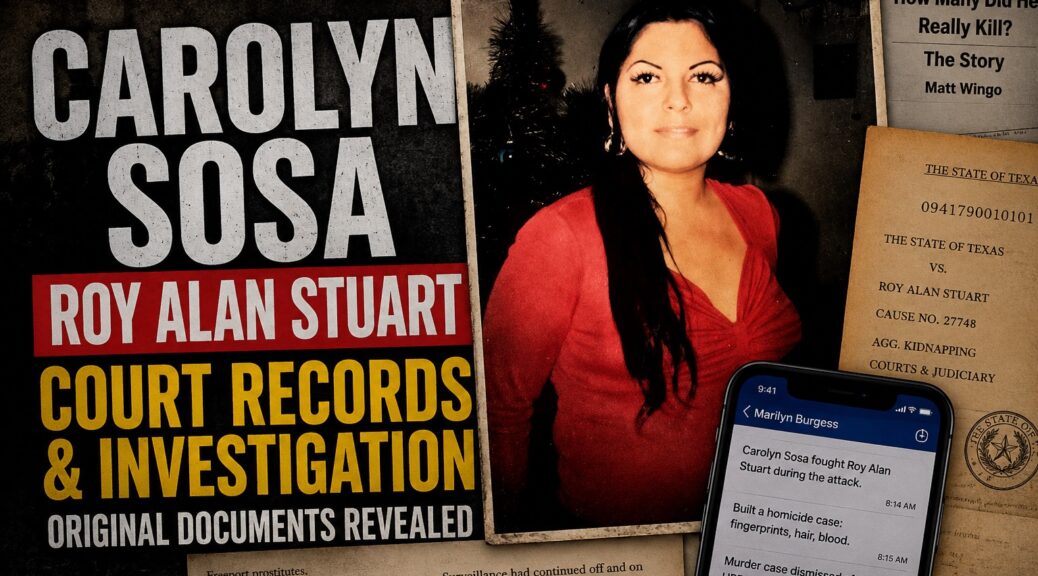
Matt Wingo’s Text Messages About Carolyn Sosa

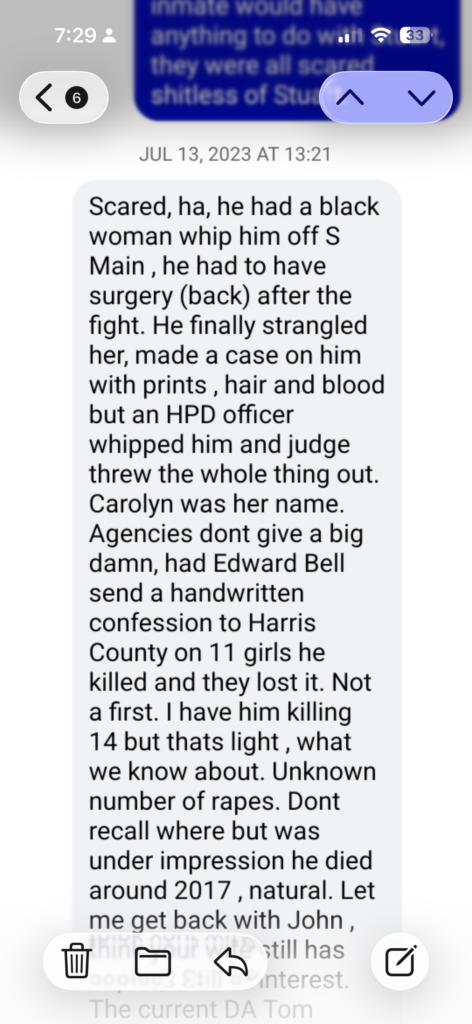
Screenshot of a July 13, 2023 text message from former Brazoria County investigator Matt Wingo discussing Roy Alan Stuart and historical investigative details.

Former Brazoria County investigator Matt Wingo exchanged text messages with Kent McGowen in July 2023.

One message states Carolyn Sosa fought Roy Alan Stuart during the attack.

Wingo wrote investigators built a homicide case using fingerprints, hair, and blood evidence.

He also wrote the murder case was dismissed after an HPD officer allegedly assaulted Stuart during his arrest.

Another message states Wingo believed Roy Alan Stuart could be connected to at least 14 killings.

Wingo also wrote then-Brazoria County District Attorney Tom Selleck wanted investigators to review Kent McGowen’s records.

These statements reflect Wingo’s account. Investigative Reporter Tammy Rose has not independently verified every statement beyond available court records.

Kent McGowen Says Roy Alan Stuart Confessed

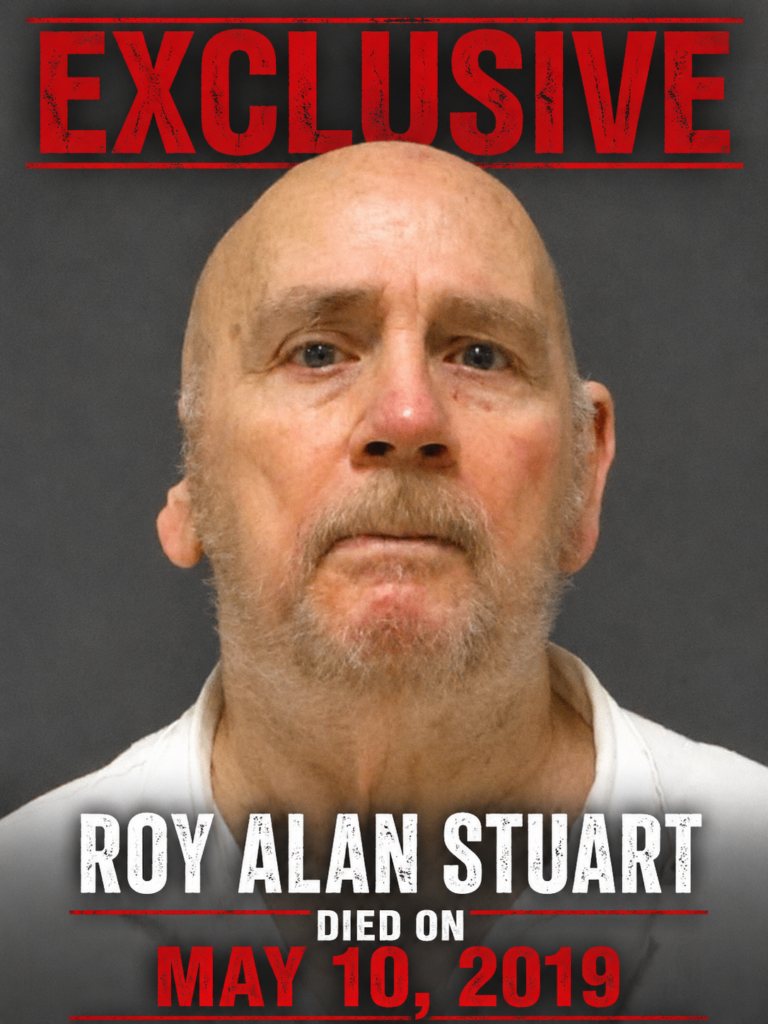
Exclusive graphic featuring Roy Alan Stuart’s mugshot with the text “Roy Alan Stuart” and “Died on May 10, 2019.

Former Harris County deputy Kent McGowen met Roy Alan Stuart while both were incarcerated at the Duncan Unit.

McGowen said Stuart openly discussed kidnapping and murdering women.

He said Stuart described picking up a Black woman near Telephone Road during rodeo season.

McGowen said Stuart claimed he tried to strangle her with a seat belt before shooting her twice with a .22-caliber pistol.

McGowen also said Stuart claimed a fisherman witnessed the killing from a nearby boat.

After reviewing historical records, McGowen believed Stuart was describing Carolyn Sosa’s murder.

Investigative Reporter Tammy Rose has not independently verified McGowen’s account.

Roy Alan Stuart Died Before the Investigation Was Complete

McGowen said he documented Stuart’s statements while they were incarcerated together and later prepared formal reports detailing the alleged confessions.

According to McGowen, he submitted those reports in 2019 to multiple agencies, including the Brazoria County District Attorney’s Office, Brazoria County Sheriff’s Office, Galveston County District Attorney’s Office, Harris County Sheriff’s Office, Houston Police Department and the FBI.

Roy Alan Stuart died on May 10, 2019, while serving a life sentence in the Texas Department of Criminal Justice.

His death came shortly after McGowen said he had notified multiple law enforcement agencies about Stuart’s alleged confessions.

Can the Carolyn Sosa Case Be Reopened?

Yes.

Under Texas law, there is no statute of limitations for murder.

Although Roy Alan Stuart is deceased and can no longer be prosecuted, investigators may reopen a homicide investigation if new evidence, witnesses, historical documents or advances in forensic science justify another review.

A reopened investigation could include re-examining physical evidence using modern DNA testing, interviewing surviving witnesses, reviewing investigative files, or comparing historical evidence with newly discovered information.

If investigators conclude the evidence supports it, they can publicly identify a deceased suspect as responsible for a homicide even though criminal prosecution is no longer possible.

What’s Next in the Carolyn Sosa Case?

Nearly 40 years after Carolyn Sosa’s murder, her family continues searching for answers.

Whether the Carolyn Sosa investigation is officially reopened will ultimately be decided by law enforcement.

However, newly shared family records, historical court documents, Matt Wingo’s text messages, Kent McGowen’s prison interview and previously submitted investigative reports have renewed attention on one of the Gulf Coast’s long-unsolved homicide investigations.

Editor’s Note: This article includes newly obtained court records, historical investigative documents, text messages, and interviews gathered during an ongoing investigation by Investigative Reporter Tammy Rose. Statements attributed to former Harris County deputy Kent McGowen are based on his interview and prison diaries describing alleged confessions made by Roy Alan Stuart while the two were incarcerated together. Statements attributed to former investigator Matt Wingo are based on text messages reviewed by Investigative Reporter Tammy Rose. Court records confirm Roy Alan Stuart was arrested in Carolyn Sosa’s homicide before the charge was dismissed. Some claims discussed in this article remain unverified or disputed. The purpose of this report is to present the available records, document new information provided by Carolyn Sosa’s family, and examine whether the case merits renewed investigative review.

Recommended Reading

The Cases That Haunt Us: From Jack the Ripper to JonBenét Ramsey

I’ll Be Gone in the Dark: One Woman’s Obsessive Search for the Golden State Killer

Related Investigation

Related: Former Harris County Deputy Kent McGowen’s Prison Diaries and Roy Alan Stuart’s Alleged Prison Confessions

Amazon Disclosure

Disclosure: As an Amazon Associate, I earn from qualifying purchases. If you purchase through my affiliate links, I may earn a small commission at no additional cost to you.