All posts by Tammy Rose

NTSB Mid Air Collision Hearing: What Flyers Need to Know

Houston helicopter cockpit during NTSB mid air collision hearing
Many helicopter pilots use iPads mounted in the cockpit to monitor nearby aircraft and terrain in real time.

What the NTSB Hearing on the Mid-Air Collision Is About

The NTSB mid air collision hearing will examine the deadly January 2025 crash between a U.S. Army Black Hawk helicopter and an American Airlines regional jet near Washington, D.C.

Pilots often rely on portable ADS-B receivers like the Garmin GDL 50 to monitor nearby traffic

On January 27, 2026, the National Transportation Safety Board (NTSB) is scheduled to hold a major investigative hearing. The goal is to determine what caused the crash and what changes may be needed to prevent another tragedy.

Why This Hearing Matters for Houston Flyers

For anyone who flies regularly, this hearing matters. That includes people using Houston’s Hobby and Bush Intercontinental airports.

The outcome could shape how U.S. airspace is managed for years. Even though the crash happened near Washington, the safety changes that follow will affect flights nationwide.

Houston is one of the busiest aviation regions in the country. Passenger jets, helicopters, military aircraft, and offshore energy flights all share the same crowded skies. That makes safety rules especially important here.

For pilots who want to improve their situational awareness in busy airspace, portable ADS-B receivers like the Garmin GDL 50 or Sentry Mini allow you to see nearby aircraft in real time on an iPad.

What Investigators Will Examine

Helicopter navigation display showing crowded airspace during NTSB mid air collision hearing
Helicopter navigation display showing crowded airspace as the NTSB reviews a mid-air collision

The NTSB hearing is not about assigning criminal blame. It is about understanding how a highly controlled aviation system still allowed two aircraft to collide.

Investigators will review air traffic control procedures, cockpit communications, radar and tracking data, aircraft equipment, and decision-making by both flight crews and controllers. Officials from the FAA and the U.S. Army are expected to testify about training, policies, and safety systems.

After the hearing, the NTSB will issue a probable cause determination along with safety recommendations. These could lead to new rules, new technology, or new procedures across the U.S. aviation system.

Key Safety Issues Under Review

Helicopter cockpit avionics showing aircraft tracking related to NTSB mid air collision hearing
A Houston helicopter cockpit – the kind of airspace that could be affected by changes from the NTSB mid-air collision hearing

One issue involves altitude differences. Early findings suggest the helicopter may have been flying higher than its assigned altitude, placing it directly in the jet’s path.

Another issue is communication. Reports indicate that air traffic control instructions may not have been clearly received by the helicopter crew due to overlapping radio traffic.

In high-traffic airspace, clear audio matters. Noise-canceling aviation headsets help pilots hear ATC instructions when frequencies get busy.

Airspace congestion is also being examined. The area around Reagan National Airport is one of the busiest in the country. Commercial jets, military aircraft, and helicopters all operate in tight corridors. Investigators are questioning whether the system relies too heavily on controllers to manage unsafe levels of traffic.

There is also a focus on safety technology. Early reports suggest the helicopter may not have been broadcasting its exact position through ADS-B at the time. ADS-B is a modern tracking system that allows aircraft and controllers to see each other more accurately. Investigators will be examining whether this played any role in the collision.

Why This Matters to Everyday Flyers in Houston

Houston has the same congestion problem
Houston faces similar airspace congestion

Even though the crash happened in Washington, the changes that follow could affect how airspace is managed nationwide, including in Texas.

If ADS-B and similar safety systems become mandatory for more aircraft, that could mean safer skies but also new equipment requirements for helicopters and government aircraft.

If changes are made to air traffic control staffing, training, or workload limits, that could directly affect how efficiently and safely flights move in and out of Houston’s airports.

This is not just a Washington story. It is a nationwide aviation safety issue.

What Flyers Should Know Right Now

Flying remains one of the safest ways to travel. Accidents like this are extremely rare. When they do happen, they often expose weaknesses that can be fixed.

The NTSB process takes time. Major rule changes can take months or even years. But history shows that these investigations often lead to real improvements in safety.

If you fly out of Houston regularly, you may not notice immediate changes. Over time, however, new procedures, better technology, and stronger safety rules could quietly make your flights even safer.

Final Thought

The January 27 NTSB hearing is about more than one tragic night in Washington. It is about making sure a disaster like this does not happen again anywhere in the country.

From crowded East Coast airspace to busy hubs like Houston, what the NTSB decides could shape how we all fly for the next generation.

Disclosure: As an Amazon Associate, I earn from qualifying purchases.

Parole Review Reignites Fears in the Calder Road Murders

Memorial site near Calder Road in League City, Texas where victims of the Texas Killing Fields were discovered
Memorial site near Calder Road in League City, Texas-one of the Texas Killing Fields discovery locations

I live in Santa Fe, Texas, just minutes from Calder Road — one of the most notorious dumping grounds linked to the Texas Killing Fields.

Living so close to this site has made this case impossible to ignore, especially now that convicted killer Clyde Hedrick is once again under parole review.

Four victims, one recovery site

The Calder Road Victims

Between 1983 and 1991, four sets of remains were found in the same field along Calder Road.

  • Heidi Marie Villarreal-Fye, 23
  • Laura Lynn Miller, 16
  • Jane Doe (unidentified)
  • Janet Doe (unidentified)

All four victims were left in the same remote field along Calder Road, which is why their cases are now permanently tied to the Texas Killing Fields mystery.

Victims Honored at the Calder Road Memorial

The memorial site also honors other women whose cases are linked to the wider Texas Killing Fields.

These include:

Audrey Lee Cook and Donna Prudhomme are also honored at the memorial; however, they were not found in the Calder Road field. Even so, their cases remain part of the same tragic Texas Killing Fields history.

Laura Miller’s case became widely known because of both her tragic death and the work her father did afterward.

Laura Lynn Miller,16

Laura Miller and a Father’s Search for Justice

Laura Miller disappeared on September 10, 1984, after calling her boyfriend from a payphone in League City, Texas. At first, police treated her disappearance as a runaway. Her father, Tim Miller, refused to accept that.

Seventeen months later, investigators found Laura’s remains along Calder Road.

The loss of his daughter transformed Tim Miller’s life. Instead of giving up, he turned his grief into action and later founded Texas EquuSearch, a volunteer organization that has helped locate missing people across the country.

Laura’s killer was never arrested.

Tim Miller has spent decades searching for the truth — not only for Laura, but for every victim connected to the Texas Killing Fields.


The Name That Will Not Go Away: Clyde Edwin Hedrick

One man has long remained at the center of suspicion: Clyde Edwin Hedrick.

Hedrick lived in the area at the time Laura disappeared and has been identified by investigators and families as a person of interest in the Calder Road murders. He was later convicted of a separate, unrelated killing — the 1984 murder of Ellen Beason, a brutal crime in which the victim was bludgeoned and concealed.

Hedrick served years in prison for that murder but was later released under Texas parole laws.

Because prosecutors lacked the physical evidence needed for a criminal case in Laura Miller’s death, Tim Miller filed a civil wrongful-death lawsuit instead. A jury found Hedrick liable and awarded Miller millions of dollars in damages.

That ruling was not a criminal conviction. Hedrick has never been tried or convicted for the Calder Road murders and has consistently denied involvement.


Parole, Halfway Houses, and Public Fear

In recent years, Hedrick has been living under state parole supervision, including time in a halfway house in the Houston area. His supervision status has become a renewed source of public concern as the Texas parole system periodically reviews whether restrictions should be loosened.

For the families of victims, this is deeply unsettling. They believe the man they hold responsible for Laura Miller’s death could one day live with fewer restrictions — despite the case never being criminally resolved.

For people who live near the Killing Fields, it raises a frightening question:

Site were 4 victims were found

Will the Texas Killing Fields Ever Be Solved?

Modern DNA technology has helped identify some previously unknown victims, offering long-overdue answers to grieving families. But the Calder Road murders themselves remain officially unsolved.

Clyde Hedrick is no longer behind bars. He was released in 2021 and is now under strict supervised release in a halfway house with GPS monitoring. The parole board is currently reviewing whether those restrictions should be eased — a decision victims’ families strongly oppose.

From where I live in Santa Fe, Calder Road is not some distant crime scene. It is right here — a quiet stretch of land hiding terrible secrets. Until someone is held fully accountable, those secrets will continue to haunt this community.

The Texas Killing Fields may be silent — but the questions are not.


Disclosure: As an Amazon Associate, I earn from qualifying purchases.

When the sky turns hostile

I started flying in news helicopters in 1994, at a time when airborne reporting was still raw and analog. No moving maps. No satellite tracking. No instant weather overlays. You trusted your pilot’s instincts, the aircraft, and whatever the sky decided to give you.

Over the years I have experienced multiple in-flight emergencies. Every one of them ended with us on the ground, alive. Each one also left a mark that never fully goes away.

With aviation accidents once again dominating headlines, I want people to understand what it actually feels like when things go wrong in the air.

These aren’t headlines. These are memories.


1995 — Flying blind into Wisconsin clouds

Chopper 12 Reporter Tammy Rose

We were flying to breaking news in Wisconsin in a Schweizer 300, a small, two-seat helicopter. It’s light, nimble, and unforgiving of bad weather. The sky that morning was layered — gray over gray — but flyable when we launched.

Then the ceiling began to drop.

At first, the ground blurred. Then it disappeared.

Inside a cloud, there is no horizon. There is no “down.” Everything outside the windshield turns into white and gray motion. Your body feels level, but your eyes are lying to you. That’s spatial disorientation, one of the deadliest conditions in aviation.

My pilot didn’t hesitate. He turned away from the weather and found a place to get us down before we lost all visual reference. We made an emergency landing at a rest stop in Fond du Lac, Wisconsin, just as the cloud deck closed in behind us.

The rotors wound down. The world went quiet.

My pilot stayed overnight with the helicopter. My parents drove to pick me up at that same rest stop. I remember how strange it felt to be sitting in a car after minutes earlier being suspended inside a cloud with no idea where the ground was.

That was the first time I truly understood how quickly flying can turn dangerous.


July 1997 — Losing power while live on the air

Bell 47

Two years later, on a hot July day in 1997, I was flying over Milwaukee, Wisconsin with a pilot and a photographer. I was in the middle of a live broadcast when the helicopter suddenly didn’t sound right.

Then it didn’t feel right.

We had lost engine power.

Later we learned that both magnetos had failed, which meant the engine could no longer fire. In a helicopter, that’s one of the most serious failures you can have. Without engine power, the only thing keeping you in the air is the pilot’s ability to transition instantly into autorotation — a maneuver that uses airflow through the rotor blades to slow and control the descent.

My pilot did exactly that.

As we descended, I stayed on the air. I finished my report while we were gliding toward a Milwaukee police department parking lot, the only open space he could safely reach.

The landing was hard. The photographer had forgotten to raise the omni antenna, and when we touched down it bent — a small piece of metal that showed just how narrow the margin had been. Some would call it a hard landing. Others might call it a crash.

We opened the doors and stepped out.

No fire.
No injuries.
Just adrenaline, silence, and the realization of how close we had come.


Texas — When the cockpit went dark

Years later, in Texas, the helicopter suffered a total avionics failure.

The screens went blank.

No navigation.
No altitude.
No attitude indicator.

My pilot was suddenly flying with nothing but what he could see outside the windshield. He diverted and found a place to land before the situation could get worse.

We made an emergency landing — and once again, walked away.


Texas — Hydraulic failure during a chase

Hydraulic failure on October 8, 2020

Another time, we were launching for a chase when the helicopter lost all hydraulic power.

Without hydraulics, the controls become brutally heavy and unpredictable. Every movement requires raw physical strength and perfect timing.

My pilot fought the aircraft back to the ground and landed safely.

That wasn’t luck.
That was training.


Why these stories matter

UPS cargo plane moments before crashing during a high-profile aviation accident
Source: National Transportation Safety Board accident investigation, public domain

When people say they’re afraid to fly, I understand why. In the past year, we’ve all watched heartbreaking, high-profile crashes — including a UPS cargo jet and the tragedy near Reagan National Airport — dominate the news. Those stories make flying feel suddenly fragile.

But here’s what I know from three decades in the air:

Flying in SkyEye 13!
Helicopter Reporter Tammy Rose

Most flights don’t end in headlines.
They end in landings.

I’ve been inside clouds with no horizon.
I’ve descended with no engine.
I’ve flown with no instruments.
I’ve felt a helicopter lose its hydraulics.

And every time, well-trained pilots brought us home.

Flying will never be risk-free — nothing worth doing ever is — but statistically it remains far safer than getting behind the wheel of a car. The difference is that when something goes wrong in the sky, the whole world hears about it.

That’s why I tell these stories. Not to scare people — but to show how much skill, discipline, and professionalism stand between an ordinary flight and disaster.

The sky demands respect.
And the people who fly us through it earn it. ✈️

Want to know what I actually use when I’m flying? I’ve put together my Amazon collection with headsets, travel gear, and in-flight must-haves I rely on in the cockpit and on the road. ⬇️ Click below to explore my Flying Essentials.

Disclosure: As an Amazon Associate, I earn from qualifying purchases.

My Flying Essentials: Comfort Meets Style

Could the Jodi Arias case be blown wide open in 2026?

Jodi Arias sitting in court during her murder trial in Phoenix, Arizona

Why the Jodi Arias Case Is Back in the Spotlight

Is there a real possibility the infamous Jodi Arias case could be retried due to missing evidence and alleged misconduct?

For the first time in years, Jodi Arias is publicly addressing that question herself.

Arias was convicted of murdering her ex-boyfriend, Travis Alexander, in 2008 after stabbing and shooting him in the shower. She is currently serving a life sentence. Now, more than a decade later, Arias has begun writing about her case again — and this time, her focus is not prison life, but the integrity of the investigation and prosecution that put her behind bars.

Flying in SkyEye 13!

Why a Retrial in 2026 Is Unlikely But Possible

Through her attorneys, Arias has filed a post-conviction relief request. From inside Perryville Prison, she responded to investigative reporter Tammy Rose regarding the possibility of an interview related to that filing.

What New Evidence Could Change

Until now, Arias’ “Just Jodi” prison blog has largely avoided the details of her criminal case, focusing instead on daily life behind bars.

But a new post titled “Hello, 2026” marks a significant shift. In it, Arias makes serious allegations, claims misconduct, and states she is seeking new legal counsel to pursue them.

In the post, Arias accuses investigators and prosecutors of withholding, losing, or destroying exculpatory evidence. She specifically names former lead detective Steve Flores, now retired, and former prosecutor Juan Martinez.

“Important, exculpatory evidence in my case has been lost or destroyed,” Arias writes. “Where is my proof? I’m working on that.”

She also alleges her current legal representation has dismissed her concerns, claiming her attorneys minimize her claims while continuing to bill the county.

Adding to the controversy, both attorneys from Arias’ original trial were later disbarred. Former prosecutor Juan Martinez was disbarred for misconduct following the trial , and Arias’ defense attorney, Kirk Nurmi, was also disbarred after writing a book about his client while her case was still active — a move widely criticized as unethical.

“As an Amazon Associate I earn from qualifying purchases”

Defense attorney Kirk Nurmi wrote a book about his client. #ad

Court documents also reference requests for information regarding a book Martinez allegedly began writing during Arias’ first trial, raising additional concerns about potential conflicts of interest.

Prosecutor Juan Martinez also allegedly worked on a book related to the case during the first trial. #ad

What This Means for True Crime Watchers where should that go

So the question remains: do these claims — combined with documented misconduct surrounding key figures in the case— give Jodi Arias a legitimate path toward a new trial?

For now, the courts will decide whether her allegations warrant further review. But for the first time in years, Jodi Arias is no longer avoiding the case – she’s confronting it head-on.

From Courtroom to Hardcover: Could Martinez’s Book Rewrite Arias’ Fate?

Prosecutor Juan Martinez enters the courtroom with a key witness during the Jodi Arias trial. Photo by Tammy Rose.

Convicted murderer Jodi Arias may be closer than ever to a second shot at freedom — and her legal team believes former prosecutor Juan Martinez’s book could be the key.

Martinez allegedly began writing Conviction: The Untold Story of Putting Jodi Arias Behind Bars while Arias was still on trial — long before it was published. Now, Arias’ attorneys are demanding business records from the literary agent Martinez originally hired, hoping those files will reveal whether he planned to profit from her case while prosecuting it.

If the records show ethical violations or conflicts of interest, her lawyers argue the trial itself may have been tainted — opening the door to post-conviction relief and a possible new path to freedom.Convicted murderer Jodi Arias may be closer than ever to a second shot at freedom — and her legal team believes former prosecutor Juan Martinez’s book could be the key. This isn’t the first controversy surrounding the Jodi Arias prosecution.

Prosecutor Juan Martinez’ book about the Arias case.

As an Amazon Associate, I earn from qualifying purchases

Obsessed with true crime? Here’s a list of must-read book you won’t put down.

Why a Retrial in 2026 is Unlikely But Possible

A judge has given Arias until September 2, 2026 to file her post-conviction petition. That deadline matters, because courts rarely reopen cases unless new evidence proves serious misconduct.

But Arias’ legal team believes these publishing records could do exactly that. If Martinez was negotiating a book deal while prosecuting Arias, it could violate ethical rules meant to prevent prosecutors from financially benefiting from active cases.

If proven, that conflict could be powerful enough to force the court to re-examine her conviction.

When Prosector Misconduct Changes Everything

History shows that misconduct can — and does — overturn even the most settled cases.

Curtis Flowers was tried six times for the same murders. Four convictions were thrown out after appeals courts found repeated prosecutorial misconduct and racial bias in jury selection. Eventually, all charges were dropped, and Flowers walked free.

James Alan Gell spent years on death row for a crime he didn’t commit. Prosecutors withheld evidence that could have cleared him. His conviction was overturned, he was acquitted in a new trial, and he was released.

These cases prove that when misconduct is exposed, even long-standing verdicts can collapse.

What This Means for True Crime Watchers

The Arias case has captivated millions for over a decade — but this development changes the story. This isn’t about whether people believe she is guilty. It’s about whether the person who prosecuted her played by the rules.

If Martinez was building a book deal while arguing for her conviction, it raises serious questions about fairness, motive, and integrity in one of the most watched trials in modern true-crime history.

Bottom Line

With the 2026 PCR deadline approaching, Arias’ attorneys are betting that what’s buried inside those publishing records could rewrite her fate — and possibly expose one of the most controversial prosecutorial conflicts the true-crime world has ever seen.

Court filings and evidence may soon tell the story that never made it into the courtroom. Click below to read the court documents.

Jodi Arias stalls on PCR bid. Court docs uncover the hold-up.

Jodi Arias hasn’t filed her post-conviction relief yet — and now we know why. Her lawyers just asked the court to cancel oral arguments connected to business records from Folio Literary Management and Steve Troha. These might be tied to Juan Martinez’s 2016 book. After they review the records, Arias could finally move forward with her PCR, and it looks like the filing deadline has been pushed back.

Want more true crime? Here’s a list of must-read books you won’t put down.

As an Amazon Associate, I earn from qualifying purchases

My First Helicopter “Crash” (A Hard Landing That Changed Everything)

It was a hot summer day in July of 1997 when a routine traffic report turned into breaking news for me. The Bell 47 I was flying in over the streets of Milwaukee, Wisconsin experienced a loss of engine power, forcing the pilot to make a hard, emergency landing near a local police station.

Our main helicopter was down for maintenance, and it was the first time I had flown in this particular aircraft — and it would be the last. The helicopter was heavily damaged, but everyone walked away safely.

Even so, the experience stayed with me. What could have ended my flying career instead became the moment that defined it. I wasn’t afraid to get back in the air, and I would go on to fly for another 30 years.

After that hard landing, I never flew without a reliable aviation headset again. This is the model I use today.

Photographer Matt England documented what happened that day in the footage below.

As an Amazon Associate I earn from qualifying purchases.

When two worlds collide during WWII.

Part One: A wartime escape, buried gold, and a family legend I’ll never forget. Growing up, I heard whispers of buried gold beneath my great-grandparents’ house in Berlitt, a wartime secret and a story that has never left our family. Here’s the legend.

My great-uncle Richard Pein posing after a deer kill in front of his Berlitt home.

After writing several books, I decided to travel to Germany to do a documentary on my family in 2017. What I found is that my great-grandparents as well as my great-uncle were allegedly heavily involved in the Nazi Party as well as the SS, according to one of their then, 90-year-old neighbors. My research also led me to Günter Waschke, whose family received Richard & Helene Pein’s Berlitt home following WWII. Click on the link below to follow my ‘Buried Treasure’ journey.

Hans Rose with neighbors near our Berlitt, Germany home in 1991. Click on the link above to follow my ‘Buried Treasure’ journey.

Part Two: Shadows of the Past. While digging into the origins of a buried treasure legend, we uncover a family’s dark secret – a great uncle once convicted of Nazi war crimes. History isn’t always comfortable, but it matters.

My interview with Günter Waschke in 2019.

My interview with Günter Waschke in 2019.

(Tammy Rose) “What can you tell me about my great-grandparents Richard & Helene Pein?


(Günter Waschke) “I was 4 years old, so I do not remember much. Helene loved me as ‘little Günter’ because her son Günther was killed in the war.”

“From Richard, I have no remembering other than he was the Mayor of Berlitt and was regarded as a bad Nazi by the upcoming Communists. They forced him to move to Granzow on his second farm. Pein’s farm in Berlitt was expropriated and divided into small farms distributed to refugees from East Germany like my mother and me. The same process was conducted with the big farm of Earl/Graf Königsmark who had committed suicide before the Russians invaded. His castle was used as a school following the war and is located across the street from the Pein home near the Church of Berlitt.”

(Tammy Rose) “What else can you tell me about that time period and our old house?”

Helene & Richard Pein in front of their Berlitt Home just before the invasion.

(Günter Waschke) “My mother and I fled from our original home near Poznan, Poland in January 1945 by foot and took only what we could carry. I cried because I forgot my doll called Ria. We lived after the war in the right part of Pein’s house, seen from the street side, until 1950. Then my mother and I left Berlitt because my father who was a prisoner of war was set free and we moved to West Germany. Additionally, it was better to go to the West because Berlitt had become part of the communist German Democratic Republic under the goodwill of Stalin.”

Part Three: Return to Berlitt and the Secrets Buried Below. After years of unanswered questions, I travel to Berlitt, Germany, back to the small house where my family once lived-and where the gold was secretly buried long ago. Now under new ownership, the home stands as both a relic of my past and the key to everything I still don’t know. As I meet with the current homeowners, I hope to unearth more than just treasure; I’m searching for clarity, truth, and the missing pieces of a story that has followed me across decade and continents. What lies beneath the floorboards may be valuable, but the answers I’m after could change everything.

Liese-Lotte, Helga, Hans & Reinhard in the Traunstein Refugee Camp in 1955,

Part Four: Shadows in the House. I finally step inside the house where our gold may still be buried, and the walls seem to whisper secrets of the past. As I explore, shocking truths emerge: my great-grandparents were deeply involved in the Nazi regime, and the treasure I’ve been chasing may not be just family gold-it could be part of a darker, more sinister history. Every coin, every hidden corner now carries the weight of betrayal, war, and a legacy I never imagined. The hunt for answers has become a confrontation with history itself. After further research, I discovered my great-uncle Werner Pein spent 7 years in prison for Nazi War Crimes. Documents are below.

JUGEMENT CONTRE WALTER HOLZ ET AUTRES:
( judgement against walter holz and others)

place of trial: t.p.f.a paris
dates of trial: 27.1.1950 – 28.1.1950
charges: “murders ; complicity of murders” (assassinats ; complicité d’assassinats)
” assaults and injuries” (coups et blessures volontaires)
” illegal confinment” (séquestrations illégales)
” torture” (tortures corporelles)
crime location: pontivy , morbihan (dpt) 
crime date: 00.07.1944
office: german police


2) werner pein: 20 years hard-labor (commutted to 7 years imprisonment)
(born.14.11.1912.berlin)
(..)
(sources: ministére de la défense
division des affaires pénales militaires
dépôt central d’archives de la justice militaire
boite postale 214
36300 leblanc
france)

Werner Pein (*14.11.1912) was SS-Osiuf/Oltn.d.SchP with Feldgendarmerie
member NSDAP 674699 (01.10.1931)
member SS 424349

Werner Pein was sentenced to 20 years in prison for Nazi War crimes

I interviewed Werner Pein’s son, Wolfgang in 2017. His full interview is below.

He was sentenced to 20 years in prison for Nazi War crimes, serving only 7 because a nurse testified on his behalf.

Part Five: Echoes of Innocence. As the story of my great-grandparents unfolds, I turn to my German relatives for answers. They dispute the claims of SS involvement, insisting that my ancestors were poor farmers, good neighbors, and hardworking members of their community. The treasure and its history remain tangled in uncertainty, and I must now navigate between family memories, historical records, and the uneasy truths buried in both.

Richard & Gunther Pein

Another one of my great-uncles, Günther Pein was killed on a bridge in Saint Pölten, Austria at the end of World War II. I often wonder how much he might of known about the Holocaust and to what extent he may have participated. My other grandfather, Howard Leo Thompson from Milton, WI also fought in WW II which makes things even more complicated. Did he encounter any of my German relatives?

Part Six: Meeting in Berlitt. I finally connect with the current homeowners of the house where the gold may be buried. After reading my books, ‘Lost Dreams’ & ‘Lost Treasures’, they reached out online, curious-and maybe cautious-about the story I’ve been chasing for years. Now, face-to-face, I try to learn whether they believe the treasure exists, and if they’ve ever attempted to dig it up. Every answer, every hesitation, adds a new layer to the mystery, and I realize that the truth about the buried coins may be closer-or more elusive-than I ever imagined.

Hans & Reinhard Rose on their Granzow farm.

Part Seven: Secrets Left Buried. After walking through the backyard where my great uncle described the treasure to my dad, I can feel it in my bones-the legend is real. Every detail he shared aligns perfectly with the property, even the parts I never included in my book. Yet, the current homeowners have no interest in digging, and I understand why. Some stories, some treasures, are meant to stay hidden. We part with a mutual respect for the past and the unspoken truth: certain secrets are better left buried.

Richard Pein holding his niece Ursula next to an Audi with an “IE” prefix, It’s a military vehicle registration code used by the German armed forces (Wehrmacht) during World War II. Following the war, the Soviet occupying power requisitioned and dismantled Auto Union AG’s production facilities in Saxony.

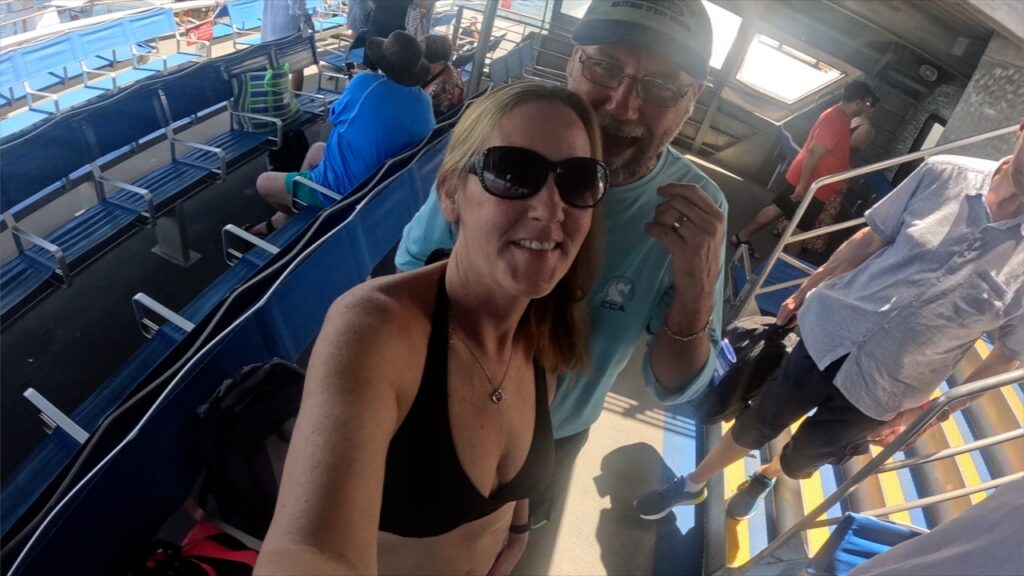
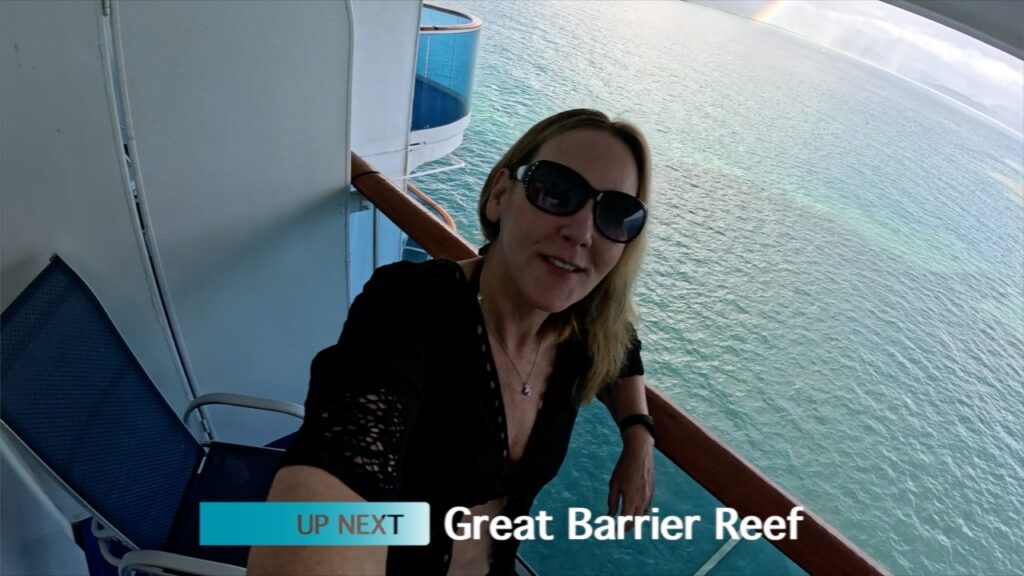
From an electrical fire to a jelly fish sting, Paul & Tammy’s adventures continue in Queensland, Australia.

7-Day Queensland, Australia Cruise!

From an electrical fire to a jelly fish sting, Paul & Tammy’s adventures continue in Queensland, Australia ending with their vows on one of the most beautiful beaches in the world.

Whitsunday Islands
Cairns Australia
Lookout Mountain on Whitsunday Islands

Great Barrier Reef in Queensland, Australia!