Tag Archives: Texas News

Manvel police records reveal retaliation complaints and questions over public-information requests

By Investigative Reporter Tammy Rose
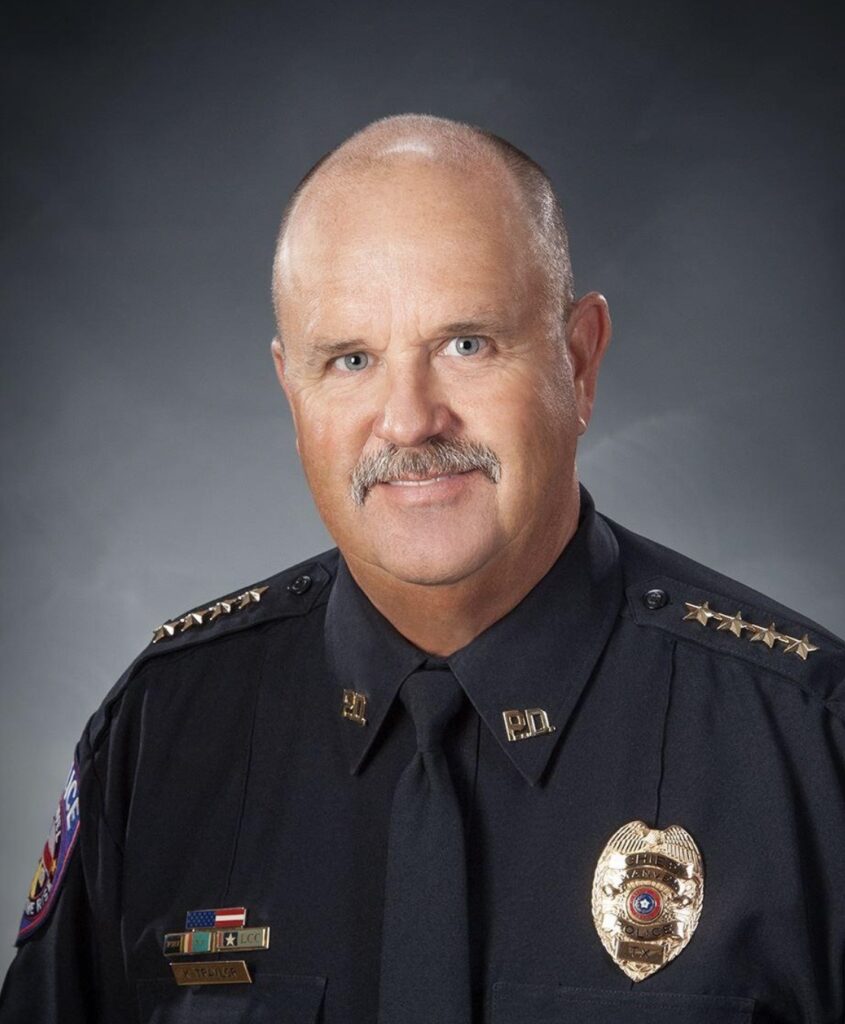
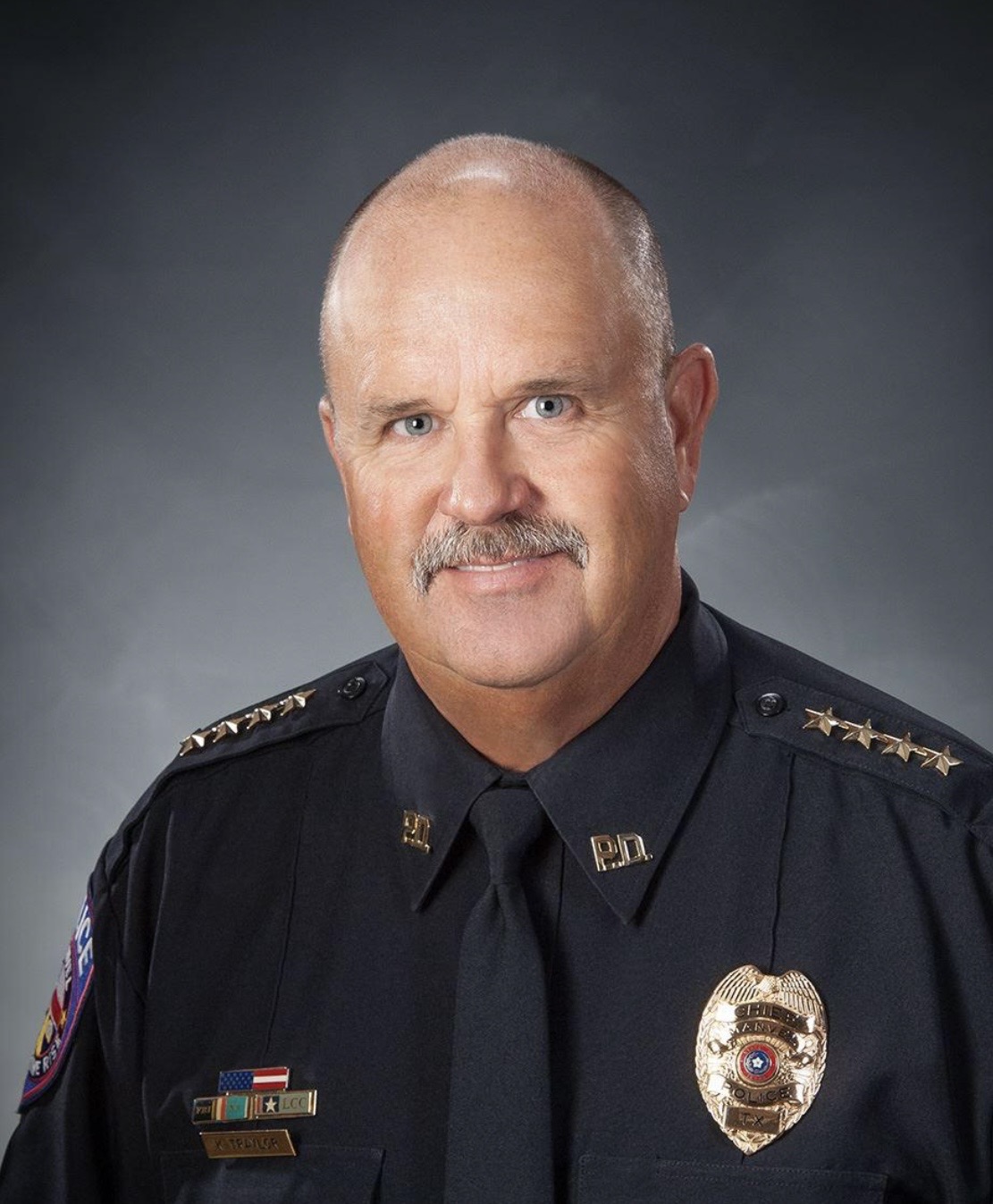
Former Manvel Police Chief Keith Traylor, named in the Manvel civil rights lawsuit.
Former Manvel Police Chief Keith Traylor is among the officials whose actions are challenged in the federal civil-rights lawsuit.

MANVEL, Texas — Two former Manvel Police Department officers accused their former chief of retaliation just days before city officials proposed his termination.

The Manvel police retaliation complaints raise questions about former Police Chief Keith Traylor’s leadership. They also reveal disputes involving the Manvel Police Association and public-information requests.

Former Police Captain Chris Day filed a complaint on September 3, 2026. Former reserve and part-time officer David Guerrero submitted another complaint the following day.

Both men questioned employment decisions involving Traylor.

Meanwhile, earlier records reveal another dispute over public-information requests involving department employees and critics.

The documents provide new insight into conflicts within the department. However, the complaints do not prove that Traylor violated department policies or retaliated against employees.

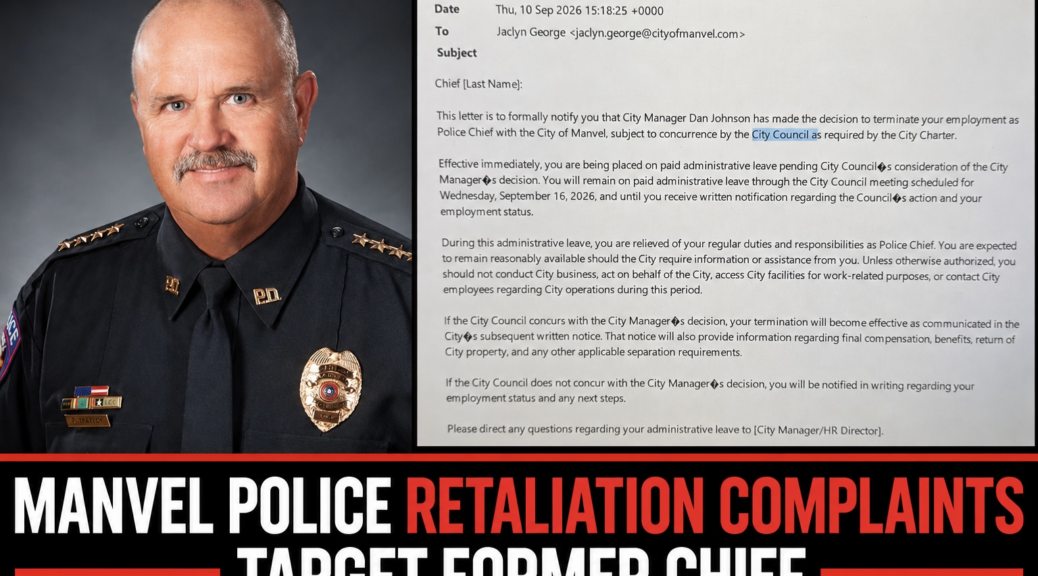
Manvel police retaliation complaints target former chief

Day submitted his complaint to city officials on September 3, 2026.

He accused department leadership of retaliation, unfair treatment and procedural violations.

Day also questioned the handling of employment decisions involving his position.

One allegation concerned an August 12 termination letter.

According to Day, the department prepared the letter before an August 13 meeting about his employment.

That timeline raises questions about when department leadership reached its decision.

Day also served as president of the Manvel Police Association.

His complaint raised concerns about whether his association activities influenced his treatment.

He requested an independent investigation and asked officials to preserve relevant records.

The documents reviewed so far do not establish whether investigators substantiated his allegations.

Second officer disputes budget explanation

On September 4, 2026, Guerrero submitted a separate complaint to City Manager Dan Johnson.

Guerrero questioned the department’s explanation for ending his employment.

According to his complaint, department officials cited the upcoming budget cycle.

However, Guerrero believed his association with Day played a role.

“I believe the actual reason for my release was my association with Chris Day,” Guerrero wrote.

He asked the city to review staffing records, financial documents and internal communications.

Specifically, Guerrero wanted investigators to determine whether budget concerns justified his removal.

He also questioned whether the department retained other reserve officers after his departure.

Furthermore, he asked officials to examine any subsequent reserve officer appointments.

Guerrero argued that those records could help establish whether the department had a legitimate financial reason for releasing him.

His complaint does not prove that officials provided a false explanation.

Instead, Guerrero requested an independent review of the circumstances.

Police association tensions emerge in complaint

Guerrero also described growing tensions between Traylor and the Manvel Police Association.

According to his complaint, association members discussed a possible vote of no confidence in Traylor’s leadership.

Guerrero claimed Traylor expressed anger about those discussions.

“The Association is trying to stab me in the back,” Guerrero wrote.

He attributed those words to Traylor.

However, the available records do not independently verify that statement.

Guerrero also questioned whether Traylor viewed his friendship with Day as a reason to remove him.

As a result, he requested an investigation outside the chief’s chain of command.

He also asked city officials to protect employees who might provide information.

Public-information requests raise separate concerns

Earlier records reveal another dispute involving the Manvel Police Association.

Between July 20 and July 24, 2025, requests associated with the organization sought government records concerning specific individuals.

Those requests included communications involving city employees, residents and animal-control matters.

Texas law allows people to request government information.

Therefore, submitting a public-information request does not establish misconduct.

However, the purpose behind certain requests later became the subject of a complaint.

The available records do not establish who directed each request or why the association sought particular information.

Former animal-control officer alleges retaliation

On August 3, 2025, former Manvel Animal Control Officer John Sherman submitted a complaint concerning a public-information request.

Sherman believed the request targeted him because of an earlier whistleblower complaint.

He identified Day in connection with the disputed request.

However, the records do not establish whether Day acted independently or followed another person’s instructions.

They also do not establish whether anyone used the request for an improper purpose.

Those questions remain important because the records involve both association activities and allegations of retaliation.

Investigators would need additional communications or testimony to determine who authorized the requests.

Did department leadership direct the requests?

Another question concerns Traylor’s possible involvement.

Information provided during this investigation alleges that Traylor pressured Day to seek records about employees and residents who criticized department leadership.

However, the documents reviewed so far do not independently establish that allegation.

They also do not establish whether Traylor directed any specific request.

Day’s account could help clarify the circumstances.

Likewise, Traylor’s response could explain whether he had any involvement.

For now, the available evidence does not support a conclusion about who directed the disputed requests.

City proposes termination days after complaints
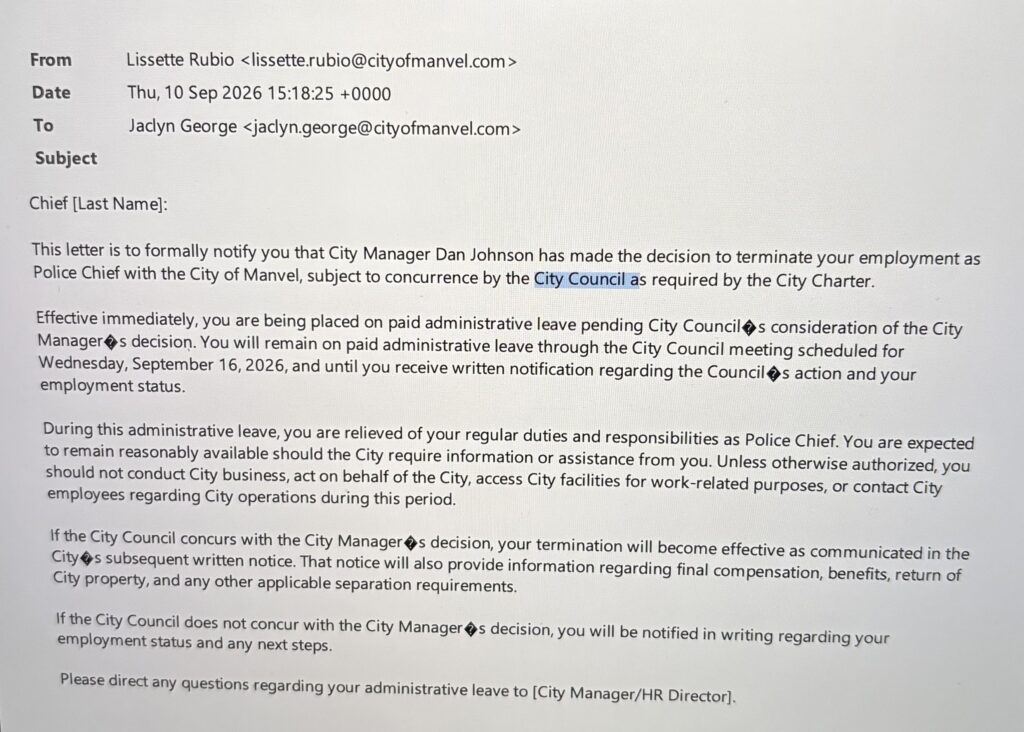
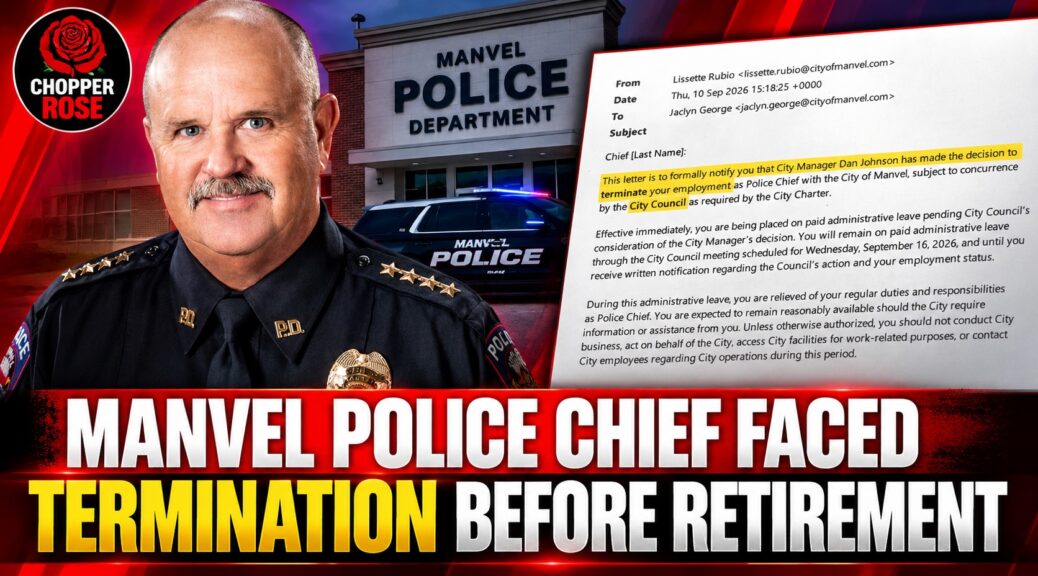
September 10, 2026, proposed termination notice for former Manvel Police Chief Keith Traylor.
A September 10, 2026, notice proposing the termination of Manvel Police Chief Keith Traylor, issued days after complaints were submitted to city officials.

On September 10, 2026, Manvel officials issued a proposed termination notice involving Traylor.

The notice followed Day’s complaint by seven days.

It also came six days after Guerrero submitted his complaint.

However, the timing alone does not establish that either complaint caused the proposed termination.

The available records do not establish which allegations, if any, directly influenced the city’s decision.

Traylor later departed the Manvel Police Department.

Rick Alvarado subsequently assumed interim leadership.

Meanwhile, Traylor moved into an interim civilian administrative role with the Clute Police Department.

The leadership changes followed months of disputes involving department management and employee relations.

What the records establish

The documents identify several significant developments.

First, Day filed a retaliation complaint on September 3, 2026.

Next, Guerrero submitted a separate complaint on September 4.

Earlier records also document Sherman’s concerns about a public-information request in August 2025.

Finally, Manvel officials issued Traylor’s proposed termination notice on September 10, 2026.

Together, these events provide a timeline of internal disputes involving department leadership.

However, several questions remain unanswered.

The available records do not establish whether investigators substantiated the retaliation allegations.

They also do not explain who directed every public-information request.

Furthermore, the documents do not establish whether the separate complaints influenced Traylor’s departure.

Investigation continues

The Manvel police retaliation complaints provide another look at internal conflicts within the department.

They also raise questions about employee treatment, police association activities and department accountability.

However, allegations require evidence before anyone can establish wrongdoing.

Additional records may help explain how city officials investigated the complaints.

They may also clarify whether department leadership influenced the disputed public-information requests.

This investigation remains ongoing.

ChopperRose.com will continue examining public records and reporting verified developments involving Manvel Police Department leadership.

My new book is now available

My new book, When Two Worlds Collide During WWII, follows two families on opposite sides of World War II and the remarkable events that eventually brought their lives together in Wisconsin.

Amazon Affiliate Disclosure: As an Amazon Associate, I earn from qualifying purchases. This comes at no additional cost to you.
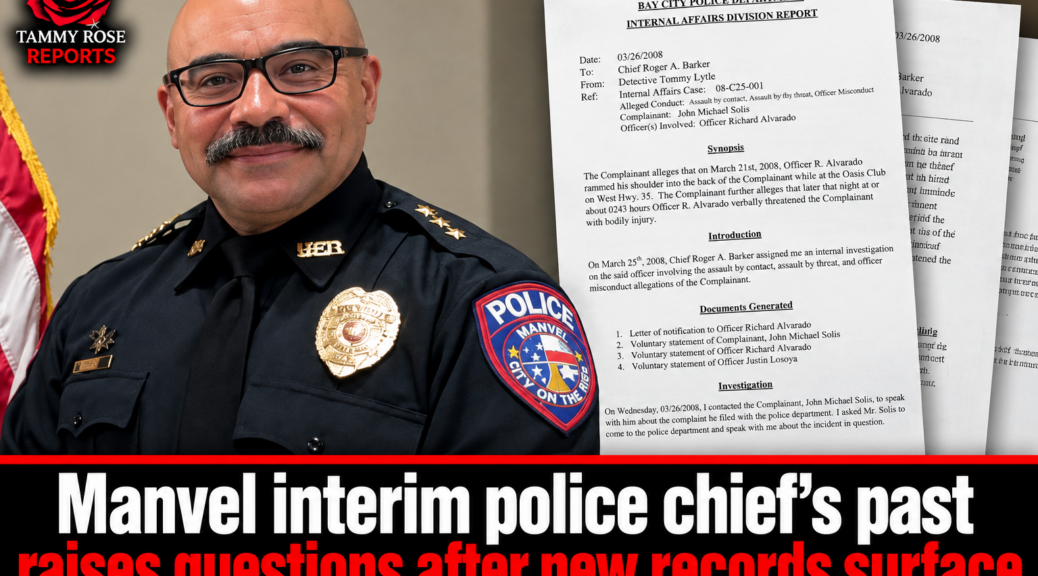
Records reveal prior investigations and termination involving Manvel interim police chief

By Investigative Reporter Tammy Rose

Newly obtained law-enforcement records reveal more about the employment history of Manvel Interim Police Chief Rick Alvarado.

The records include an investigation involving a county-owned television, concerns uncovered during reviews of a county-issued cellphone, paid administrative leave and Alvarado’s 2020 termination from the Victoria County Sheriff’s Office.

However, the records reviewed do not show that Alvarado was criminally charged in connection with those matters.

Alvarado has now responded in detail.

He disputes some of the conclusions drawn from the records. He also says Manvel had his complete background file before hiring him.

Investigation involved county-owned television

One of the earliest Victoria County records involves a county-owned television.

A February 5, 2019 review says an earlier internal investigation examined the possible theft or misappropriation of a television belonging to the Victoria County Sheriff’s Office.

Capt. Charles Williamson had been assigned to determine whether Alvarado committed a criminal offense or violated department policy.

According to the review, Williamson did not believe there was enough evidence to prove that a criminal offense occurred.

However, Williamson identified two possible policy violations.

Sheriff T. Michael O’Connor later ordered Lt. Will Franklin to review the case again.

Franklin was asked to determine whether investigators had missed additional policy violations or unethical conduct.

The review also included a separate complaint involving Alvarado’s conduct while working as an instructor at the Victoria College Police Academy.

Cellphone review uncovered other concerns

The television investigation also led investigators to review information from a county-issued cellphone or SIM card used by Alvarado.

That review uncovered material investigators considered troubling.

However, investigators said some of that material was not directly related to the television allegation.

Franklin’s 2019 review described repeated personal use of county communications equipment.

Investigators also documented derogatory language and conversations involving anabolic steroids.

Franklin concluded that several incidents violated Victoria County Sheriff’s Office policy.

He also wrote that the conduct did not meet the ethical expectations required of sheriff’s office employees or Texas peace officers.

Alvarado placed on administrative leave

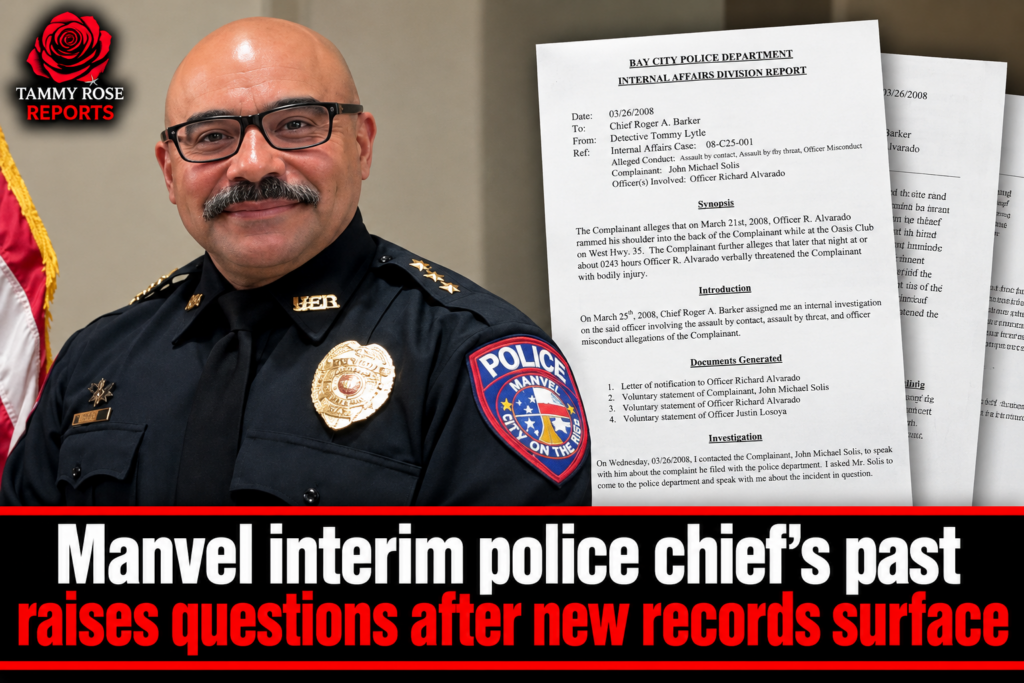
Rick Alvarado, interim Manvel police chief, in police uniform.
Rick Alvarado, interim chief of the Manvel Police Department.

Another internal investigation began in August 2020.

On August 4, Alvarado was placed on paid administrative leave while investigators reviewed the matter.

The memo ordered him to remain available by phone during normal work hours and prohibited him from acting on behalf of the sheriff’s office while the investigation continued.

Two days later, investigators examined a county-issued iPhone used by Alvarado.

The forensic report documented more than 1,000 chats and more than 5,000 SMS messages.

It also listed tens of thousands of images and thousands of videos.

Investigators reported finding conversations involving substances identified in the report as Endurabol, RAD 140, Testolone, SARMs and testosterone.

The report also described contacts investigators identified as known steroid or drug users, felons or people associated with criminal activity.

Those descriptions came from the sheriff’s office investigation.

They do not, by themselves, establish criminal conduct by Alvarado.

Investigator questioned missing messages

The cellphone examiner also noted something he considered unusual.

According to the report, investigators found call logs between Alvarado and his wife but no direct SMS messages between them.

The investigator wrote that this could indicate the phone had been cleaned before it was surrendered.

However, the report does not establish who may have deleted information or when.

Investigators also noted that some social-media applications had previously been installed but were no longer on the phone.

Victoria County terminated Alvarado

On August 21, 2020, Victoria County Sheriff Justin Marr notified Alvarado that his employment would be terminated.

The termination notice cited misuse of a county-issued cellphone and conduct unbecoming a sheriff’s office employee.

The letter referenced both the earlier investigation and the newer 2020 review.

Among the findings, investigators cited extensive personal use of the county phone.

They also documented derogatory language involving coworkers and ethnic or racial groups.

Other conversations involved strip clubs, alcohol and steroids.

The termination letter also cited contacts with people investigators described as felons or drug users.

In addition, the sheriff’s office cited a February 2018 conversation involving an alleged $11 payment for each police academy cadet Alvarado sent to a nutrition store.

The termination letter described that as a possible personal benefit connected to his official position.

Those were findings from an employment investigation.

The records reviewed do not show that Alvarado was criminally charged over those allegations.

Alvarado disputes steroid allegations

Alvarado says the termination followed a change in leadership at the Victoria County Sheriff’s Office.

He says the internal investigation focused, in part, on concerns involving steroid use.

Alvarado says he was undergoing medically supervised Testosterone Replacement Treatment at the time.

He says that treatment included prescription medications and over-the-counter supplements.

Alvarado also says he offered to provide medical records and submit to a drug screen.

According to Alvarado, both offers were declined.

He says he later contested the allegations.

However, he does not dispute using the county-issued cellphone for personal matters.

Alvarado says employees commonly used one phone for both personal and county business under previous leadership.

He says the new administration chose to enforce the policy differently.

“I take full ownership for violating this policy,” Alvarado wrote in his response.

Alvarado says he received honorable F-5

Alvarado also says he received an honorable discharge designation on his F-5 employment separation record.

He argues that his continued TCOLE licensing and law-enforcement career are important context.

The records I have reviewed so far do not include the final F-5 form confirming that designation.

Therefore, I am attributing that statement directly to Alvarado.

Katy Police voicemail raises separate questions

A voicemail recording provided to me during this investigation appears to contain a message from a Katy Police Department representative discussing Alvarado’s application to that department.

The caller says Alvarado interviewed with Katy Police in September 2020.

During the voicemail, the caller says Alvarado was “kind of vague on a couple of IAs” involving the Bay City Police Department.

“So we passed on him,” the caller says.

The caller also says Katy had several strong applicants in that group and therefore did not continue further into Alvarado’s background.

The voicemail also says Katy had a personal history statement completed by Alvarado.

The caller offered to provide a copy of that document.

The recording does not establish that Alvarado made a false statement during the interview.

It does show that questions about his prior internal-affairs history came up during Katy’s hiring process before the department decided not to move forward with him.

Alvarado responds to Bay City investigation

Alvarado also provided more information about a 2008 Bay City internal-affairs investigation.

He says the allegations were unfounded and resulted in no discipline.

According to Alvarado, the complaint came from a man he had previously arrested for assault causing bodily injury involving family violence.

Alvarado says the man later confronted him while he was off duty and tried to provoke a fight.

He says he de-escalated the situation and walked away.

According to Alvarado, the man later tried to hit him with a vehicle and made threats.

Alvarado says independent witnesses supported his version of events.

He says the investigation was then closed without discipline or even verbal counseling.

I am continuing to review records related to that Bay City matter.

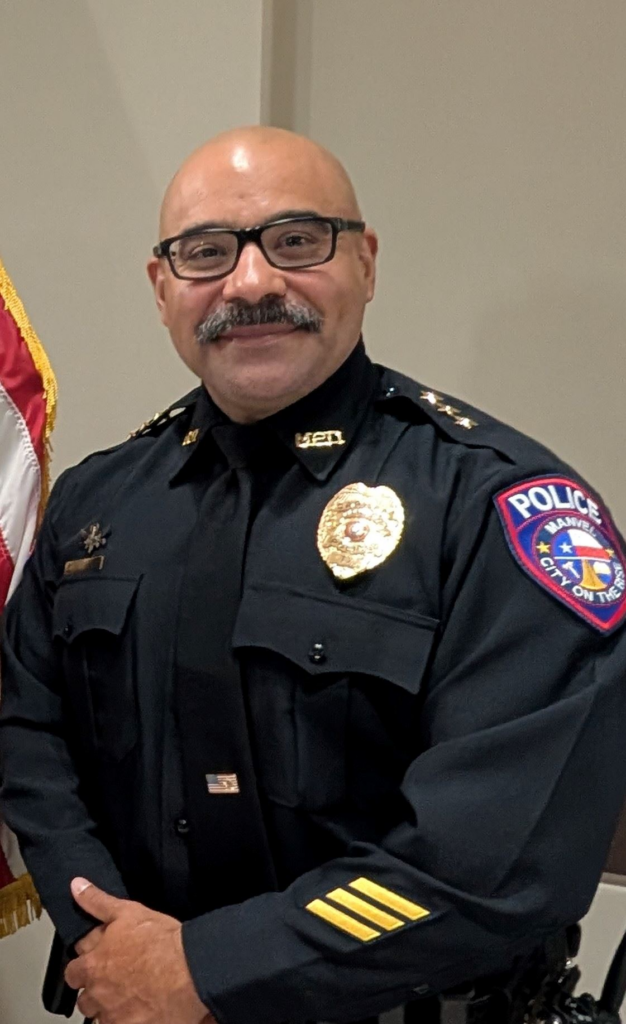
2022 disclosure involved Alvarado

Alvarado’s Victoria County employment history later became relevant in a criminal case.

A June 2022 disclosure referenced information connected to the investigation that led to his termination.

The material involved concerns about possible illicit drug use and conduct unbecoming an officer.

Alvarado says he recently reviewed the disclosure connected to Cause Number 20-05-3213-D.

He says the request involved employment records that were available for review by the court.

Alvarado also says he confirmed with the Victoria County District Attorney’s Office that he is not on its “Brady List.”

He says he has testified in several criminal cases since then.

I have not independently confirmed that statement with the Victoria County District Attorney’s Office.

A disclosure of potential impeachment material does not automatically mean an officer committed a crime.

It also does not automatically mean an officer is permanently barred from testifying.

Personnel file also shows positive career history

The newly obtained personnel file contains favorable information about Alvarado as well.

That context matters.

Alvarado joined the Victoria County Sheriff’s Office in August 2014 after previously serving with the Bay City Police Department.

He later became an investigator.

A 2016 performance evaluation described his reports as clearly written and accurate.

The evaluation also noted his work on sexual assault and child sexual-abuse cases.

In addition, Alvarado worked with outside agencies and served as commander of the Victoria County Sheriff’s Office SWAT team.

Records show he earned advanced law-enforcement certifications and accumulated thousands of hours of training.

Therefore, the disciplinary records represent only one part of a much longer law-enforcement career.

Alvarado says Manvel had complete file

Alvarado later joined the Manvel Police Department and eventually moved into executive leadership.

He now serves as Interim Director of Public Safety and Chief of Police.

Alvarado says he was fully open during Manvel’s hiring process.

“The city had my complete background file,” he wrote.

That statement is significant because one of the main questions raised during this investigation was what Manvel knew before hiring and promoting him.

Alvarado says the city had the information.

Alvarado defends leadership record

Alvarado also pointed to his more than 20 years in law enforcement.

He cited experience in investigations, command, tactical operations, training and policy.

He says his leadership approach centers on accountability, transparency and what he described as “Extreme Ownership.”

Alvarado says he has focused on building a professional and accountable police department in Manvel.

He also says he believes public trust and responsible use of public resources are central to his leadership.

Questions still remain

Alvarado’s response answers several important questions.

However, the records still leave areas that warrant additional review.

One question involves what documentation Manvel received during its background investigation.

Another involves whether the city reviewed the Victoria County termination records and later disclosure material.

There is also the question of what Alvarado disclosed to different agencies during separate hiring processes.

The Katy voicemail raises one set of questions.

Alvarado’s statement about being fully transparent with Manvel provides his answer regarding another.

Those two hiring processes occurred at different times and involved different agencies.

Therefore, they should not automatically be treated as contradictory.

The records also show both positive performance history and serious disciplinary findings.

That distinction is important.

Prior investigations alone do not prove that Alvarado is unqualified to lead a police department.

At the same time, when a law-enforcement officer rises to the highest position in a department, the public has an interest in knowing what appears in that officer’s employment history.

The public also has an interest in knowing what city officials reviewed before making that decision.

I am continuing to review records and seek additional documentation.

This story will be updated if new information becomes available.

My new book is now available

My new book, When Two Worlds Collide During WWII, follows two families on opposite sides of World War II and the remarkable events that eventually brought their lives together in Wisconsin.

Amazon Affiliate Disclosure: As an Amazon Associate, I earn from qualifying purchases. This comes at no additional cost to you.
Federal judge weighs ruling in Manvel civil-rights lawsuit as trial could come in 2027

By Investigative Reporter Tammy Rose

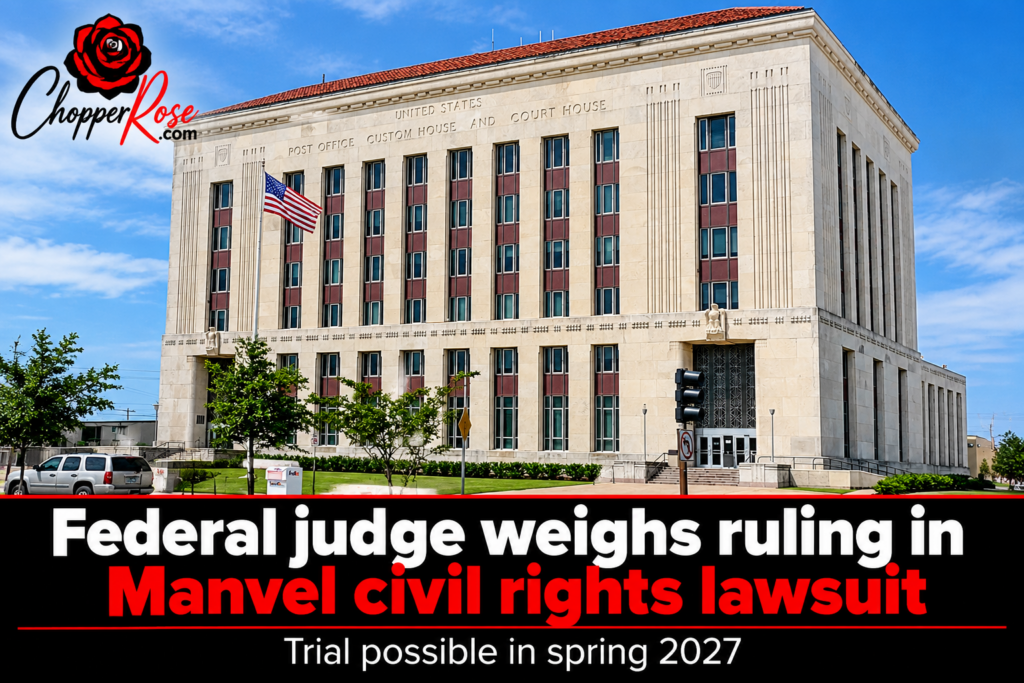
The Manvel civil rights lawsuit could be headed toward trial in spring 2027. However, a federal judge must first decide whether the case, or portions of it, can proceed.

Attorney Michael Kerensky confirmed Thursday, October 29, that the judge is reviewing competing motions for summary judgment in Marks v. City of Manvel.

The lawsuit involves allegations of constitutional violations stemming from a Manvel Police Department investigation.

Kerensky said no additional hearings are expected until the judge issues a ruling.

If claims remain for trial, the next court appearance will likely be a docket call to establish a trial schedule.

Although a spring 2027 trial is anticipated, the judge has not set a date.

What is the lawsuit about?

Former Manvel Police Chief Keith Traylor, named in the Manvel civil rights lawsuit.
Former Manvel Police Chief Keith Traylor is among the officials whose actions are challenged in the federal civil-rights lawsuit.

The federal lawsuit, filed in the Southern District of Texas, Galveston Division, involves plaintiffs John Marks and Freddie Douglas.

The case challenges actions taken during a Manvel Police Department investigation and raises questions about whether the plaintiffs’ constitutional rights were violated.

Former Manvel Police Chief Keith Traylor is among the officials whose actions have been challenged in the litigation.

The plaintiffs’ claims remain allegations. The court has not made a final determination that the defendants violated anyone’s constitutional rights.

Depositions and the investigation

The litigation has involved sworn testimony from individuals connected to the underlying investigation.

Depositions allow attorneys to question witnesses under oath about their actions, knowledge and recollections.

Such testimony can play an important role in determining whether significant factual disputes exist and whether those disputes must be resolved at trial.

The proceedings have also involved questions concerning testimony from law-enforcement and prosecutorial officials.

A March 2026 court ruling addressed an interlocutory appeal related to depositions involving Texas Ranger Aaron Arizmendi and District Attorney Tom Selleck.

That procedural dispute is separate from the summary judgment motions now awaiting a decision.

What is summary judgment?

Both sides have asked the federal court to rule on legal issues before trial.

A motion for summary judgment allows a judge to resolve a claim when there is no genuine dispute over facts material to the decision and the moving party is entitled to judgment under the law.

The judge could dismiss some claims, allow others to proceed or issue a ruling that resolves the case without a trial.

The filing of competing motions does not mean either side has prevailed.

What happens next?

According to Kerensky, the court is not expected to schedule additional hearings until the pending motions are decided.

If claims remain for trial, the next step would likely be a docket call, during which the court could establish a trial schedule.

Kerensky anticipates a possible trial in spring 2027 but emphasized that scheduling is ultimately the judge’s decision.

The case remains unresolved.

Why this case matters

The lawsuit raises questions about the responsibilities of law-enforcement officers during criminal investigations and the constitutional protections afforded to individuals who become subjects of those investigations.

Federal civil-rights lawsuits can examine whether government officials acted within the limits of their legal authority.

However, allegations made in a lawsuit are not proof of misconduct, and the defendants have the opportunity to contest the claims.

The upcoming ruling could determine whether a jury will eventually hear the disputed evidence.

For now, the case remains in the hands of the federal judge.

This is an ongoing investigation. Additional reporting will follow when the court issues its ruling.

My new book is now available

My new book, When Two Worlds Collide During WWII, follows two families on opposite sides of World War II and the remarkable events that eventually brought their lives together in Wisconsin.

Amazon Affiliate Disclosure: As an Amazon Associate, I earn from qualifying purchases. This comes at no additional cost to you.
Exclusive: Toxic workplace allegations emerge in Manvel police chief retirement records

By Investigative Reporter Tammy Rose

Exclusive: Toxic workplace allegations emerge in Manvel police chief retirement records

By Investigative Reporter Tammy Rose

Newly obtained records raise questions about the Manvel police chief retirement and the events that led to it.

The documents reveal allegations of retaliation, abuse of authority and a toxic work environment. They also include a proposed termination notice and a negotiated retirement agreement.

Former Police Chief Keith Traylor left the department on September 30, 2026.

However, the records suggest city officials considered another outcome before his departure.

Manvel police chief faced proposed termination

A proposed termination notice included in September 10, 2026, records outlined plans to remove Manvel Police Chief Keith Traylor, subject to City Council concurrence.

A September 10, 2026, email included a proposed termination notice for Traylor.

The notice stated that City Manager Dan Johnson had decided to terminate the chief, pending City Council approval.

The document also addressed administrative leave and the next steps if the council rejected the decision.

However, the records reviewed do not establish that the council approved his termination.

Instead, the city and Traylor reached a separation agreement.

The proposed termination notice followed a September 3, 2026, formal complaint filed by Chris Day, a former Manvel police employee and president of the Manvel Police Association.

Day alleged retaliation, abuse of authority and violations of department disciplinary procedures. He also questioned whether his own termination had been predetermined, pointing to a termination letter dated August 12, one day before his August 13 disciplinary meeting.

Day requested an independent investigation into Chief Keith Traylor’s conduct, including allegations of intimidation and a toxic workplace.

The complaint also raised concerns about a possible vote of no confidence in Traylor’s leadership.

These allegations have not been independently substantiated, and the complaint does not establish that Traylor violated department policy or state law.

Records reveal toxic workplace allegations

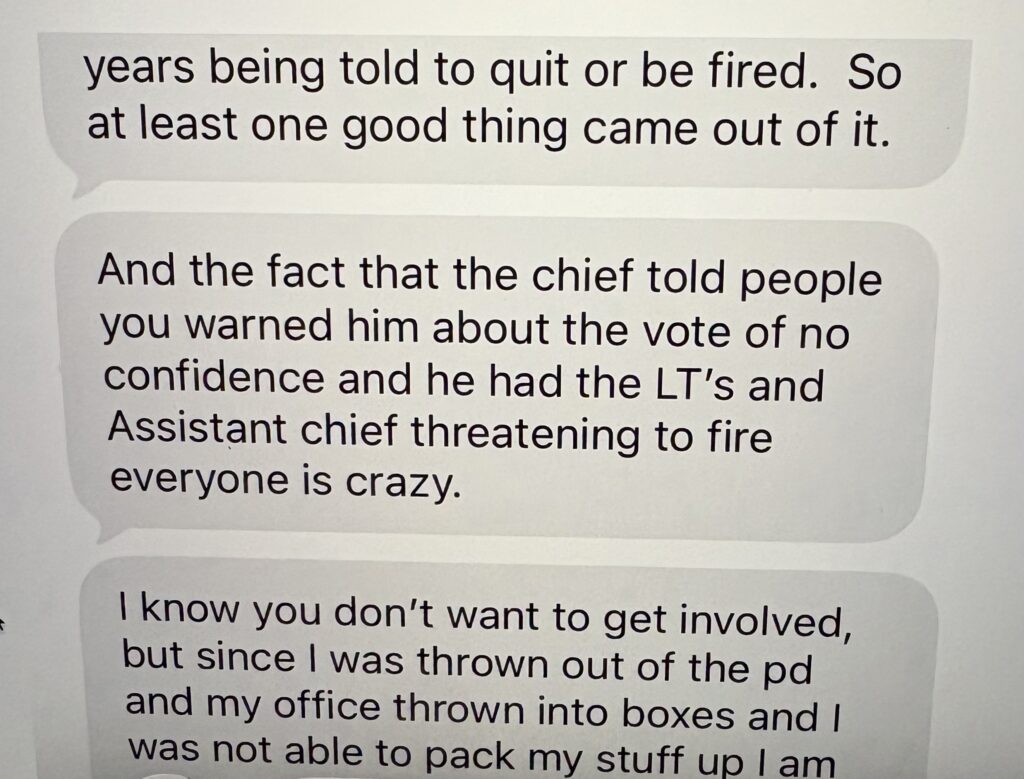
Text messages obtained through public records describe allegations of retaliation, threats of termination and a vote of no confidence involving Manvel Police Department leadership.

Additional documents describe serious disputes inside the Manvel Police Department.

A formal complaint alleges retaliation, abuse of authority and a toxic work environment.

Other records include messages from a former employee who claimed department leaders treated him unfairly.

He alleged that the chief retaliated against him after he filed a complaint. He also described threats of termination and ongoing workplace conflict.

The messages reference a vote of no confidence involving department leadership.

These claims remain allegations.

Source document: September 30, 2026, response from Mayor Dan Davis

The documents reviewed do not independently establish their accuracy.

Former officer questioned whether termination was predetermined

A September 3, 2026, formal complaint submitted by former Manvel police employee Chris Day raises additional questions about the disciplinary process under former Police Chief Keith Traylor.

Day alleged that his termination may have been predetermined, pointing to a termination letter dated August 12, one day before his August 13 disciplinary meeting.

He also alleged that he was not provided all investigative materials before his termination, received insufficient time to respond to disciplinary findings and was given approximately 45 minutes’ notice before an administrative interview.

Day, who identified himself as president of the Manvel Police Association, also raised concerns about possible retaliation. According to his complaint, association members had discussed a possible vote of no confidence in Traylor.

The complaint requested an independent investigation, preservation of relevant records and consideration of placing Traylor on paid administrative leave while the allegations were examined.

Day acknowledged that his termination appeal had been denied. His complaint sought a separate investigation into whether the disciplinary process had been handled properly.

These allegations have not been independently established by the complaint itself, and the records reviewed here do not establish that Traylor violated department policy or Texas law.

Retirement agreement included special protections

The separation agreement describes Traylor’s departure as a voluntary retirement in good standing.

The timing of the agreement raises additional questions. A proposed termination notice dated September 10, 2026, indicates City Manager Dan Johnson was considering terminating Traylor’s employment, pending City Council approval. Yet the signed separation agreement states that Traylor submitted his voluntary retirement notice that same day. The agreement ultimately characterized his departure as a voluntary retirement in good standing.

The records raise an important question: What happened between the proposed termination and the negotiated retirement agreement?

Section 3 addresses his personnel file, disciplinary records and employment references.

The agreement restricts the city from adding certain materials about inquiries to his personnel file or Texas Commission on Law Enforcement records.

It also requires the city to report his departure as a voluntary retirement.

Additionally, the agreement provides salary and accrued leave payments.

It includes continued health coverage under specified terms.

The city and Traylor agreed that the settlement did not constitute an admission of wrongdoing.

Mayor publicly praised Traylor

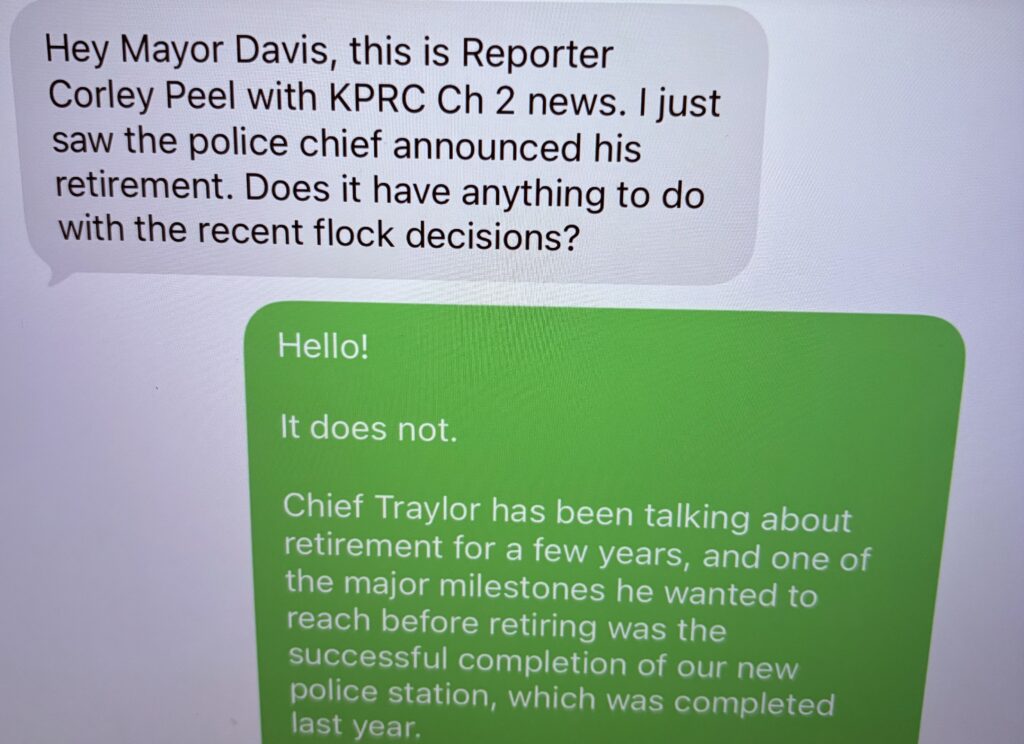
Text messages obtained through public records show KPRC 2 reporter Corley Peel questioning Manvel Mayor Dan Davis about Police Chief Keith Traylor’s retirement. Davis denied a connection to recent Flock camera decisions and said Traylor had discussed retirement for years.
Photo credit: City of Manvel public records, September 2026.

On September 16, a KPRC reporter asked Manvel Mayor Dan Davis about the retirement.

Davis said Traylor had discussed retirement for several years.

He also praised the chief’s leadership and service to the city.

However, the proposed termination notice raises questions about what city officials discussed before the retirement agreement.

Questions remain about Manvel police leadership

The records reveal a department facing workplace allegations and internal disputes.

They also document a proposed termination and a later agreement that characterized Traylor’s departure as voluntary.

Several questions remain.

What prompted the proposed termination? How did city officials investigate the workplace complaints? What led to the final retirement agreement?

The documents reviewed do not fully answer those questions.

Investigative Reporter Tammy Rose continues to examine the records surrounding Traylor’s departure.

My new book is now available

My new book, When Two Worlds Collide During WWII, follows two families on opposite sides of World War II and the remarkable events that eventually brought their lives together in Wisconsin.

Texas Public Information Act Request: Dash Camera Released, Body Camera Pending

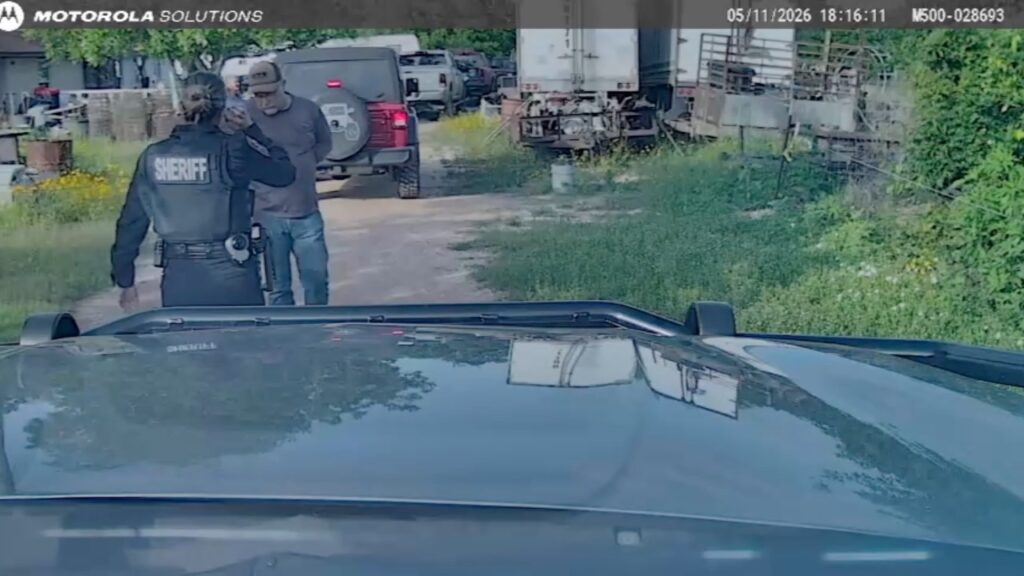
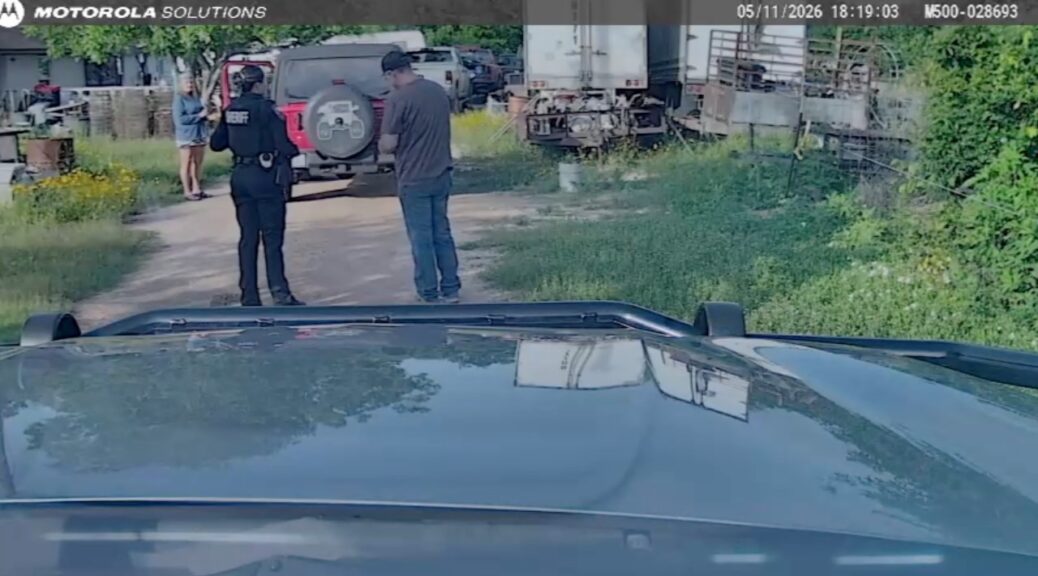
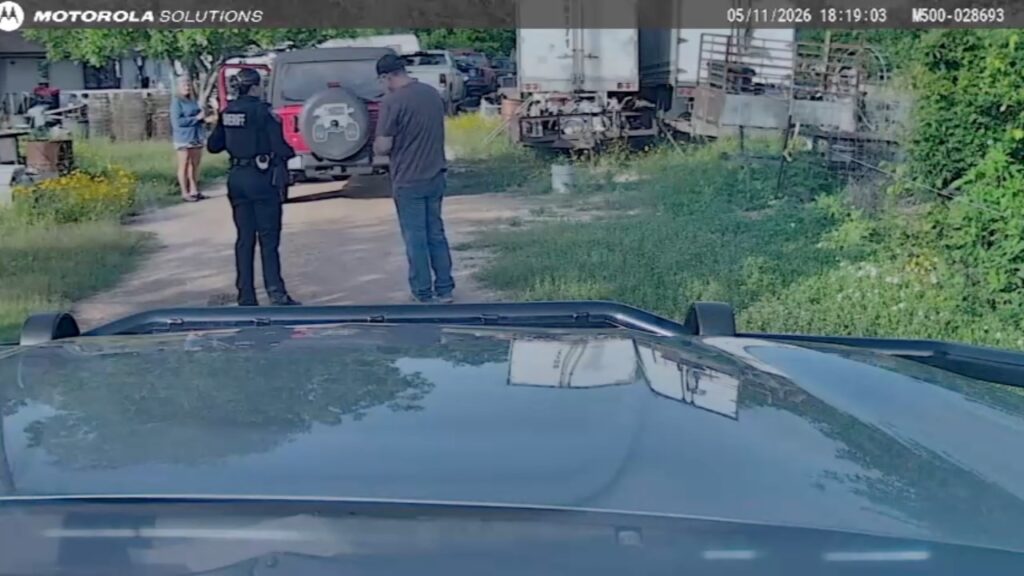
Raw dash camera image released through a Texas Public Information Act request showing a Brazoria County sheriff’s deputy speaking with individuals during a May 11, 2026 encounter related to the Rebecca Beard investigation.
Screenshot from the dash camera video released by Brazoria County in response to a Texas Public Information Act request. The recording contains no audio. The requested body camera video remains pending while the Texas Attorney General reviews whether it may be withheld.

Texas Public Information Act Request Leads to Dash Camera Release While Body Camera Remains Under Review

The Brazoria County Criminal District Attorney’s Office released the dash camera recording in response to my Texas Public Information Act request. The responding deputy’s body camera recording remains under review by the Texas Attorney General.

Page one of the Brazoria County Criminal District Attorney’s Office response confirming my public information request, payment, and the release of the dash camera recording while the requested body camera recording remains under review by the Texas Attorney General.

By Investigative Reporter Tammy Rose

Transparency matters. That is why I filed a Texas Public Information Act request after an encounter with a woman connected to the Rebecca Beard investigation.

The request resulted in sheriff’s reports, dispatch records, redacted documents, and dash camera video. However, one important record remains unavailable. The Brazoria County District Attorney’s Office has asked the Texas Attorney General to decide whether the responding deputy’s body camera can be withheld.

This article explains what happened, what the released records show, and why I continue to seek the body camera recording.

Why I Went to the Property

As an investigative reporter, I believe everyone deserves an opportunity to comment before publication.

I went to Cherie “Rio” Starr’s residence to request an interview about statements she has made regarding the Rebecca Beard investigation.

She declined to comment.

According to the incident report, Starr told deputies she was a protected witness and wanted to know how I obtained her personal information.

The report also states she believed someone had sent me to her property.

I Returned to My Jeep

After Starr declined to comment, I walked back to my Jeep because I intended to leave.

According to the sheriff’s report, I told deputies that Starr and Kenneth Cadenhead prevented me from leaving the property.

The dashcam video released by Brazoria County contains no audio. Therefore, it cannot capture the conversations that occurred during the encounter.

However, the video does show Starr standing near my driver’s side while Cadenhead remained behind my Jeep during part of the incident.

According to my recollection, both were asking me to identify my confidential source.

I declined.

Why I Would Not Reveal My Source

The incident report notes that I refused to identify my source.

That decision was intentional.

Protecting confidential sources is a long-standing practice in investigative journalism. Sources often provide information only because they trust reporters to keep their identities confidential.

My purpose that day was to request an interview. It was not to disclose who provided information for my reporting.

A Detail Not Included in the Report

One part of the encounter is not reflected in the written incident report.

According to my recollection, while standing near my driver’s side door, Starr told me she would agree to an interview “when this is all over.”

She also indicated that the Rebecca Beard investigation remained an active case that had never been closed.

Because the released dashcam has no audio, viewers cannot hear that conversation.

For that reason, I continue to seek release of the responding deputy’s body camera recording.

What the Public Records Show

My Texas Public Information Act request produced several records, including:

Sheriff’s incident reports
Dispatch and CAD records
Dashcam video
Redacted documents

The only major record that has not been released is the deputy’s body camera.

The District Attorney’s Office has asked the Texas Attorney General to determine whether that recording may be withheld under the Texas Public Information Act.

Receiving a request for an Attorney General ruling does not automatically mean the recording will never be released. The Attorney General will determine whether any exceptions to disclosure apply under Texas law.

How I Obtained the Records

Many people ask how to request police records in Texas.

In my case, I submitted a Texas Public Information Act request to Brazoria County.

After receiving a cost estimate, I paid the required fee at the Brazoria County Treasurer’s Office inside the courthouse.

The courthouse is beautiful, although locating the correct office can be a little confusing for first-time visitors.

After payment was processed, I went to the District Attorney’s Office to pick up the responsive records.

Everyone I dealt with during the process was courteous and helpful.

I also received more records than I expected.

Part Two Is Coming Soon

In Part Two, I will explain the Texas Public Information Act process step by step.

I will also show:

How to submit an open records request
Where to pay the required fees
How to pick up responsive records
Why some records are released immediately while others require a ruling from the Texas Attorney General

Understanding the process can help anyone request public records in Texas.

⸻

Related Investigations

⸻

Equipment I Use

For field reporting and investigative journalism, I rely on equipment that performs well in demanding conditions.

As an Amazon Associate, I earn from qualifying purchases. This comes at no additional cost to you.
Rebecca Beard Case: Why Wasn’t Paul Taylor’s Home Investigated After John Cone’s Report?

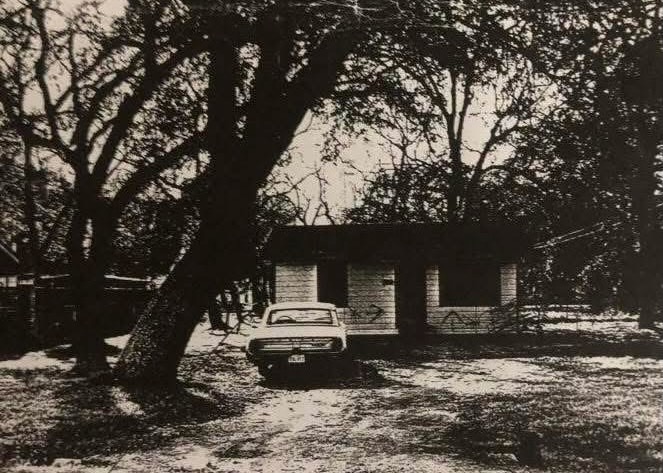
Historic black-and-white photograph of Paul Taylor’s former Clute home, featured in an article examining why investigators did not immediately secure or process the property after John Cone reported an alleged confession in the Rebecca Beard case.
The former Clute home where Paul Taylor lived became a focus of later investigative records after John Cone reported that Taylor allegedly confessed to killing Rebecca Beard. The article examines why available records do not document an immediate crime scene search or forensic processing of the property following that report.

Rebecca Beard Case: Why Wasn’t Paul Taylor’s Home Investigated After John Cone’s Report?

Reviewed by Investigative Reporter Tammy Rose

Police records raise new questions

Nearly 40 years after Rebecca “Becky” Beard disappeared, police records raise a question that remains unanswered.

If Sheriff Joe King received details of an alleged confession from John Cone shortly after Becky vanished, why don’t the records reviewed by Investigative Reporter Tammy Rose document an immediate search or forensic examination of Paul Taylor’s home?

The question stands out because later investigative summaries describe a series of events that, if accurate, pointed investigators toward Taylor’s residence within days of Becky’s disappearance.

John Cone said Taylor admitted killing Becky

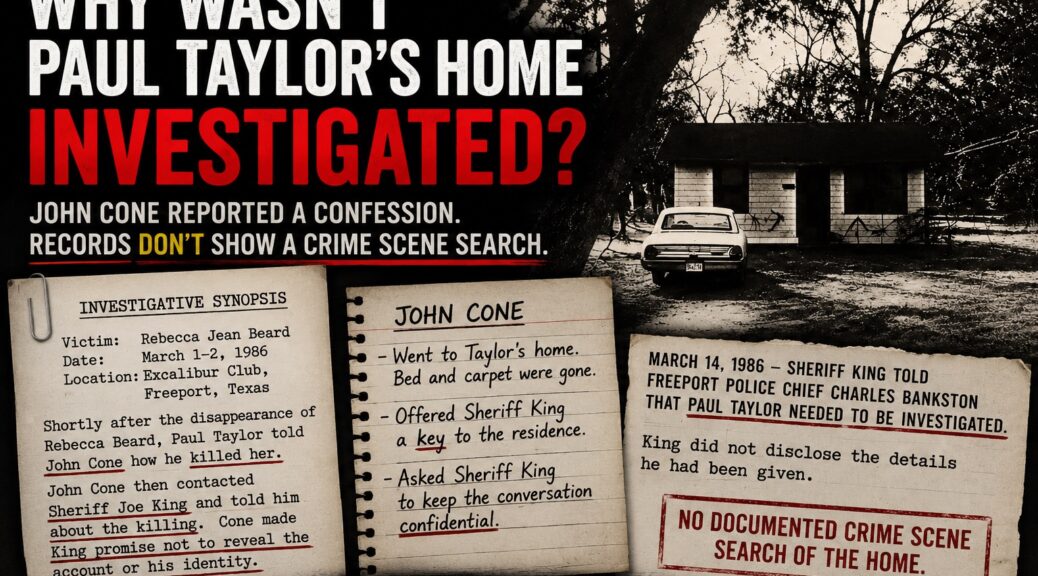
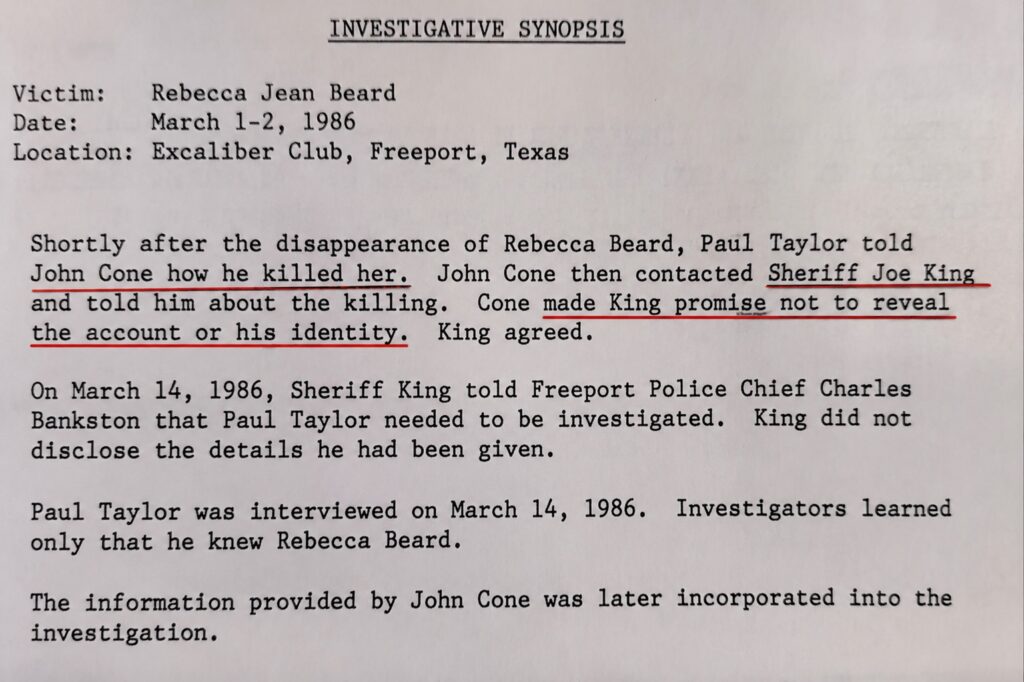
Investigative synopsis from the Rebecca Beard case stating that John Cone told investigators Paul Taylor admitted killing Rebecca Beard, contacted Brazoria County Sheriff Joe King, and asked that both his identity and the account remain confidential.
This investigative synopsis states that John Cone reported an alleged confession by Paul Taylor to Sheriff Joe King shortly after Rebecca Beard disappeared. According to the document, Cone asked King to keep both the information and his identity confidential. The synopsis also states King later advised Freeport Police that Taylor should be investigated, raising questions about what investigative steps followed.

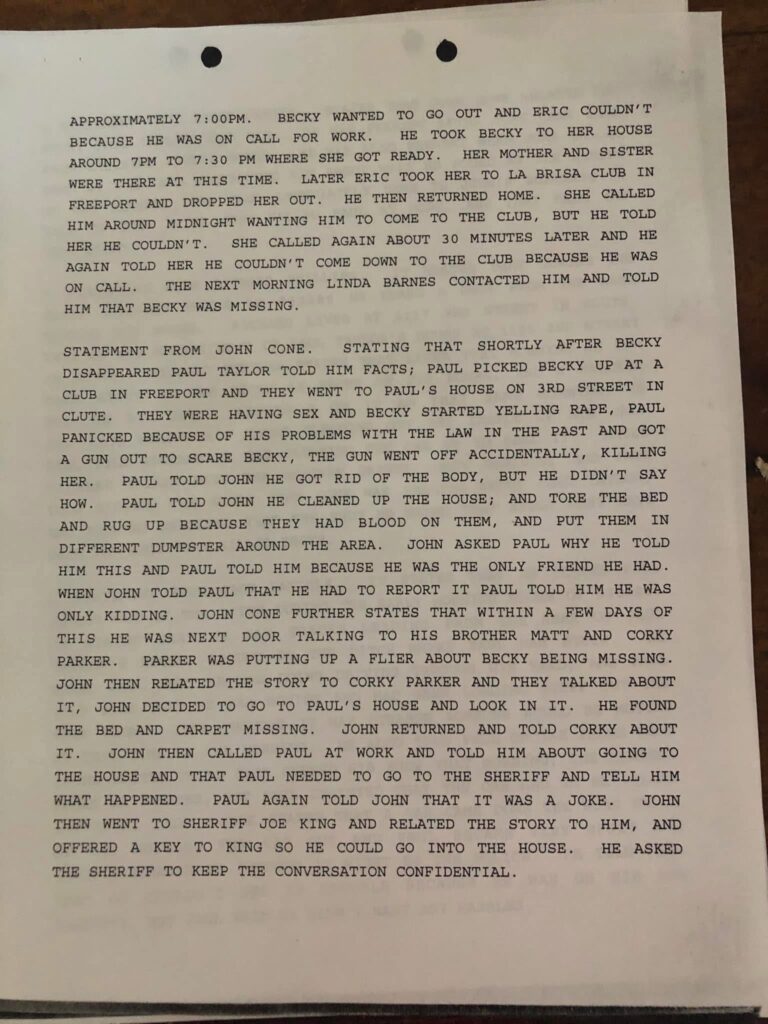
According to a later investigative synopsis, John Cone told investigators that Paul Taylor admitted Becky died inside his Clute home.

Cone’s statement says Taylor claimed he picked Becky up after she left a club, took her to his residence, and that she died after a gun discharged during a struggle.

Taylor allegedly told Cone he cleaned the residence, removed the bed and carpet because they contained blood, and discarded them in dumpsters.

Cone also said he entered Taylor’s home himself and noticed the bed and carpet were gone.

According to the records, Cone then contacted Brazoria County Sheriff Joe King and reported what Taylor allegedly told him.

Cone reportedly offered Sheriff Joe King a key

Investigative document summarizing John Cone’s statement in the Rebecca Beard case. The document states that Paul Taylor allegedly confessed to Cone, that Cone reported the information to Sheriff Joe King, and that Cone offered the sheriff a key to Taylor’s home after noticing the bed and carpet were missing.
This investigative document summarizes John Cone’s account, including his claim that Paul Taylor allegedly confessed to killing Rebecca Beard. According to the document, Cone said he entered Taylor’s home, noticed the bed and carpet were missing, and later offered Sheriff Joe King a key to the residence. The document raises questions about what investigative steps followed after that information reached law enforcement.

One detail stands out in Cone’s statement.

Cone said he offered Sheriff Joe King a key to Taylor’s residence.

He also asked the sheriff to keep both the conversation and his identity confidential.

The investigative synopsis later states that King agreed to keep the information confidential.

According to that same synopsis, Sheriff King informed Freeport Police Chief Charles Bankston on March 14, 1986, that Paul Taylor needed to be investigated but did not relate the details Cone had provided.

Taylor was interviewed that day. The synopsis states investigators learned only that Taylor knew Becky.

Where is the documented crime scene investigation?

The records reviewed by Investigative Reporter Tammy Rose do not document that investigators immediately searched Paul Taylor’s residence or processed it as a possible crime scene.

The records also do not document officers collecting physical evidence, photographing the interior, looking for blood evidence, seizing the reportedly missing bed or carpet, or tracing the dumpsters where Taylor allegedly said he discarded evidence.

Those questions remain central to understanding the early investigation. The records reviewed for this report do not document that investigators immediately completed those investigative steps after John Cone reported what Taylor allegedly told him.

Those questions remain central to understanding the early investigation. The records reviewed for this report do not document that investigators immediately completed those investigative steps after John Cone reported what Taylor allegedly told him.

Another report raised similar concerns

The records contain another development one month later.

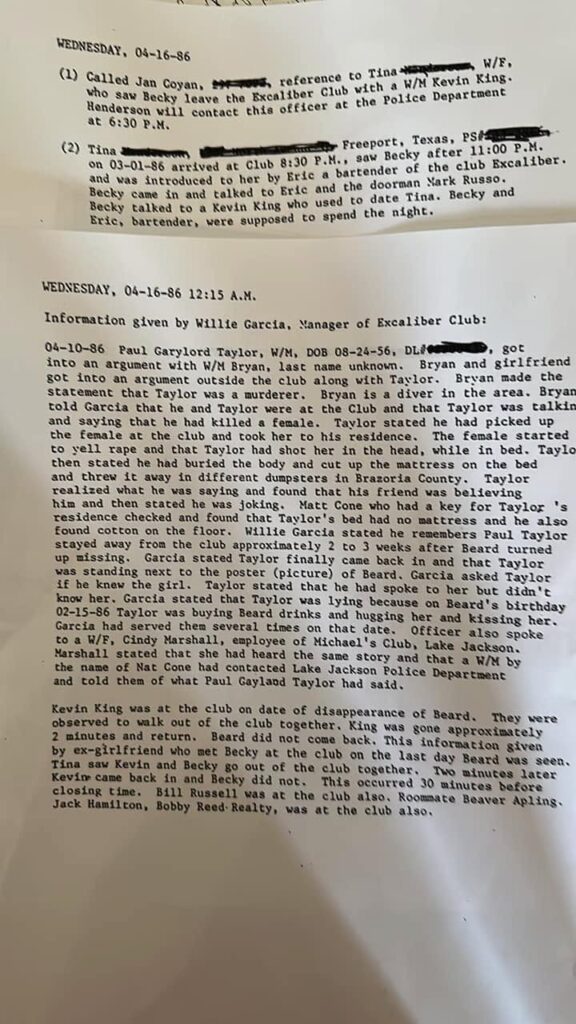
An April 16, 1986 report states the manager of Excaliber Club told investigators about another conversation involving Taylor.

According to the report, another witness claimed Taylor said he picked up a woman from the club, took her home, shot her, buried her body, cut up the mattress and discarded it in dumpsters.

The same report states Matt Cone checked Taylor’s residence and found the bed no longer had a mattress. Cotton stuffing reportedly remained on the floor.

Even then, the records reviewed by Investigative Reporter Tammy Rose do not document that officers immediately processed the residence as a homicide scene.

Another inconsistency emerges

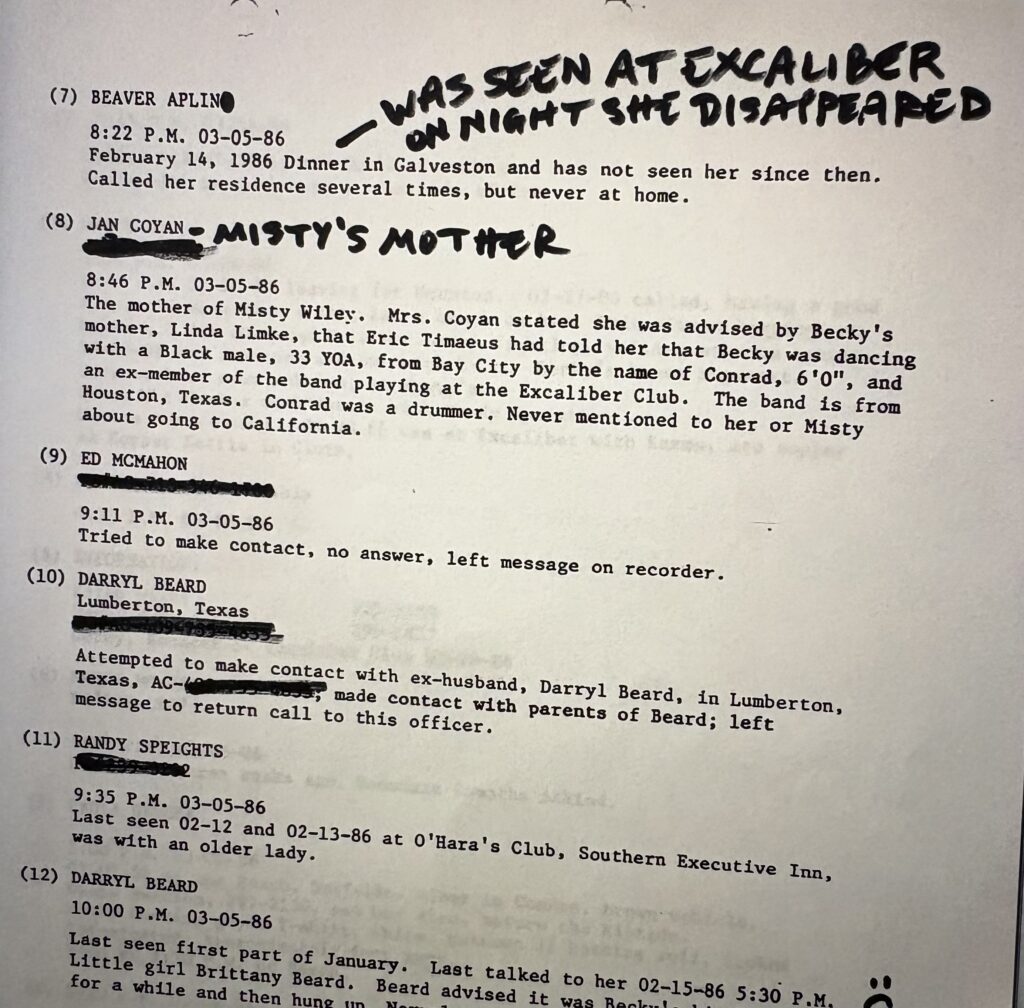
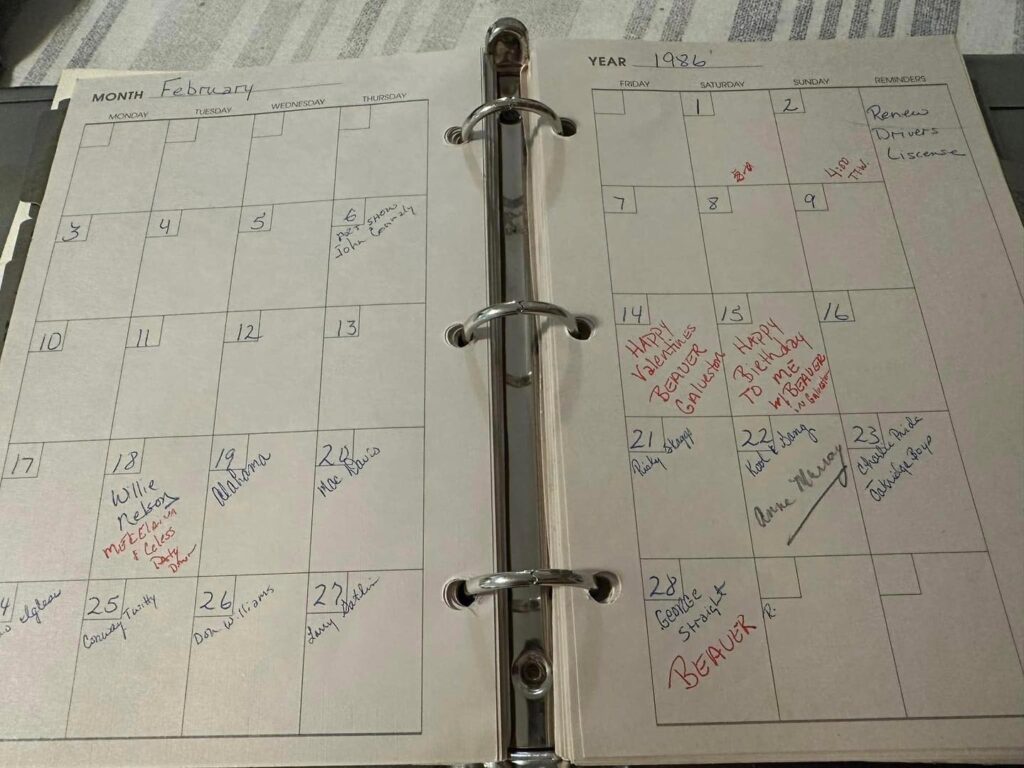
These records compare early police reports, a later investigative summary, and Rebecca Beard’s personal planner. One report states Beaver (Arch) Aplin last saw Rebecca on February 14, while a later investigative summary lists him among witnesses who reportedly saw her at Excalibur on the night she disappeared. The differing timelines raise questions about how investigators reconciled those statements during the investigation.

While reviewing the early investigation, another issue surfaced.

Police reports appear to contain conflicting information about Beaver (Arch) Aplin’s timeline.

One report says Aplin told investigators he had not seen Becky since February 14, 1986.

A later investigative report identifies Aplin as one of several people reportedly present at Excaliber on the night Becky disappeared.

That apparent inconsistency raises another question.

Did investigators ever reconcile those differing accounts?

That question will be examined in Part 2 of this series.

Questions that remain

The records reviewed for this article leave several unanswered questions:

Why wasn’t Taylor’s residence immediately documented as a potential crime scene after John Cone reported an alleged confession?
Did Sheriff Joe King ever use the key Cone reportedly offered?
Were investigators ever able to locate the missing bed, carpet or mattress?
If those items were never recovered, how much potential evidence may have been lost?

Nearly four decades later, those questions remain central to understanding the early investigation into Rebecca Beard’s disappearance.

⸻

Internal links

Why I Traveled to Arizona to Interview Arch Aplin
Rebecca Beard family meeting with investigators

Amazon recommendations

True Crime Investigation Notebook

Keep detailed notes while following complex investigations. A structured notebook makes it easier to compare timelines, witness statements and evidence.

⸻

Disclosure: As an Amazon Associate, I earn from qualifying purchases at no additional cost to you. Your support helps fund my investigative reporting and allows me to continue researching and publishing stories like this one.
Rebecca Beard Family Questions Claims Paul Taylor Declined Legal Representation

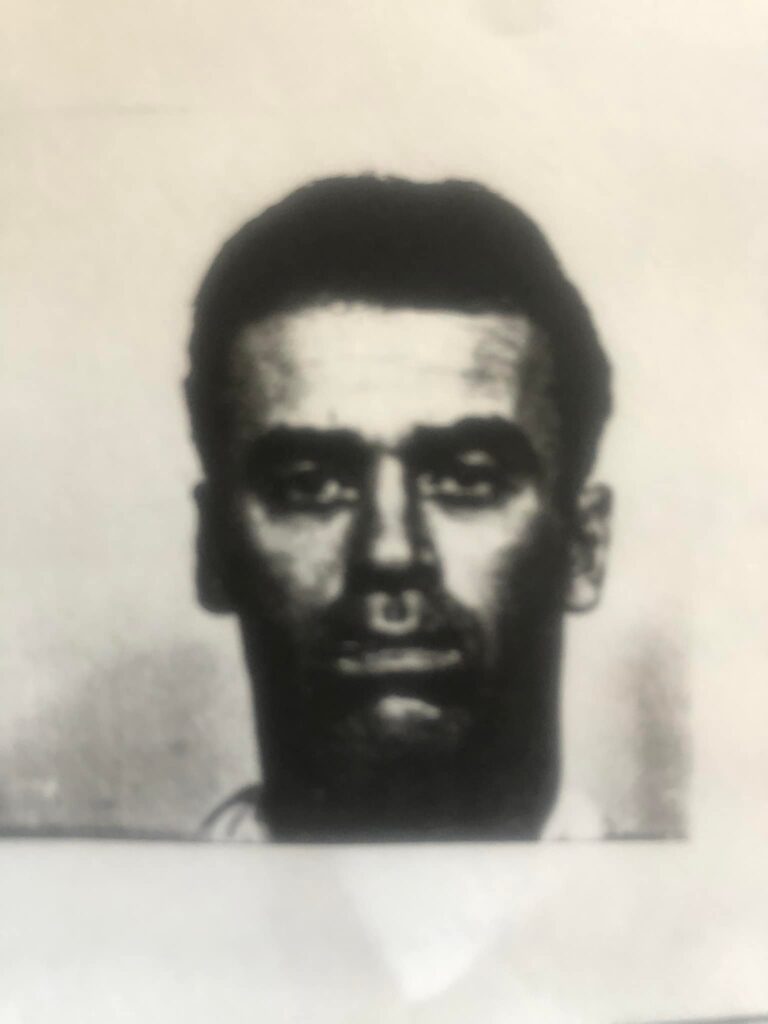
Paul Taylor Jr. booking photo taken during the investigation into the Rebecca Beard case.
Paul Taylor Jr. booking photo from the investigation into the 1986 disappearance and murder of Rebecca Beard. His recent prison messages are compared with statements discussed during a meeting with Rebecca Beard’s family regarding legal representation.

Rebecca Beard Family Questions Statements About Paul Taylor and Legal Representation

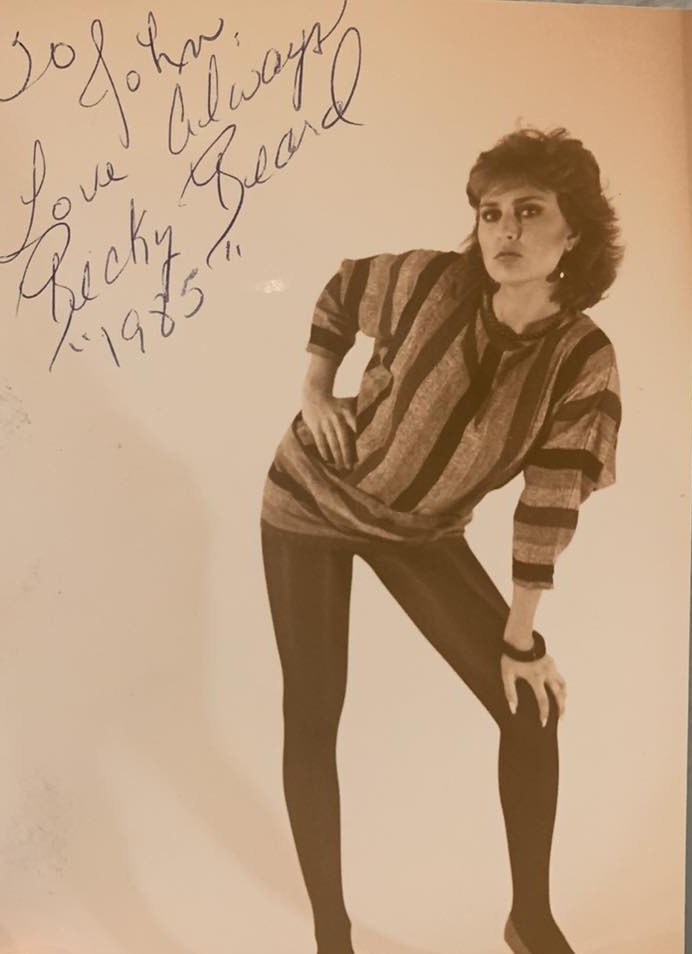
Autographed 1985 promotional photo of Rebecca Beard with a handwritten inscription reading, “To John, Love Always, Becky Beard.”
An autographed 1985 photo of Rebecca Beard inscribed, “To John, Love Always, Becky Beard.” The image is included in the Beard family’s article examining conflicting accounts about Paul Taylor Jr. and legal representation.

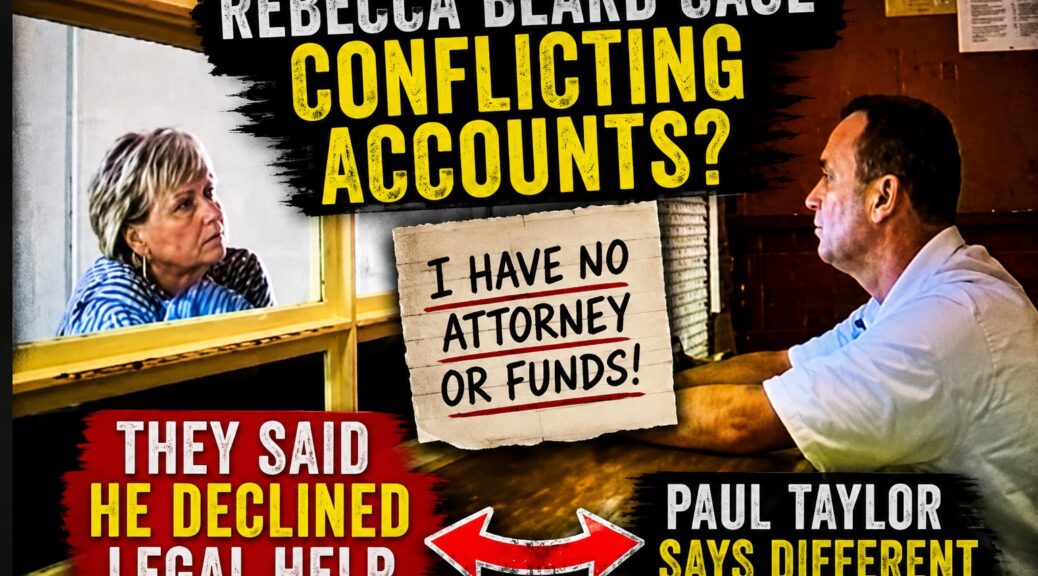
The family of Rebecca Beard says newly reviewed prison messages from Paul Taylor raise questions about statements made during a meeting with Brazoria County officials regarding legal representation and the Texas Innocence Project.

According to Rebecca Beard’s sister, Carol Mize, family members met with officials to discuss developments in the decades-old murder case. During that meeting, participants discussed whether Taylor had been offered legal representation.

Carol Mize Says Officials Claimed Paul Taylor Declined Legal Representation

According to Carol Mize, participants at the meeting stated that Paul Taylor had been offered legal representation but declined the offer.

That statement prompted questions from the Beard family after reviewing messages Taylor later sent from prison.

Paul Taylor’s Messages Tell a Different Story

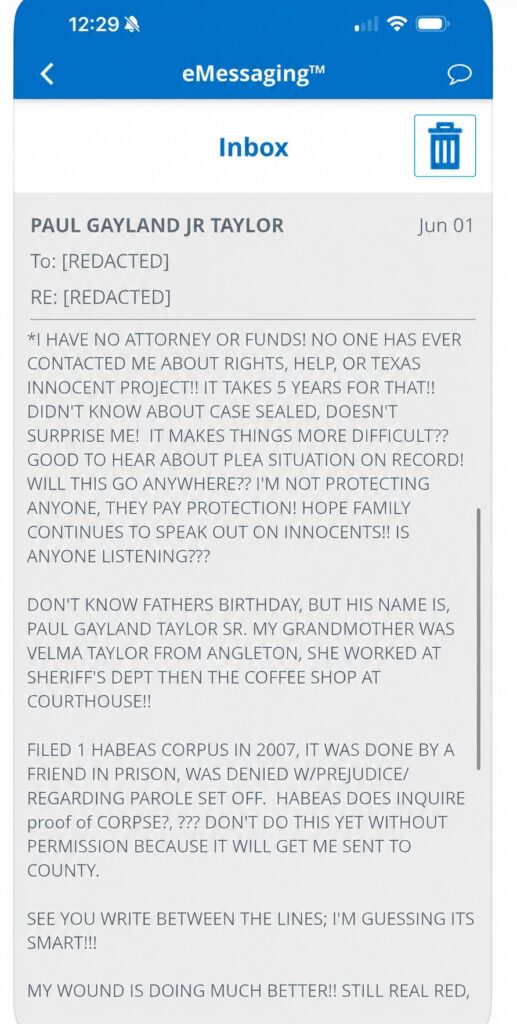
Screenshots of prison messages sent by Paul Taylor Jr. that are compared with statements discussed during a meeting with Rebecca Beard’s family regarding legal representation and the Texas Innocence Project.

In a message provided to the Beard family, Taylor wrote:

“I HAVE NO ATTORNEY OR FUNDS!”

He also wrote:

“NO ONE HAS EVER CONTACTED ME ABOUT RIGHTS, HELP, OR TEXAS INNOCENT PROJECT!!”

Taylor added that he was unaware of a sealed case document, writing:

“DIDN’T KNOW ABOUT CASE SEALED…”

In a more recent message to Investigative Reporter Tammy Rose, Taylor wrote:

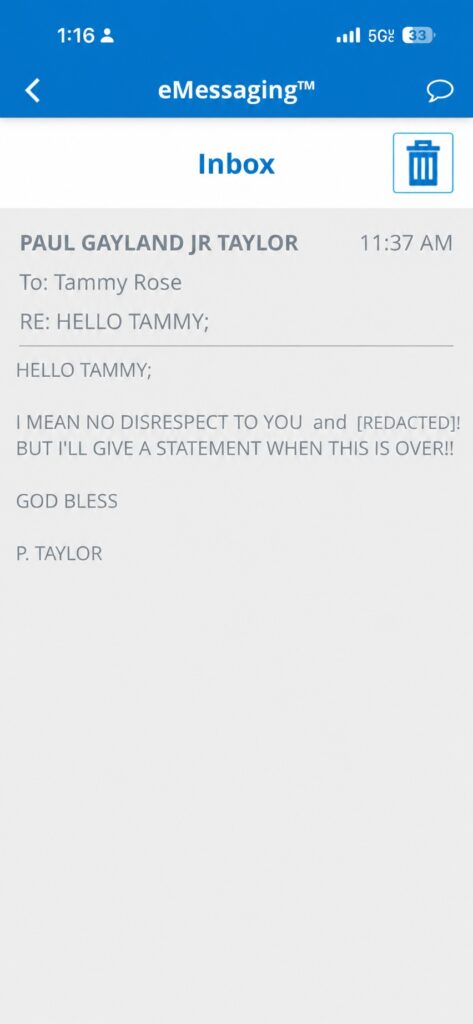
“I MEAN NO DISRESPECT TO YOU and (REDACTED) ! BUT I’LL GIVE A STATEMENT WHEN THIS IS OVER!!”

Conflicting Accounts Raise New Questions

Carol Mize says officials stated Paul Taylor declined legal representation that had been offered to him. Taylor’s prison messages later presented a different account, raising new questions in the Rebecca Beard case.

According to Carol Mize, officials stated during the meeting that Paul Taylor declined legal representation that had been offered to him.

Taylor’s own written messages present a different account. In those messages, he states that he has no attorney, no funds, and was never contacted about rights, legal help, or the Texas Innocence Project.

At this time, Tammy Rose has not independently verified which account is accurate. The article reflects statements made during the meeting, as described by Carol Mize, alongside Taylor’s own written messages.

Editor’s Note

This article is based on statements made during a meeting attended by Rebecca Beard’s family, as described by Carol Mize, and on messages attributed to Paul Taylor. The statements represent differing accounts and are presented to accurately reflect what each party said.

⸻

If you enjoy following long-term investigations and behind-the-scenes reporting, check out the gear I personally use in the field and while traveling.

⸻

If you’re fascinated by unsolved mysteries and criminal investigations, browse my collection of recommended true crime books covering some of the most compelling cases ever investigated.

⸻

Related Articles:

• Rebecca Beard Timeline: Key Events in the 1986 Disappearance

• Rebecca Beard Case: Public Records, Confessions, and Investigation Updates

Amazon Affiliate Disclosure: As an Amazon Associate, I earn from qualifying purchases at no additional cost to you.
Brazoria County Seeks to Withhold Records on Outside Counsel

The requested records involve outside attorneys hired by Brazoria County in connection with the John Mendoza Jr. shooting investigation.

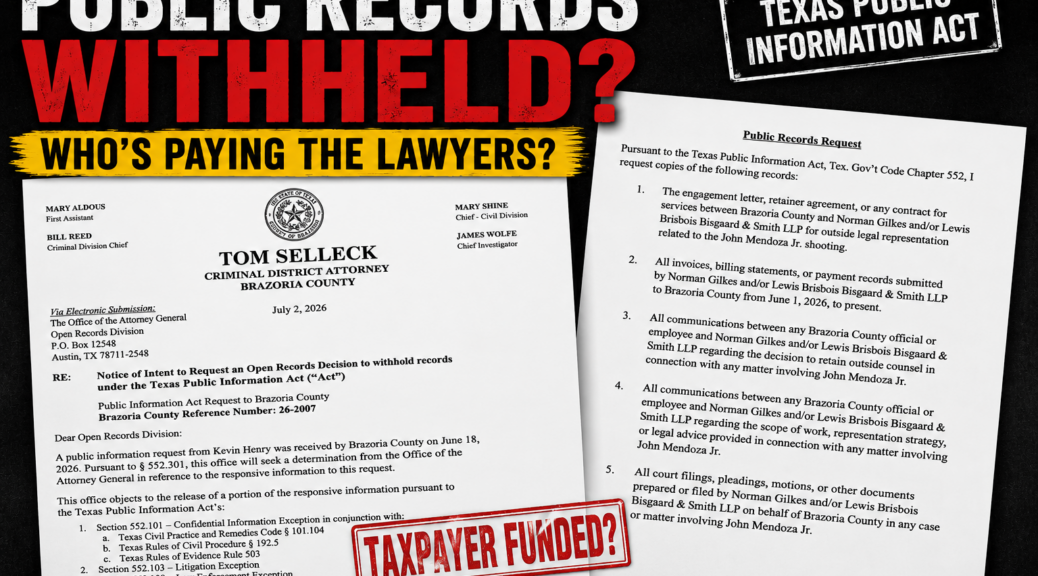
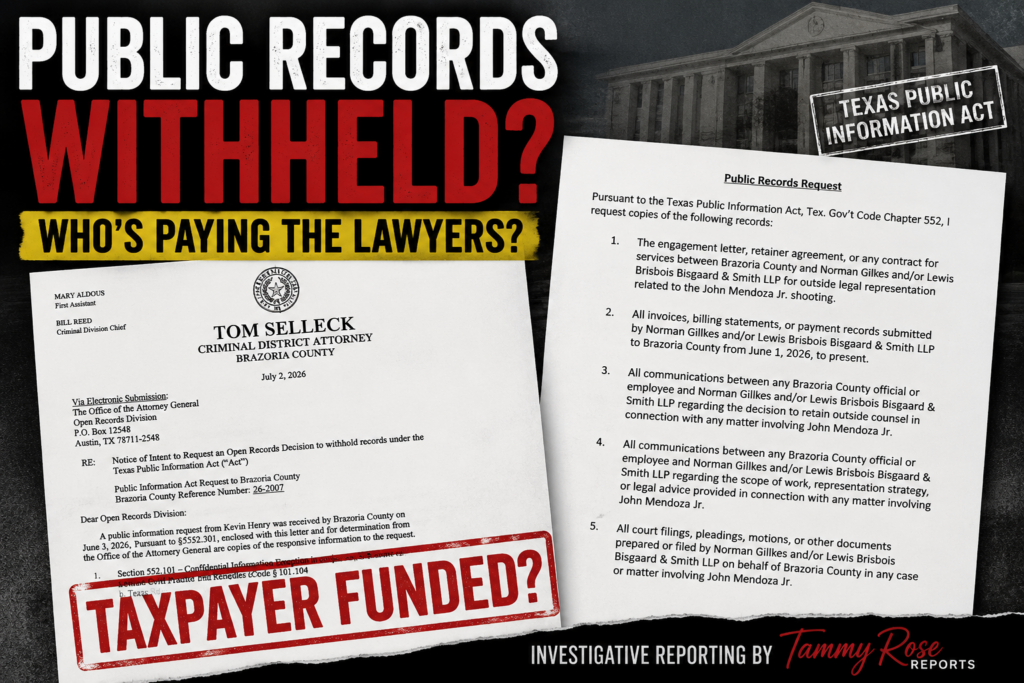
Public records request and Brazoria County DA letter seeking to withhold records in the John Mendoza Jr. shooting investigation.
July 2, 2026: Brazoria County District Attorney’s Office notified requester Kevin Henry that it was asking the Texas Attorney General to determine whether records related to outside legal counsel could be withheld under the Texas Public Information Act.

Brazoria County DA Asks Texas Attorney General to Withhold Records on Outside Counsel Hired After John Mendoza Jr. Shooting

By Investigative Reporter Tammy Rose

Why did Brazoria County hire outside legal counsel following the fatal shooting of John Mendoza Jr., and why is the District Attorney now asking the Texas Attorney General to keep those records from the public?

Those are questions at the center of a new Texas Public Information Act dispute after podcast host Kevin Henry requested documents related to outside attorneys retained by Brazoria County following the officer-involved shooting.

The records request seeks documents that would show:

The attorney engagement letter.

The scope of legal representation.

Financial terms of the agreement.

Communications regarding hiring outside counsel.

Authority used to retain the attorneys.

Invoices and payment records.

According to the request, the records involve outside attorney Norman Giles and the law firm Lewis Brisbois Bisgaard & Smith LLP in connection with matters involving John Mendoza Jr., John Mendoza Sr., and attorney Charles Adams.

DA Requests Attorney General Ruling

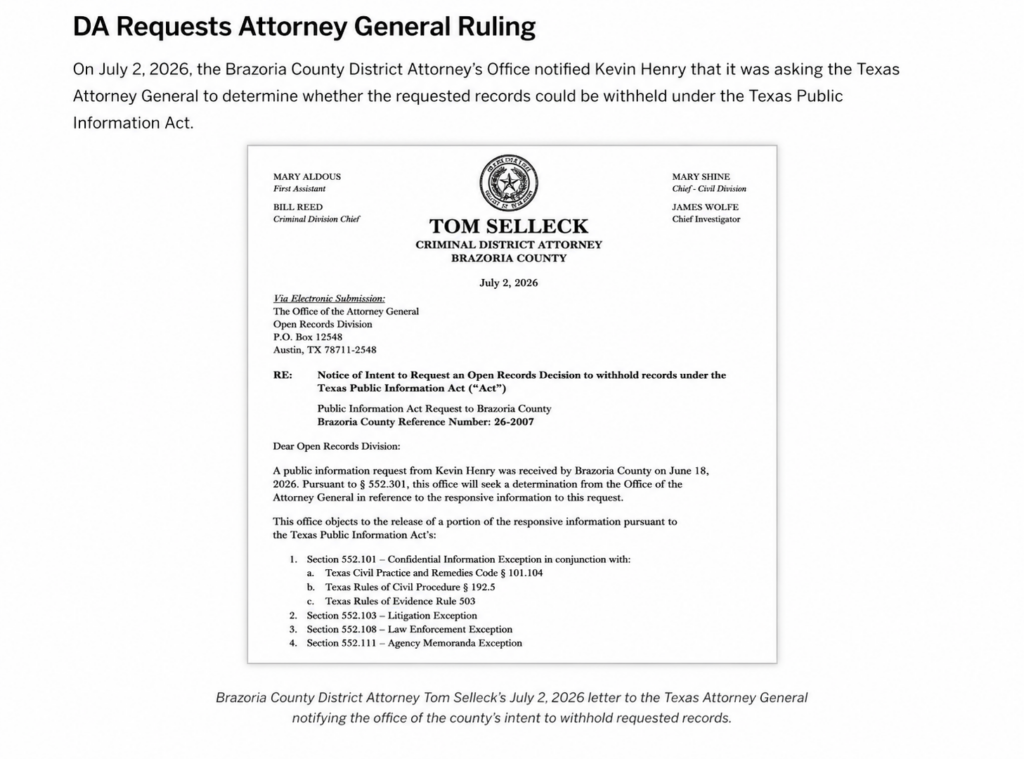
July 2, 2026 Brazoria County District Attorney letter requesting a Texas Attorney General ruling on whether records related to outside legal counsel may be withheld under the Texas Public Information Act.
On July 2, 2026, the Brazoria County District Attorney’s Office notified Kevin Henry that it was seeking a Texas Attorney General ruling on whether records related to outside legal counsel could be withheld under the Texas Public Information Act.

Instead of immediately releasing the records, Brazoria County Criminal District Attorney Tom Selleck notified the Texas Attorney General that his office intends to seek permission to withhold portions of the requested information.

In the July 2, 2026 letter, the DA cites several exceptions under the Texas Public Information Act, including:

Confidential information

Litigation exception

Law enforcement exception

Agency memoranda

The Attorney General will ultimately determine whether those claimed exemptions apply.

Kevin Henry Challenges the County’s Position

Portrait of Kevin Henry, host of The Kevin Henry Podcast, who filed the Texas Public Information Act request seeking records related to outside legal counsel in the John Mendoza Jr. investigation.
Kevin Henry filed the public records request seeking contracts, invoices, communications, and related records concerning outside legal counsel hired by Brazoria County in connection with the John Mendoza Jr. investigation. The Brazoria County District Attorney’s Office later notified him it was seeking a Texas Attorney General ruling on whether some of those records could be withheld.

Kevin Henry argues the requested documents involve public expenditures rather than protected legal advice.

In his filing, he contends that:

Engagement letters for outside legal services are generally public records.

Financial terms of public contracts are typically subject to disclosure.

Outside counsel was retained before litigation was filed.

The public has a strong interest in understanding how taxpayer money is being spent following the fatal shooting.

Henry also argues that disclosure is particularly important because the request concerns the death of John Mendoza Jr. during an encounter with a Brazoria County Sheriff’s deputy.

Why This Matters

When government agencies retain outside attorneys, taxpayers often pay those legal expenses.

The records requested could provide additional information about:

When outside counsel was hired.

What work the attorneys were retained to perform.

How much taxpayers may ultimately pay.

The legal scope of the representation.

Whether those documents remain confidential now rests with the Texas Attorney General’s Office.

What Happens Next

The Attorney General will review both Brazoria County’s arguments for withholding the records and Kevin Henry’s response opposing those claims.

If the Attorney General orders disclosure, Brazoria County may be required to release some or all of the requested documents. If the ruling favors the county, portions of the records could remain withheld.

I’ll continue following this public records dispute and provide updates as additional filings become available.

The Texas Attorney General will now determine whether the requested records must be released or whether the county may lawfully withhold some or all of them under the Texas Public Information Act.

More John Mendoza Jr. Coverage: Follow my ongoing investigative reporting into the John Mendoza Jr. shooting, including public records requests, legal filings, the outside counsel controversy, attorney statements, and previous developments in the case.

Recommended Reporting Gear

As an Amazon Associate, I earn from qualifying purchases at no additional cost to you. Every purchase made through these links helps support my independent investigative reporting and allows me to continue covering stories like this one. Thank you for your support.
Reporting Equipment I Use & Recommend:

🎤 Voice Recorder

📷 Body Camera

📻 Police Scanner

John Gabriel Mendoza Jr. Investigation: State Reports Raise New Questions

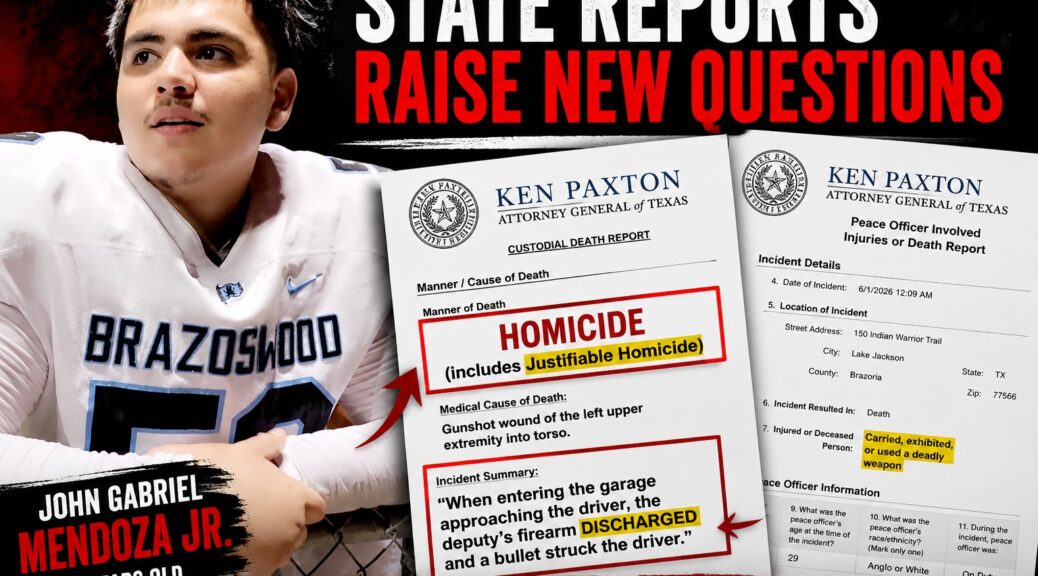
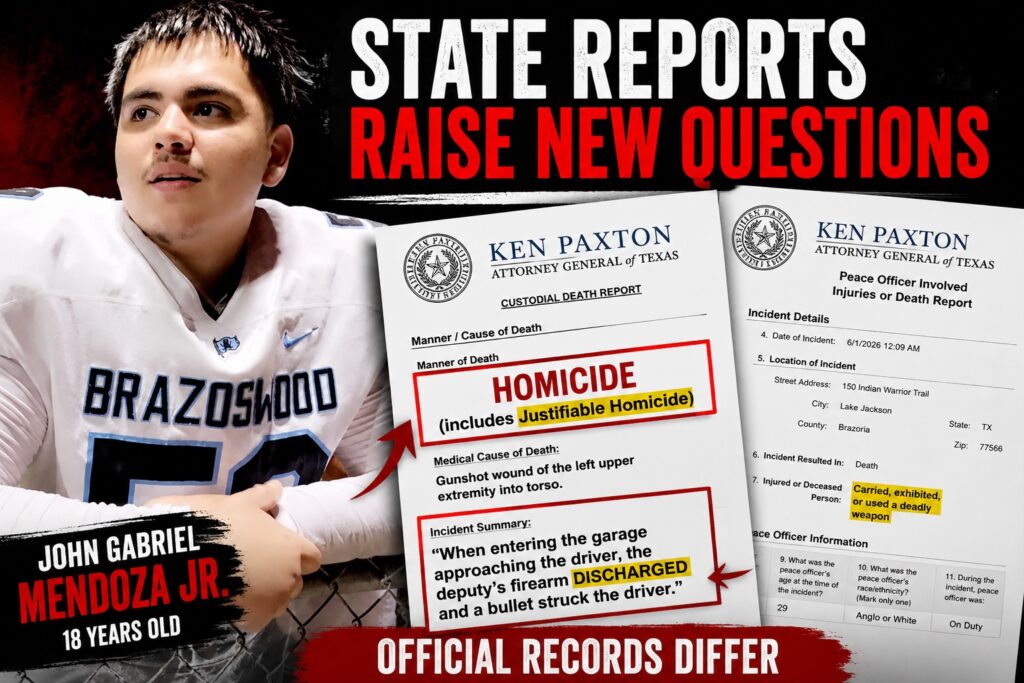
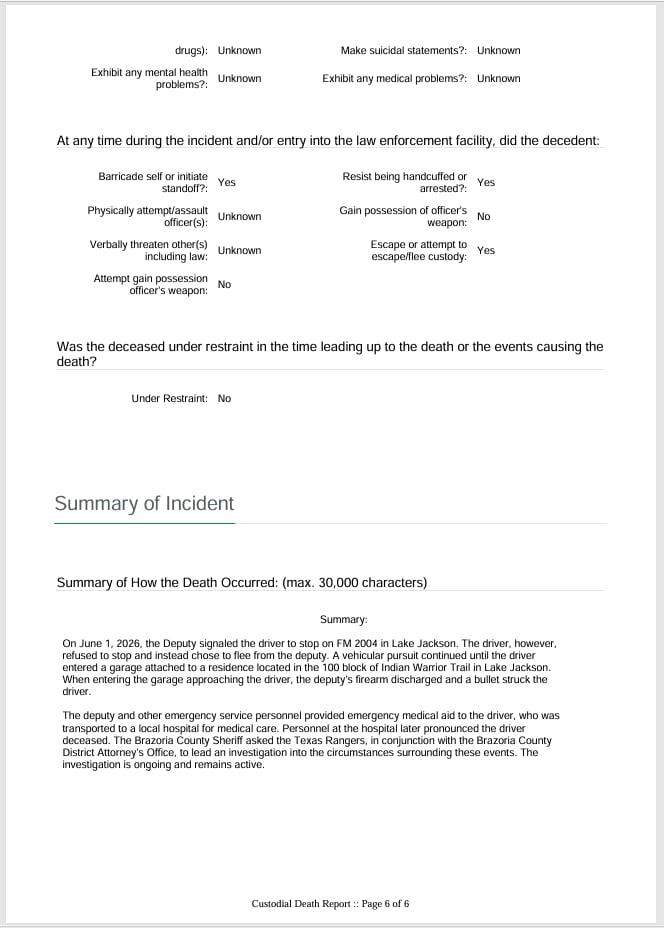
Featured image for an investigative news article about John Gabriel Mendoza Jr. showing his football photo alongside Texas Attorney General custodial death reports highlighting the manner of death and differing language in official records.
Newly released Texas Attorney General reports raise new questions in the investigation into the fatal shooting of John Gabriel Mendoza Jr. The Texas Rangers investigation remains ongoing.

By Investigative Reporter Tammy Rose

John Gabriel Mendoza Jr. Investigation

The John Gabriel Mendoza Jr. investigation continues to raise new questions after newly released Texas Attorney General state reports provided additional details about the fatal June 1 shooting in Lake Jackson. The documents describe the same incident but use different wording in several key sections.

The Brazoria County Sheriff’s Office submitted both a Custodial Death Report and a Peace Officer Involved Injuries or Death Report to the Texas Attorney General. While the Texas Rangers continue investigating the John Gabriel Mendoza Jr. case, the newly released records highlight differences in how the incident was documented.

Both reports describe the same incident. However, they use different wording in several sections while the Texas Rangers continue their investigation.

John Gabriel Mendoza Jr. Investigation: Reports Describe the Same Incident 

Both reports identify Mendoza as the 18-year-old who died after a deputy attempted a traffic stop that ended at a residence on Indian Warrior Trail in Lake Jackson.

According to the records, Mendoza drove into a garage attached to a home after deputies attempted to stop him.

The reports state the deputy was on duty and involved in a pursuit after Mendoza allegedly failed to stop.

Custodial Death Report Lists Homicide

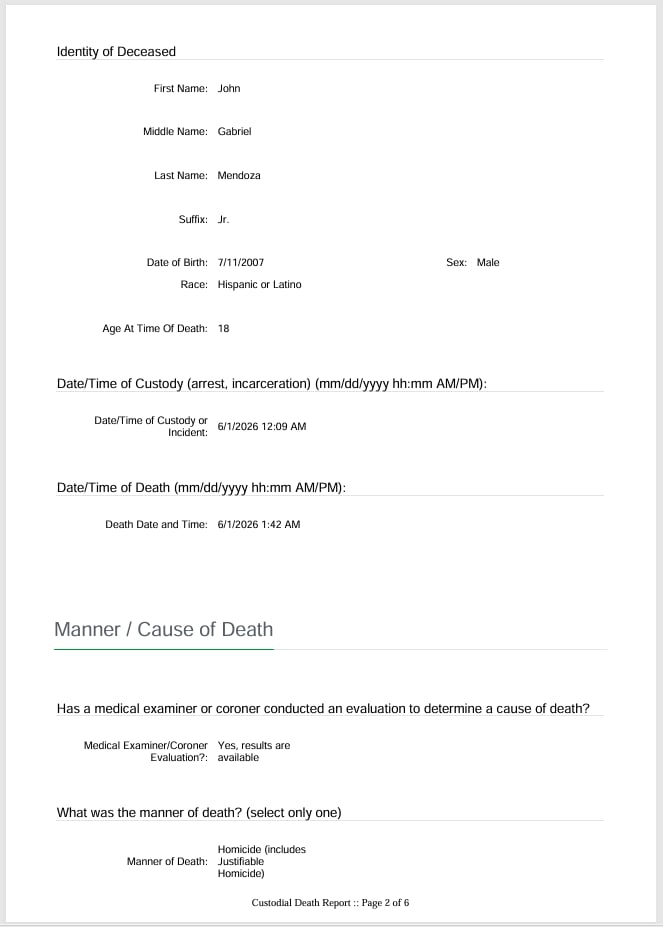
Texas Attorney General Custodial Death Report identifying John Gabriel Mendoza Jr. and listing the official manner and cause of death in the Lake Jackson investigation.
The Texas Attorney General Custodial Death Report identifies John Gabriel Mendoza Jr. and includes the official manner and cause of death submitted by the Brazoria County Sheriff’s Office.

The Custodial Death Report lists the manner of death as:

Homicide (includes Justifiable Homicide).

Medical examiners use that classification when one person causes another person’s death. The classification does not determine whether a crime occurred or whether criminal charges are appropriate.

The report lists the medical cause of death as a gunshot wound that entered through the left upper extremity into the torso.

It also identifies the weapon as a handgun.

Incident Summary Uses the Word “Discharged”

Texas Attorney General Custodial Death Report summary describing the fatal shooting of John Gabriel Mendoza Jr. and stating that the deputy’s firearm discharged while approaching the driver.
The incident summary in the Texas Attorney General Custodial Death Report states that the deputy’s firearm discharged while approaching John Gabriel Mendoza Jr. The report does not explain what caused the firearm to discharge.

One section of the Custodial Death Report states:

“When entering the garage approaching the driver, the deputy’s firearm discharged and a bullet struck the driver.”

The report does not explain why the firearm discharged or whether investigators have determined if the discharge was intentional, accidental, or the result of another circumstance.

Reports Use Different Language About a Weapon

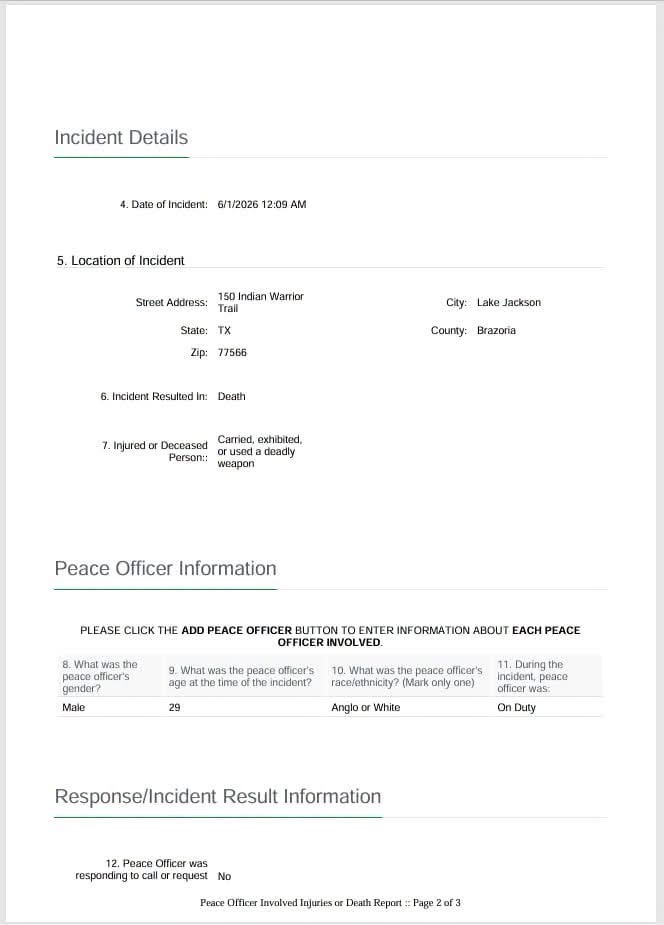
Texas Attorney General Peace Officer Involved Injuries or Death Report stating that John Gabriel Mendoza Jr. carried, exhibited, or used a deadly weapon during the incident.
A separate Texas Attorney General report states that John Gabriel Mendoza Jr. “carried, exhibited, or used a deadly weapon.” The report does not identify the weapon or explain why this wording differs from the Custodial Death Report.

One section of the Custodial Death Report asks whether Mendoza displayed or used a weapon during the incident.

The answer listed is:

Unknown.

However, the separate Peace Officer Involved Injuries or Death Report includes a different description.

That report states the injured or deceased person:

“Carried, exhibited, or used a deadly weapon.”

Neither report explains the apparent difference in wording or identifies the weapon referenced in that section.

The records also do not describe when investigators reached those conclusions or whether additional evidence remains under review.

Deputy Was Not Responding to a Call

The Peace Officer Involved Injuries or Death Report states the deputy was not responding to a call for service when the incident began.

Instead, the report states the encounter occurred during a pursuit involving a suspect who was allegedly evading arrest or detention using a motor vehicle.

The report identifies the deputy as a 29-year-old male who was on duty at the time of the shooting.

Investigation Continues

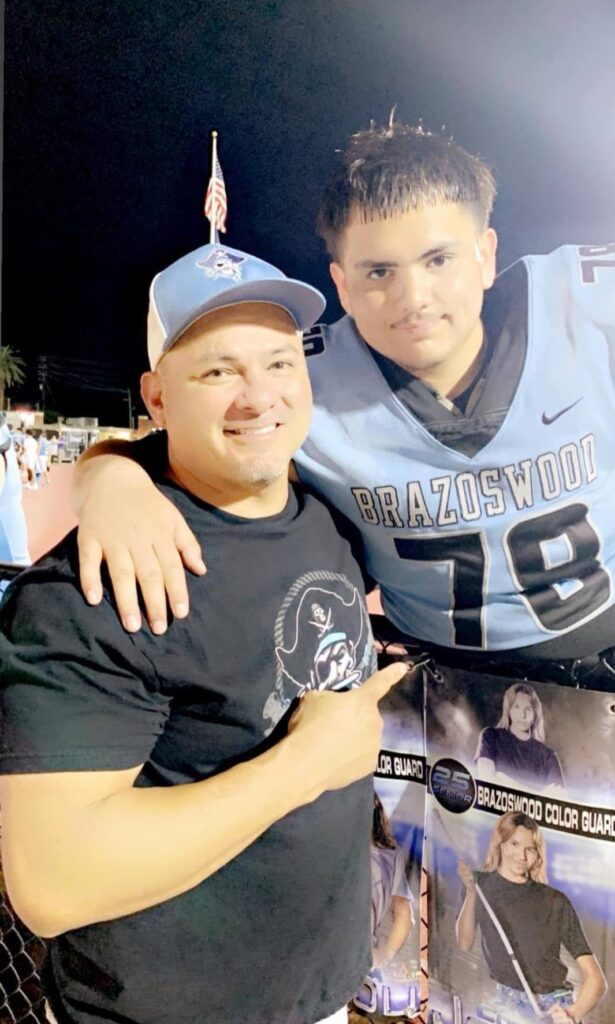
John Gabriel Mendoza Jr. poses in his Brazoswood High School football uniform with a family member before his death.
John Gabriel Mendoza Jr. is pictured in his Brazoswood High School football uniform before the June 1, 2026, incident in Lake Jackson. The Texas Rangers continue to investigate the fatal deputy-involved shooting.

The Custodial Death Report states emergency personnel treated Mendoza before transporting him to a local hospital, where he later died.

The report also confirms that the Texas Rangers, working with the Brazoria County District Attorney’s Office, continue investigating the shooting.

Neither report reaches a conclusion about criminal responsibility or explains what caused the deputy’s firearm to discharge.

As the investigation moves forward, the newly released state records answer some questions while raising others about the events inside the garage on June 1.

Investigative Reporter Tammy Rose contacted the Brazoria County Sheriff’s Office for comment regarding the newly released state records. No response had been received at the time of publication.

⸻

Related Coverage

Texas Rangers affidavit and scanner audio timeline

Deputy fired following policy violations

⸻

Amazon Recommendation

On Combat by Lt. Col. Dave Grossman – Understanding the psychological effects of deadly force.

Amazon Associate Disclosure: As an Amazon Associate, I earn from qualifying purchases at no additional cost to you.
Two Deadly West Houston Crashes Shut Down I-10 and Highway 6

Two Deadly Crashes Snarl Traffic Across West Houston

Two deadly crashes kept first responders busy across west Houston Wednesday morning, shutting down major roadways and creating long traffic delays.

The first crash happened around 5 a.m. on the inbound lanes of Interstate 10 near Eldridge Parkway.

According to authorities, an 18-wheeler and another vehicle collided, causing a fire. Two people died at the scene.

Investigators closed all inbound lanes near Dairy Ashford while crews worked to clear the wreckage. Traffic backed up for several miles, stretching toward Kingsland Boulevard during the morning commute.

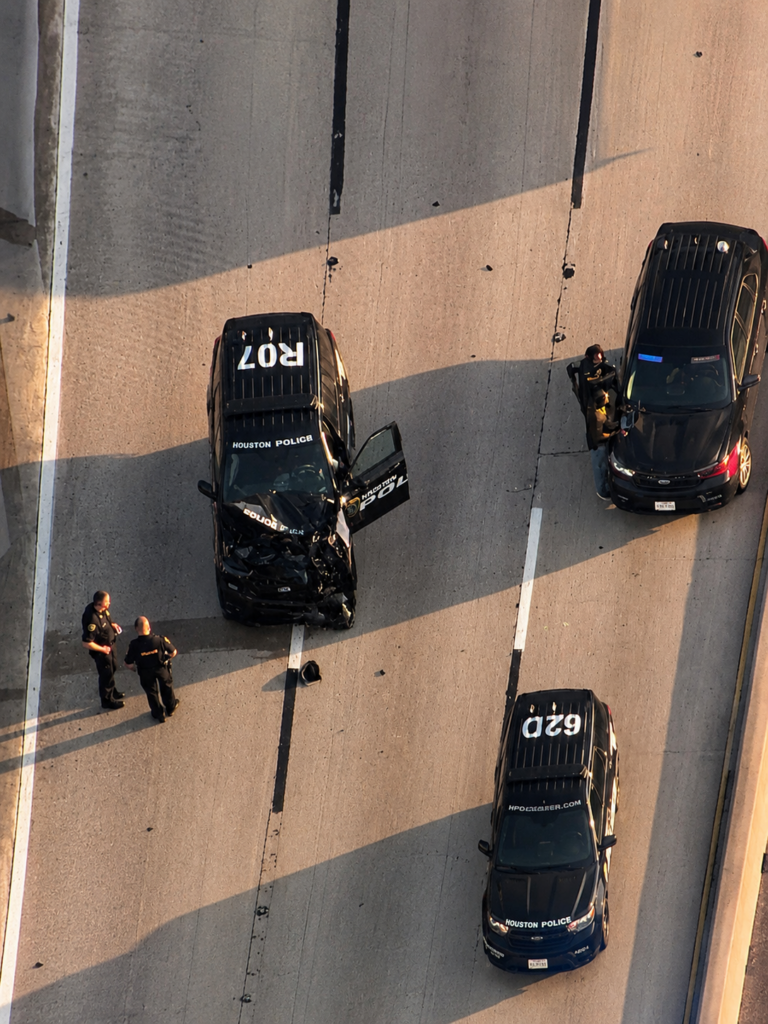
Police pursuit ends in fatal Highway 6 crash

A second deadly crash occurred on Highway 6 southbound near the Westpark Tollway.

Photos from the scene show heavy damage to both an HPD patrol vehicle and another vehicle following what authorities described as the end of a police pursuit.

Officials confirmed the incident was fatal. Based on available information, the deceased was not the Houston police officer. Authorities have not yet released additional details about the person who died or the events leading up to the crash.

The investigation remained active as officers documented the scene and worked to reopen the roadway.

Investigation continues

Authorities continue investigating both crashes. Additional information, including the identities of those involved, is expected after next-of-kin notifications and the completion of the preliminary investigations.

For more breaking news, click here.

As an Amazon Associate I earn from qualifying purchases at no additional cost to you.
Emergency Vehicle Escape Tool

First Aid Kit for Vehicles

Dash Camera

Roadside Emergency Safety Kit