Tag Archives: True Crime

Rebecca Beard Part 2: Early Police Reports Reveal the First Days of the Investigation

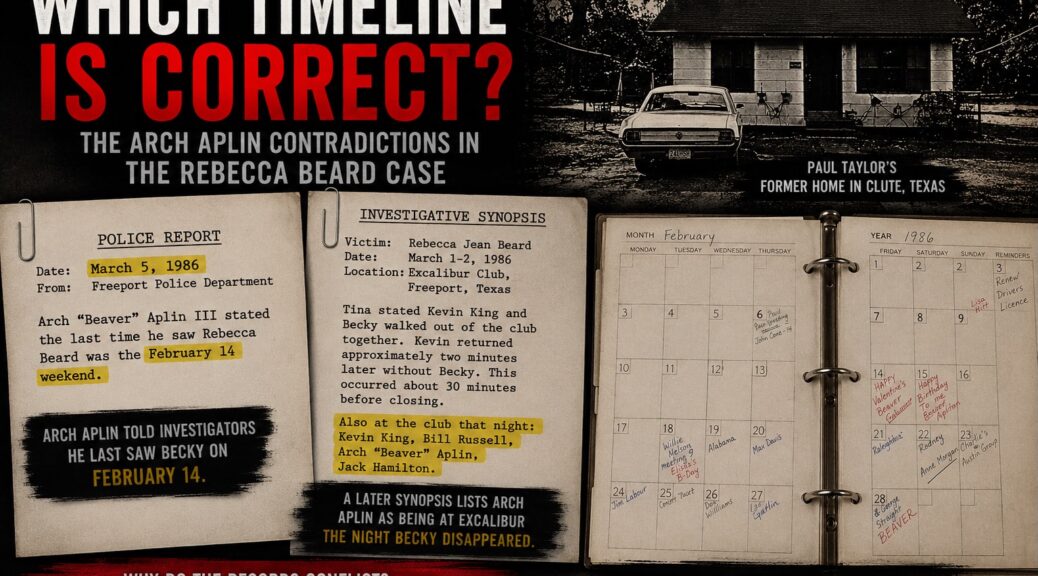
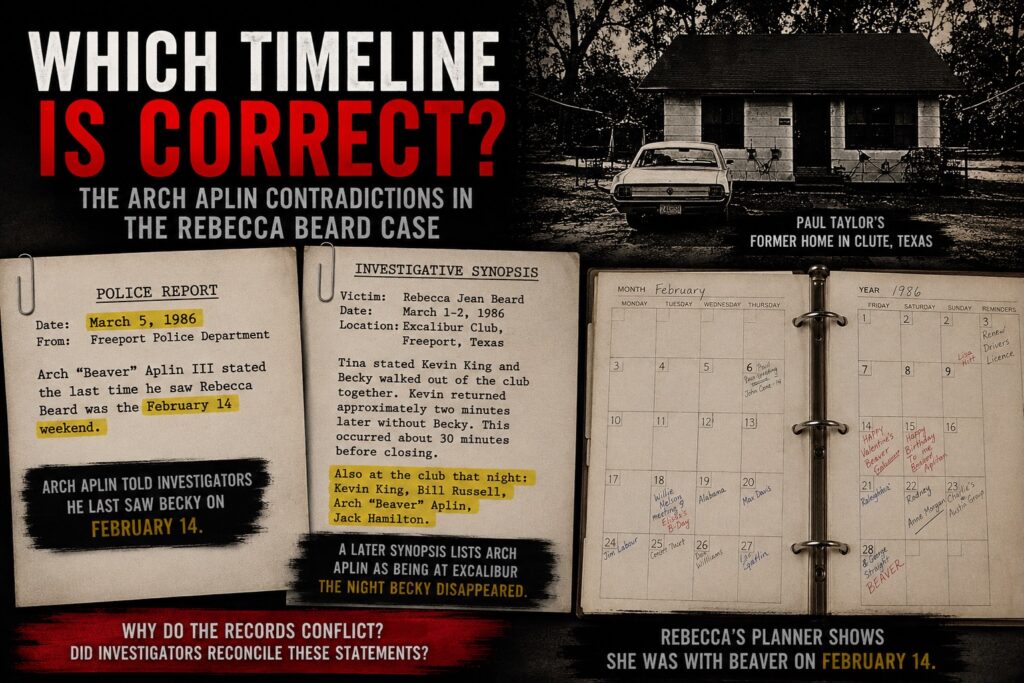
Featured image for “Rebecca Beard Part 2: Early Police Reports Reveal the First Days of the Investigation,” highlighting conflicting timelines involving Arch Aplin, police reports, an investigative synopsis, Rebecca Beard’s 1986 planner, and Paul Taylor’s former home.
Early police records reveal conflicting timelines in the Rebecca Beard investigation. This graphic compares witness statements, investigative documents, and Rebecca’s personal planner to examine how the investigation evolved during its first days. Reporting by Investigative Reporter Tammy Rose.

Rebecca Beard Part 2: Early Police Reports Show How the Investigation Evolved

Rebecca Beard disappeared during the early morning hours of March 2, 1986, after spending the previous evening at the Excalibur Club in Freeport, Texas. During the first days of the investigation, detectives worked to reconstruct her final hours by interviewing friends, coworkers, club patrons, and anyone who may have seen her before she vanished.

The earliest police reports provide a snapshot of where the investigation began. At that stage, detectives had not narrowed their focus to one individual. Instead, they documented numerous interviews, followed multiple leads, and worked to establish Rebecca’s last known movements.

Nearly four decades later, those reports remain important because they show how the investigation developed over time.

Detectives Worked to Build Rebecca Beard’s Timeline
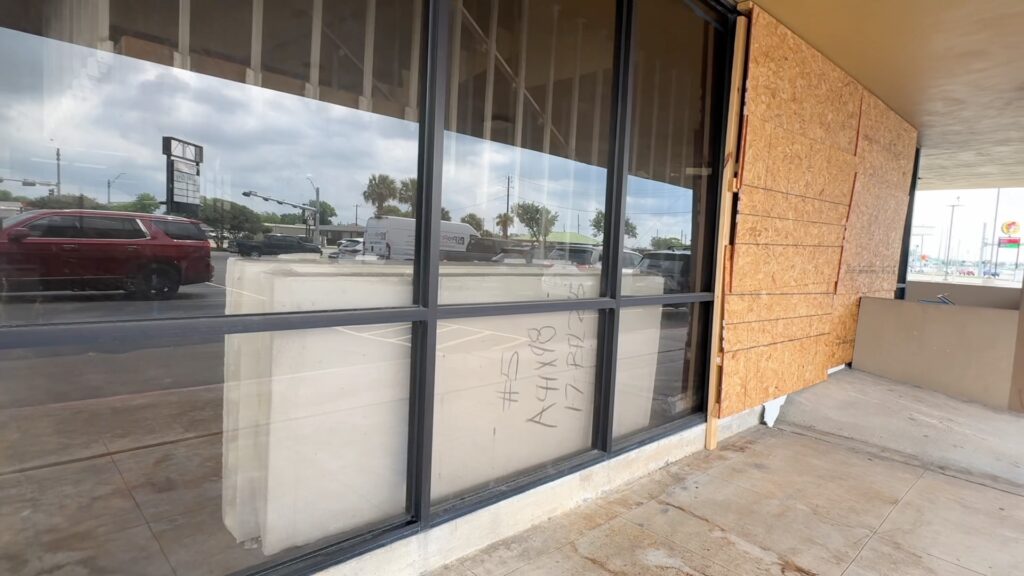
Present-day view of the former Excalibur Club building in Freeport, Texas, showing the storefront with boarded windows and the location where Rebecca Beard was last reported seen before her disappearance in 1986.
The former Excalibur Club in Freeport, Texas, as it appears today. Investigators interviewed witnesses who were at the nightclub as they worked to reconstruct Rebecca Beard’s movements during the early days of the 1986 investigation.

One of the first priorities involved determining Rebecca’s movements after she left the Excalibur Club.

Investigators interviewed witnesses who had been with Rebecca that evening or reported seeing her during the early morning hours. Detectives compared those statements in an effort to establish a reliable timeline.

The reports also reference a gold Chevrolet Camaro Z-28. Detectives attempted to identify the vehicle, determine who owned it, and learn whether it played a role in Rebecca’s disappearance.

Those early efforts demonstrate how investigators attempted to preserve every possible lead.

Arch “Beaver” Aplin Was Among the First Witnesses Interviewed
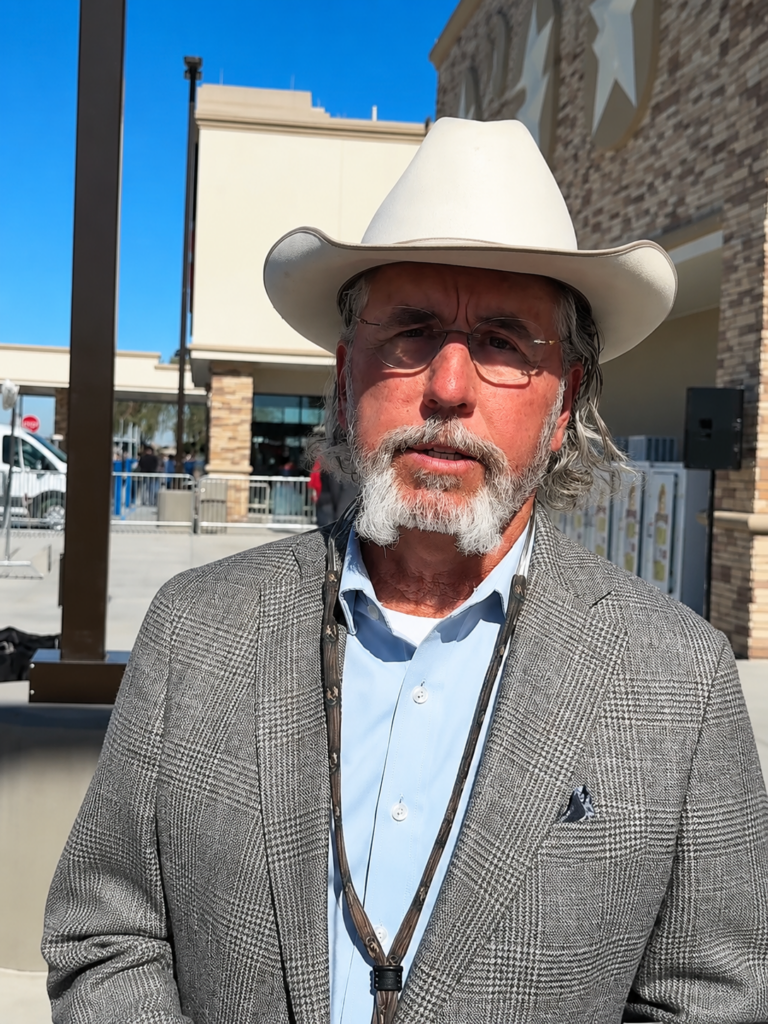
Arch “Beaver” Aplin III speaks during the Buc-ee’s grand opening in Goodyear, Arizona, wearing a white cowboy hat, glasses, and a gray sport coat.
Arch “Beaver” Aplin III at the Buc-ee’s grand opening in Goodyear, Arizona. This image was captured by Investigative Reporter Tammy Rose. Aplin was interviewed by investigators on March 5, 1986, during the early stages of the Rebecca Beard investigation.

After Rebecca Beard disappeared, investigators interviewed Arch “Beaver” Aplin on March 5, 1986.

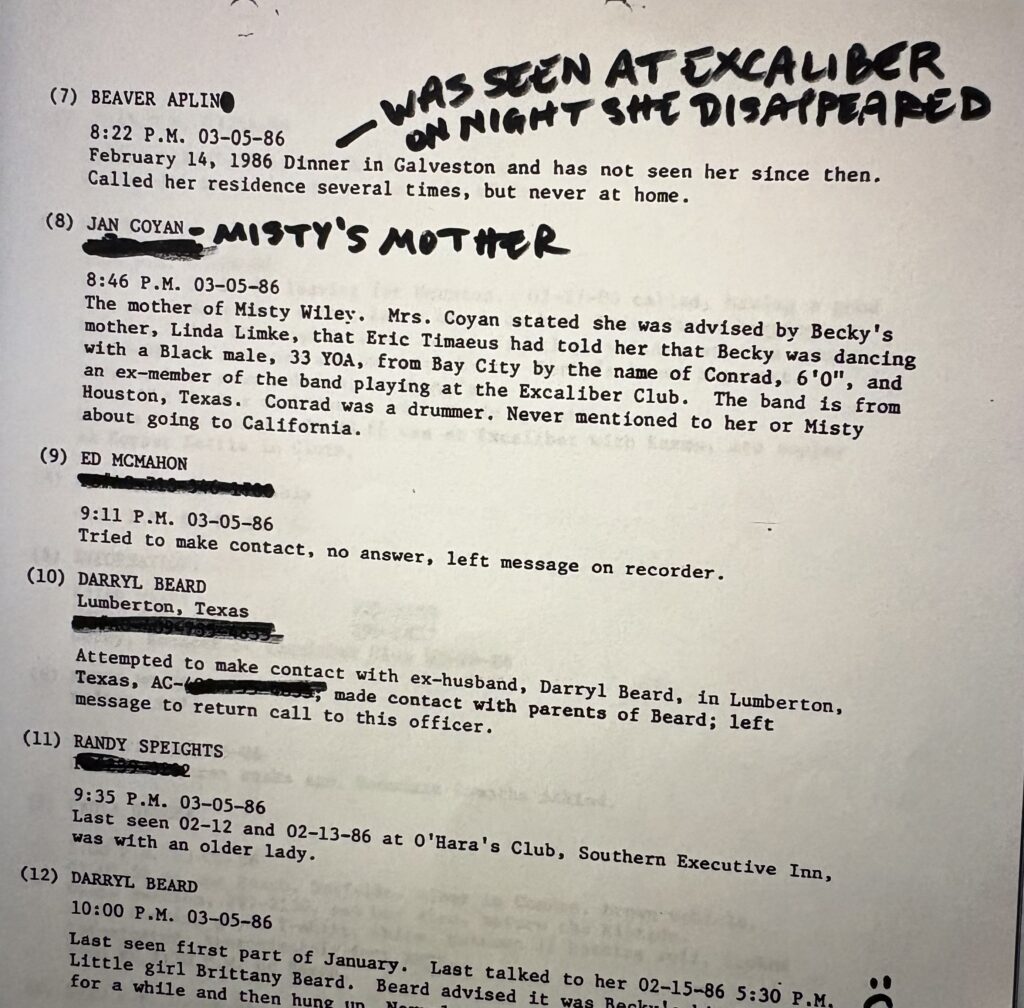
According to the police report, Aplin told detectives the last time he saw Rebecca was the weekend of February 14, when they had dinner together in Galveston. He also said he had called her several times afterward but never reached her.

At that point in the investigation, detectives documented Aplin’s account as one of many witness statements they were using to reconstruct Rebecca’s final movements.

Later Records Raised New Timeline Questions
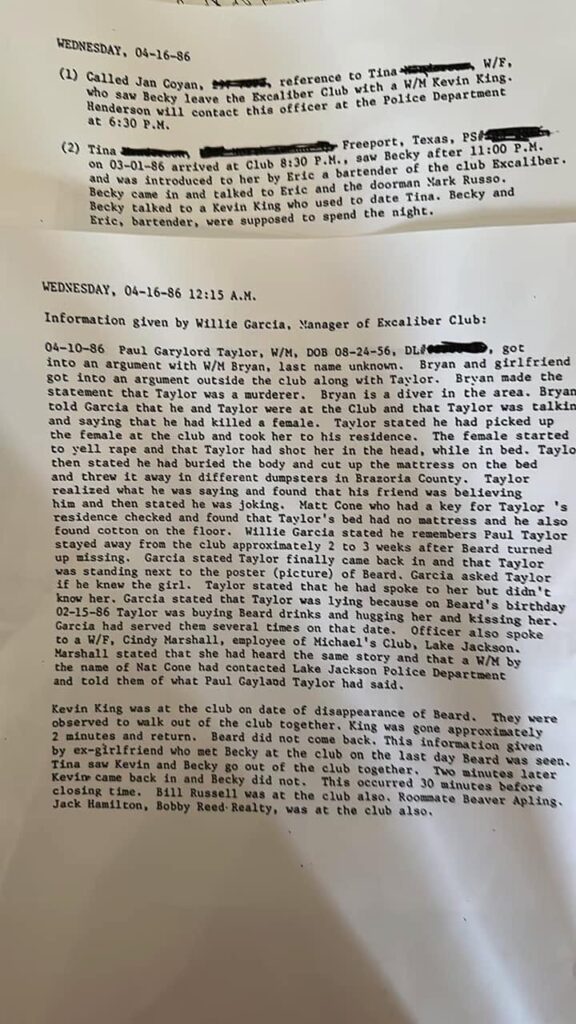
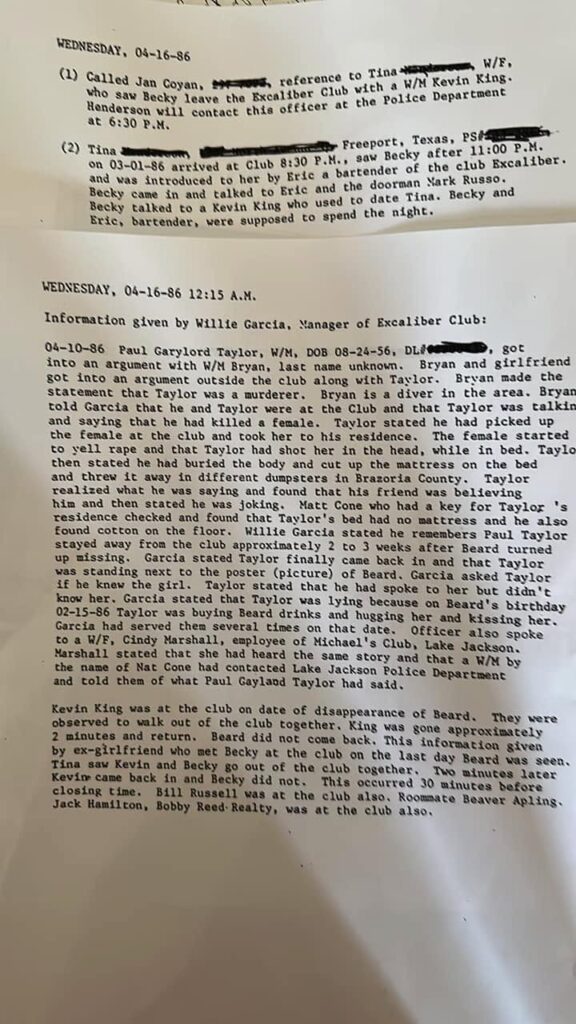
Investigative synopsis from the Rebecca Beard case showing the section summarizing Tina’s witness statement, including references to Kevin King, Arch “Beaver” Aplin, Bill Russell, Jack Hamilton, and other individuals reportedly at the Excalibur Club on the night Rebecca Beard disappeared.
This investigative synopsis includes a summary of Tina’s witness statement. According to the document, Tina reported seeing Kevin King leave the Excalibur Club with Rebecca Beard before he returned without her. The synopsis also lists Arch “Beaver” Aplin, Bill Russell, and Jack Hamilton as being at the club that night, raising additional questions about the investigation’s timeline.

This is where the investigation becomes more complicated.

A later investigative synopsis documents witness Tina’s account of the night Rebecca disappeared.

According to that synopsis, Tina told investigators Kevin King walked out of the Excalibur Club with Rebecca about 30 minutes before closing and returned approximately two minutes later without her.

The same synopsis also lists Kevin King, Bill Russell, Arch “Beaver” Aplin and Jack Hamilton as being at Excalibur that night.

When compared with Aplin’s March 5 statement that he had not seen Rebecca since February 14, the two records appear to present different timelines.

The investigative records reviewed for this series do not explain how detectives reconciled those accounts.

Arch “Beaver” Aplin Remained in Contact With Investigators
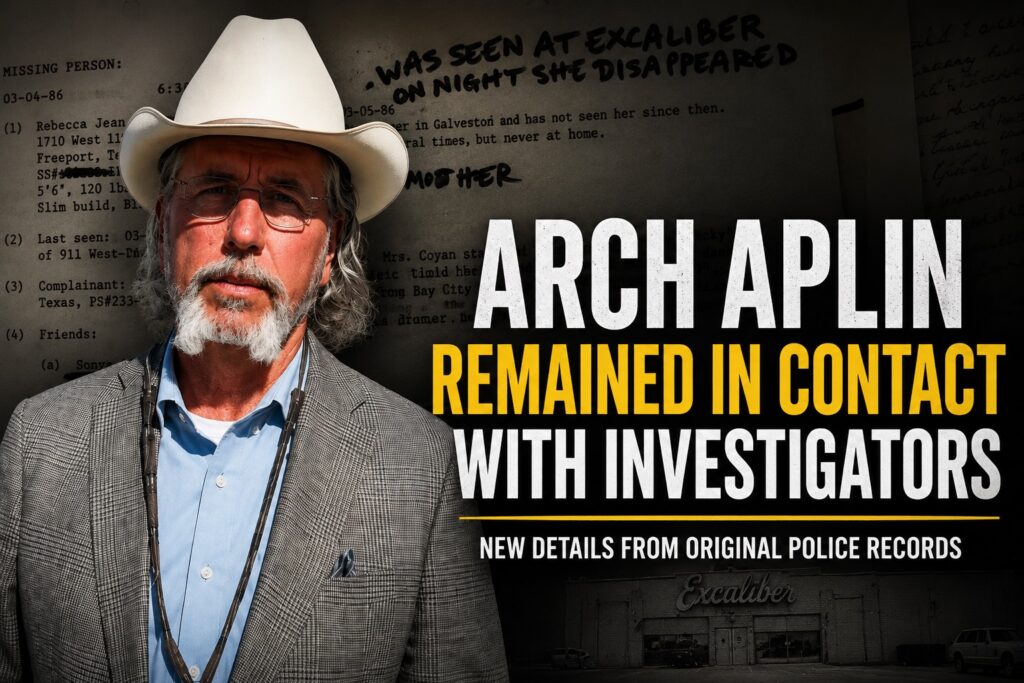
Graphic featuring Arch “Beaver” Aplin III alongside the headline “Arch Aplin Remained in Contact With Investigators” over a background of original Rebecca Beard police records and the former Excalibur Club.
This graphic highlights original police records documenting that Arch “Beaver” Aplin remained in contact with investigators after Rebecca Beard disappeared. The records show detectives continued communicating with Aplin as they worked to reconstruct Rebecca’s final known movements during the 1986 investigation.

The early investigative records also document repeated contact between detectives and Arch “Beaver” Aplin, who had been at the Excalibur Club around the time Rebecca Beard disappeared.

Rather than disappearing from the investigation after giving an initial statement, the reports show Aplin continued communicating with law enforcement in the days and weeks that followed.

According to the investigative notes, Aplin contacted detectives seeking updates on the investigation and asked whether he could publicly offer a $10,000 reward for information leading to Rebecca’s whereabouts.

The records indicate detectives discussed the proposed reward with Aplin while continuing to investigate numerous leads.

Those contacts are significant because they demonstrate that investigators maintained communication with Aplin throughout the early stages of the case. The reports do not indicate that detectives viewed him as someone who had withdrawn from the investigation. Instead, the documented contacts suggest he remained interested in learning whether investigators had developed new information.

The investigative files also reflect that detectives continued interviewing numerous witnesses during this same period, including Rebecca’s friends, coworkers, and individuals believed to have seen her during the weekend she disappeared.

Another Witness Reported Seeing Rebecca Beard at a Surfside Beach Party
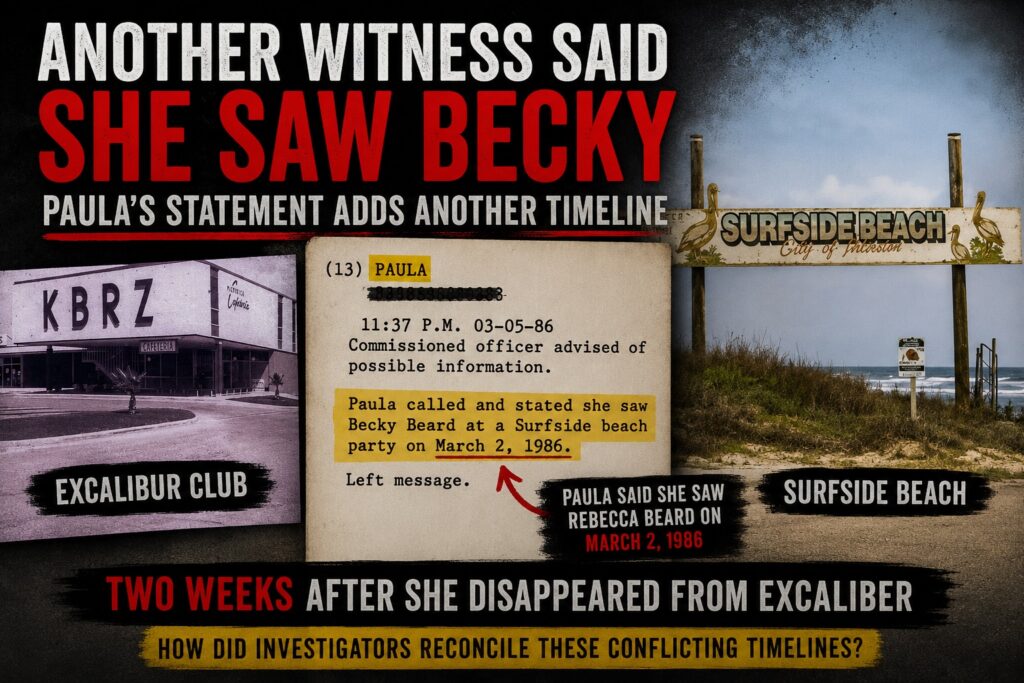
Graphic comparing Paula’s witness statement with images of the former Excalibur Club and Surfside Beach. The graphic highlights a police report stating Paula told investigators she saw Rebecca Beard at a Surfside beach party on March 2, 1986.
This graphic highlights Paula’s statement documented in the original police investigation. According to the police report, Paula told investigators she saw Rebecca Beard at a Surfside beach party on March 2, 1986. Her account added another reported timeline for detectives to evaluate as they worked to reconstruct Rebecca’s final known movements.

The original police investigation also documented a statement from another witness, Paula, who told investigators she saw Rebecca Beard at a Surfside beach party on the morning of March 2, 1986.

According to the police report, Paula said she recognized Becky and saw her with two males at the gathering. If her recollection was accurate, it could place Rebecca alive after the time she was believed to have left Excalibur, adding another timeline investigators had to evaluate.

Paula’s account does not prove what happened to Rebecca. However, it is one of several witness statements included in the original case file. When viewed alongside other reported sightings and witness interviews, it illustrates the challenges investigators faced while trying to reconstruct Rebecca’s final known movements.

More than 40 years later, these differing witness accounts continue to raise questions about Rebecca Beard’s disappearance and whether every lead documented in the original investigation was fully reconciled.

The Investigation Was Still Taking Shape

Reading the reports chronologically shows detectives working through dozens of leads while trying to establish Rebecca’s final movements.

Several witnesses interviewed in March 1986 told investigators they did not know Paul Taylor or had never heard Rebecca mention his name. At the same time, detectives continued following information involving several other individuals connected to the case.

These reports should be viewed as a snapshot of the investigation during its earliest weeks. Criminal investigations often evolve as detectives conduct additional interviews, gather new evidence, and revisit earlier leads.

The progression of the Rebecca Beard investigation reflects that process.

Coming in Part 3

The earliest police reports reveal how detectives began piecing together Rebecca Beard’s final known movements through witness interviews, follow-up leads, and investigative records. As the investigation continued, additional witness statements and investigative summaries documented new information and raised further questions.

In Part 3, I examine those later records, including additional witness statements, documented timeline discrepancies, and what they may reveal about the Rebecca Beard investigation nearly four decades later.

Research Tools for Investigative Journalists

Every long-term investigation benefits from careful note-taking. A quality investigator’s notebook or case journal provides a simple way to organize timelines, document interviews, and track developing leads while reviewing historical records.

Related Articles

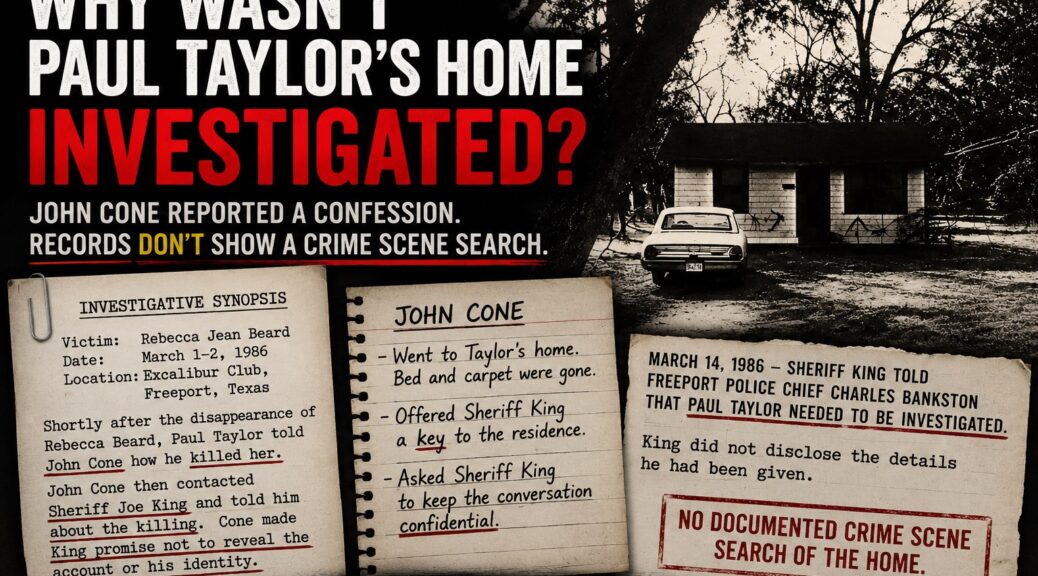
Rebecca Beard Case: Why Wasn’t Paul Taylor’s Home Investigated After John Cone’s Report?

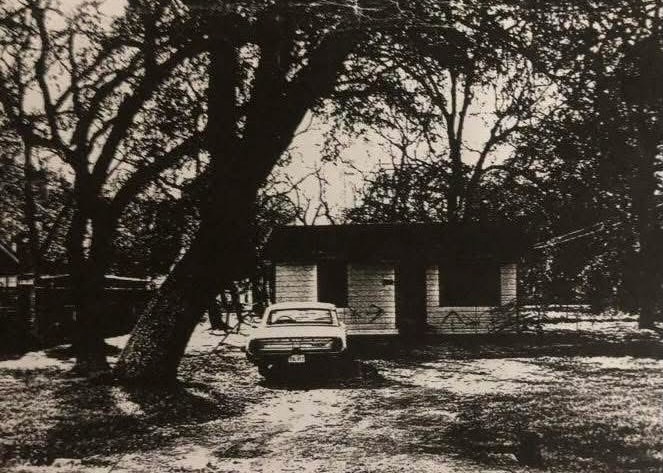
Historic black-and-white photograph of Paul Taylor’s former Clute home, featured in an article examining why investigators did not immediately secure or process the property after John Cone reported an alleged confession in the Rebecca Beard case.
The former Clute home where Paul Taylor lived became a focus of later investigative records after John Cone reported that Taylor allegedly confessed to killing Rebecca Beard. The article examines why available records do not document an immediate crime scene search or forensic processing of the property following that report.

Rebecca Beard Case: Why Wasn’t Paul Taylor’s Home Investigated After John Cone’s Report?

Reviewed by Investigative Reporter Tammy Rose

Police records raise new questions

Nearly 40 years after Rebecca “Becky” Beard disappeared, police records raise a question that remains unanswered.

If Sheriff Joe King received details of an alleged confession from John Cone shortly after Becky vanished, why don’t the records reviewed by Investigative Reporter Tammy Rose document an immediate search or forensic examination of Paul Taylor’s home?

The question stands out because later investigative summaries describe a series of events that, if accurate, pointed investigators toward Taylor’s residence within days of Becky’s disappearance.

John Cone said Taylor admitted killing Becky

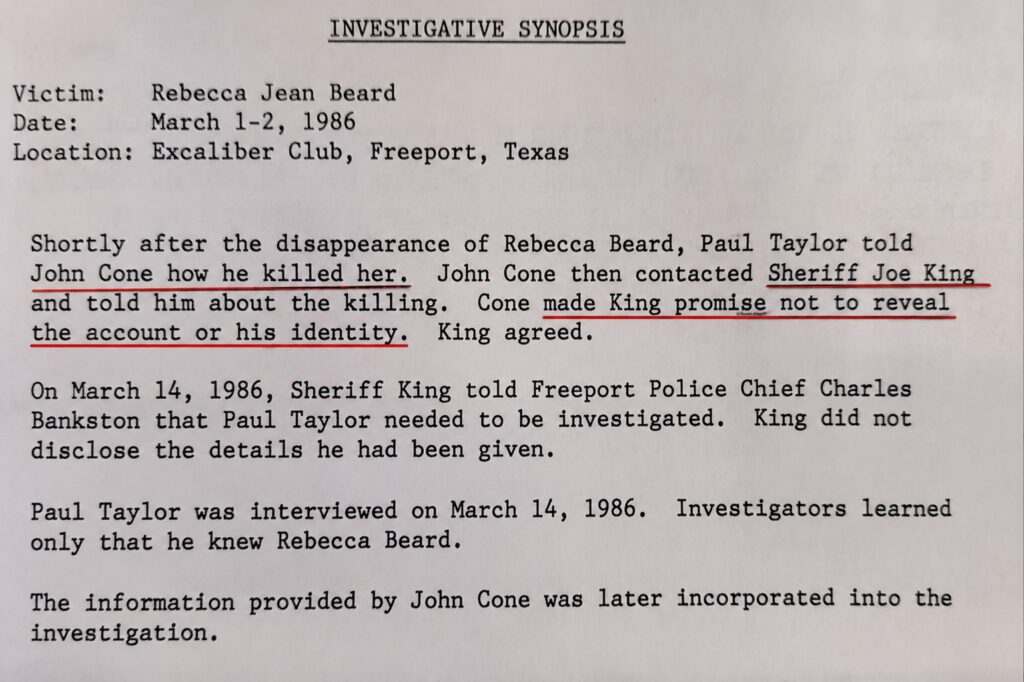
Investigative synopsis from the Rebecca Beard case stating that John Cone told investigators Paul Taylor admitted killing Rebecca Beard, contacted Brazoria County Sheriff Joe King, and asked that both his identity and the account remain confidential.
This investigative synopsis states that John Cone reported an alleged confession by Paul Taylor to Sheriff Joe King shortly after Rebecca Beard disappeared. According to the document, Cone asked King to keep both the information and his identity confidential. The synopsis also states King later advised Freeport Police that Taylor should be investigated, raising questions about what investigative steps followed.

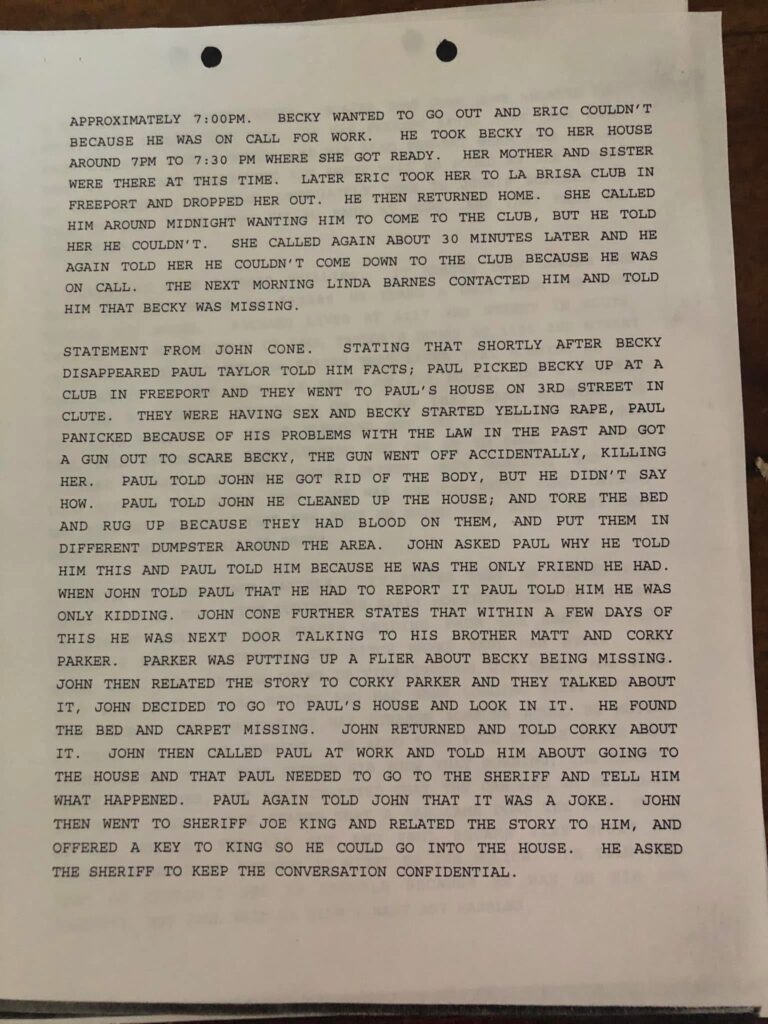
According to a later investigative synopsis, John Cone told investigators that Paul Taylor admitted Becky died inside his Clute home.

Cone’s statement says Taylor claimed he picked Becky up after she left a club, took her to his residence, and that she died after a gun discharged during a struggle.

Taylor allegedly told Cone he cleaned the residence, removed the bed and carpet because they contained blood, and discarded them in dumpsters.

Cone also said he entered Taylor’s home himself and noticed the bed and carpet were gone.

According to the records, Cone then contacted Brazoria County Sheriff Joe King and reported what Taylor allegedly told him.

Cone reportedly offered Sheriff Joe King a key

Investigative document summarizing John Cone’s statement in the Rebecca Beard case. The document states that Paul Taylor allegedly confessed to Cone, that Cone reported the information to Sheriff Joe King, and that Cone offered the sheriff a key to Taylor’s home after noticing the bed and carpet were missing.
This investigative document summarizes John Cone’s account, including his claim that Paul Taylor allegedly confessed to killing Rebecca Beard. According to the document, Cone said he entered Taylor’s home, noticed the bed and carpet were missing, and later offered Sheriff Joe King a key to the residence. The document raises questions about what investigative steps followed after that information reached law enforcement.

One detail stands out in Cone’s statement.

Cone said he offered Sheriff Joe King a key to Taylor’s residence.

He also asked the sheriff to keep both the conversation and his identity confidential.

The investigative synopsis later states that King agreed to keep the information confidential.

According to that same synopsis, Sheriff King informed Freeport Police Chief Charles Bankston on March 14, 1986, that Paul Taylor needed to be investigated but did not relate the details Cone had provided.

Taylor was interviewed that day. The synopsis states investigators learned only that Taylor knew Becky.

Where is the documented crime scene investigation?

The records reviewed by Investigative Reporter Tammy Rose do not document that investigators immediately searched Paul Taylor’s residence or processed it as a possible crime scene.

The records also do not document officers collecting physical evidence, photographing the interior, looking for blood evidence, seizing the reportedly missing bed or carpet, or tracing the dumpsters where Taylor allegedly said he discarded evidence.

Those questions remain central to understanding the early investigation. The records reviewed for this report do not document that investigators immediately completed those investigative steps after John Cone reported what Taylor allegedly told him.

Those questions remain central to understanding the early investigation. The records reviewed for this report do not document that investigators immediately completed those investigative steps after John Cone reported what Taylor allegedly told him.

Another report raised similar concerns

The records contain another development one month later.

An April 16, 1986 report states the manager of Excaliber Club told investigators about another conversation involving Taylor.

According to the report, another witness claimed Taylor said he picked up a woman from the club, took her home, shot her, buried her body, cut up the mattress and discarded it in dumpsters.

The same report states Matt Cone checked Taylor’s residence and found the bed no longer had a mattress. Cotton stuffing reportedly remained on the floor.

Even then, the records reviewed by Investigative Reporter Tammy Rose do not document that officers immediately processed the residence as a homicide scene.

Another inconsistency emerges

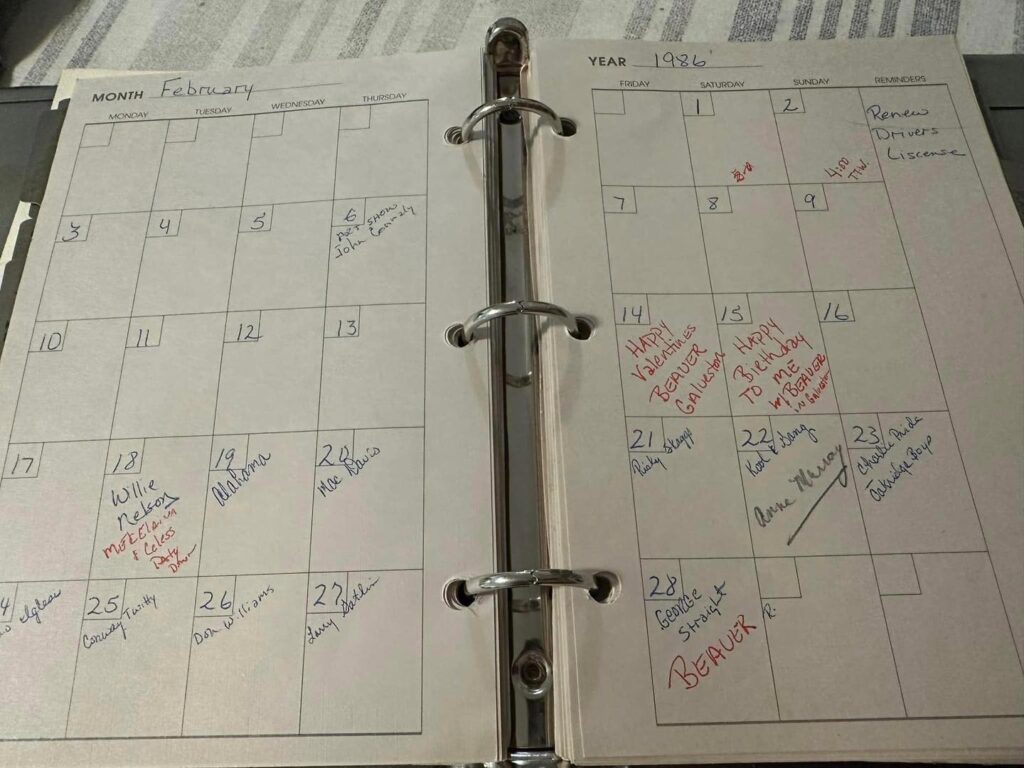
These records compare early police reports, a later investigative summary, and Rebecca Beard’s personal planner. One report states Beaver (Arch) Aplin last saw Rebecca on February 14, while a later investigative summary lists him among witnesses who reportedly saw her at Excalibur on the night she disappeared. The differing timelines raise questions about how investigators reconciled those statements during the investigation.

While reviewing the early investigation, another issue surfaced.

Police reports appear to contain conflicting information about Beaver (Arch) Aplin’s timeline.

One report says Aplin told investigators he had not seen Becky since February 14, 1986.

A later investigative report identifies Aplin as one of several people reportedly present at Excaliber on the night Becky disappeared.

That apparent inconsistency raises another question.

Did investigators ever reconcile those differing accounts?

That question will be examined in Part 2 of this series.

Questions that remain

The records reviewed for this article leave several unanswered questions:

Why wasn’t Taylor’s residence immediately documented as a potential crime scene after John Cone reported an alleged confession?
Did Sheriff Joe King ever use the key Cone reportedly offered?
Were investigators ever able to locate the missing bed, carpet or mattress?
If those items were never recovered, how much potential evidence may have been lost?

Nearly four decades later, those questions remain central to understanding the early investigation into Rebecca Beard’s disappearance.

Internal links

Why I Traveled to Arizona to Interview Arch Aplin
Rebecca Beard family meeting with investigators

Amazon recommendations

True Crime Investigation Notebook

Keep detailed notes while following complex investigations. A structured notebook makes it easier to compare timelines, witness statements and evidence.

Disclosure: As an Amazon Associate, I earn from qualifying purchases at no additional cost to you. Your support helps fund my investigative reporting and allows me to continue researching and publishing stories like this one.

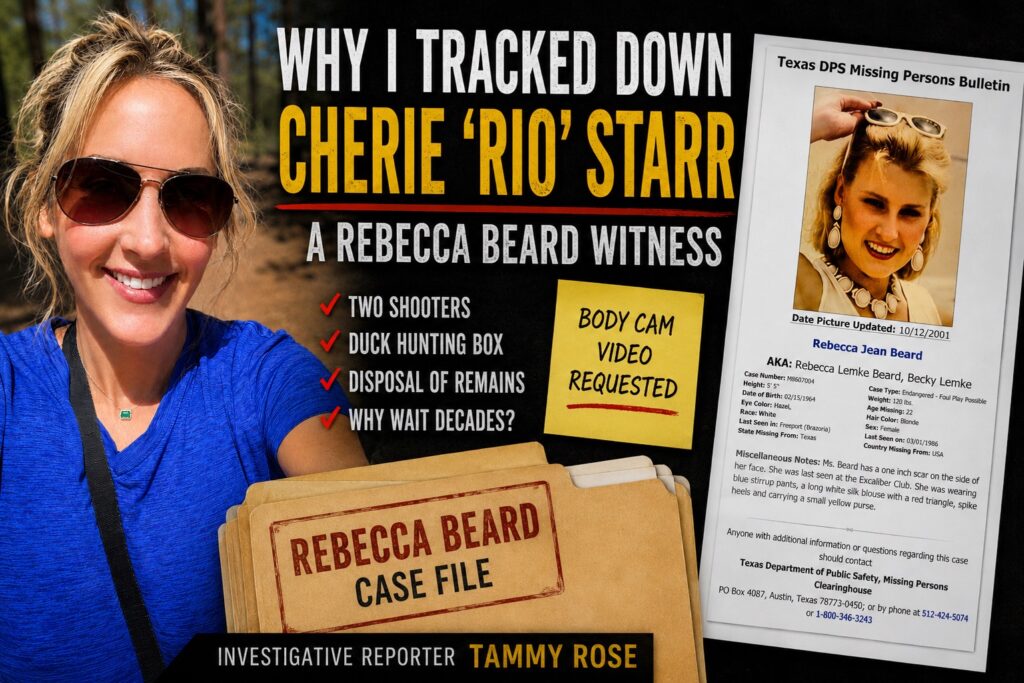
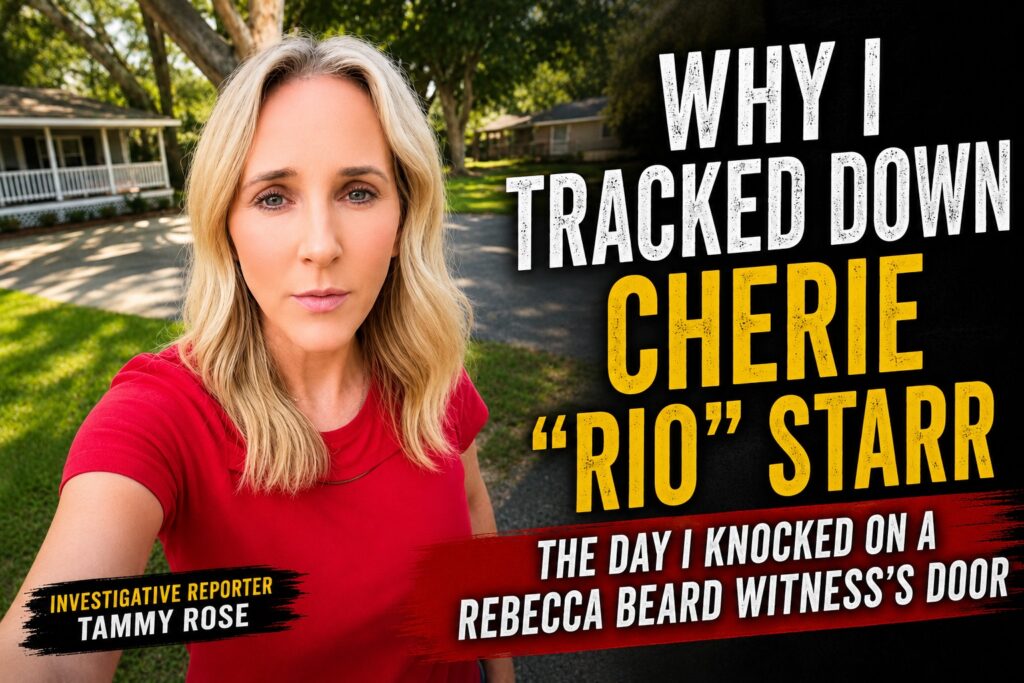
Why I Tracked Down Rebecca Beard Witness Cherie “Rio” Starr

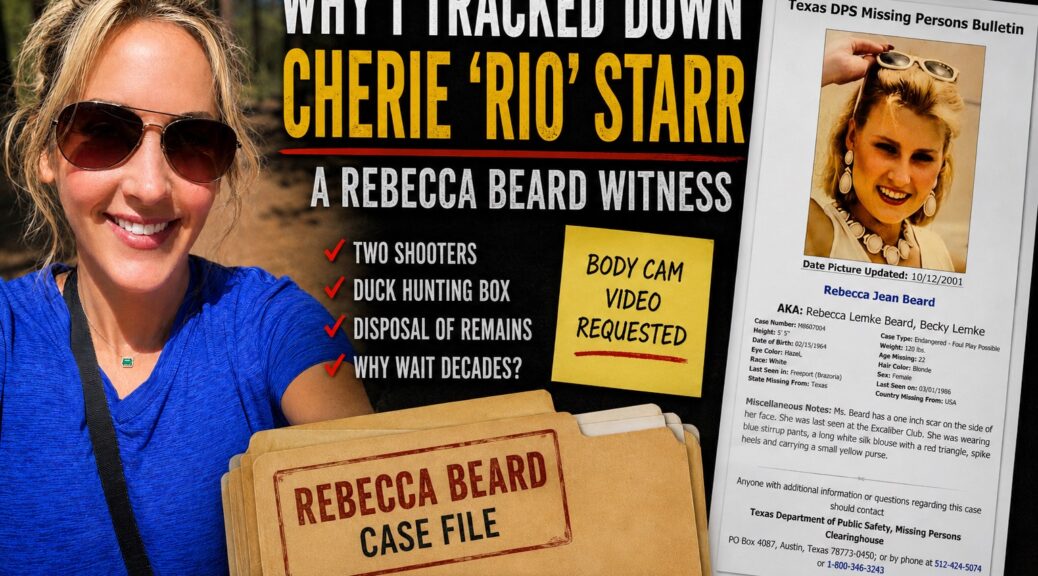
Thumbnail for an investigative news article titled “Why I Tracked Down Rebecca Beard Witness Cherie ‘Rio’ Starr.” The image features investigative reporter Tammy Rose alongside a Texas DPS missing persons bulletin for Rebecca Beard, a folder labeled “Rebecca Beard Case File,” and text referencing the Rebecca Beard investigation, including “Two Shooters,” “Duck Hunting Box,” “Disposal of Remains,” and “Body Cam Video Requested.”
Thumbnail for my investigation into why I tracked down Rebecca Beard witness Cherie “Rio” Starr and the questions her account raises about one of Brazoria County’s longest-running cold cases.

When I interviewed Rebecca Beard’s sister, Carol Mize, I expected to learn more about the ongoing search for Becky’s remains and the questions that still surround the case.

Paul Taylor Jr. pleaded guilty to Rebecca Beard’s murder in 1995. However, Becky’s body has never been found.

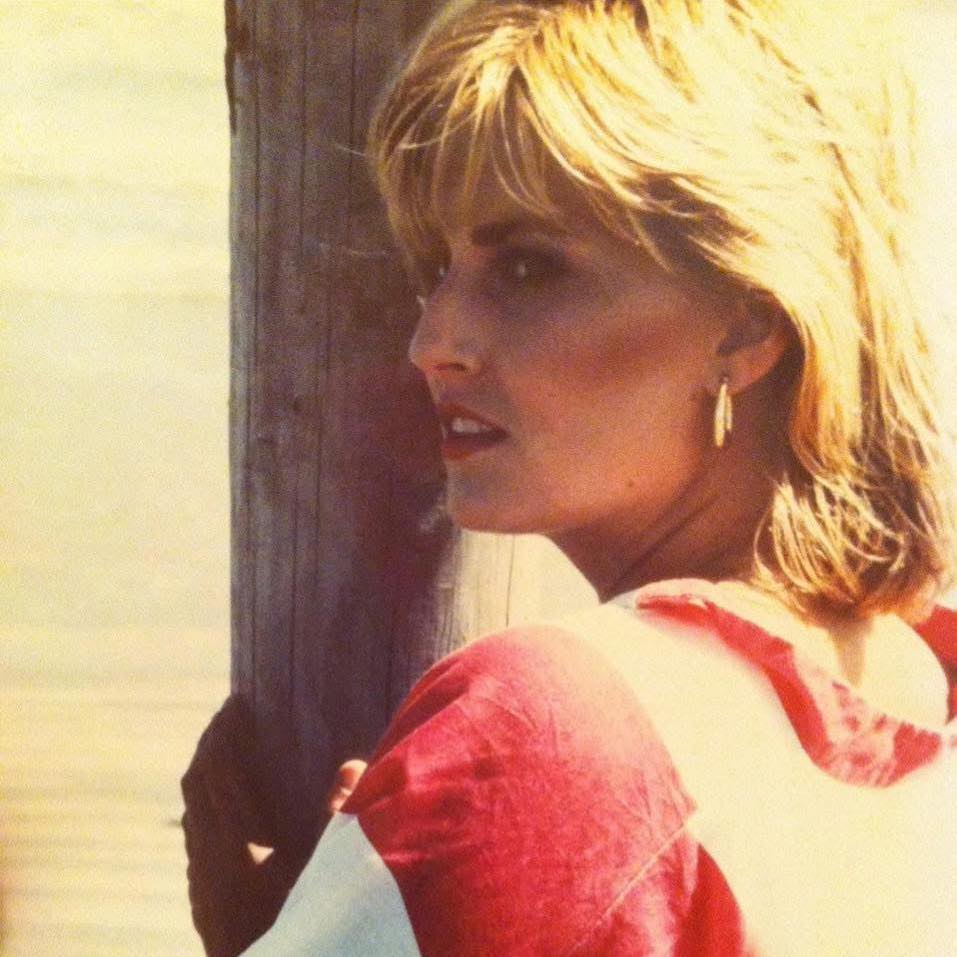
Side-profile photograph of Rebecca Beard wearing a red and white top and gold hoop earrings while looking over her shoulder. The image appears in an investigative article discussing new information shared by Rebecca Beard’s sister, Carol Mize, about the case.
A photograph of Rebecca Beard featured alongside new details shared by her sister, Carol Mize, during an interview about the investigation and the questions that continue to surround Becky’s disappearance.

Instead of discussing only the search, Carol shared details from a witness deposition that stopped me in my tracks.

The witness, Cherie “Rio” Starr, described two shooters, a duck hunting box, and an alleged effort to conceal Becky’s remains.

Some of those claims appeared to overlap with information that had been discussed publicly over the years. Other claims seemed extraordinary.

I did not know what to believe.

As a journalist, I knew I had to ask the witness my own questions.

Watch Carol Mize’s chilling interview about the alleged duck box.

Why I Decided to Find Cherie Starr

One question stayed with me.

If someone witnessed what Starr later described in her deposition, why wait decades to report it?

I also wanted to know whether investigators could verify any part of her account.

Rebecca’s family believed her allegations deserved to be investigated. I wanted to hear directly from the person making those claims.

That is what journalists do.

We ask questions.

Why I Waited to Tell This Story

When I knocked on Starr’s door, her identity had not been made public.

Because of that, I chose not to report her name or write about what happened that day.

I believed that was the fair and responsible decision.

Since then, Rebecca’s family has publicly discussed Starr. Brazoria County District Attorney Tom Selleck told the family that investigators do not currently consider her a credible witness.

That announcement could affect future investigative steps, including whether authorities continue searching locations connected to Starr’s allegations.

Now readers deserve to understand why I went looking for her in the first place.

What Carol Mize Told Me

Carol described allegations that were difficult to forget.

According to Carol, Starr claimed Becky was shot by two different people using two different guns.

Carol also said Starr described a duck hunting box and an alleged attempt to move and hide Becky’s remains.

The allegations were graphic.

If true, they could have changed the direction of the investigation.

They also raised obvious questions.

Why did no one hear this story for decades?

Why had the witness waited so long to come forward?

Those were the questions I wanted to ask.

Knocking on Doors Is Part of Journalism

During more than 30 years as a reporter, I have knocked on hundreds of doors.

Sometimes people answer questions.

Sometimes they decline.

Sometimes they close the door.

That is part of investigative journalism.

I introduced myself and asked Cherie Starr if she would answer a few questions about the Rebecca Beard case.

She told me she had no comment.

I thanked her and walked back to my Jeep.

What Happened When I Knocked on Cherie Starr’s Door

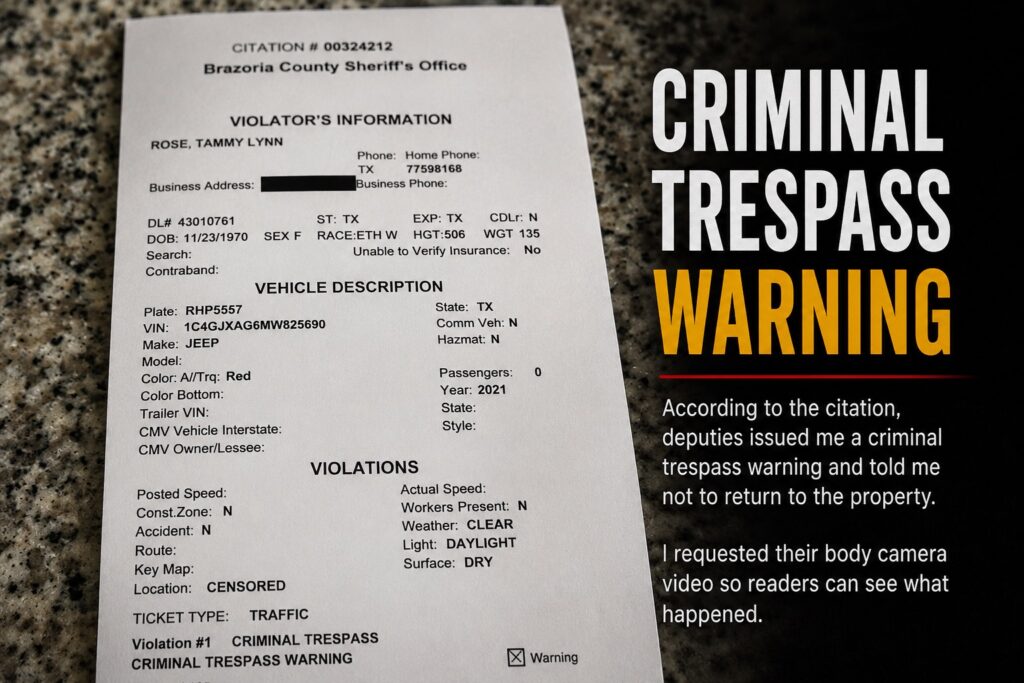
Screenshot from an article showing a redacted Brazoria County Sheriff’s Office criminal trespass warning issued to investigative reporter Tammy Rose after attempting to contact Rebecca Beard witness Cherie “Rio” Starr. The image also notes that a public records request was submitted for the deputies’ body camera video documenting the encounter.
After knocking on Rebecca Beard witness Cherie “Rio” Starr’s door, I was issued a criminal trespass warning. I later requested the responding deputies’ body camera video through a public records request so readers can see what happened for themselves.

As I prepared to leave, Cherie Starr ran outside with another man.

They demanded to know who had given me her name.

I told them I never reveal confidential sources. Protecting sources is part of my job.

During the encounter, Starr said she was calling the district attorney, investigator Matt Wingo, and former DA investigator John Blankenship.

However, only local law enforcement officers responded to the scene.

According to my recollection, Starr then stood behind my Jeep while continuing to question me.

I did not believe I could safely back up while someone stood behind my vehicle.

I stayed where I was until deputies arrived.

They investigated the situation for about two hours.

Before I left, deputies issued me a criminal trespass warning and told me not to return to the property.

Why I Requested the Body Camera Video

I do not expect readers to rely only on my account.

That is why I requested the deputies’ body camera footage through the Texas Public Information Act.

As of today, I am still waiting for those records.

When I receive the footage, I will publish it so readers can watch the encounter and reach their own conclusions.

Transparency matters.

Why This Story Matters

Today, investigators have told the family they do not consider Starr a credible witness.

That does not change why I knocked on her door.

At the time, Rebecca’s family believed her allegations were important enough to investigate. I believed they were important enough to question.

I was not trying to prove Cherie Starr right.

I was not trying to prove her wrong.

I wanted answers.

That is my job.

Investigative journalism means asking difficult questions, even when those questions make people uncomfortable.

Whether readers agree with my reporting or not, I believe they deserve to understand why I knocked on Cherie “Rio” Starr’s door.

Related Coverage

Read my coverage of the meeting between Rebecca Beard’s family and investigators.

You can also read my reporting on the physical evidence and the ongoing search for Rebecca Beard’s remains.

If you enjoy my investigative reporting, please consider checking out the books and gear I recommend for journalists and true crime readers.

Affiliate Disclosure: This post may contain affiliate links. If you purchase through these links, I may earn a small commission at no additional cost to you.

Investigative Reporter Tammy Rose

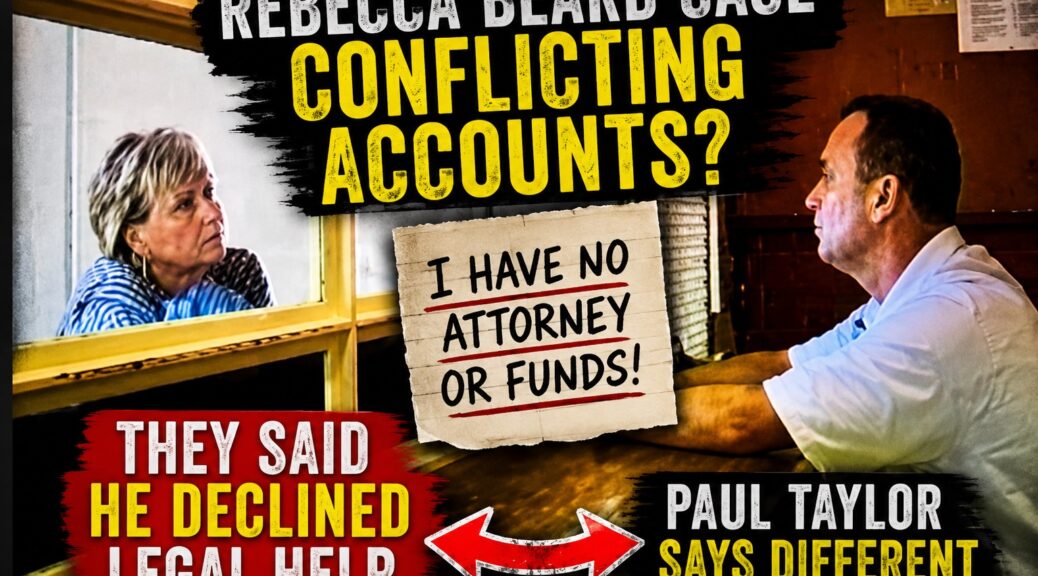
Rebecca Beard Family Questions Claims Paul Taylor Declined Legal Representation

Paul Taylor Jr. booking photo taken during the investigation into the Rebecca Beard case.
Paul Taylor Jr. booking photo from the investigation into the 1986 disappearance and murder of Rebecca Beard. His recent prison messages are compared with statements discussed during a meeting with Rebecca Beard’s family regarding legal representation.

Rebecca Beard Family Questions Statements About Paul Taylor and Legal Representation

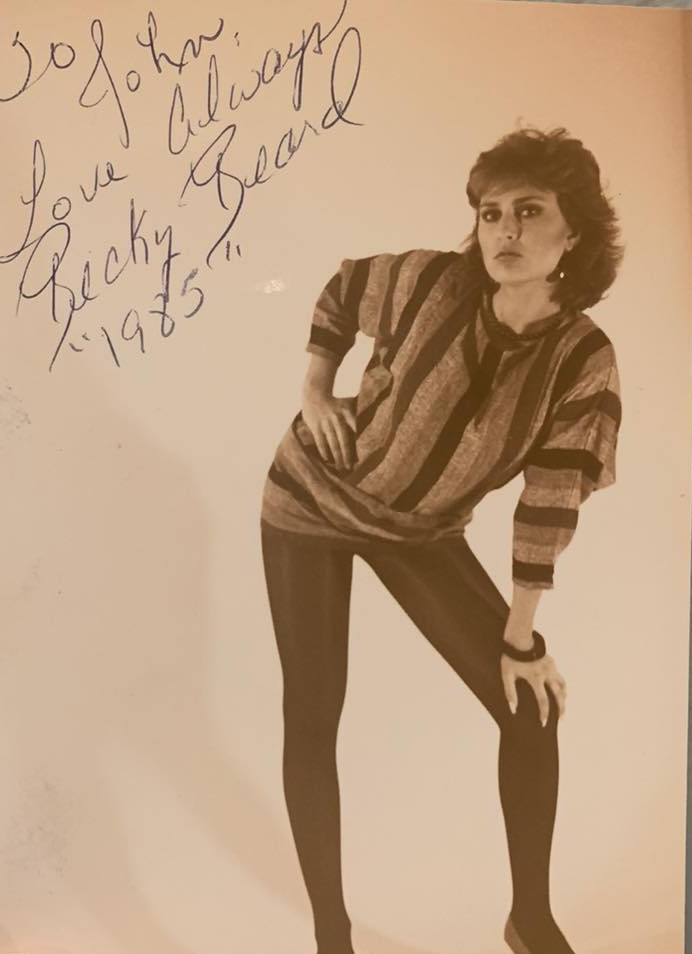
Autographed 1985 promotional photo of Rebecca Beard with a handwritten inscription reading, “To John, Love Always, Becky Beard.”
An autographed 1985 photo of Rebecca Beard inscribed, “To John, Love Always, Becky Beard.” The image is included in the Beard family’s article examining conflicting accounts about Paul Taylor Jr. and legal representation.

The family of Rebecca Beard says newly reviewed prison messages from Paul Taylor raise questions about statements made during a meeting with Brazoria County officials regarding legal representation and the Texas Innocence Project.

According to Rebecca Beard’s sister, Carol Mize, family members met with officials to discuss developments in the decades-old murder case. During that meeting, participants discussed whether Taylor had been offered legal representation.

Carol Mize Says Officials Claimed Paul Taylor Declined Legal Representation

According to Carol Mize, participants at the meeting stated that Paul Taylor had been offered legal representation but declined the offer.

That statement prompted questions from the Beard family after reviewing messages Taylor later sent from prison.

Paul Taylor’s Messages Tell a Different Story

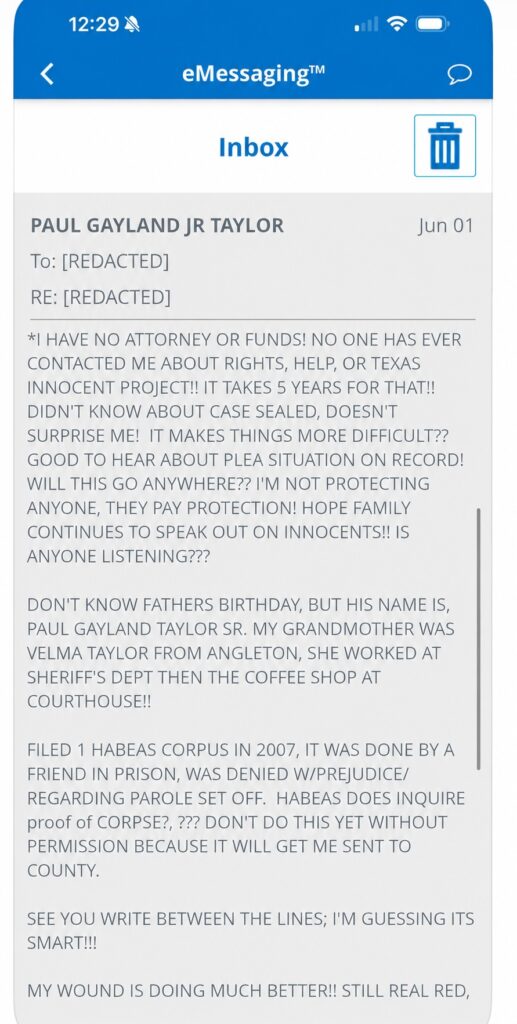
Screenshots of prison messages sent by Paul Taylor Jr. that are compared with statements discussed during a meeting with Rebecca Beard’s family regarding legal representation and the Texas Innocence Project.

In a message provided to the Beard family, Taylor wrote:

“I HAVE NO ATTORNEY OR FUNDS!”

He also wrote:

“NO ONE HAS EVER CONTACTED ME ABOUT RIGHTS, HELP, OR TEXAS INNOCENT PROJECT!!”

Taylor added that he was unaware of a sealed case document, writing:

“DIDN’T KNOW ABOUT CASE SEALED…”

In a more recent message to Investigative Reporter Tammy Rose, Taylor wrote:

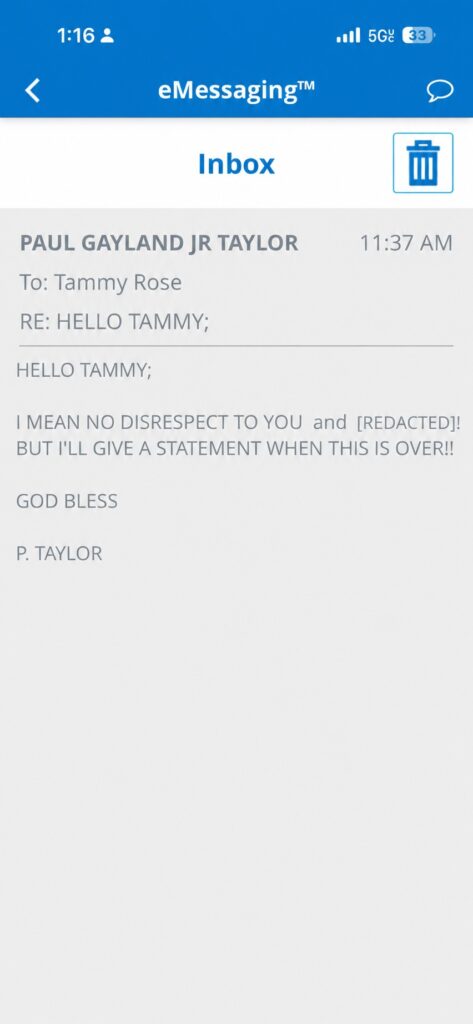
“I MEAN NO DISRESPECT TO YOU and (REDACTED) ! BUT I’LL GIVE A STATEMENT WHEN THIS IS OVER!!”

Conflicting Accounts Raise New Questions

Carol Mize says officials stated Paul Taylor declined legal representation that had been offered to him. Taylor’s prison messages later presented a different account, raising new questions in the Rebecca Beard case.

According to Carol Mize, officials stated during the meeting that Paul Taylor declined legal representation that had been offered to him.

Taylor’s own written messages present a different account. In those messages, he states that he has no attorney, no funds, and was never contacted about rights, legal help, or the Texas Innocence Project.

At this time, Tammy Rose has not independently verified which account is accurate. The article reflects statements made during the meeting, as described by Carol Mize, alongside Taylor’s own written messages.

Editor’s Note

This article is based on statements made during a meeting attended by Rebecca Beard’s family, as described by Carol Mize, and on messages attributed to Paul Taylor. The statements represent differing accounts and are presented to accurately reflect what each party said.

If you enjoy following long-term investigations and behind-the-scenes reporting, check out the gear I personally use in the field and while traveling.

If you’re fascinated by unsolved mysteries and criminal investigations, browse my collection of recommended true crime books covering some of the most compelling cases ever investigated.

Related Articles:

Rebecca Beard Timeline: Key Events in the 1986 Disappearance

Rebecca Beard Case: Public Records, Confessions, and Investigation Updates

Amazon Affiliate Disclosure: As an Amazon Associate, I earn from qualifying purchases at no additional cost to you.

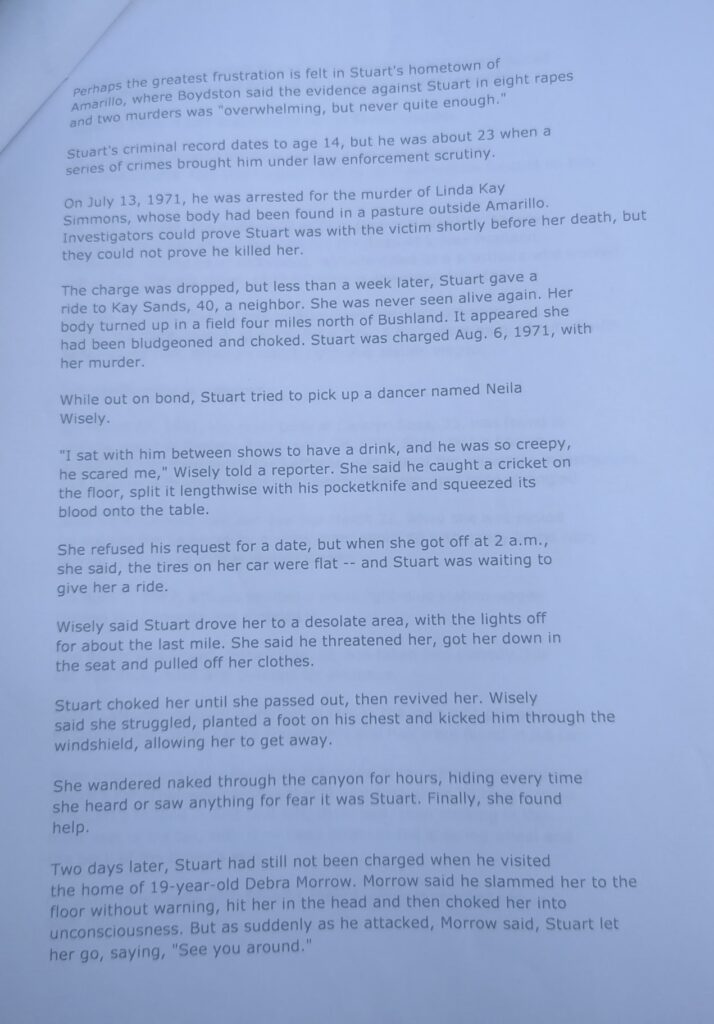
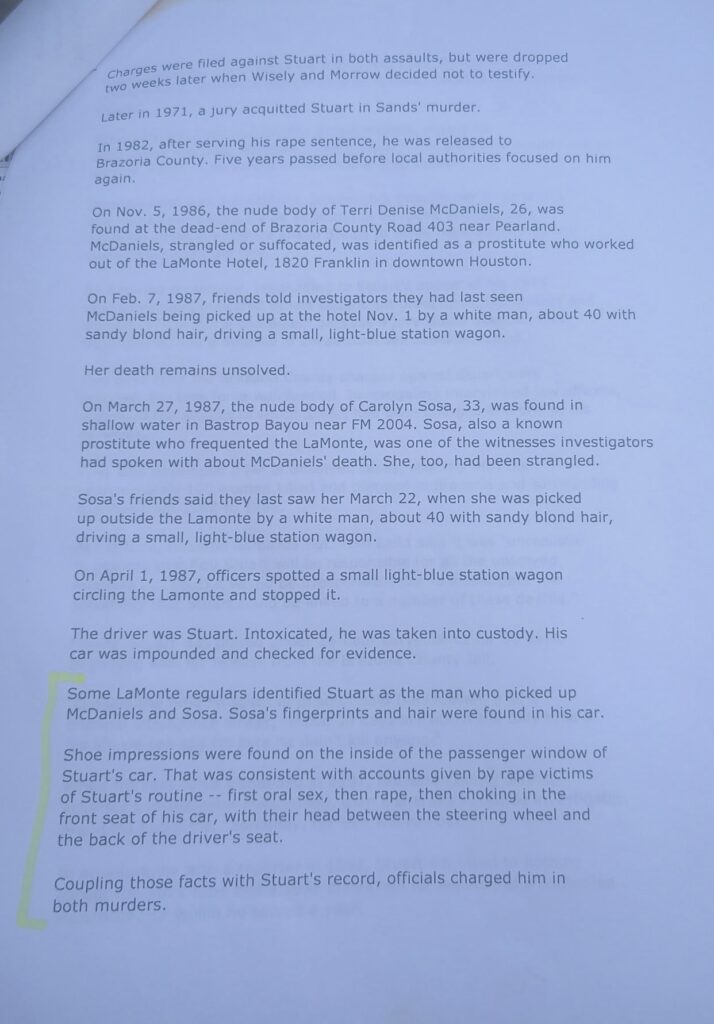
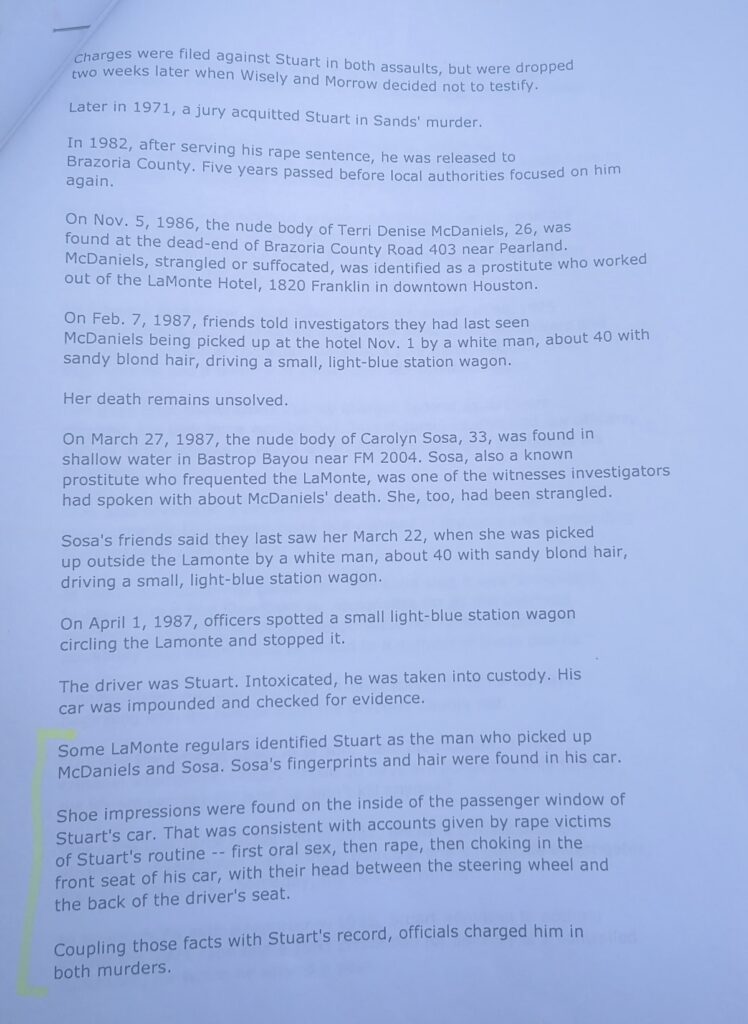
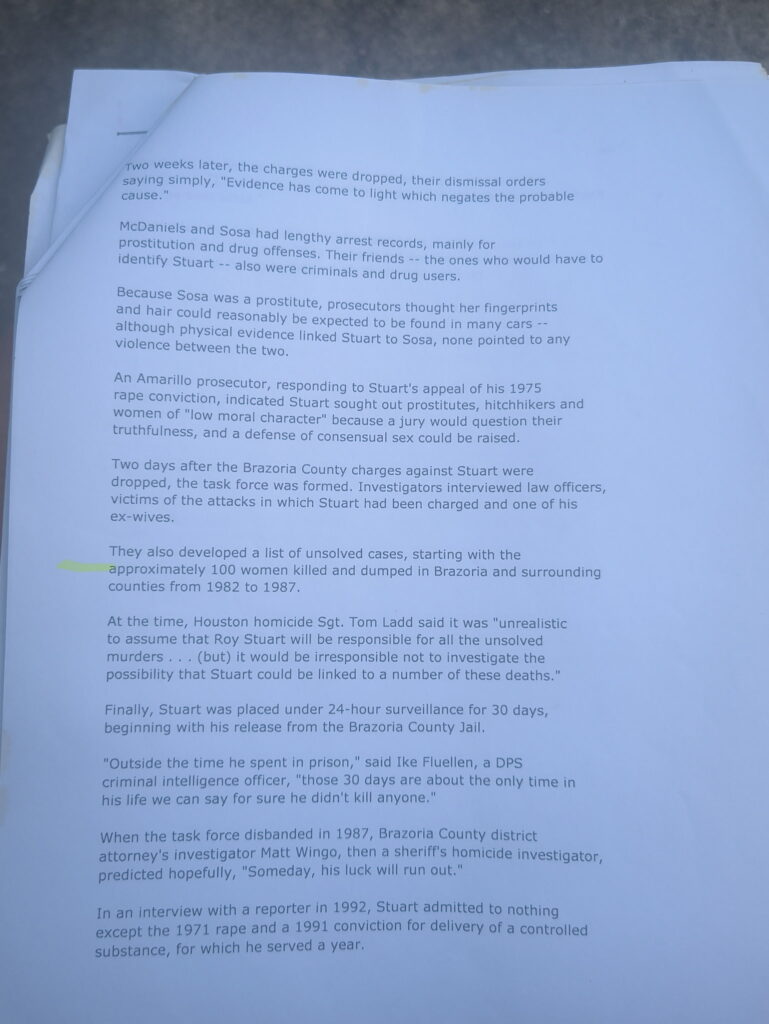
Carolyn Sosa’s Daughter Speaks Out as New Documents and Roy Alan Stuart Prison Confession Claims Renew Calls for Review

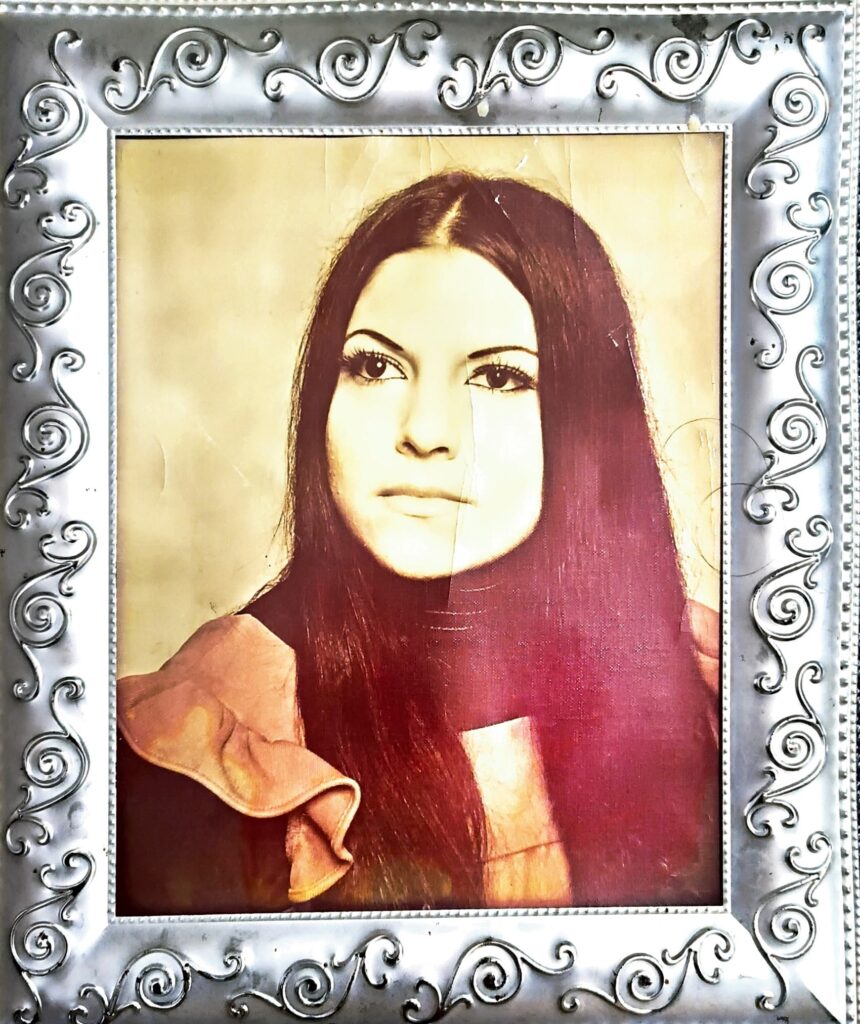
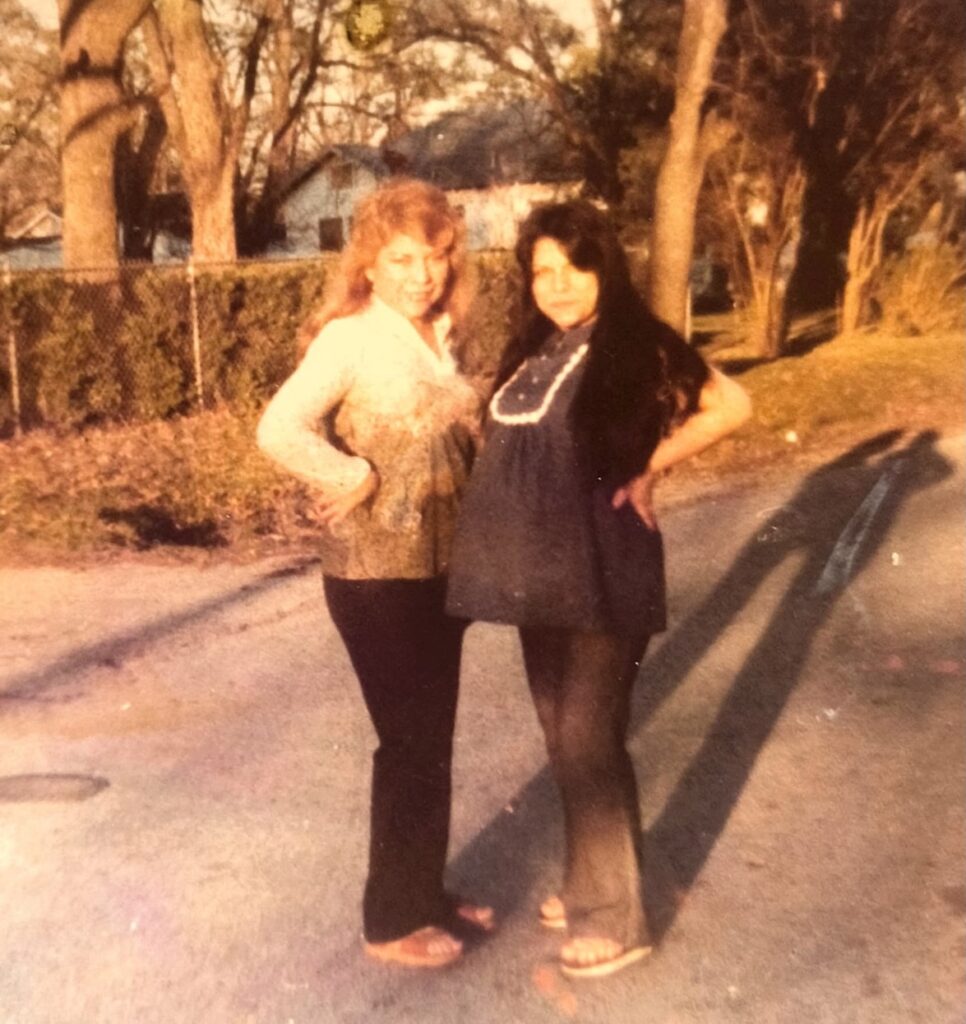
Carolyn Sosa portrait in a decorative silver frame shared by her family as part of the investigation into her 1987 murder.

For nearly 40 years, Donna Sanchez has searched for answers about what happened to her mother, Carolyn Sosa.

After Investigative Reporter Tammy Rose reached out during an ongoing investigation into former Harris County deputy Kent McGowen’s prison diaries and Roy Alan Stuart’s alleged prison confessions, Donna shared family memories, court records and historical documents she hopes could help bring renewed attention to her mother’s unsolved murder.

“I was seven years old when my mother died,” Donna said. “She was strangled and thrown into Bastrop Bayou.”

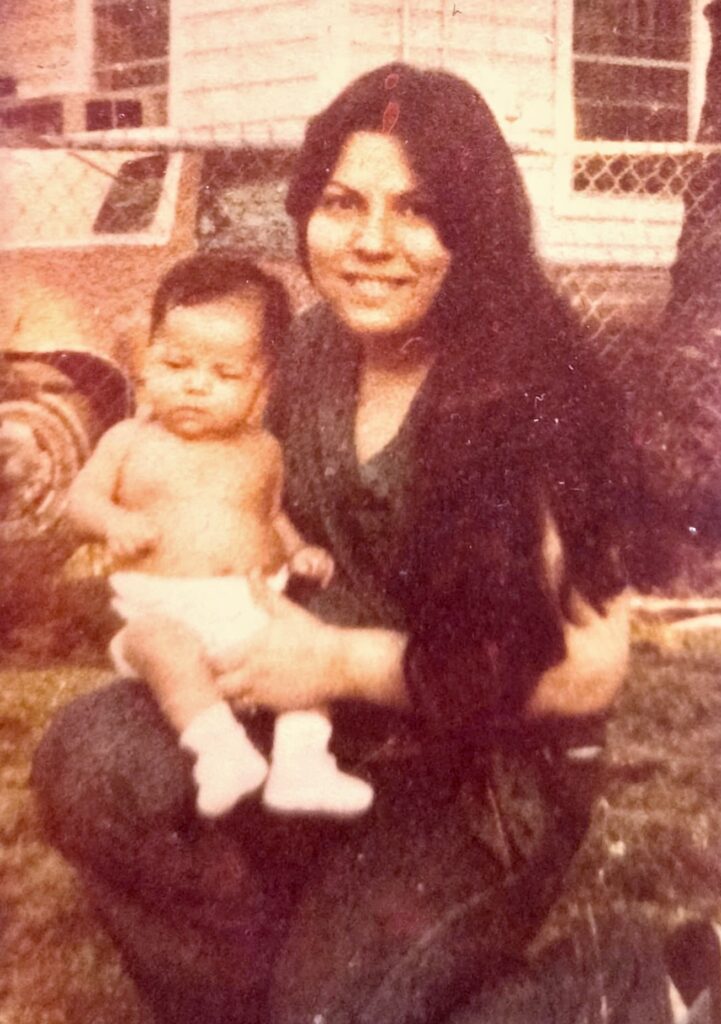
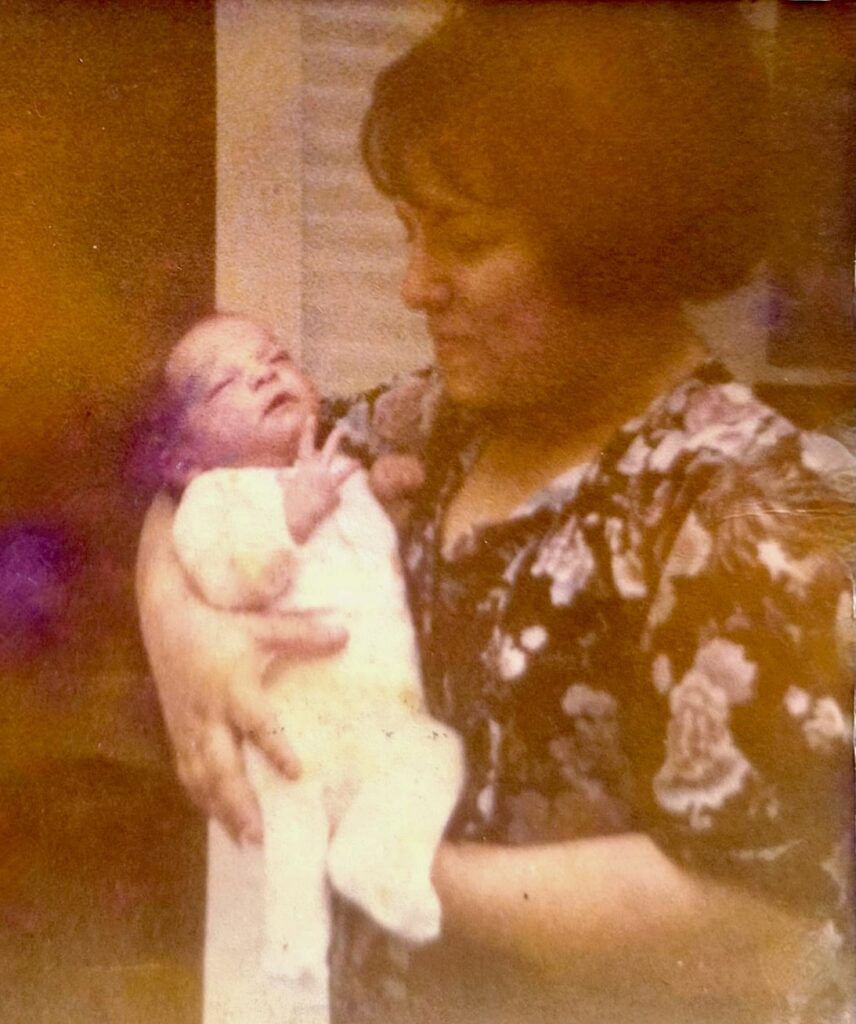
Carolyn Sosa holding her young daughter Donna Sanchez in a family photograph taken before Carolyn’s 1987 disappearance.

Carolyn Sosa Case

After speaking with Investigative Reporter Tammy Rose, Donna Sanchez shared family memories, court records, historical documents, newspaper articles, and text messages related to the Carolyn Sosa investigation.

Donna believes Roy Alan Stuart murdered her mother, Carolyn Sosa, and hopes the records contribute to another review of the case.

Some of the historical records overlap with information gathered during this investigation, including details Kent McGowen says Roy Alan Stuart shared while the two were incarcerated together. Readers can review the original source documents below and draw their own conclusions.

Who Was Carolyn Sosa?

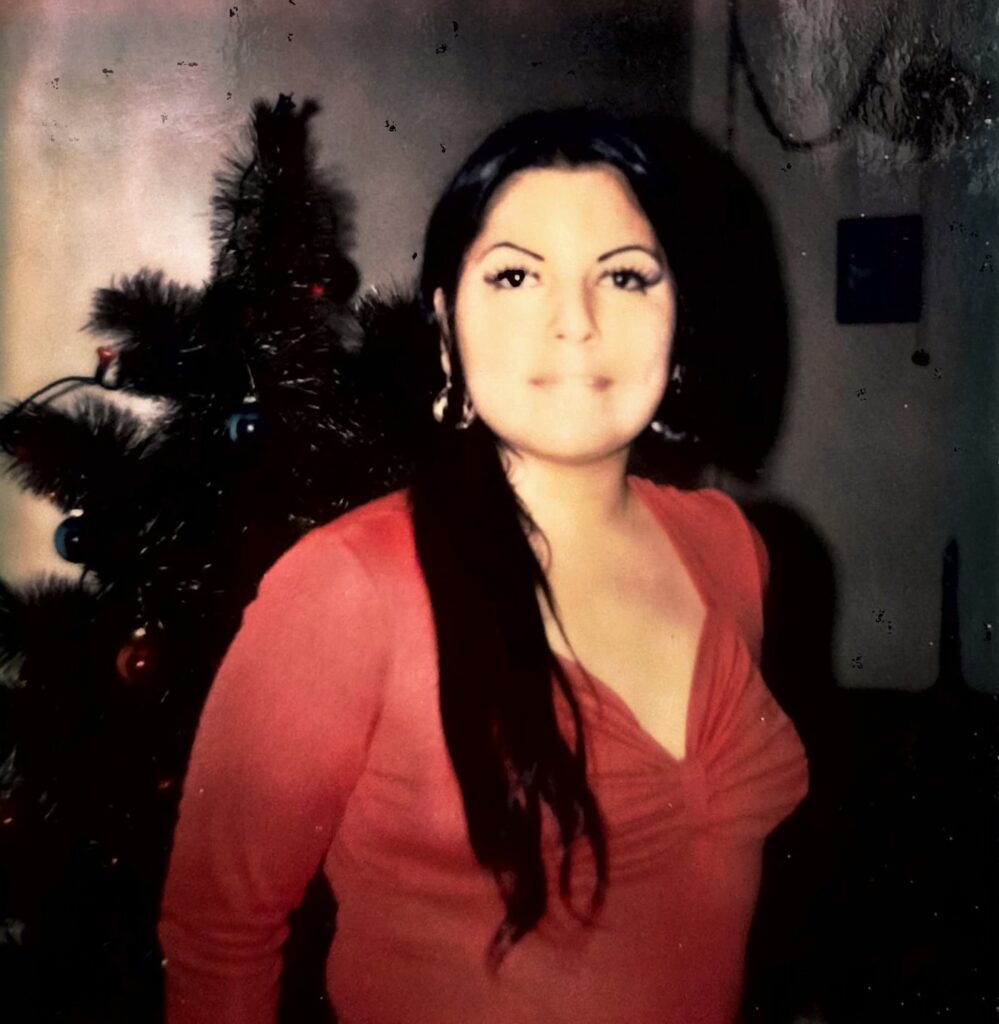
Carolyn Sosa in a red blouse in a family photograph taken before her disappearance in March 1987.

Carolyn Sosa was 33 years old when she disappeared in March 1987. Investigators believe she was last seen leaving Houston’s LaMonte Hotel.

Her body was later found in shallow water near Bastrop Bayou off FM 2004.

Investigators also believed Carolyn had information about the earlier killing of Terri Denise McDaniels.

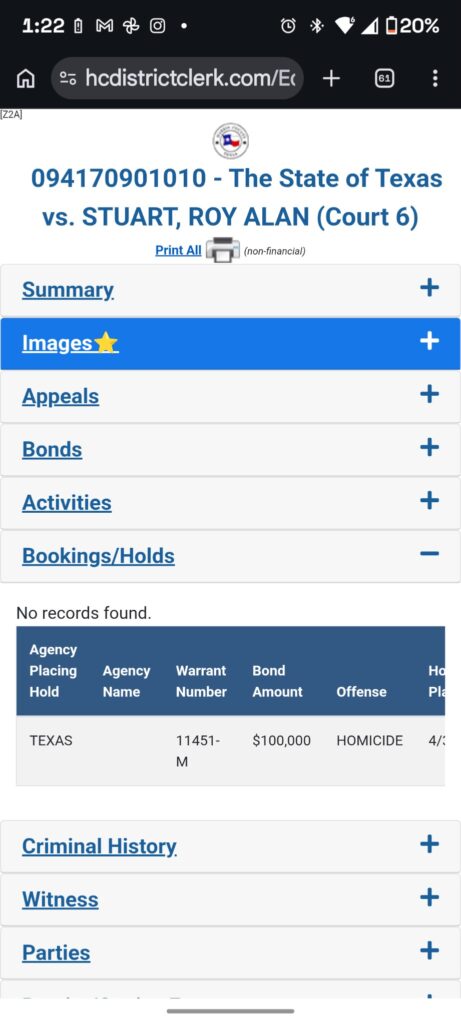
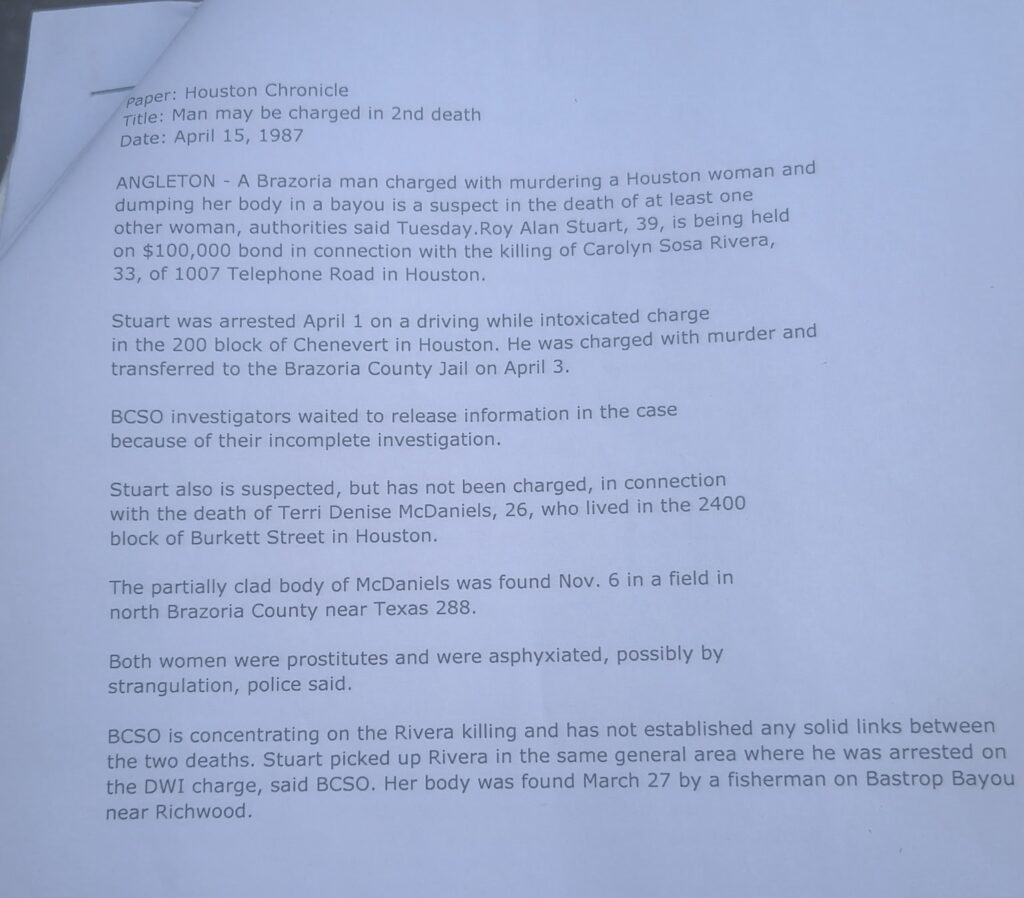
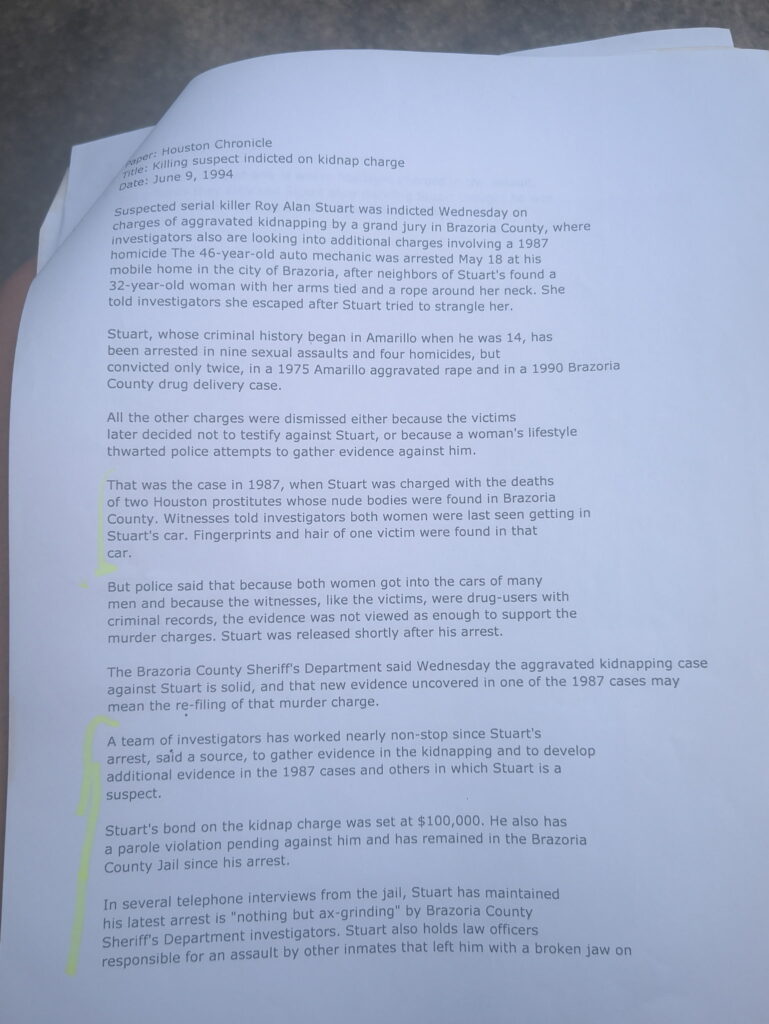
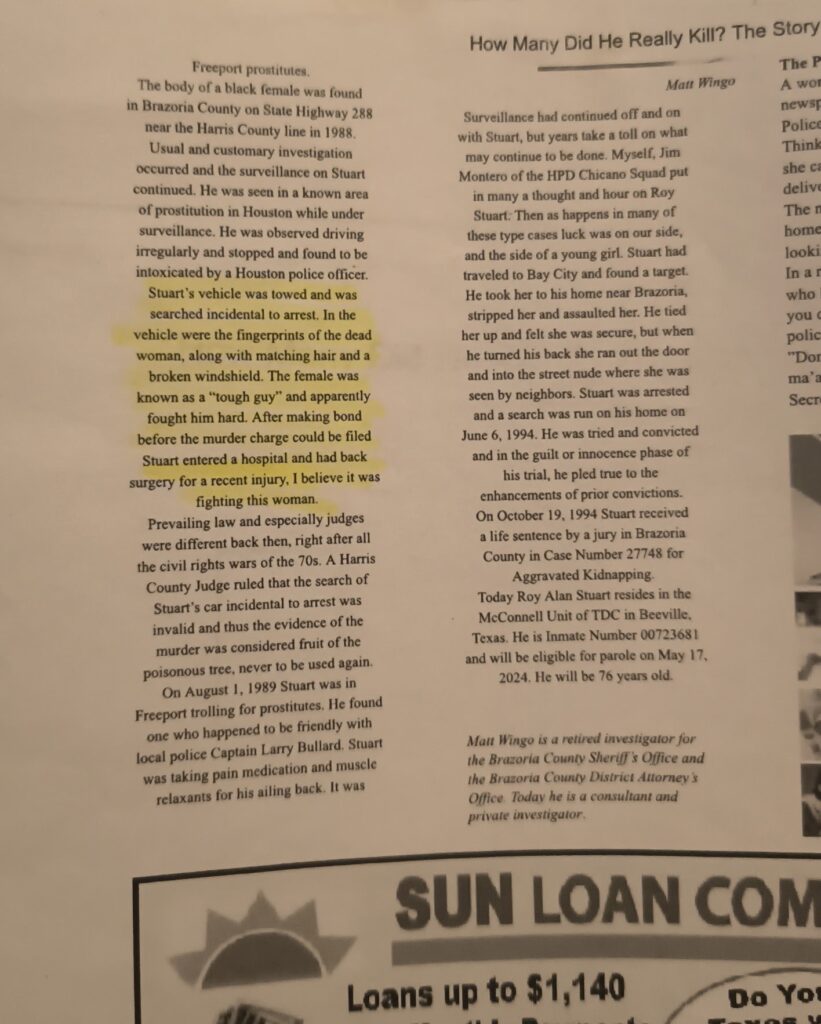
Historical investigative records state investigators found Carolyn Sosa’s fingerprints and hair inside Roy Alan Stuart’s vehicle.

Historical Court Records

The gallery below contains historical court records, newspaper articles, and investigative documents related to the Carolyn Sosa homicide investigation and Roy Alan Stuart. Readers can review the original source material and examine the records in their historical context.

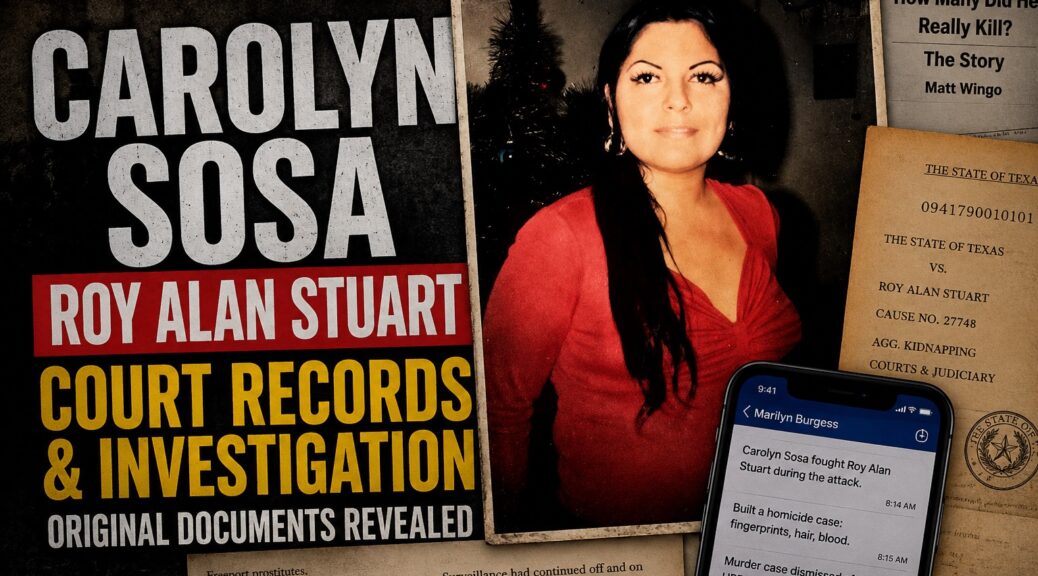
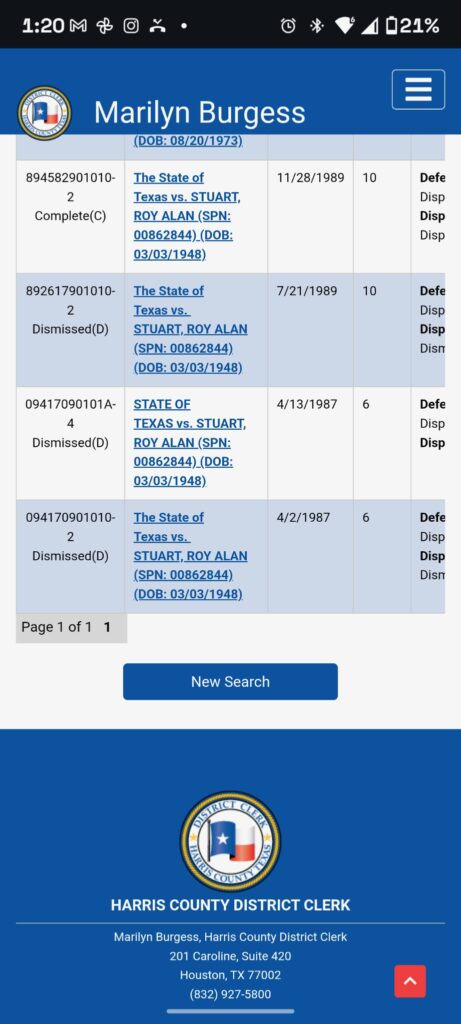
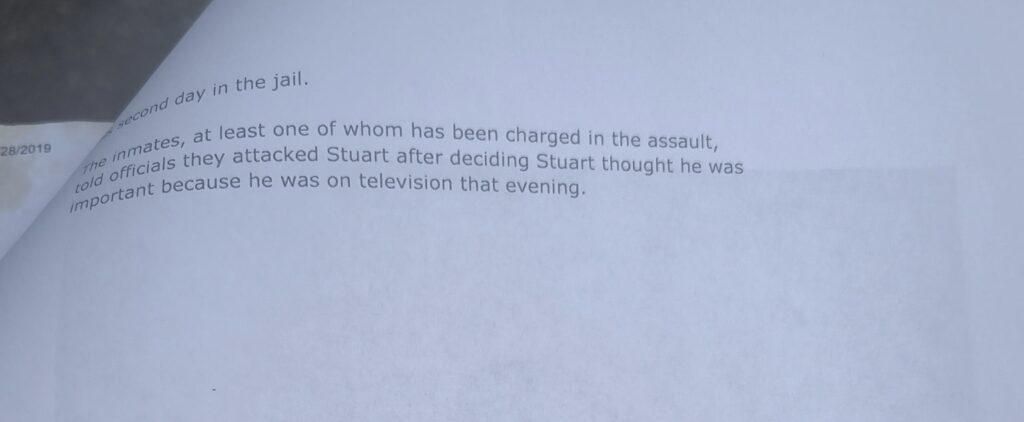
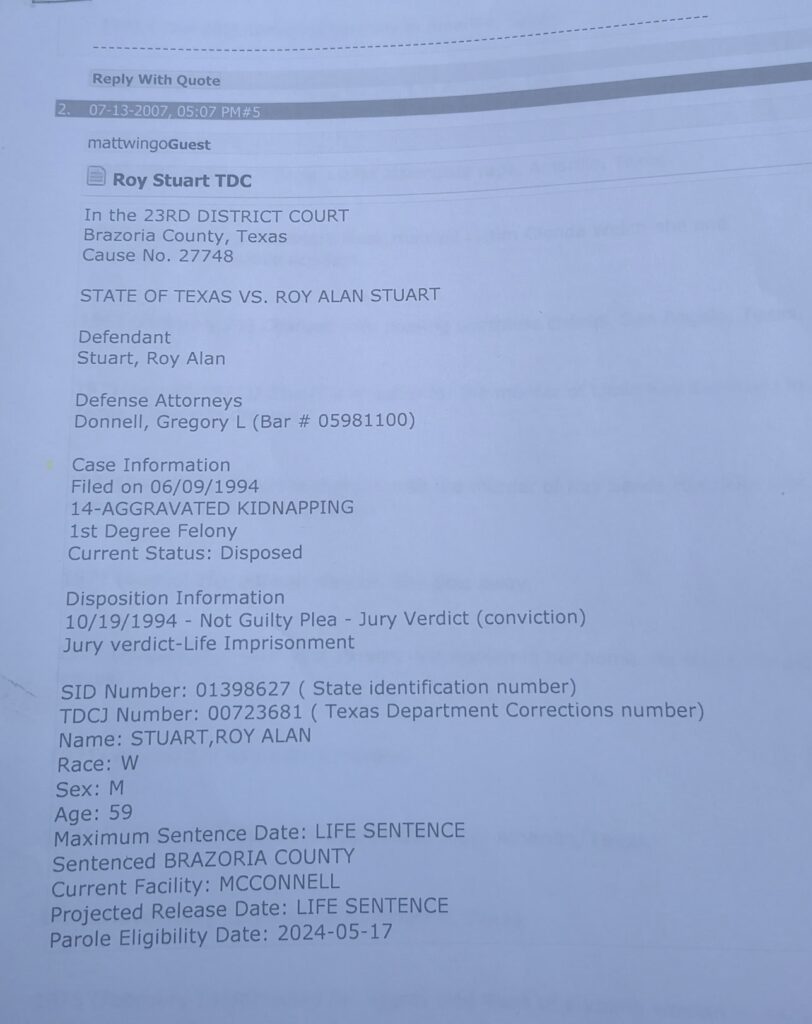
Donna Sanchez shared court records showing Roy Alan Stuart was arrested in Carolyn Sosa’s murder. The murder charge was later dismissed.

Donna said investigators told her family they collected fingerprints, hair evidence, blood evidence, and skin reportedly found beneath Carolyn Sosa’s fingernails.

“My mom was small, but she was a fighter,” Donna told Investigative Reporter Tammy Rose.

Donna hopes someone will finally answer what happened to her mother.

Matt Wingo’s Text Messages About Carolyn Sosa

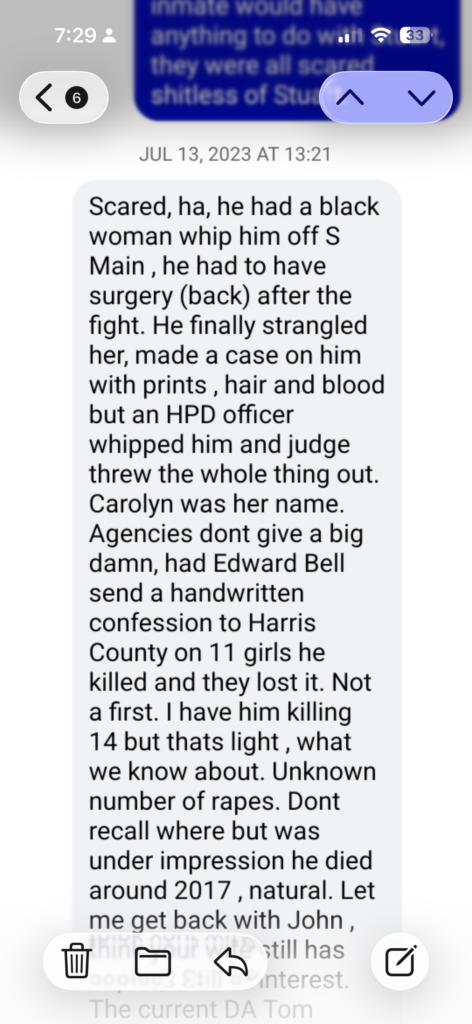
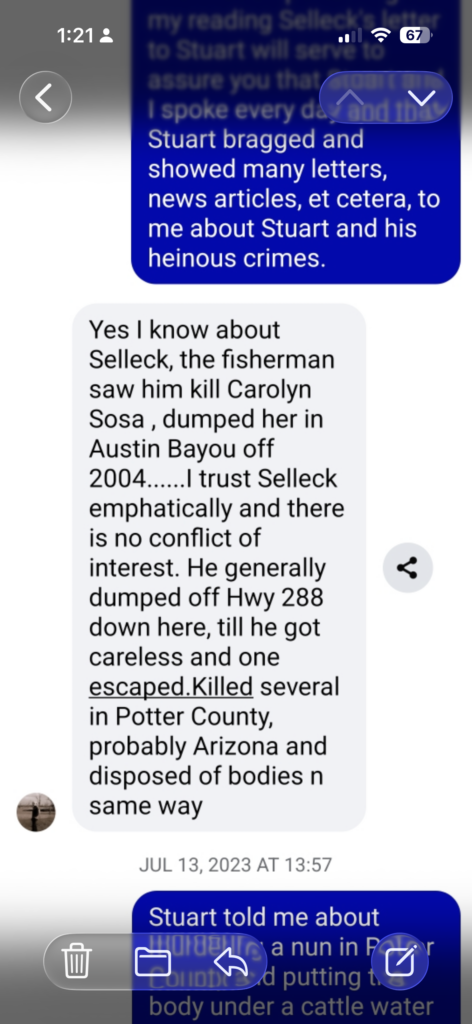
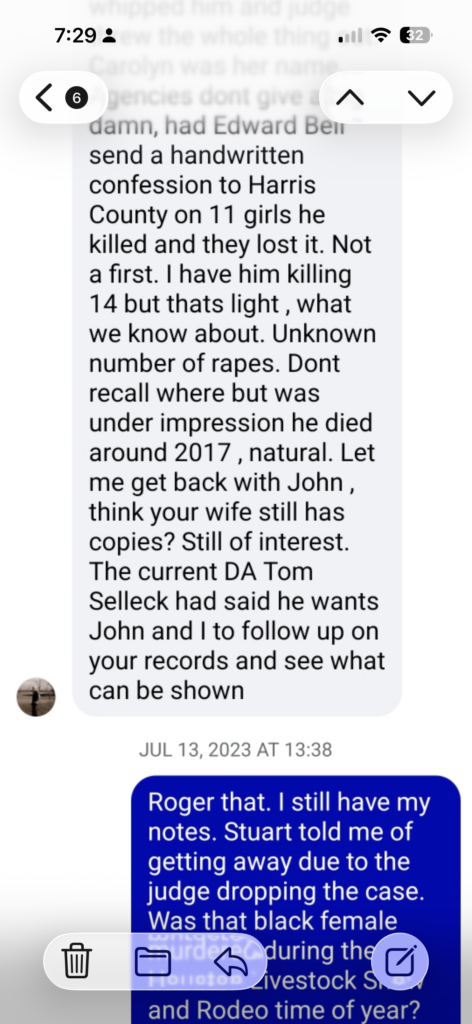
Screenshot of a July 13, 2023 text message from former Brazoria County investigator Matt Wingo discussing Roy Alan Stuart and historical investigative details.

Former Brazoria County investigator Matt Wingo exchanged text messages with Kent McGowen in July 2023.

One message states Carolyn Sosa fought Roy Alan Stuart during the attack.

Wingo wrote investigators built a homicide case using fingerprints, hair, and blood evidence.

He also wrote the murder case was dismissed after an HPD officer allegedly assaulted Stuart during his arrest.

Another message states Wingo believed Roy Alan Stuart could be connected to at least 14 killings.

Wingo also wrote then-Brazoria County District Attorney Tom Selleck wanted investigators to review Kent McGowen’s records.

These statements reflect Wingo’s account. Investigative Reporter Tammy Rose has not independently verified every statement beyond available court records.

Kent McGowen Says Roy Alan Stuart Confessed

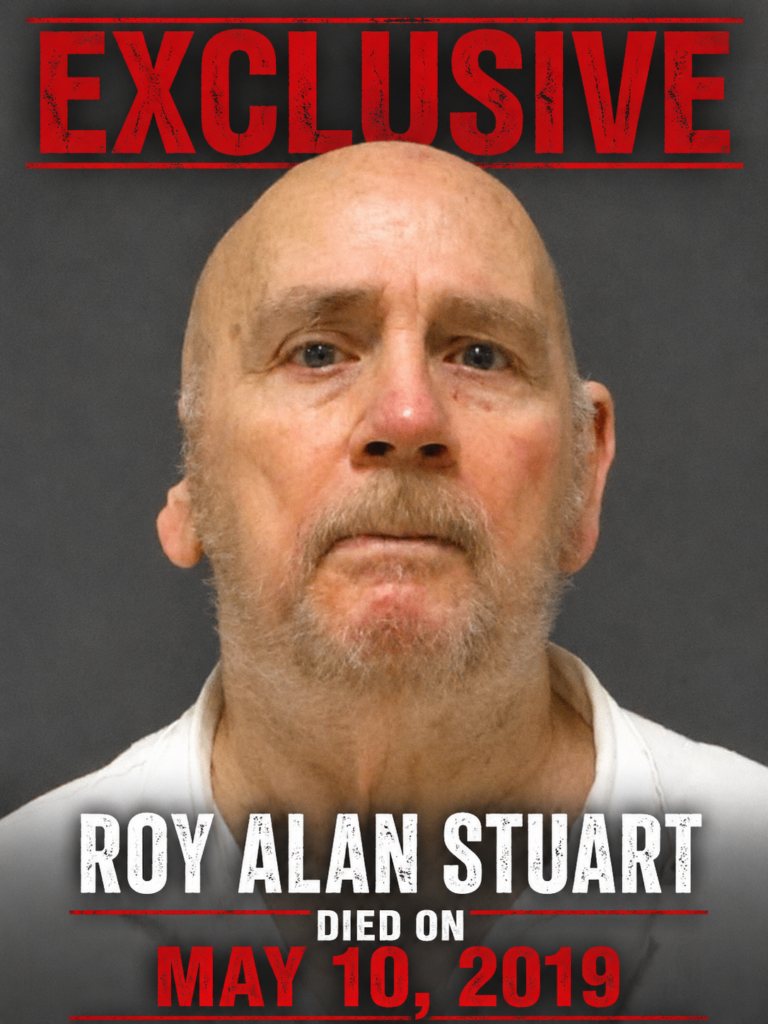
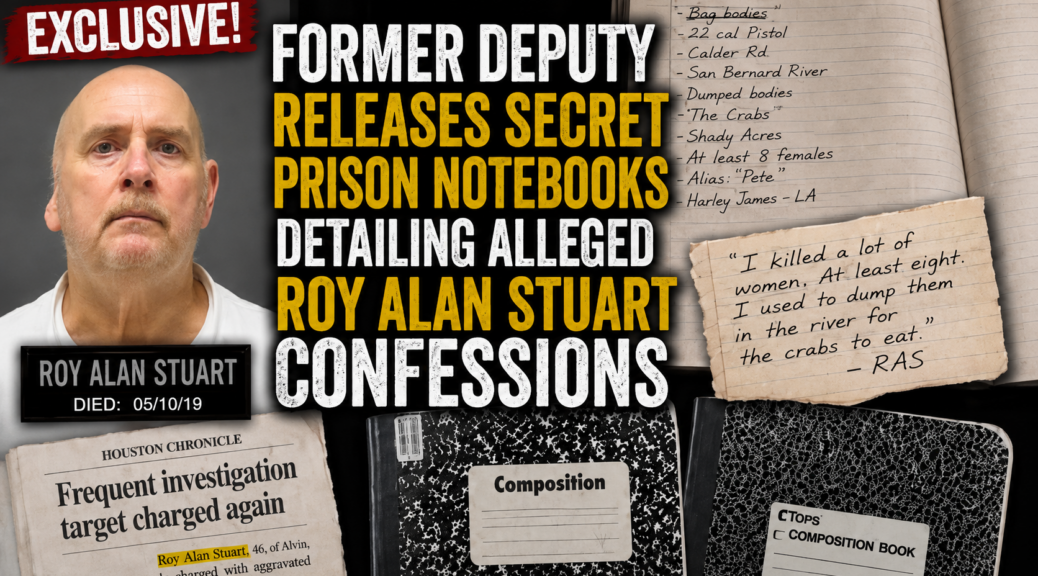
Exclusive graphic featuring Roy Alan Stuart’s mugshot with the text “Roy Alan Stuart” and “Died on May 10, 2019.

Former Harris County deputy Kent McGowen met Roy Alan Stuart while both were incarcerated at the Duncan Unit.

McGowen said Stuart openly discussed kidnapping and murdering women.

He said Stuart described picking up a Black woman near Telephone Road during rodeo season.

McGowen said Stuart claimed he tried to strangle her with a seat belt before shooting her twice with a .22-caliber pistol.

McGowen also said Stuart claimed a fisherman witnessed the killing from a nearby boat.

After reviewing historical records, McGowen believed Stuart was describing Carolyn Sosa’s murder.

Investigative Reporter Tammy Rose has not independently verified McGowen’s account.

Roy Alan Stuart Died Before the Investigation Was Complete

McGowen said he documented Stuart’s statements while they were incarcerated together and later prepared formal reports detailing the alleged confessions.

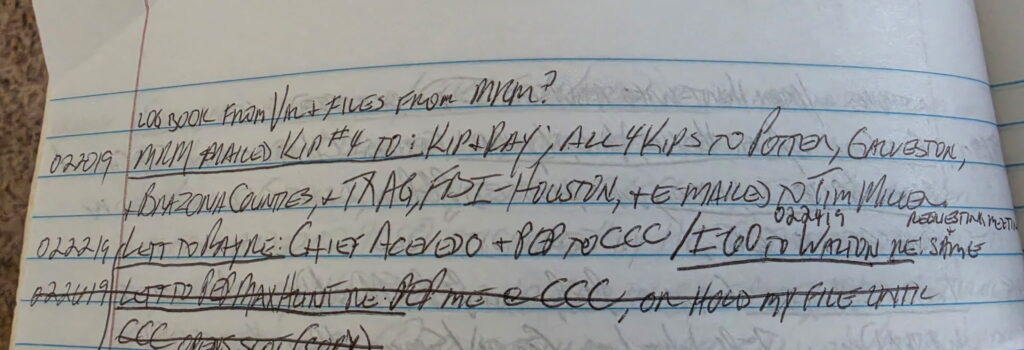
According to McGowen, he submitted those reports in 2019 to multiple agencies, including the Brazoria County District Attorney’s Office, Brazoria County Sheriff’s Office, Galveston County District Attorney’s Office, Harris County Sheriff’s Office, Houston Police Department and the FBI.

Roy Alan Stuart died on May 10, 2019, while serving a life sentence in the Texas Department of Criminal Justice.

His death came shortly after McGowen said he had notified multiple law enforcement agencies about Stuart’s alleged confessions.

Can the Carolyn Sosa Case Be Reopened?

Yes.

Under Texas law, there is no statute of limitations for murder.

Although Roy Alan Stuart is deceased and can no longer be prosecuted, investigators may reopen a homicide investigation if new evidence, witnesses, historical documents or advances in forensic science justify another review.

A reopened investigation could include re-examining physical evidence using modern DNA testing, interviewing surviving witnesses, reviewing investigative files, or comparing historical evidence with newly discovered information.

If investigators conclude the evidence supports it, they can publicly identify a deceased suspect as responsible for a homicide even though criminal prosecution is no longer possible.

What’s Next in the Carolyn Sosa Case?

Nearly 40 years after Carolyn Sosa’s murder, her family continues searching for answers.

Whether the Carolyn Sosa investigation is officially reopened will ultimately be decided by law enforcement.

However, newly shared family records, historical court documents, Matt Wingo’s text messages, Kent McGowen’s prison interview and previously submitted investigative reports have renewed attention on one of the Gulf Coast’s long-unsolved homicide investigations.

Editor’s Note: This article includes newly obtained court records, historical investigative documents, text messages, and interviews gathered during an ongoing investigation by Investigative Reporter Tammy Rose. Statements attributed to former Harris County deputy Kent McGowen are based on his interview and prison diaries describing alleged confessions made by Roy Alan Stuart while the two were incarcerated together. Statements attributed to former investigator Matt Wingo are based on text messages reviewed by Investigative Reporter Tammy Rose. Court records confirm Roy Alan Stuart was arrested in Carolyn Sosa’s homicide before the charge was dismissed. Some claims discussed in this article remain unverified or disputed. The purpose of this report is to present the available records, document new information provided by Carolyn Sosa’s family, and examine whether the case merits renewed investigative review.

Recommended Reading

The Cases That Haunt Us: From Jack the Ripper to JonBenét Ramsey

I’ll Be Gone in the Dark: One Woman’s Obsessive Search for the Golden State Killer

Related Investigation

Related: Former Harris County Deputy Kent McGowen’s Prison Diaries and Roy Alan Stuart’s Alleged Prison Confessions

Amazon Disclosure

Disclosure: As an Amazon Associate, I earn from qualifying purchases. If you purchase through my affiliate links, I may earn a small commission at no additional cost to you.

EXCLUSIVE: Roy Alan Stuart Prison Confessions Revealed in Kent McGowen’s Secret Journals

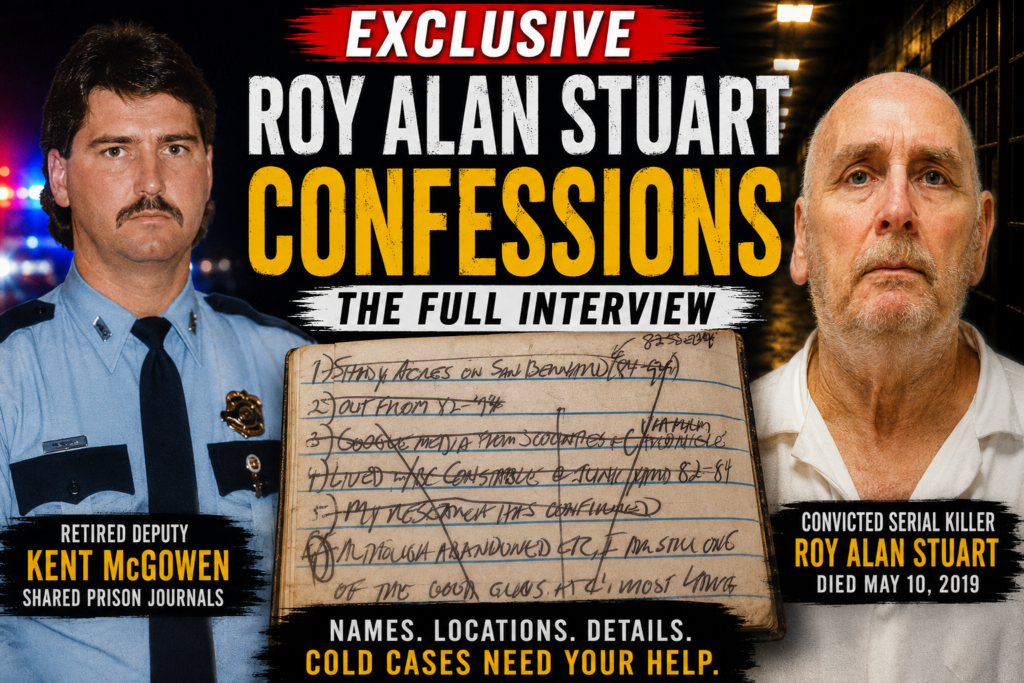
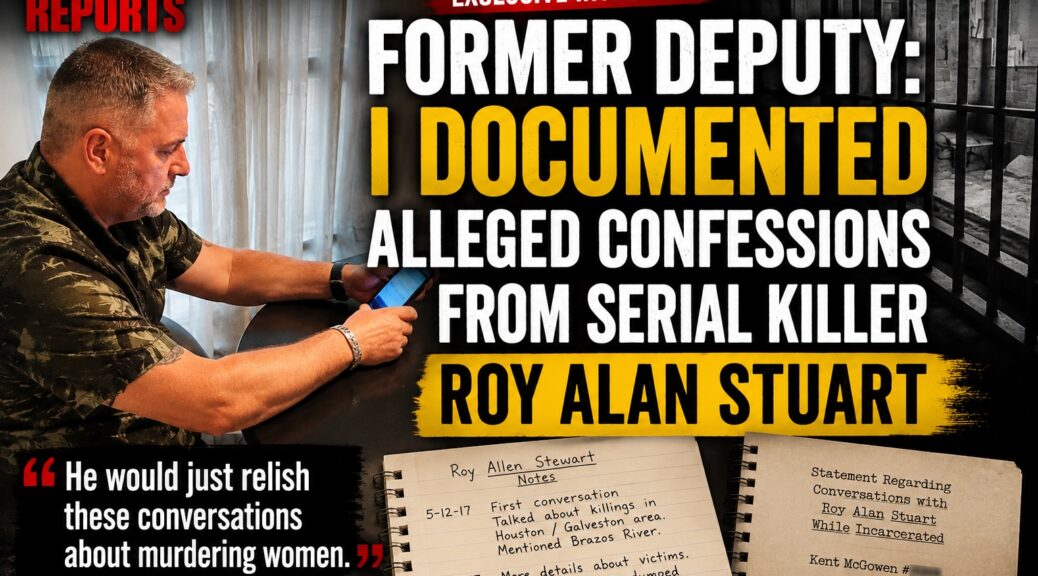
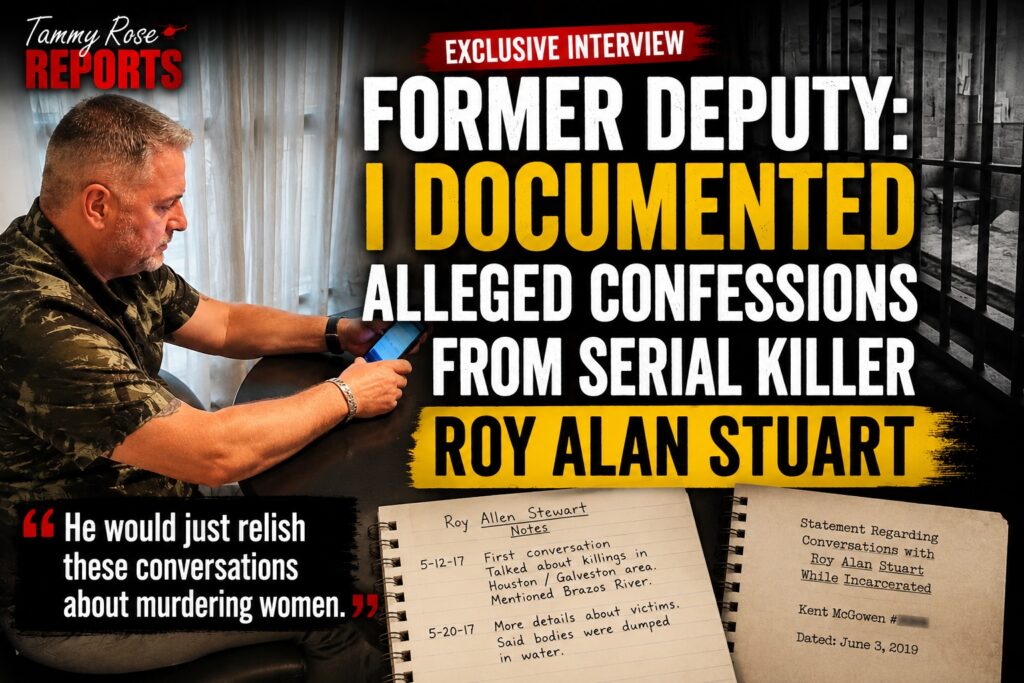
Thumbnail featuring retired deputy Kent McGowen on the left, convicted serial killer Roy Alan Stuart on the right, and a real handwritten prison notebook page in the center. The image promotes an exclusive interview about McGowen’s prison journals documenting alleged conversations with Stuart.
Thumbnail for the exclusive interview featuring retired deputy Kent McGowen, convicted serial killer Roy Alan Stuart, and a real handwritten notebook page provided by McGowen. McGowen says the journals document alleged conversations with Stuart while they were incarcerated together.

Former Deputy Documents Alleged Roy Alan Stuart Confessions in Secret Prison Journals

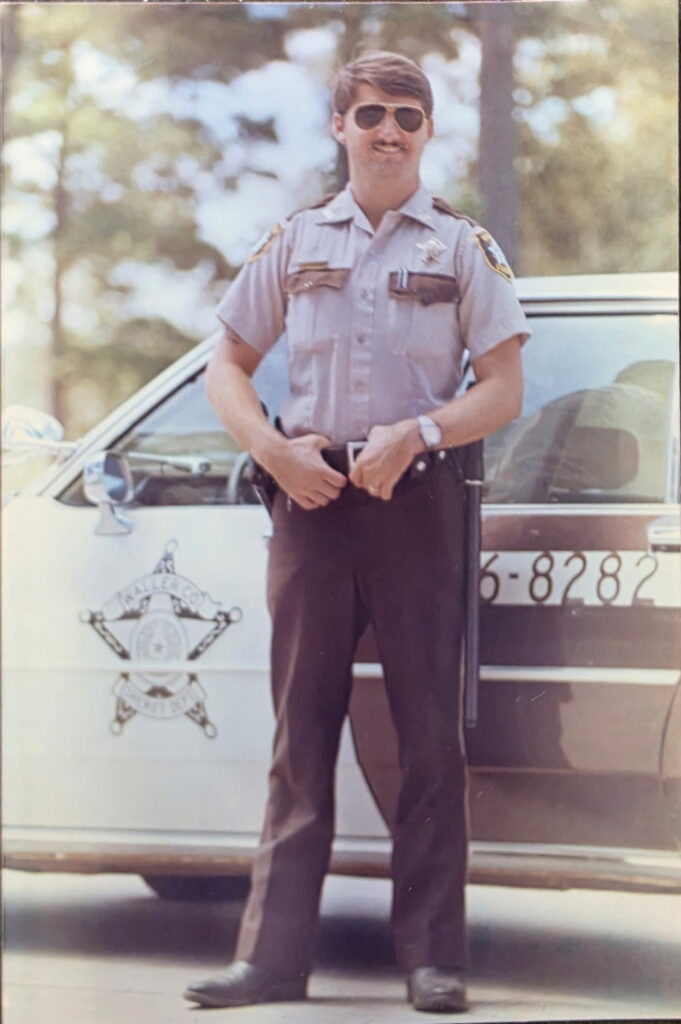
Former Harris County deputy Kent McGowen poses in uniform beside a sheriff’s patrol car before his 1992 conviction.
Before serving about 19 years in prison, Kent McGowen worked as a Harris County deputy. McGowen says it was during his incarceration that he met Roy Alan Stuart and began documenting the conversations that became the basis of his prison journals and investigative notes.

By Tammy Rose | Investigative Reporter

Exclusive graphic featuring Roy Alan Stuart’s mugshot with the text “Roy Alan Stuart” and “Died on May 10, 2019.

For nearly two years inside a Texas prison, former Harris County deputy Kent McGowen says he got to know convicted serial killer Roy Alan Stuart. What began as casual conversations became something McGowen says he could not ignore.

McGowen says Stuart described murders, body disposal sites and victims who had never been publicly connected to him. McGowen feared he would forget the details, so he secretly documented the conversations in composition notebooks, handwritten journals and investigative timelines.

The former Harris County deputy shared those journals, notebooks and supporting documents publicly for the first time.

Over the past several weeks, I interviewed former Harris County deputy Kent McGowen, reviewed hundreds of pages of handwritten prison journals and supporting documents, and examined records related to the claims discussed in this article.

Editor’s Note – July 11, 2026

After Investigator Matt Wingo contacted me to point out factual errors in my original article, I reexamined Kent McGowen’s original handwritten journals. During that review, I determined that I had misinterpreted several entries involving investigator communications. The journals document communications between Kent McGowen and investigators—including letters, telephone calls, emails, and other correspondence—but they do not establish that Investigator Matt Wingo or the other investigators personally met with Kent as I had previously interpreted. Those sections have been corrected to more accurately reflect the original handwritten journals.

The allegations and information presented throughout this article remain attributed to Kent McGowen’s interview and handwritten journals unless otherwise noted. As with the original publication, these claims have not been independently verified by this news organization.

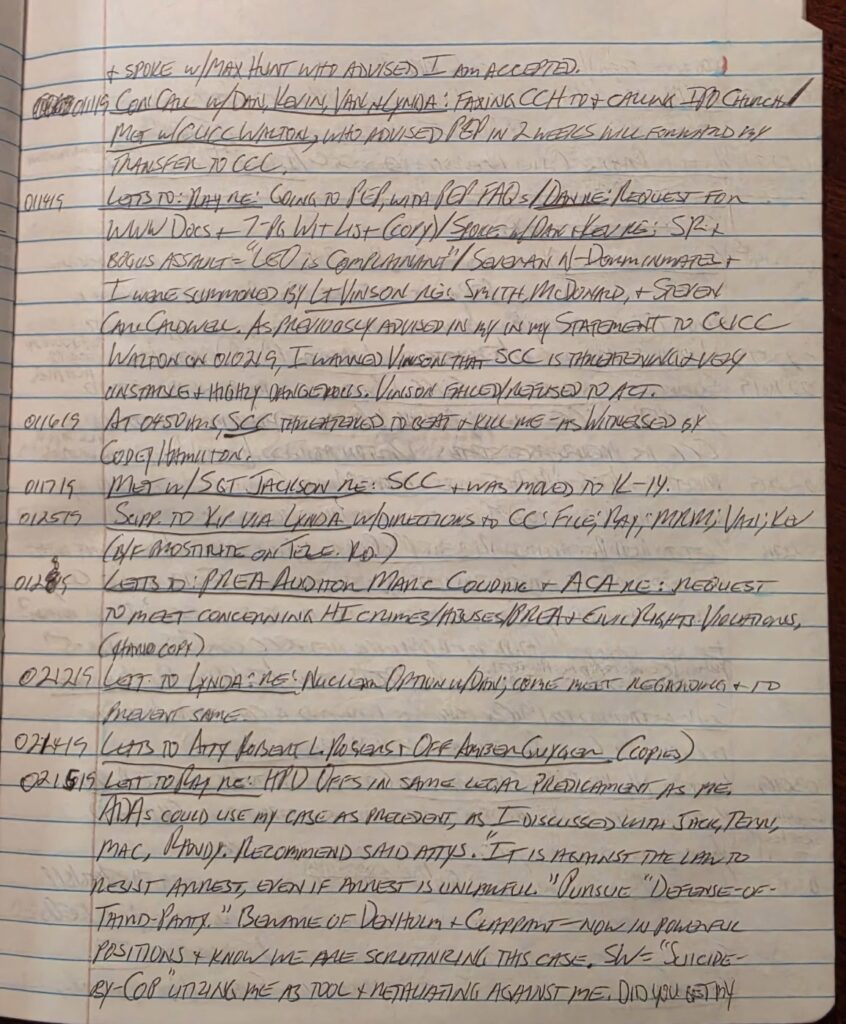
Why McGowen Started Writing Everything Down

Former Harris County deputy Kent McGowen poses with fellow inmates during his incarceration in the Texas Department of Criminal Justice. McGowen says he met convicted serial killer Roy Alan Stuart while they were housed in the same prison unit.
Former Harris County deputy Kent McGowen spent about 19 years in prison, where he says he lived near Roy Alan Stuart for nearly two years and began documenting the conversations that became the basis of his handwritten prison journals.

Watch my exclusive interview as Kent McGowen describes chilling details he says Roy Alan Stuart confessed to while the two were incarcerated together.

McGowen served about 19 years in the Texas Department of Criminal Justice after a jury convicted him in the 1992 murder of Susan White.

McGowen says he spent nearly two years housed in what he described as a converted shipping container with more than a dozen other inmates, including Stuart.

According to McGowen, most inmates avoided Stuart because of his reputation.

Exclusive graphic featuring Roy Alan Stuart’s mugshot with the text “Roy Alan Stuart” and “Died on May 10, 2019.

“If you think what a serial killer looks like, that’s the picture that pops into your mind,” McGowen told me.

Eventually, the two men started talking.

According to McGowen, those conversations changed everything.

He says Stuart described crimes, victims, locations and methods in extraordinary detail. McGowen believed much of the information had never become public.

Instead of relying on memory, McGowen quietly wrote down what Stuart told him. He used composition notebooks, handwritten journals and investigative timelines whenever he had the opportunity.

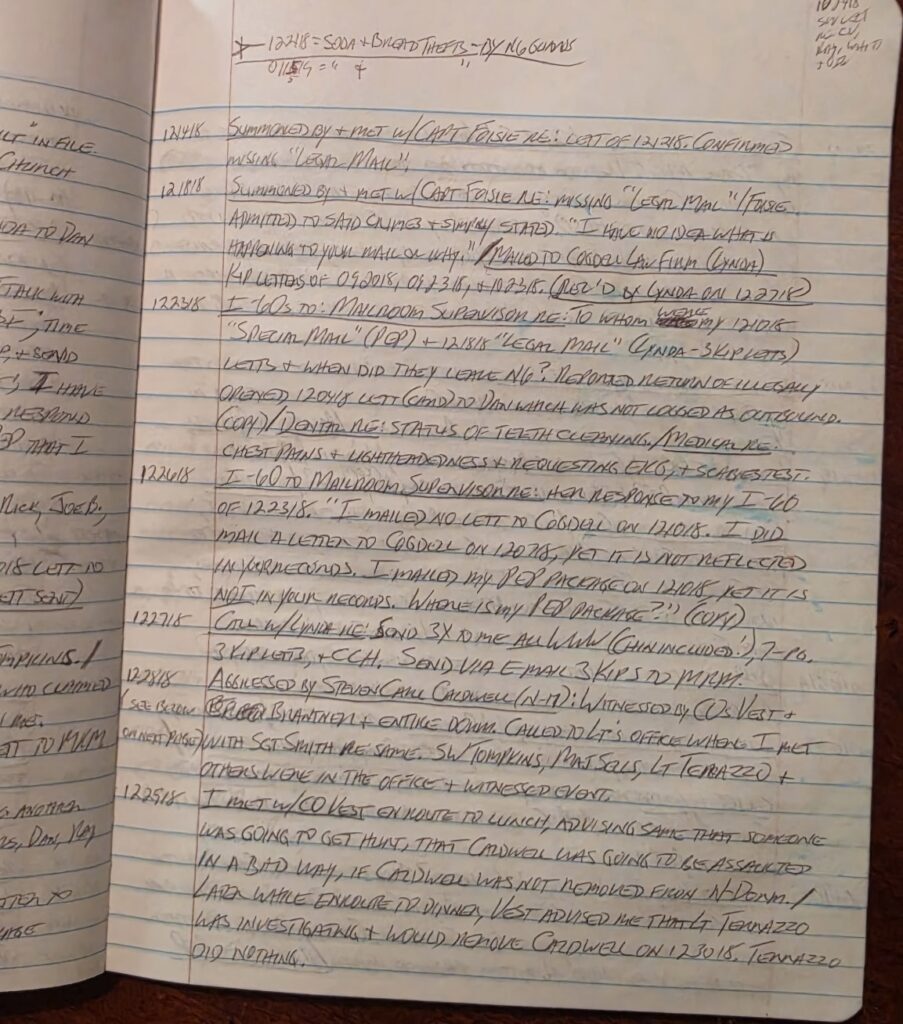
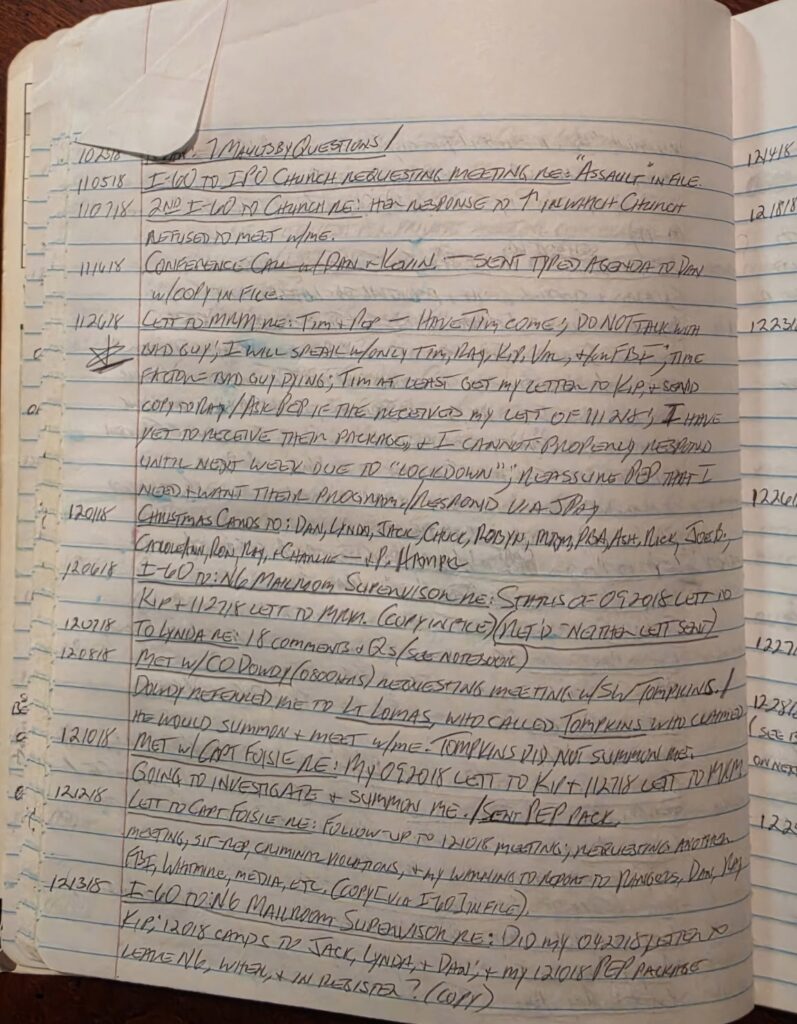
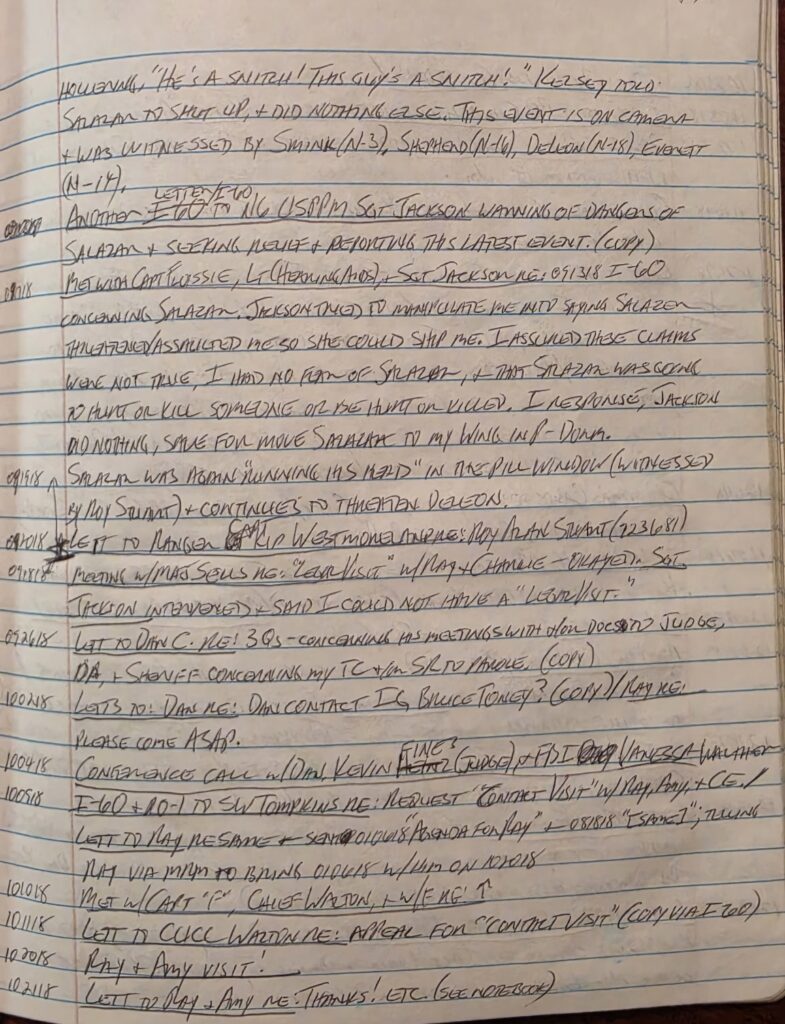
Secret Prison Journals

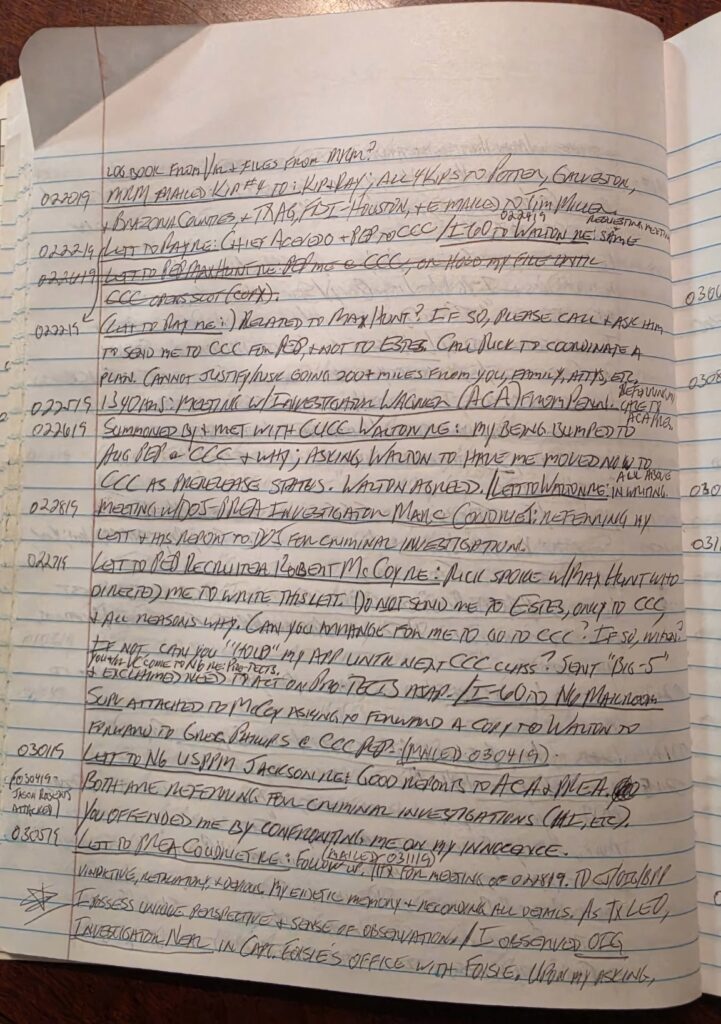
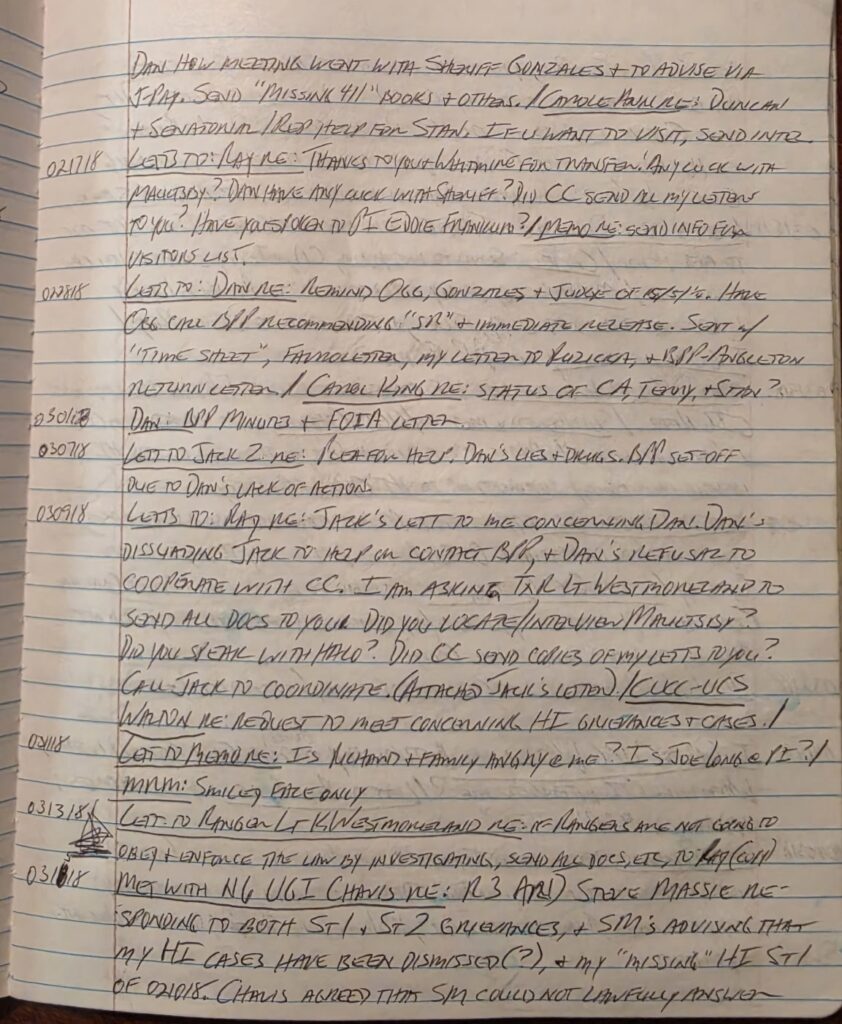
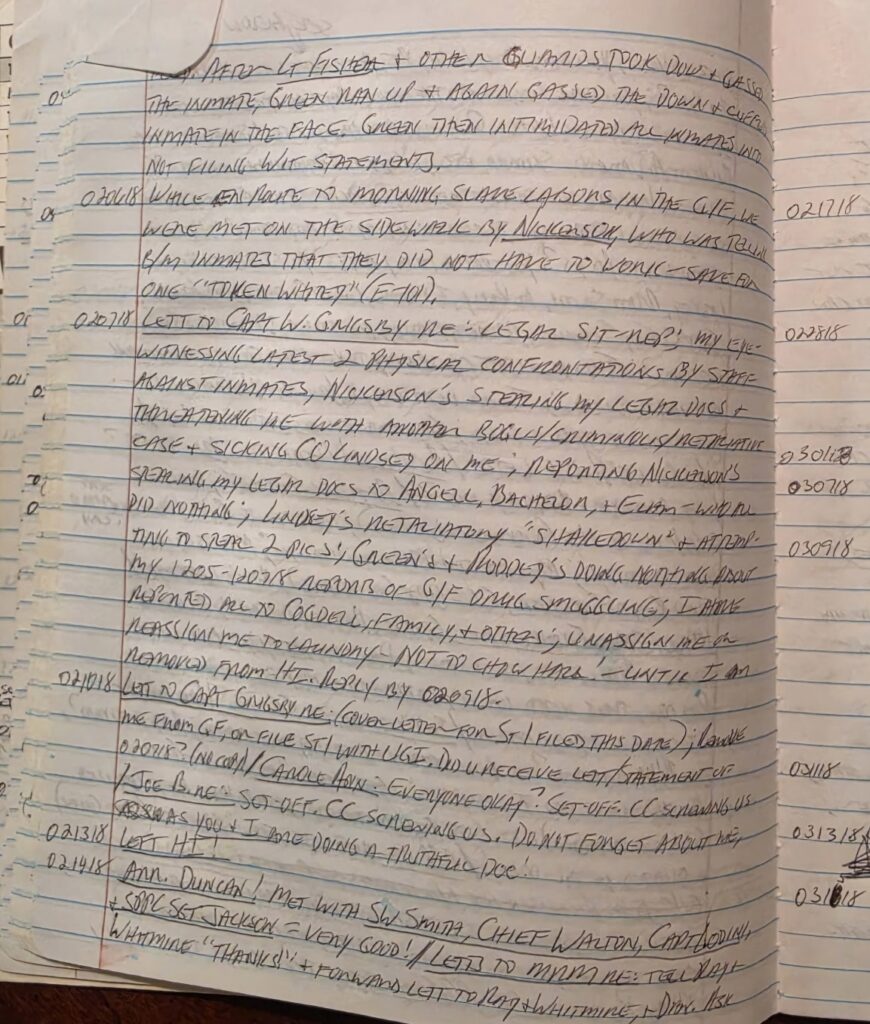
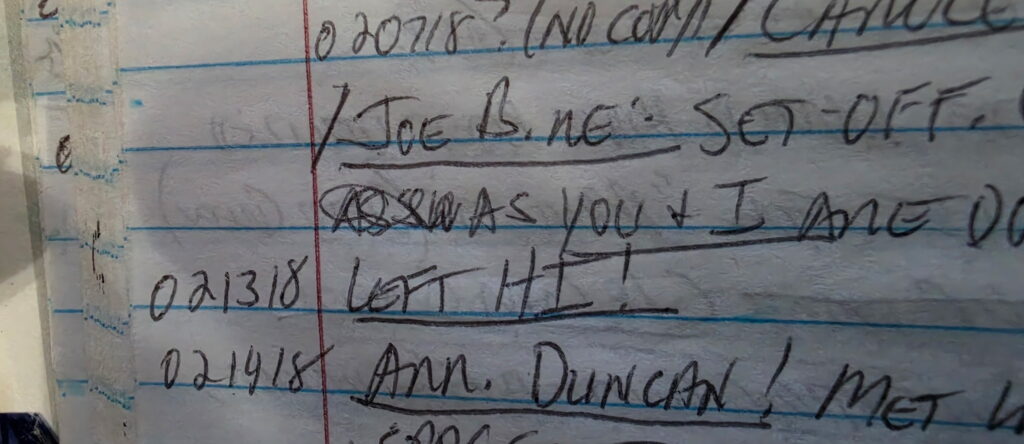
Close-up of a handwritten prison journal page provided by former Harris County deputy Kent McGowen documenting notes he says were taken after conversations with convicted serial killer Roy Alan Stuart while incarcerated.
One page from Kent McGowen’s handwritten prison journals. McGowen says he wrote many of the notes covertly while incarcerated with Roy Alan Stuart to preserve details he believed investigators should review. The handwritten entries are published as source material and have not been independently verified by Investigative Reporter Tammy Rose.

McGowen says he often wrote the notes late at night after speaking with Stuart. Poor lighting and the need for secrecy made many pages difficult to read decades later.

He never intended to publish the journals.

Instead, McGowen says he created a personal record of conversations he hoped investigators would eventually review.

As time passed, he expanded the project. He created typed investigative summaries, organized his notes and added details as additional memories surfaced.

Original Notebook Pages

Additional Documents

During our interview, McGowen said the journals document conversations and allegations involving convicted serial killer Roy Alan Stuart while the two men were incarcerated together.

I am publishing the journals as source material for transparency. I have not independently verified every allegation they contain. Readers should not interpret their publication as confirmation that every claim is true.

I published the notebook pages as McGowen provided them, except for minor adjustments that improve readability.

Readers can compare the original handwritten journals with McGowen’s later typed investigative summaries to better understand the chronology he documented.

What Stuart Told McGowen

According to McGowen, Roy Alan Stuart eventually grew comfortable talking about his past. McGowen says Stuart began describing crimes he claimed to have committed.

The conversations continued for nearly two years while both men served time in the Texas Department of Criminal Justice. McGowen worried he would forget important details, so he recorded the conversations in handwritten prison journals. Later, he organized the information into typed investigative summaries and timelines.

McGowen’s notes include allegations involving additional victims whom public records have never linked to Stuart.

One entry identifies Linda Kay (White) Simmons. McGowen says Stuart claimed responsibility for killing her in 1971 after prison officials released him following the killing of another victim also named Kay.

Another entry describes a woman McGowen says Stuart claimed was thrown from a bridge into Austin Bayou. McGowen writes that Stuart described the location during one of their conversations.

McGowen also documented allegations involving a constable he says Stuart claimed to have killed. During my interview with McGowen, he said Stuart identified the person as a law enforcement officer who later used a wheelchair.

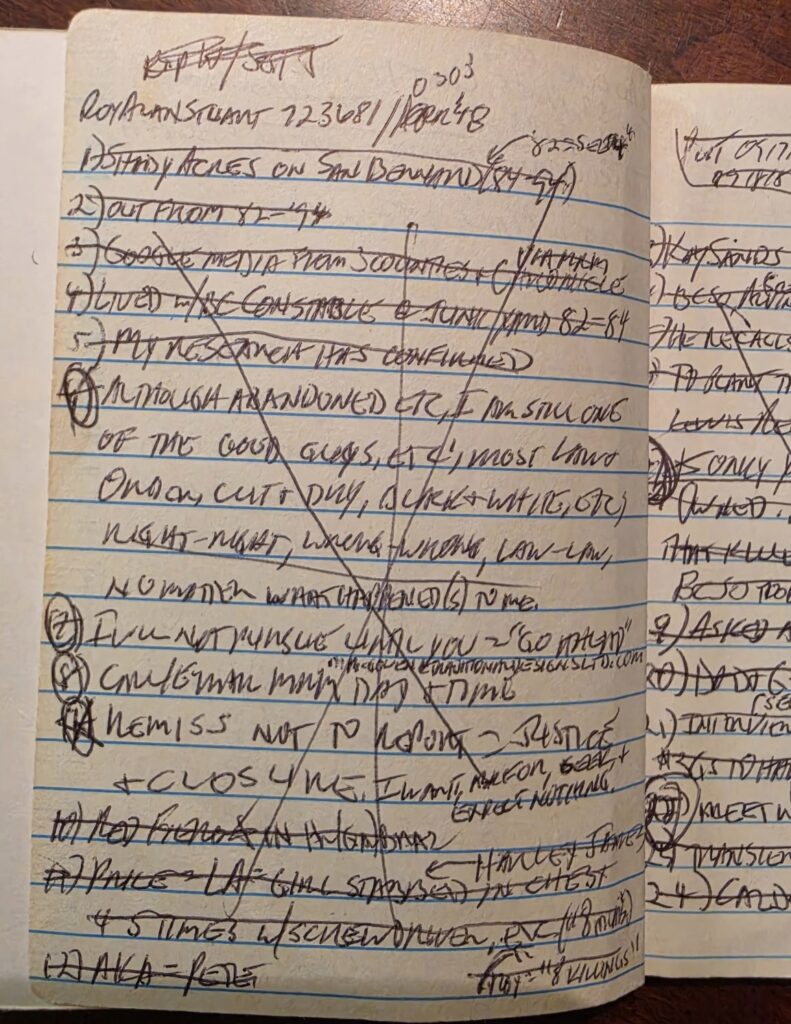
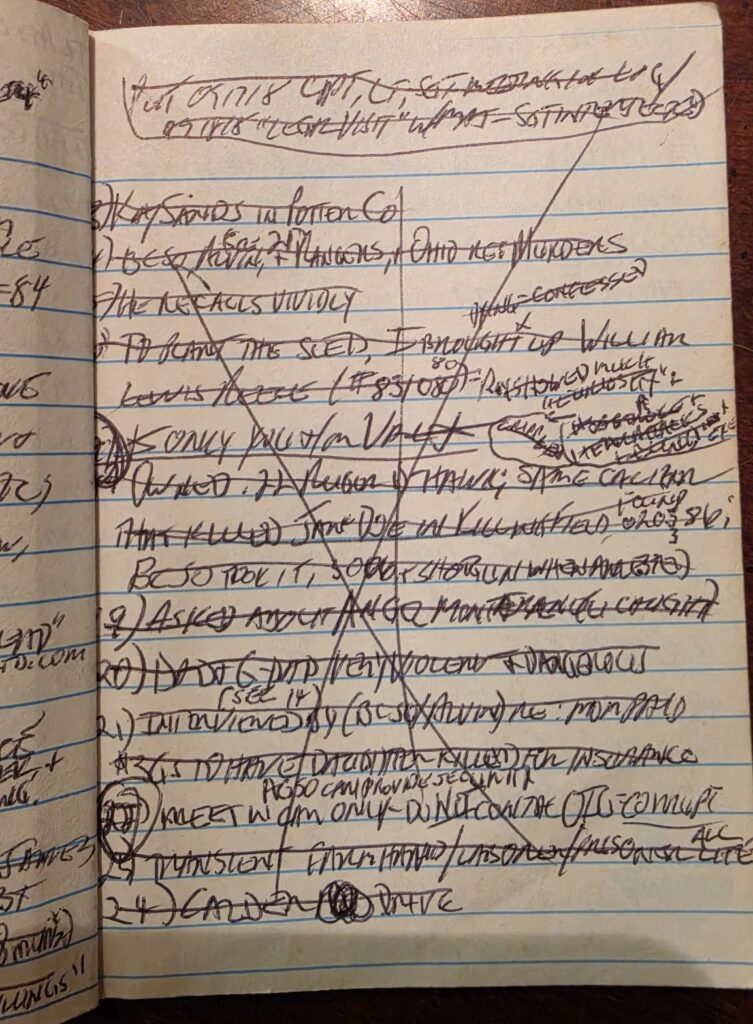
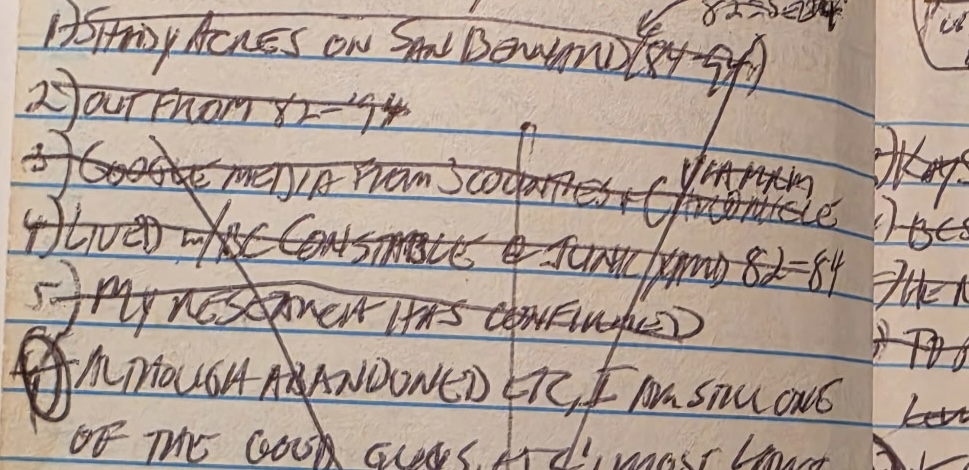
Close-up of a handwritten notebook page provided by Kent McGowen containing numbered investigative notes. Entries appear to reference a junkyard, an “ex constable,” and the Alvin area between 1982 and 1984. Portions of the handwriting are difficult to decipher.
Copy of a handwritten notebook page provided by Kent McGowen. Entries appear to reference a junkyard, an “ex constable,” and the Alvin area between 1982 and 1984. Portions of the handwriting are difficult to decipher.

One handwritten notebook page also appears to reference a junkyard, an “ex constable,” and the Alvin area between 1982 and 1984, although portions of the handwriting are difficult to decipher. McGowen says he later shared this information with retired Brazoria County investigator Matt Wingo and referenced additional details involving Austin Bayou in his prison notes.

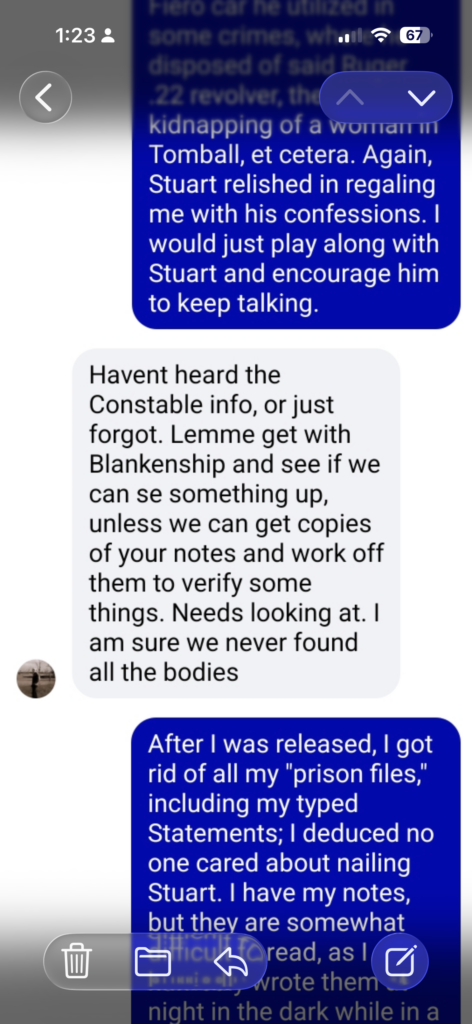
Screenshot of a text message exchange between former Harris County deputy Kent McGowen and retired TDCJ investigator Matt Wingo discussing McGowen’s prison notes about Roy Alan Stuart, including Wingo’s response that investigators should review the notes to verify additional information and his belief that not all victims had been found.
Screenshot of a July 2023 text conversation in which retired veteran investigator Matt Wingo discusses reviewing Kent McGowen’s prison notes related to convicted serial killer Roy Alan Stuart. The exchange is published as source material. Its contents have not been independently verified by me.

Additional Allegations Documented in McGowen’s Notes

According to McGowen’s handwritten notes and his 2023 correspondence with retired investigator Matt Wingo, Stuart allegedly described numerous additional crimes during nearly two years of conversations in prison. They include:

McGowen’s notes state that Stuart claimed his first killing occurred when he was about 10 years old. According to the notes, Stuart alleged his father restrained Stuart’s paternal uncle and ordered him to beat the man to death with a baseball bat.

The notes also describe an allegation that Stuart murdered a nun in Potter County and concealed her body beneath a cattle water trough.

Another allegation in McGowen’s notes is that Stuart claimed he kidnapped a woman in Tomball.

The notes also reference additional alleged homicide victims, body disposal locations, and other crimes Stuart reportedly described during nearly two years of conversations in prison.

The allegations above have not been independently verified by me. They are published because they appear in McGowen’s contemporaneous notes and correspondence, which investigators previously acknowledged reviewing.

Could Terri Denise McDaniels Be One of the Cases?

Terri Denise McDaniels was found murdered in Pearland on Oct. 31, 1986. Her homicide remains unsolved.

McGowen’s notes include an allegation that Roy Alan Stuart claimed he murdered a young girl in Brazoria County after allegedly being paid approximately $3,000 by the victim’s mother for life insurance proceeds.

At this time, I have not identified any public records linking Roy Alan Stuart to McDaniels’ homicide, and no official connection has been established.

While researching the case, I found online discussions in which some members of the public have speculated that Stuart could have been responsible for McDaniels’ unsolved killing. Those online discussions are not evidence and do not establish a connection.

Because McDaniels’ homicide remains unsolved and McGowen’s notes describe an alleged unidentified victim in Brazoria County, I am continuing to examine whether any records or witnesses support—or refute—a possible connection.

Investigators Acknowledged Receiving the Information

Additional notebook entries reference unidentified victims, possible body disposal sites and locations McGowen believed investigators should review.

No public records confirm Stuart’s involvement in these additional cases.

I included the material because it appears throughout McGowen’s handwritten journals, investigative summaries and supporting documents.

Efforts to Alert Investigators

McGowen says he never intended for the prison journals to remain hidden.

After leaving prison, he organized his handwritten notes into typed investigative summaries. He says he shared portions of that material with investigators in hopes they would examine the information further.

The emails, text messages and documents included in this article show McGowen’s efforts to preserve the information and seek additional review. They do not independently verify the allegations themselves.

State Records Confirm Roy Alan Stuart Died in Prison

Official Record: The Texas Attorney General Custodial Death Report below confirms Roy Alan Stuart died on May 10, 2019, while in the custody of the Texas Department of Criminal Justice. The report lists his manner of death as natural and identifies lung cancer as the medical cause of death.

While reviewing McGowen’s records, I also obtained an official Texas Attorney General Custodial Death Report confirming Roy Alan Stuart died on May 10, 2019, while in the custody of the Texas Department of Criminal Justice.

The report states Stuart was 71 years old. He died while receiving hospice care at the Michael Unit in Anderson County. It lists lung cancer as the medical cause of death and classifies the manner of death as natural.

McGowen told me Stuart appeared to disappear from the public TDCJ inmate roster after he began providing information to investigators in 2019. According to McGowen, Stuart later appeared under a different unit assignment before state records ultimately confirmed his death.

What Remains Unverified

Many of the allegations contained in McGowen’s journals and investigative summaries have never been independently verified.

Some involve crimes for which Stuart was never charged, while others identify alleged victims, disposal sites or additional homicides that are not reflected in publicly available court records.

Throughout this investigation, I have distinguished between information supported by public records and allegations McGowen attributes to Stuart during their time incarcerated in the Texas Department of Criminal Justice.

Readers should not interpret publication of these documents as confirmation that every allegation is true. Instead, the records are being published so readers can examine the original material alongside the reporting as this investigation continues.

Investigation Continues

Over the coming weeks, I will continue reviewing prison journals, handwritten notes, investigative timelines and correspondence provided by McGowen.

Public records requests remain pending. I also continue seeking comment from current and former law enforcement officials mentioned throughout this investigation.

The records are being published so readers can examine the original material.

McGowen believes the journals preserve years of conversations investigators should examine. Time will determine whether those allegations lead to new evidence or simply become part of the historical record.

Do You Have Information?

Do you have information related to Roy Alan Stuart or any case discussed in this investigation?

Send documentation, photographs, court records or firsthand information that could help verify or refute claims in McGowen’s journals.

Email Investigative Reporter Tammy Rose at chopperrose@msn.com

Editor’s Note: This article contains allegations documented in Kent McGowen’s prison journals, handwritten notes and correspondence. Unless otherwise noted, these allegations have not been independently verified by me and should not be interpreted as established fact.

If you’re interested in learning more about Roy Alan Stuart and other notorious Texas crime cases, browse my recommended true crime books in my Amazon storefront.

Disclosure: As an Amazon Associate, I earn from qualifying purchases at no additional cost to you.

Related Coverage: Former Deputy Documents Alleged Roy Alan Stuart Confessions.

Investigator Matt Wingo Responds to Roy Alan Stuart Story, Raises Questions About Prison Journals

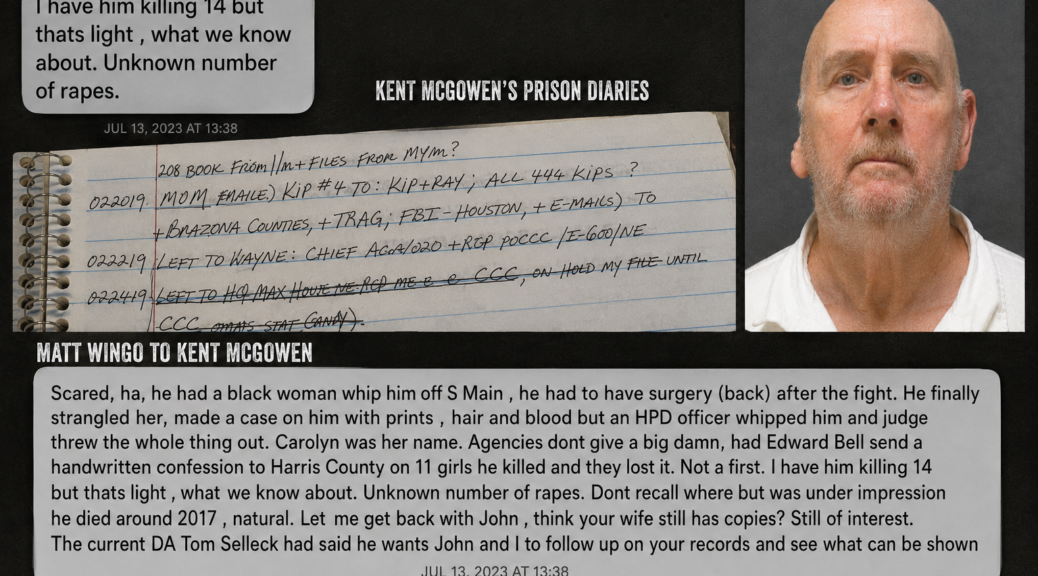
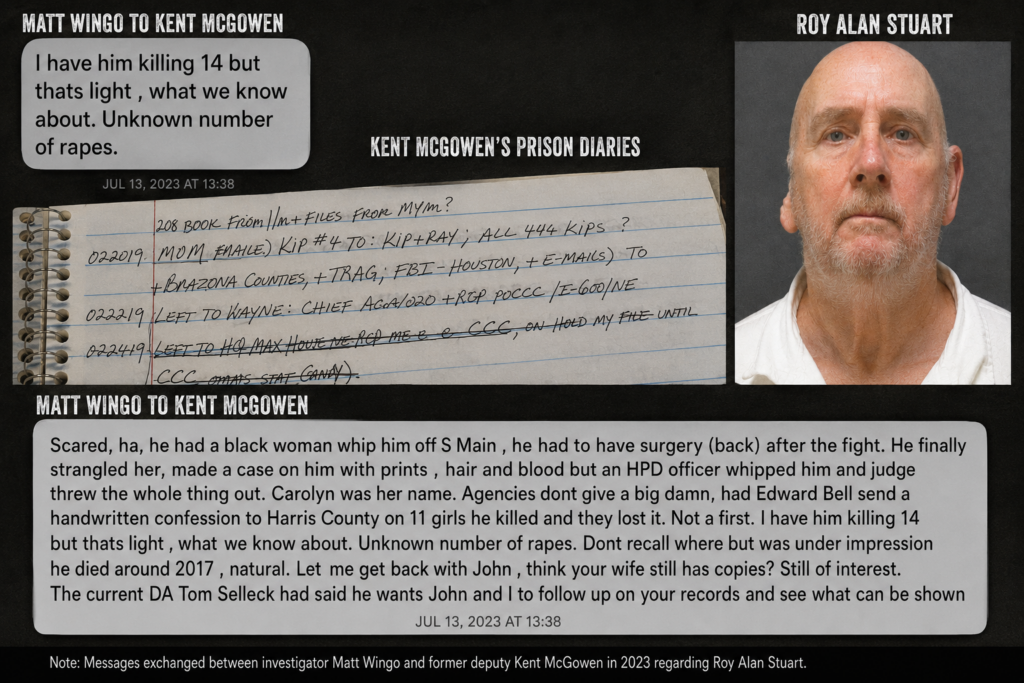
Matt Wingo response to Roy Alan Stuart investigation showing July 2023 text messages, Kent McGowen prison diaries and Roy Alan Stuart mugshot.

Investigator Matt Wingo Raises Questions About Roy Alan Stuart Prison Journal Story

Before publishing my interview with former Harris County deputy Kent McGowen and his handwritten prison journals about convicted serial killer Roy Alan Stuart, I contacted investigator Matt Wingo seeking an interview and comment.

I did not receive an interview before my publication deadline.

After the story was published, Wingo text messaged and emailed me several times expressing concerns about the accuracy of information contained in McGowen’s journals. Although one of his text messages stated he did not want further contact, he continued sending additional emails outlining what he believes are significant factual problems.

Why I Reported the Story the Way I Did

The messages document that Wingo and McGowen communicated. They do not independently establish that every claim discussed in those communications is accurate.

July 13, 2023 text message exchange between investigator Matt Wingo and former Harris County deputy Kent McGowen discussing Roy Alan Stuart. The messages include discussion of an estimated homicide count and references to reviewing additional investigative records.

One issue readers should understand is the homicide count.

Before publication, I had seen a July 2023 message between Wingo and McGowen in which Wingo wrote:

“I have him killing 14 but that’s light, what we know about.”

However, because I was unable to interview Wingo before publication, I did not feel it was appropriate to publish his estimate as fact without giving him the opportunity to explain how he reached that number.

Instead, I reported what Kent McGowen told me during my interview and clearly identified him as the source of those statements. Throughout my reporting, I repeatedly noted that many of the claims contained in McGowen’s journals remain unverified.

Editor’s Note – July 10, 2026

After Investigator Matt Wingo contacted me to point out factual errors in my original article, I reexamined Kent McGowen’s original handwritten journals. During that review, I determined that I had misinterpreted several entries involving investigator communications. The journals document communications between Kent McGowen and investigators—including letters, telephone calls, emails, text messages and other correspondence. Upon reexamining the journals, I determined I had incorrectly interpreted some entries as documenting in-person meetings as I had previously interpreted.

The underlying claims in this article remain attributed to Kent McGowen’s interview and handwritten journals unless otherwise noted. As with the original publication, these allegations have not been independently verified by this news organization.

Additional Documents Reviewed

Excerpts from Kent McGowen’s original handwritten prison journals referencing communications with investigators and agencies regarding information he said Roy Alan Stuart shared while they were incarcerated together.

In addition to the handwritten journals, I also reviewed text messages, emails, and other communications exchanged between Matt Wingo and Kent McGowen regarding Roy Alan Stuart as part of this reporting.

The Questions That Remain

Several important questions remain unanswered.

Which Texas Ranger or Rangers were referenced in McGowen’s journals?

Can the journal entries regarding investigator communications be independently corroborated through public records or other witnesses?

Which portions of the journals can be independently verified?

Which claims cannot currently be verified?

Are there additional public records that support or contradict McGowen’s account?

I intend to continue reporting on these questions as more information becomes available.

More Resources

If stories about cold cases, victims, and investigative journalism matter to you, these books and reports may also be helpful.

📚 The Body Keeps the Score by Bessel van der Kolk

📚 While the City Slept by Eli Sanders

📰 Read my original investigation:

Exclusive: Roy Alan Stuart Prison Confessions Revealed

Why I Fight So Hard for Victims: The Story I’ve Never Shared

Disclosure: As an Amazon Associate, I earn from qualifying purchases. If you purchase through my affiliate links, I may receive a small commission at no additional cost to you. Thank you for supporting my independent investigative journalism.

Roy Alan Stuart Investigator Messages Revealed

Matt Wingo response to Roy Alan Stuart investigation showing July 2023 text messages, Kent McGowen prison diaries and Roy Alan Stuart mugshot.

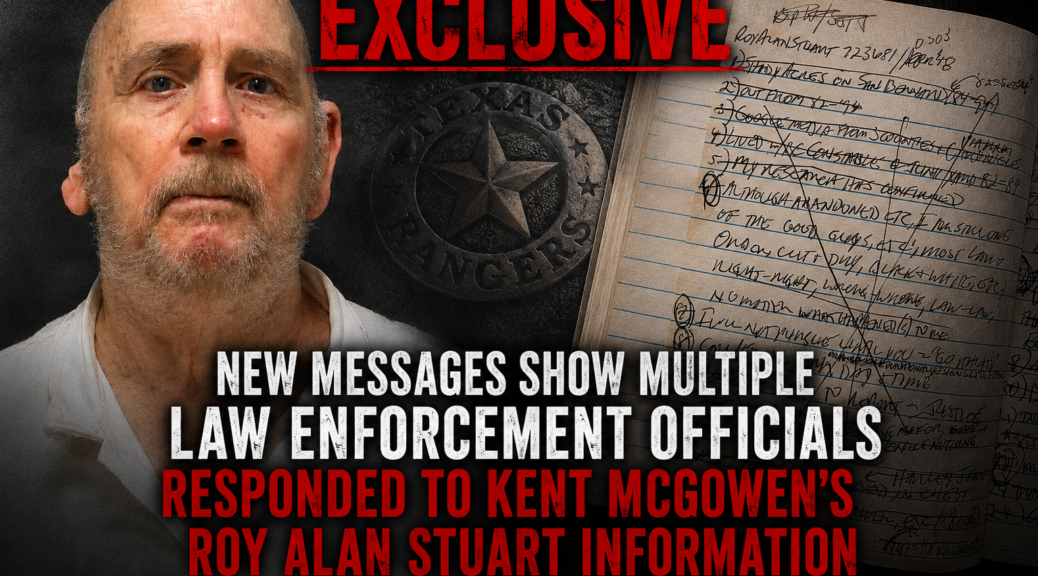
New Messages Show Multiple Law Enforcement Officials Responded to Kent McGowen Regarding Roy Alan Stuart Information.

By Investigative Reporter Tammy Rose

Additional text messages obtained during my investigation into Roy Alan Stuart show Kent McGowen exchanged text messages with multiple law enforcement officials after providing information from his prison journals.

The messages do not verify the allegations contained in McGowen’s journals. However, they do document that officials from multiple agencies acknowledged receiving or discussing the information and, in some cases, indicated they intended to review the material.

FBI Safe Streets Task Force Acknowledged the Request

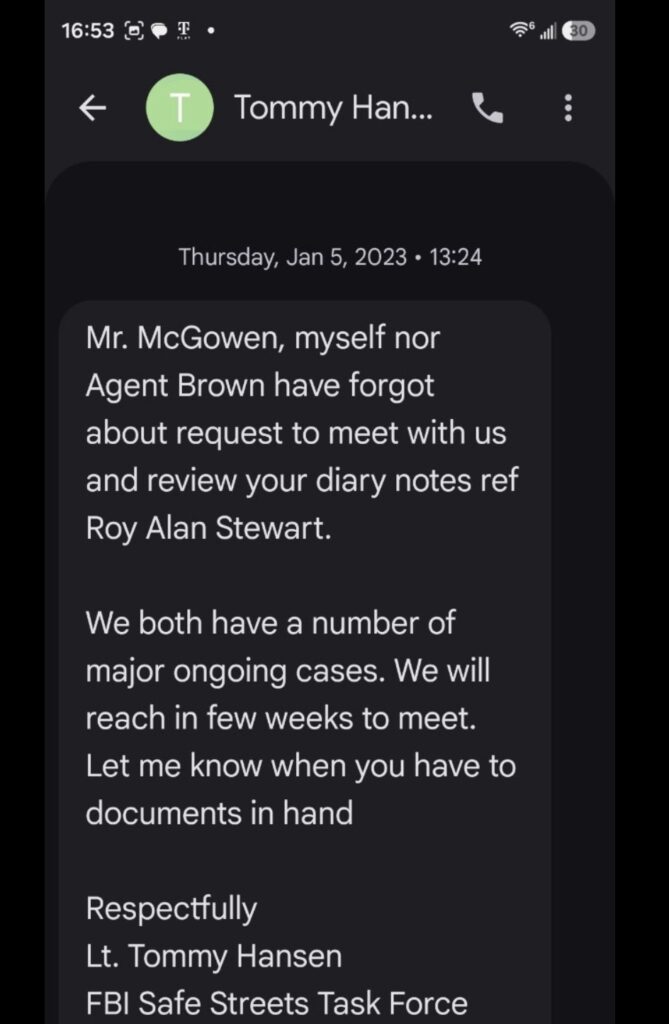
In a text message dated January 5, 2023, FBI Safe Streets Task Force Lt. Tommy Hansen responded to McGowen regarding the Roy Alan Stuart journals.

Hansen wrote:

Screenshot of a January 5, 2023 text message from FBI Safe Streets Task Force Lt. Tommy Hansen acknowledging Kent McGowen’s request to review Roy Alan Stuart prison journal notes.
A January 5, 2023 text message from FBI Safe Streets Task Force Lt. Tommy Hansen acknowledges Kent McGowen’s request to review his Roy Alan Stuart prison journals. Personal phone number has been redacted.

“Myself nor Agent Brown have forgot about request to meet with us and review your diary notes ref Roy Alan Stewart.”

He continued by explaining that both investigators were handling several major cases before adding:

“We both have a number of major ongoing cases. We will reach in few weeks to meet.”

The message documents that McGowen’s request remained under consideration while investigators focused on other active investigations.

John Blankenship Responded to McGowen’s Information

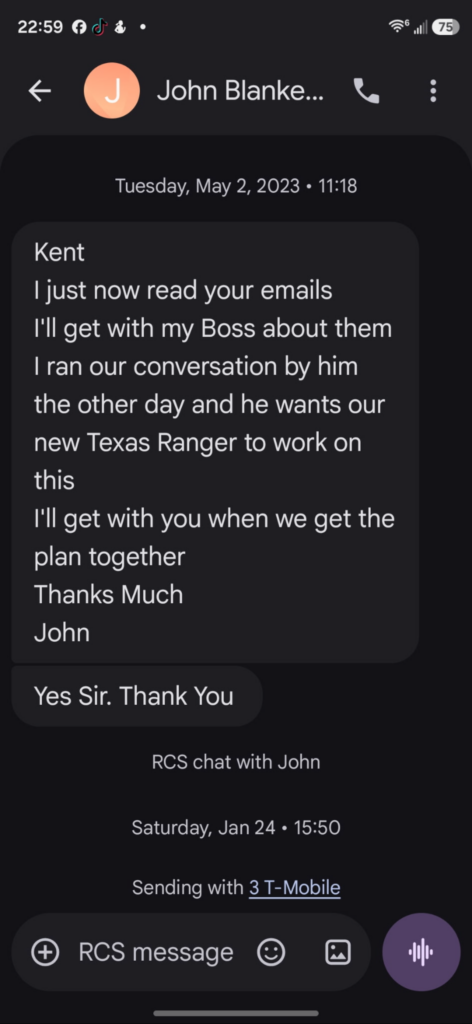
On May 2, 2023, McGowen received another text message from John Blankenship after sending additional information.

Screenshot of a May 2, 2023 text message from John Blankenship discussing Kent McGowen’s Roy Alan Stuart information and referencing a Texas Ranger.
In a May 2, 2023 text message, John Blankenship told Kent McGowen he had discussed the Roy Alan Stuart information with his supervisor and that a Texas Ranger would work on the matter.

Blankenship wrote:

“I ran our conversation by my boss… he wants our new Texas Ranger to work on this.”

He added that he would contact McGowen again once they had a plan in place.

The message indicates McGowen’s information was discussed internally and that a Texas Ranger was expected to become involved.

Texas Ranger Contact

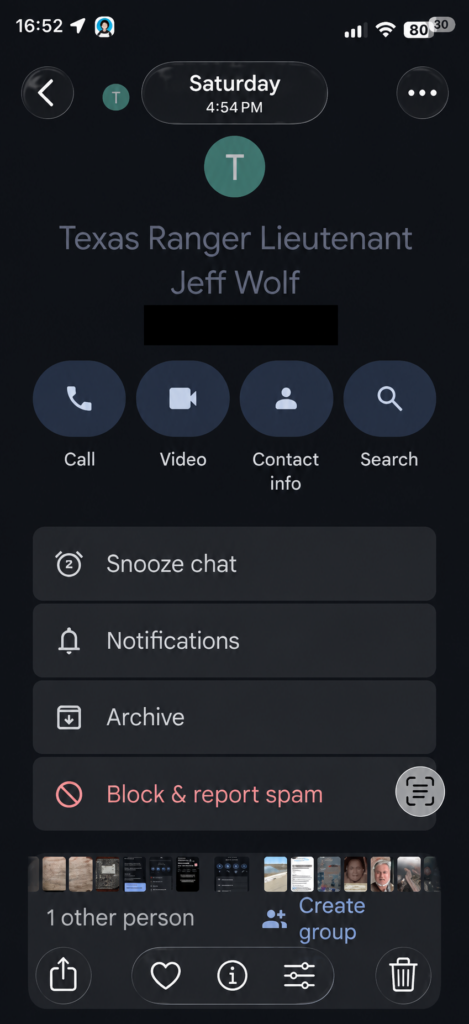
Contact screen identifying Texas Ranger Lieutenant Jeff Wolf, provided by Kent McGowen as part of his Roy Alan Stuart investigation materials. Phone number has been redacted.
Kent McGowen provided this contact entry identifying Texas Ranger Lieutenant Jeff Wolf while documenting his efforts to share information related to Roy Alan Stuart with law enforcement. The phone number has been redacted for privacy.

McGowen also provided a contact entry identifying Texas Ranger Lieutenant Jeff Wolf.

While a contact listing alone does not establish what communications occurred, it is consistent with McGowen’s account that he attempted to provide his journals to multiple law enforcement agencies.

What the Messages Show

The text messages do not establish that Roy Alan Stuart’s alleged confessions were verified.

They also do not confirm that investigators concluded Stuart committed the crimes described in McGowen’s journals.

What they do show is that officials representing multiple agencies acknowledged receiving or discussing McGowen’s information and communicated with him regarding his request to have the material reviewed.

Those communications provide additional documentation supporting McGowen’s longstanding claim that he repeatedly attempted to bring the information to law enforcement after documenting his conversations with Stuart in prison.

Continuing Investigation

I continue to review prison journals, text messages, official records, and other documents related to Roy Alan Stuart.

If you have firsthand information regarding Roy Alan Stuart, the prison journals, or any of the cases discussed, you can contact me confidentially.

As with all of my reporting, allegations contained in the journals remain unverified unless supported by independent evidence or official records.

Recommended Reading

📚 The Stranger Beside Me by Ann Rule

The Stronger Beside Me

📚 Mindhunter by John E. Douglas and Mark Olshaker

Mindhunter

Related Investigations

Related Coverage

Former Harris County Deputy Kent McGowen Shares Chilling Roy Alan Stuart Prison Confessions

Disclosure: As an Amazon Associate, I earn from qualifying purchases. If you purchase through my affiliate links, I may receive a small commission at no additional cost to you. Thank you for supporting my investigative journalism.

Why I Fight So Hard for Victims: The Story I’ve Never Shared

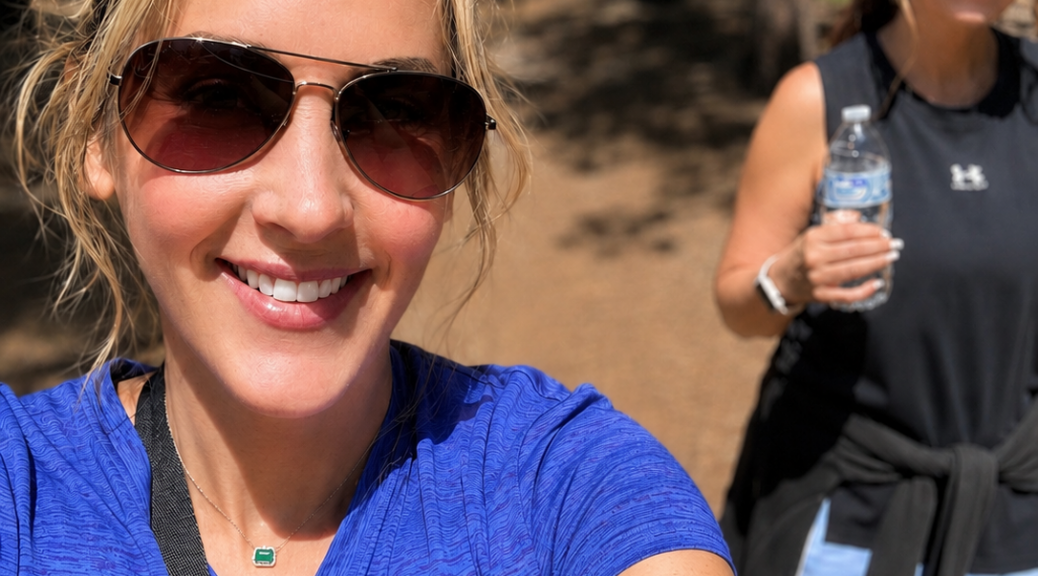
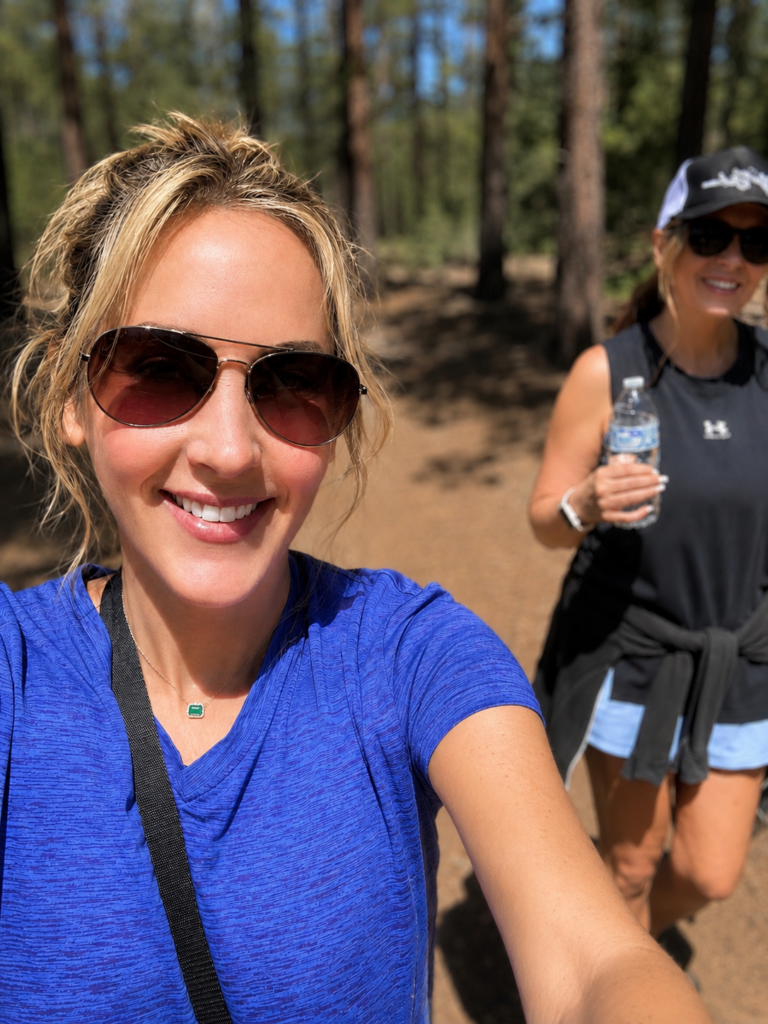
Tammy Rose hiking with a friend before sharing the personal story that inspired her investigative reporting and advocacy for crime victims.
Tammy Rose shares the personal journey that inspired her lifelong commitment to fighting for victims.

Why I Fight So Hard for Victims: The Story I’ve Never Shared

By Investigative Reporter Tammy Rose

Why I’m Sharing This Now

People often ask why I spend so much time filing public records requests, interviewing grieving families, and refusing to give up on cold cases.

The answer isn’t found in a newsroom.

It’s found in one of the most painful chapters of my own life.

Long before I became an investigative reporter, I became a victim.

For years, I kept this story private because of the shame, embarrassment, and fear that followed.

Today, I’m sharing it because I hope it helps others understand why I fight so hard for victims.

I Didn’t Want to Report the Crime

The person who sexually assaulted me wasn’t a stranger.

He was someone my family knew and trusted.

After it happened, I didn’t want to report the crime.

I was embarrassed.

I was ashamed.

Like many victims, I blamed myself.

I wanted to pretend it had never happened.

It was my former husband who convinced me to go to law enforcement. He told me that if I didn’t report the crime, he would.

Looking back, I’m grateful he encouraged me to speak up.

At the time, it felt impossible.

The Trial Changed My Family Forever

Going through the criminal justice system was one of the hardest experiences of my life.

During the trial, I learned the defendant had previously been convicted in another sexual assault case involving a child under the age of 14 and had served a much shorter sentence.

That realization was heartbreaking.

The case also divided my family.

One of the most painful moments was watching my own sister testify for the defense.

My father blamed me for what had happened.

Losing the support of people I loved was devastating.

The verdict ended the criminal case.

It did not end the pain.

The Papers I Never Threw Away

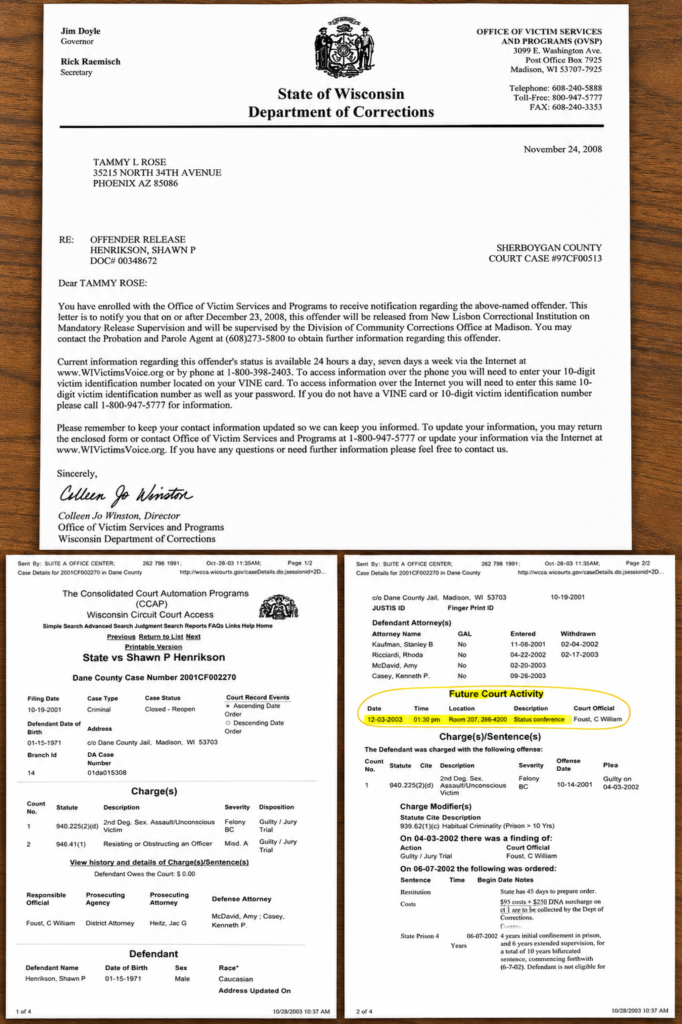
Wisconsin court records and victim notification documents preserved by Tammy Rose years after her criminal case, illustrating the lasting impact of surviving sexual assault.
Court records and victim notification letters I kept for years—documents that reminded me the criminal case ended, but the journey as a victim did not.

Recently, I opened a folder I hadn’t looked at in years.

Inside were Wisconsin court records, sentencing documents, and a Wisconsin Department of Corrections victim notification letter informing me the offender would one day be released from prison.

Holding those papers again reminded me that victims often carry a case long after the courtroom is empty.

The documents aren’t just legal records.

For me, they represent years of healing.

Years Later, I Had to Defend My Truth Again

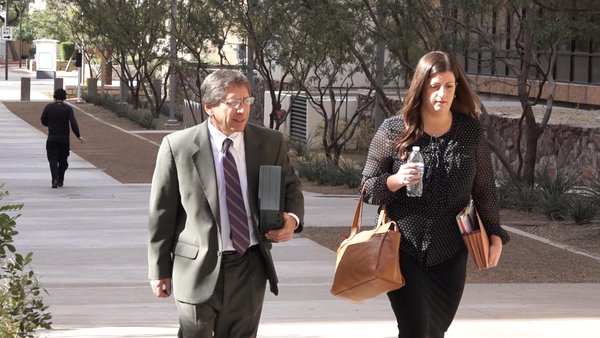
Courthouse walkway during the Jodi Arias sentencing retrial where testimony related to the State Bar proceedings was taking place.
Courthouse during the Jodi Arias sentencing retrial, where my reporting ultimately led to State Bar proceedings that resulted in my deposition years after my own criminal case had ended.

Years after my criminal case ended, I was covering the Jodi Arias sentencing retrial as a reporter.

During my reporting, I uncovered information that led me to file a complaint with the State Bar of Arizona regarding prosecutor Juan Martinez.

As part of that disciplinary process, I was deposed.

During that process, records from my own criminal case became part of the deposition and were made public. As a victim, it was devastating to see deeply personal parts of my past become public record years after I believed I had finally moved forward.

I never imagined my own past would become part of those proceedings.

During the deposition, my background was examined, including the sexual assault case from years earlier. My credibility was challenged, and I felt as though I was once again defending one of the most painful experiences of my life.

For years, I had been afraid to speak up.

Then something changed.

I remember saying, “The judge and jury believed me. If you disagree with that, take it up with them.”

It was the first time in a long time that I truly stood up for myself.

Why I Fight So Hard for Victims

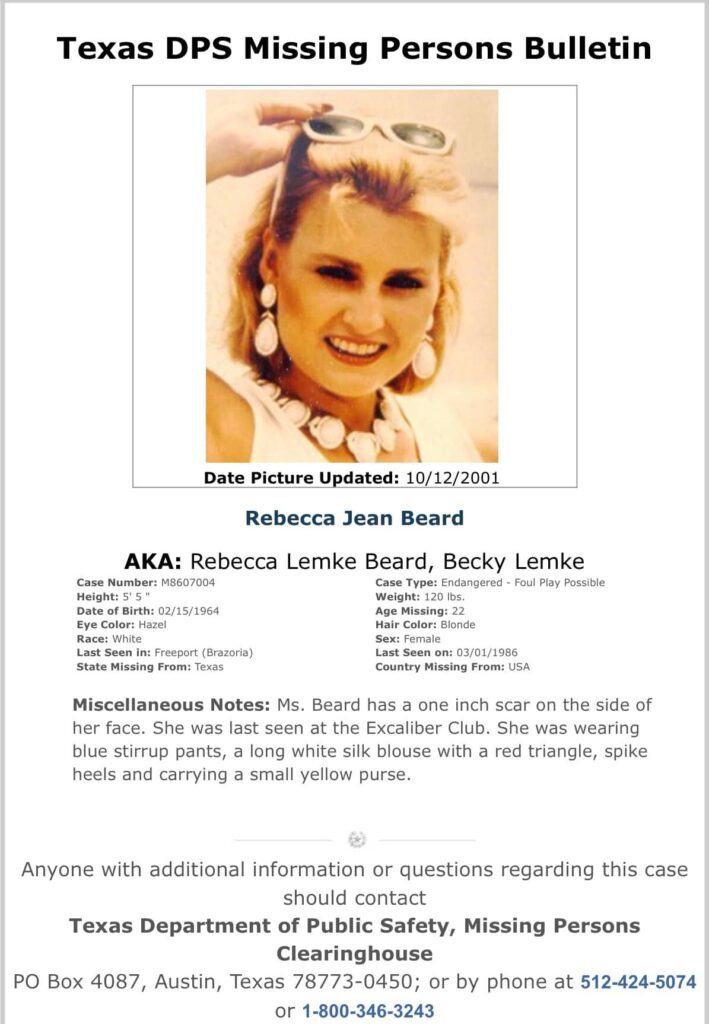
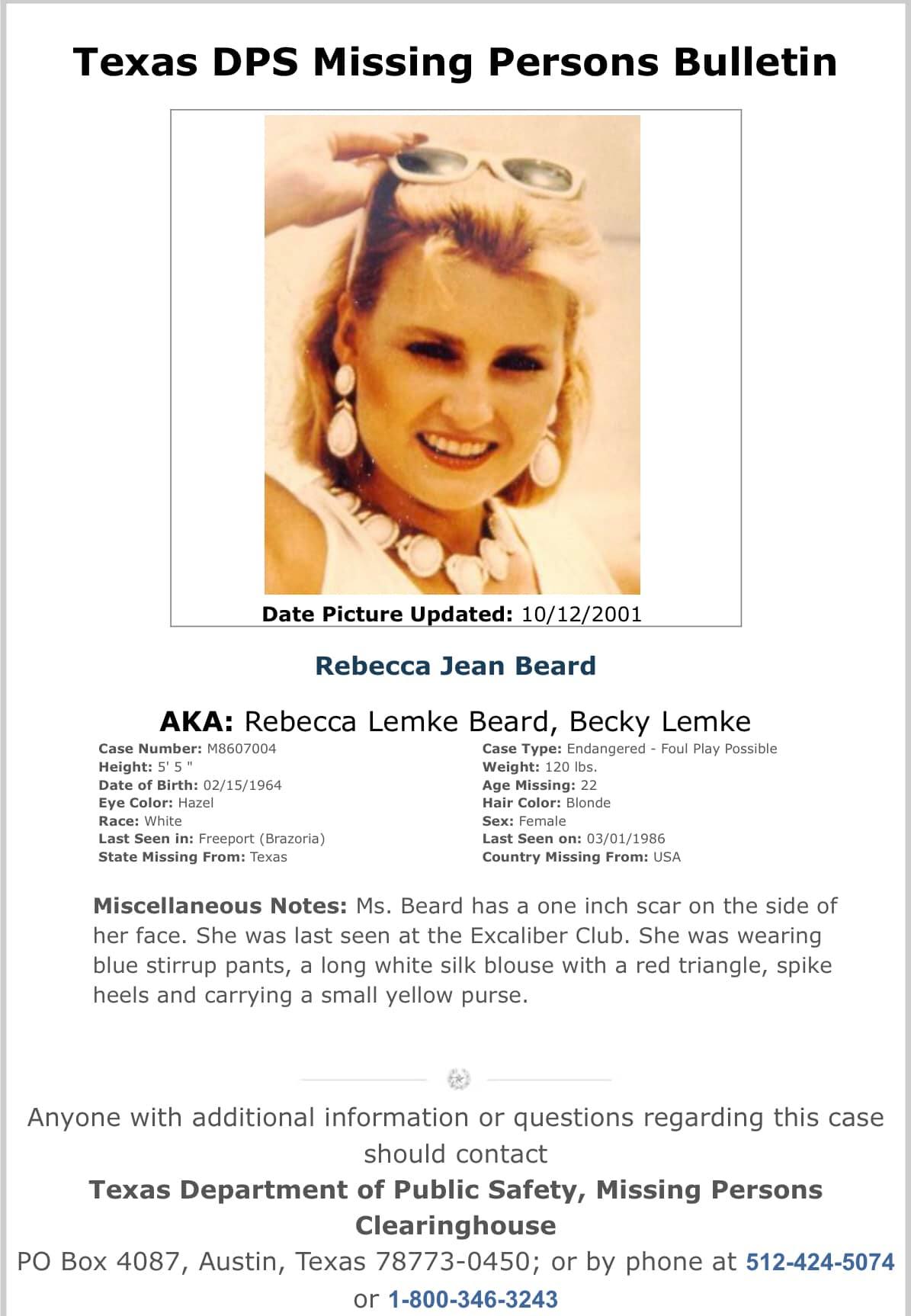
Texas Department of Public Safety Missing Persons Bulletin for Rebecca Jean Beard, issued during the investigation into her disappearance.
Official Texas DPS Missing Persons Bulletin for Rebecca Jean Beard, documenting her disappearance before Paul Taylor Jr. later pleaded guilty in the case despite her remains never being recovered.

Every records request I file…

Each family I interview…

No cold case is just another story.

Every difficult question I ask…

Is driven by one purpose: finding the truth.

I know what it feels like to wonder if anyone will believe you.

I’ve experienced losing relationships because I told the truth.

Years later, my credibility was questioned over events from my past.

Those experiences shaped the reporter I am today.

Victims deserve compassion.

Families deserve answers.

The truth deserves to be pursued—even when it’s uncomfortable.

To Every Victim Reading This

Memorial image of Terri Denise McDaniels, an unsolved homicide victim from Pearland, Texas, whose case remains unsolved.
Terri Denise McDaniels was murdered in Pearland, Texas, on October 31, 1986. Her homicide remains unsolved. Every unsolved case represents a family still waiting for answers and justice.

Maybe you’ve been afraid to report a crime.

Perhaps someone blamed you for something that wasn’t your fault.

Or maybe you’ve wondered whether anyone would believe you.

You are not alone.

Sharing this story isn’t about reliving the past.

It’s about explaining why I continue fighting for victims every single day.

I can’t change what happened to me.

But I can make sure my experiences help someone else find the courage to speak.

As long as I have a voice, I’ll keep fighting for those still searching for justice.

That’s why I fight so hard for victims.

Continue Reading

If you’d like to learn more about trauma, healing, and the importance of seeking justice for victims, you may also find these resources helpful.

Disclosure: As an Amazon Associate, I earn from qualifying purchases at no additional cost to you.

Recommended Reading

The Body Keeps the Score by Bessel van der Kolk

The Gift of Fear by Gavin de Becker

More Investigations by Tammy Rose

Rebecca Beard: No Body. No Weapon. My investigation into the 1986 disappearance and the unanswered questions that remain.

Roy Alan Stuart Prison Journals: Former Harris County Deputy Kent McGowen shares chilling prison confessions that could help solve cold cases.

Former Deputy Documents Alleged Roy Alan Stuart Confessions

By Investigative Reporter Tammy Rose

How An Unlikely Prison Friendship Began

Former Harris County deputy Kent McGowen says one of the most unexpected chapters of his life began while serving a prison sentence in the Texas Department of Criminal Justice.

McGowen was convicted in the 1992 murder of Susan White and spent 19 years in prison before he was paroled. Since his release, he has spoken publicly about his case and his time in prison, including conversations he says he had with convicted serial killer Roy Alan Stuart.

According to McGowen, he spent nearly two years housed near convicted serial killer Roy Alan Stuart, where the two developed an unlikely relationship that led to conversations about alleged unsolved murders across Southeast Texas.

McGowen says he carefully documented those conversations, typed formal reports, and later turned the information over to multiple law enforcement agencies.

I have not independently verified Stuart’s alleged prison statements or whether they resulted in any solved criminal cases.

An Unlikely Prison Conversation

McGowen told me that most inmates avoided Stuart, describing him as someone who appeared exactly how many people would imagine a serial killer.

After noticing Stewart sitting alone, McGowen said he bought him a pint of ice cream and a soft drink from the prison commissary.

According to McGowen, that simple act led Stuart to begin discussing murders he claimed to have committed throughout Texas.

“Nobody would talk to Roy,” McGowen said. “After that, he just started talking.”

McGowen said one reason he began paying close attention was because Stuart showed him what McGowen recalls was a letter that Stuart claimed had been written by attorney Tom Selleck. According to McGowen, Stuart also claimed Selleck represented him at the time. Selleck currently serves as the Brazoria County Criminal District Attorney and previously worked as an assistant district attorney before entering private practice. I have not independently verified the letter, its authenticity, or Stuart’s claim regarding the alleged legal representation.

Claims Of Additional Victims

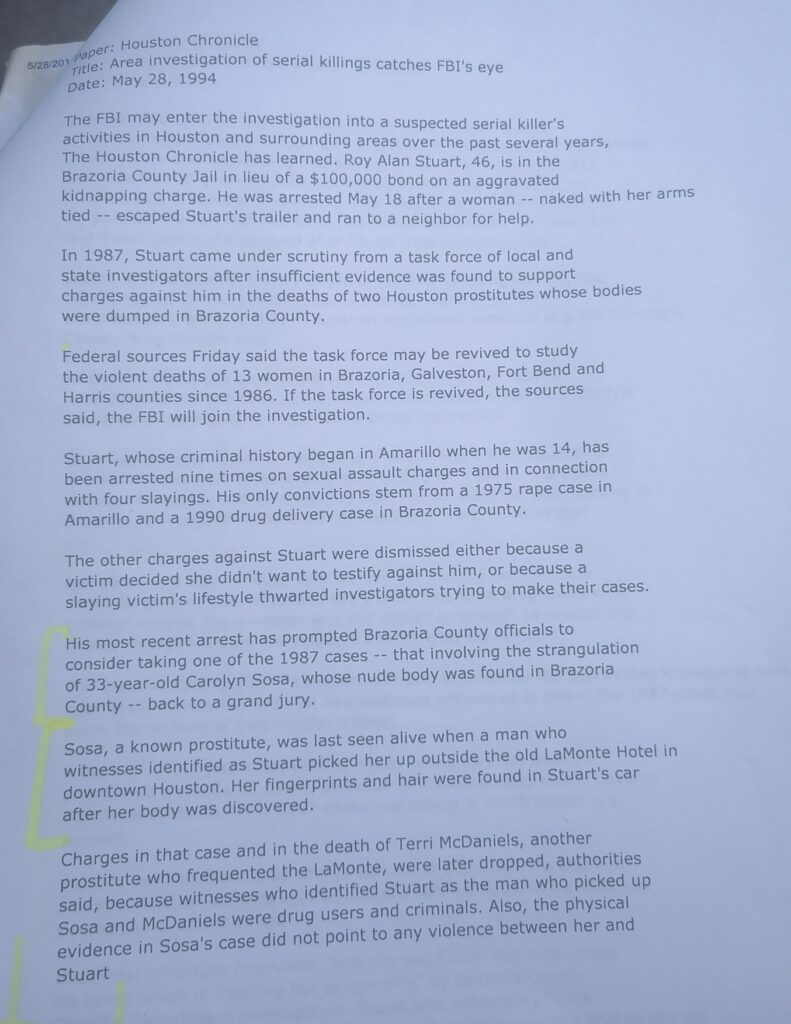
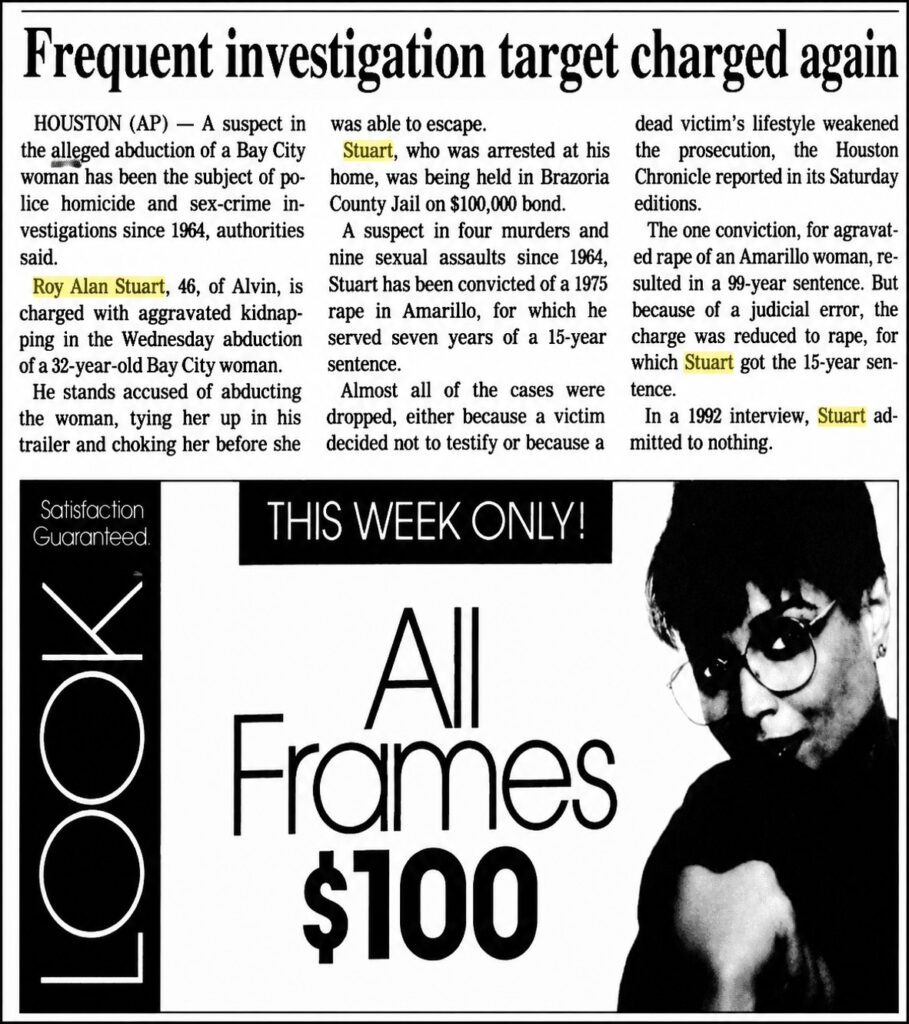
Historical 1994 Victoria Advocate newspaper clipping reporting Roy Alan Stuart’s arrest in Brazoria County and describing his criminal history.
Historical newspaper clipping from The Victoria Advocate (May 1994) reporting Roy Alan Stuart’s arrest in Brazoria County. The article states Stuart had been investigated in multiple homicide and sexual assault cases. Included for historical context alongside Kent McGowen’s interview.

McGowen alleges Stuart described several killings that were never publicly connected to him.

Among the stories McGowen recalls were allegations involving:

A woman allegedly abducted from Houston during rodeo season.

A victim allegedly killed near a waterway in Brazoria County.

Bodies allegedly disposed of in or near the Brazos River.

Additional killings Stuart allegedly discussed involving Southeast Texas.

McGowen says Stuart showed no remorse while recounting the alleged crimes.

Documenting Every Conversation

Rather than relying on memory, McGowen says he immediately began documenting the conversations.

He kept handwritten notes while incarcerated before later typing formal reports describing what Stuart allegedly told him.

McGowen says he eventually forwarded those reports to multiple law enforcement agencies, including investigators in several Texas counties.

“I wanted to document everything while it was still fresh,” McGowen said.

Investigators Later Contacted Him

According to McGowen, investigators later reached out requesting copies of his notes.

He says an FBI agent also contacted him after learning about the reports and asked to review the journals because they reflected his contemporaneous observations while Stuart was allegedly making the statements.

McGowen says he continues to maintain copies of those writings today.

Questions Still Remain

Whether Stuart’s alleged prison statements can ever be verified remains unknown.

At this time, I have not found any publicly available records that independently confirm the additional alleged victims described by McGowen.

However, McGowen believes investigators considered the information important enough to request his documentation years after the conversations took place.

As part of my continuing coverage, I am preparing additional public records requests to determine what investigative steps, if any, followed McGowen’s submissions.

This remains an active reporting project. If you have firsthand knowledge related to Roy Alan Stuart or the investigations discussed in this article, contact me through ChopperRose.com

Related Coverage

Convicted Former Deputy Says He Was Framed — But Key Questions Remain (coming soon)
Rebecca Beard Investigation: Exclusive Interviews And Court Records

Texas Killing Fields: Continuing Coverage

Amazon Recommendations

Books About Serial Killers

Whoever Fights Monsters by Robert K. Ressler

Mindhunter by John E. Douglas

Disclosure: As an Amazon Associate, I earn from qualifying purchases at no additional cost to you.