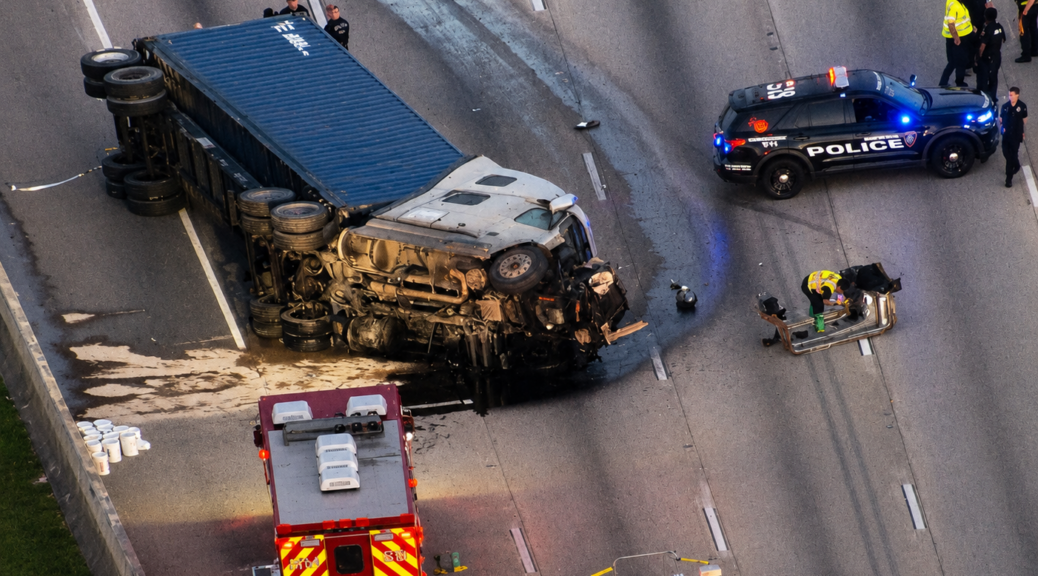
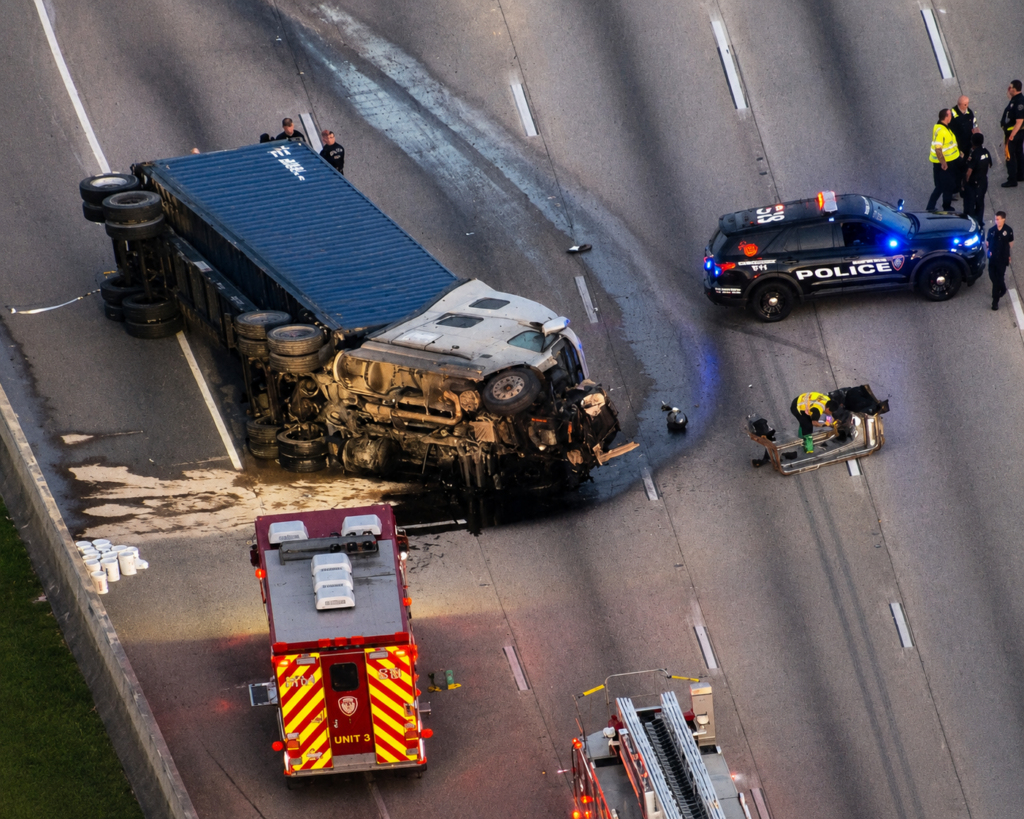
Emergency crews respond after a deadly crash involving an 18-wheeler on Interstate 10 inbound near Highway 6 in west Houston. Photo: Tammy Rose
Two Deadly Crashes Snarl Traffic Across West Houston
Two deadly crashes kept first responders busy across west Houston Wednesday morning, shutting down major roadways and creating long traffic delays.
The first crash happened around 5 a.m. on the inbound lanes of Interstate 10 near Eldridge Parkway.
According to authorities, an 18-wheeler and another vehicle collided, causing a fire. Two people died at the scene.
Investigators closed all inbound lanes near Dairy Ashford while crews worked to clear the wreckage. Traffic backed up for several miles, stretching toward Kingsland Boulevard during the morning commute.
Police pursuit ends in fatal Highway 6 crash
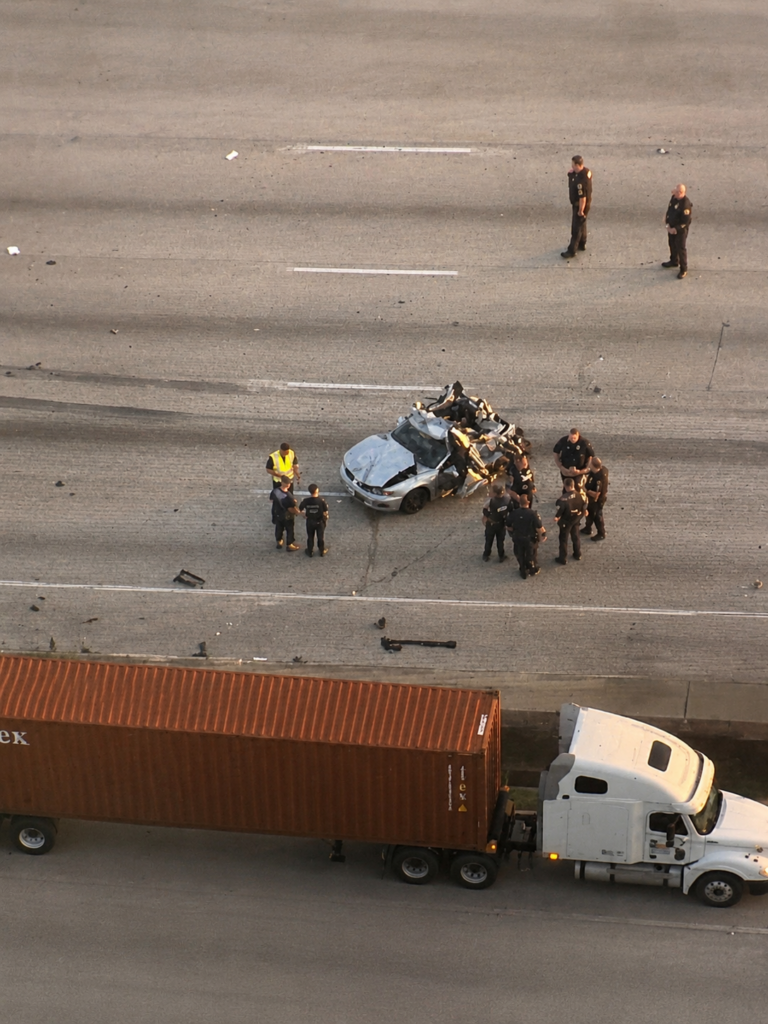
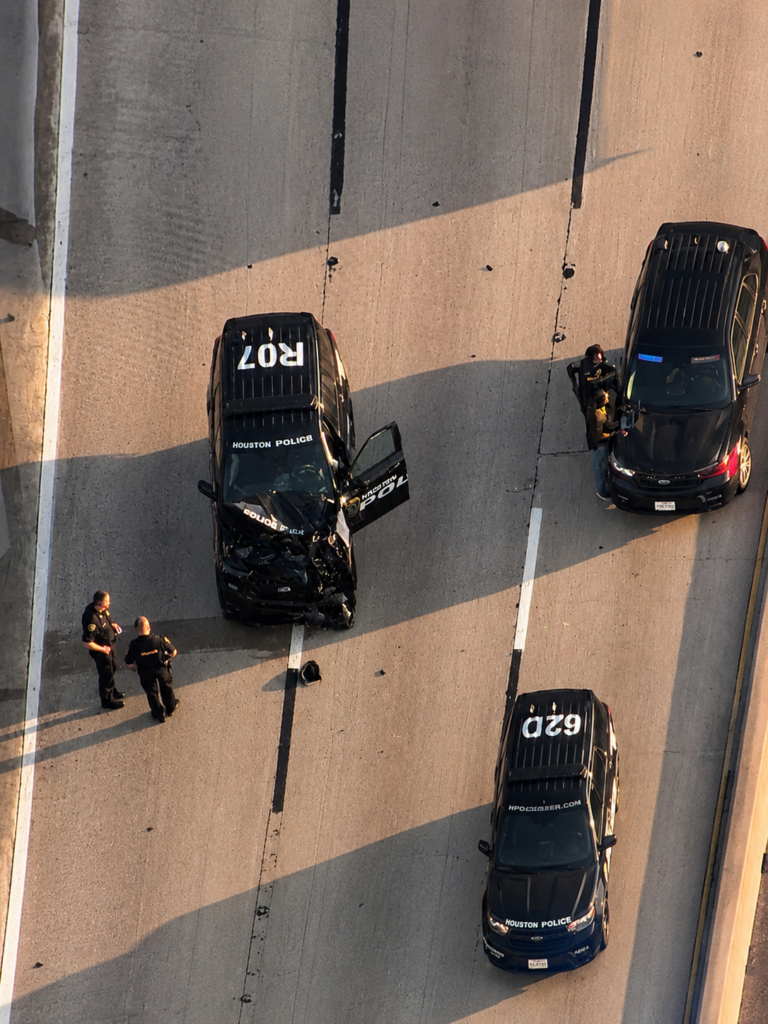
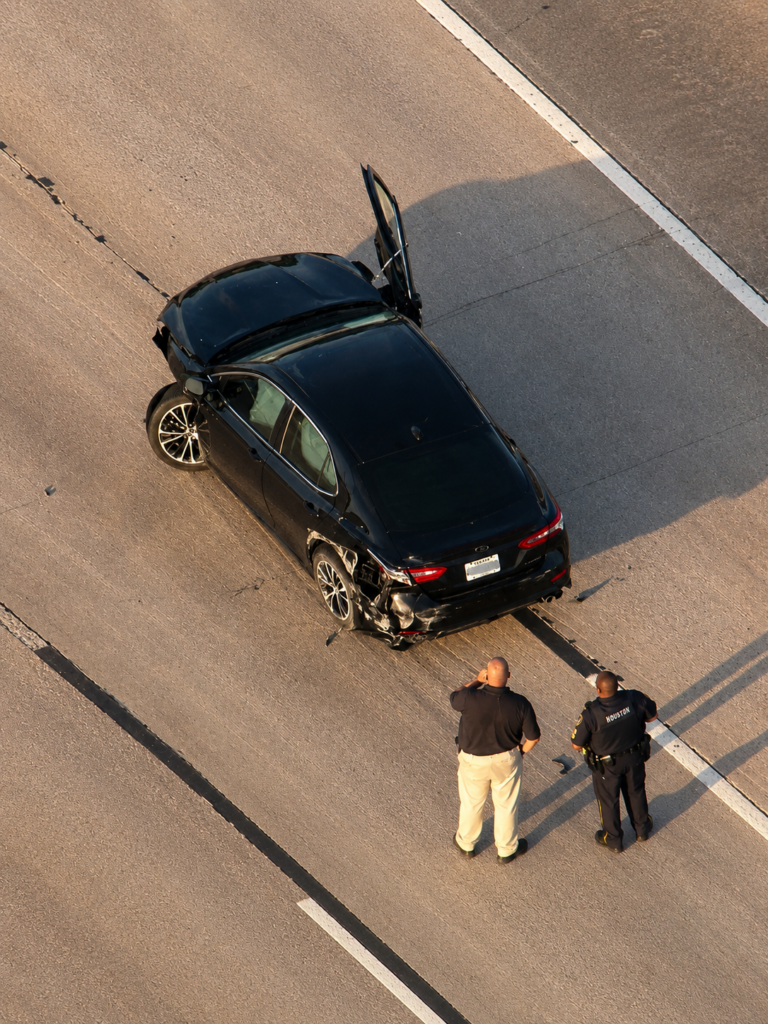
Emergency crews investigate a deadly crash following a police pursuit on southbound Highway 6 near the Westpark Tollway in west Houston. Photo: Tammy Rose
A second deadly crash occurred on Highway 6 southbound near the Westpark Tollway.
Photos from the scene show heavy damage to both an HPD patrol vehicle and another vehicle following what authorities described as the end of a police pursuit.
Officials confirmed the incident was fatal. Based on available information, the deceased was not the Houston police officer. Authorities have not yet released additional details about the person who died or the events leading up to the crash.
The investigation remained active as officers documented the scene and worked to reopen the roadway.
Investigation continues
Authorities continue investigating both crashes. Additional information, including the identities of those involved, is expected after next-of-kin notifications and the completion of the preliminary investigations.
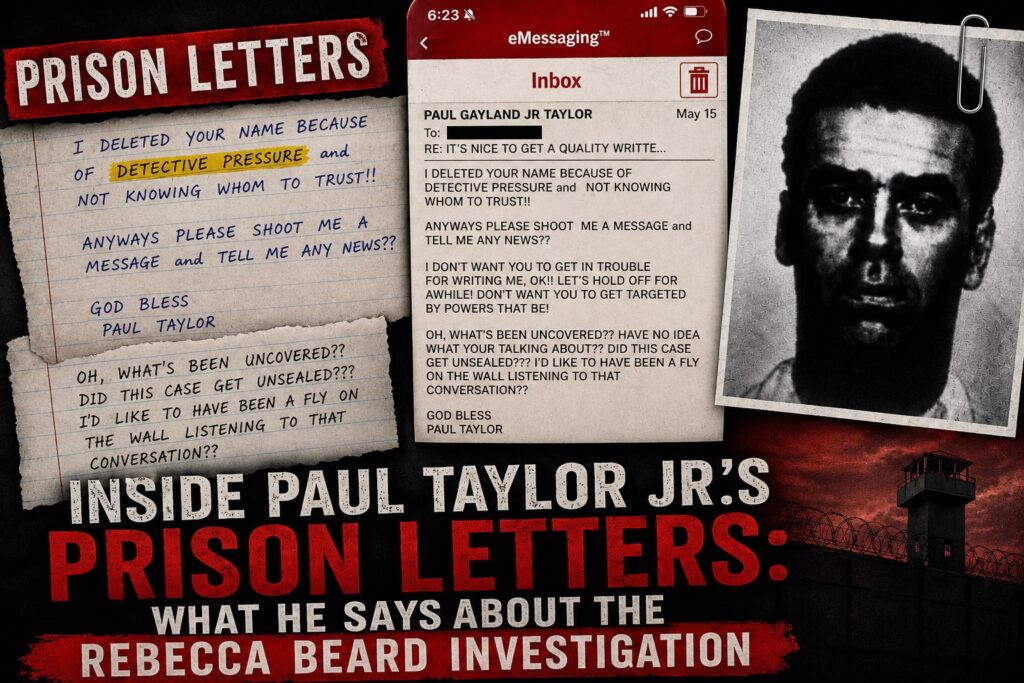
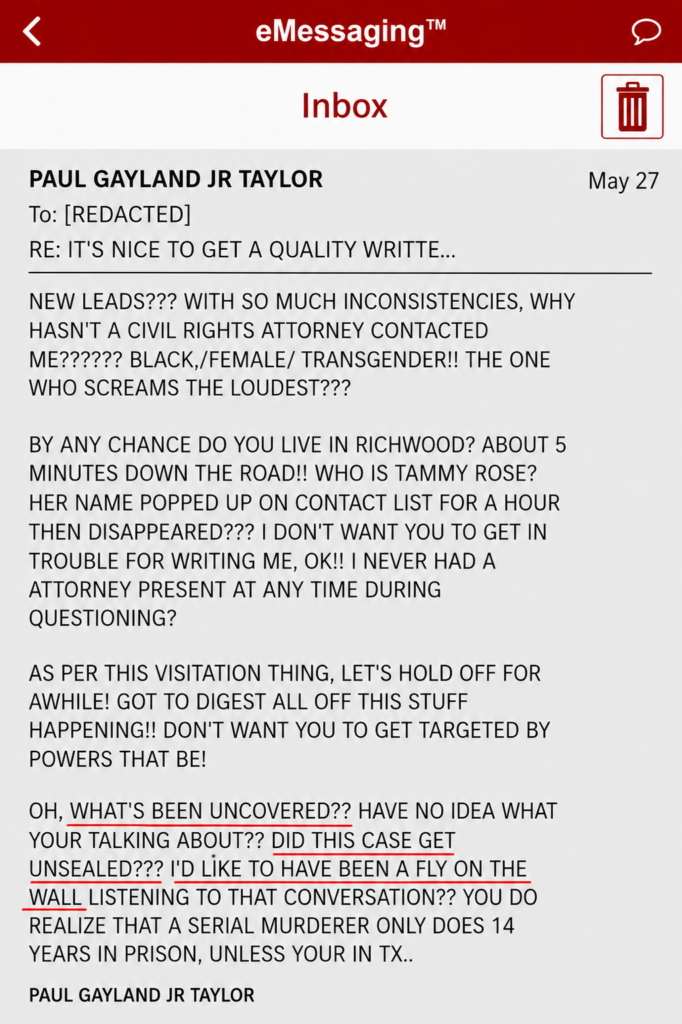
Newly obtained prison messages from Paul Taylor Jr. discuss the Rebecca Beard investigation, prison life and his perspective decades after the case.
Nearly four decades after Rebecca Beard disappeared, new prison messages from convicted killer Paul Taylor Jr. are offering another glimpse into how he views the investigation today.
The messages, shared with Investigative Reporter Tammy Rose by a longtime correspondent who asked to remain anonymous, cover much more than the Rebecca Beard case. Taylor discusses prison life, his health, his faith, investigators, and why he believes renewed attention is being focused on his case.
While many of his statements reflect his personal opinions and allegations, they provide insight into his current mindset as interest in the Rebecca Beard investigation continues.
Taylor questions renewed interest in the Rebecca Beard case
In several messages, Taylor repeatedly asks why people are suddenly interested in his case after so many years.
He questions why the victim’s family has continued speaking publicly and wonders what new information investigators may have uncovered.
Taylor also asks whether new evidence has surfaced and repeatedly requests updates from outside prison.
His questions come as the Rebecca Beard investigation has received renewed attention following exclusive interviews, court records, and additional reporting into the 1986 disappearance.
Paul Taylor Jr. comments on investigators
Throughout the messages, Taylor criticizes investigators and the criminal justice system.
He claims authorities mishandled evidence and writes that people should question official accounts of the investigation.
These statements represent Taylor’s personal opinions and have not been independently verified.
Despite his criticism, Taylor continues asking for information about developments in the case.
Faith remains a central theme
Religion appears throughout nearly every message.
Taylor writes about reading the Bible each morning, praying daily, and believing God has guided him throughout his years in prison.
He frequently ends his messages with blessings and encourages others to pray.
The repeated references suggest his Christian faith continues to play a significant role in his daily life behind bars.
Life inside a Texas prison
The letters also describe Taylor’s daily routine inside prison.
He discusses prison conditions, medical treatment following the removal of basal cell carcinoma, communication through the Securus messaging system, and the challenges of staying connected with the outside world.
Taylor says receiving letters helps him remain informed about events beyond prison walls.
Taylor notices new reporting
One of the more interesting portions of the correspondence comes when Taylor references recent reporting.
He asks whether Tammy Rose is writing articles and later questions why her name briefly appeared in his contact list before disappearing.
The messages suggest Taylor is aware that new reporting and renewed public interest continue surrounding the Rebecca Beard investigation.
Investigation continues
Rebecca Beard disappeared in 1986 and her body has never been found.
Although Paul Taylor Jr. pleaded guilty in connection with her death, questions remain about where Rebecca’s remains may be located.
Investigators have conducted multiple searches over the years, while Rebecca’s family continues asking authorities to pursue additional leads.
The newly shared prison messages do not establish new evidence in the case. Instead, they provide additional insight into Taylor’s thoughts as the investigation continues decades later.
Editor’s Note: The prison messages contain Taylor’s personal opinions and allegations regarding investigators and the criminal justice system. Those statements have not been independently verified and are presented to accurately reflect the contents of the correspondence.
Recommended Reading
If you’re interested in the Rebecca Beard investigation and other Texas cold cases, these books provide additional background and context. Purchasing through the links below helps support my independent reporting at no additional cost to you.
Disclosure: As an Amazon Associate, I earn from qualifying purchases at no additional cost to you. Thank you for supporting my independent journalism and investigative reporting.
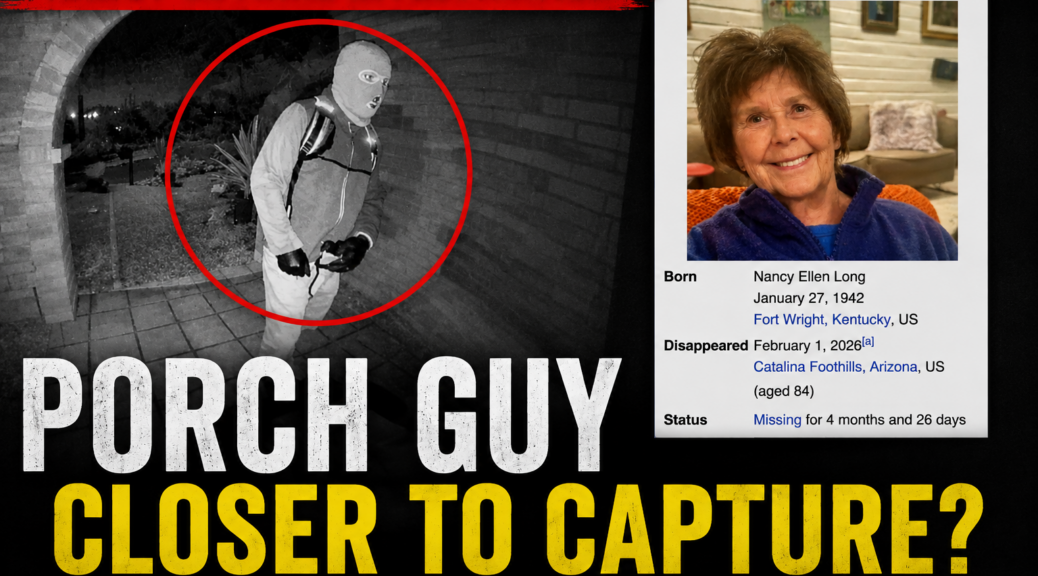
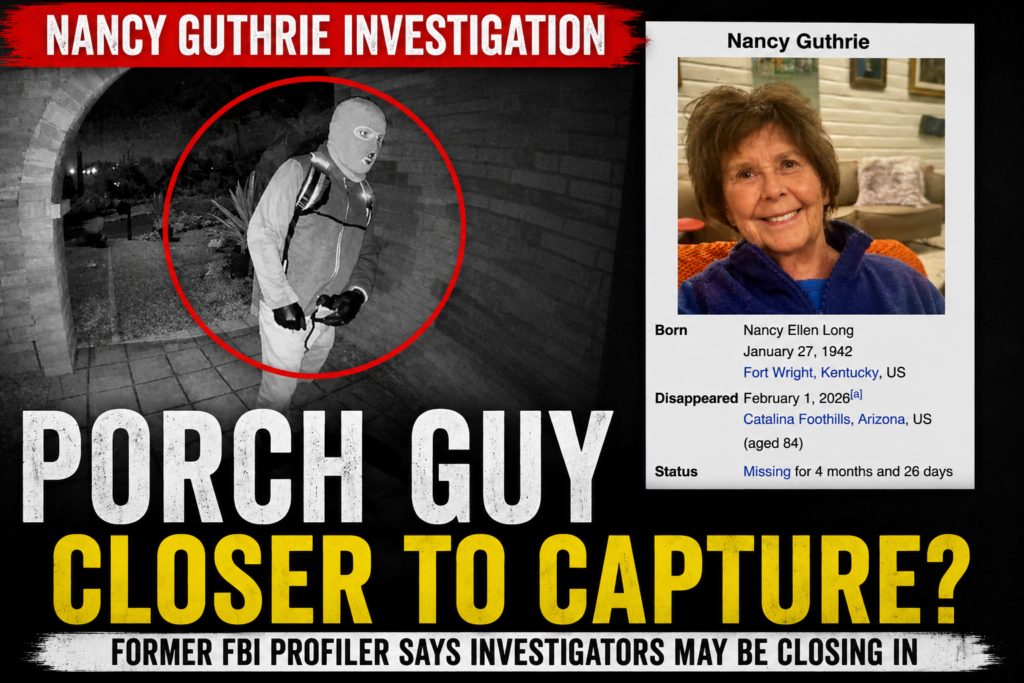
A former FBI agent says investigators may be getting closer to identifying the masked “Porch Guy” in the disappearance of Nancy Guthrie. The assessment reflects the former agent’s opinion and is not an official statement from investigators.
Former FBI Agent Says Nancy Guthrie Investigation May Be Close to Major Breakthrough
TUCSON, Ariz. — Is the mystery surrounding Nancy Guthrie’s disappearance about to take a dramatic turn?
A former FBI special agent says she believes investigators may be closing in on the masked figure known as “Porch Guy”—the person captured on surveillance video outside Guthrie’s home the night the 84-year-old disappeared.
During an appearance on The Megyn Kelly Show, former FBI Special Agent Maureen O’Connell said she is “75 percent” confident investigators are getting close to identifying or capturing the mysterious suspect.
“I think they’re getting close to the Porch Guy,” O’Connell said. “When they get the Porch Guy, the floodgates shall swing open.”
If true, it would mark the biggest potential breakthrough since Nancy Guthrie vanished from her Tucson home on Feb. 1.
Authorities have released surveillance images showing a masked person wearing dark clothing approaching Guthrie’s home before her disappearance. Investigators have not publicly identified the individual, and no arrests have been announced.
The comments from O’Connell come as renewed attention has focused on the case following reports about alleged ransom communications sent after Guthrie disappeared. Law enforcement has not publicly confirmed the authenticity of every message received, and the FBI continues to investigate.
Nancy Guthrie, the mother of NBC Today co-anchor Savannah Guthrie, remains missing nearly five months after investigators say she was abducted from her home. The FBI and the Pima County Sheriff’s Department continue to ask anyone with information to come forward.
While O’Connell’s assessment has generated headlines, it is important to note that her comments reflect her opinion and sources, not an official announcement from investigators.
What Happens Next?
If investigators identify the person known as “Porch Guy,” it could answer several lingering questions:
Was the suspect acting alone?
Was Nancy Guthrie targeted?
Could investigators finally learn what happened after she disappeared?
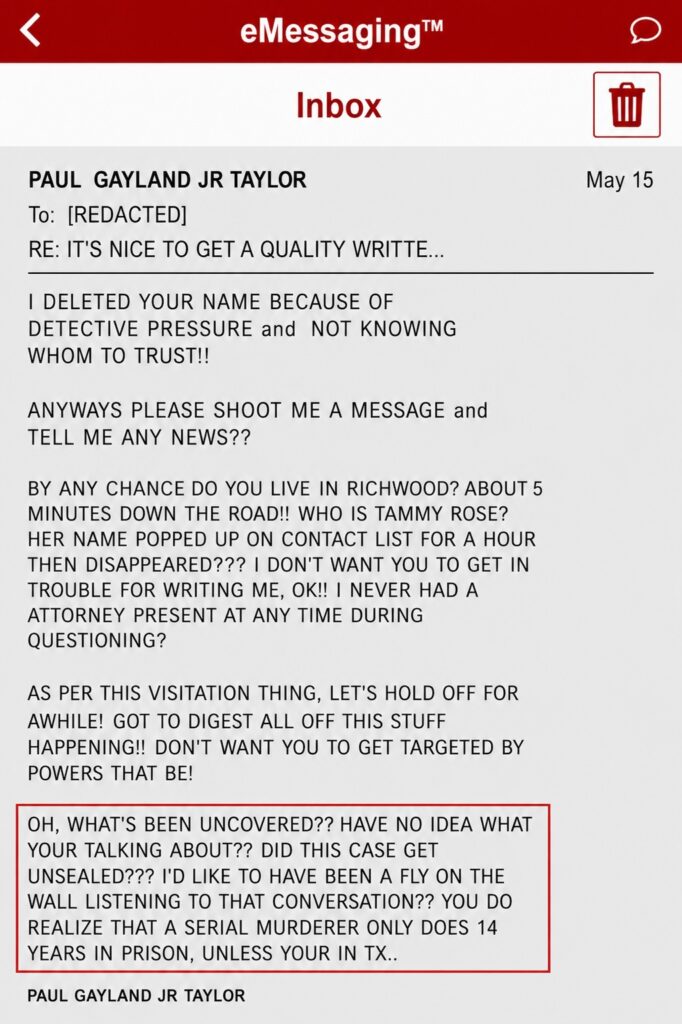
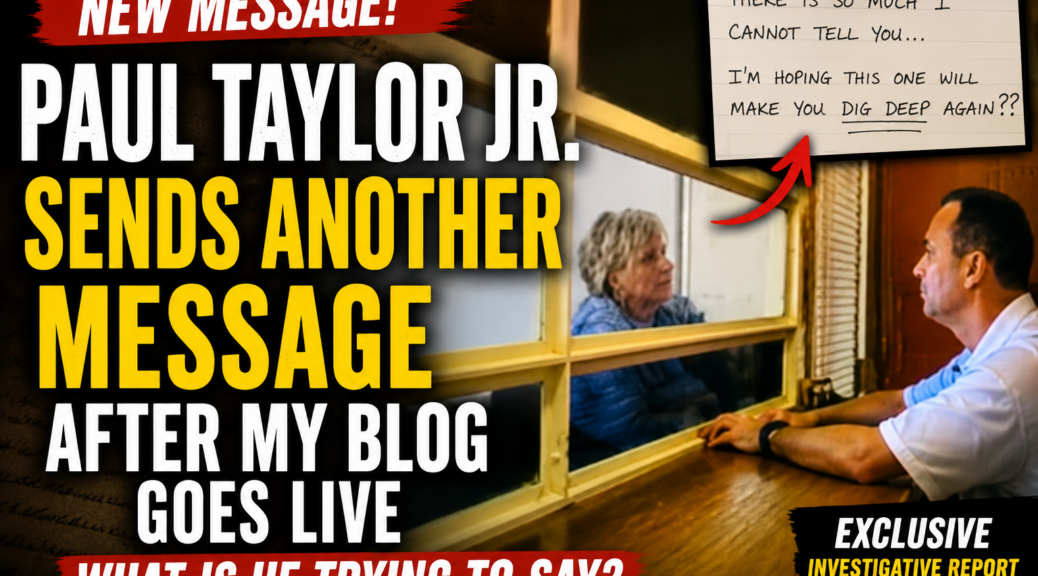
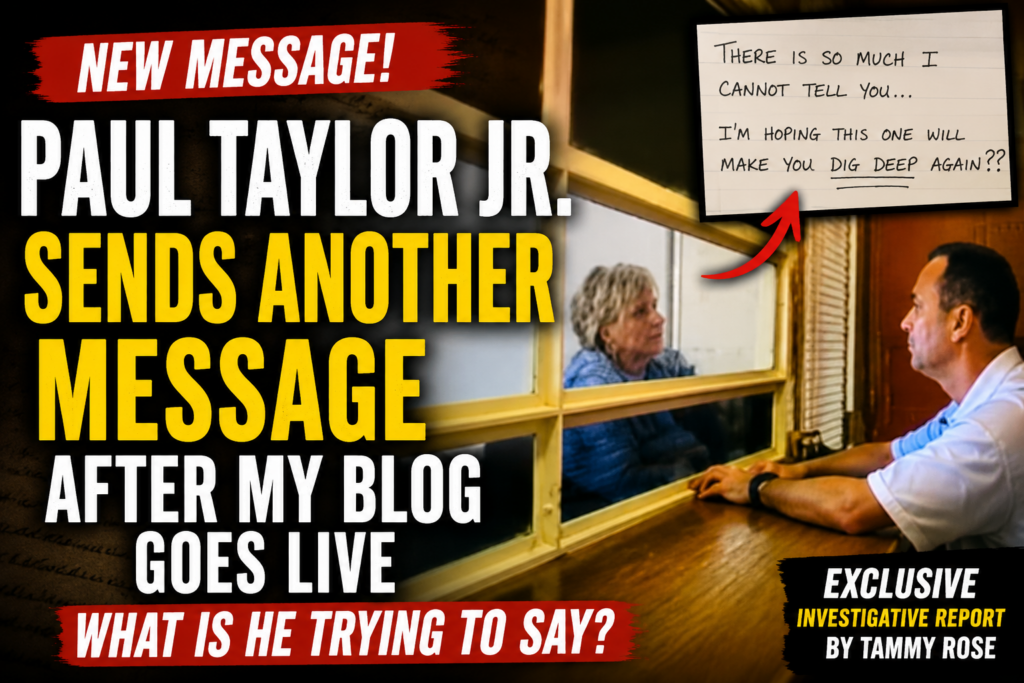
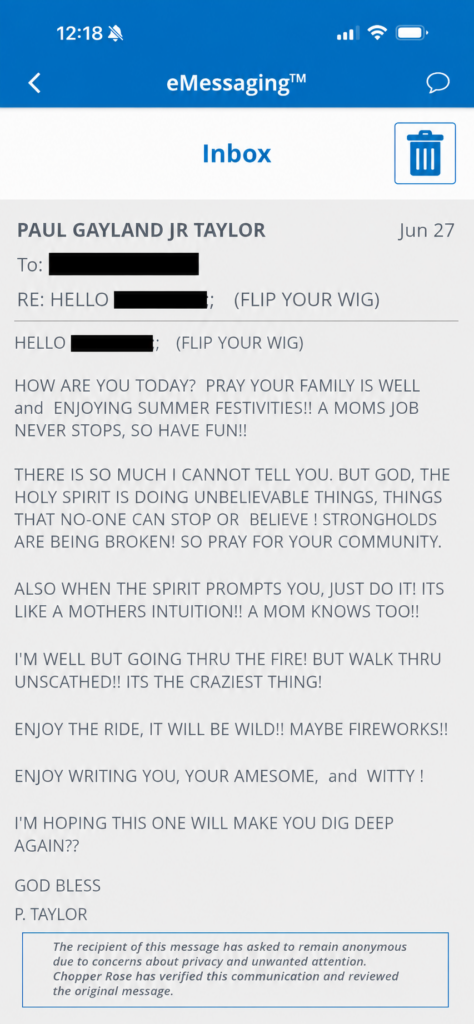
Just days after I published previously released messages from Paul Taylor Jr., another communication arrived in the recipient’s inbox.
The recipient asked to remain anonymous because of concerns about unwanted attention in Brazoria County. I reviewed the original message before publishing this report and agreed to protect the recipient’s identity.
“I’m Hoping This One Will Make You Dig Deep Again”
The latest message does not contain a confession or new details about Rebecca Beard’s disappearance. Instead, Taylor continues using spiritual language while suggesting there is more he cannot discuss.
Among the statements included in the email:
“There is so much I cannot tell you.”
“The Holy Spirit is doing unbelievable things.”
“I’m hoping this one will make you dig deep again??”
Taylor also writes that he is “going through the fire” before telling the recipient to “enjoy the ride.”
A Continuing Pattern
This message follows other communications I previously reported on involving Taylor.
While the email does not offer new evidence in the Rebecca Beard investigation, it continues a pattern of messages in which Taylor hints at information without providing specific facts.
To protect the recipient’s privacy, I redacted identifying information from the published screenshots at the recipient’s request.
Related Coverage: Read my previous reporting on the Rebecca Beard investigation and Paul Taylor Jr.’s earlier communications.
Recommended Reading: If you’re interested in unsolved Texas murder cases, these books provide additional background through my Amazon affiliate links. As an Amazon Associate, I earn from qualifying purchases at no additional cost to you.
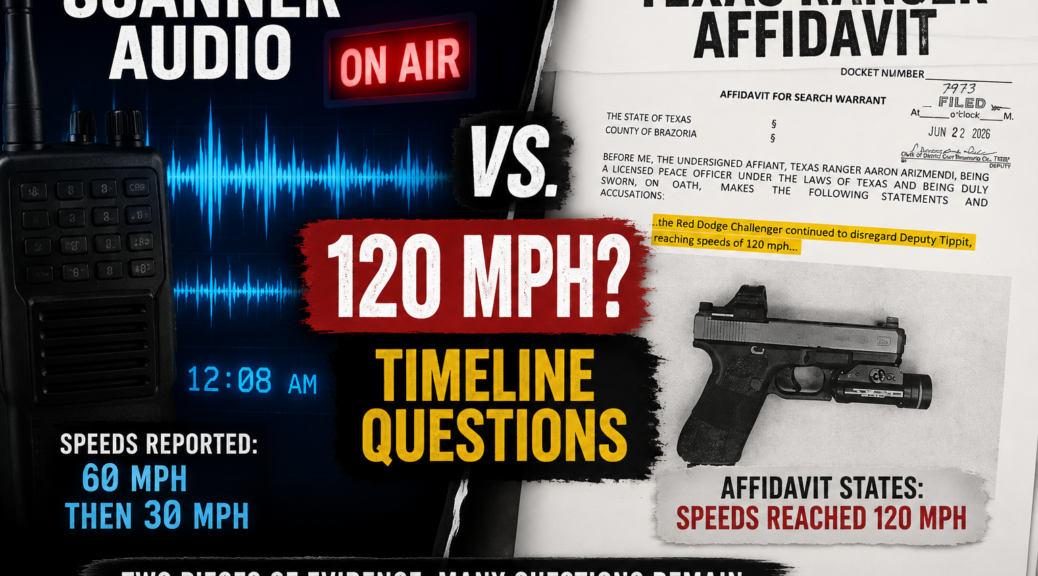
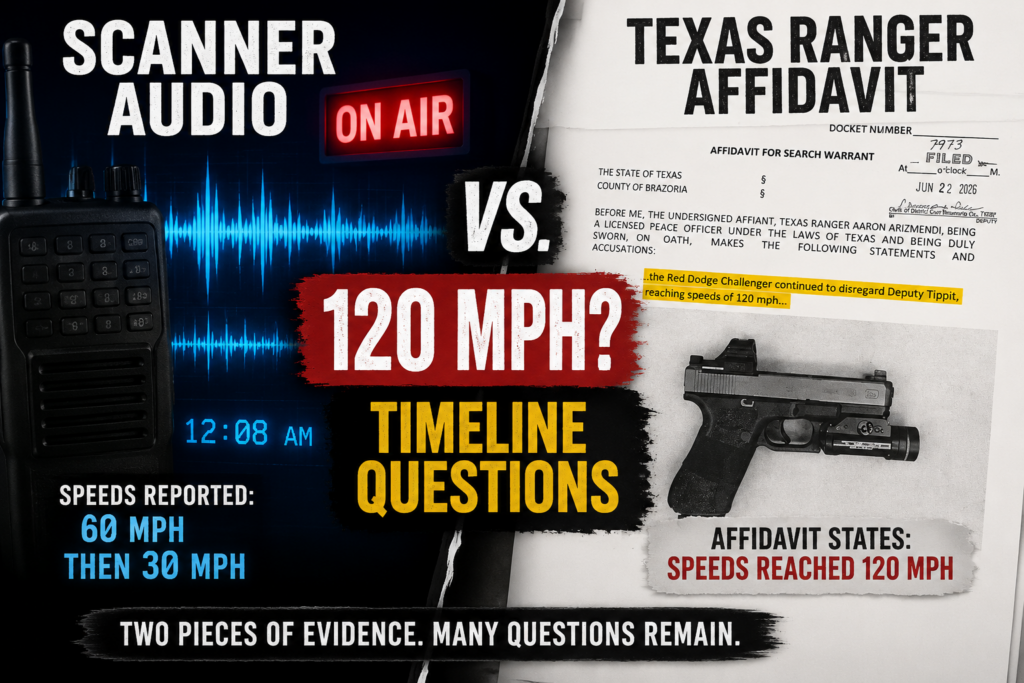
A comparison graphic highlights questions raised after Investigative Reporter Tammy Rose compared scanner audio obtained shortly after the June 1 officer-involved shooting with a recently released Texas Ranger affidavit. The article includes the affidavit and scanner audio so readers can review the evidence themselves.
Scanner Audio Raises New Questions After Release of Texas Ranger Affidavit
By Investigative Reporter Tammy Rose
Scanner audio obtained by Investigative Reporter Tammy Rose shortly after the June 1 officer-involved shooting is raising new questions after being compared with a recently released Texas Ranger search warrant affidavit.
The affidavit states investigators reviewed Deputy Kevin Tippit’s dash camera and body camera before preparing the search warrant. According to the document, the pursuit reached speeds of approximately 120 mph after Tippit activated his emergency lights and siren.
However, after reviewing all scanner traffic I was able to obtain beginning at midnight on June 1, the first pursuit-related radio traffic I located begins at approximately 12:08 a.m.
The scanner audio and the affidavit are both included below so readers can review the evidence for themselves.
What the Scanner Audio Reveals
The scanner traffic begins with officers discussing a pursuit involving a Dodge Challenger.
During the transmissions, officers can be heard reporting speeds of about 60 mph. Later, as the pursuit entered a residential neighborhood, officers reported speeds closer to 30 mph.
The scanner audio also captures Deputy Tippit reporting what he described as an “accidental discharge.”
Moments later, dispatch clarified there was a gunshot victim. Emergency crews requested a trauma kit and a tourniquet before CPR efforts began.
What the Texas Ranger Affidavit Says
The Texas Ranger affidavit describes a different timeline.
According to the affidavit, Deputy Tippit observed the Challenger around 12:06 a.m. on FM 2004. After activating his emergency lights and siren, investigators say the Challenger accelerated and reached approximately 120 mph while running six red lights.
The affidavit states the pursuit ended at a home on Indian Warrior Trail. Deputy Tippit entered the garage, discharged his firearm, and later radioed dispatch reporting an accidental discharge before rendering aid.
Why the Timeline Matters
The scanner audio reviewed by Investigative Reporter Tammy Rose does not include pursuit traffic before approximately 12:08 a.m.
That does not necessarily mean the affidavit is incorrect.
Instead, it raises several important questions.
Additional radio traffic may have occurred on another channel that was not included in the scanner recordings available for review.
The times listed in the affidavit may also be approximate.
It is also possible investigators reconstructed the timeline using dash camera and body camera footage instead of scanner traffic.
How Was 120 MPH Determined?
Another unanswered question involves the reported speed.
The affidavit states investigators observed the pursuit on dash camera video. However, the document does not explain how the 120 mph figure was determined.
It is unclear whether investigators relied on the patrol vehicle’s speedometer, video analysis, onboard vehicle data, or another investigative method.
Additional records may answer that question in the future.
Read the Documents and Listen to the Audio
For transparency, I have included both the Texas Ranger affidavit and the scanner audio below.
I encourage readers to review both pieces of evidence and draw their own conclusions.
As more records become public, including dash camera video, body camera footage, dispatch logs, CAD records, and forensic reports, they may provide additional context about the timeline and the reported speeds.
Editor’s Note:The scanner audio included below reflects the recordings Investigative Reporter Tammy Rose was able to obtain. Additional law enforcement communications or evidence not included in those recordings may exist and could provide additional context.
Disclosure: As an Amazon Associate, I may earn a small commission from qualifying purchases at no additional cost to you. Thank you for supporting independent journalism.
Rebecca Beard Investigation: New Documents and Paul Taylor Jr.’s Interview Raise Unanswered Questions
Nearly 40 years after 22-year-old Rebecca “Becky” Beard disappeared after leaving a Freeport nightclub with Paul Taylor Jr., questions about the case remain.
Paul Taylor Jr. later pleaded guilty, but Becky’s body has never been officially recovered.
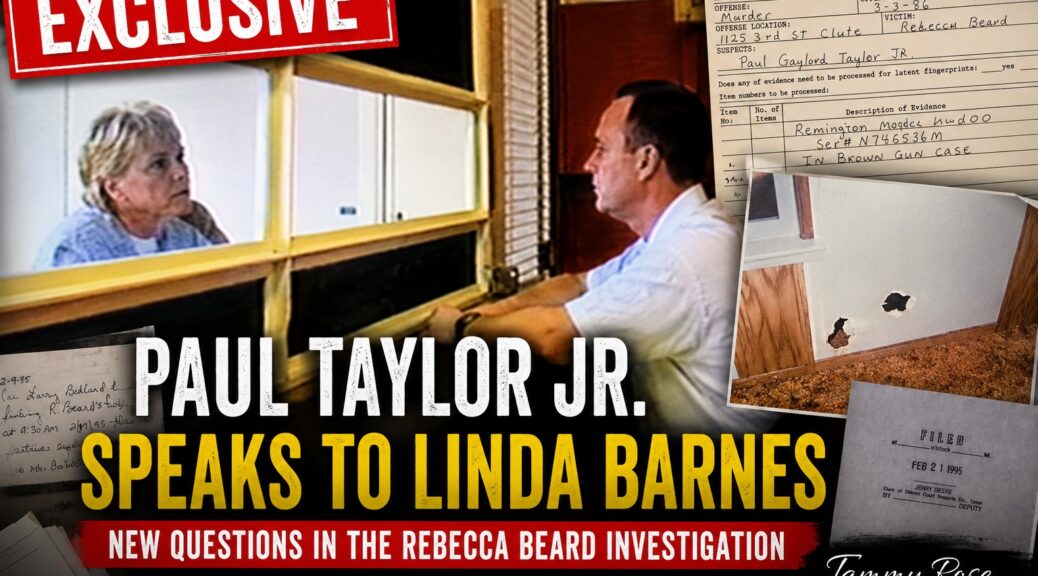
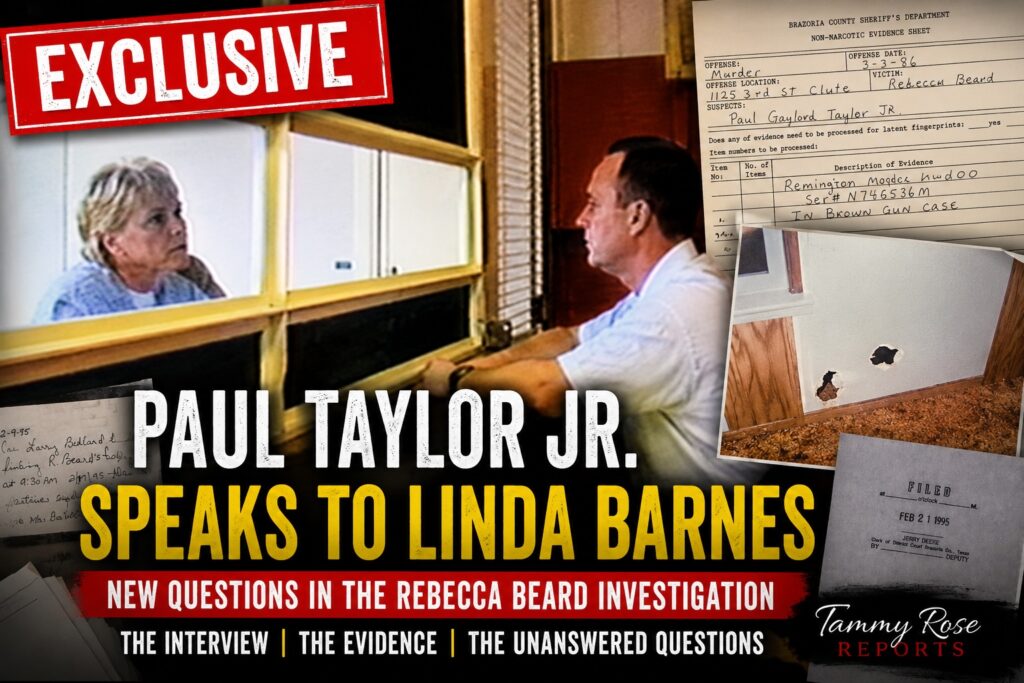
Now, Investigative Reporter Tammy Rose has reviewed court records, police photographs and a recorded interview between Taylor and Becky’s mother, Linda Barnes. Together, those records raise new questions about the evidence, the murder weapon and other details of the Rebecca Beard investigation.
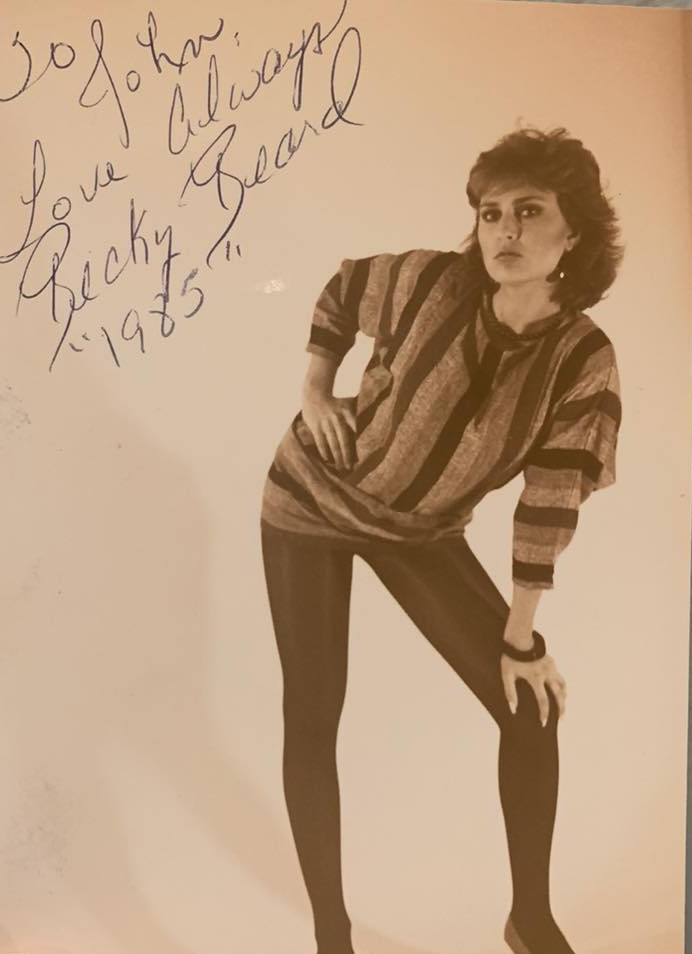
A signed 1985 promotional photograph of Rebecca “Becky” Beard addressed “To John.” The image is among personal items reviewed during Investigative Reporter Tammy Rose’s ongoing Rebecca Beard investigation.
Linda Barnes Refused to Let the Case Go Cold
Rebecca disappeared after leaving the Excalibur nightclub with Paul Taylor Jr. in March 1986.
For years, Becky’s mother, Linda Barnes, refused to give up. She searched for answers, gathered records and pushed investigators to keep working the case.
Her persistence paid off. A Brazoria County grand jury indicted Paul Taylor Jr. in 1994—eight years after Becky’s disappearance.
Taylor later pleaded guilty, but Becky’s body has never been officially recovered.
Taylor Describes the Night Becky Disappeared
In a recorded interview with Linda Barnes, Taylor claimed Becky voluntarily left the nightclub with him and went to his home.
He said they argued after he failed to obtain cocaine.
Taylor claimed he tried to scare Becky with a firearm before shooting her.
He told Barnes he wrapped Becky in orange sheets secured with duct tape before disposing of her body.
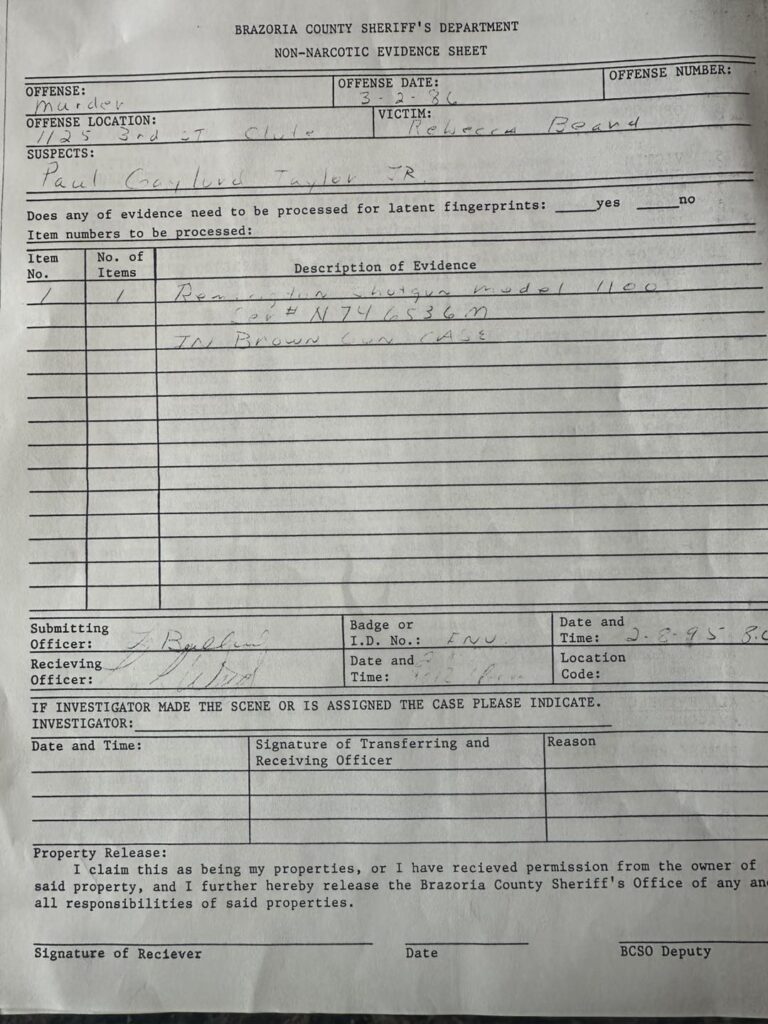
He also claimed he threw the weapon into a bayou. However, a Brazoria County Sheriff’s Office evidence sheet reviewed by Investigative Reporter Tammy Rose lists a Remington Model 1100 shotgun and a brown gun case as evidence in the case.
Because Taylor described the firearm only as “the weapon” during the interview, the apparent difference between his account and the evidence sheet raises additional questions.
A Shotgun Appears on the Evidence List
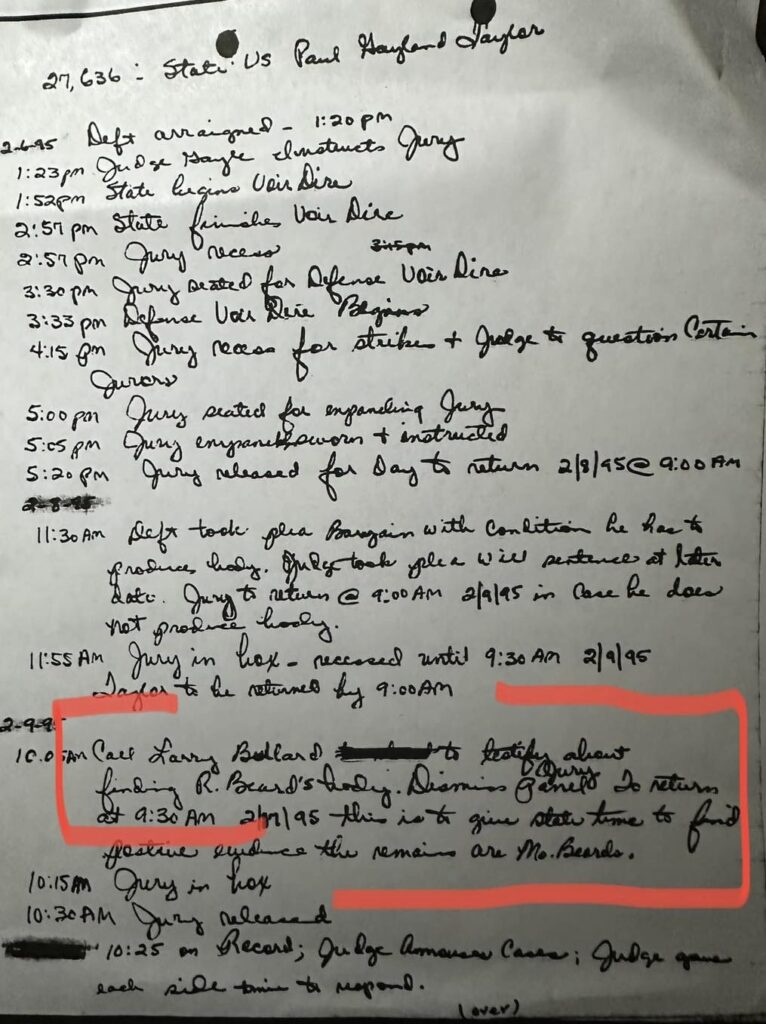
Brazoria County Sheriff’s Office evidence sheet listing a Remington Model 1100 shotgun in the Rebecca Beard investigation.Handwritten court notes from Paul Taylor Jr.’s prosecution appear to reference additional time to identify possible remains in the Rebecca Beard investigation.
One document reviewed by Investigative Reporter Tammy Rose is a Brazoria County Sheriff’s Office evidence sheet.
Among the listed evidence is a Remington Model 1100 shotgun and a brown gun case.
During his interview with Barnes, Taylor never identified the firearm by type. Instead, he repeatedly referred only to “the weapon.”
The records reviewed do not explain when the shotgun was recovered, where it was recovered or whether it was ultimately identified as the murder weapon.
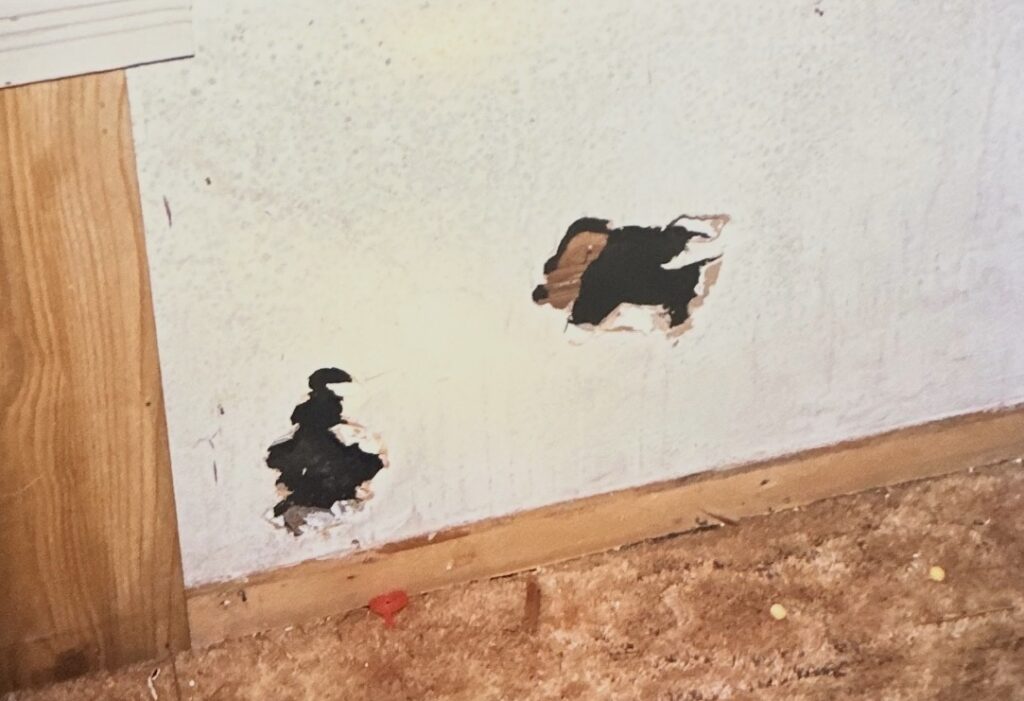
Police Photographs Show Two Holes in the Bedroom Wall
A police crime scene photograph documents two holes in a bedroom wall inside Paul Taylor Jr.’s home. During his recorded interview with Linda Barnes, Taylor described firing a single fatal shot. The records reviewed by Investigative Reporter Tammy Rose do not explain the presence of the second hole.
Crime scene photographs reviewed by Investigative Reporter Tammy Rose document two holes in a bedroom wall inside Taylor’s home.
During the interview, Taylor described firing a single fatal shot.
The available records reviewed do not explain whether investigators determined how the two holes were created or whether either hole was connected to the homicide.
The records also do not explain whether ballistic testing linked the recovered shotgun to the wall damage.
The Tow Truck Driver Taylor Could Not Remember
One of the most revealing exchanges involves a tow truck driver.
Barnes confronted Taylor with information that a tow truck operator reportedly pulled his vehicle from a ditch after Becky’s disappearance.
Taylor repeatedly responded that he did not remember the incident.
Barnes described details including a neighbor who reportedly witnessed the vehicle in the ditch and the driver’s recollection of the call.
The conversation highlights a pattern throughout the interview. Taylor remembered specific details such as orange sheets, duct tape and burying Becky, yet repeatedly claimed he could not remember other significant events from that same period.
Court Notes Reference Possible Remains
Handwritten court notes reviewed by Investigative Reporter Tammy Rose appear to show prosecutors requested additional time to determine whether recovered remains belonged to Rebecca Beard.
The handwriting is difficult to read in places, but the notes appear to reference delaying proceedings while investigators sought positive identification of possible remains.
The records reviewed do not explain what became of those reported remains or whether they were ultimately determined to belong to someone else.
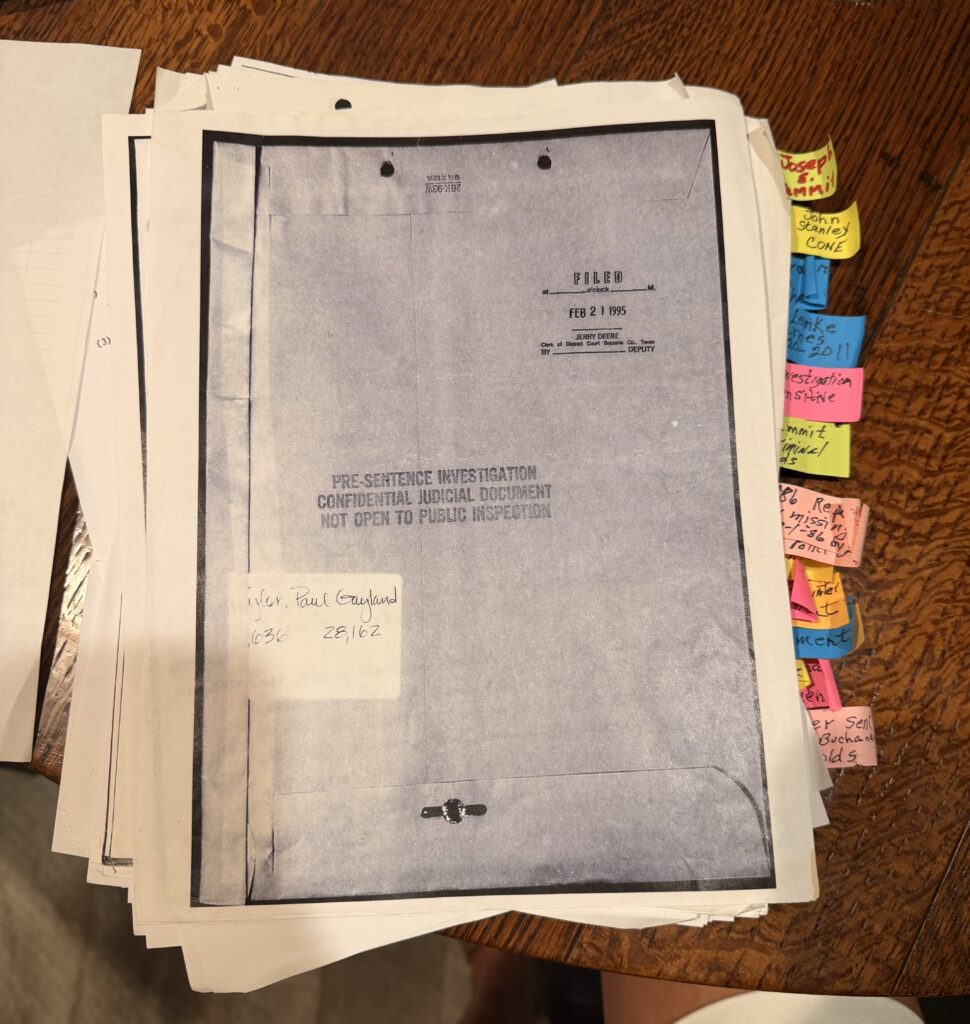
A Confidential Court Record
A confidential pre-sentence investigation file prepared before Paul Taylor Jr.‘s sentencing. The court record was reviewed by Investigative Reporter Tammy Rose as part of the ongoing Rebecca Beard investigation and provides additional context to the case decades after Becky’s disappearance.
Also among the records is a pre-sentence investigation stamped:
“Confidential Judicial Document — Not Open to Public Inspection.”
The document was prepared before Taylor’s sentencing and demonstrates that confidential records existed during the criminal proceedings.
Questions That Still Remain
The records reviewed by Investigative Reporter Tammy Rose answer some questions but leave many others unresolved.
Among them:
When was the Remington Model 1100 shotgun recovered? Was it ever identified as the murder weapon? Were the two holes in the bedroom wall forensically examined? What became of the possible remains referenced in court notes? Why do some details in Taylor’s interview differ from other investigative records?
Nearly four decades after Rebecca Beard disappeared, Linda Barnes’ determination continues to inspire efforts to better understand what happened to her daughter.
Editor’s Note
This report is based on court records, law enforcement documents, police photographs and a recorded interview reviewed by Investigative Reporter Tammy Rose. Where records are incomplete or unclear, this article presents unanswered questions rather than conclusions.
If you’re interested in cold cases, unsolved mysteries, and investigative reporting, these books provide insight into how complex cases are investigated and solved
I’ll Be Gone in the Dark by Michelle McNamara A bestselling investigation into the Golden State Killer case.
Disclosure: As an Amazon Associate, Chopper Rose earns from qualifying purchases. If you purchase through the links below, we may earn a small commission at no additional cost to you. These commissions help support independent investigative journalism and cold case reporting.
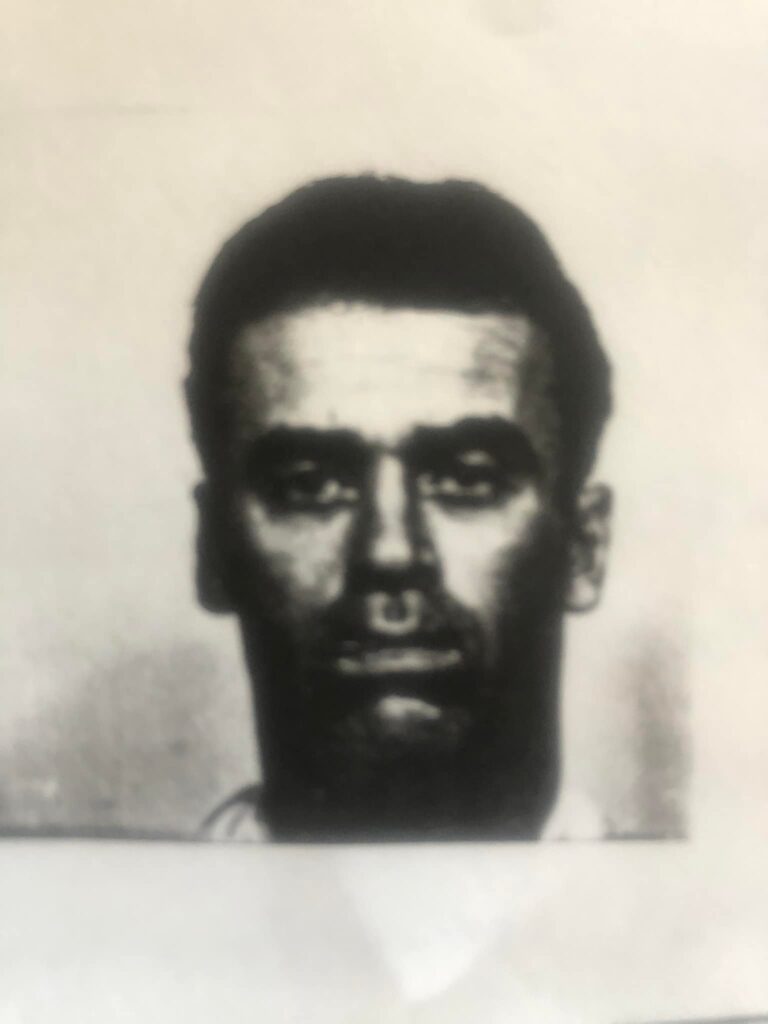
Paul Taylor Jr. during the investigation into the 1986 disappearance and death of Rebecca Beard.
For nearly 40 years, the Rebecca Beard case has been filled with unanswered questions.
As I’ve investigated the case, I’ve interviewed Rebecca’s daughter, Brittany Pipkin. I’ve also interviewed family members, reviewed court records, obtained police reports, and spoken with others connected to the investigation. Throughout the process, I kept one goal in mind. I wanted to hear directly from Paul Taylor Jr.
Taylor pleaded guilty in connection with Rebecca Beard’s death. However, no trial ever took place. Investigators have never recovered Rebecca’s remains. Many questions still remain.
I believed it was important to give him the opportunity to tell his side of the story.
My First Attempt
My first step was sending Paul Taylor Jr. a message through the Texas Department of Criminal Justice’s eMessaging system at the Alfred D. Hughes Unit, where he is currently incarcerated.
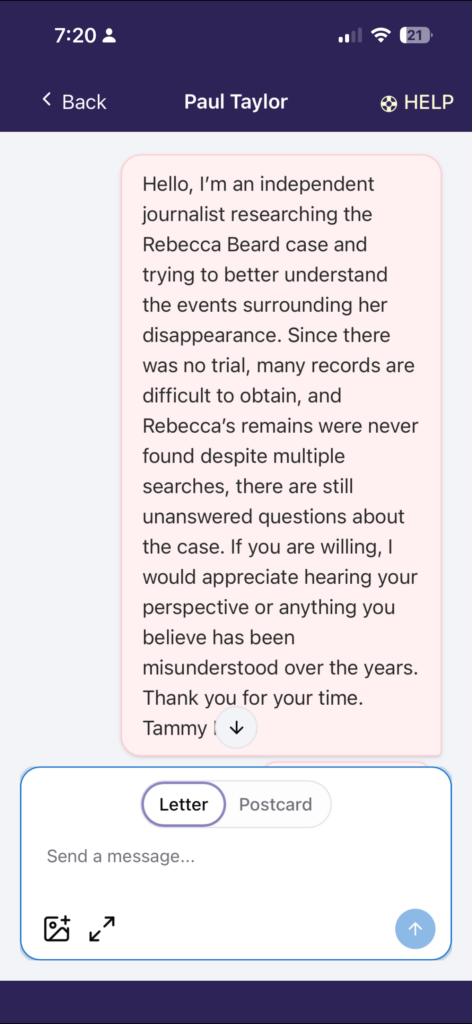
In that message, I introduced myself as an independent investigative journalist researching the Rebecca Beard case. I explained that I wanted to hear his perspective and asked whether he would be willing to discuss anything he believed had been misunderstood over the years.
One of several attempts I made to contact Paul Taylor Jr. while seeking an interview about the Rebecca Beard case. Communication proved difficult during the reporting process.
Hitting Roadblocks
Reaching Paul wasn’t as simple as sending one message.
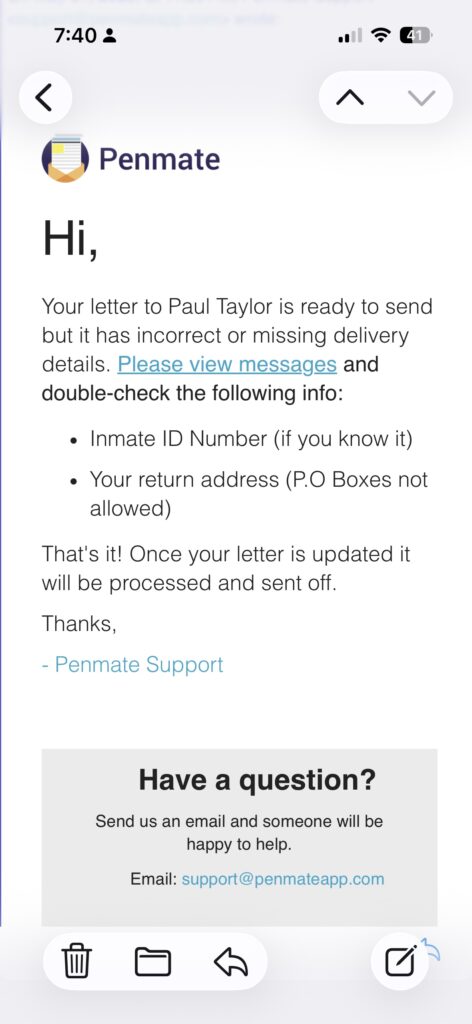
I also attempted to contact him by mail, but my correspondence repeatedly failed to reach him. Despite multiple attempts, I wasn’t able to establish communication.
Like many investigations, this became another reminder that reporting often involves persistence, patience, and countless dead ends before making progress.
One of several challenges I encountered while trying to contact Paul Taylor Jr. My initial letter could not be processed because additional delivery information was required.
A Breakthrough
After months of trying, a trusted friend who has asked to remain anonymous was able to establish communication with Paul Taylor Jr. and let him know I was hoping to interview him.
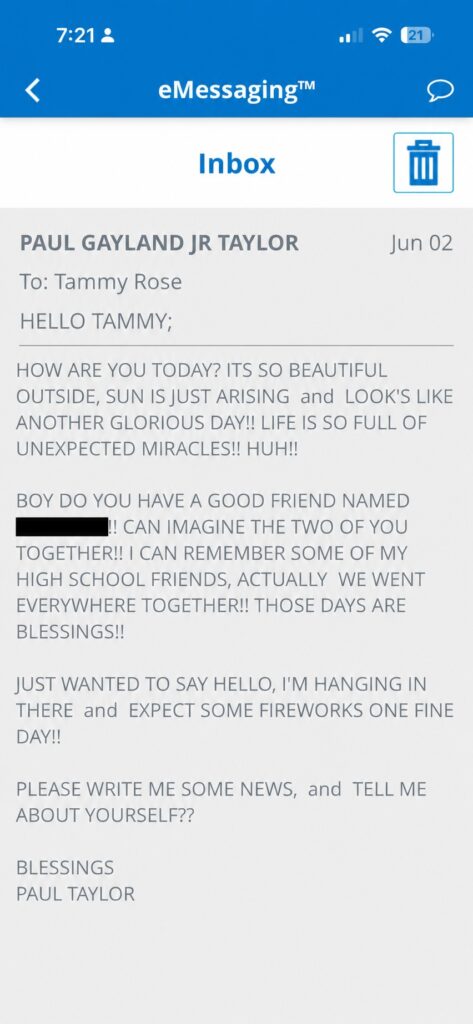
That effort led to something I had been working toward for months—my first direct response from Paul Taylor Jr.
In his message, Paul greeted me warmly, shared a few thoughts about life, and encouraged me to continue writing to him.
Although he did not discuss the Rebecca Beard case in that first message, it marked the beginning of direct communication after months of unsuccessful attempts.
Continuing the Conversation
I’m continuing to work toward an exclusive interview with Paul Taylor Jr.
Through subsequent communication facilitated by my anonymous source, Paul indicated that he had stopped speaking publicly for a period because of pressure from detectives. That statement reflects Paul’s account and has not been independently verified.
Whether an interview ultimately takes place remains to be seen, but I believe every person connected to this decades-old case deserves the opportunity to be heard.
For me, investigative journalism isn’t about reaching conclusions before asking questions. It’s about documenting the facts, giving people the opportunity to respond, and continuing to pursue answers—even when the process takes months.
If I am able to conduct an interview with Paul Taylor Jr., I’ll share it here on http://ChopperRose.com and on my YouTube channel.
What Would You Ask?
If an interview with Paul Taylor Jr. takes place, what question would you want answered?
Readers who follow the Rebecca Beard investigation may also be interested in these books on criminal investigations, missing persons cases, and unsolved mysteries:
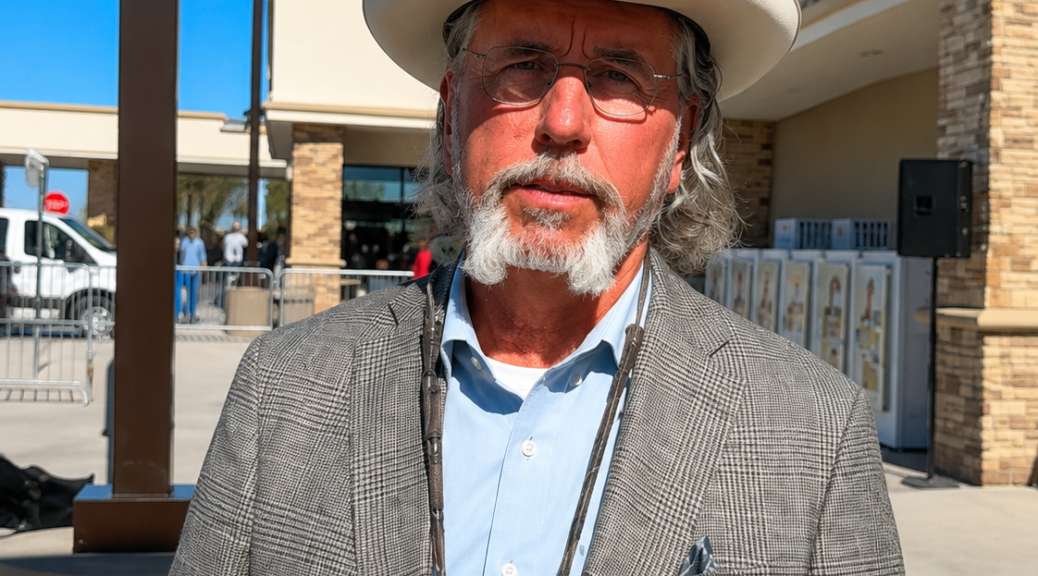
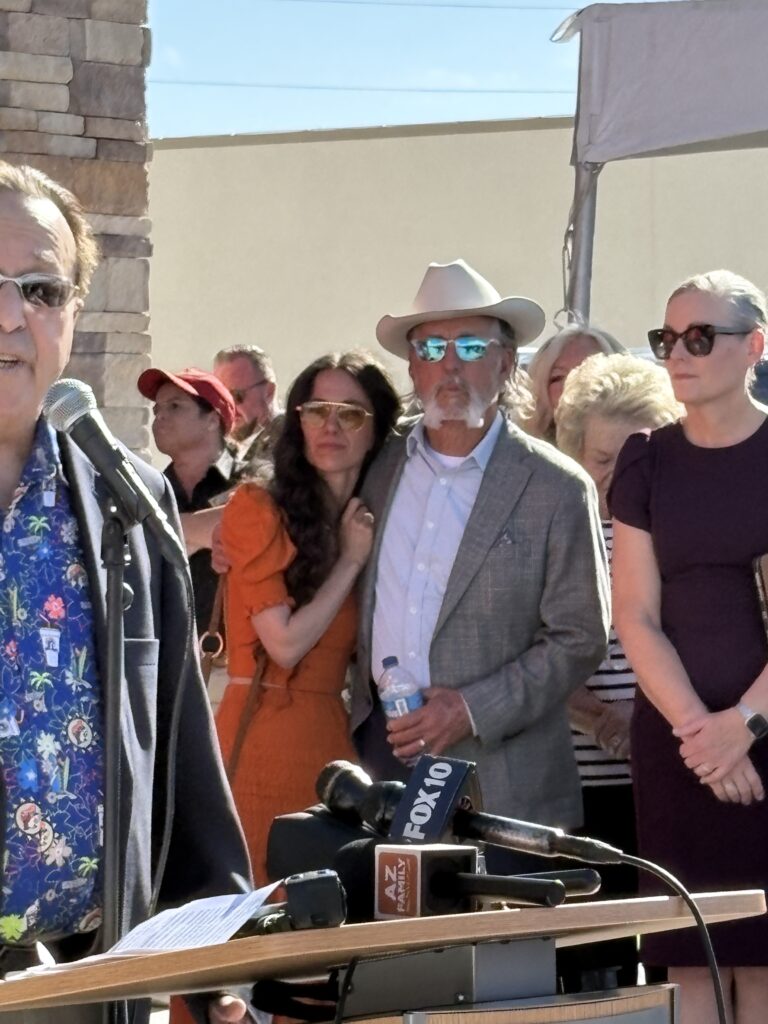
Arch Aplin and Daughter at Arizona Buc-ee’s Opening
While thousands of people lined up for the grand opening of Arizona’s first Buc-ee’s, I traveled across the country for a different reason.
For months, Rebecca Beard’s family has been searching for answers in a case that remains one of the most talked-about unsolved mysteries along the Texas Gulf Coast. As part of my ongoing investigation, I wanted to ask Buc-ee’s founder Arch Aplin about his connection to Rebecca Beard and references to him in historical police records.
The challenge? Arch Aplin rarely gives interviews outside of Buc-ee’s business matters, and he has never publicly addressed Rebecca Beard on camera.
So I went to Arizona.
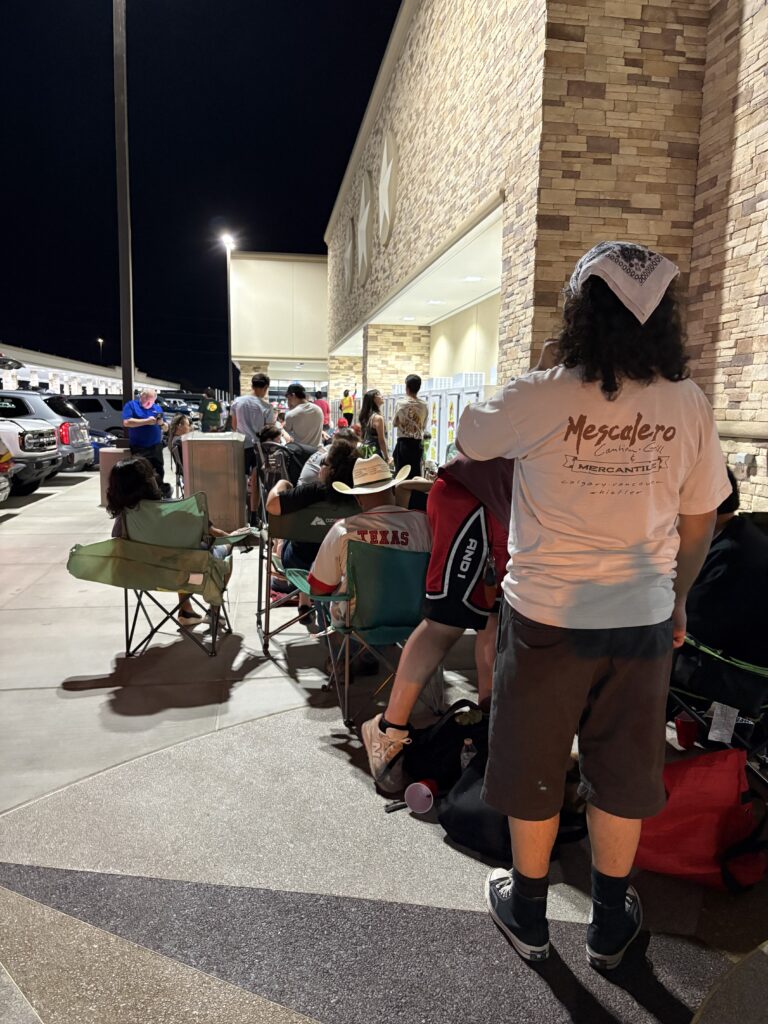
A Crowd Waiting For Buc-ee’s
Some Buc-ee’s fans arrived hours before opening day, setting up chairs and waiting overnight to be among the first customers inside Arizona’s first Buc-ee’s.
Long before the doors opened, thousands of fans were already lined up outside the massive new Buc-ee’s location. Some had traveled hours for the grand opening.
Most reporters were focused on the store, the crowds, and the ribbon-cutting ceremony.
I was focused on a question that dates back nearly four decades.
Finally Getting The Chance To Ask
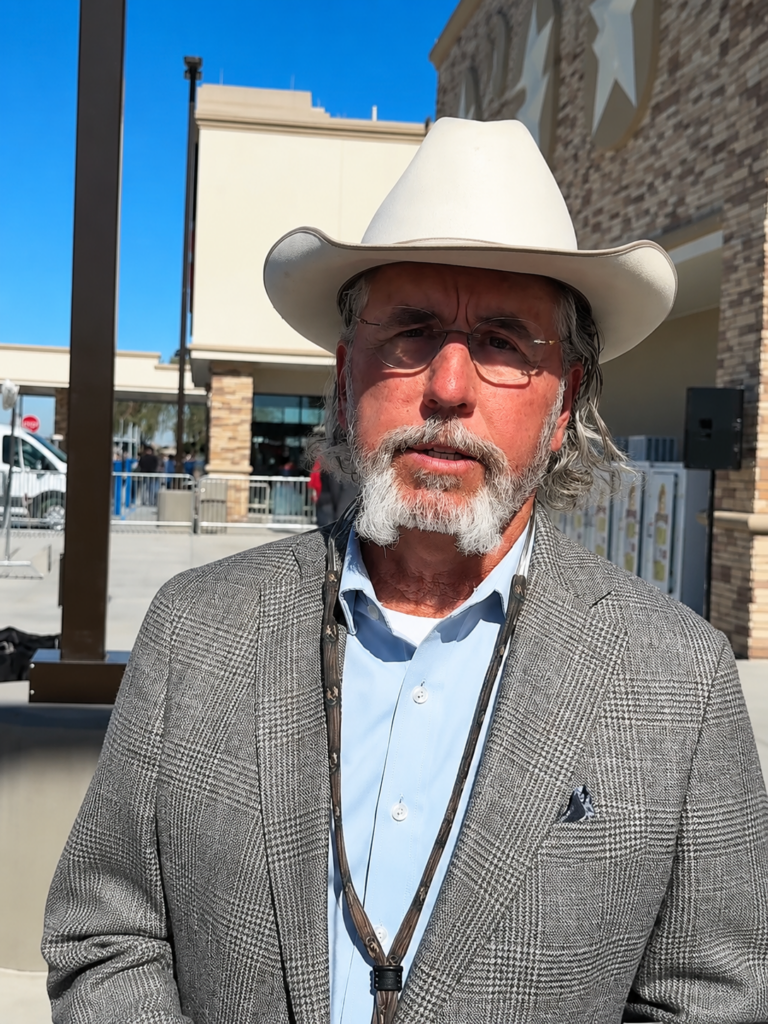
Buc-ee’s founder Arch Aplin speaks with Investigative Reporter Tammy Rose during the Arizona grand opening. During the exchange, Aplin briefly addressed a question about Rebecca Beard, calling the case “a sad thing” and saying his heart goes out to the family.
After waiting through the event and multiple appearances, I finally had the opportunity to ask Arch Aplin about Rebecca Beard.
At first, he appeared unable to hear my question over the noise and activity surrounding the grand opening. After repeating the question, he stopped and responded.
His answer was brief.
“It’s just a sad thing. I don’t know what to even say. My heart goes out to them.”
The comment marks one of the few known public responses from Aplin regarding Rebecca Beard and her family.
Why The Question Matters
Rebecca Beard disappeared in 1986. Decades later, questions continue to surround the circumstances of her death and what may have happened to her remains.
Members of Beard’s family have publicly stated they still want answers. In recent interviews with me, family members raised questions about individuals named in historical police records and expressed a desire to hear from people connected to the case.
That is why I asked the question.
The Response Is Now Public
Whether viewers believe the response answered anything or not, the moment is now part of the public record.
As a journalist, my job is not to decide what people should think. My job is to ask questions and let viewers hear the answers for themselves.
Watch the full video interview below and decide for yourself.
Readers who follow the Rebecca Beard investigation may also be interested in these books on criminal investigations, missing persons cases, and unsolved mysteries:
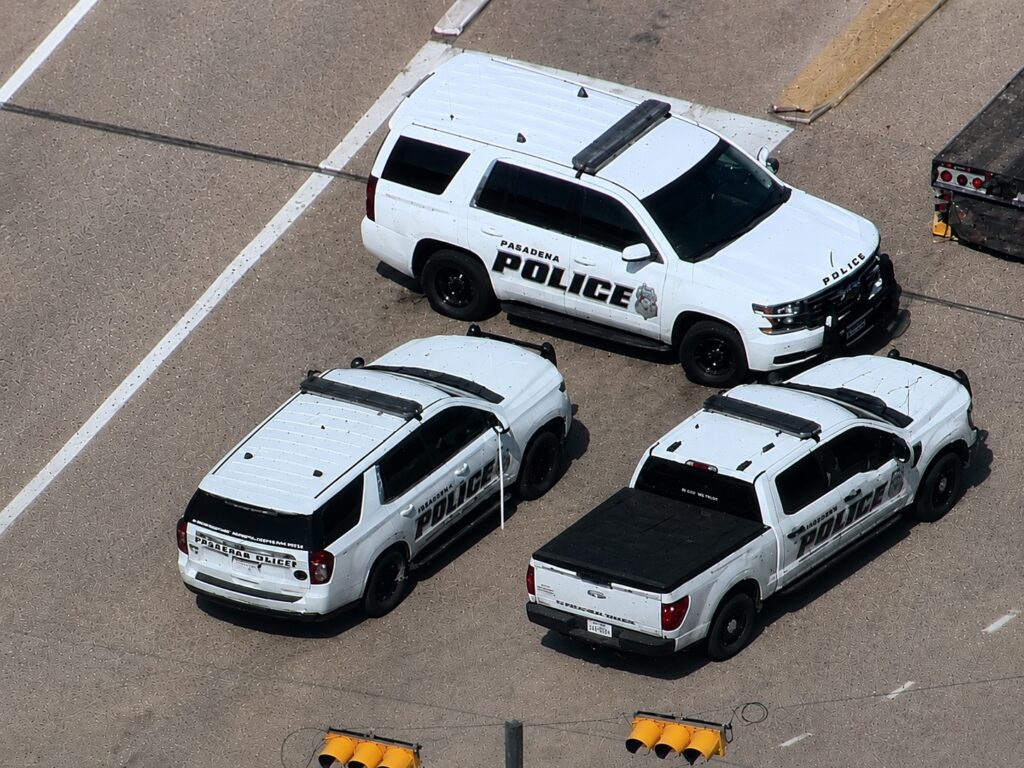
The suspects’ getaway car sits wedged beneath a semi-trailer after a Pasadena pawn shop robbery ended in a dramatic crash involving two 18-wheelers.
Robbery Suspects’ Getaway Car Ends Up Under 18-Wheeler
What started as an armed robbery at a Pasadena pawn shop ended with a mangled getaway car trapped beneath an 18-wheeler along Houston’s East Loop.
According to the Pasadena Police Department, officers were called around 9 a.m. Thursday to a robbery at a Cash America Pawn store in the 500 block of Pasadena Boulevard. Investigators say two armed suspects entered the business, robbed the store, and fled in a white Nissan Altima.
But their escape didn’t last long.
Police Spot Suspects Near East Loop
Pasadena officers quickly obtained a description of the vehicle and began searching the area. A short time later, an officer located the Nissan Altima near Market Street and the East Loop.
Police said the suspects attempted to evade officers before the situation spiraled out of control.
Getaway Car Slams Into Two 18-Wheelers
Investigators say the Altima first collided with an 18-wheeler driven by Alex Flores on the Market Street bridge.
The impact sent the vehicle spinning out of control. The car then traveled down an embankment toward the East Loop, where it crashed into a second 18-wheeler and became wedged underneath the trailer.
Photos from the scene show the white sedan crushed beneath the massive truck.
Driver Critically Injured
Emergency crews rushed to the crash scene and worked to free the driver from the wreckage.
Police said the suspect suffered critical injuries and was transported to a nearby hospital.
A second suspect fled the scene on foot but was later captured and taken into custody.
Investigation Continues
The Pasadena Police Department continues to investigate both the armed robbery and the crash.
Authorities have not yet released the identities of the suspects.
As investigators work to piece together exactly what happened, the dramatic crash serves as a reminder of how quickly a getaway attempt can turn into a life-threatening disaster.
What Do You Think?
Should suspects who flee from police face enhanced penalties when innocent motorists are put at risk?
Leave your thoughts in the comments.
Related: Read more Houston-area breaking news and police investigations on http://ChopperRose.com
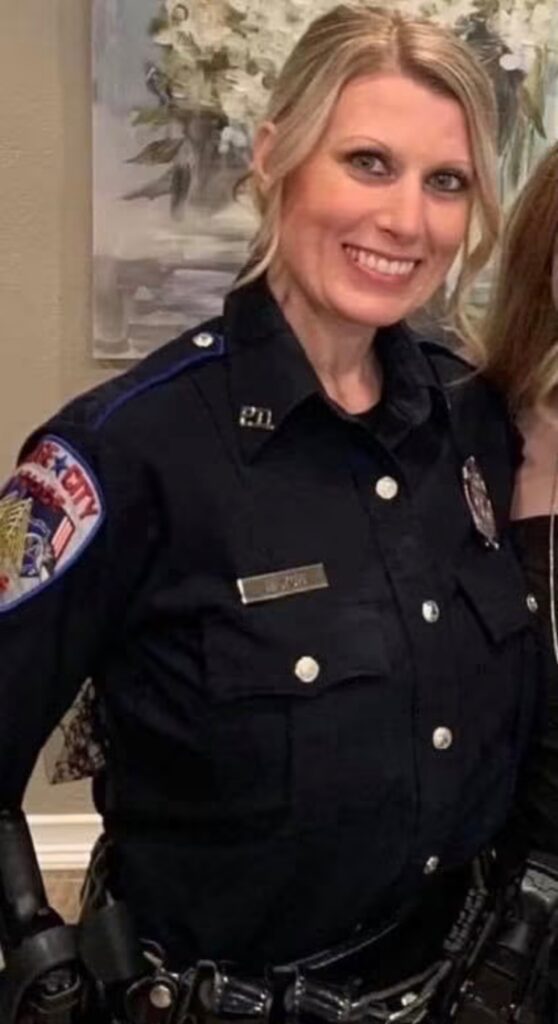
Rebecca Beard’s daughter, Brittany Pipkin, became a police officer and is now using those investigative skills in her search for answers about her mother’s 1986 murder. Photo courtesy of Brittany Pipkin.
Why Brittany Pipkin Questions the Original Investigation
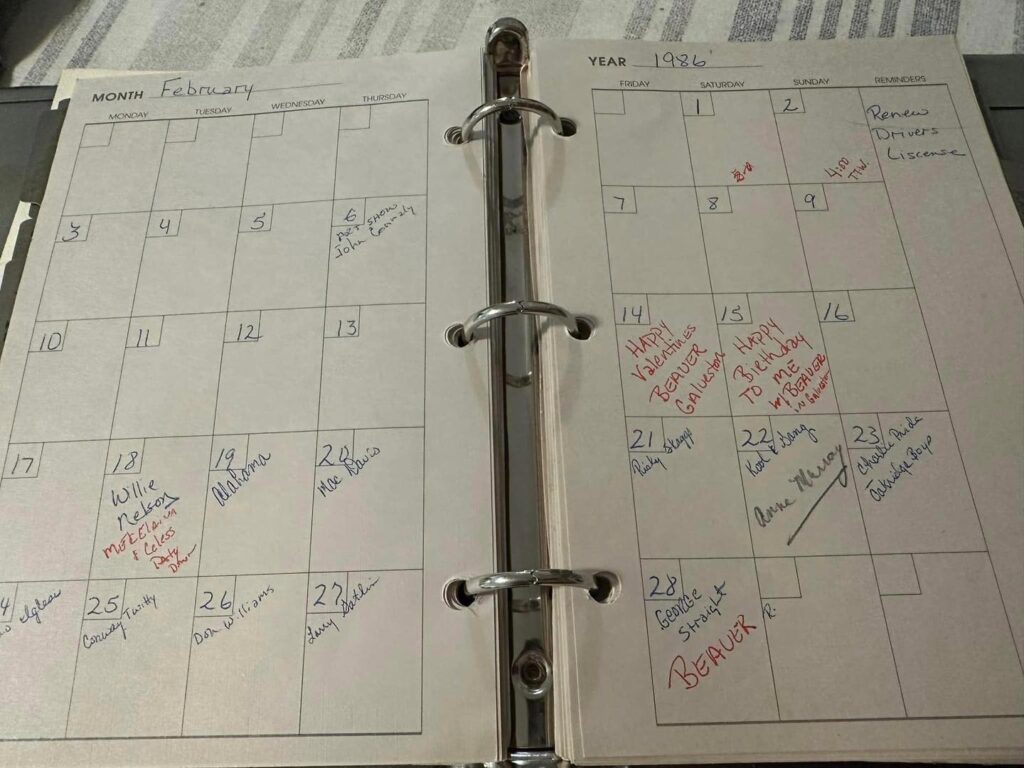
Becky Beard’s personal planner from 1986 remains an important piece of family history. Her daughter, Brittany Pipkin, has carefully reviewed the planner and other records while searching for answers about her mother’s disappearance and presumed murder.
BEAUMONT, Texas — More than four decades after Rebecca Beard disappeared and was later presumed murdered, her family says they are still searching for answers.
After reviewing decades of police reports, Rebecca’s daughter, Brittany Pipkin, believes there are questions that remain unanswered about several people whose names appear throughout the investigation.
Among them are businessman Arch Aplin and John Cohn.
Watch the Full Video Report
Investigative Reporter Tammy Rose sat down with Brittany Pipkin to discuss why she believes additional questions should be asked about individuals named in the original investigation.
Questions About Arch Aplin
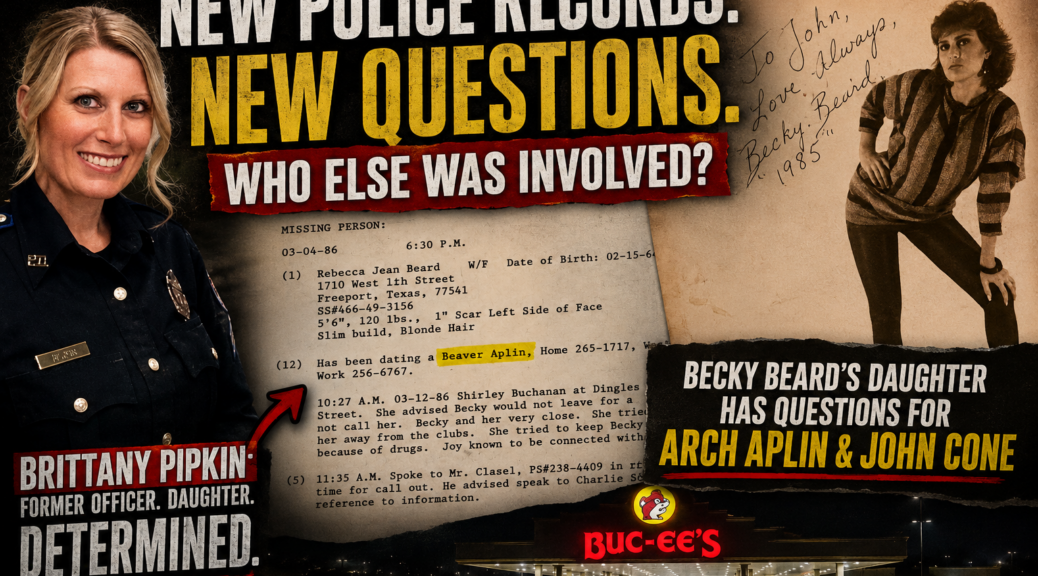
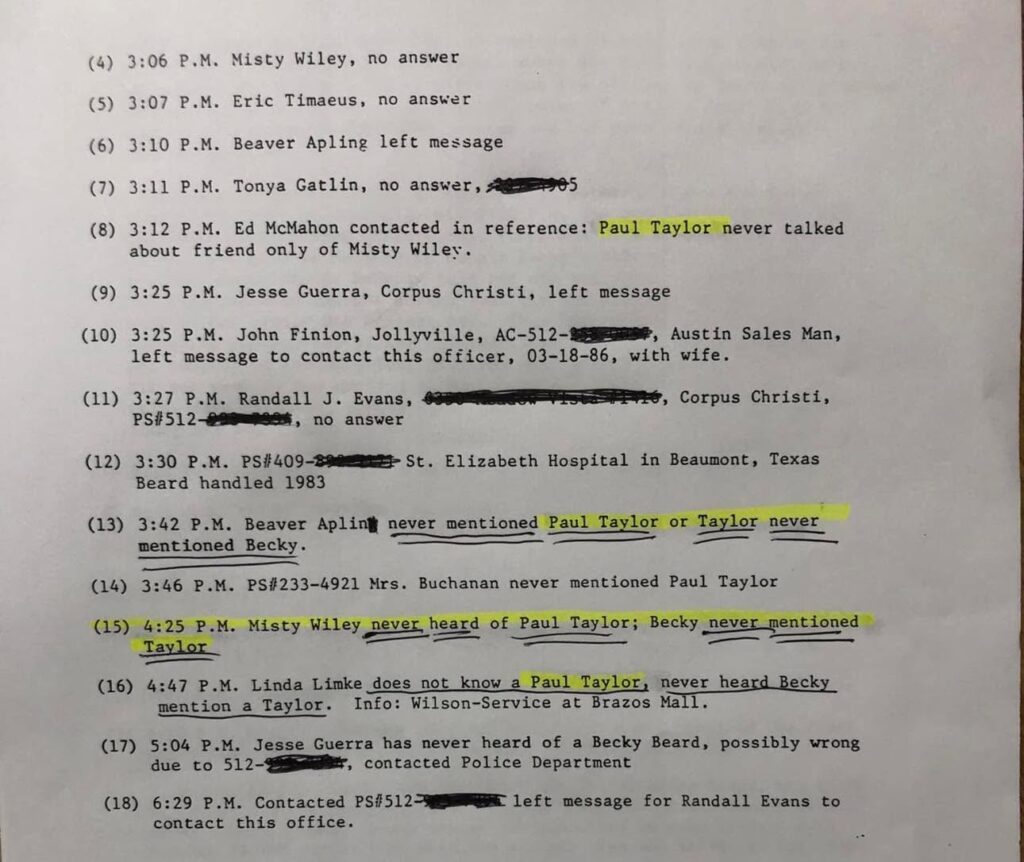
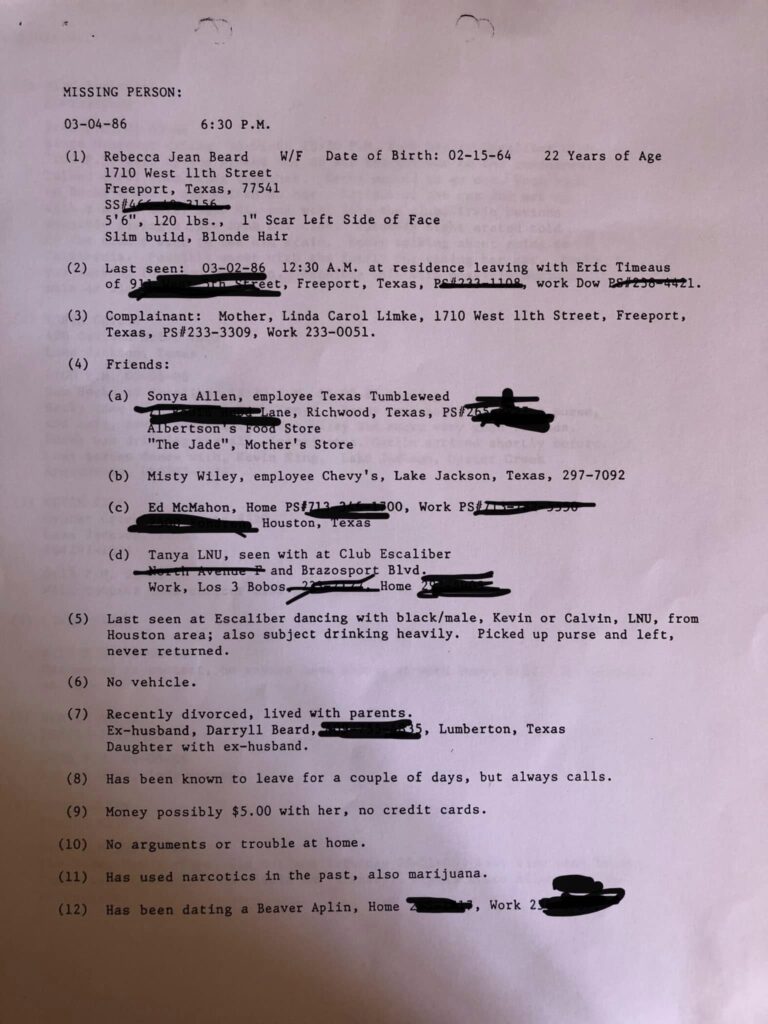
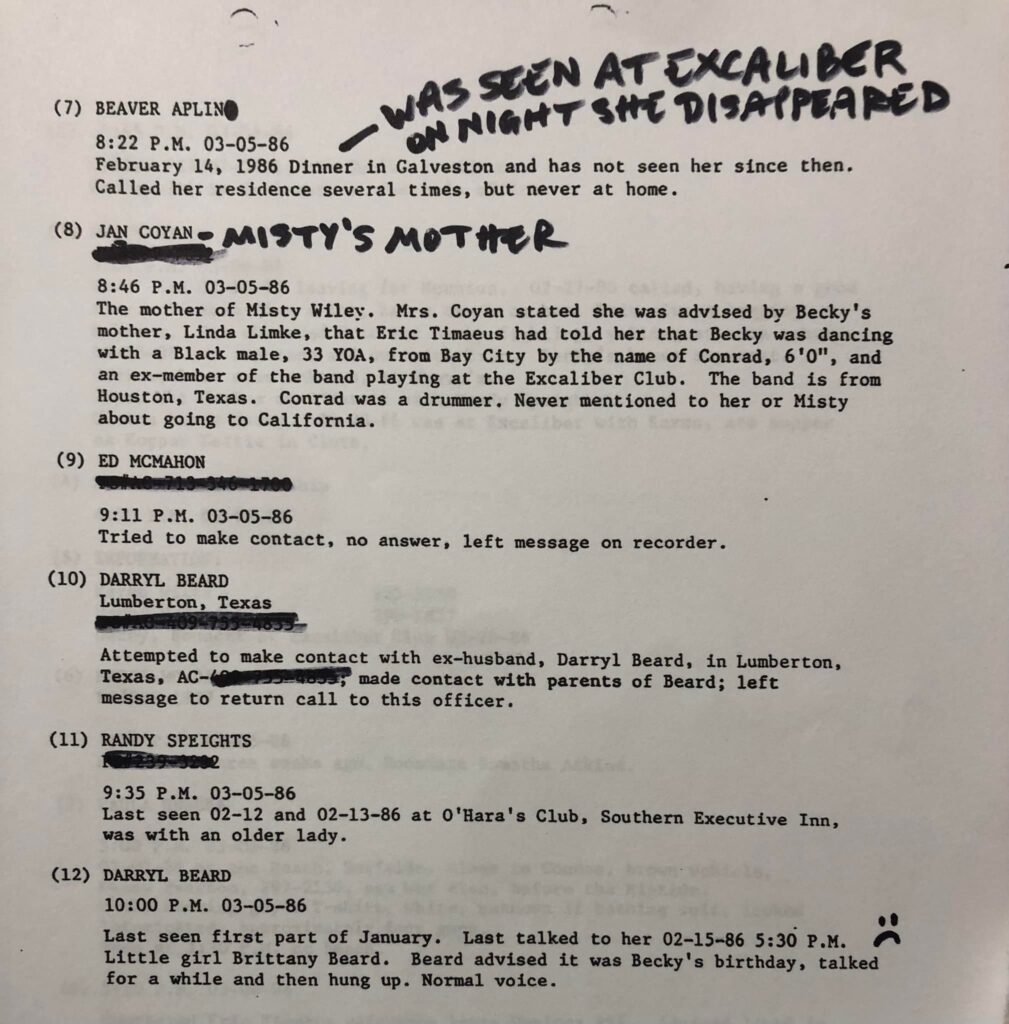
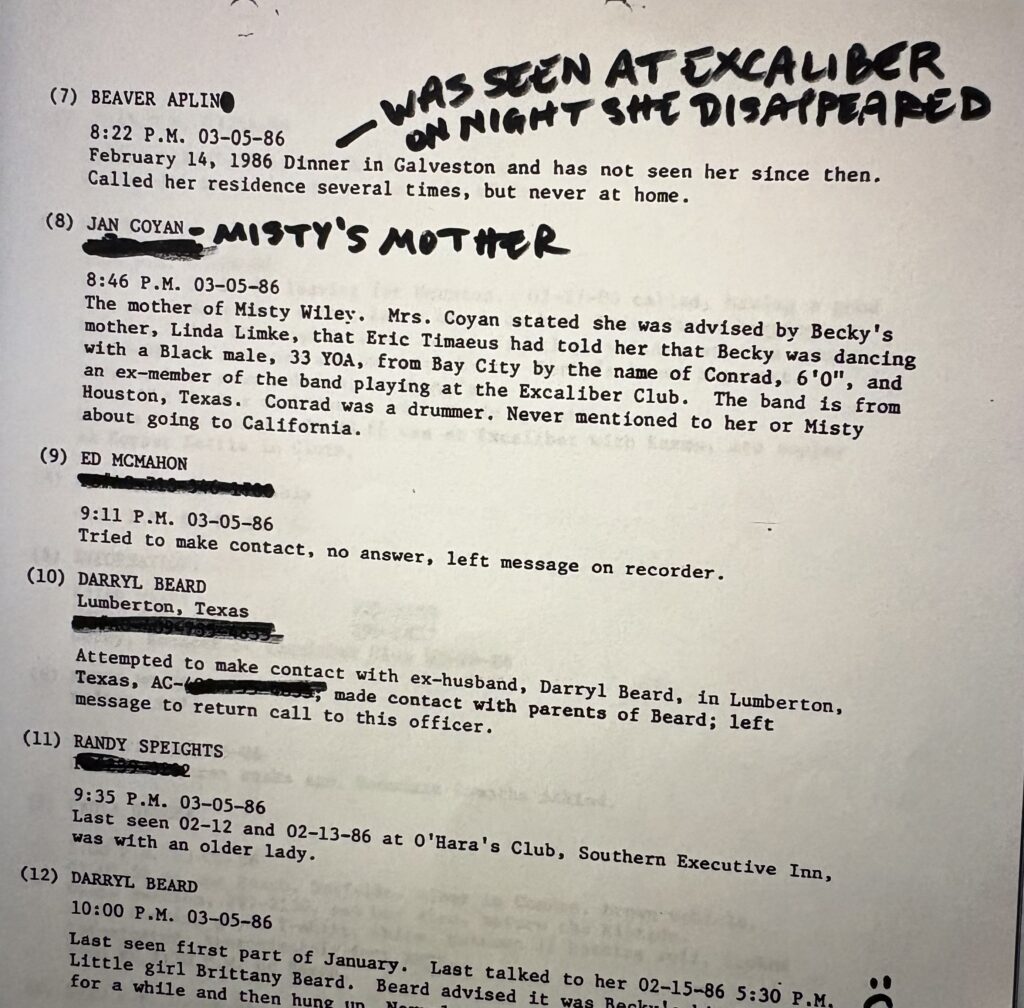
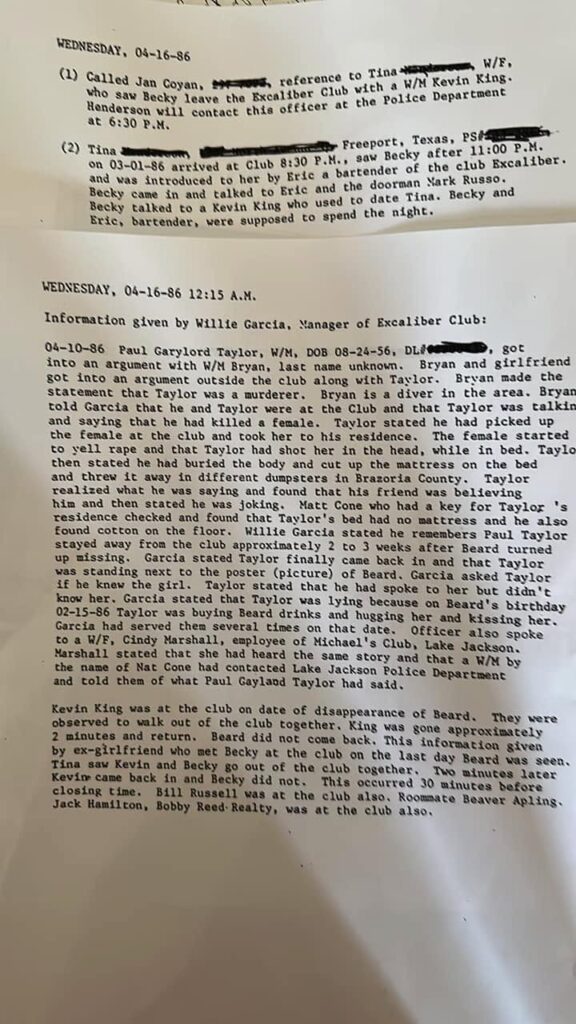
Redacted police report pages reviewed by Rebecca Beard’s family, with highlighted sections referencing individuals connected to the investigation.
According to police reports reviewed by the family, Arch Aplin’s name appears numerous times throughout the investigation.
Pipkin says she first became aware of Aplin while reviewing records connected to her mother’s case.
“When I was younger, I was a huge fan because I saw his name in all the police reports,” Pipkin said.
According to Pipkin, reports indicate Aplin had contact with Rebecca Beard before her disappearance and later communicated frequently with investigators.
Police records also reference reward money being offered during the investigation.
“He was contacting detectives almost daily,” Pipkin said. “He’s offering rewards.”
Despite that involvement, Pipkin says she has never had an opportunity to speak with Aplin directly.
“I’ve sent him a few emails,” she said. “He’s never reached out to talk to us.”
Pipkin says she would like the opportunity to ask questions about Rebecca’s final days and what information he may remember from that time period.
“I would love to ask him if he knows more than what was told to investigators,” she said.
Conflicting Accounts Raise Questions
Brittany Pipkin points to what she believes are inconsistencies within the case records. One document appears to list Arch Aplin as the last person known to have seen Becky Beard on February 14, 1986, while another references a witness statement involving Paul Taylor at the Excalibur Club around the time of her disappearance. Pipkin says the records raise questions she believes deserve further examination.
Questions Surrounding John Cohn
A police report indicates John Cone requested to speak with his attorney before providing a statement to investigators.A signed photograph of Rebecca Beard provided by her family. Family members believe the inscription may be connected to John Cohn.
Pipkin also wants to speak with John Cohn, whose name appears in investigative records.
According to police reports, Cohn reportedly contacted then-Brazoria County Sheriff E.J. “Joe” King shortly after Rebecca’s murder.
The reports indicate Cohn allegedly told authorities that his friend and co-owner of a home on Third Street in Clute was responsible for Rebecca’s death.
That individual, Paul Taylor Jr., would not be charged until approximately nine years later.
Taylor eventually pleaded guilty in connection with the case.
For Pipkin, the timeline raises questions.
“What did people know, and when did they know it?” she asked.
She believes additional information may still exist regarding what occurred in the days immediately following Rebecca’s disappearance.
“I think he knows a lot more than what has been stated,” Pipkin said.
The Family Says This Is About Finding The Truth
Pipkin emphasizes that the family’s goal is not to publicly accuse anyone.
Instead, she says they are seeking answers and hoping investigators continue pursuing leads that could help locate Rebecca’s remains.
“We’re not doing this to accuse anybody,” Pipkin said.
“We just want the truth. We want to bring her home.”
More than 40 years after Rebecca Beard vanished, the family says that goal has never changed.
They want a place to visit.
A place to leave flowers.
And finally, a place to lay Rebecca Beard to rest.
The individuals named in this story have not been charged with Rebecca Beard’s murder. Statements referenced in this article are drawn from interviews, court records and police reports reviewed by the family. Investigators have not publicly announced additional suspects in the case.
If you’re interested in cold cases, unsolved mysteries, and investigative reporting, these books provide insight into how complex cases are investigated and solved:
📖 I’ll Be Gone in the Dark by Michelle McNamara A bestselling investigation into the Golden State Killer case.
Disclosure: As an Amazon Associate, Chopper Rose earns from qualifying purchases. If you purchase through the links below, we may earn a small commission at no additional cost to you. These commissions help support independent investigative journalism and cold case reporting.