Tag Archives: Wisconsin

When Two Worlds Collide During WWII: My New Book Is Now Available

By Investigative Reporter Tammy Rose

Some stories refuse to let you go.

This one has followed me for more than two decades—from Wisconsin to Germany, through old photographs, family memories, forgotten records and a documentary that took me back to my family’s home in Berlitt.

I’ve walked where they walked and stood inside the home where part of this story began. For years, I’ve tried to understand what happened to the people in those fading photographs. Their lives, separated by an ocean, would eventually become connected by war.

Now, their story is finally a book.

When Two Worlds Collide During WWII is finally here.
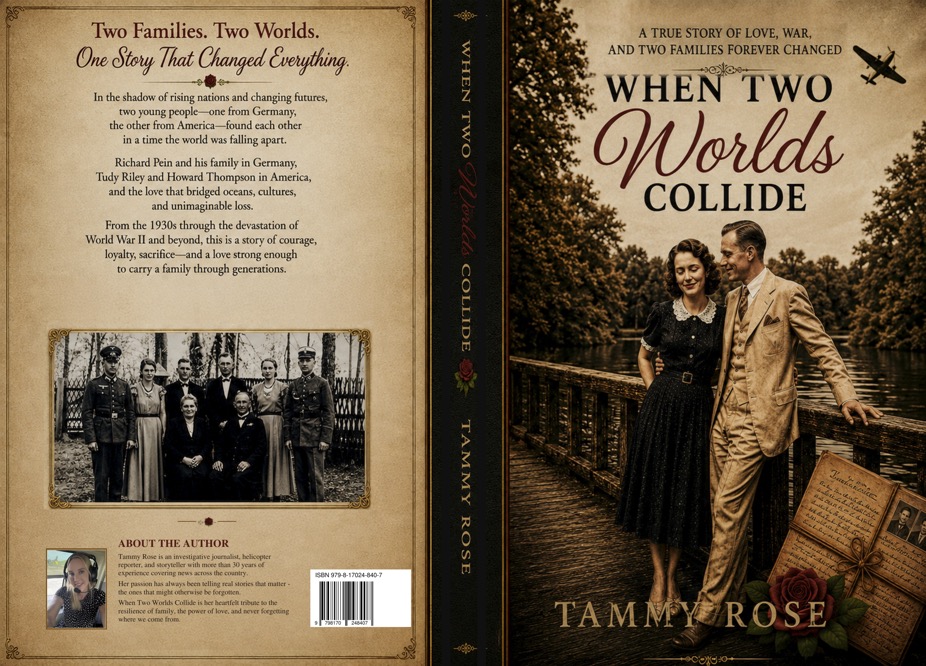
This is more than a World War II story to me. It is the story of two families—one in Germany and one in Wisconsin—whose lives unfolded thousands of miles apart as war changed everything around them.

And somehow, their worlds would eventually collide.

A World War II story inspired by my own family history

Young Octavia “Tudy” Riley, who was born without her left arm
Octavia “Tudy” Riley as a young child. Born without her left arm, she would grow up refusing to let it define what she could accomplish.

When Two Worlds Collide During WWII blends documented family history, real people and real events with dramatized scenes that bring their experiences to life.

The story begins in the 1930s and follows two families on opposite sides of the Atlantic.

In Wisconsin, a young woman born without her left arm refuses to allow the expectations of the era to determine the life she will lead.

In Germany, the Pein family watches the world around them transform under Hitler, war and eventually the Soviet advance.

There are marriages and separations, soldiers and civilians, impossible choices, lost homes and a family struggling to survive the aftermath of a war that changed Europe forever.

At its heart, though, this is a story about family, survival and the extraordinary chain of events that ultimately connected two worlds.

The real people behind the story
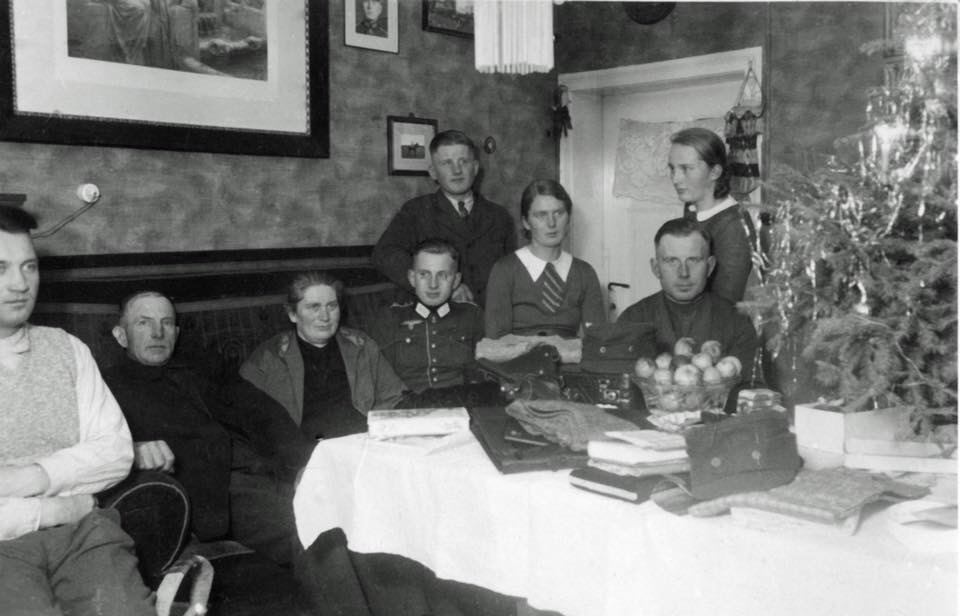
Pein family gathered for their last Christmas together in their Berlitt home in Germany
The Pein family gathered for their last Christmas together in their Berlitt home before war, loss and displacement changed their lives forever.

One of the most meaningful parts of writing this book was being able to use real family photographs.

These aren’t actors.

They aren’t AI recreations.

They are the actual people whose lives inspired the story.

Some of their experiences survived through documents and photographs. Others survived because family members kept telling the stories.

I spent countless hours trying to piece those fragments together.

There were moments when one photograph, one record or one remembered detail suddenly connected pieces of the story that had been separated for decades.

That became one of my favorite parts of this journey.

From Germany to Wisconsin
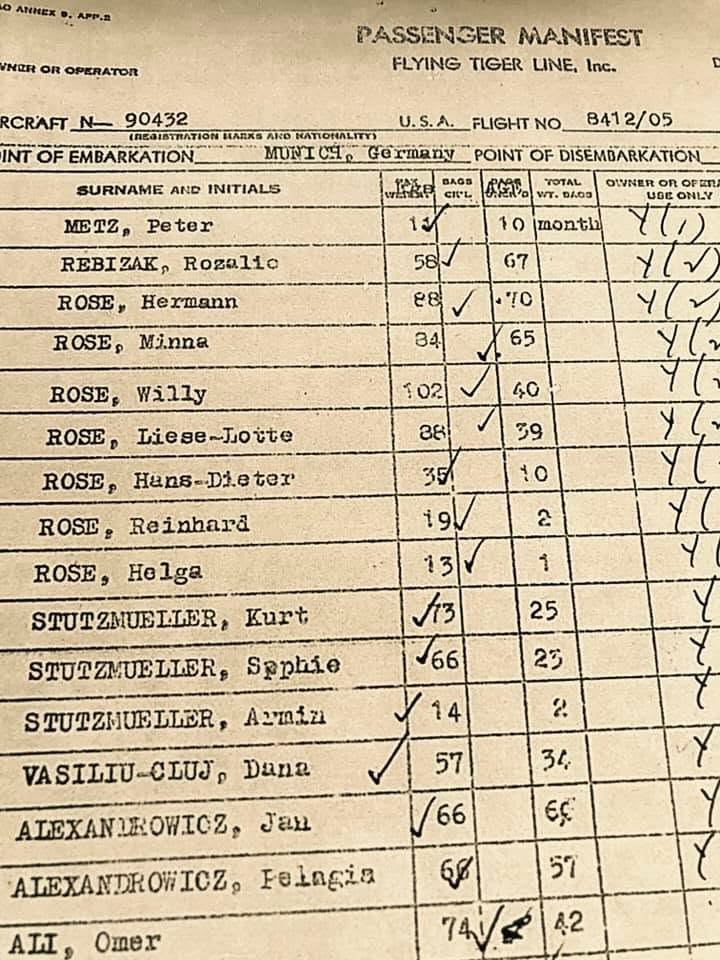
Flying Tiger Line passenger manifest showing the Rose family’s 1957 immigration to the United States
Flying Tiger Line passenger manifest documenting the Rose family’s journey to the United States in 1957.

The book travels from a small German village to wartime Europe, postwar refugee life and eventually Wisconsin.

The war didn’t simply end for families when the fighting stopped.

Homes were lost. Borders changed. Families were separated. People who had survived the war still had to figure out how to survive the peace that followed it.

For one branch of my family, that journey eventually led across the Atlantic and to a completely new life in America.

Knowing where that journey ultimately led made writing its beginning even more powerful for me.

Why I wrote When Two Worlds Collide During WWII
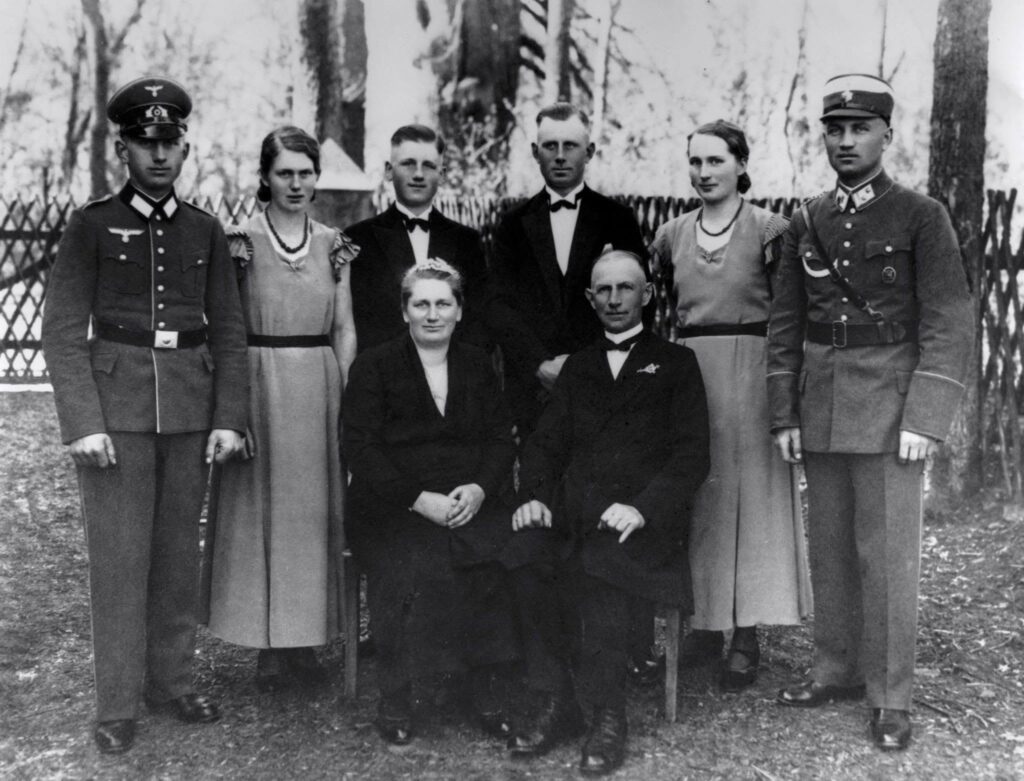
Richard and Helene Pein with their children in Berlitt, Germany, before World War II
Richard and Helene Pein with their children at the family home in Berlitt, Germany, before World War II changed their lives.

I wanted to preserve these stories before more of them disappeared.

Family history has a way of becoming smaller with every generation. A story that one person remembers vividly becomes a sentence told by the next generation—and eventually it can disappear altogether.

I didn’t want that to happen to this one.

As a reporter, I’m accustomed to searching for records, questioning details and trying to determine what can actually be documented.

As a writer, I wanted to do something different with those discoveries.

I wanted readers to feel as though they were there.

Because some conversations and moments from nearly a century ago can never be known, portions of the book are dramatized. I explain that distinction for readers in the book while preserving the real names, family history and historical foundation behind the story.

Take When Two Worlds Collide During WWII on your next trip

There is something fitting about reading a story that crosses the Atlantic while traveling yourself.

Whether you’re heading to Germany, Italy or somewhere completely different, this is the kind of book you can tuck into your carry-on and disappear into during a long flight.

If this story inspires a trip of your own, you can search Hotels.com for hotels and places to stay throughout Europe and beyond.

Disclosure: I may earn a commission from qualifying Hotels.com bookings made through links on this website, at no additional cost to you.

Order When Two Worlds Collide During WWII on Amazon

After spending so much time with these people, their photographs and their stories, seeing this book become something readers can actually hold is difficult to put into words.

I hope you fall in love with these families.

I hope parts of their story surprise you.

Most of all, I hope it makes you think about the stories hidden inside your own family—and the people who lived extraordinary lives long before we were here to hear about them.

When Two Worlds Collide During WWII is available now on Amazon.

👉 [ORDER THE BOOK ON AMAZON]

Thank you to everyone who followed along while I researched, wrote, rewrote, edited and finally sent this story out into the world.

Now it’s yours to read.

Disclosure: As an Amazon Associate, I earn from qualifying purchases.
When the sky turns hostile

Tammy Rose inside a news helicopter at night, sharing stories of in-flight incidents and difficult weather conditions.

I started flying in news helicopters in 1994, at a time when airborne reporting was still raw and analog. No moving maps. No satellite tracking. No instant weather overlays. You trusted your pilot’s instincts, the aircraft, and whatever the sky decided to give you.

Over the years I have experienced multiple in-flight emergencies. Every one of them ended with us on the ground, alive. Each one also left a mark that never fully goes away.

With aviation accidents once again dominating headlines, I want people to understand what it actually feels like when things go wrong in the air.

These aren’t headlines. These are memories.


1995 — Flying blind into Wisconsin clouds

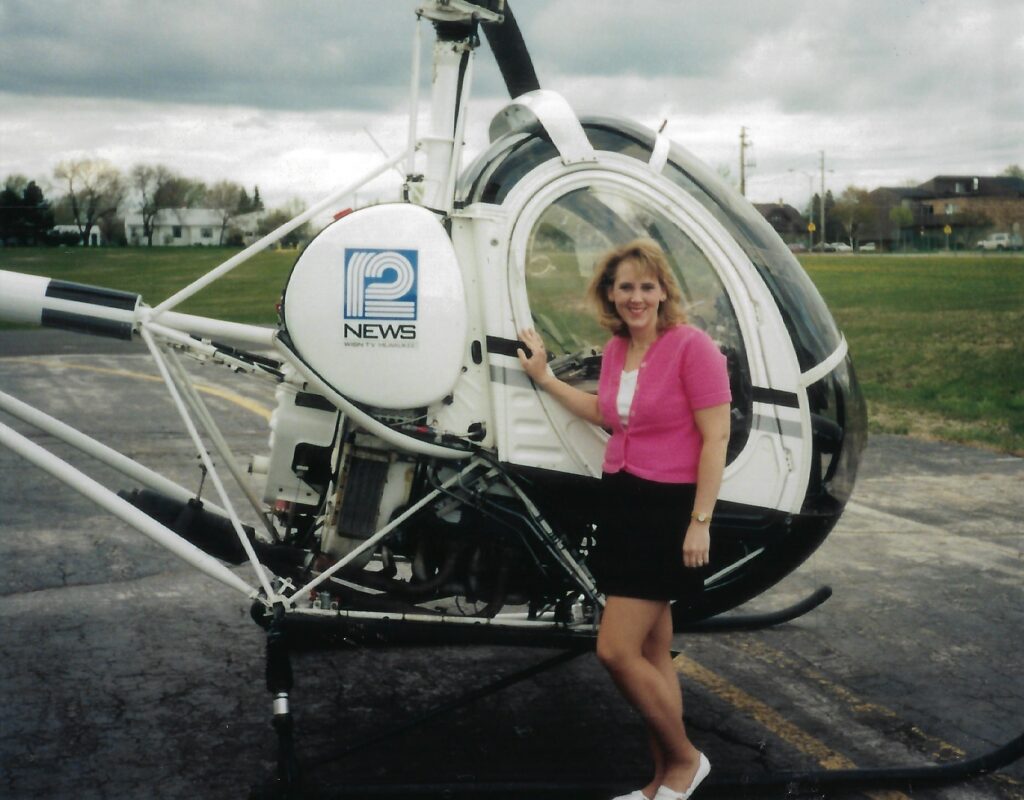
Tammy Rose standing beside a Schweizer 300 helicopter used during an early career flight that later involved a spatial disorientation incident
Chopper 12 Reporter Tammy Rose

We were flying to breaking news in Wisconsin in a Schweizer 300, a small, two-seat helicopter. It’s light, nimble, and unforgiving of bad weather. The sky that morning was layered — gray over gray — but flyable when we launched.

Then the ceiling began to drop.

At first, the ground blurred. Then it disappeared.

Inside a cloud, there is no horizon. There is no “down.” Everything outside the windshield turns into white and gray motion. Your body feels level, but your eyes are lying to you. That’s spatial disorientation, one of the deadliest conditions in aviation.

My pilot didn’t hesitate. He turned away from the weather and found a place to get us down before we lost all visual reference. We made an emergency landing at a rest stop in Fond du Lac, Wisconsin, just as the cloud deck closed in behind us.

The rotors wound down. The world went quiet.

My pilot stayed overnight with the helicopter. My parents drove to pick me up at that same rest stop. I remember how strange it felt to be sitting in a car after minutes earlier being suspended inside a cloud with no idea where the ground was.

That was the first time I truly understood how quickly flying can turn dangerous.


July 1997 — Losing power while live on the air

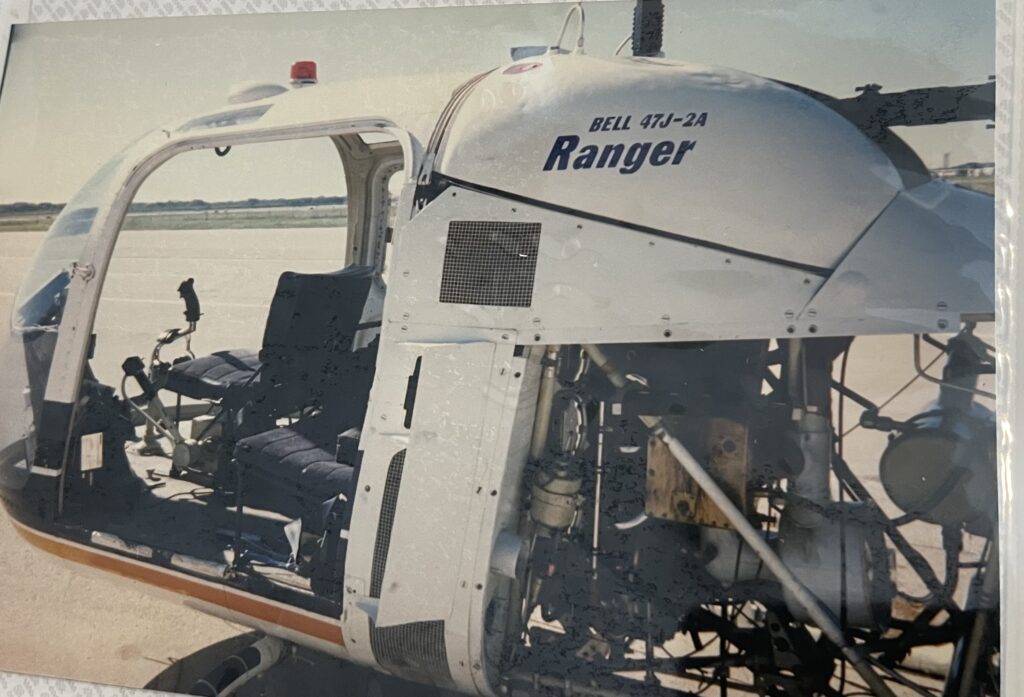
Bell 47 Ranger news helicopter on the ground, the aircraft involved in a hard landing near Milwaukee, Wisconsin.
Bell 47

Two years later, on a hot July day in 1997, I was flying over Milwaukee, Wisconsin with a pilot and a photographer. I was in the middle of a live broadcast when the helicopter suddenly didn’t sound right.

Then it didn’t feel right.

We had lost engine power.

Later we learned that both magnetos had failed, which meant the engine could no longer fire. In a helicopter, that’s one of the most serious failures you can have. Without engine power, the only thing keeping you in the air is the pilot’s ability to transition instantly into autorotation — a maneuver that uses airflow through the rotor blades to slow and control the descent.

My pilot did exactly that.

As we descended, I stayed on the air. I finished my report while we were gliding toward a Milwaukee police department parking lot, the only open space he could safely reach.

The landing was hard. The photographer had forgotten to raise the omni antenna, and when we touched down it bent — a small piece of metal that showed just how narrow the margin had been. Some would call it a hard landing. Others might call it a crash.

We opened the doors and stepped out.

No fire.
No injuries.
Just adrenaline, silence, and the realization of how close we had come.


Texas — When the cockpit went dark

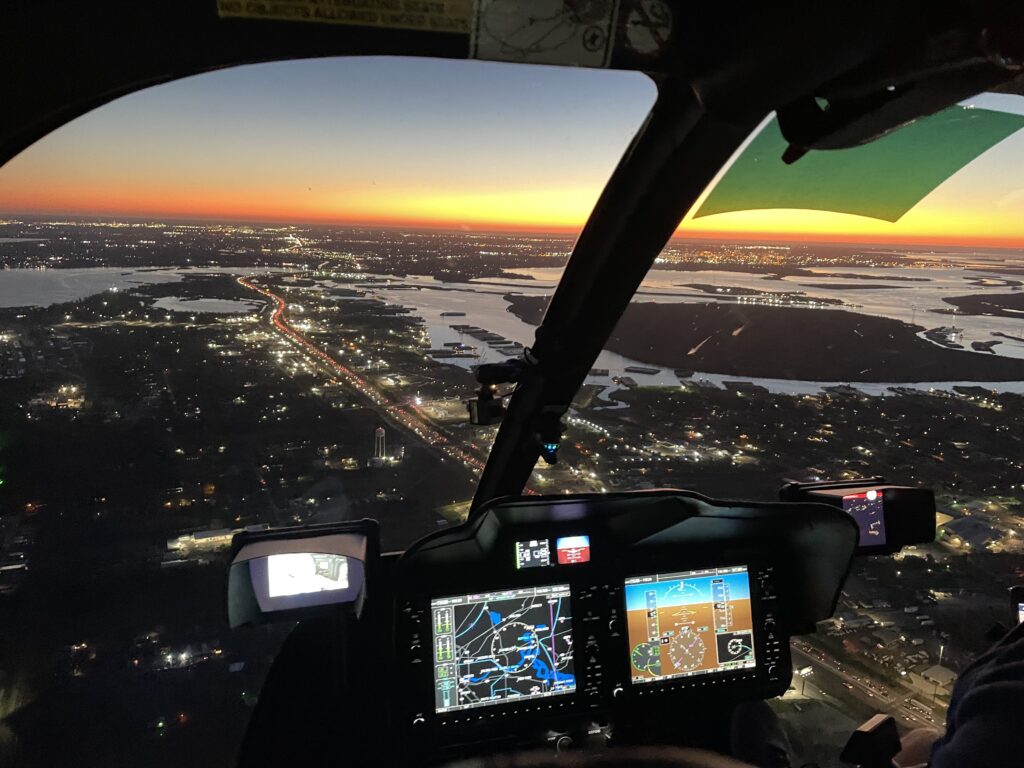
View from inside a news helicopter cockpit at sunset, with avionics displays visible and city lights below.

Years later, in Texas, the helicopter suffered a total avionics failure.

The screens went blank.

No navigation.
No altitude.
No attitude indicator.

My pilot was suddenly flying with nothing but what he could see outside the windshield. He diverted and found a place to land before the situation could get worse.

We made an emergency landing — and once again, walked away.


Texas — Hydraulic failure during a chase

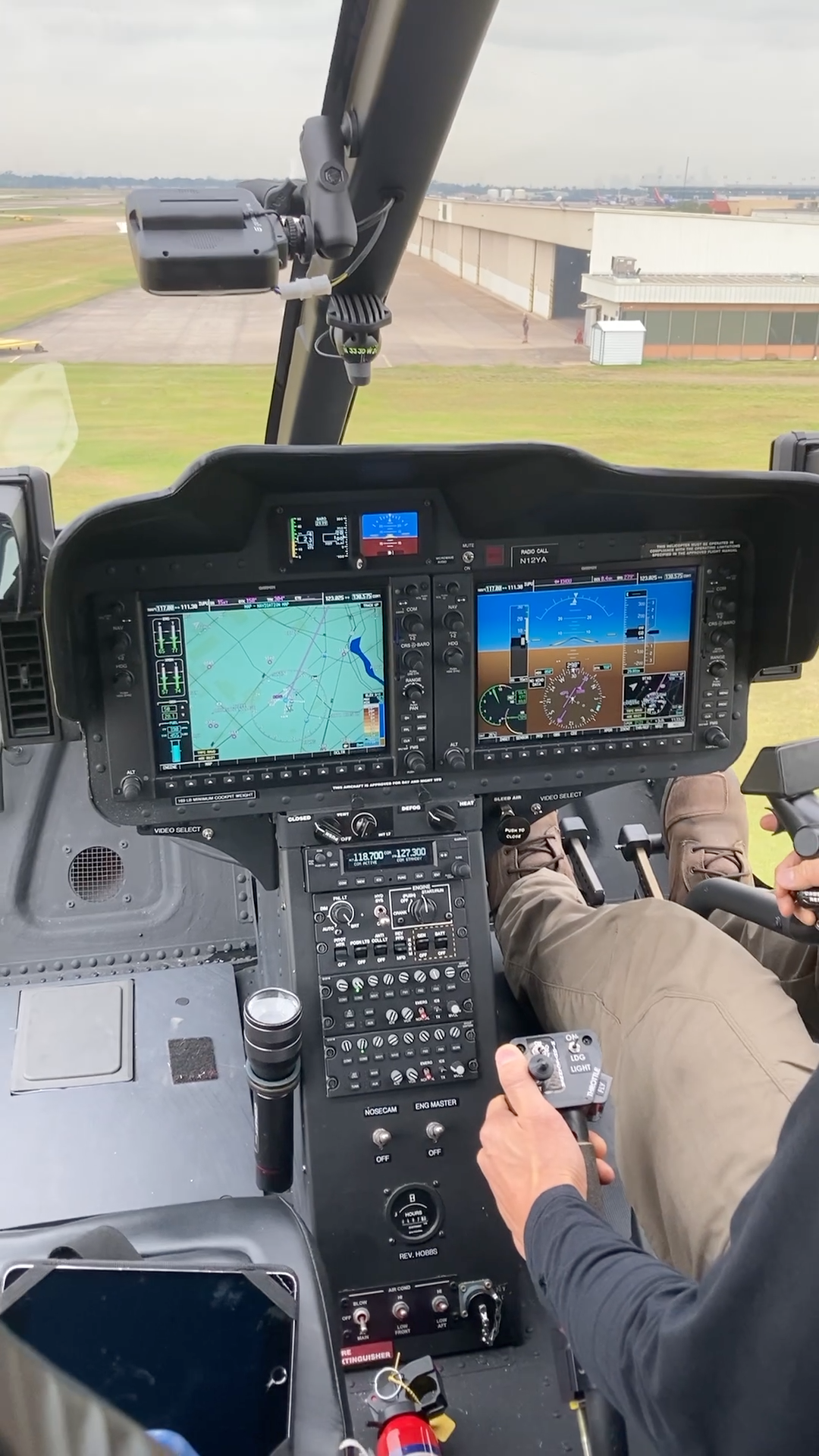
View inside a news helicopter cockpit during an in-flight hydraulic failure with pilot controls and avionics visible.
Hydraulic failure on October 8, 2020

Another time, we were launching for a chase when the helicopter lost all hydraulic power.

Without hydraulics, the controls become brutally heavy and unpredictable. Every movement requires raw physical strength and perfect timing.

My pilot fought the aircraft back to the ground and landed safely.

That wasn’t luck.
That was training.


Why these stories matter

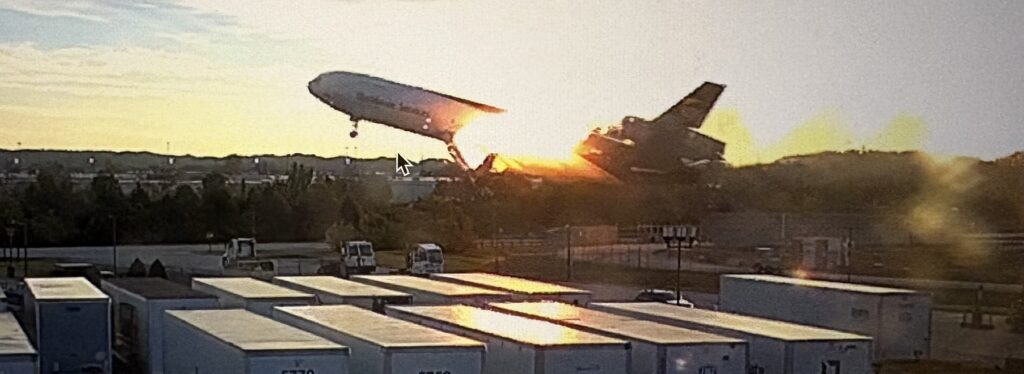
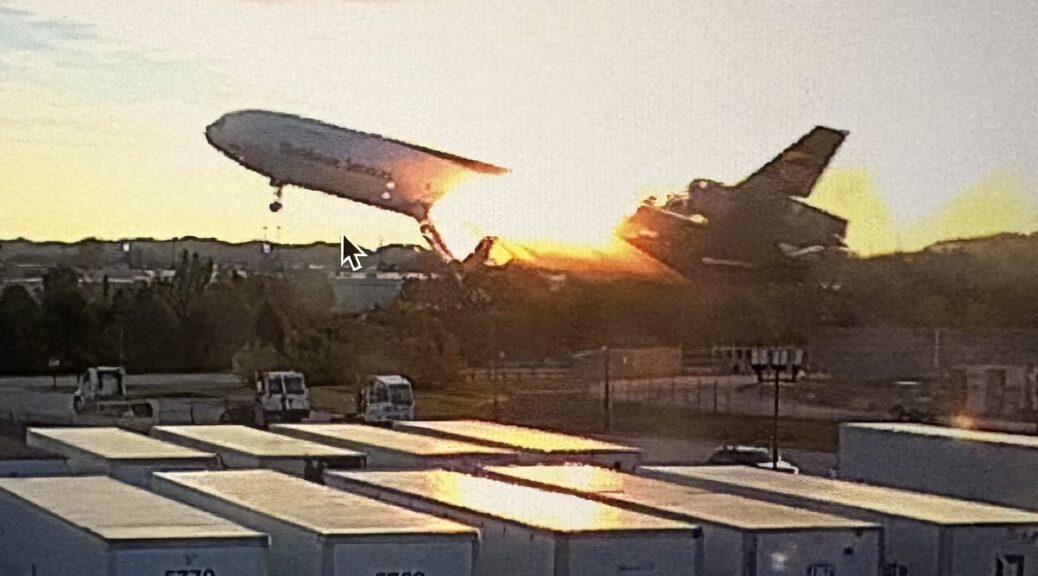
UPS cargo plane moments before crashing during a high-profile aviation accident
Source: National Transportation Safety Board accident investigation, public domain

When people say they’re afraid to fly, I understand why. In the past year, we’ve all watched heartbreaking, high-profile crashes — including a UPS cargo jet and the tragedy near Reagan National Airport — dominate the news. Those stories make flying feel suddenly fragile.

But here’s what I know from three decades in the air:

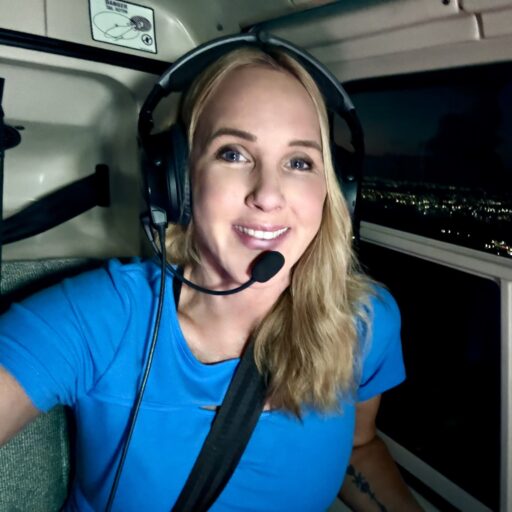
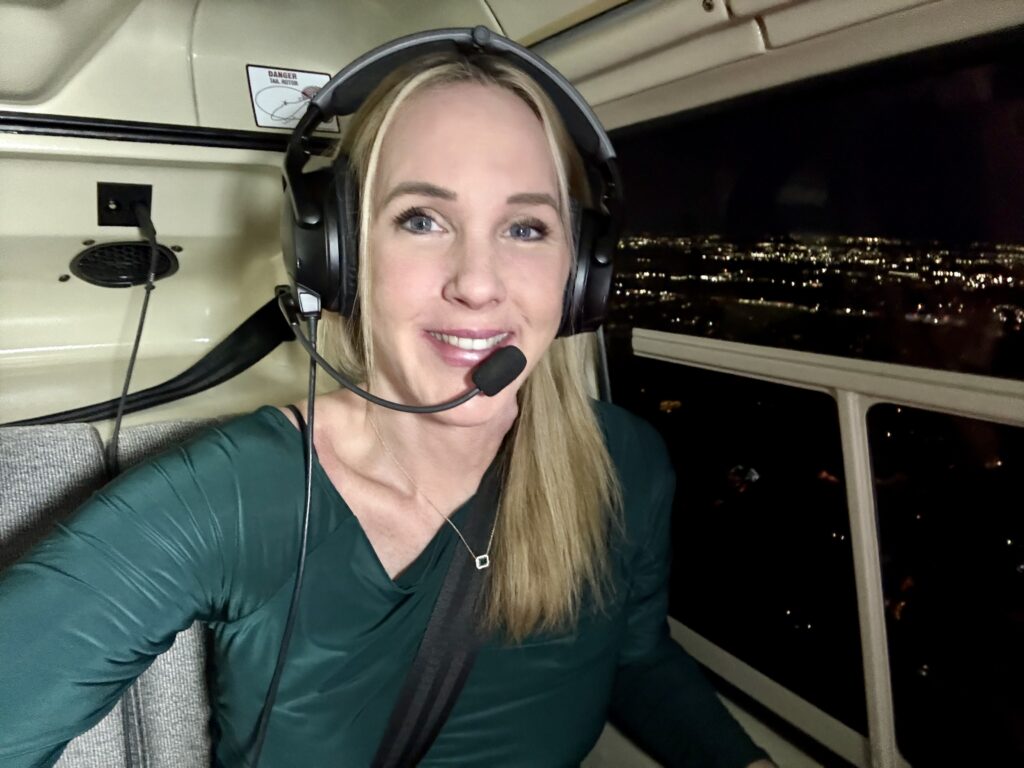
Helicopter reporter Tammy Rose wearing a headset inside the SkyEye 13 news helicopter during a nighttime flight.
Helicopter Reporter Tammy Rose

Most flights don’t end in headlines.
They end in landings.

I’ve been inside clouds with no horizon.
I’ve descended with no engine.
I’ve flown with no instruments.
I’ve felt a helicopter lose its hydraulics.

And every time, well-trained pilots brought us home.

Flying will never be risk-free — nothing worth doing ever is — but statistically it remains far safer than getting behind the wheel of a car. The difference is that when something goes wrong in the sky, the whole world hears about it.

That’s why I tell these stories. Not to scare people — but to show how much skill, discipline, and professionalism stand between an ordinary flight and disaster.

The sky demands respect.
And the people who fly us through it earn it. ✈️

Want to know what I actually use when I’m flying? I’ve put together my Amazon collection with headsets, travel gear, and in-flight must-haves I rely on in the cockpit and on the road. ⬇️ Click below to explore my Flying Essentials.

Disclosure: As an Amazon Associate, I earn from qualifying purchases.
My Flying Essentials: Comfort Meets Style