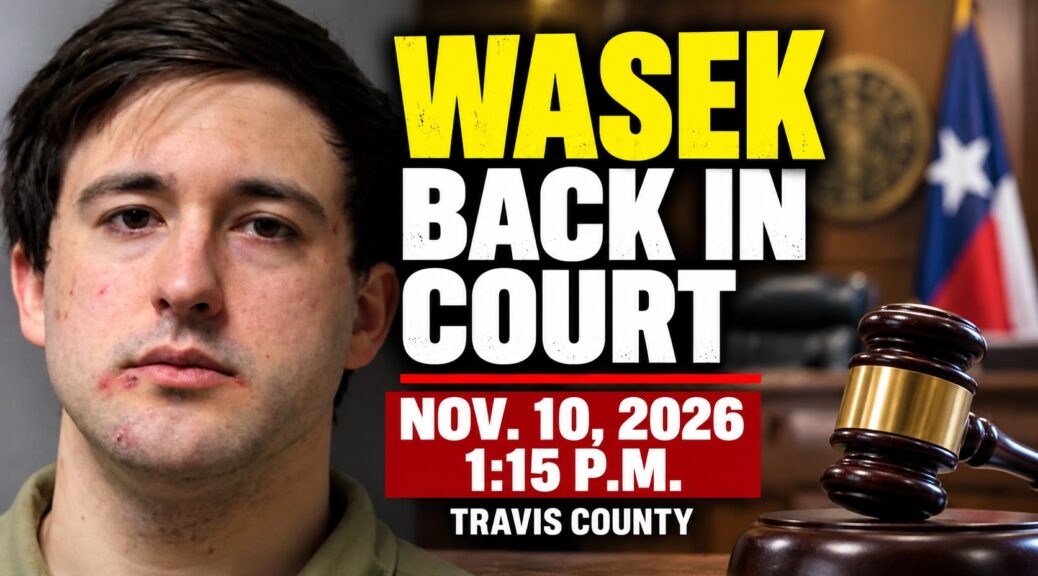
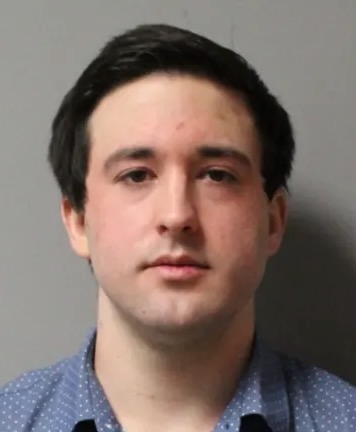
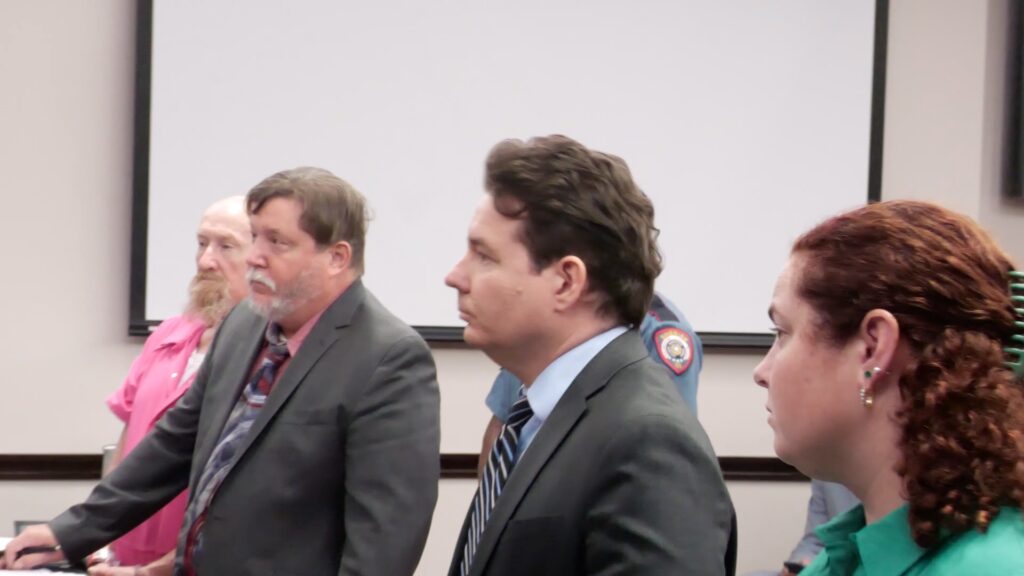
Mitchell Wasek has another court date in Travis County.
Court records show Wasek will return to the 167th District Court on Nov. 10, 2026, at 1:15 p.m.
The hearing involves several criminal cases that I have followed for years.
One of Wasek’s original 2023 cases lists a writ hearing. His separate 2025 case lists a pretrial hearing at the same time.
The Nov. 10 setting is not a trial date.
Wasek’s original cases remain in court
Wasek faces six invasive visual recording cases filed in 2023.
Those cases carry cause numbers D-1-DC-23-500314 through D-1-DC-23-500319. Travis County previously listed all six for writ hearings in the 167th District Court.
The latest Odyssey record I reviewed on Oct. 2 shows a Nov. 10 writ hearing in case D-1-DC-23-500314.
The older cases have also gone through appellate proceedings.
Separate 2025 case heads to pretrial hearing
Wasek also faces a separate felony case filed in 2025.
That case carries cause number D-1-DC-25-500122.
The Travis County docket lists the 2025 charge as possession of child pornography.
The latest Odyssey record shows a pretrial hearing on Nov. 10 at 1:15 p.m.
The newer case and at least one of Wasek’s original cases now have hearings set for the same date and time.
Defense wants evidence suppressed
The 2025 case includes two major defense challenges.
Wasek’s attorneys filed a motion to suppress on April 14.
The docket describes it as a motion to suppress evidence obtained by theft and breach of computer security.
The public docket I reviewed does not show an order resolving that motion.
Defense also seeks dismissal
Wasek’s attorneys filed another motion on June 2.
That motion asks the judge to dismiss the indictment due to an expired statute of limitations.
The filing does not mean the court has dismissed the indictment.
The public docket I reviewed does not show an order granting that request.
Court records also show several subpoena applications filed in June.
What happens next in the Mitchell Wasek cases?
Mitchell Wasek faces felony charges in Travis County as his defense seeks to suppress evidence and dismiss the indictment.
The Nov. 10 hearings could provide answers about the pending legal challenges.
The 167th District Court handles felony criminal cases in Travis County. Judge Dayna Blazey presides over the court.
For now, Wasek’s cases remain pending.
I will continue reviewing the court records and report any new rulings before the Nov. 10 hearings.
My new book, When Two Worlds Collide During WWII, follows two families on opposite sides of World War II and the remarkable events that eventually brought their lives together in Wisconsin.
The story is based on my own family history, with real people, family photographs and stories passed down through generations.
Disclosure: As an Amazon Associate, I earn from qualifying purchases.
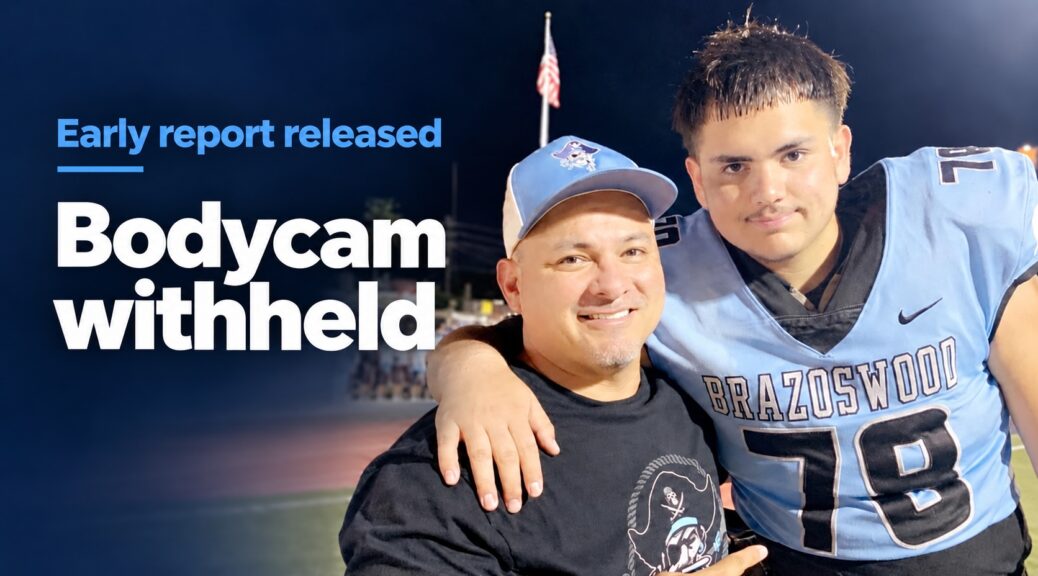
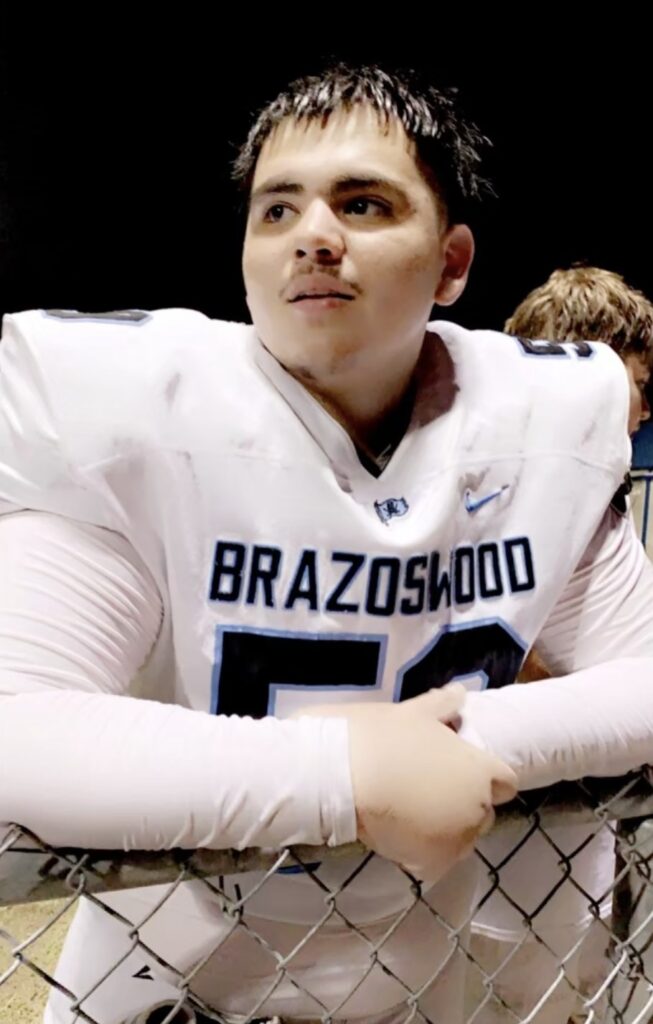
John Gabriel Mendoza Jr., 18, was a Texas State University student who died following the June 1, 2026 shooting involving former Brazoria County deputy Kevin Daniel Tippit.
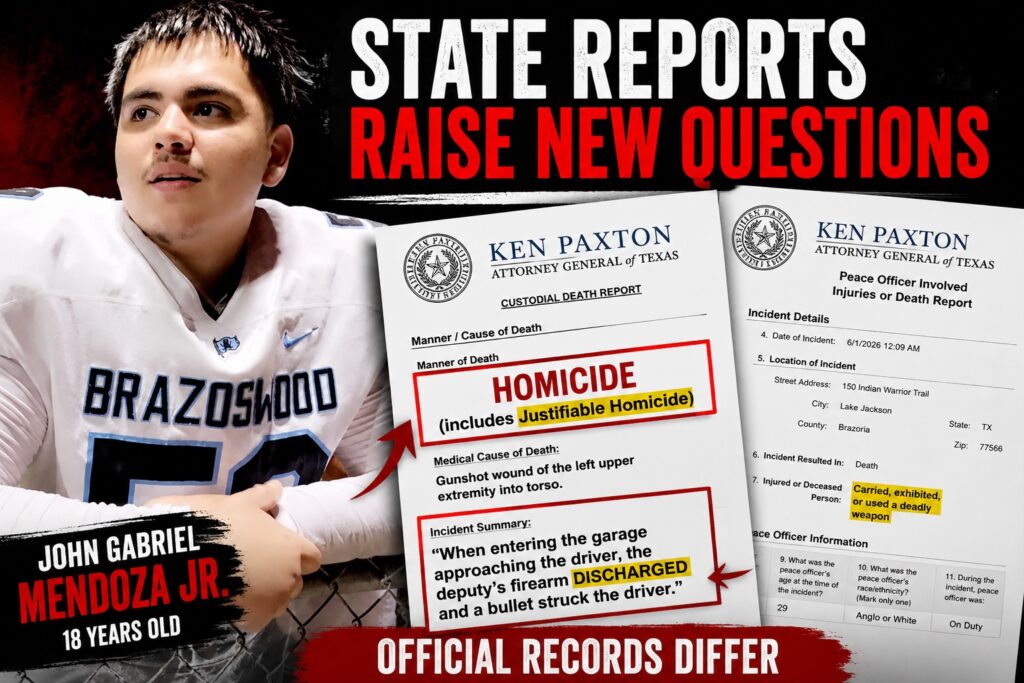
Months after the fatal shooting of John Gabriel Mendoza Jr., Brazoria County released an incident report printed two days after the shooting.
The sheriff’s office printed the report on June 3, 2026, at 7:39 a.m. The report warns that it only reflects the investigation as it existed at that time.
The county released the early John Mendoza report on September 14. However, it withheld the bodycam, dashcam and nearly the entire detailed narrative.
What the John Mendoza report shows
The Brazoria County Sheriff’s Office lists the incident under case number 2606-0001.
The report identifies the original allegation as evading arrest or detention with a vehicle. It lists the location as the 1100 block of FM 2004 in Lake Jackson.
The report identifies the vehicle as a red 2021 Dodge Challenger.
A short summary states that deputies attempted a traffic stop before the vehicle fled.
The report lists the State of Texas as the victim. It identifies Mendoza as the suspect in the alleged evading offense.
That classification only concerns the original pursuit report. It does not establish that Mendoza committed a crime.
County redacts Tippit’s narrative
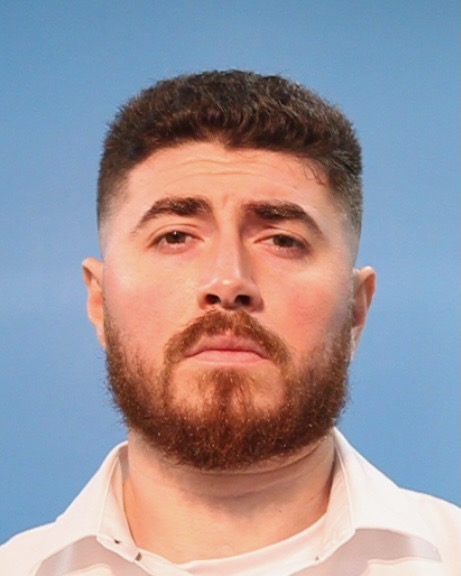
Former Brazoria County Sheriff’s Deputy Kevin Daniel Tippit faces a charge of aggravated assault by a public servant in connection with the June 1, 2026 shooting of John Gabriel Mendoza Jr. Photo credit: Brazoria County Sheriff’s Office.
The detailed narrative contains one visible line about former Brazoria County Deputy Kevin Daniel Tippit.
The report states that Tippit advised he was in pursuit at about 12:09 a.m.
The county covered nearly every word that follows with black boxes. It also redacted the names of the assisting officers.
The visible line does not establish when the pursuit began. It only records when the report says Tippit advised that he was in pursuit.
Records do not contradict Ranger affidavit
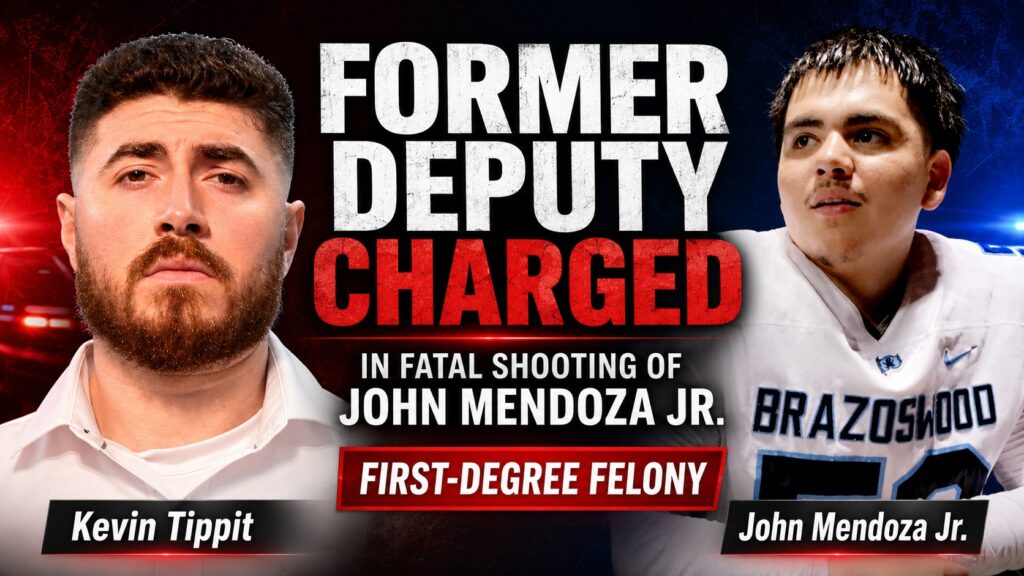
Former Brazoria County Sheriff’s Deputy Kevin Tippit has been charged with first-degree felony aggravated assault by a public servant in connection with the fatal shooting of 18-year-old John Gabriel Mendoza Jr.
The new report does not contradict the timeline in the Texas Ranger affidavit.
The Ranger affidavit says Tippit observed the Challenger around 12:06 a.m. It also says he activated his emergency lights and siren.
The available scanner recording begins carrying pursuit traffic around 12:08 a.m. The sheriff’s report then places Tippit’s pursuit notification at about 12:09 a.m.
Those times describe different points during the encounter. They do not prove that investigators provided an incorrect timeline.
The newly released report also does not reveal the “accidental discharge” statement. The previously obtained scanner audio already captured Tippit making that report.
Rangers reviewed bodycam and dashcam
The Texas Ranger affidavit says investigators reviewed Tippit’s bodycam and dashcam.
According to the affidavit, the Challenger reached approximately 120 mph and ran six red lights. The pursuit ended inside the garage at Mendoza’s family home.
The affidavit says Tippit entered the garage and fired through the driver’s-side window.
Scanner traffic later captured Tippit reporting what he described as an “accidental discharge.”
The new John Mendoza report offers no additional account of the shooting. Brazoria County withheld the videos that could allow the public to examine the encounter independently.
Attorney General allows county to withhold records
The Texas Attorney General issued ruling OR2026-038106 on August 28, 2026.
The ruling covered eight public-information requests, including Brazoria County request number 26-1859.
Brazoria County argued that releasing the evidence could interfere with an active criminal case. The Attorney General allowed the county to withhold most of the investigative material.
However, the ruling required the county to release basic information.
Investigative Reporter Tammy Rose then requested the information covered by the ruling. Brazoria County assigned that follow-up request number 26-2947.
The county responded on September 14 with the early report and extensive redactions.
Report predates major developments
The sheriff’s office printed the released report on June 3.
That date matters because the report predates several major developments in the case.
Sheriff Bo Stallman fired Tippit on June 9. Stallman cited policy violations involving the handling and discharge of Tippit’s firearm.
A Brazoria County grand jury later indicted Tippit on aggravated assault by a public servant. Texas Rangers arrested him on August 11.
The court has scheduled Tippit’s trial for February 1, 2027. Court dates can change.
An indictment does not establish guilt. The law presumes Tippit innocent unless prosecutors prove the charge in court.
Release offers no updated shooting account
The records released in September provide an early account of the alleged evading offense. They do not provide a current summary of the shooting investigation.
The packet contains no updated narrative following Tippit’s firing, indictment or arrest. It also contains no bodycam, dashcam or complete radio record.
The release confirms that Tippit advised he was in pursuit at about 12:09 a.m. Beyond that entry, it adds little to the established public record.
The most important evidence remains outside public view.
Investigative Reporter Tammy Rose will continue seeking the bodycam, dashcam and other records as the criminal case moves forward.
Read the documents
The Attorney General ruling, Brazoria County’s response and the sanitized incident report appear below.
My new book, When Two Worlds Collide During WWII, follows two families on opposite sides of World War II and the remarkable events that eventually brought their lives together in Wisconsin.
The story is based on my own family history, with real people, family photographs and stories passed down through generations.
Disclosure: As an Amazon Associate, I earn from qualifying purchases.
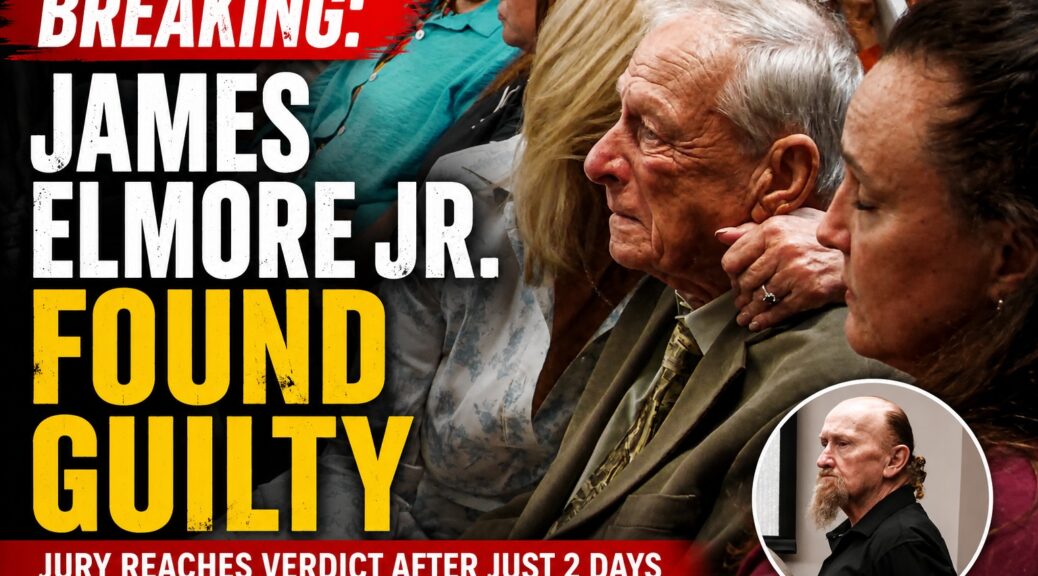
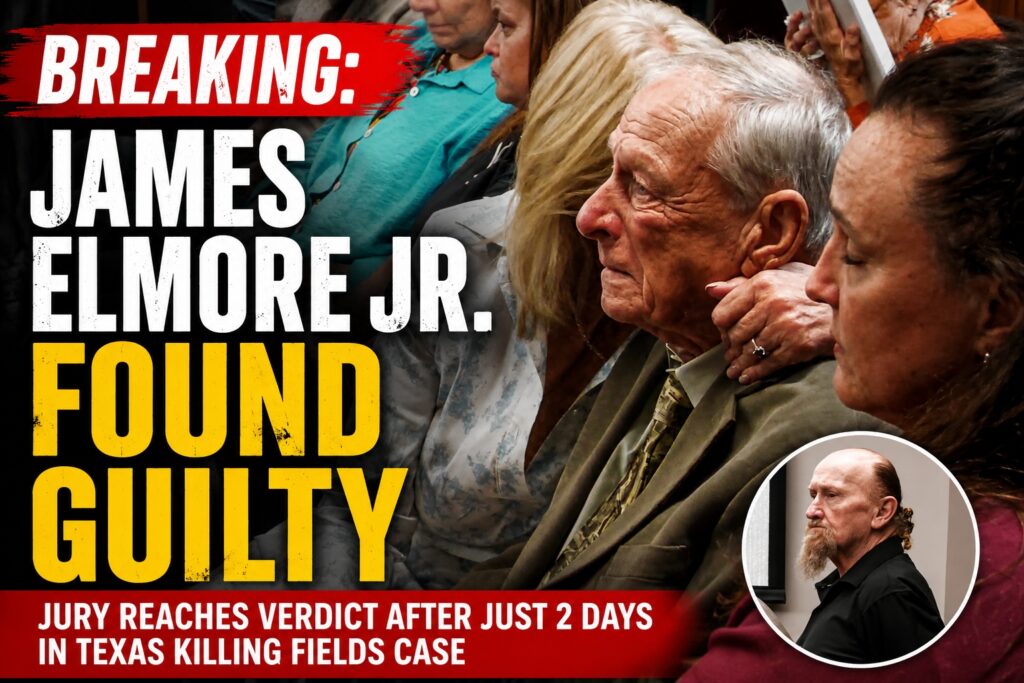
James Elmore Jr. was found guilty after a two-day trial in Galveston County tied to the death of Laura Miller.
A Galveston County jury found James Elmore Jr. guilty Wednesday following a fast-moving trial connected to the death of Laura Miller.
The verdict came after just two days of testimony.
Jurors began deliberating Wednesday afternoon. A short time later, the court notified the media that the jury had reached a verdict.
Elmore stood trial on charges tied to Laura Miller and Audrey Cook, two women whose remains were found in the League City area decades ago.
Jury reaches verdict in James Elmore Jr. trial
The case moved quickly Wednesday.
Prosecutors rested their case. The defense then called witnesses before both sides completed their cases.
Six women and six men ultimately received the case.
The jury returned its verdict later Wednesday afternoon.
Elmore was found guilty.
I will update this story with the verdict on each individual count and sentencing information as the court releases those details.
Tim Miller takes the stand
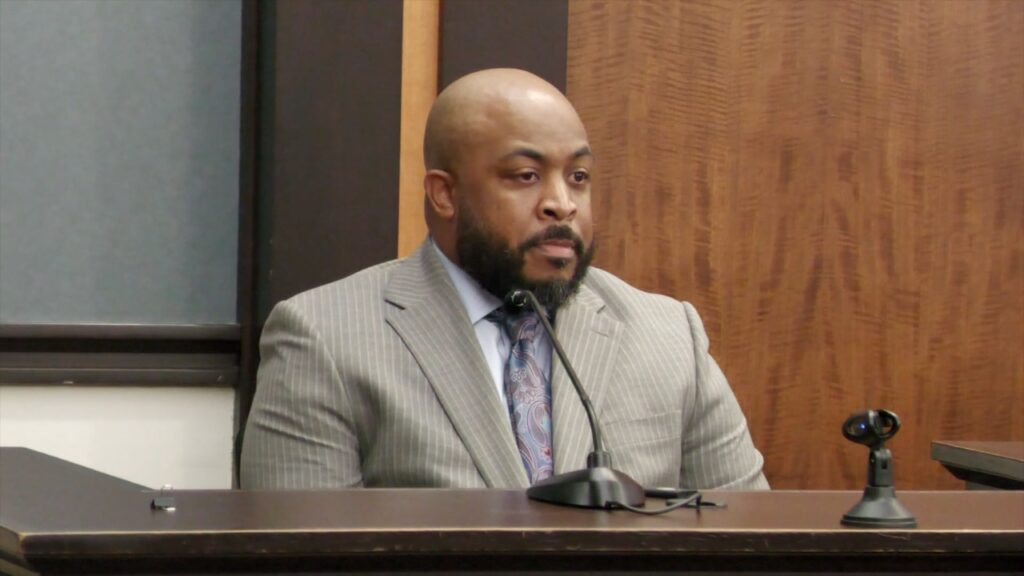
Laura Miller’s father, Tim Miller, was among the key witnesses called by prosecutors.
Miller testified about his years of contact with Elmore and his efforts to learn what happened to his daughter.
Jurors also heard about information Elmore allegedly knew concerning Laura and the location where her remains were found.
The defense later cross-examined Miller about those conversations and the investigation.
Jurors watched recorded interviews
The jury also watched recordings involving Elmore.
Those recordings became an important part of the prosecution’s case.
Investigators questioned what Elmore knew about Laura Miller and events surrounding her death.
The testimony focused on whether Elmore knew details that had not been released to the public.
Decades after Laura Miller disappeared
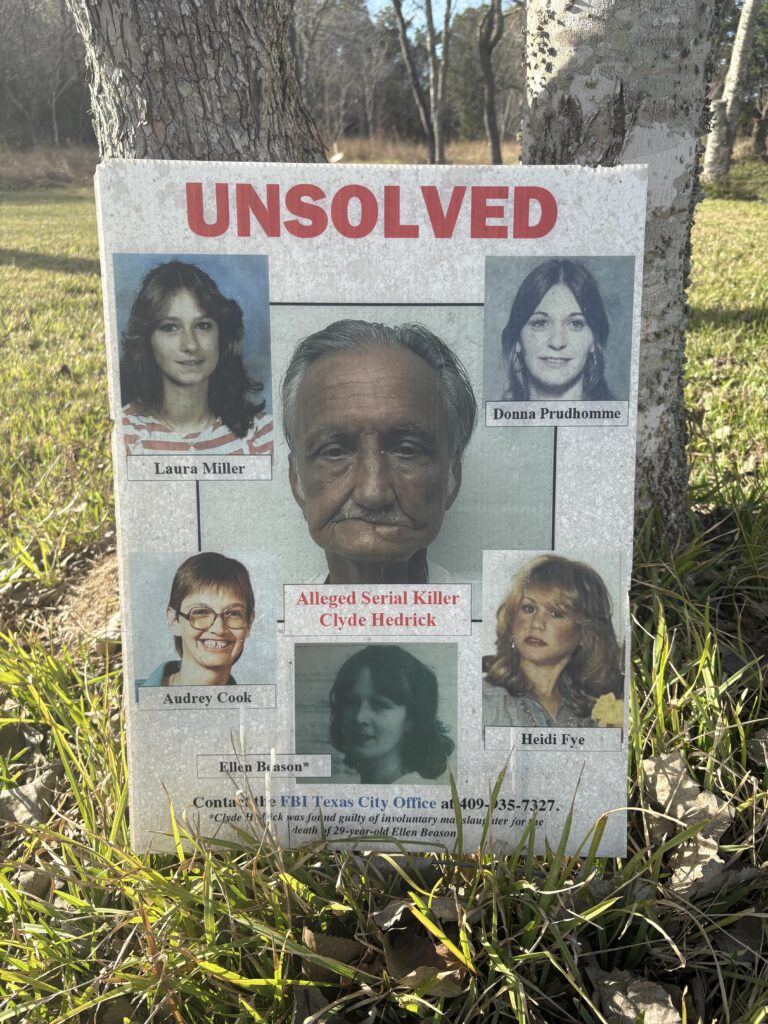
Memorial sign highlighting four victims whose cases have been linked to the same recovery site during the investigation into Clyde Hedrick and several unsolved homicides.
Laura Miller disappeared in 1984.
Her remains were later discovered near Calder Road in League City.
The area eventually became associated with several unsolved deaths and disappearances.
Laura’s death remained under investigation for decades.
Elmore’s arrest brought the case back into a Galveston County courtroom more than 40 years later.
What happens next
The case now moves to the next phase following the guilty verdict.
I am continuing to follow developments from the courthouse and will update this story with the verdict on each charge and sentencing information as those details become available.
Full courtroom video and continuing coverage will also be posted on Tammy Rose Reports on YouTube.
Outside the courtroom, I have also been working on a deeply personal project.
My new book, When Two Worlds Collide During WWII, follows two families on opposite sides of World War II and the remarkable events that eventually brought their lives together in Wisconsin.
The story is based on my own family history, with real people, family photographs and stories passed down through generations.
Disclosure: As an Amazon Associate, I earn from qualifying purchases.
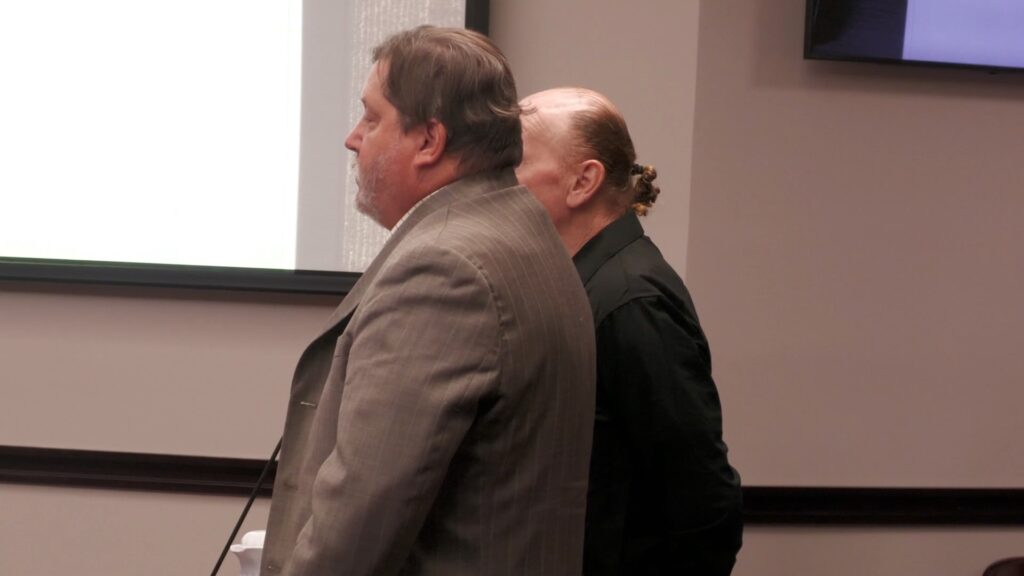
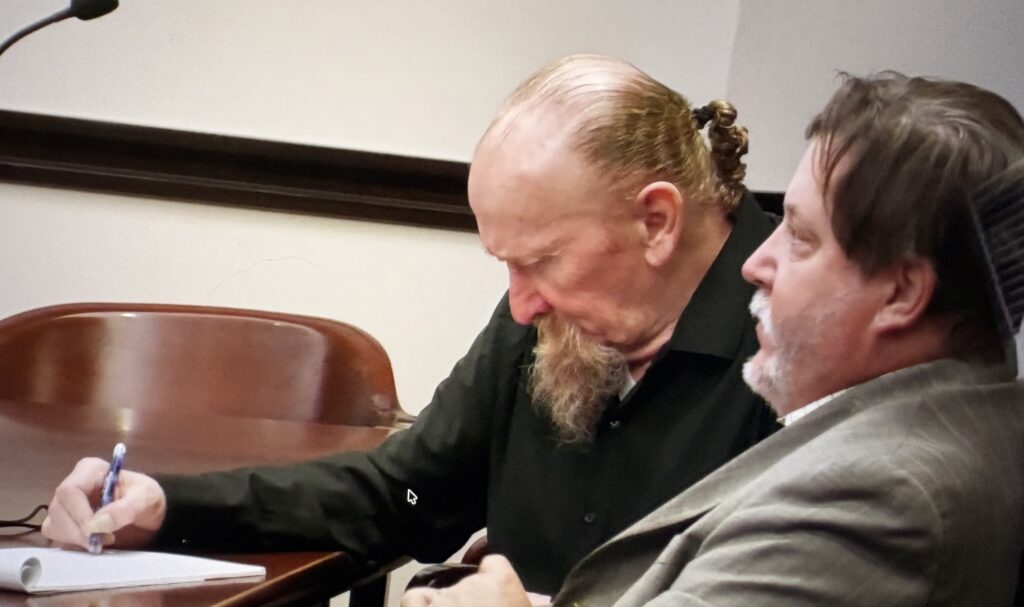
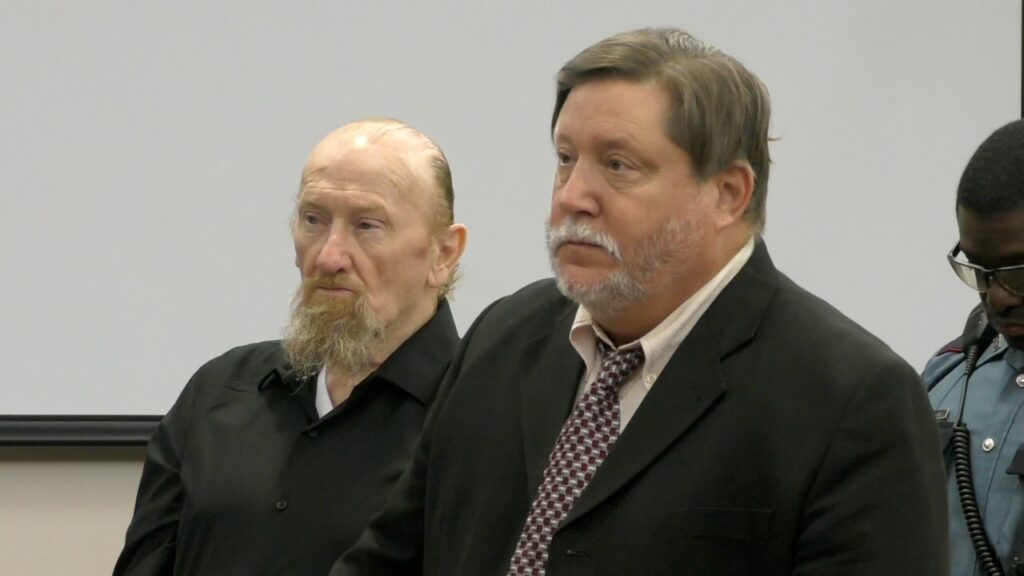
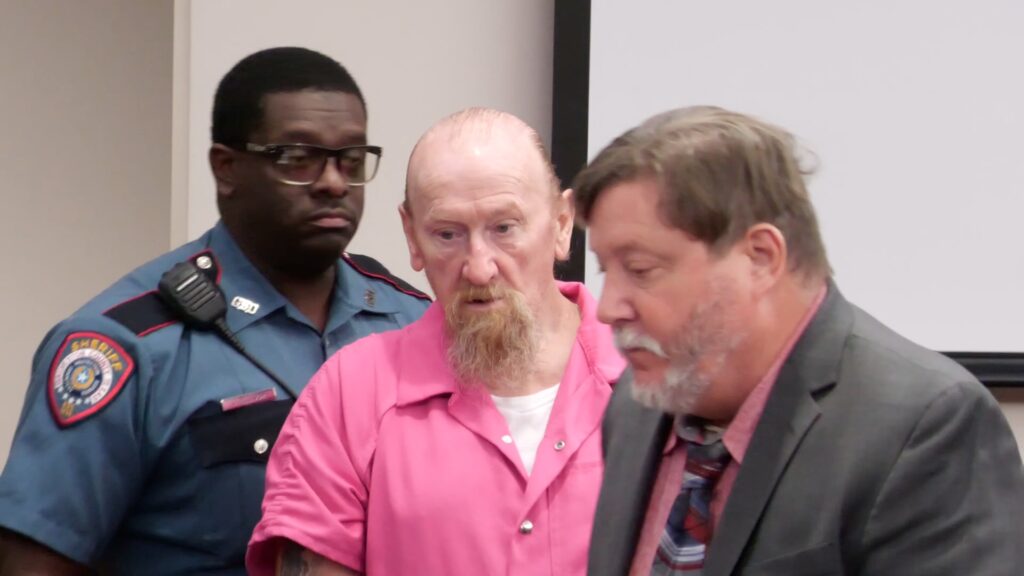
James Elmore Jr. sits with his defense attorney during his trial in Galveston County.
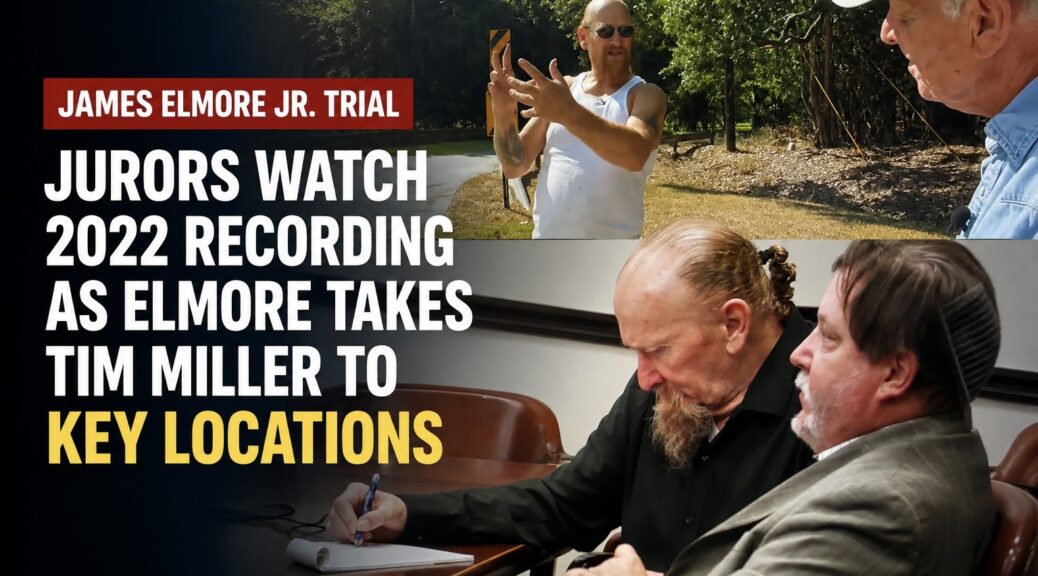
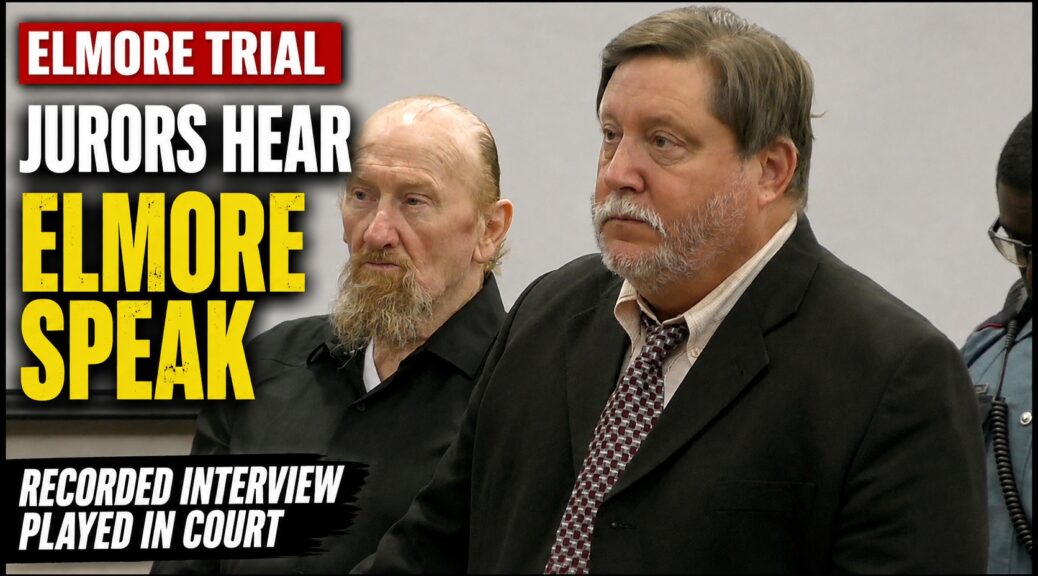
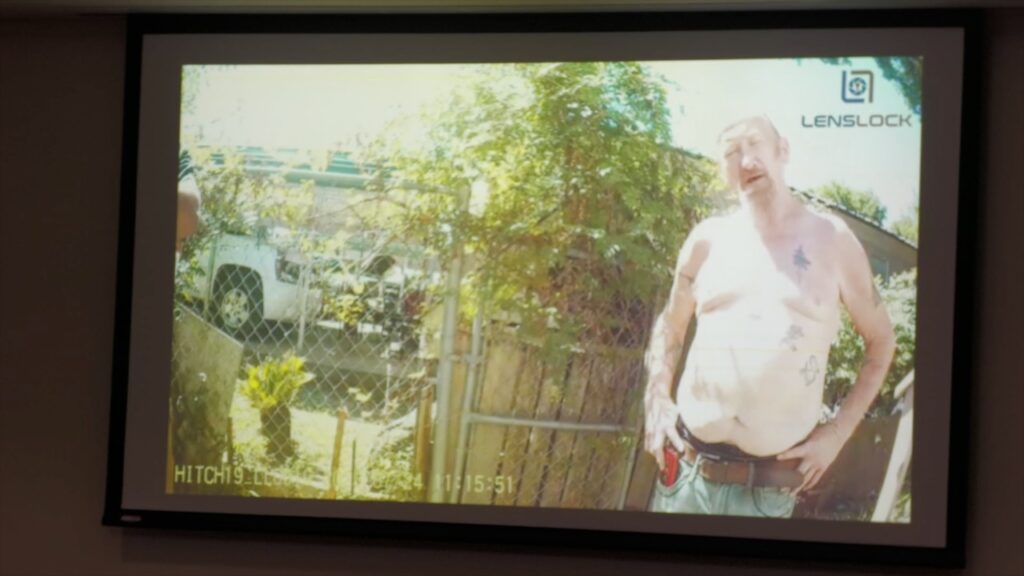
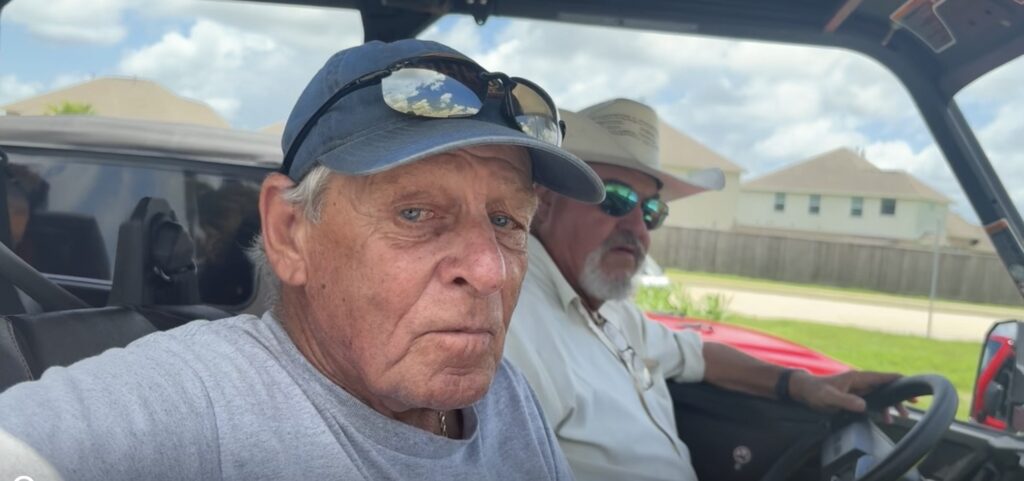
Jurors in the James Elmore Jr. trial watched a lengthy 2022 recording Wednesday that put Elmore’s own words at the center of the case.
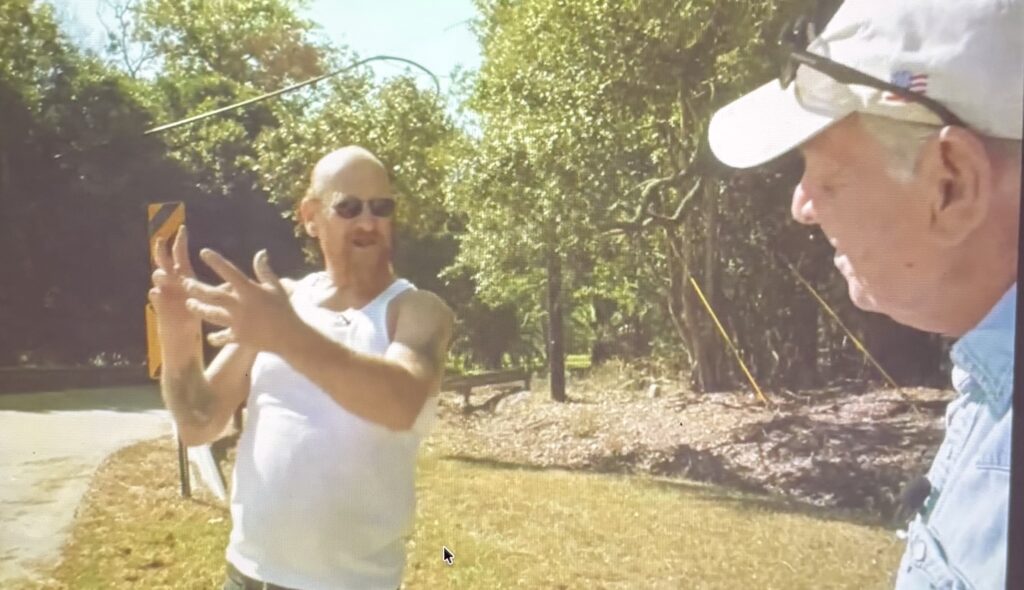
The video shows Elmore riding with Tim Miller through League City. Elmore points out locations tied to Laura Miller, Audrey Cook and Clyde Hedrick.
The recording also captures Elmore making claims about what happened to Laura before and after her death.
Prosecutors played the video during Day 3 of the trial.
Tim Miller explains why he recorded Elmore
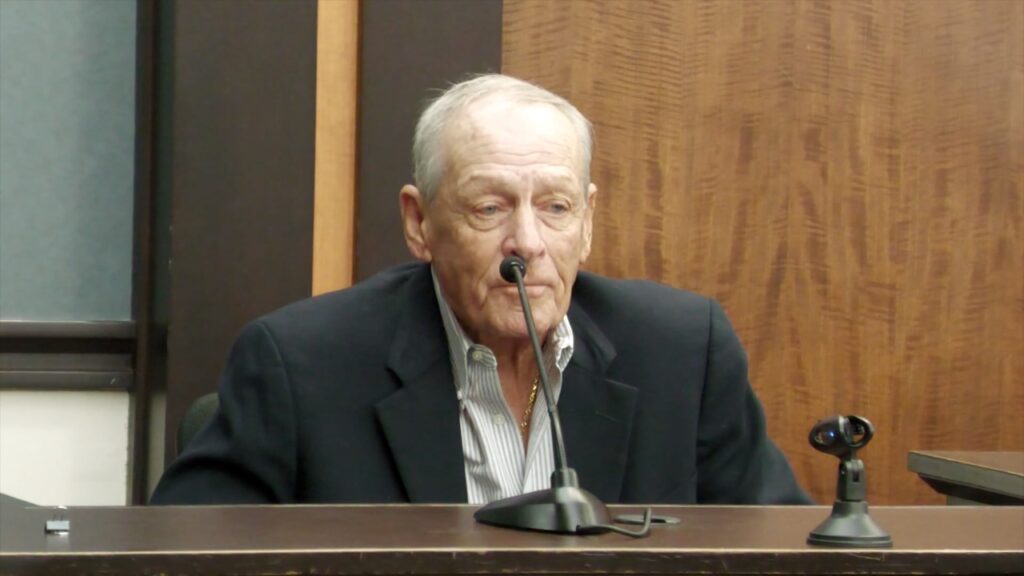
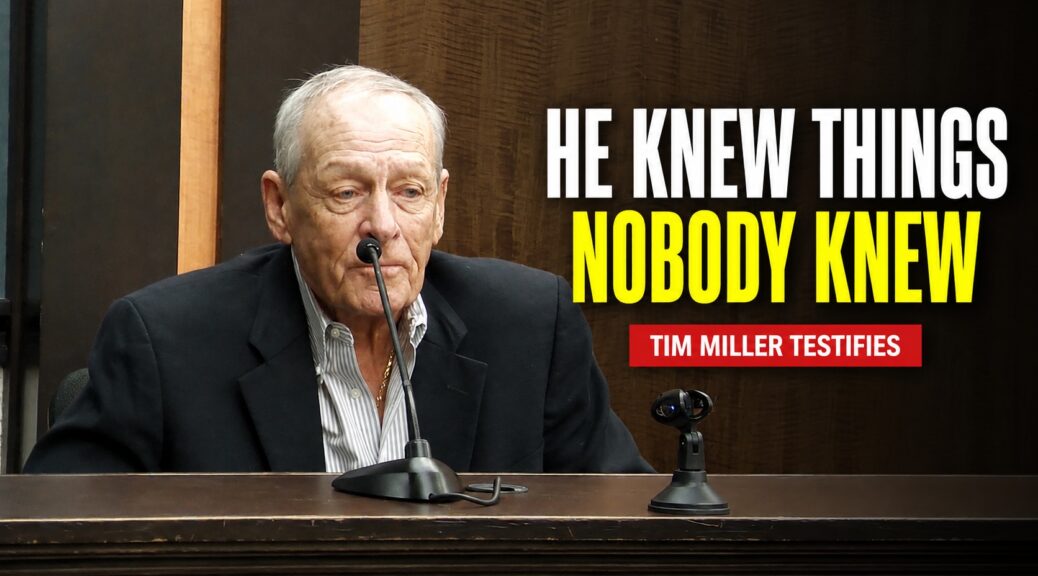
Tim Miller testifies about his conversations with James Elmore Jr. during the trial.
Miller told jurors he wanted to preserve what Elmore had told him.
He said Elmore had discussed several health problems. Miller feared Elmore could die before investigators resolved the case.
Miller said he contacted a friend with a production company and arranged the recording.
He told jurors he wanted Elmore to repeat what he had previously told him.
Miller also stressed during the recording that Elmore had contacted him voluntarily.
The video dates to Oct. 10, 2022.
Elmore returns to Calder Road
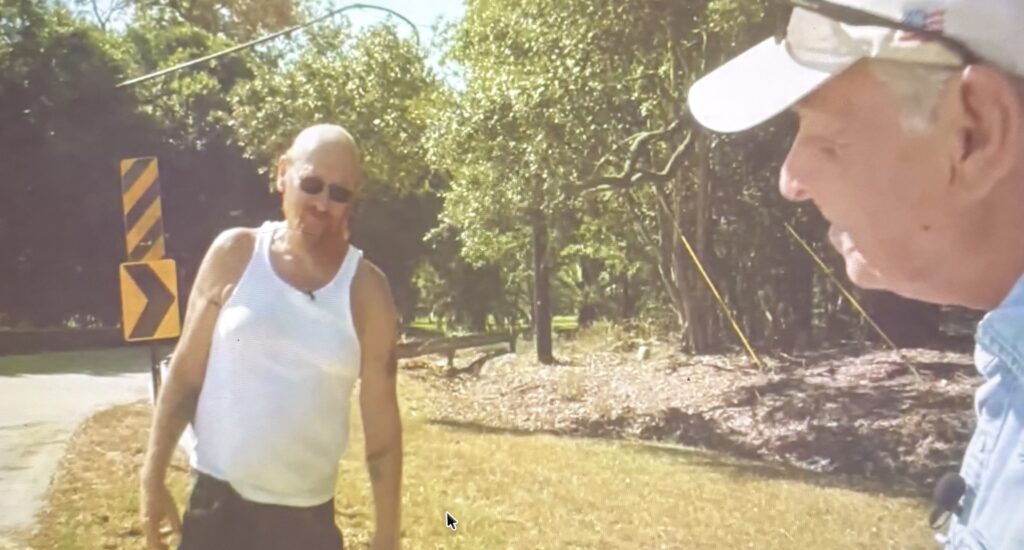
James Elmore Jr. points out an area near Calder Road during a 2022 recording with Tim Miller that was shown to jurors.
The recording shows Miller and Elmore driving through areas connected to the investigation.
They returned to Calder Road, where investigators found the remains of Laura Miller and Audrey Cook in 1986.
Elmore pointed out areas where he claimed the bodies had been placed.
He also discussed how the area looked decades earlier. Elmore described thick vegetation and fewer homes.
Miller questioned Elmore about the locations as they drove through the area.
Elmore claims he saw Laura at Hedrick’s house
One of the most significant portions of the recording focused on Clyde Hedrick’s former home.
Elmore claimed he saw Laura at the house.
Memorial sign highlighting four victims whose cases have been linked to the same recovery site during the investigation into Clyde Hedrick and several unsolved homicides.
He also described events involving drugs inside the home. Elmore claimed he prepared drugs and warned Hedrick that the amount was too much.
Elmore said he later saw Laura covered with a shirt. He claimed he initially thought she was sleeping.
Elmore also described returning to the house days later.
His account forms a key part of the prosecution’s case against him.
Cemetery becomes another focus
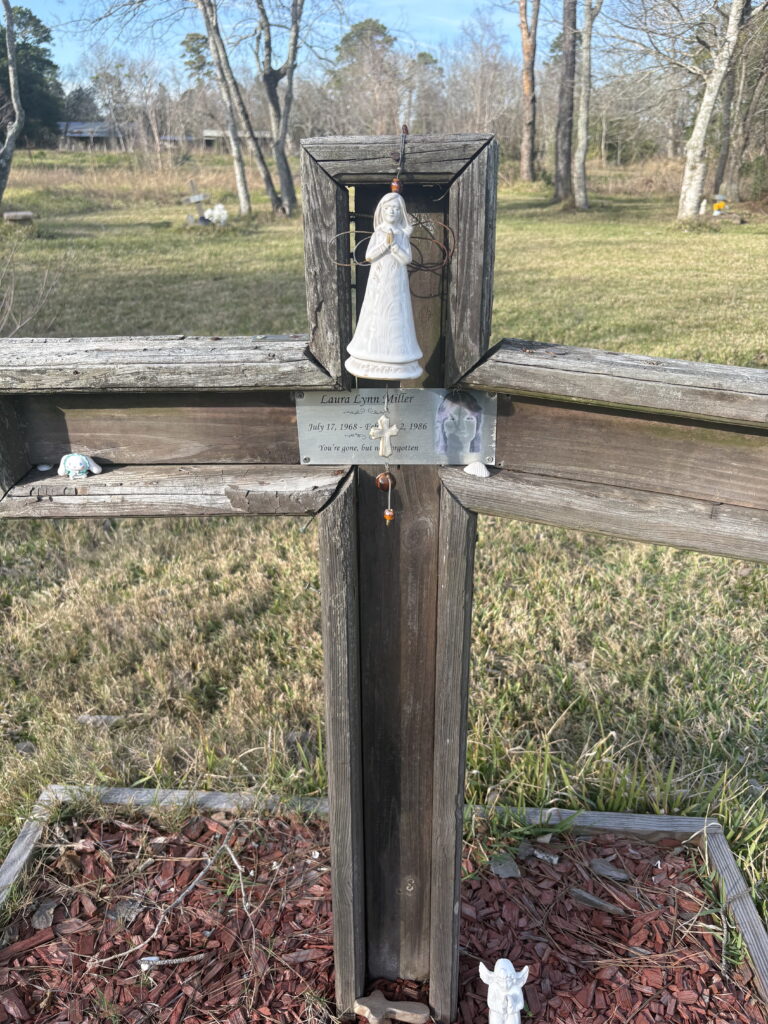
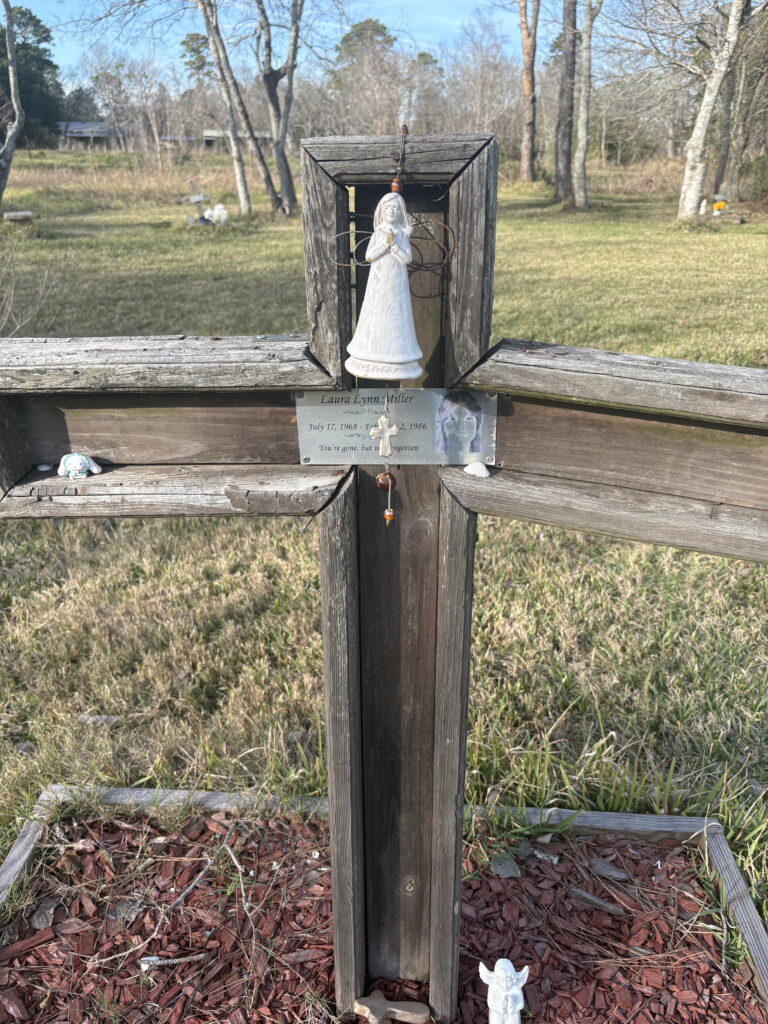
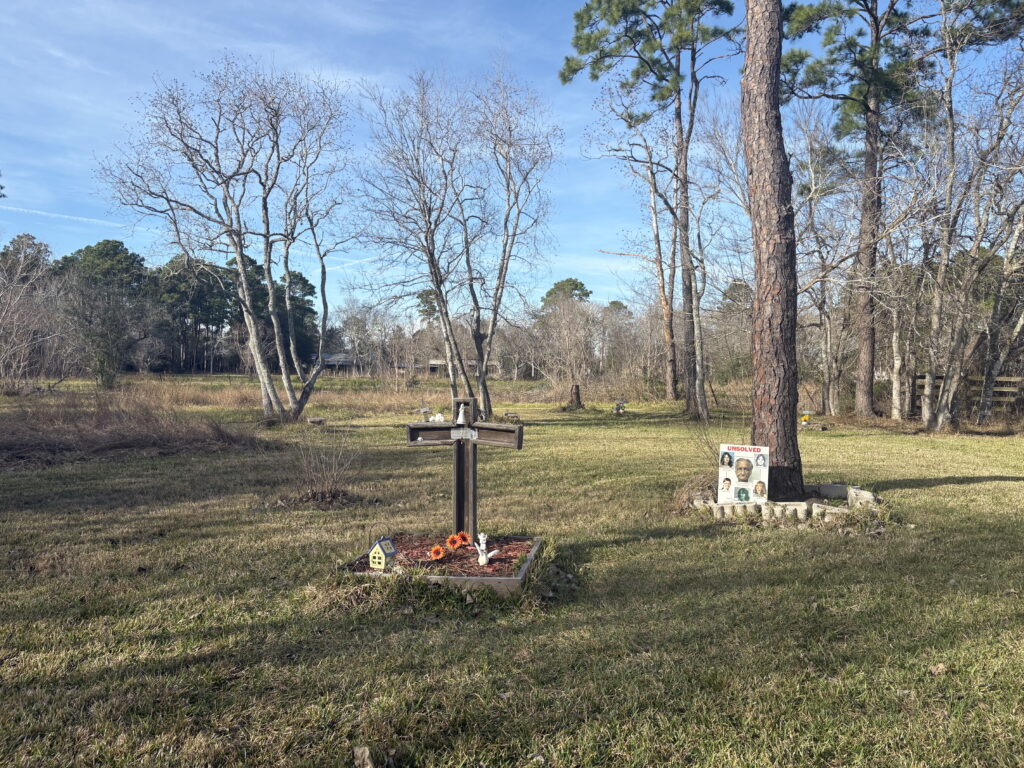
A cross memorial for Laura Miller stands near the Calder Road area where her remains were found in 1986.
The recording also took jurors to a cemetery near the neighborhood where Laura lived.
Elmore claimed Laura sometimes went to the cemetery.
He said Hedrick had seen and spoken with her there before her death.
Elmore described an encounter in which Hedrick approached Laura while Elmore and another man were nearby.
That claim could become important because it addresses whether Hedrick knew Laura before she died.
Elmore discusses shirt found near Laura Miller
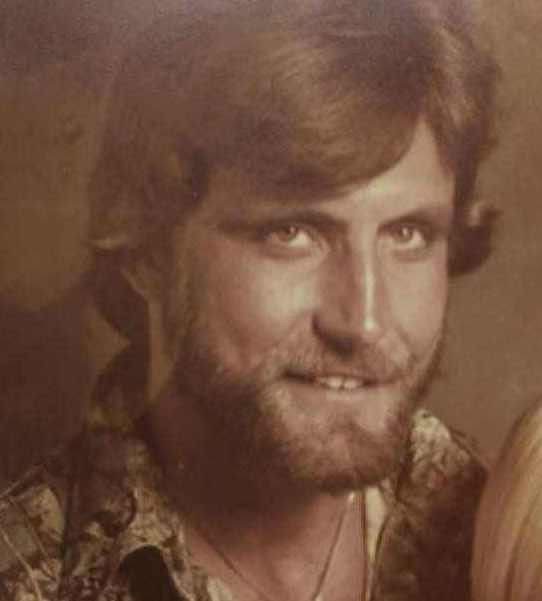
Clyde Hedrick in an undated photograph. His clothing became relevant during testimony about a shirt found near Laura Miller’s remains.
The shirt found near Laura Miller’s remains also came up during the recording.
Elmore claimed Hedrick often wore cowboy-style shirts.
He also claimed Hedrick later complained about losing a favorite shirt.
Investigators found a man’s shirt near Laura’s remains.
Jurors will have to decide what weight to give Elmore’s statements and whether they connect to other evidence presented during the trial.
Jurors hear Elmore in his own words
James Elmore Jr. talks with Tim Miller near Calder Road during a 2022 recording later played for jurors.
The recording marks a significant point in the trial.
Until now, jurors have heard witnesses describe statements Elmore allegedly made about Laura Miller and the investigation.
Wednesday, they heard Elmore make claims himself.
The video allowed jurors to watch him point out locations and answer Miller’s questions.
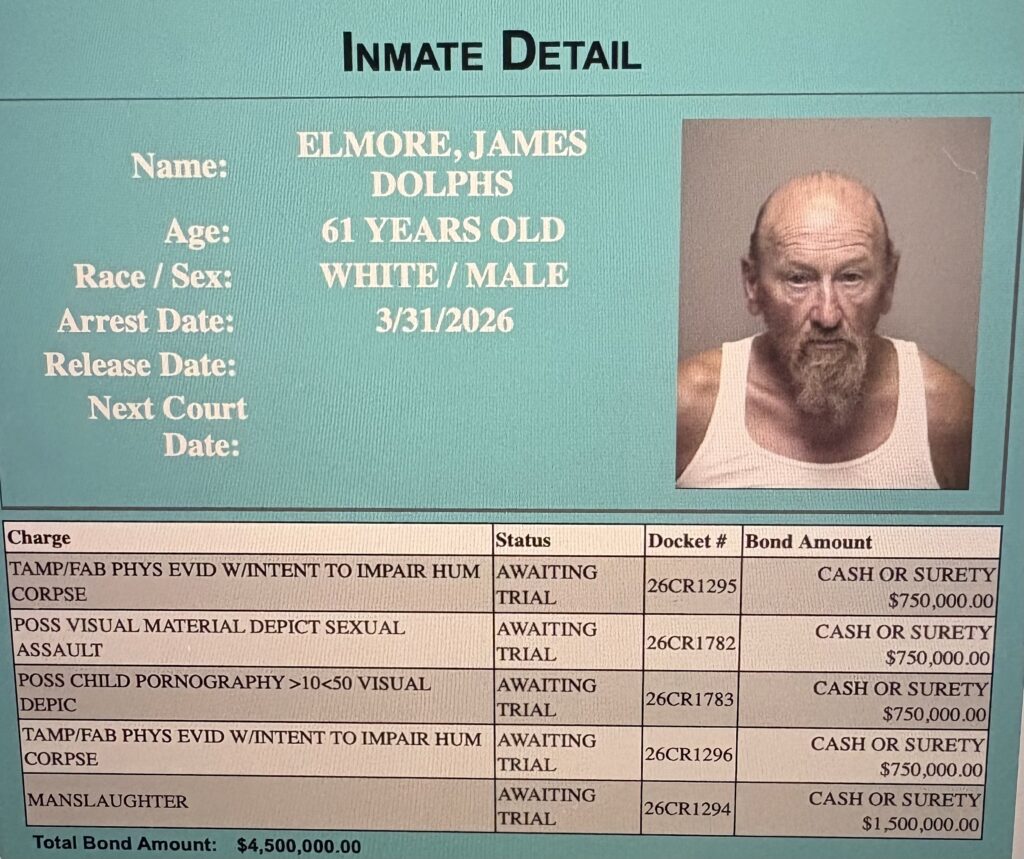
Elmore faces a manslaughter charge in connection with Laura Miller’s death. He also faces tampering charges involving the remains of Laura Miller and Audrey Cook.
The trial continues in Galveston County.
Editor’s note: Statements attributed to James Elmore Jr. in this story come from the recorded interview played for jurors in court. The allegations and evidence remain for the jury to evaluate.
Outside the courtroom, I have also been working on a deeply personal project.
My new book, When Two Worlds Collide During WWII, follows two families on opposite sides of World War II and the remarkable events that eventually brought their lives together in Wisconsin.
The story is based on my own family history, with real people, family photographs and stories passed down through generations.
Tim Miller testifies Tuesday afternoon about Laura Miller’s disappearance and the information he says James Elmore Jr. gave him.
Tim Miller delivered emotional testimony Tuesday afternoon in the James Elmore Jr. trial. He described the day his daughter vanished and the 2022 call that changed the decades-old investigation.
Miller told jurors that Elmore knew details about Laura Miller and Audrey Cook that the public did not know. He also testified that Elmore described his alleged role in Laura’s death.
Elmore has pleaded not guilty. He faces a manslaughter charge in Laura Miller’s death. He also faces charges of tampering with the bodies of Miller and Cook.
Watch Tim Miller’s afternoon testimony below. This is the court video currently available for download. I will add any additional testimony when the remaining recordings become available.
Tim Miller describes Laura’s disappearance
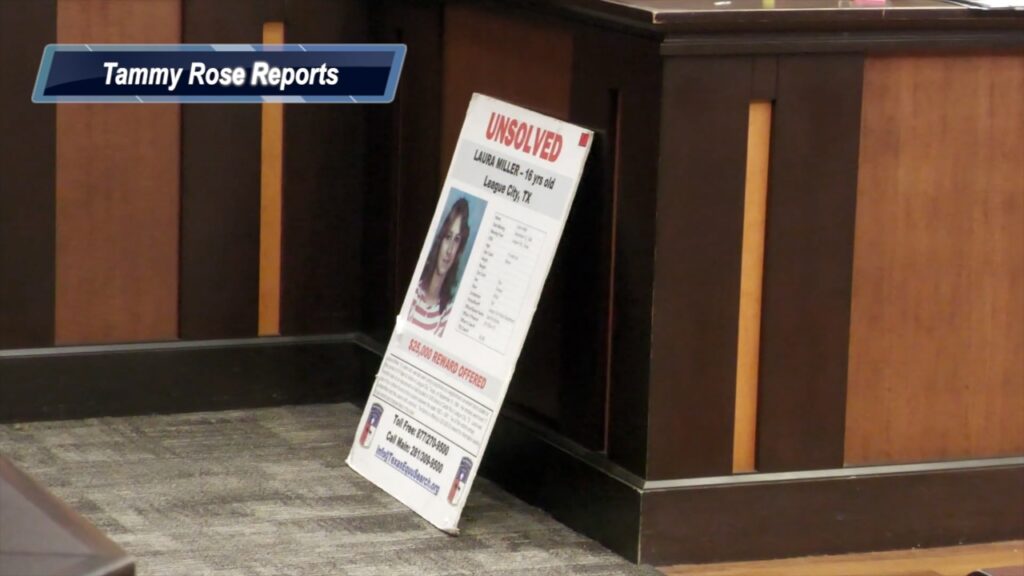
Prosecutors display a reward flyer for Laura Miller while Tim Miller testifies on September 1, 2026.
Laura Miller disappeared on September 10, 1984. She was 16 years old.
Tim Miller described the last morning he saw his daughter alive. He also told jurors about the 17 months he spent searching for answers.
Miller learned in February 1986 that investigators had found the remains of two young women near Calder Road. He took a newspaper article about the discovery to police.
Investigators later identified one of the victims as Laura.
Miller said he repeatedly returned to the field where investigators found her. He searched for her clothing and necklace. He also built a cross near the location.
Years later, Miller founded Texas EquuSearch. The organization has searched for missing people across the United States and in other countries.
Miller called the organization Laura’s legacy.
James Elmore contacted Texas EquuSearch
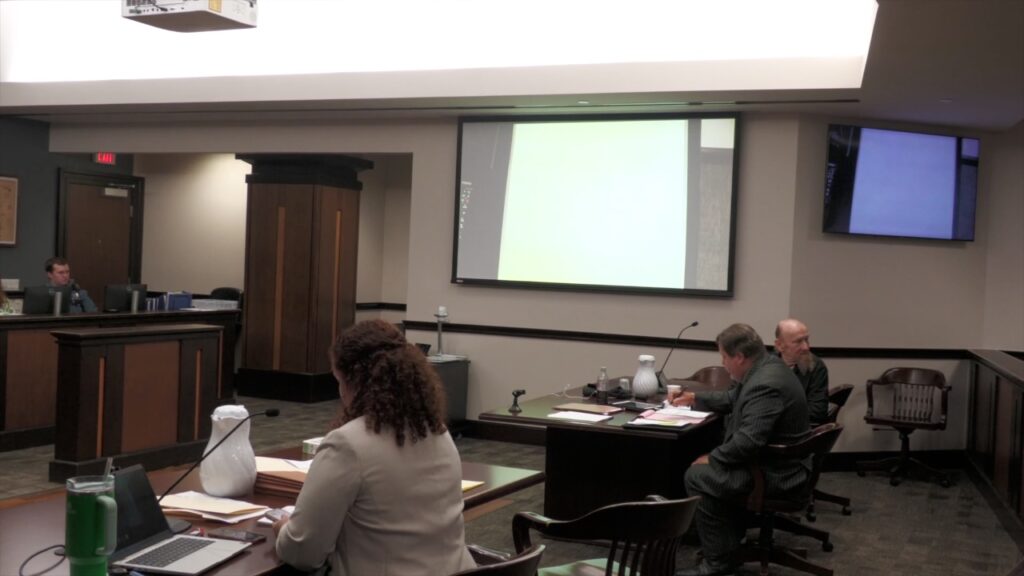
James Elmore Jr. sits at the defense table during the afternoon testimony on September 1, 2026.
Miller testified that Elmore contacted Texas EquuSearch in April 2022. The message said Elmore wanted to discuss a missing-person case and “get some things off his chest.”
Miller called Elmore and asked which case he wanted to discuss.
According to Miller, Elmore named Laura Miller and Clyde Hedrick.
Miller then drove to Elmore’s home in Bacliff. Elmore asked him to take a ride to Calder Road.
Once there, Miller said Elmore pointed toward an area behind a church. Miller initially questioned whether Elmore had real information. The location of the so-called Killing Fields had received widespread attention.
That changed during their next stop.
Cemetery detail convinced Miller
A wooden cross stands in memory of Laura Lynn Miller near the site where her remains were found.
Miller testified that Elmore directed him to a home on Nevada Street in Dickinson. Hedrick once lived near the Miller family.
Elmore then directed Miller toward a nearby cemetery.
According to Miller, Elmore pointed toward trees and said Hedrick had hidden there to watch Laura when she visited the cemetery.
Miller said Laura’s visits to that cemetery were not public knowledge.
“That’s when I knew this guy was real,” Miller told jurors.
Miller asked Elmore whether he would speak with law enforcement. He then took him to an FBI office.
Miller recounts Elmore’s alleged statements
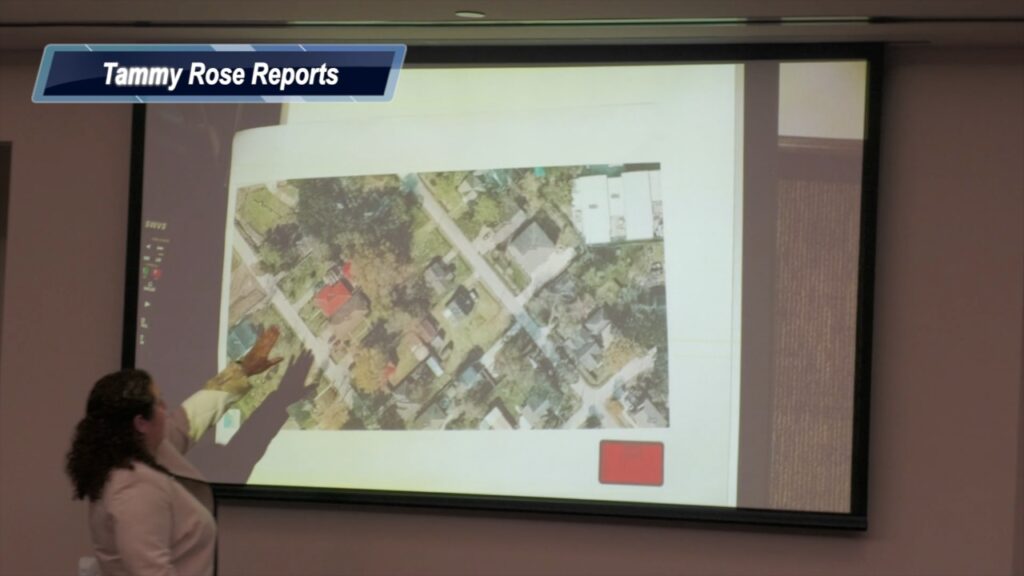
Jurors view a map showing Clyde Hedrick’s former home near the Miller family’s house in Dickinson.
Miller testified that Elmore slowly revealed more information during later conversations.
According to Miller, Elmore said Laura was with Hedrick and other men on the night she died. Miller testified that Elmore described mixing cocaine in a syringe and handing it to Hedrick.
Miller said Elmore claimed that he warned Hedrick not to inject Laura. According to Miller, Elmore then described watching Laura shake and take her final breath.
The state has accused Elmore of recklessly causing Laura’s death by preparing a syringe that contained cocaine and another substance.
Miller also testified about a shirt connected to the case. He said Elmore described the shirt before seeing a photograph of it.
According to Miller, that detail had never become public.
Testimony turns to Audrey Cook
Memorial sign highlighting four victims whose cases have been linked to the same recovery site during the investigation into Clyde Hedrick and several unsolved homicides.
Miller said Elmore also provided details about Audrey Cook.
Cook’s remains were found near Calder Road in 1986. Investigators did not identify her until 2019.
Miller testified that he first visited the location with one of the people who found Cook’s body. Days later, he returned to the area with Elmore.
Miller said he did not tell Elmore where to go. According to Miller, Elmore walked to the same location and pointed toward the same tree.
Miller also testified that Elmore described Cook’s alleged shooting. He said Elmore identified the ammunition as a .22-caliber Federal hollow-point rifle bullet.
Miller told jurors that Cook’s autopsy findings were not public at that time.
Miller paid Elmore nearly $33,000
The defense will likely focus on money that Miller gave Elmore.
Miller testified that a reward offered $25,000 for information in Laura’s case. He said Elmore had already implicated himself and revealed key details before receiving any money.
Miller first gave Elmore $5,000. He later made additional payments.
In total, Miller said he gave Elmore nearly $33,000. That amount included the reward and additional money for Elmore’s personal and medical needs.
Miller denied paying Elmore to make the statements.
He said Elmore had information about Laura and other missing women. Miller also feared Elmore could die before investigators solved the case.
“He was the only one left,” Miller testified.
Recorded interview will play for jurors
Miller arranged a recorded interview with Elmore in 2022. He said he wanted to preserve the information because Elmore had discussed cancer and heart problems.
The interview lasts more than 90 minutes.
Prosecutors introduced the recording as evidence Tuesday afternoon. They plan to play it for jurors Wednesday.
Miller said he did not watch the video until two days before his testimony because it was too painful.
Miller says he believes Elmore
Miller continued communicating with Elmore for several years. He also connected Elmore with Hitchcock Police Detective Cory Williams.
According to Miller, Williams later began investigating the case and spoke directly with Elmore.
Prosecutors ended the afternoon by asking Miller whether he believed the information Elmore gave him.
“Yes, ma’am,” Miller answered.
They then asked whether he believes Elmore bears responsibility for Laura’s death.
My new book, When Two Worlds Collide During WWII, follows two families separated by war—one in Wisconsin and one in Germany—whose lives eventually collide in a way neither could have imagined. Order your copy on Amazon.
Affiliate disclosure: As an Amazon Associate, I earn from qualifying purchases. I may also earn a commission from eligible Hotels.com bookings, at no additional cost to you.
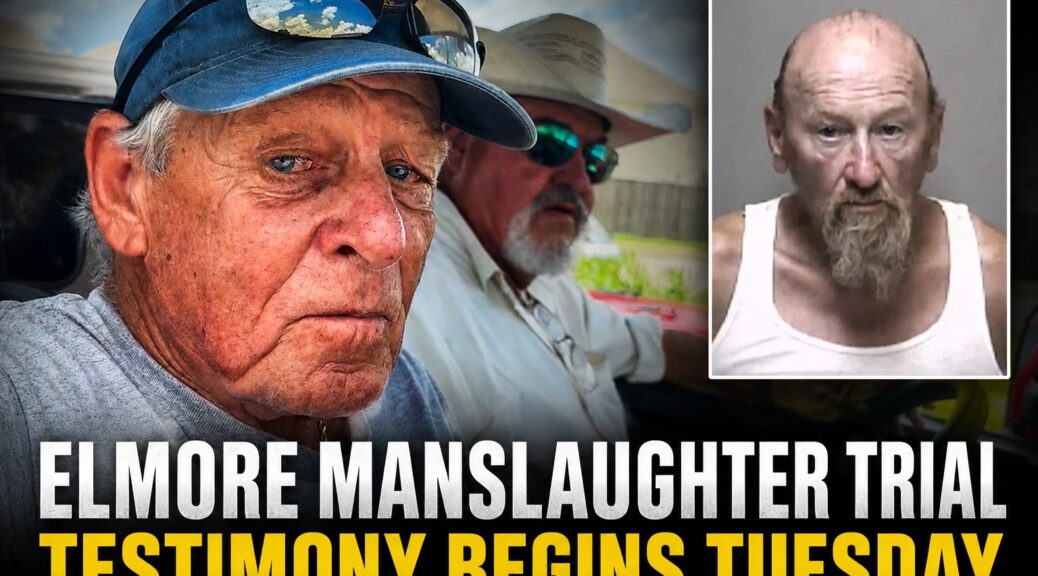
Opening statements began Tuesday in the James Elmore Jr. trial in Galveston County. By midday, jurors were hearing Elmore speak in a recorded interview with the detective who helped revive the decades-old investigation into Laura Miller’s death.
Prosecutors told jurors that Elmore knew details about Laura that had never been made public. They argue those details connect him to what happened to the 16-year-old more than 40 years ago.
Elmore has pleaded not guilty to manslaughter in Laura’s death.
Prosecutors say Elmore knew details about Laura Miller
Memorial sign highlighting four victims whose cases have been linked to the same recovery site during the investigation into Clyde Hedrick and several unsolved homicides.
During opening statements, prosecutors focused on what Elmore allegedly told Laura’s father, Tim Miller.
The state said Elmore contacted Miller and told him he needed to get something off his chest. Miller later met with Elmore and drove around with him.
Prosecutors said Elmore directed Miller to Calder Road. He allegedly pointed out an area where he remembered dumping trash and seeing what he thought was a mannequin.
Laura’s remains were found near Calder Road in 1986.
Prosecutors also highlighted another detail they say Elmore could not have learned from news reports.
The state said Elmore knew Laura would skip school and spend time at a cemetery. He allegedly knew where she would sit among the trees.
Prosecutors said Tim Miller knew that detail because he had caught his daughter there before.
The state argues Elmore knew things that only someone with firsthand knowledge would know.
Watch: Detective Cory Williams questions James Elmore Jr.
Jurors heard portions of a recorded interview between Detective Cory Williams and James Elmore Jr. during Tuesday’s testimony. In the video below, viewers can hear Williams question Elmore directly about information surrounding Laura Miller and the investigation.
The court video is included as part of my podcast coverage so you can hear the exchange presented to the jury for yourself.
State describes alleged party before Laura Miller’s death
Prosecutors also gave jurors their account of a party they say took place before Laura died.
According to the state, Elmore said Laura was in a room with him, Clyde Hedrick and John Gorham.
Prosecutors said Elmore described Hedrick giving Laura cocaine. Elmore allegedly believed the amount was too much for the 16-year-old.
The state said Laura soon began flailing and removing her clothes.
Prosecutors told jurors Elmore said he and others eventually left the room. The state alleges Laura died sometime afterward.
The prosecution also told jurors that Elmore later helped move items from the house. Prosecutors say he described an arm falling out while something was being carried.
The defense reserved its opening statement.
Jurors hear about remains found near Calder Road
Memorial crosses mark the Calder Road area where the remains of Laura Miller and Audrey Cook were found in 1986.
The first witnesses took jurors back to the area where Laura Miller and Audrey Cook were found in February 1986.
Testimony described the largely undeveloped Calder Road area as it appeared at the time.
Jurors also heard testimony about the condition of the remains and the autopsies.
Laura’s cause of death could not be determined from her skeletal remains. Testimony also addressed the limitations investigators faced because toxicology testing could no longer determine whether drugs played a role in her death.
Detective Corey Williams takes the stand
Hitchcock Police Detective Corey Williams testifies in the James Elmore Jr. trial in Galveston County.
The case then moved to Hitchcock Police Detective Corey Williams.
Williams testified that he has worked in law enforcement for about 17 years. He said investigating cold cases involving missing women became a passion alongside his regular work as a detective.
Williams eventually met Tim Miller while working on other missing-person investigations.
That connection led him to James Elmore.
Williams told jurors that he did not initially consider Elmore a suspect.
Instead, investigators believed Elmore might have information about another case.
That changed during their interview.
Elmore’s interview changes direction of investigation
James Elmore Jr. booking photo. His trial is currently scheduled to begin Aug. 31, 2026, in Galveston County.
Williams testified that Elmore began talking about other cases during the interview.
Then the conversation turned to a party and Laura Miller.
Williams said Elmore’s statements caused him to start looking at Elmore differently. He testified that he began considering Elmore a possible suspect in Laura’s death.
Williams then gathered records from several law enforcement agencies and investigated information Elmore provided.
He also traveled to Louisiana, Oklahoma and other parts of Texas while investigating information connected to the cases.
Jurors hear James Elmore in his own words
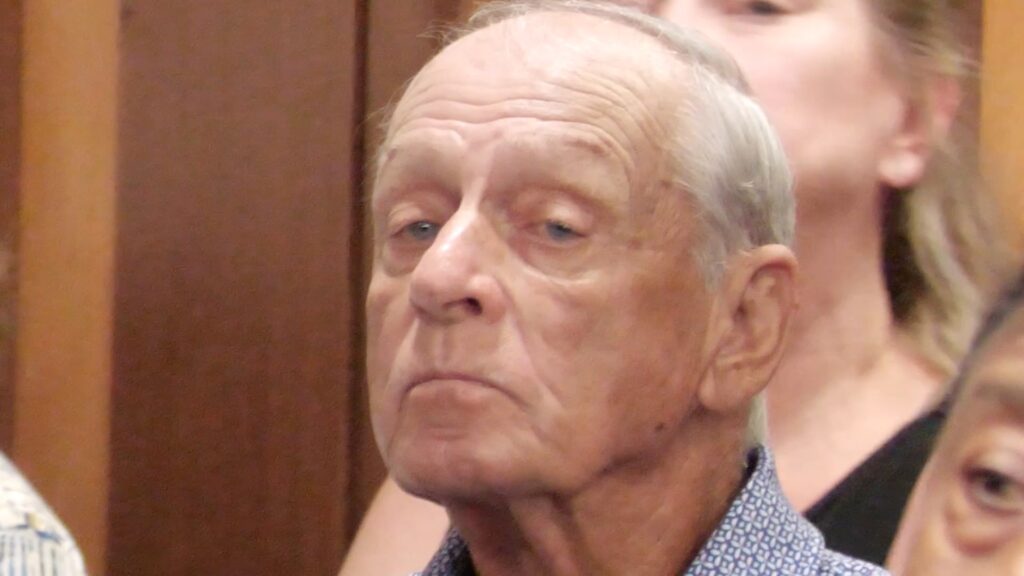
James Elmore Jr. appears in court ahead of his scheduled manslaughter trial in Galveston County.
Prosecutors then played Williams’ recorded interview with Elmore for the jury.
It marked a significant moment in the trial. Jurors could now hear Elmore describe events in his own voice.
During the recording, Elmore talks about the party where Laura was present.
He discusses drugs and describes Laura removing her clothes.
Investigators repeatedly question him about who remained in the room and what happened next.
Elmore says there were parts of the night he did not witness. He also says he did not see Laura being killed.
The interview then moves to what allegedly happened afterward.
Elmore talks about helping move items from a house. During one exchange, he describes an arm falling out of something being moved.
Investigators press him for more details about what he saw, who was there and where items were taken.
Elmore also discusses the Calder Road area and tells investigators he could show them the general location.
Recorded statements become key evidence
Jurors watched recorded footage of James Elmore Jr. as prosecutors presented statements they say became key evidence in the Laura Miller case.
Williams testified that Elmore’s statements changed the course of his investigation.
Prosecutors are using Elmore’s own words to support their argument that he had knowledge about Laura, the party and events surrounding her death that he should not otherwise have known.
Elmore also denies witnessing Laura’s death during the recording and repeatedly tells investigators that he does not know exactly what happened during portions of the night.
Jurors will have to weigh those statements along with the physical evidence and testimony from other witnesses.
The James Elmore Jr. trial continues in Galveston County.
This one has followed me for more than two decades—from Wisconsin to Germany, through old photographs, family memories, forgotten records and a documentary that took me back to my family’s home in Berlitt.
I’ve walked where they walked and stood inside the home where part of this story began. For years, I’ve tried to understand what happened to the people in those fading photographs. Their lives, separated by an ocean, would eventually become connected by war.
This is more than a World War II story to me. It is the story of two families—one in Germany and one in Wisconsin—whose lives unfolded thousands of miles apart as war changed everything around them.
And somehow, their worlds would eventually collide.
A World War II story inspired by my own family history
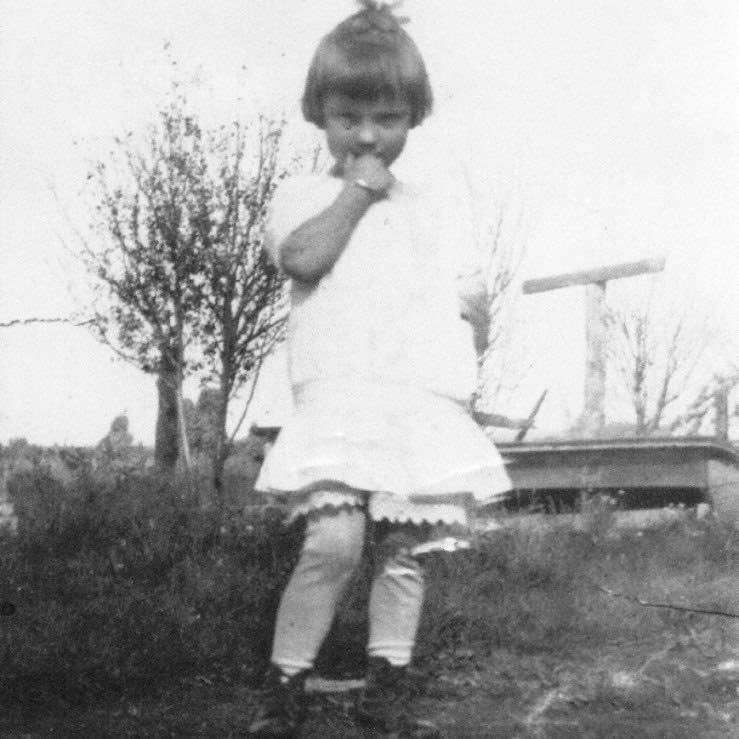
Octavia “Tudy” Riley as a young child. Born without her left arm, she would grow up refusing to let it define what she could accomplish.
When Two Worlds Collide During WWII blends documented family history, real people and real events with dramatized scenes that bring their experiences to life.
The story begins in the 1930s and follows two families on opposite sides of the Atlantic.
In Wisconsin, a young woman born without her left arm refuses to allow the expectations of the era to determine the life she will lead.
In Germany, the Pein family watches the world around them transform under Hitler, war and eventually the Soviet advance.
There are marriages and separations, soldiers and civilians, impossible choices, lost homes and a family struggling to survive the aftermath of a war that changed Europe forever.
At its heart, though, this is a story about family, survival and the extraordinary chain of events that ultimately connected two worlds.
The real people behind the story
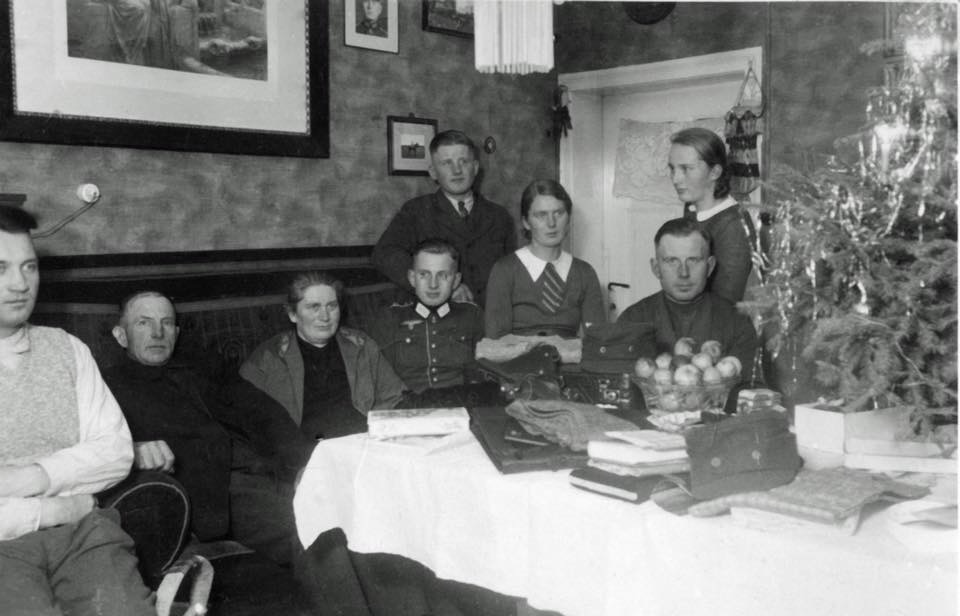
The Pein family gathered for their last Christmas together in their Berlitt home before war, loss and displacement changed their lives forever.
One of the most meaningful parts of writing this book was being able to use real family photographs.
These aren’t actors.
They aren’t AI recreations.
They are the actual people whose lives inspired the story.
Some of their experiences survived through documents and photographs. Others survived because family members kept telling the stories.
I spent countless hours trying to piece those fragments together.
There were moments when one photograph, one record or one remembered detail suddenly connected pieces of the story that had been separated for decades.
That became one of my favorite parts of this journey.
From Germany to Wisconsin
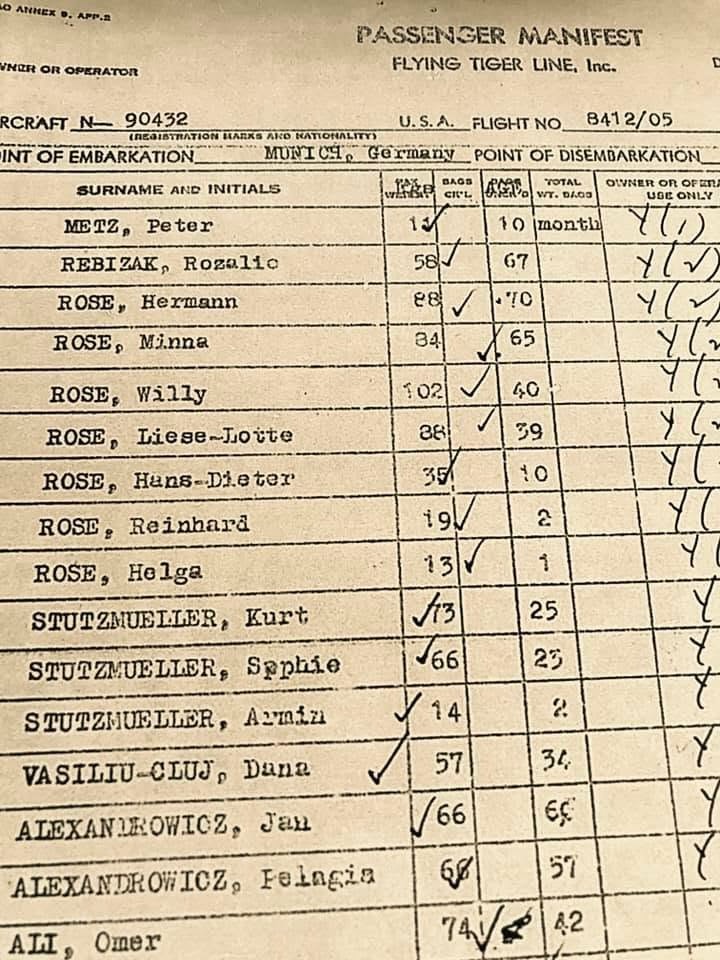
Flying Tiger Line passenger manifest documenting the Rose family’s journey to the United States in 1957.
The book travels from a small German village to wartime Europe, postwar refugee life and eventually Wisconsin.
The war didn’t simply end for families when the fighting stopped.
Homes were lost. Borders changed. Families were separated. People who had survived the war still had to figure out how to survive the peace that followed it.
For one branch of my family, that journey eventually led across the Atlantic and to a completely new life in America.
Knowing where that journey ultimately led made writing its beginning even more powerful for me.
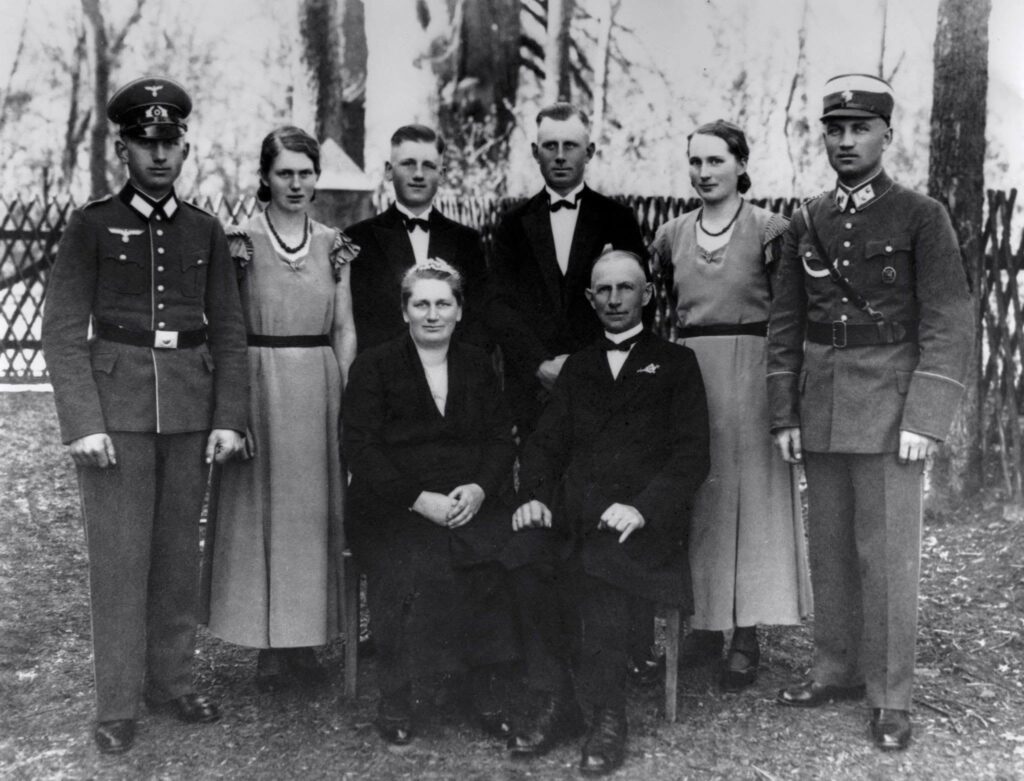
Richard and Helene Pein with their children at the family home in Berlitt, Germany, before World War II changed their lives.
I wanted to preserve these stories before more of them disappeared.
Family history has a way of becoming smaller with every generation. A story that one person remembers vividly becomes a sentence told by the next generation—and eventually it can disappear altogether.
I didn’t want that to happen to this one.
As a reporter, I’m accustomed to searching for records, questioning details and trying to determine what can actually be documented.
As a writer, I wanted to do something different with those discoveries.
I wanted readers to feel as though they were there.
Because some conversations and moments from nearly a century ago can never be known, portions of the book are dramatized. I explain that distinction for readers in the book while preserving the real names, family history and historical foundation behind the story.
There is something fitting about reading a story that crosses the Atlantic while traveling yourself.
Whether you’re heading to Germany, Italy or somewhere completely different, this is the kind of book you can tuck into your carry-on and disappear into during a long flight.
If this story inspires a trip of your own, you can search Hotels.com for hotels and places to stay throughout Europe and beyond.
Disclosure: I may earn a commission from qualifying Hotels.com bookings made through links on this website, at no additional cost to you.
After spending so much time with these people, their photographs and their stories, seeing this book become something readers can actually hold is difficult to put into words.
I hope you fall in love with these families.
I hope parts of their story surprise you.
Most of all, I hope it makes you think about the stories hidden inside your own family—and the people who lived extraordinary lives long before we were here to hear about them.
When Two Worlds Collide During WWII is available now on Amazon.
Tim Miller, father of Laura Miller and founder of Texas EquuSearch, shown in a Galveston County courtroom.
The James Elmore Jr. trial moves into testimony Tuesday in Galveston County.
The court released Tuesday’s schedule.
Prosecutors expect Tim Miller to testify. Miller is Laura Miller’s father and the founder of Texas EquuSearch.
His testimony could become one of the most closely watched moments of the trial.
Tim Miller expected to take the stand
Tim Miller has spent decades searching for answers in the death of his daughter, Laura Miller. He is expected to be the prosecution’s first witness in the James Elmore Jr. trial.
Miller spent years searching for answers about his daughter’s death.
More recently, he had repeated contact with Elmore.
Miller has said he met privately with Elmore dozens of times after Elmore approached him with information about Laura’s death. Those conversations eventually became part of the renewed investigation.
Prosecutors expect Miller to testify about those contacts with Elmore.
Elmore faces a manslaughter charge in Laura Miller’s death.
He pleaded not guilty.
Opening statements expected Tuesday
James Elmore Jr. appears in court ahead of his scheduled manslaughter trial in Galveston County.
Proceedings are scheduled to begin at 9 a.m. Tuesday, Sept. 1.
The court will formally read the charge before opening statements.
Assistant District Attorney Katelyn Willis will give the prosecution’s opening statement. Willis leads the Violence Against Women Division.
ADA Adam Poole also represents the state. He leads the Felony Division but will not give an opening statement.
Defense attorney William “Bill” Agnew is not expected to give an opening statement immediately after the prosecution, according to the current schedule.
Manslaughter case goes before jury first
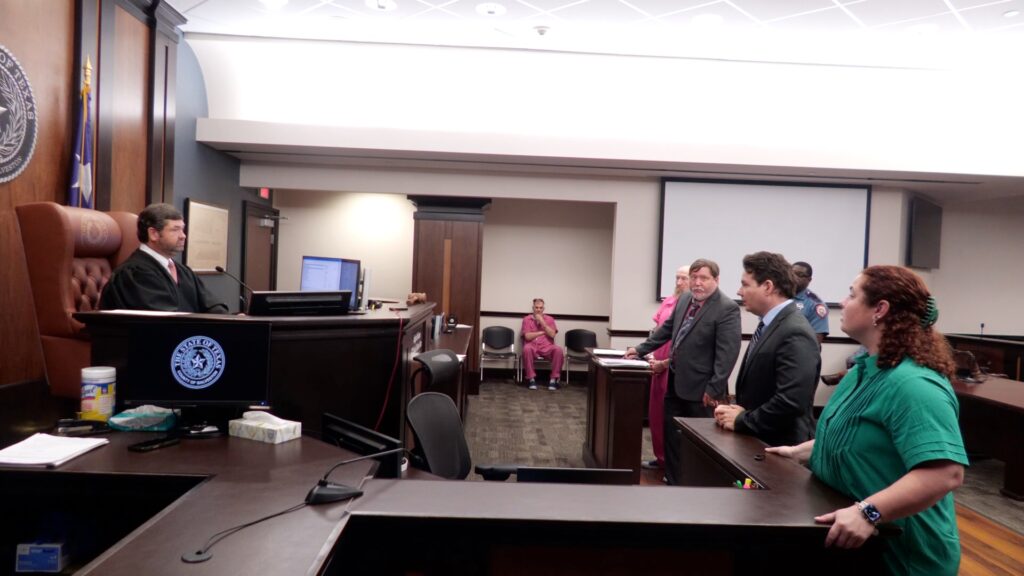
James Elmore Jr. appears in the 122nd District Court ahead of his manslaughter trial in the death of Laura Miller.
Elmore is charged with manslaughter in connection with Laura Miller’s death and with two counts of tampering with evidence involving the remains of Laura Miller and Audrey Cook.
He has pleaded not guilty and is presumed innocent unless proven guilty beyond a reasonable doubt.
Trial expected to continue through Friday
James Elmore Jr. appears in court as proceedings move toward testimony in the manslaughter case involving Laura Miller’s death.
The court currently expects testimony to continue through Friday, Sept. 4.
Proceedings are scheduled to begin at 9 a.m. each day and conclude around 5 p.m.
The schedule could change depending on testimony and other issues that arise during the trial.
I will continue following the James Elmore Jr. trial and will report new developments as they happen.
James Elmore Jr. appears in court ahead of his scheduled manslaughter trial in Galveston County.
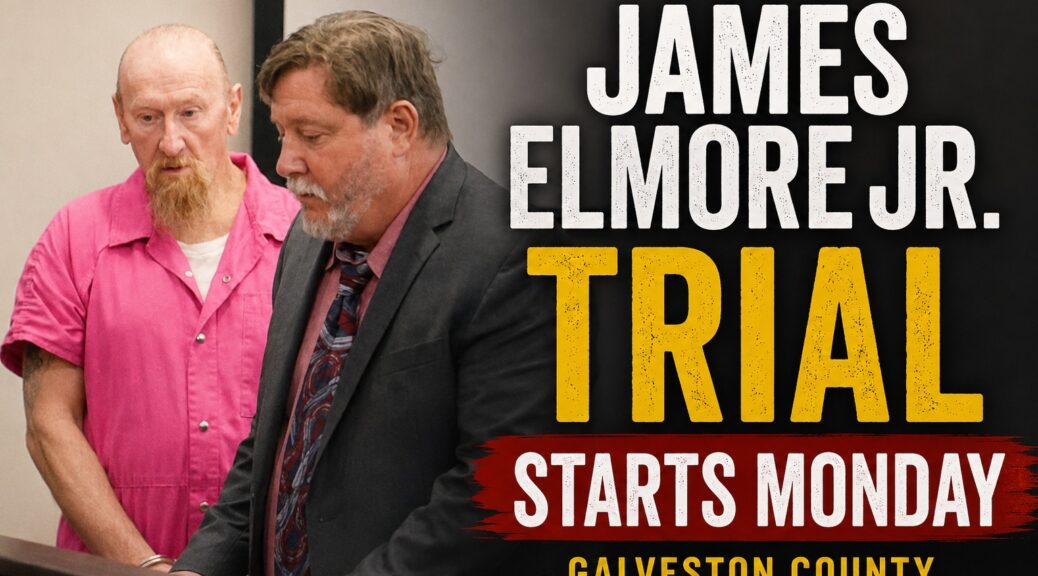
The James Elmore Jr. trial is set to begin Monday in Galveston County.
Elmore faces a manslaughter charge in connection with the death of Laura Miller.
The case is scheduled in the 122nd District Court.
The court has already warned attorneys that it does not expect another delay without a serious emergency.
Jury selection could draw a large crowd
Jury selection may become one of the first major hurdles in the case.
During an earlier pretrial hearing, the judge and attorneys discussed calling more than 200 prospective jurors because of the publicity surrounding the case.
The court also discussed using a larger courtroom.
Attorneys considered a written jury questionnaire and individual questioning for some prospective jurors. The goal is to determine whether jurors can decide the case only on evidence presented in court.
Manslaughter case will go first
James Elmore Jr. booking photo. His trial is currently scheduled to begin Aug. 31, 2026, in Galveston County.
Prosecutors previously told the judge they plan to try the manslaughter case first.
Elmore has several other criminal cases pending.
The state has said evidence connected to some of those cases could become relevant during the manslaughter trial. If Elmore is convicted, prosecutors could also seek to introduce additional evidence during the punishment phase.
Watch the pretrial hearing
I previously covered Elmore’s Aug. 21 pretrial hearing, where the judge and attorneys discussed jury selection, outstanding discovery and how the manslaughter case would move forward.
Watch my full video from the hearing below for more context before Monday’s trial.
When testimony could begin
The court previously discussed beginning jury selection Monday afternoon.
Opening statements and testimony could begin Tuesday if a jury is seated in time. Attorneys have estimated the trial could last about one week.
That timeline could change depending on how long jury selection takes.
What to watch Monday
The biggest questions heading into court are how large the jury pool will be, whether attorneys use questionnaires and how quickly they can seat a jury.
There could also be last-minute motions before testimony begins.
Chopper Rose Productions will be at the courthouse following developments as the case moves toward trial.